

OBD-II Code B1433: Forward Radar Sensor Alignment Fault
What B1433 means, why it triggers, and how to fix it
- Code B1433 has three distinct meanings: Ford (ADAS radar misalignment), Toyota/Lexus (HVAC servo failure), and Hyundai/Kia/Nissan (critical SRS/airbag fault).
- For Ford vehicles, B1433 disables Automatic Emergency Braking and requires a professional ADAS recalibration costing $250 to $600.
- On Toyota and Lexus models, this code indicates a failed air outlet servo motor, requiring an 8 to 10-hour dashboard removal that costs upwards of $1,200.
- For Hyundai, Kia, and Nissan, B1433 flags a high-resistance fault in a seatbelt pretensioner or airbag, requiring immediate repair or a $120 mail-in rebuild service to restore crash safety.
What Does B1433 Mean?

Code B1433 is a manufacturer-specific code with three distinct meanings. On Ford and Lincoln vehicles, the forward-looking radar sensor for Adaptive Cruise Control (ACC) is misaligned, deactivating advanced safety systems. On Toyota and Lexus models, it indicates a mechanical failure of an HVAC air-outlet servo motor inside the dashboard. On Hyundai, Kia, and Nissan vehicles, it flags a critical Supplemental Restraint System (SRS) fault, typically high resistance in a side airbag or seatbelt pretensioner.
Technical definition: For Ford: B1433:54 - Forward Looking Sensor Horizontal Alignment: Missing Calibration (angle outside +/- 3.0 degrees). For Toyota/Lexus: Air Outlet Damper Position Sensor Circuit. For Hyundai/Kia/Nissan: Side Airbag/Pretensioner Resistance Too High.
Can I Drive With B1433?
Yes, But With Caution. Yes, but with extreme caution. On Ford vehicles, Adaptive Cruise Control and Automatic Emergency Braking are disabled, meaning the car will not brake to prevent a collision. On Hyundai, Kia, and Nissan models, the affected airbag or seatbelt pretensioner will not deploy in a crash, drastically increasing injury risk.
Common Causes

- Front Bumper or Radar Bracket Damage (Very Common) — Even a minor impact bends the radar sensor bracket behind the grille, knocking it outside the +/- 3.0 degree tolerance required for operation.
- Recent Repairs or Suspension Modifications (Very Common) — Removing the front bumper, replacing a windshield, or installing a lift kit alters the sensor's angle relative to the road, requiring immediate recalibration.
- Failed or Incomplete Calibration (Common) — Interrupting a scan tool calibration procedure or failing to meet the strict driving parameters during a dynamic relearn sets this code.
- Incorrect Software Configuration (Common) — Retrofitted modules or used replacement parts with incorrect wheelbase data (often accompanied by a U2100 code) cause calibration to fail instantly.
- Weak 12V Battery (Rare) — Voltage drops below 12.4V during startup trigger false 'history' codes in Toyota HVAC and Nissan SRS modules.
- Internal Sensor or Servo Failure (Rare) — The radar unit suffers water intrusion, or the Toyota HVAC servo motor strips its internal plastic gears after years of use.
Symptoms

- Pre-Collision Assist Not Available Warning — A dashboard message appears every time you start the car, and Adaptive Cruise Control is grayed out or unavailable (Ford/Lincoln).
- Airbag or SRS Light Illuminated — The red airbag warning light stays on, indicating a disabled safety restraint component (Hyundai/Kia/Nissan).
- Incorrect HVAC Airflow — Air blows from the wrong vents or gets stuck on the defrost setting regardless of climate control inputs (Toyota/Lexus).
Diagnostic Flowchart

Tap your situation to follow the diagnostic path that matches what you're seeing on this code.
Common Fixes & Costs
- ADAS Radar Sensor Recalibration — Parts: $0, Labor: $250-$600, ~1.5 hr book time (Professional)
- Replace Radar Mounting Bracket and Recalibrate — Parts: $50-$150, Labor: $350-$800, ~2.5 hr book time (Professional)
- Replace Forward Radar Sensor and Recalibrate — Parts: $500-$1,300, Labor: $300-$700, ~2.0 hr book time (Professional)
- Rebuild or Replace Seatbelt Pretensioner — Parts: $120-$450, Labor: $150-$300, ~1.5 hr book time (Intermediate)
- Replace HVAC Air Outlet Servo (Toyota/Lexus) — Parts: $150-$300, Labor: $1,200-$2,000, ~9.5 hr book time (Professional)
Used vs. New Parts: Buying Guide
When a used part is worth it: For expensive ADAS radar sensors, a used OEM part with a warranty offers significant savings. For Toyota HVAC servos, buy new OEM due to the massive labor cost of replacement. For SRS components, use a professional rebuild service rather than buying used.
Donor-vehicle mileage cap: roughly under 60000 miles for the part to have meaningful remaining life.
Donor quality checklist:
- Verify the part number is an exact match.
- Ensure the donor vehicle was not involved in a heavy front-end collision.
- Never buy SRS components from a vehicle where airbags deployed.
Decision logic:
- If The part is a safety-critical SRS component. → Buy new OEM or use a professional rebuilding service. Do not buy used.
- If The part is an ADAS radar sensor and a used OEM part is less than 50% of the new price. → A used part is reasonable, but requires professional programming.
- If The part is a Toyota/Lexus HVAC servo motor. → Buy a new OEM part. The 10-hour labor cost makes cheaper parts too risky.
Warranty tradeoff: Used parts have a 30-90 day warranty. New OEM parts carry a 1-2 year warranty. SRS rebuild services often provide a lifetime warranty.
Worst-case if a used part fails: $500-$1500 if a used module fails post-warranty, requiring you to pay for installation labor twice.
What Happens If You Wait — Timeline
- Immediate: Ford: Automatic Emergency Braking is disabled. Hyundai/Kia/Nissan: The affected airbag or pretensioner is disabled. (MPG impact: 0%% · Added cost: $0)
- Ongoing: The vehicle is operated with a known critical safety defect. There is no further mechanical damage, but the safety risk is constant. (MPG impact: 0%% · Added cost: N/A)
- Event of a Collision: A preventable collision occurs because automatic braking failed, or an occupant is severely injured because an airbag failed to deploy. (MPG impact: N/A% · Added cost: $2,000 - $15,000+)
Cost of Not Fixing It
- Immediate: Ford: Critical safety systems like Automatic Emergency Braking are disabled. Hyundai/Kia/Nissan: The airbag or seatbelt pretensioner will not deploy in a crash. (Added cost: N/A - Safety Risk)
- Ongoing: Toyota/Lexus: Inability to control air direction, leading to discomfort and potential visibility issues if you cannot clear the windshield. (Added cost: Negligible)
- Long-term: Driving with a malfunctioning ADAS or SRS system leads to preventable collisions or severe injuries. (Added cost: $2,000 - $15,000+)
Diagnosis Steps
- Check for Related Trouble Codes
Scan all modules. Code U2100 means programming is missing. Code C1001 indicates camera misalignment. Fix these before attempting radar calibration.
Tools: OBD-II Scanner (Beginner) - Visually and Physically Inspect Radar Mounting
Examine the front bumper and grille. Gently push the radar sensor; it must be completely solid. Any movement means the bracket is broken and requires replacement.
Tools: Flashlight (Beginner) - Monitor Live Sensor Alignment Data (Ford)
Access the Cruise Control Module (CCM) and view the 'ALGN_OFF' PID. A reading outside +/- 3.0 degrees confirms physical misalignment that software calibration cannot fix.
Tools: Advanced Scan Tool (e.g., FORScan) (Advanced) - Attempt Dynamic Recalibration
Initiate the relearn procedure and drive on a straight, well-marked road at 30+ mph for 15 minutes. If the code returns instantly, physical adjustment is required.
Tools: Advanced Scan Tool (Advanced) - Perform Static Recalibration
Place the vehicle in a level bay and use specialized targets at precise distances to complete the alignment. Stop DIY efforts here and take the vehicle to an ADAS specialist.
Tools: ADAS Calibration Rig, OEM Scan Tool (Professional) - Test SRS Circuit Resistance (Hyundai/Kia/Nissan)
Disconnect the battery for 5 minutes. Unplug the SRS module and measure harness resistance (typically 1.8 - 3.4 ohms). Never measure the airbag directly to avoid accidental deployment.
Tools: High-Impedance Multimeter, Dummy Resistor (Advanced) - Test HVAC Servo Voltage (Toyota/Lexus)
Command vent changes via scan tool and back-probe the A/C amplifier. Erratic or stuck voltage confirms a stripped servo motor.
Tools: Multimeter, Scan Tool (Advanced) - Check Battery Voltage
Ensure the battery voltage is stable and above 12.4 volts with the engine off. Clear 'history' codes and retest to rule out low-voltage glitches.
Tools: Multimeter (Beginner)
When This Code Triggers (Freeze-Frame Conditions)
- Vehicle Speed: 35-55 mph (For ADAS faults, the code sets during steady highway driving when the system performs a self-check.)
- Ignition Status: ON (For SRS faults, the code sets during the initial key-on self-test when the module checks circuit resistance.)
- System Voltage: 11.5V - 14.5V (Code sets when voltage is normal, though a history code may have been set during a low-voltage event.)
Related Codes
- C1001 — Indicates 'Vision System Camera Alignment Incorrect'. The radar and camera fuse data for ACC. If both codes are present, both systems require dual calibration.
- U2100 — Means 'Initial Configuration Not Complete'. If present with B1433, the module has lost its programming and must be configured with a factory scan tool before calibration.
- B1432 — Indicates a vertical alignment error. B1433 is horizontal. Vertical alignment is mechanically adjustable via a screw, whereas horizontal is set via software calibration.
- B1441 — On Toyota/Lexus, this code for 'Air Mix Damper' often appears with B1433. B1433 controls vent modes, while B1441 controls temperature blend.
Climate & Environmental Factors
- Cold Weather / Snow & Ice: Snow or ice physically blocks the radar sensor's view, causing the system to set a fault and shut down until cleaned.
- High Humidity: Moisture ingress over many years corrodes SRS wiring connectors, increasing electrical resistance and triggering the B1433 code on Hyundai/Kia models.
How to Talk to a Mechanic About This Code
Where to Take It: Dealer vs Independent vs Chain
- Dealer:
Best for: Vehicles under warranty., Complex ADAS calibrations requiring module programming (PMI)., Checking for manufacturer-specific warranty extensions on SRS components.
Downsides: Highest labor rates., May default to replacing an entire assembly rather than a smaller component. (Typical cost: +50% vs. baseline) - Independent Shop:
Best for: Out-of-warranty vehicles where cost is a major factor., Mechanical repairs like the Toyota HVAC servo replacement., SRS diagnostics if they specialize in electrical systems.
Downsides: Quality varies dramatically., Many lack dedicated equipment for ADAS static calibrations. (Typical cost: +0% vs. baseline) - Chain Shop:
Best for: Simple jobs like oil changes. Not recommended for B1433.
Downsides: Technicians lack tools and training for ADAS calibration or SRS diagnostics. (Typical cost: -10% vs. baseline)
When to Walk Away From the Repair
If the estimated repair cost exceeds 50% of the car's current private-party value, seriously consider selling or trading it in.
- Car worth $4000, fix is $2500: Walk Away. The repair cost is over 60% of the car's value.
- Car worth $25000, fix is $600: Fix It. The repair cost is less than 3% of the car's value and restores a critical safety feature.
- Car worth $3000, fix is $1800: Borderline. The repair is 60% of the car's value. Get a second opinion.
What Scan Tool You Need for This Code
Minimum: A scanner that reads manufacturer-specific Body (B) and Chassis (C) codes from the SRS, BCM, and CCM. A basic engine-only reader is useless for B1433.
A $20 code reader only checks the engine for emissions codes. It cannot communicate with the ADAS, SRS, or HVAC modules where B1433 originates.
Rent vs buy: Auto parts stores rent basic scanners that CANNOT read SRS/ADAS codes. Buying a mid-range scanner like the Autel MK808 is a worthwhile investment.
How to Clear the Code After You Fix It
- Reconnect battery if disconnected for repair.
- Use a compatible OBD-II scan tool to clear the DTC from the specific module (CCM, SRS, or BCM).
- For ADAS faults, perform the required dynamic or static calibration drive cycle.
- For SRS faults, cycle the ignition off and on, waiting 10 seconds to confirm the airbag light stays off.
- For Toyota HVAC faults, cycle the ignition and operate all HVAC modes to confirm the code does not return.
Drive cycle (~15 minutes): For Ford dynamic calibration: Drive for up to 15 minutes at speeds above 30 mph on a straight road with clear lane markings. For SRS/HVAC, clearing the code and performing a key cycle is sufficient.
Readiness monitors affected: This is a Body (B) or Chassis (C) code and does not affect emissions readiness monitors.
Watch out for:
- Clearing the code with a generic scanner will not fix the issue; it returns immediately if the underlying fault is not corrected.
- Crash data stored in an SRS module after an accident cannot be cleared with a standard scan tool and requires a professional reset service.
Will This Fail Emissions / State Inspection?
No — by itself this code doesn't fail OBD inspection (but it can keep readiness monitors from setting, which causes a separate fail).
- California: An airbag light will NOT fail a smog check, but it is a major safety issue.
- New York: An illuminated airbag warning light is noted as an advisory but is NOT a cause for inspection failure.
- Texas: An illuminated airbag light will NOT cause a failure in the state safety inspection.
Manufacturer-Specific Notes
- Ford / Lincoln: B1433 means the Adaptive Cruise Control radar requires horizontal alignment via a specific scan tool calibration procedure.
- Toyota / Lexus: B1433 is completely unrelated to cruise control. It signifies a mechanical fault in the HVAC air outlet servo motor behind the dashboard.
- Hyundai / Kia: B1433 indicates a critical SRS code for high resistance in a side airbag or seatbelt pretensioner. Check for extended warranty campaign TXXQ.
- Nissan: Points to a fault with the passenger seat belt pretensioner. Check for Campaign ID PD105 regarding defective pretensioners.
Real Owner Stories
2018 Ford F-150 Platinum with ACC Fault
Owner bought the truck used with a persistent 'Pre-Collision Assist Not Available' warning.
Outcome: The radar bracket was slightly bent, pushing the sensor outside the software's +/- 3.0 degree adjustment limit. A shop replaced the bracket and performed a static calibration to fix it.
Lesson: If a dynamic calibration succeeds but the code persists, the root cause is physical damage or a bent bracket, not a software glitch.
2009 Toyota Prius with HVAC issues
After replacing a dead 12V battery, the scanner showed a 'history' code for B1433 (Air Outlet Damper).
Outcome: The code did not return and the HVAC operated normally. The low voltage from the dying battery caused a temporary communication glitch.
Lesson: Always clear Toyota HVAC history codes and retest before assuming the expensive servo motor has failed.
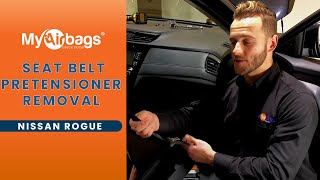
Nissan Rogue with Airbag Light
After a minor accident where seatbelts locked but airbags didn't deploy, the airbag light stayed on with code B1433.
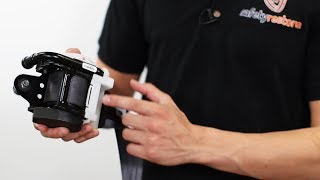
Outcome: The service rebuilt the pyrotechnic mechanism for $120. After reinstalling and clearing codes, the airbag light turned off.
Lesson: Using a professional rebuilding service for deployed pretensioners is a safe, cost-effective alternative to buying new OEM parts.
How to Prevent This Code From Triggering
- Maintain Safe Following Distance (Daily driving habit) — Minimizes the risk of stones and road debris kicking up and damaging the radar sensor or bracket located in the front grille.
- Keep Sensors Clean (Weekly) — Wiping away bug splatters, snow, and ice prevents blockages that interfere with diagnostics and trigger temporary fault codes.
- Cycle HVAC Modes Periodically (Monthly) — Running the climate control through all modes prevents Toyota/Lexus servo motors from seizing up due to lack of use.
Frequently Asked Questions
Can I fix code B1433 myself?
A DIY fix is highly unlikely. Ford ADAS calibration requires specialized alignment targets, Toyota HVAC repair requires a 10-hour dashboard removal, and SRS faults pose severe safety risks. You must take the vehicle to a professional.
My scan tool says the calibration was successful, but the B1433 code came right back. What's wrong?
The calibration routine ran, but the final measured angle was still outside the acceptable +/- 3.0 degree range. The root cause is physical damage, such as a bent mounting bracket, that software cannot compensate for.
I found B1433 as a 'history' code on my Toyota. Do I need to tear apart the dash?
Not necessarily. HVAC codes can be triggered as a temporary glitch by a weak 12V battery. Clear the codes and operate the HVAC system; if the code does not return as 'current', no repair is needed.
Why did the B1433 code appear after I got a new windshield?
Replacing a windshield alters the viewing angle of the forward-facing camera, which works alongside the radar. This misalignment causes the system to fail its self-check and trigger code B1433. You must have the camera recalibrated at a glass shop to clear the fault.
I installed a lift kit and now have code B1433. Why?
Installing a lift kit alters the vehicle's rake and ride height, changing the angle of the forward radar sensor relative to the road. The system detects this misalignment and sets the code. Recalibration is required to compensate for the new posture.
What is the difference between dynamic and static ADAS calibration?
Dynamic calibration involves driving the vehicle under specific conditions to let the sensor align itself. Static calibration is done in a workshop using specialized targets placed at precise distances from the vehicle.
Will a wheel alignment fix the B1433 sensor alignment issue?
No. A wheel alignment corrects tire and suspension angles, while ADAS calibration is a separate electronic procedure to aim the radar relative to the car's thrust line.
Is it safe to ignore code B1433?
No. Ignoring this code means driving without critical safety systems like Automatic Emergency Braking or functional airbags, drastically increasing your risk in an accident.
Key Takeaways
- Code B1433 has three distinct meanings: Ford (ADAS radar misalignment), Toyota/Lexus (HVAC servo failure), and Hyundai/Kia/Nissan (critical SRS/airbag fault).
- For Ford vehicles, B1433 disables Automatic Emergency Braking and requires a professional ADAS recalibration costing $250 to $600.
- On Toyota and Lexus models, this code indicates a failed air outlet servo motor, requiring an 8 to 10-hour dashboard removal that costs upwards of $1,200.
- For Hyundai, Kia, and Nissan, B1433 flags a high-resistance fault in a seatbelt pretensioner or airbag, requiring immediate repair or a $120 mail-in rebuild service to restore crash safety.
Helpful Videos

The information in this article is provided for general reference and educational purposes only. Vehicle specifications, procedures, and part compatibility can vary by production date, trim level, and region. Always consult your vehicle's factory service manual and verify part numbers before purchasing or performing repairs. Safety-critical components such as airbags, seat belts, and braking systems should be installed by a qualified professional.
- 🎬 Helpful Videos
- What Does B1433 Mean?
- Can I Drive With B1433?
- Common Causes
- Symptoms
- Diagnostic Flowchart
- Common Fixes & Costs
- Used vs. New Parts: Buying Guide
- What Happens If You Wait — Timeline
- Cost of Not Fixing It
- Diagnosis Steps
- When This Code Triggers (Freeze-Frame Conditions)
- Related Codes
- Climate & Environmental Factors
- How to Talk to a Mechanic About This Code
- Where to Take It: Dealer vs Independent vs Chain
- When to Walk Away From the Repair
- What Scan Tool You Need for This Code
- How to Clear the Code After You Fix It
- Will This Fail Emissions / State Inspection?
- Manufacturer-Specific Notes
- Real Owner Stories
- 2018 Ford F-150 Platinum with ACC Fault
- 2009 Toyota Prius with HVAC issues
- Nissan Rogue with Airbag Light
- How to Prevent This Code From Triggering
- Frequently Asked Questions
- Can I fix code B1433 myself?
- My scan tool says the calibration was successful, but the B1433 code came right back. What's wrong?
- I found B1433 as a 'history' code on my Toyota. Do I need to tear apart the dash?
- Why did the B1433 code appear after I got a new windshield?
- I installed a lift kit and now have code B1433. Why?
- What is the difference between dynamic and static ADAS calibration?
- Will a wheel alignment fix the B1433 sensor alignment issue?
- Is it safe to ignore code B1433?
- Key Takeaways
- 🎟️ Get 5% Off