

OBD-II Code B1412: A Multi-System Fault Guide
What B1412 means, why it triggers, and how to fix it on your vehicle
- Identify your vehicle's specific B1412 definition first, as it indicates an A/C ambient temperature sensor fault on Toyotas but a critical airbag clock spring failure on Fords and Mazdas.
- Do not drive vehicles logging B1412 for an airbag clock spring or pretensioner fault; the entire Supplemental Restraint System (SRS) is disabled and will not deploy in a crash.
- Fix Toyota and Lexus B1412 A/C issues by replacing the ambient temperature sensor (part #88790-22131) located behind the front grille, which typically costs $20-$70 and takes 15 minutes.
- Ignore code B1412-96 on Jaguar and Land Rover vehicles; official service bulletins (SSM72302) confirm this is a benign software glitch requiring no repairs.
What Does B1412 Mean?

B1412 is a manufacturer-specific Body Diagnostic Trouble Code (DTC) with drastically different meanings depending on the car brand. For Toyota, Lexus, and Nissan, it points to a faulty ambient (outside) air temperature sensor circuit. For Ford, Mazda, Volvo, and Chrysler, it signals a critical fault in the driver's airbag clock spring (spiral cable). For Hyundai, it indicates a communication error with a rear side impact sensor. On newer Mazdas, it points to a rear passenger-side seatbelt pretensioner circuit fault.
Technical definition: The official SAE/ISO definition for B1412 varies by manufacturer. Common definitions include: 'Ambient Temperature Sensor Circuit', 'Driver Airbag Squib Circuit / Spiral Cable Fault', 'SIS (Side Impact Sensor) Rear-Driver Communication Error', and 'Second Row Passenger Side Seatbelt Pretensioner Deployment Control'. Suffixes like '-96' (Jaguar/Land Rover) or '-13' (Mazda) provide specific circuit-level diagnostic data.
Can I Drive With B1412?

Yes, But With Caution. Driving is possible, but extreme caution is required. If the airbag warning light is on (common with Ford, Mazda, Volvo, Chrysler, and Hyundai), the entire Supplemental Restraint System (SRS) is disabled. Airbags and seatbelt pretensioners will not deploy in a crash, drastically increasing the risk of serious injury. If the code triggers an A/C issue (Toyota/Lexus), driving is completely safe, but automatic climate control functions will fail.
Common Causes

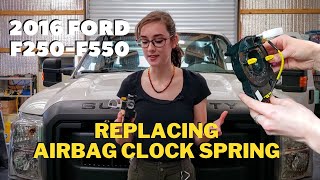
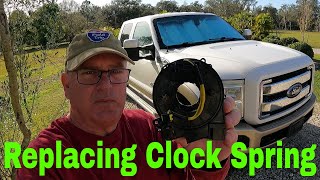
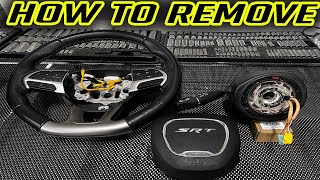
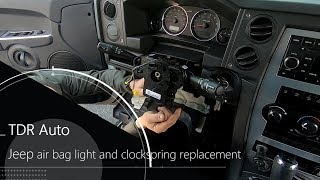
- Defective Airbag Clock Spring / Spiral Cable (Ford, Mazda, Volvo, Chrysler) (Very Common) — The clock spring is a coiled ribbon of wires behind the steering wheel. Constant turning fatigues and breaks the internal wires over time, creating an open circuit in the airbag system.
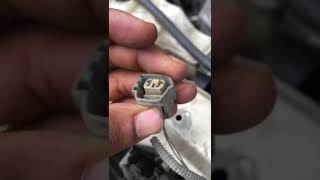
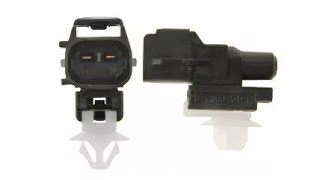
- Faulty Ambient Temperature Sensor (Toyota, Lexus, Nissan) (Very Common) — Located behind the front grille, this sensor fails from age, moisture, or damage from minor front-end impacts, disabling automatic climate control. 🎬 Watch: Diagnostic and repair steps for Toyota ambient sensors.
- Damaged Wiring or Connectors (Including Rodent Damage) (Common) — Frayed, corroded, or chewed wiring interrupts the signal to the affected component. The ambient temperature sensor wiring in the front grille is particularly vulnerable to rodents and road salt.
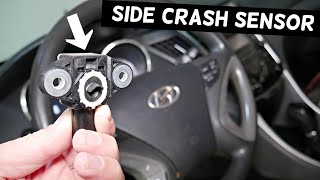
- Faulty Side Impact Sensor (Hyundai) (Less Common) — Moisture intrusion under the seat or in the C-pillar corrodes the rear driver-side impact sensor or its connector, causing a communication failure. 🎬 Watch: How to locate and replace Hyundai side impact sensors.
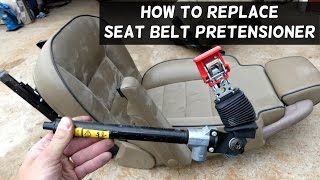
- Faulty Seatbelt Pretensioner (Mazda) (Less Common) — On modern Mazdas (like the CX-5), B1412 points to an open circuit in the rear passenger-side seatbelt pretensioner, often requiring full assembly replacement.
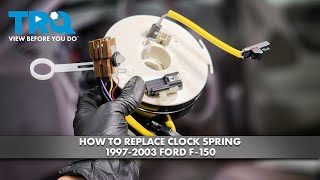
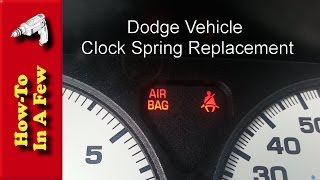
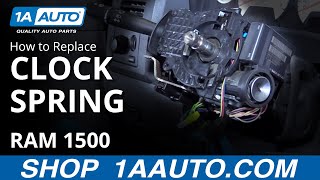
- Incorrectly Installed Parts (Rare) — Installing a new clock spring without properly centering it tears the internal ribbon cable immediately upon turning the steering wheel. 🎬 See how to replace a clock spring on Dodge vehicles.
- Faulty Control Module (BCM, HVAC, or SRS) (Rare) — The computer module responsible for reading the component fails and sets a false code. Consider this only after exhausting all wiring and sensor tests.
Symptoms

- Airbag Warning Light is On — The SRS/airbag warning light illuminates, indicating the entire airbag system is disabled. This is the most critical symptom for Ford, Mazda, Chrysler, and Hyundai vehicles.
- Steering Wheel Buttons or Horn Not Working — A broken clock spring severs connections to all steering wheel electronics, causing the horn, cruise control, and radio buttons to fail simultaneously with the airbag light.
- Incorrect Outside Temperature Display — On Toyota, Lexus, and Nissan vehicles, the dashboard temperature display sticks on one extreme number (e.g., -9°F) or shows dashes.
- A/C System Blows Hot Air — The automatic climate control stops working or behaves erratically because it relies on an accurate outside temperature reading to regulate the cabin.
- Grinding Noise When Turning Steering Wheel — A physically shattered clock spring makes a rubbing, grinding, or snapping sound inside the steering column as the wheel turns.
Diagnostic Flowchart
Tap your situation to follow the diagnostic path that matches what you're seeing on this code.
Common Fixes & Costs
- Replace Airbag Clock Spring (Spiral Cable) — Parts: $150-$450, Labor: $100-$200, ~1.5 hr book time (Professional)
- Replace Ambient Temperature Sensor — Parts: $20-$70, Labor: $90-$150, ~1.0 hr book time (DIY)
- Repair Damaged Wiring or Connector — Parts: $10-$40, Labor: $120-$250, ~2.0 hr book time (Intermediate)
- Replace Side Impact Sensor — Parts: $50-$150, Labor: $100-$200, ~2.0 hr book time (Intermediate)
- Replace Seatbelt Pretensioner Assembly — Parts: $200-$500, Labor: $125-$250, ~1.5 hr book time (Professional)
Used vs. New Parts: Buying Guide
When a used part is worth it: A used ambient temperature sensor is acceptable for budget repairs. Buying used SRS components (clock springs, impact sensors, pretensioners) is strictly prohibited due to extreme safety risks.
Donor-vehicle mileage cap: roughly under 100000 miles for the part to have meaningful remaining life.
Donor quality checklist:
- DO NOT BUY USED SRS COMPONENTS. Their history is unknown, and they may contain stored crash data or internal damage.
- For ambient sensors, ensure exact part number matching and inspect connector pins for green corrosion.
- Avoid parts from flood-damaged vehicles.
Decision logic:
- If The faulty part is a clock spring, impact sensor, or seatbelt pretensioner → Buy a new OEM or high-quality aftermarket part. Never risk your life to save money on used safety gear.
- If The faulty part is an Ambient Temperature Sensor → Buy a new aftermarket part ($20-$70). A used part is only acceptable if you are on a strict budget.
Warranty tradeoff: Used parts offer 30-day warranties. New aftermarket parts offer 1-year to lifetime warranties. New OEM parts carry 1-year/12,000-mile warranties.
Worst-case if a used part fails: $650 if a used clock spring fails, requiring repeat labor and a new part. The true worst-case cost is a non-functional airbag during a collision.
What Happens If You Wait — Timeline
- Immediate: The SRS module detects a circuit fault and illuminates the airbag light. The entire SRS system (airbags and pretensioners) is immediately disabled as a fail-safe. (MPG impact: 0%% · Added cost: $0 (The cost is a critical loss of safety. Driving with the light on increases the risk of severe injury or death in a crash.))
- 1+ months: The safety system remains disabled. The vehicle will automatically fail mandatory safety inspections in states like New York or Virginia. (MPG impact: 0%% · Added cost: $50-$150 in failed inspection fees, plus the eventual $350-$800 repair cost.)
- Immediate: The outside temperature reading becomes incorrect. The automatic climate control system fails to regulate cabin temperature and defaults to blowing hot air. (MPG impact: 0-2%% · Added cost: $0 (The fault causes passenger discomfort but does not damage the A/C compressor or other mechanical parts.))
- 1+ months: The A/C system remains unusable in automatic mode. There is no risk of cascading mechanical failure. (MPG impact: 0-2%% · Added cost: $0 (The main cost remains the eventual $110-$200 repair.))
Cost of Not Fixing It
- Immediate (SRS/Airbag Fault): The entire Supplemental Restraint System is disabled. Airbags and seatbelt pretensioners will NOT activate in a crash, presenting a critical safety risk. (Added cost: N/A (Safety Risk))
- Immediate (A/C Temp Sensor Fault): Automatic climate control fails, causing the A/C to blow hot air or behave erratically. (Added cost: Negligible)
- Long-Term: Vehicles with SRS faults will fail state safety inspections. A/C faults cause ongoing discomfort but no mechanical damage. (Added cost: $50-$150 (Failed inspection fees))
Diagnosis Steps
- Identify Your Vehicle's Definition for B1412
Determine what B1412 means for your specific make and model. Search '[Your Car Make/Model/Year] B1412' to confirm if you are diagnosing an airbag, A/C, side impact sensor, or seatbelt issue.
Tools: Internet access (Beginner) - Scan Tool Live Data Analysis
Use a professional scan tool to access the BCM or SRS module. For A/C faults, monitor the 'Ambient Air Temperature' PID for plausible readings. For SRS faults, view the resistance values for the airbag/pretensioner loops. A reading of 'OPEN' or >5 ohms pinpoints the exact faulty circuit.
Tools: Professional OBD-II Scan Tool (Advanced) - Check Steering Wheel Functions (Ford/Mazda/Chrysler)
With the airbag light on, test the horn, cruise control, and audio buttons. If multiple functions are dead, you have a failed clock spring.
Tools: None (Beginner) - Visual Inspection (Toyota/Lexus/Nissan)
Locate the ambient temperature sensor clipped in front of the radiator/condenser. Check if the sensor is missing, unplugged, or if its wiring is visibly frayed, corroded, or chewed.
Tools: Flashlight (Beginner) - Test Ambient Temperature Sensor Resistance (Toyota/Lexus)
Disconnect the sensor and measure resistance with a multimeter. Toyota/Lexus sensors typically read 2.0-2.5kΩ at 68°F (20°C) and 1.0-1.5kΩ at 86°F (30°C). A reading of 0 (short) or OL (open) confirms the sensor is dead.
Tools: Multimeter, basic hand tools (Intermediate) - Test Ambient Sensor Circuit Voltage (Toyota/Lexus)
Backprobe the sensor's signal wire with a multimeter set to DC Volts. The sensor receives a 5V reference from the control module. Voltage should change with temperature (e.g., 1.4V-1.8V at 77°F). A static 0V or 5V reading indicates a wiring or module fault.
Tools: Multimeter (with backprobe pins) (Advanced) - Test Clock Spring for Intermittent Faults
Disconnect the battery, wait 15 minutes, and remove the airbag. Disconnect the clock spring connectors. Use a multimeter to check continuity on each pin while slowly rotating the clock spring lock-to-lock. If continuity drops to OL (open) during rotation, the internal ribbon is broken.
Tools: Multimeter, socket set, torque wrench, trim removal tools (Advanced) - Test Airbag / Pretensioner Circuit Resistance
Disconnect the battery and the yellow SRS connector for the suspect component. A functional SRS squib (explosive charge) typically reads between 2.0 and 3.5 ohms. Readings significantly higher, open (OL), or shorted (0 ohms) indicate a failed component.
Tools: Multimeter, trim removal tools, socket set (Advanced) - Test Side Impact Sensor Circuit (Hyundai)
Access the sensor in the B-pillar or C-pillar. Inspect the connector for corrosion. Test the disconnected sensor's resistance; a good sensor reads a specific value (e.g., 500-800 ohms), while a bad one reads open (OL) or shorted (0 ohms).
Tools: Multimeter, trim removal tools, socket set (Intermediate)
When This Code Triggers (Freeze-Frame Conditions)
- System Self-Test: Ignition ON (The SRS module performs a complete self-test of all components at startup. A fault is logged instantly if a circuit integrity issue (like a broken clock spring) is found.)
- Circuit Monitoring: Continuous (The relevant control module (SRS, BCM, or HVAC) continuously monitors the circuit. The code sets the moment voltage or resistance drops out of the specified range.)
- Vehicle State: Any (Unlike powertrain codes requiring specific driving conditions, this body code triggers while driving, idling, or simply turning the key to the 'ON' position.)
- Battery Voltage: 11.5V - 14.5V (The fault logs under normal operating voltage. While low voltage causes erratic codes, it is rarely the root cause of a persistent B1412.)
Related Codes
- P0070 - P0074 — Powertrain codes for the Ambient Air Temperature Sensor. A faulty sensor triggers these 'P' codes in the ECM and the B1412 'B' code in the HVAC module simultaneously.
- B0001 - B0028 — Generic codes for driver-side airbag squib faults. If paired with B1412 on a Ford or Mazda, the clock spring is definitively the cause.
- B1410 (Mazda) — Indicates a driver-side rear seatbelt pretensioner fault. Often appears alongside B1412 (passenger-side) after a collision.
- B1412-87 (Jaguar/Land Rover) — Unlike the benign -96 suffix, B1412-87 is a real 'Missing message' fault on the LIN bus, often causing parasitic battery drains.
Climate & Environmental Factors

- Extreme Cold: Temperatures below -63°F (-53°C) cause some Toyota/Lexus systems to log a false B1412 ambient sensor code, which clears when warmed.
- Dusty / Dry Climates: Fine dust penetrates Jeep Wrangler clock spring housings, contaminating electrical contacts and triggering SRS faults.
- High Humidity / Salt Belt Regions: Road salt corrodes exposed connectors on ambient temperature sensors and low-mounted side impact sensors.
How to Talk to a Mechanic About This Code
Say this: "If your airbag light is on, say: 'I have a B1412 code with an airbag light and dead steering wheel buttons. I suspect a clock spring failure. Please confirm an open circuit in the driver's airbag loop before replacing it.' If you have A/C issues, say: 'I have a B1412 code, the outside temp display is wrong, and the A/C blows warm. Please test the ambient temperature sensor resistance before quoting a new A/C control module.'"
This language directs the technician to the most likely cause for your specific vehicle, preventing expensive misdiagnoses like replacing an A/C control module for a $60 sensor fault.
Avoid saying:
- 'My airbag light is on, can you fix it?' (Invites expensive guesswork)
- 'Just do whatever it takes to fix the A/C.'
- 'I have a B1412 code, just replace the part.' (Diagnosis is required to identify WHICH part)
Questions to ask before authorizing the repair:
- For an airbag issue: Did the scan tool show 'open' or 'high resistance' in the specific SRS circuit?
- For an A/C issue: What was the resistance reading of the ambient temperature sensor?
- Is the replacement part new OEM or aftermarket, and what is the warranty?
- Does the estimate include clearing the SRS light with a compatible scanner afterward?
Where to Take It: Dealer vs Independent vs Chain
- Dealer:
Best for: Vehicles under warranty or with active clock spring recalls (Ford, Toyota, Lexus, Jeep)., Diagnosing the B1412-96 'ghost code' on a Jaguar/Land Rover., Complex SRS module communication issues.
Downsides: Significantly higher labor rates and part costs., May default to replacing entire assemblies rather than repairing wiring. (Typical cost: +50% vs. baseline) - Independent Shop:
Best overall fit for out-of-warranty B1412 repairs. Choose a shop specializing in electrical or SRS repairs for airbag faults.
Best for: Out-of-warranty clock spring replacements., A/C ambient temp sensor diagnostics., Getting a second opinion on a high dealership quote.
Downsides: Expertise with SRS systems varies widely; ensure the shop has ASE-certified electrical technicians. (Typical cost: +0% vs. baseline) - Chain Shop:
AVOID for any airbag or SRS-related diagnosis due to safety risks. Acceptable only for verified A/C sensor replacements.
Best for: Simple ambient temperature sensor replacements.
Downsides: High potential for misdiagnosing this multi-faceted code., Technicians often lack specialized training for explosive SRS components. (Typical cost: -10% vs. baseline)
When to Walk Away From the Repair
If the estimated repair cost exceeds 40-50% of the car's current private-party value, consider selling the vehicle. However, SRS faults are critical safety liabilities that must be fixed if you intend to keep driving the car.
- Car worth $5000, fix is $200: Fix it. A $200 ambient temp sensor repair restores A/C functionality for just 4% of the car's value.
- Car worth $4000, fix is $550: Fix it. A $550 clock spring repair is a mandatory safety fix and sits well below the walk-away threshold at 14%.
- Car worth $2500, fix is $800: Borderline. An $800 seatbelt pretensioner repair is 32% of the car's value. Get a second opinion before proceeding.
- Car worth $2000, fix is $1500: Walk away. A repair costing 75% of the vehicle's value is a poor investment.
What Scan Tool You Need for This Code
Minimum: A scan tool capable of reading and clearing codes from the Supplemental Restraint System (SRS) module. Basic engine code readers will not work.
A $20 code reader cannot see B1412 in the SRS or HVAC modules. Crucially, even after replacing a clock spring, a basic reader cannot turn off the airbag warning light.
Budget: Autel AutoLink AL619 (~$90) — Reads and clears SRS (Airbag) codes on most major vehicle models, allowing you to turn off the airbag light after a successful repair.
Mid-range: BlueDriver Pro (~$120) — Offers full-system scanning and live data streaming to view real-time airbag circuit resistance, essential for confirming intermittent clock spring faults.
Professional: Autel MaxiCOM MK808BT (~$450) — Provides full bidirectional control and manufacturer-specific data access, mimicking dealership tools for complex module communication diagnostics.
Rent vs buy: Auto parts stores read codes for free, but their loaner tools usually block SRS code clearing due to liability. You must buy an SRS-capable scanner or pay a shop to clear the light.
How to Clear the Code After You Fix It
- Reconnect the battery if disconnected.
- For SRS/Airbag faults: Use a professional scan tool capable of accessing the SRS module to clear the code. Standard OBD-II readers will not work.
- For A/C faults: Use a standard OBD-II scan tool to clear the code.
- Cycle the ignition off, then on, and verify the warning light does not return.
Drive cycle (~15 minutes): No specific drive cycle is required. SRS systems self-test at startup; if the repair is successful, the light stays off. For A/C faults, driving for 15 minutes confirms climate control operation.
Readiness monitors affected: None
Watch out for:
- Using a basic $20 code reader will fail to clear an airbag light because it cannot communicate with the SRS module.
- Disconnecting the battery will not clear hard-coded SRS faults on modern vehicles.
- If the airbag light returns immediately, the hardware fault was not fixed or the new clock spring snapped during installation.
Will This Fail Emissions / State Inspection?
No — by itself this code doesn't fail OBD inspection (but it can keep readiness monitors from setting, which causes a separate fail).
- California: Will PASS a smog check. California emissions inspections do not check SRS/airbag systems. As long as the Check Engine Light is off, an airbag light is ignored.
- New York: Automatic FAILURE. New York law explicitly states an illuminated airbag warning light is grounds for safety inspection failure.
- Texas: Likely to PASS. The official Texas vehicle inspection checklist does not include the airbag warning light as a failure item.
Most Commonly Affected Vehicles
- Toyota Corolla, Camry, Yaris, RAV4, Prius (2005-2015) — Logs B1412 for an 'Ambient Temperature Sensor Circuit' fault. Part #88790-22131 is the standard fix.
- Ford Focus, Fiesta, F-150, Super Duty (2008-2023) — Logs B1412 for a 'Driver Airbag Slip Ring' (clock spring) failure. Check NHTSA for active truck recalls.
- Mazda Mazda3, Mazda6, CX-5 (2007-2020) — Indicates a clock spring failure on older models, or a 'Second Row Passenger Side Seatbelt Pretensioner' fault on 2018+ models.
- Lexus LS, CT200h, ES, RX350, NX Series (2008-2024) — Points to the ambient temperature sensor on older models. 2023-2024 models face a major clock spring recall.
- Hyundai Santa Fe, various (2010-2016) — Logs B1412 as a 'Side Impact Sensor (SIS) Rear-Driver Communication Error'.
- Dodge / Chrysler / Jeep Charger, 300, Grand Cherokee, Wrangler (2006-2017) — Relates to an open driver squib circuit (clock spring). 2011-2016 RHD Wranglers have an active recall for this.
- Volvo S60, V70, XC90, S80 (2005-2015) — Commonly associated with a failed clock spring triggering the SRS warning light.
- Nissan Altima, Almera, Navara (2010-2016) — Typically relates to the ambient temperature sensor circuit or a clock spring failure.
Manufacturer-Specific Notes
- Jaguar / Land Rover: Code B1412-96 is a known software glitch related to the 'Quiescent Relay Box'. TSBs SSM72302 and SSM72286 instruct technicians to ignore it entirely.
- Toyota / Lexus: Recall NHTSA 23V-480 affects 2023-2024 models for a faulty spiral cable (clock spring) that deactivates the driver's airbag. Dealers replace it for free.
- Ford: Recall NHTSA 23V-847 affects 2023 F-150 and Super Duty trucks for insufficient clock spring welds. Older Super Duty trucks have recalls for dust-induced clock spring failures.
- Jeep: Recall NHTSA 16V-288 affects 2011-2016 RHD Wranglers. Dust enters the clock spring, compromising the airbag circuits and preventing deployment.
- Mazda: On 2018+ platforms, B1412 points to the 'Second Row Passenger Side Seatbelt Pretensioner', not the clock spring. The '-13' suffix indicates an open circuit.
Real Owner Stories
2013 Toyota Corolla - A/C & Temp Display Failure
The outside temperature display stuck at -22°F and the A/C blew hot air. A scan revealed code B1412.
Outcome: The owner installed a new OEM sensor (part #88790-22131) for $60 in 15 minutes. The temperature display and A/C worked perfectly immediately.
Lesson: Never replace an expensive A/C control module for a Toyota B1412 code without first testing the $60 ambient temperature sensor.
2012 Ford Focus - Airbag Light & Horn Failure
The airbag warning light illuminated, followed days later by the horn and steering wheel radio controls failing. A scan confirmed B1412.
Outcome: An independent shop replaced the clock spring for $450, resolving all symptoms and extinguishing the airbag light.
Lesson: An airbag light paired with dead steering wheel buttons guarantees a clock spring failure. This is a non-negotiable safety repair.
2020 Mazda CX-5 - Airbag Light After Accident
Purchased after a minor collision, the vehicle had an airbag light and locked rear seatbelts. A scan showed B1412:13-8A (open circuit in rear pretensioners).
Outcome: The B1412 code remained because the electrical fault (deployed charge) wasn't fixed. The owner had to buy brand new seatbelt assemblies from Mazda.
Lesson: If an SRS pyrotechnic charge deploys, 'repair' services cannot fix the electrical fault. You must replace the entire assembly.
2017 Jaguar F-PACE - Code with No Symptoms
A dealership noted code B1412-96 during routine service, despite no warning lights or functional problems.
Outcome: The TSBs identified B1412-96 as a benign software glitch related to the 'Quiescent Relay Box'. The owner instructed the dealer to ignore it.
Lesson: Code suffixes matter. Jaguar's B1412-96 is a 'ghost code' to ignore, while B1412-87 indicates a real wiring fault.
How to Prevent This Code From Triggering
- Apply Dielectric Grease to Exposed Connectors (Every 2-3 years) — Applying non-conductive dielectric grease to the ambient temp sensor connector seals out moisture and road salt, preventing circuit-killing corrosion.
- Deter Rodents from Engine Bay (Ongoing for outdoor vehicles) — Rodents target the ambient temp sensor harness. Use peppermint oil under the hood and park in well-lit areas to prevent chewed wires.
- Avoid Turning Steering Wheel When Car is Off (Daily habit) — Turning the wheel lock-to-lock without power steering assist places severe mechanical strain on the clock spring's internal ribbon cable.
- Ensure Proper Clock Spring Centering During Repairs (During steering column service) — Failing to lock the clock spring in its centered position during steering repairs will snap the internal ribbon on the first full turn.
- Clean Battery Terminals (Annually) — Corroded terminals cause voltage spikes that trigger erratic behavior and false codes from sensitive modules like the SRS computer.
Frequently Asked Questions
Is it safe to drive with a B1412 code?
It depends entirely on the cause. If the airbag light is on, the entire SRS system is disabled and will not function in an accident, posing a major safety risk. If the code is for the A/C temperature sensor, driving is safe, but automatic climate control will fail.
Can I fix code B1412 myself?
You can easily DIY an ambient temperature sensor replacement on a Toyota or Lexus. However, airbag clock springs, seatbelt pretensioners, and side impact sensors require professional replacement. These SRS components are dangerous to handle and require a specialized scanner to reset.
Why did my horn and cruise control stop working when the airbag light came on?
This is a classic symptom of a failed airbag clock spring. The clock spring provides the electrical link for all steering wheel functions, so a broken internal ribbon cable severs connections to the horn, cruise control, and airbag simultaneously.
Can a bad clock spring drain my battery?
Generally, no, because a broken wire inside the clock spring creates an open circuit that cannot draw power. However, if the shredded internal ribbon cable causes a short circuit between a constant power wire and another circuit, it creates a parasitic drain. If a battery drain coincides with clock spring symptoms, suspect a short in the steering column.
What does the '-96' at the end of my B1412 code mean?
For Jaguar or Land Rover, the B1412-96 suffix identifies a known software glitch that the manufacturer advises ignoring. Do not replace any parts for this specific code. On other brands, suffixes point to specific fault types like open circuits or shorts to ground.
My mechanic says to ignore code B1412. Is that right?
Only ignore it if you drive a Jaguar or Land Rover and the code is specifically B1412-96. On those brands, this is a known software bug. For all other brands, B1412 indicates a real, often safety-critical problem requiring immediate diagnosis.
My mechanic wants to replace the whole A/C control module for B1412. Is that necessary?
No, this is a common misdiagnosis for Toyota and Lexus vehicles. B1412 is almost always caused by a faulty $20-$70 ambient temperature sensor or its wiring. Test the sensor and its circuit thoroughly before paying for an expensive A/C control module.
Key Takeaways
- Identify your vehicle's specific B1412 definition first, as it indicates an A/C ambient temperature sensor fault on Toyotas but a critical airbag clock spring failure on Fords and Mazdas.
- Do not drive vehicles logging B1412 for an airbag clock spring or pretensioner fault; the entire Supplemental Restraint System (SRS) is disabled and will not deploy in a crash.
- Fix Toyota and Lexus B1412 A/C issues by replacing the ambient temperature sensor (part #88790-22131) located behind the front grille, which typically costs $20-$70 and takes 15 minutes.
- Ignore code B1412-96 on Jaguar and Land Rover vehicles; official service bulletins (SSM72302) confirm this is a benign software glitch requiring no repairs.
Helpful Videos


The information in this article is provided for general reference and educational purposes only. Vehicle specifications, procedures, and part compatibility can vary by production date, trim level, and region. Always consult your vehicle's factory service manual and verify part numbers before purchasing or performing repairs. Safety-critical components such as airbags, seat belts, and braking systems should be installed by a qualified professional.
- 🎬 Helpful Videos
- What Does B1412 Mean?
- Can I Drive With B1412?
- Common Causes
- Symptoms
- Diagnostic Flowchart
- Common Fixes & Costs
- Used vs. New Parts: Buying Guide
- What Happens If You Wait — Timeline
- Cost of Not Fixing It
- Diagnosis Steps
- When This Code Triggers (Freeze-Frame Conditions)
- Related Codes
- Climate & Environmental Factors
- How to Talk to a Mechanic About This Code
- Where to Take It: Dealer vs Independent vs Chain
- When to Walk Away From the Repair
- What Scan Tool You Need for This Code
- How to Clear the Code After You Fix It
- Will This Fail Emissions / State Inspection?
- Most Commonly Affected Vehicles
- Manufacturer-Specific Notes
- Real Owner Stories
- 2013 Toyota Corolla - A/C & Temp Display Failure
- 2012 Ford Focus - Airbag Light & Horn Failure
- 2020 Mazda CX-5 - Airbag Light After Accident
- 2017 Jaguar F-PACE - Code with No Symptoms
- How to Prevent This Code From Triggering
- Frequently Asked Questions
- Is it safe to drive with a B1412 code?
- Can I fix code B1412 myself?
- Why did my horn and cruise control stop working when the airbag light came on?
- Can a bad clock spring drain my battery?
- What does the '-96' at the end of my B1412 code mean?
- My mechanic says to ignore code B1412. Is that right?
- My mechanic wants to replace the whole A/C control module for B1412. Is that necessary?
- Key Takeaways
- 🎟️ Get 5% Off