

OBD-II Code B1408: Manufacturer-Specific Body Control Fault
What B1408 means, why it triggers, and how to fix it
- Code B1408 lacks a universal OBD-II definition; its meaning changes entirely based on your vehicle's manufacturer, ranging from a Ford seat mat to a Mitsubishi impact sensor.
- An illuminated airbag light alongside code B1408 confirms your Supplemental Restraint System (SRS) is disabled, meaning 0 airbags will deploy in a collision.
- On 2019-2021 Ford Transit vans, B1408 almost exclusively indicates a cracked driver's seat suspension mat, a known flaw covered under TSB 23-2235.
- Diagnosing B1408 requires an SRS-capable scanner costing at least $80; a standard $20 engine code reader cannot access the airbag control module to read or clear this fault.
What Does B1408 Mean?

B1408 is a body-related trouble code whose meaning changes significantly depending on your vehicle's manufacturer. It lacks a single universal definition. For some cars, it points to a fault in the airbag system, while for others it indicates a problem with a power window motor or a CAN bus communication error. Because it most often relates to the airbag system, treat it as a critical safety issue until proven otherwise.
Technical definition: There is no standardized SAE/ISO definition for B1408. Manufacturers assign its meaning. Common definitions include: Ford: 'Driver's Seat Suspension Mat Assembly Fault' or 'Passenger Side Curtain Deployment Control Circuit Open'. Land Rover: 'Driver Seatbelt Anchor Pretensioner Deployment Control - Circuit Open'. Nissan: 'Airbag Control Unit Internal Error'. Mitsubishi: 'Front Impact Sensor (RH) Communication Error'. Chevrolet: 'Reference Voltage Circuit #2 Output Voltage Too High'.
Can I Drive With B1408?

No — Do Not Drive. It is not safe to drive with an active B1408 code and an illuminated airbag light. This combination indicates a critical fault in the Supplemental Restraint System (SRS), which the vehicle's computer disables to prevent accidental deployment. In an accident, your airbags and seatbelt pretensioners will not function, dramatically increasing the risk of serious injury or death. Furthermore, in states with safety inspections, an active airbag warning light results in an automatic failure.
Common Causes

- Damaged Driver's Seat Suspension Mat (Ford Transit) (Very Common) — On 2019-2021 Ford Transit vans, this is the most frequent cause. The plastic seat support mat cracks, severing integrated airbag system wires and causing the seat to sag. 🎬 Watch: How to replace the Ford Transit seat suspension mat. Ford issued TSB 23-2235 to address this specific design flaw.
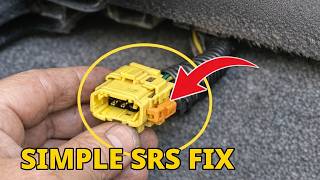
- Damaged, Dirty, or Loose SRS Wiring/Connectors (Common) — Wiring under seats or behind trim panels gets stretched, pinched, or corroded by water intrusion. The yellow connectors used for airbag systems are highly sensitive; a loose or dirty pin increases circuit resistance and triggers the code.
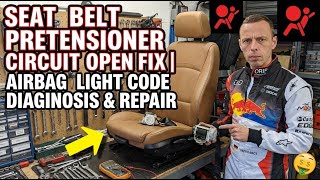
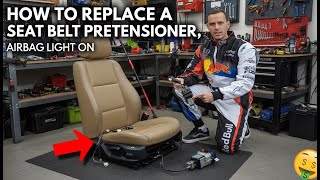
- Faulty Seat Belt Pretensioner or Buckle (Common) — On makes like Land Rover, the code points to a failed seat belt pretensioner. This results from a failed internal pyrotechnic charge, a bad electrical connector, or an internal circuit fault. 🎬 See this walkthrough for diagnosing Land Rover seatbelt pretensioner codes.
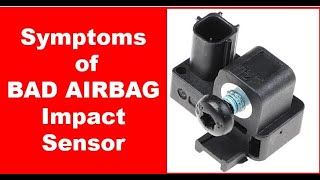
- Faulty Front Impact Sensor (Common) — On Mitsubishi models, B1408 indicates a communication error with the right-hand (passenger side) front impact sensor. This stems from a failed sensor, damaged wiring, or a broader CAN bus network issue.
- Faulty Airbag Control Module (RCM/SRS) (Less Common) — The Restraints Control Module (RCM) is the computer for the airbag system. On vehicles like Nissan, B1408 indicates an internal hardware failure of this module, requiring replacement and reprogramming.
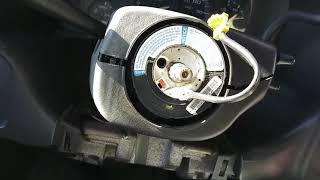
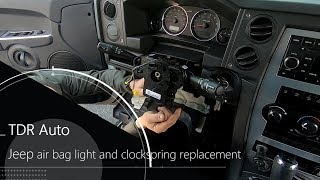
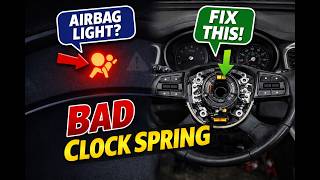
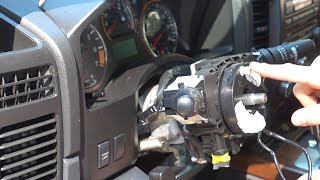
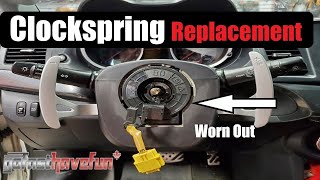
- Failed Clock Spring (Less Common) — The clock spring is a rotary electrical connector in the steering column. A broken internal ribbon cable causes an open circuit, triggering an airbag light and disabling steering wheel controls.
- Failed Power Window Motor or Switch (Rare) — In rare instances on older Land Rover models, this code triggers due to a short in the driver's power window motor circuit, though this is an exception to the usual SRS-related definitions.
Symptoms

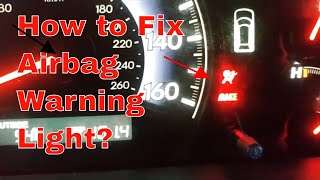
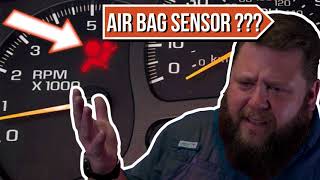
- Airbag Warning Light On — The SRS/airbag light on your dashboard illuminates permanently, confirming the safety system is disabled.
- Sagging Driver's Seat — Specific to the Ford Transit, the driver's seat cushion collapses or lacks support because the internal suspension mat has broken.
- Seat Belt Light Malfunction — Because seat belt pretensioners are part of the SRS system, a fault here triggers the airbag light and sometimes affects the seat belt warning indicator.
- Steering Wheel Buttons Not Working — If a failed clock spring causes the code, you lose function of the horn, cruise control, or radio buttons on the steering wheel.
- Fault Code Present in SRS Module (scan-tool only — no driver-felt sign) — The B1408 code, along with a two-digit subtype suffix (e.g., :13 for Open Circuit), is stored in the SRS module.
Diagnostic Flowchart
Tap your situation to follow the diagnostic path that matches what you're seeing on this code.
Common Fixes & Costs
- Replace Driver's Seat Suspension Mat (Ford Transit) — Parts: $50-$150, Labor: $200-$400, ~2 hr book time (Professional)
- Repair/Clean Under-Seat Wiring/Connector — Parts: $5-$20, Labor: $130-$200, ~1 hr book time (Intermediate)
- Replace Seat Belt Pretensioner/Buckle — Parts: $150-$400, Labor: $150-$300, ~1.5 hr book time (Intermediate)
- Replace Front Impact Sensor — Parts: $100-$250, Labor: $130-$200, ~1 hr book time (Intermediate)
- Replace Airbag Control Module (RCM/SRS) — Parts: $400-$1200, Labor: $150-$300, ~1.5 hr book time (Professional)
Used vs. New Parts: Buying Guide
When a used part is worth it: Used parts make sense for non-pyrotechnic components like a wiring pigtail or a seat frame. Used control modules require professional resetting and VIN programming. Never buy used pyrotechnic devices (airbags, pretensioners) due to safety risks.
Donor-vehicle mileage cap: roughly under 50000 miles for the part to have meaningful remaining life.
Donor quality checklist:
- Verify the donor vehicle was not in a flood or fire.
- Ensure the part is from a non-deployed vehicle.
- Match part numbers exactly; a mismatched module requires professional programming.
Decision logic:
- If The part is a pyrotechnic device (airbag, pretensioner, clock spring). → Buy new OEM. The safety risk of a used part failing is not worth the cost savings.
- If The part is an Airbag Control Module. → Favor having your original module reset by a professional service. Used modules require professional VIN programming.
- If The part is a sensor or wiring harness. → A used part from a low-mileage, non-accident donor is a reasonable option if the part number matches exactly.
Warranty tradeoff: Used parts typically have a 30-90 day warranty. New OEM parts carry a 1-year or longer warranty.
Worst-case if a used part fails: $1500-$3000 if a faulty used module or airbag is installed, requiring repeat labor and a new part.
Cost of Not Fixing It
- Immediate: Complete failure of the airbag system. Airbags and seatbelt pretensioners will NOT deploy in an accident. (Added cost: N/A)
- Next State Inspection: Automatic failure of the vehicle's annual safety inspection in states that mandate it. (Added cost: $50-$200 in fines and re-inspection fees.)
- 1-6+ Months: If caused by a water leak, continued exposure spreads corrosion to other modules or the main vehicle harness. (Added cost: $500-$3000+)
Diagnosis Steps
- Confirm Vehicle-Specific Definition
Use a search engine with your car's make, model, year, and 'B1408' to find the exact manufacturer definition. This dictates whether you are diagnosing an airbag, a seat mat, or a sensor.
Tools: Smartphone or Computer (Beginner) - Scan for Sub-Codes with an SRS Scanner
A basic OBD-II reader cannot access airbag modules. Use an SRS-capable scanner to retrieve the full code and its subtype (like B1408:13 for 'Circuit Open' or B1408:11 for 'Short to Ground').
Tools: SRS-capable OBD-II Scanner (Beginner) - Check for Known TSBs
Search for Technical Service Bulletins (TSBs) for your specific vehicle. For example, Ford Transit owners must reference TSB 23-2235, which outlines the exact seat mat repair procedure.
Tools: Smartphone or Computer (Beginner) - Perform a Visual Inspection of Connectors
Disconnect the battery and wait 30 minutes. Look under the seats and behind trim panels for loose, pinched, or corroded yellow airbag connectors. Unplugging, cleaning with contact cleaner, and reseating the connector fixes many open circuit faults.
Tools: Flashlight, Electronics Contact Cleaner (Intermediate) - Test Pretensioner/Squib Circuit Resistance
If the code points to a pretensioner or airbag squib, test the component's resistance. With the battery disconnected, use a multimeter to measure across the component's two pins. A healthy squib reads between 1.5 and 3.5 ohms. Infinity (O.L.) means the component is blown.
Tools: Multimeter, Back-probe pins (Advanced) - Test the Suspected Circuit Wiring
Disconnect the battery, the component, and the SRS module. Use a multimeter to check for end-to-end continuity on each wire in the affected circuit. Check for a short to ground by testing continuity between each wire and the chassis. Never send voltage directly into an airbag.
Tools: Multimeter, Vehicle-specific wiring diagram (Advanced) - Diagnose CAN Bus Communication Errors
For Mitsubishi models indicating a communication error, diagnose the CAN bus network before replacing the impact sensor. Use an oscilloscope to verify CAN High switches between 2.5V and 3.5V, and CAN Low switches between 2.5V and 1.5V.
Tools: Advanced Scan Tool, Oscilloscope (Advanced)
When This Code Triggers (Freeze-Frame Conditions)
- SRS Module Voltage: 11.5-14.5V (The module records a fault if system voltage drops too low, which happens during a cold start with a weak battery.)
- Component Resistance: 1.5-3.5 Ohms (For circuit faults, the module logs if the resistance of a pyrotechnic component is too high (open circuit) or too low (short circuit).)
- Fault Status: Present / Active (Indicates whether the fault is currently active or an intermittent issue that is not currently detected.)
Related Codes
- B1405, B1407, B0001, B0010 — On 2019-2021 Ford Transits, these codes group with B1408 in TSB 23-2235. They all point to the same root cause: a failed driver's seat suspension mat.
- B1408:11, B1408:12, B1408:13, B1408:1A — These suffixes provide specific circuit details. :11 = Short to Ground. :12 = Short to Battery. :13 = Circuit Open. :1A = Resistance Below Threshold. The suffix dictates the diagnostic path.
- B1409 — On Mitsubishi vehicles, B1408 indicates a communication 'error' (intermittent signal), while B1409 indicates communication 'impossible' (complete loss of signal) with the front impact sensor.
- B1193:00 — Means 'Event Threshold Exceeded'. It indicates the module recorded crash data and locked itself. The RCM must be reset or replaced after all deployed components are fixed.
Climate & Environmental Factors
- High Humidity / Water Intrusion: Direct water leaks from sunroof drains or windshield seals cause corrosion on airbag system wiring and connector pins. This corrosion increases circuit resistance, triggering B1408.
- Extreme Cold: In sub-freezing temperatures, electrical connectors contract, causing intermittent open circuits. An airbag light that appears on a cold start but disappears when the cabin warms up indicates a marginal connection.
How to Talk to a Mechanic About This Code
Say this: "I have an airbag light on and my scanner shows code B1408. For my [Make/Model/Year], I understand this often relates to [specific known issue, e.g., 'the driver's seat mat' or 'an under-seat connector']. Can you start by checking for TSBs and inspecting the connectors before recommending major part replacements?"
This signals you are an informed customer. It directs the technician to the most likely, cheapest fixes first and prevents them from starting with a generic, expensive diagnostic path.
Avoid saying:
- 'My airbag light is on, can you just fix it?'
- 'I have a B1408 code, just replace the airbag module.'
- 'Do whatever you think is best.'
Questions to ask before authorizing the repair:
- What specific definition did your scanner find for B1408 on my vehicle?
- Did you find any Technical Service Bulletins related to this code?
- Can you show me the damaged wire or faulty connector?
- If a part needs replacement, is a reset/rebuilt service an option instead of new OEM?
Where to Take It: Dealer vs Independent vs Chain
- Dealer:
Recommended if a known TSB or warranty extension applies to your vehicle.
Best for: Vehicles under warranty or covered by a manufacturer's customer satisfaction program (like Ford's 21N08)., Complex manufacturer-specific quirks requiring proprietary tools (e.g., Mitsubishi CAN bus issues).
Downsides: Highest labor rates., May replace entire assemblies rather than attempting a simpler wiring repair. (Typical cost: +50% vs. baseline) - Independent Shop:
Good fit. Ask if they have an SRS-capable scanner and experience with your vehicle's brand before booking.
Best for: Out-of-warranty vehicles where the cause is likely a common issue like a bad connector., Getting a second opinion on a high dealer quote.
Downsides: Quality varies greatly. Ensure the shop has a technician experienced in airbag diagnostics. (Typical cost: +0% vs. baseline) - Chain Shop:
AVOID. Airbag system diagnosis is a safety-critical task requiring specialized knowledge.
Best for: Not recommended for this type of repair.
Downsides: Technicians are rarely equipped or trained for in-depth SRS diagnostics., High pressure to upsell leads to misdiagnosis and unnecessary module replacements. (Typical cost: -10% vs. baseline)
When to Walk Away From the Repair
If the estimated repair cost for the B1408 code exceeds 50% of your car's private-party value, seriously consider selling the vehicle as-is.
- Car worth $18000, fix is $1700: Fix it. This is a significant but manageable cost relative to the vehicle's value.
- Car worth $5000, fix is $1700: Borderline. The repair is nearly 35% of the car's value. Get a second opinion to see if a cheaper connector repair is possible.
- Car worth $3000, fix is $1700: Walk away. The repair cost is over 50% of the car's value and not economically sensible.
What Scan Tool You Need for This Code

Minimum: A scanner that reads and clears Supplemental Restraint System (SRS/Airbag) codes. A basic engine-only OBD-II reader will not work.
A standard $20 code reader only sees 'P' (Powertrain) codes. B1408 is a 'B' (Body) code stored in the airbag module. Without an SRS-capable scanner, you cannot see or clear the code.
Budget: Autel AutoLink AL619 (~$100) — Reads and clears engine, ABS, and SRS codes on most major vehicle brands. It shows the B1408 code and allows you to clear it after a repair.
Mid-range: BlueDriver Pro (~$120) — Connects to your smartphone and provides access to enhanced diagnostics, including reading SRS codes with manufacturer-specific details and repair reports.
Professional: Autel MaxiCOM MK808 (~$400) — A full-system diagnostic tablet offering dealer-level access to the SRS module, live data viewing, and bi-directional controls to test components.
Rent vs buy: Most auto parts stores do NOT rent out SRS-capable scanners due to liability. Buying a budget-friendly SRS scanner is more cost-effective than paying for a single diagnostic hour at a shop.
How to Clear the Code After You Fix It
- Ensure the physical repair is complete and all connectors are firmly seated.
- Reconnect the vehicle's battery.
- Use an SRS-capable OBD-II scan tool to access the Supplemental Restraint System module.
- Select 'Clear Codes' or 'Reset Faults'.
- Cycle the ignition off, then on, and verify the airbag light performs its 5-second self-check and turns off.
Drive cycle (~5 minutes): An SRS system does not require a driving cycle. A simple key-off, key-on cycle allows the module to re-run its internal self-test. If the light stays off, the repair is successful.
Watch out for:
- Using a basic engine code reader that cannot communicate with the SRS module.
- Failing to fix the underlying physical problem, causing the code to return instantly.
- Attempting to clear crash data (hard codes) with a standard scanner instead of sending the module out for a professional reset.
Will This Fail Emissions / State Inspection?
No — by itself this code doesn't fail OBD inspection (but it can keep readiness monitors from setting, which causes a separate fail).
- California: An airbag light will NOT cause a failure of the California Smog Check, which only tests emissions components.
- New York: The NYS DMV lists the airbag light as an 'advisement only', but some shops still fail the vehicle based on strict safety interpretations.
- Texas: Airbags are not an inspected item in Texas. A vehicle with an illuminated airbag light passes the state safety inspection.
- Virginia: In states with strict safety inspections like Virginia, an illuminated airbag light is grounds for an automatic inspection failure.
Most Commonly Affected Vehicles
- Ford Transit (2019-2021) — Extremely common issue with the driver's seat suspension mat failing. Covered by Ford TSB 23-2235.
- Land Rover Range Rover, Discovery (2013-2020) — Points to a fault with the driver's seat belt pretensioner circuit, even if the scanner gives a misleading description about a window motor.
- Mitsubishi Outlander, Mirage (2014-2025) — Indicates a 'Front impact sensor (RH) communication error'. Diagnosis must start with the CAN bus line before replacing the sensor.
- Ford Edge (2015-2024) — Often associated with the 'Passenger Side Curtain Deployment Control 2' circuit, frequently caused by a loose connector in the A-pillar.
- Nissan Qashqai, Altima, Sentra (2013-2022) — Indicates an internal failure of the airbag control module itself, though dirty under-seat connectors should be ruled out first.
- Chevrolet Silverado, Tahoe (2014-2021) — Defined as 'Reference Voltage Circuit #2 Output Voltage Too High', pointing to a specific electrical short rather than a single component.
- Jeep / Dodge / Chrysler Grand Cherokee, Charger (2011-2021) — Points to a communication issue, such as 'Control Module Communication Bus OFF', indicating a CAN bus network problem.
Manufacturer-Specific Notes
- Ford: For 2019-2021 Transit vans, B1408 almost exclusively means the driver's seat suspension mat failed. Ford issued Customer Satisfaction Program 21N08 to extend warranty coverage for this specific flaw.
- Land Rover: Scanners give misleading definitions. A tool might say 'Drivers door window glass UP circuit short to battery' when the actual fault is an open circuit in the driver's seatbelt pretensioner.
- Nissan: B1408 points directly to an internal, non-serviceable failure within the main airbag control module. Always try a 'key on, key off' reset procedure and clean under-seat connectors before replacing the module.
- Mitsubishi: Service procedures mandate checking the CAN bus network for faults before condemning the right-hand front impact sensor, as a network issue falsely implicates the component.
Frequently Asked Questions
Why does the definition of B1408 change so much?
Body codes (starting with 'B') lack the strict standardization of powertrain codes. Manufacturers assign them to different systems based on their own internal logic. Always verify the exact meaning for your specific vehicle year and model.
Is it safe to drive with the airbag light on?
No. An illuminated airbag light means the vehicle's computer has disabled the Supplemental Restraint System (SRS) to prevent accidental deployment. In a crash, zero airbags will deploy, drastically increasing the risk of injury.
Will my car pass a safety inspection with the airbag light on?
In states requiring safety inspections (like Virginia or New York), an active airbag warning light is an automatic failure. Driving without a valid inspection is illegal and results in fines. States with emissions-only testing (like California) will pass the vehicle.
Can I just clear the code to turn the light off?
You can clear it with an SRS scanner, but if the physical problem remains, the code returns immediately. Clearing a code never fixes a hard fault like a broken wire or failed sensor.
My mechanic quoted thousands to fix the airbag light. What should I do?
Always get a second opinion for high-dollar SRS repairs, as expensive modules are frequently misdiagnosed. Ask the technician to verify they checked all related wiring, under-seat connectors, and manufacturer TSBs first. Simple issues like dirty connectors cause a large percentage of these codes.
What are the most common misdiagnosis mistakes for B1408?
The most common mistake is replacing expensive modules without checking for simple connector faults or known TSBs. Examples include replacing Transit SRS parts without checking the seat mat, or trusting a Land Rover scanner's 'window motor' definition over the actual pretensioner fault.
Can I fix an airbag system myself?
DIY airbag repairs are dangerous for beginners because the system contains pyrotechnic charges that deploy if mishandled. While cleaning a connector is safe if the battery is disconnected for 30 minutes, component replacement requires professional expertise.
My seat is sagging and my airbag light is on. Is it related?
Yes, if you drive a 2019-2021 Ford Transit. This specific combination is the hallmark symptom of a cracked seat suspension mat severing the internal airbag wiring. Ford TSB 23-2235 covers this exact failure.
Key Takeaways
- Code B1408 lacks a universal OBD-II definition; its meaning changes entirely based on your vehicle's manufacturer, ranging from a Ford seat mat to a Mitsubishi impact sensor.
- An illuminated airbag light alongside code B1408 confirms your Supplemental Restraint System (SRS) is disabled, meaning 0 airbags will deploy in a collision.
- On 2019-2021 Ford Transit vans, B1408 almost exclusively indicates a cracked driver's seat suspension mat, a known flaw covered under TSB 23-2235.
- Diagnosing B1408 requires an SRS-capable scanner costing at least $80; a standard $20 engine code reader cannot access the airbag control module to read or clear this fault.
Helpful Videos




The information in this article is provided for general reference and educational purposes only. Vehicle specifications, procedures, and part compatibility can vary by production date, trim level, and region. Always consult your vehicle's factory service manual and verify part numbers before purchasing or performing repairs. Safety-critical components such as airbags, seat belts, and braking systems should be installed by a qualified professional.
- 🎬 Helpful Videos
- What Does B1408 Mean?
- Can I Drive With B1408?
- Common Causes
- Symptoms
- Diagnostic Flowchart
- Common Fixes & Costs
- Used vs. New Parts: Buying Guide
- Cost of Not Fixing It
- Diagnosis Steps
- When This Code Triggers (Freeze-Frame Conditions)
- Related Codes
- Climate & Environmental Factors
- How to Talk to a Mechanic About This Code
- Where to Take It: Dealer vs Independent vs Chain
- When to Walk Away From the Repair
- What Scan Tool You Need for This Code
- How to Clear the Code After You Fix It
- Will This Fail Emissions / State Inspection?
- Most Commonly Affected Vehicles
- Manufacturer-Specific Notes
- Frequently Asked Questions
- Why does the definition of B1408 change so much?
- Is it safe to drive with the airbag light on?
- Will my car pass a safety inspection with the airbag light on?
- Can I just clear the code to turn the light off?
- My mechanic quoted thousands to fix the airbag light. What should I do?
- What are the most common misdiagnosis mistakes for B1408?
- Can I fix an airbag system myself?
- My seat is sagging and my airbag light is on. Is it related?
- Key Takeaways
- 🎟️ Get 5% Off