

OBD-II Code B1407: A Comprehensive Guide to Airbag & Sensor Faults
What B1407 means, manufacturer-specific causes, and how to fix it for good
- Code B1407 disables your vehicle's entire airbag system, increasing the risk of fatal injury in a frontal crash by 29%.
- Inspect the yellow SRS wiring harness under the front passenger seat first, as broken wires from seat movement cause over 80% of B1407 faults.
- If you own a 2020-2022 Ford Explorer or Lincoln Aviator, check TSB 22-2190 to replace the known-faulty side airbag connector pigtail.
- Never probe an airbag connector with a multimeter while the battery is connected; always disconnect the negative terminal and wait 30 minutes to prevent accidental deployment.
What Does B1407 Mean?

B1407 is a body trouble code (B-code) indicating the Restraints Control Module (RCM) detected a safety system circuit fault. While manufacturer-specific, it most commonly points to a passenger-side airbag, seat sensor, or under-seat wiring issue. The computer found an open circuit, short circuit, or out-of-range resistance value. As a safety precaution, the RCM disables the affected airbag system to prevent accidental deployment.
Technical definition: The SAE/ISO definition for B1407 is highly manufacturer-specific. Common definitions include: Ford/Lincoln: Passenger Side Airbag Deployment Control Circuit Fault; 🎬 Watch: Diagnosing Ford passenger side airbag circuit faults Hyundai: Passenger Presence Detection (PPD) Communication Error; Mitsubishi: Right Front Impact Sensor Voltage Failure; GM/Jaguar/Land Rover: Engine Oil Level Sensor Circuit Fault.
Can I Drive With B1407?
No — Do Not Drive. Mechanically, the vehicle operates normally, but it is unsafe to drive. Code B1407 signifies a critical Supplemental Restraint System (SRS) fault. The control module disables the entire airbag system, meaning airbags and seatbelt pretensioners will not deploy in a collision. Properly functioning frontal airbags reduce driver fatalities by 29%. Driving with this light active causes automatic failure of state safety inspections and risks insurance claim denial in an accident.
Common Causes

- Damaged Under-Seat Wiring or Loose Connector (Very Common) — The yellow SRS wiring harness under the front seats is highly susceptible to damage from seat movement, stored items, or rodents chewing the soy-based insulation. Wires stretch and break internally, or connector pins loosen, causing an open circuit (sub-code B1407:13).
- Faulty Side Airbag Connector (Ford/Lincoln TSB 22-2190) (Very Common) — On 2020-2022 Ford Explorer, Lincoln Aviator, and 2021-2022 Ford Bronco models, the side airbag module connector inside the seat fails due to contamination and movement. Ford addresses this specific defect in Technical Service Bulletin 22-2190.
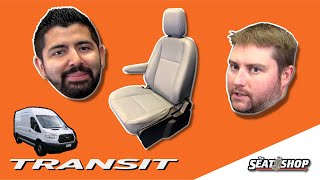
- Broken Driver's Seat Suspension Mat (Ford Transit TSB 23-2235) (Common) — On 2019-2021 Ford Transit vans, the plastic suspension mat under the driver's seat cushion breaks. This causes the seat to sag and severs an integrated sensor circuit, triggering B1407 alongside codes B1408 and B0001.
- Faulty Front Impact Sensor (Mitsubishi) (Common) — On Mitsubishi vehicles, B1407 specifically means 'Right Front Impact Sensor Voltage Error.' The sensor located near the front radiator support has failed or its wiring harness is compromised. 🎬 Watch: Mitsubishi front impact sensor voltage failure fix
- Failed Passenger Presence Detection (PPD) Sensor (Less Common) — On vehicles like the Hyundai Sonata, B1407 indicates a communication error with the PPD sensor mat in the passenger seat. This system detects passenger weight to enable the airbag; a failed mat triggers the code.
- Loose Airbag Fasteners (Ford Recall 20S48) (Rare) — Certain 2020 Ford Explorer and Lincoln Aviator vehicles have a factory defect where side airbag attachments were not properly tightened, affecting deployment and triggering circuit codes.
- Failed Restraints Control Module (RCM) (Very Rare) — The main airbag computer (RCM) rarely fails internally. Rule out all wiring, connectors, and sensors before condemning this expensive module.
Symptoms

- Airbag Warning Light On — The dashboard SRS light illuminates and stays on permanently, indicating an active fault.
- Passenger Airbag 'OFF' Light Illuminated — The 'Passenger Airbag OFF' indicator remains lit even when an adult occupies the passenger seat (common on Hyundai).
- Sagging Driver's Seat — Specific to Ford Transit models, the driver's seat cushion feels like a hammock due to a broken internal suspension mat. 🎬 See how to disassemble the Ford Transit seat for repairs
- Information Display Warning — The driver information center displays a 'Service Airbag System' message.
- Airbag System Disabled (scan-tool only — no driver-felt sign) — The RCM disables the SRS as a safety precaution. Airbags will not deploy in a crash.
Diagnostic Flowchart
Tap your situation to follow the diagnostic path that matches what you're seeing on this code.
Common Fixes & Costs
- Repair Under-Seat Wiring or Connector — Parts: $10-$35 (SRS pigtail or heat shrink), Labor: $150-$250, ~1.5 hr book time (Intermediate)
- Replace Side Airbag Connector and Module (Ford TSB 22-2190) — Parts: $310-$480, Labor: $300-$600, ~2.0 hr book time (Professional)
- Replace Driver's Seat Suspension Mat (Ford Transit TSB 23-2235) — Parts: $80-$120, Labor: $250-$350, ~2.0 hr book time (Professional)
- Replace Front Impact Sensor — Parts: $60-$120, Labor: $100-$200, ~1.0 hr book time (Intermediate)
- Tighten Airbag Fasteners (Recall 20S48) — Parts: $0, Labor: $0, ~0.5 hr book time (Professional)
Used vs. New Parts: Buying Guide
When a used part is worth it: Used parts are acceptable for non-pyrotechnic components like impact sensors or wiring pigtails, provided they come from a reputable auto recycler.
Donor-vehicle mileage cap: roughly under 100000 miles for the part to have meaningful remaining life.
Donor quality checklist:
- Verify the donor vehicle lacks flood or fire damage.
- Ensure sensor part numbers match exactly.
- NEVER install a used airbag module that has stored crash data.
Decision logic:
- If The part is a pyrotechnic device (airbag module, pretensioner). → Buy new OEM. The safety risk of a used part is too high.
- If The part is an external impact sensor. → A certified used OEM sensor is a cost-effective alternative.
- If The part is a wiring connector. → Buy new. Pigtails are inexpensive and guarantee clean contacts.
Warranty tradeoff: Used parts carry 30-90 day warranties. New OEM parts installed by a dealer carry a 12-month/12,000-mile warranty.
Worst-case if a used part fails: Severe injury or death if a used airbag module fails to deploy.
What Happens If You Wait — Timeline
- Immediate (0-1 day): The RCM detects the circuit fault. The airbag warning light illuminates, and the entire SRS is disabled. (MPG impact: 0%% · Added cost: $0)
- Ongoing: The vehicle remains mechanically drivable, but lacks critical safety systems. (MPG impact: 0%% · Added cost: $0)
- First state safety inspection: The vehicle automatically fails mandatory safety inspections, preventing registration renewal. (MPG impact: 0%% · Added cost: $50-$200 in failed inspection fees.)
- In case of a collision: Airbags fail to deploy. Insurers deny claims due to knowingly inoperative safety systems. (MPG impact: 0%% · Added cost: Thousands in uncovered medical and liability costs.)
Cost of Not Fixing It
- Immediate: Airbags and seatbelt pretensioners will not deploy in a collision, drastically increasing the risk of fatal injury. (Added cost: N/A)
- Ongoing: Automatic failure of mandatory state vehicle safety inspections, preventing registration renewal. (Added cost: $50-$200 in failed inspection fees and fines.)
- In Case of Accident: Insurance companies deny personal injury claims, arguing the vehicle's safety systems were knowingly inoperative. (Added cost: Thousands in uncovered medical bills and liability.)
Diagnosis Steps
- Read Fault Codes and Sub-Codes
Connect an SRS-capable scanner. Confirm B1407 and note sub-codes: :13 (Circuit Open), :11 (Short to Ground), :12 (Short to Battery), or :1A (Resistance Below Threshold).
Tools: Advanced OBD-II Scanner (Beginner) - Check TSBs and Recalls
Search your VIN for manufacturer bulletins. Ford TSB 22-2190 (Explorer/Aviator/Bronco) and TSB 23-2235 (Transit) dictate specific, mandatory repair procedures.
Tools: Internet access, VIN (Beginner) - Inspect Under-Seat Wiring
Visually inspect the yellow SRS connectors under the front seats. Look for stretched wires, disconnected plugs, or rodent chew marks. On a Ford Transit, check for a sagging driver's seat.
Tools: Flashlight (Beginner) - Depower SRS and Inspect Pins
CRITICAL: Disconnect the negative battery terminal and wait 30 minutes to discharge backup capacitors. Disconnect the yellow SRS plugs and inspect for green/white corrosion or bent pins.
Tools: Wrench set, Flashlight, Pin inspection tools (Intermediate) - Perform a Wiggle Test
With a live data scanner connected, gently wiggle the under-seat SRS harness. If the code status changes from 'Active' to 'Intermittent', the fault is in that specific wire section.
Tools: Advanced OBD-II Scanner (Intermediate) - Measure Circuit Resistance
DANGER: Never probe an airbag module directly. With the SRS depowered and the airbag disconnected, measure the harness resistance. A reading of infinity (O.L.) confirms an open circuit (:13).
Tools: Digital Multimeter, Wiring diagram (Advanced) - Test with an SRS Load Tool
Depower the SRS, disconnect the airbag, and plug a 2.0-3.5 ohm resistor into the harness. Repower and clear codes. If the code stays away, the airbag module is faulty. If it returns, the wiring is bad.
Tools: SRS Load Tool or 3-ohm Resistor (Advanced) - Swap Impact Sensors (Mitsubishi)
If diagnosing a front impact sensor, swap the right sensor with the identical left sensor. Clear codes. If code B1417 appears, the sensor is defective. If B1407 returns, the wiring is faulty.
Tools: Socket set (Intermediate)
When This Code Triggers (Freeze-Frame Conditions)
- System Voltage: 11.5-14.5V (Normal operating voltage at the time of fault detection.)
- Ignition Status: ON (The RCM detects the fault during the key-on self-test.)
- DTC Status: Current/Active (Confirms the hard fault is actively present.)
- Fault Type: Circuit Open (:13) (Specifies the exact electrical nature of the failure.)
Related Codes
- B1404 — The direct counterpart to B1407 for the driver's side. Addressed simultaneously in Ford TSB 22-2190.
- B1408 / B0001 — Companion codes on a Ford Transit. Seeing these alongside B1407 confirms a broken driver's seat suspension mat.
- B1407:13 — A sub-code meaning 'Circuit Open.' It strongly suggests a severed wire or disconnected plug.
- B1407:11 / :12 / :1A — Sub-codes indicating 'Short to Ground' (:11), 'Short to Battery' (:12), or 'Resistance Below Threshold' (:1A).
Climate & Environmental Factors
- High Humidity: Moisture penetrates sensitive SRS plugs, accelerating pin corrosion. This increases electrical resistance, triggering open/high resistance faults.
- Temperature Fluctuations: Repeated heating and cooling cycles cause wiring to expand and contract. Over time, this fatigues internal wire strands and backs pins out of connectors.
How to Talk to a Mechanic About This Code
Say this: "I have an airbag light on and my scanner shows code B1407. Please check for any related TSBs and inspect the wiring under the passenger seat before recommending any part replacement."
Directs the technician to the cheapest-to-fix causes first (wiring, TSBs) and prevents them from immediately quoting an expensive airbag module replacement.
Avoid saying:
- 'My airbag light is on, can you fix it?'
- 'Just do whatever it takes to turn the light off.'
- 'I don't know what's wrong, just look at it.'
Questions to ask before authorizing the repair:
- Did you find a broken wire or a bad connector?
- Is there a Technical Service Bulletin (TSB) for this issue on my vehicle?
- If a part needs replacement, how did you confirm the original part failed and the wiring is good?
- What is the warranty on this specific repair?
Where to Take It: Dealer vs Independent vs Chain
- Dealer:
Recommended for newer Fords with known TSBs. They guarantee a correct, by-the-book repair on a critical safety system.
Best for: Vehicles under warranty or active recall (e.g., Ford Recall 20S48)., Repairs covered by specific TSBs (like Ford TSB 22-2190)., Complex diagnostics requiring manufacturer-specific software.
Downsides: Highest labor rates and part costs., Inclined to replace entire assemblies rather than perform simple wiring repairs. (Typical cost: +50% vs. baseline) - Independent Shop:
Excellent fit if you vet the shop. An experienced independent technician fixes common wiring faults much cheaper than a dealer.
Best for: Out-of-warranty vehicles with common wiring issues., Getting a second opinion on a costly dealer quote.
Downsides: Must verify the shop has an ASE-certified technician experienced in SRS diagnostics. (Typical cost: +0% vs. baseline) - Chain Shop:
AVOID. Airbag system repair is a specialized safety task unsuited for quick-service chain shops.
Best for: Routine maintenance like oil changes and tires.
Downsides: Technicians lack training for complex electrical and SRS diagnostics., High pressure to upsell parts leads to misdiagnosis. (Typical cost: -10% vs. baseline)
When to Walk Away From the Repair
If the estimated repair cost exceeds 40-50% of the car's private-party value, consider replacing the vehicle.
- Car worth $4000, fix is $2200: Walk away. The repair cost exceeds 50% of the car's value.
- Car worth $15000, fix is $600: Fix it. The repair cost is low and restores a critical safety feature.
What Scan Tool You Need for This Code

Minimum: A scanner that reads and clears Supplemental Restraint System (SRS) codes. Basic engine-only readers will not work.
Standard $20 code readers cannot communicate with the Restraints Control Module. They show 'No Codes Found' even with the airbag light on.
Budget: Foxwell NT630 Plus (~$99) — Reads and clears SRS fault codes and shows live data. A solid entry-level tool for DIYers.
Mid-range: Innova 5610 (~$330) — Offers robust SRS diagnostics, live data, and bi-directional control to test components.
Professional: Autel MaxiCOM MK808BT (~$450-550) — Provides comprehensive all-system diagnostics, advanced SRS functions, and component testing with Bluetooth mobility.
Rent vs buy: Auto parts store loaner programs typically do not rent SRS-capable scanners due to liability. You must buy your own or visit a professional shop.
How to Clear the Code After You Fix It
- Ensure the physical wiring or sensor fault is fully repaired.
- Reconnect the negative battery terminal.
- Turn the ignition to the 'ON' position without starting the engine.
- Use an SRS-capable OBD-II scan tool to clear the codes from the RCM.
- Cycle the ignition off, wait 10 seconds, then turn it back on to confirm the airbag light stays off.
Drive cycle (~5 minutes): SRS codes do not require a drive cycle. The RCM performs a complete self-test at every key-on event. If repaired, the code clears immediately.
Readiness monitors affected: None
Watch out for:
- Using a basic engine scanner that cannot communicate with the SRS module.
- Assuming disconnecting the battery clears hard SRS codes (it does not).
- Failing to fix the root cause, causing the code to return instantly.
Will This Fail Emissions / State Inspection?
No — by itself this code doesn't fail OBD inspection (but it can keep readiness monitors from setting, which causes a separate fail).
- California: An airbag light does not fail a smog check, but technicians refuse to test unsafe vehicles, and dealers cannot legally sell them.
- New York: An illuminated airbag warning light is an automatic failure of the annual safety inspection.
- Virginia: Active airbag lights result in immediate safety inspection failure.
Most Commonly Affected Vehicles
- Ford Explorer (2020-2022) — Highly prone to faulty side airbag wiring connectors (TSB 22-2190) and loose fasteners (Recall 20S48).
- Lincoln Aviator (2020-2022) — Shares the Explorer platform and suffers the identical side airbag connector failure (TSB 22-2190).
- Ford Transit (2019-2021) — Known defect where the driver's seat suspension mat breaks, severing the sensor circuit (TSB 23-2235).
- Ford Bronco (2021-2022) — Affected by the side airbag connector issue detailed in TSB 22-2190.
- Ford Mondeo / Fusion (2015-2020) — Experiences broken airbag wiring under the passenger seat due to stress from seat movement.
- Hyundai Sonata (2004-2010) — B1407 indicates a 'PPD communication error,' pointing to a failed Passenger Presence Detection mat.
- Mitsubishi Lancer / Outlander (2008-2022) — B1407 is defined as 'Front Impact Sensor (RH) Voltage Error,' requiring front right sensor diagnosis.
- Ford EcoSport (2018-2022) — Prone to under-seat wiring issues, including documented rodent damage to the soy-based harness.
- Ford F-250 / F-350 Super Duty (2019-2023) — Tight wire routing causes pinched or broken under-seat connectors, triggering B1407 or B1404.
Manufacturer-Specific Notes

- General Motors / Jaguar / Land Rover: On these vehicles, B1407 is completely unrelated to airbags. It indicates a fault with the Engine Oil Level Sensor circuit. Look for a low oil warning on the dash.
- Mitsubishi: Mitsubishi consistently defines B1407 as a 'Front Impact Sensor (RH) Voltage Error.' Diagnosis must focus on the front bumper area, not the cabin.
- Hyundai: Hyundai issued a 15-year extended warranty for the Occupant Classification System (OCS) sensor mat in many 2006-2011 models, a primary cause of this code.
Real Owner Stories
2015 Ford Fusion with B1407:13
The airbag light stayed on permanently. A scan tool showed B1407:13, indicating an open circuit in the passenger side airbag.
Outcome: They found two wires in the yellow SRS harness broken internally near the main connector. The insulation looked intact, but the copper was severed. Splicing and heat-shrinking the wires permanently fixed the issue.
Lesson: For a B1407:13 'Circuit Open' fault, wires break internally from seat movement without visible external damage. Perform a wiggle test before replacing modules.
2020 Ford Transit with sagging driver's seat
The driver's seat physically sagged like a hammock, followed by the airbag warning light and code B1407.
Outcome: The owner purchased the official Ford repair kit to replace the broken plastic mat, restoring seat firmness and resolving the airbag code.
Lesson: On a 2019-2021 Ford Transit, a sagging driver's seat and code B1407 are directly linked. Fix the physical seat structure first.
Mitsubishi Outlander with B1407
A scan revealed code B1407, defined as 'Front Impact Sensor (RH) Voltage Error.'
Outcome: After clearing codes, the fault changed to B1417 (Left Sensor Error). This proved the original right-side sensor was defective. Installing a new sensor fixed the vehicle.
Lesson: Swapping identical parts from left to right is a powerful, free diagnostic technique to confirm a faulty sensor before buying parts.
How to Prevent This Code From Triggering
- Keep the area under front seats completely clear (Always) — Prevents items like water bottles from shifting and snagging the delicate SRS wiring harness.
- Be gentle when vacuuming under seats (During cleaning) — Aggressively shoving a vacuum nozzle dislodges connectors and damages fragile wires.
- Apply dielectric grease to SRS connectors (Once every few years) — Blocks moisture and prevents pin corrosion in high-humidity environments.
- Use rodent repellent measures (Seasonally) — Deters mice from chewing on the attractive soy-based wire insulation used in modern vehicles.
Frequently Asked Questions
Can I fix a B1407 code myself?
Yes, if the cause is a visibly broken wire and you have electrical repair experience. However, you MUST depower the SRS by disconnecting the battery and waiting 30 minutes before touching any yellow connectors. Stop DIY and hire a professional if the repair involves replacing an airbag module.
Will my insurance be void if I drive with the airbag light on?
It is highly likely. Insurance policies require vehicles to be roadworthy, and an active airbag light automatically fails safety inspections. Insurers often deny injury claims if they prove you knowingly drove with disabled safety systems.
My airbag light came on after I moved the seat. Did I cause it?
Yes, this is the most common trigger for code B1407. Moving the seat to extreme positions stretches or pinches the tightly routed SRS wiring harness underneath. This physical stress breaks the internal wires or unseats the connector, causing an open circuit.
What is the most common misdiagnosis for B1407?
The biggest mistake is immediately replacing the expensive Restraints Control Module (RCM) or airbag module. In 90% of cases, the fault is a simple broken wire or loose pin in the under-seat connector. Always perform a continuity test on the wiring harness first.
Will clearing the code with a scanner turn the light off?
No, clearing the code only extinguishes the light for a few seconds. The RCM performs a self-test every time you start the vehicle. It immediately detects the hard circuit fault and turns the warning light back on.
My car is a GM and has code B1407, but my airbag light isn't on. Why?
On General Motors vehicles, B1407 indicates a fault in the engine oil level sensor circuit, not the airbag system. Your primary symptom is a 'Low Oil Level' warning on the dashboard, even when the oil is full.
What does the ':13' mean after B1407?
The ':13' sub-code translates to 'Circuit Open.' It tells the technician the module detects infinite resistance, meaning a wire is completely cut or a plug is disconnected.
Key Takeaways
- Code B1407 disables your vehicle's entire airbag system, increasing the risk of fatal injury in a frontal crash by 29%.
- Inspect the yellow SRS wiring harness under the front passenger seat first, as broken wires from seat movement cause over 80% of B1407 faults.
- If you own a 2020-2022 Ford Explorer or Lincoln Aviator, check TSB 22-2190 to replace the known-faulty side airbag connector pigtail.
- Never probe an airbag connector with a multimeter while the battery is connected; always disconnect the negative terminal and wait 30 minutes to prevent accidental deployment.
Helpful Videos

The information in this article is provided for general reference and educational purposes only. Vehicle specifications, procedures, and part compatibility can vary by production date, trim level, and region. Always consult your vehicle's factory service manual and verify part numbers before purchasing or performing repairs. Safety-critical components such as airbags, seat belts, and braking systems should be installed by a qualified professional.
- 🎬 Helpful Videos
- What Does B1407 Mean?
- Can I Drive With B1407?
- Common Causes
- Symptoms
- Diagnostic Flowchart
- Common Fixes & Costs
- Used vs. New Parts: Buying Guide
- What Happens If You Wait — Timeline
- Cost of Not Fixing It
- Diagnosis Steps
- When This Code Triggers (Freeze-Frame Conditions)
- Related Codes
- Climate & Environmental Factors
- How to Talk to a Mechanic About This Code
- Where to Take It: Dealer vs Independent vs Chain
- When to Walk Away From the Repair
- What Scan Tool You Need for This Code
- How to Clear the Code After You Fix It
- Will This Fail Emissions / State Inspection?
- Most Commonly Affected Vehicles
- Manufacturer-Specific Notes
- Real Owner Stories
- 2015 Ford Fusion with B1407:13
- 2020 Ford Transit with sagging driver's seat
- Mitsubishi Outlander with B1407
- How to Prevent This Code From Triggering
- Frequently Asked Questions
- Can I fix a B1407 code myself?
- Will my insurance be void if I drive with the airbag light on?
- My airbag light came on after I moved the seat. Did I cause it?
- What is the most common misdiagnosis for B1407?
- Will clearing the code with a scanner turn the light off?
- My car is a GM and has code B1407, but my airbag light isn't on. Why?
- What does the ':13' mean after B1407?
- Key Takeaways
- 🎟️ Get 5% Off