

OBD-II Code B1381: A Comprehensive Guide for Professionals and DIYers
Beyond the Basics: Understanding B1381 Variations, Advanced Diagnosis, and Real-World Fixes
- Code B1381 definitions vary strictly by manufacturer: it indicates a disabled airbag on Hyundais, a power tailgate fault on Hondas, and a simple oil reset button failure on GM vehicles.
- Never attempt to diagnose a Hyundai B1381 code yourself; it disables the driver's side airbag and requires a professional $200-$400 clock spring replacement.
- For GM and Ford vehicles, test the $35-$85 oil reset switch for continuity before assuming the wiring or Body Control Module has failed.
- Do not confuse the automotive B1381 diagnostic code with the Chamberlain B1381 garage door opener during online searches.
- A basic $20 code reader cannot clear B1381; you must use an advanced OBD-II scanner capable of reading Body (B) and Supplemental Restraint System (SRS) codes.
What Does B1381 Mean?
Code B1381 most commonly means the Body Control Module (BCM) detects an open circuit at the oil change reset button. The computer expects a specific voltage signal when the button is pressed, but receives nothing. This happens when the button breaks, a wire is cut, a connector loosens, or a fuse blows.
Technical definition: The SAE/ISO definition for B1381 is "Oil Change Reset Button Circuit Open". The control module sends a reference voltage to the reset switch and monitors for a voltage drop or ground path when pressed. The absence of this signal change confirms a break in circuit continuity.
Can I Drive With B1381?
Yes, But With Caution. The answer depends entirely on the vehicle manufacturer. If the code refers to the oil reset button (GM/Ford), the vehicle is safe to drive, but you must track oil changes manually. On Hyundai models, this code indicates a critical airbag fault, meaning the vehicle is unsafe and requires immediate inspection. On Honda/Acura models, it points to a power tailgate fault, posing a minor hazard if the tailgate opens unexpectedly.
Common Causes
- Faulty Oil Change Reset Button (Very Common) — Internal button contacts wear out from repeated use or fail due to moisture, preventing the switch from completing the circuit when pressed.
- Damaged Wiring or Corroded Connectors (Common) — Wires leading to the control module chafe, break, or disconnect due to vibration. Exposure to moisture or road salt corrodes connector pins, creating high resistance that mimics an open circuit.
- Blown Instrument Panel Fuse (Less Common) — The reset button circuit shares a fuse with other instrument panel components. A blown fuse severs power to the entire circuit, instantly triggering the code.
- Poor Ground Connection (Less Common) — The circuit requires a solid ground to function. A corroded or loose ground wire creates an open circuit condition, stopping the signal path.
- Body Control Module (BCM) Failure or Software Glitch (Rare) — An internal failure in the BCM's driver circuitry or a software glitch causes it to falsely report an open circuit. This sometimes occurs after a battery disconnect.
Symptoms
- Maintenance Reminder Stays On and Cannot Be Reset — The oil life or 'maintenance required' message remains illuminated on the dashboard and ignores all attempts to reset it via the button or cluster menu.
- Reminder Resets Temporarily, Then Returns — The reminder appears to reset but returns during the next drive cycle because the control module never received a permanent reset signal.
- Check Engine Light or General Service Light Illuminates — Certain vehicles trigger a general service warning light or the Check Engine Light to alert the driver of the body code fault.
- Audible 'Service Required' Chime on Startup — The persistent maintenance reminder is accompanied by a recurring audible chime every time the vehicle starts.
Diagnostic Flowchart
Tap your situation to follow the diagnostic path that matches what you're seeing on this code.
Common Fixes & Costs
- Replace Oil Change Reset Button/Switch — Parts: $35-$85, Labor: $75-$150, ~1.0 hr book time (DIY)
- Repair Damaged Wiring or Clean Connectors — Parts: $5-$25, Labor: $100-$250, ~2.0 hr book time (Intermediate)
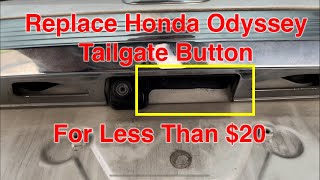
- Replace Power Tailgate Switch (Honda/Acura) — Parts: $35-$60, Labor: $100-$150, ~1.0 hr book time (Intermediate)
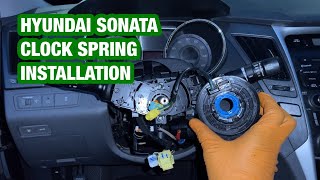
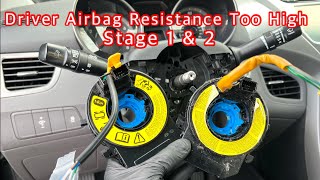
- Replace Airbag Clock Spring (Hyundai) — Parts: $50-$150, Labor: $150-$300, ~1.5 hr book time (Professional)
- Replace Blown Fuse — Parts: $1-$5, Labor: $0-$50, ~0.2 hr book time (DIY)
- Replace Body Control Module (BCM) — Parts: $200-$600, Labor: $150-$300, ~2.0 hr book time (Professional)
Used vs. New Parts: Buying Guide
When a used part is worth it: Used parts are not recommended for switches or clock springs, as they are wear items. A used power tailgate motor assembly from a low-mileage donor vehicle is a cost-effective alternative to a new $1,000+ unit.
Donor-vehicle mileage cap: roughly under 60000 miles for the part to have meaningful remaining life.
Donor quality checklist:
- NEVER buy a used clock spring. It is a critical safety part with an unknown history.
- Verify the donor vehicle was not scrapped due to electrical or flood damage.
- Match part numbers exactly to ensure smart key compatibility.
Decision logic:
- If The faulty part is a clock spring (Hyundai) → Always buy new OEM or premium aftermarket. The safety risk is not worth the savings.
- If The faulty part is a simple button or switch → Buy new. The $35 cost of a new part outweighs the hassle of a used switch failing.
- If The faulty part is a complete power tailgate motor assembly (Honda) → Buy a used assembly from a reputable recycler with a warranty to save hundreds of dollars.
Warranty tradeoff: Used parts carry a 30-90 day warranty. New aftermarket parts offer 1-year to lifetime warranties. New OEM parts carry a 1-year/12,000-mile warranty.
Worst-case if a used part fails: $300 if a used clock spring or tailgate motor fails, requiring repeat labor costs.
What Happens If You Wait — Timeline
- Immediate: For Hyundai Airbag Fault: The driver's airbag is immediately disabled. The safety risk is total and immediate. (MPG impact: 0%% · Added cost: $0 (Safety risk outweighs monetary cost))
- 0-1 month: For GM/Ford Oil Reset Fault: 'Change Oil Soon' message appears permanently. The driver must begin manually tracking mileage. (MPG impact: 0%% · Added cost: $0)
- 1-12 months: For GM/Ford Oil Reset Fault: If oil changes are forgotten, oil degrades, losing viscosity and increasing engine friction. (MPG impact: 1-2%% · Added cost: $50-$100 in wasted fuel)
- 12-24+ months: For GM/Ford Oil Reset Fault: Severely neglected oil turns into sludge, starving critical components of lubrication and destroying the engine. (MPG impact: 5-10%% · Added cost: $3,000-$8,500 for engine replacement.)
- 1-6+ months: For Honda Tailgate Fault: A faulty switch causes an intermittent parasitic battery drain, weakening the battery until it fails to start the car. (MPG impact: 0%% · Added cost: $150-$300 for a new battery.)
Cost of Not Fixing It
- Immediate (Hyundai Airbag Fault): CRITICAL SAFETY RISK: The driver's side airbag is disabled and will not deploy in a crash. Requires immediate professional attention. (Added cost: N/A (Safety risk outweighs monetary cost))
- Ongoing (GM/Ford Oil Reset Fault): You must manually track oil change intervals. Forgetting leads to engine sludge and accelerated internal wear. (Added cost: $3,000-$8,500 for engine replacement if oil changes are severely neglected.)
- Ongoing (Honda/Acura Tailgate Fault): Loss of power tailgate functionality. A malfunctioning switch causes a parasitic battery drain, killing the battery overnight. (Added cost: $150-$300 for a replacement battery damaged by parasitic drain.)
Diagnosis Steps
- Verify Code Definition by Manufacturer
Use an OBD-II scanner capable of reading Body ('B') codes. Confirm B1381 is present and check its exact definition for your specific vehicle. This is crucial: B1381 means an airbag fault on Hyundais and a tailgate fault on Hondas. Note any accompanying BCM or SRS codes.
Tools: Advanced OBD-II Scanner (Beginner) - [PRO TIP] Monitor Switch Status with a Scan Tool
Connect a professional scan tool, navigate to the BCM live data, and find the oil reset switch status. It should read 'Open'. Press the button; it should change to 'Closed'. If it does not change, the fault lies between the button and the BCM.
Tools: Advanced OBD-II Scanner with Live Data (Intermediate) - Visually Inspect Button, Connectors, and Wiring
Locate the reset button. Inspect for physical damage or spilled liquids. Trace the wiring harness, looking for pinched sections or chafing. Unplug the switch and inspect the connector pins for green corrosion or spread terminals.
Tools: Flashlight, Trim Removal Tools (Beginner) - Check the Associated Instrument Panel Fuse
Consult the owner's manual to locate the fuse powering the instrument panel or maintenance system. Pull the fuse and inspect the internal wire. A blown fuse indicates a short circuit that must be located.
Tools: Fuse Puller, Owner's Manual (Beginner) - Test the Reset Button for Continuity and Resistance
Disconnect the switch. Set a multimeter to Ohms (Ω). Measure across the switch's pins. It should read 'OL' (Open Loop). Press and hold the button; the reading must drop below 1.0 Ohm. Any higher reading indicates a faulty internal switch contact.
Tools: Digital Multimeter (Intermediate) - Test the Connector for Power and Ground
Turn the ignition on. Use a multimeter to test the wiring harness connector that plugs into the switch. Verify a reference voltage (typically 5V or 12V) on the power pin and a solid ground on the ground pin. Missing voltage points to a wiring break toward the BCM.
Tools: Digital Multimeter, Wiring Diagram (Intermediate) - Check for an Open in the Wiring
If the switch works but voltage is missing at the connector, test for continuity between the switch connector's signal pin and the corresponding pin at the BCM. An 'OL' reading confirms a broken wire in the harness.
Tools: Digital Multimeter, Wiring Diagram (Advanced) - Perform a Voltage Drop and Wiggle Test
Connect the multimeter to monitor continuity on the signal wire. Vigorously wiggle the wiring harness along its routing path. A fluctuating reading exposes an intermittent break. Perform a voltage drop test across the circuit to find hidden high resistance caused by internal wire corrosion.
Tools: Digital Multimeter (Advanced)
When This Code Triggers (Freeze-Frame Conditions)
- Module Voltage: 11.5-12.5V (Key On, Engine Off (KOEO) during BCM self-test.)
- Ignition Status: RUN (The code logs when the ignition turns on and the BCM checks its input circuits.)
- Odometer: Varies (The exact mileage at which the open circuit was first detected.)
- Button/Switch State: Open/Not Pressed (The BCM logs the fault when it sees a permanent open circuit during self-test or fails to detect a state change when a reset is attempted.)
Related Codes
- B1380 — Indicates a general 'Oil Change Reset Button Circuit Failure'. B1381 is more specific, pointing directly to an open circuit.
- B1379 — Indicates 'Oil Change Reset Button Circuit Short To Ground'. This is the electrical opposite of B1381's open circuit.
- B1382 — Indicates 'Oil Change Reset Button Circuit Short To Battery', meaning the signal wire is improperly touching a power source.
- P0316 — On Ford vehicles, a B1381-15 code pairs with P0316 to indicate a startup misfire, shifting diagnosis entirely to engine health.
Climate & Environmental Factors
- High Humidity and Spills: Moisture from humidity or spilled beverages seeps into dash switches, corroding internal contacts and creating the open circuit that triggers B1381.
- Freezing Temperatures: Cold weather causes switch materials to contract and freezes trapped moisture, preventing internal contacts from connecting. This is a documented issue with Honda tailgate switches.
- Road Salt: Salt spray penetrates lower chassis and tailgate wiring harnesses, accelerating corrosion that makes wires brittle enough to snap.
How to Talk to a Mechanic About This Code
Say this: "I have a B1381 code on my [Make]. Based on my research, this code has different meanings. For my vehicle, it points to a problem with the [Airbag System / Power Tailgate / Oil Reset Button]. Please start the diagnosis there."
This proves you are an informed customer and directs the mechanic to the correct system, preventing them from misdiagnosing a critical airbag fault as a simple oil reset issue.
Avoid saying:
- 'My service light is on, can you check it?' (Invites a broad, expensive diagnostic search).
- 'Just fix the B1381 code.' (Causes them to replace the wrong part if they don't know the specific manufacturer definition).
- 'I think it's the oil reset button.' (Do not suggest a fix unless you are certain; let them diagnose the specific system).
Questions to ask before authorizing the repair:
- For a Hyundai: Did you confirm the fault is in the SRS system? What specific resistance fault did you find?
- For a Honda: Did you test the tailgate release switch for continuity before condemning the motor?
- For a GM/Ford: Did you use a scan tool to verify the BCM is receiving the button press signal?
- Can you show me the faulty part?
- What is the warranty on this specific repair?
Where to Take It: Dealer vs Independent vs Chain
- Dealer:
Recommended strictly for the Hyundai airbag fault due to safety liability. For other variants, use an independent shop.
Best for: Hyundai vehicles with an airbag light (safety-critical)., Vehicles under warranty., Complex Body Control Module (BCM) programming.
Downsides: Highest labor rates., May default to replacing an entire expensive assembly instead of a smaller component. (Typical cost: +50% vs. baseline) - Independent Shop:
Best overall fit for GM and Honda variants. They easily handle faulty switches or broken wires for a much lower cost than a dealer.
Best for: GM/Ford oil reset button faults., Honda/Acura power tailgate issues., Out-of-warranty vehicles.
Downsides: Quality varies; ensure they are ASE certified for electrical systems., May lack proprietary tools for complex BCM programming. (Typical cost: +0% vs. baseline) - Chain Shop:
AVOID. B1381 requires specific diagnostic capabilities beyond the scope of most chain shops.
Best for: Simple maintenance like oil changes or tires.
Downsides: Technician skill varies dramatically., Not equipped to diagnose B-codes, SRS, or BCM faults. (Typical cost: -10% vs. baseline)
When to Walk Away From the Repair
If the estimated repair cost exceeds 50% of your car's private-party value, seriously consider walking away.
- Car worth $3500, fix is $2200: Walk Away. A $2,200 repair for a Hyundai airbag on a $3,500 car is not economical.
- Car worth $8000, fix is $900: Fix It. A $900 repair for a Honda power tailgate motor on an $8,000 vehicle is a reasonable investment.
- Car worth $5000, fix is $150: Fix It. A $150 repair for an oil reset button on a $5,000 truck easily removes a major annoyance.
What Scan Tool You Need for This Code
Minimum: A scanner capable of reading and clearing Body (B-codes) and Supplemental Restraint System (SRS) codes.
A $20 code reader only reads powertrain (P-codes) and cannot see B1381. You need a tool that communicates with the BCM and SRS modules.
Budget: BlueDriver Pro (~$120) — Reads and clears B-codes and SRS codes for major brands. Displays live data to verify if a button press registers.
Mid-range: Foxwell NT510 Elite (~$180) — Provides OE-level diagnostics for BCM and SRS systems. Performs active bi-directional tests on switches and components.
Professional: Autel MaxiCOM MK808 (~$500) — Full-system scanner offering extensive diagnostic capabilities and service functions like clock spring calibration.
Rent vs buy: Auto parts stores do NOT rent scanners with B-code or SRS capabilities. You must buy a capable scanner or visit a professional shop.
How to Clear the Code After You Fix It
- Reconnect the battery if disconnected during repair.
- Use an advanced OBD-II scan tool to clear the B-code from the Body Control Module.
- Perform the vehicle's specific manual oil reset procedure to confirm the fix.
- Cycle the ignition off and on to ensure the code does not immediately return.
Drive cycle (~15 minutes): A full drive cycle is not required for B-codes. A simple key cycle forces the BCM to re-run its self-test. A short 15-minute drive confirms all interior systems function normally.
Readiness monitors affected: B-codes do not affect emissions readiness monitors., Disconnecting the battery to clear the code will reset all emissions monitors to 'Not Ready'.
Before emissions retest: drive at least 100 miles to fully set monitors.
Watch out for:
- Using a basic P-code scanner that cannot communicate with the BCM.
- Assuming disconnecting the battery clears the code from the BCM's non-volatile memory.
- Clearing the code without fixing the broken wire, causing it to return instantly.
Will This Fail Emissions / State Inspection?
No — by itself this code doesn't fail OBD inspection (but it can keep readiness monitors from setting, which causes a separate fail).
- California: A B-code will not fail a Smog Check. The inspection focuses strictly on powertrain (P-codes) and the Check Engine Light.
- New York: An oil light or tailgate fault passes inspection. If B1381 triggers an airbag warning light (Hyundai), it is noted as an advisory but is NOT a cause for rejection in NYS.
- Texas: Emissions inspections ignore B-codes. However, the separate safety inspection fails any vehicle with an illuminated airbag warning light (Hyundai).
Most Commonly Affected Vehicles
- General Motors Silverado, Sierra, Tahoe (2000-2024) — Uses the standard 'Oil Reset Button Circuit Open' definition. Complex manual reset procedures often lead to false codes if performed incorrectly.
- Ford Mustang, Expedition (2000-2024) — A B1381-15 variant indicates a 'Left Front Door Handle Proximity Sensor' failure or 'Misfire Detected On Startup', completely unrelated to the oil reset.
- Hyundai Tucson, Genesis (2005-2015) — CRITICAL: Defined as 'DRIVER SIDE AIRBAG RESISTANCE CIRCUIT SHORT TO BATTERY'. This disables the airbag and requires immediate professional repair.
- Honda Odyssey, Pilot, CR-V (2008-2017) — Defined as 'Tailgate Closer Unit Release Switch Circuit Malfunction'. The failure is usually the exterior release switch, not the expensive closer motor.
- Acura MDX, RDX (2010-2020) — Shares the Honda power tailgate definition. Diagnosis must focus on the tailgate latch and release switch wiring.
- Suzuki Grand Vitara, SX4 (2000-2012) — Defined as 'Device Voltage Reference Output Circuit Short to Ground', pointing to a 5-volt reference issue affecting multiple sensors.
- Mazda Various (2000-2024) — Rarely reported. If encountered, the definition is manufacturer-specific and requires a high-level scan tool to interpret accurately.
- Jaguar / Land Rover Various (2010-2024) — Not a standard code. Diagnosis requires proprietary JLR SDD or Pathfinder software to determine the specific module fault.
Manufacturer-Specific Notes
- Hyundai: B1381 indicates 'DRIVER SIDE AIRBAG RESISTANCE CIRCUIT SHORT TO BATTERY'. This disables the airbag system. Misdiagnosing this as a simple button issue poses a severe safety risk.
- Honda / Acura: B1381 means 'Power Tailgate Closer Unit Release Switch Circuit Malfunction'. Honda issued TSB 16-063 for CR-V and Odyssey models where this switch fails specifically in cold weather.
- Ford: Ford uses multiple definitions. A B1381-15 variant means 'Misfire Detected On Startup' or 'Door Handle Proximity Sensor' failure. The suffix dictates the entire diagnostic path.
- General Motors: The Oil Life Monitor relies on specific manual reset procedures (e.g., three gas pedal presses in five seconds). Failing to execute this perfectly mimics a circuit fault. Always retry the reset procedure before replacing parts.
Real Owner Stories
2011 Honda Odyssey with 130K miles
The power tailgate refused to open with the remote or exterior handle. Code B1381 was present.
What they tried:
- Initially suspected a failed tailgate motor, a $1,000+ repair.
- Tested continuity on the tailgate closer unit release switch using a multimeter.
- Found the switch had an internal open circuit.
Outcome: Replaced only the faulty release switch for $50. The owner completed the repair themselves, saving over $1,000 compared to a full motor replacement.
Lesson: On Hondas, B1381 points specifically to the release switch circuit. Diagnose the $50 switch before assuming the expensive motor assembly has failed.
2007 Chevrolet Silverado with 180K miles
The 'Change Engine Oil' message remained on despite performing the manual gas pedal reset procedure.
What they tried:
- Repeated the reset procedure multiple times; the cluster confirmed 'OIL LIFE RESET' but the message returned instantly.
- Used a basic scanner, which only provided manual reset instructions.
- Considered replacing the entire instrument panel cluster.
Outcome: Learned that older GM clusters occasionally suffer internal software glitches that refuse to reset. The owner chose to live with the light and track oil changes manually to avoid a $500 cluster replacement.
Lesson: If the GM reset procedure confirms success but the light returns instantly, and the switch tests good, the fault lies within the instrument cluster software.
2008 Hyundai Tucson with airbag light on
The airbag warning light illuminated. A scan revealed code B1381, confusing the owner who found 'oil reset' definitions online.
What they tried:
- Searched online and found generic definitions.
- Consulted a model-specific service manual, revealing the true airbag definition.
Outcome: Took the vehicle to a professional. Diagnosis confirmed a 'DRIVER SIDE AIRBAG RESISTANCE CIRCUIT SHORT TO BATTERY'. The shop replaced the steering column clock spring for $350, restoring the airbag system.
Lesson: Never assume a code's meaning. On Hyundais, B1381 indicates a disabled airbag. Verify manufacturer-specific definitions before attempting repairs.
How to Prevent This Code From Triggering
- Apply dielectric grease to electrical connectors (During any repair involving connectors) — Dielectric grease seals out moisture and oxygen, preventing the pin corrosion that causes open circuits.
- Use switches and buttons gently (Daily habit) — Avoiding excessive force reduces wear on internal springs and contact points, prolonging switch life.
- Clean interior spills immediately (As needed) — Liquids seeping into dash switches cause immediate shorts or long-term corrosion that destroys the circuit.
- Follow exact manufacturer reset procedures (After every oil change) — Failing to execute manual reset sequences perfectly mimics a circuit fault, leading to unnecessary diagnostic work.
- Inspect and clean tailgate connectors (Every 2-3 years) — Connectors exposed to road salt and vibration are prone to failure. Cleaning removes early corrosion before it breaks the circuit.
Frequently Asked Questions
What are the most common misdiagnosis mistakes with B1381?
The biggest mistake is assuming B1381 always means an oil reset button problem. On a Honda, a technician wastes hours on the dash when the fault is in the power tailgate. Misdiagnosing a Hyundai with this code is dangerous, as it points to a critical airbag system failure.
I searched for B1381 and found results for a Chamberlain garage door opener. What's the connection?
There is absolutely no connection. The Chamberlain B1381 is a model number for a popular garage door opener. Disregard all search results related to garage doors when diagnosing your vehicle.
What's the difference between an 'open circuit' (B1381) and a 'short circuit' (B1379/B1382)?
An 'open circuit' is like a cut in a garden hose where electricity cannot reach the end. A 'short circuit' is like the hose springing a leak and spraying electricity where it shouldn't go, often hitting metal or another power wire. B1381 specifically means there is a physical break somewhere in the wire's path.
My scanner shows B1381-15 on my Ford. Is that the same as a B1381?
No, it is completely different. The '-15' suffix on a Ford indicates a 'Door Handle Proximity Sensor' failure or a 'Misfire Detected On Startup'. You must diagnose the problem based on the full code and its specific suffix definition.
Can I just ignore code B1381?
If you confirm it relates to the oil reset button, you can ignore it and track your oil changes manually. However, if your vehicle is a Hyundai where the code means an airbag fault, it must be repaired immediately. Ignoring an airbag fault leaves the system disabled during a crash.
Why can't I just reset the light with a scanner?
You can clear the code with a scanner, but it returns immediately on the next key cycle because the underlying open circuit still exists. You must fix the physical break to keep the light off permanently.
Where is the oil reset button located?
The location varies greatly by vehicle. On older cars, it is a small button in the fuse box or under the dashboard. On post-2007 cars, it is integrated into the instrument cluster menus and controlled by steering wheel buttons.
Is this an expensive repair?
For the common oil reset button fault, repairs typically cost under $200 for a new switch or wire repair. It becomes expensive when the code points to a Honda tailgate motor ($1,000+) or a Hyundai airbag clock spring ($300+).
Key Takeaways
- Code B1381 definitions vary strictly by manufacturer: it indicates a disabled airbag on Hyundais, a power tailgate fault on Hondas, and a simple oil reset button failure on GM vehicles.
- Never attempt to diagnose a Hyundai B1381 code yourself; it disables the driver's side airbag and requires a professional $200-$400 clock spring replacement.
- For GM and Ford vehicles, test the $35-$85 oil reset switch for continuity before assuming the wiring or Body Control Module has failed.
- Do not confuse the automotive B1381 diagnostic code with the Chamberlain B1381 garage door opener during online searches.
- A basic $20 code reader cannot clear B1381; you must use an advanced OBD-II scanner capable of reading Body (B) and Supplemental Restraint System (SRS) codes.
Helpful Videos

The information in this article is provided for general reference and educational purposes only. Vehicle specifications, procedures, and part compatibility can vary by production date, trim level, and region. Always consult your vehicle's factory service manual and verify part numbers before purchasing or performing repairs. Safety-critical components such as airbags, seat belts, and braking systems should be installed by a qualified professional.
- 🎬 Helpful Videos
- What Does B1381 Mean?
- Can I Drive With B1381?
- Common Causes
- Symptoms
- Diagnostic Flowchart
- Common Fixes & Costs
- Used vs. New Parts: Buying Guide
- What Happens If You Wait — Timeline
- Cost of Not Fixing It
- Diagnosis Steps
- When This Code Triggers (Freeze-Frame Conditions)
- Related Codes
- Climate & Environmental Factors
- How to Talk to a Mechanic About This Code
- Where to Take It: Dealer vs Independent vs Chain
- When to Walk Away From the Repair
- What Scan Tool You Need for This Code
- How to Clear the Code After You Fix It
- Will This Fail Emissions / State Inspection?
- Most Commonly Affected Vehicles
- Manufacturer-Specific Notes
- Real Owner Stories
- 2011 Honda Odyssey with 130K miles
- 2007 Chevrolet Silverado with 180K miles
- 2008 Hyundai Tucson with airbag light on
- How to Prevent This Code From Triggering
- Frequently Asked Questions
- What are the most common misdiagnosis mistakes with B1381?
- I searched for B1381 and found results for a Chamberlain garage door opener. What's the connection?
- What's the difference between an 'open circuit' (B1381) and a 'short circuit' (B1379/B1382)?
- My scanner shows B1381-15 on my Ford. Is that the same as a B1381?
- Can I just ignore code B1381?
- Why can't I just reset the light with a scanner?
- Where is the oil reset button located?
- Is this an expensive repair?
- Key Takeaways
- 🎟️ Get 5% Off