

OBD-II Code B1380: Accessory Power Circuit Malfunction
What B1380 means, why it triggers, and how to fix it
- B1380 indicates a fault in the wiring that powers an accessory, rather than a failure of the accessory itself.
- On GM trucks and SUVs, B1380 frequently triggers a 'no-start' condition instantly fixed by replacing a blown 2-amp or 5-amp 'DLIS' fuse.
- Over 80% of complex B1380 codes stem from a wiring harness rubbing against a sharp metal edge or corroding from water intrusion.
- Manufacturer definitions vary wildly: B1380 disables the ignition on a Chevy, disables the driver's airbag on a Kia, and breaks the power tailgate on a Honda.
What Does B1380 Mean?

B1380 means the Body Control Module (BCM) has detected an electrical problem in a circuit that powers an accessory. This circuit is active when the key is in the 'ACC' or 'ON' position. The problem is almost always a short circuit (a wire touching metal or another wire) or an open circuit (a broken wire).
Technical definition: On General Motors vehicles, B1380 means 'Device Ignition Accessory Circuit Short to Battery or Ground'. However, the definition varies wildly by manufacturer, referring to a power tailgate on a Honda, a side airbag circuit on a Kia, or a radiator fan relay on a Ford.
Can I Drive With B1380?
Yes, But With Caution. Drivability depends entirely on the manufacturer. On GM vehicles, you risk a sudden no-start condition that leaves you stranded. On Kia and Hyundai models, driving is NOT recommended because B1380 indicates a disabled driver's side airbag. On a Honda Odyssey, the fault isolates to the power tailgate and does not affect driving safety.
Common Causes

- Blown Fuse (Very Common) — A short circuit in the accessory's wiring causes the protective fuse to blow. In many GM no-start cases, a small 2-amp or 5-amp fuse (often labeled 'DLIS' or 'Power Mode') in the under-hood fuse block is the sole culprit.
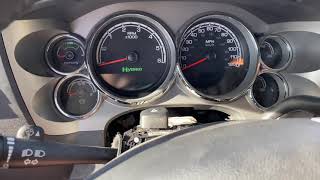
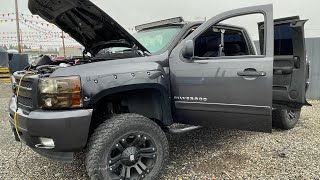
- Damaged or Chafed Wiring Harness (Very Common) — Wires rub against sharp metal edges on the vehicle's body, wearing through the insulation and causing a short circuit. This is a known issue on GM SUVs where a harness chafes on a floor stud, and on Chevy Express vans where wiring under the driver's floor mat breaks from foot traffic. 🎬 Watch: Diagnosing a Chevy Express no-start with code B1380.
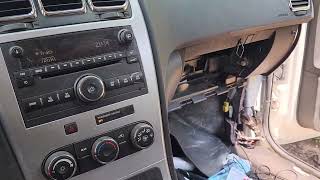
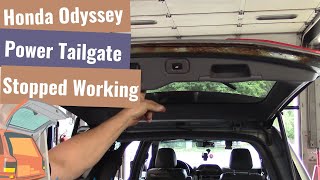
- Water Intrusion and Corrosion (Common) — Water leaking into the cabin or engine bay seeps into connectors and fuse boxes, causing corrosion and short circuits. On Honda Odysseys, water intrusion directly shorts the power tailgate control module. 🎬 Watch: Troubleshooting a Honda Odyssey power tailgate that won't open.
- Improperly Installed Aftermarket Accessories (Common) — Aftermarket radios, alarms, or remote starters tap into ignition and accessory circuits. Poor connections or incorrect wiring introduce shorts. A GM technical service bulletin specifically advises removing these devices when diagnosing a B1380 no-start.
- Faulty Ignition Switch (Less Common) — The ignition switch sends signals to the BCM about the key's position. An internally worn ignition switch sends incorrect voltage signals, forcing the BCM to set a B1380 code.
- Faulty Accessory Component (Less Common) — The component the circuit powers (like a radio or climate control unit) fails internally, creating a short circuit that triggers the code.
- Faulty Body Control Module (BCM) (Rare) — The BCM monitors and controls the accessory circuits. The BCM itself occasionally fails, sending a false B1380 code. This is a last-resort diagnosis; GM warns against premature BCM replacement for this code.
Symptoms

- No Crank / No Start — On Chevrolet and GMC models, this code ties directly to the ignition and anti-theft systems, completely preventing the engine from cranking.
- Accessory Malfunction — A specific accessory stops working entirely, such as the radio, power windows, power tailgate, or climate controls.
- Security Light On — If the fault interrupts the anti-theft system's power feed, the dashboard security light stays illuminated, accompanying a no-start condition.
- Intermittent Stalling or Electrical Issues — The vehicle stalls while driving over bumps, or dashboard lights flicker as a chafed wire makes and loses contact with the chassis.
Diagnostic Flowchart
Tap your situation to follow the diagnostic path that matches what you're seeing on this code.
Common Fixes & Costs
- Replacing a Blown Fuse — Parts: $1-$5, Labor: $0-$75, ~0.1 hr book time (DIY)
- Repairing Damaged Wiring — Parts: $5-$20, Labor: $200-$800, ~2.0 hr book time (Intermediate)
- Removing or Repairing Aftermarket Wiring — Parts: $0-$15, Labor: $100-$400, ~1.5 hr book time (Intermediate)
- Replacing the Ignition Switch
— Parts: $60-$250, Labor: $100-$300, ~1.5 hr book time
(Intermediate)
: OEM
: OEM - Replacing the Body Control Module (BCM)
— Parts: $400-$800, Labor: $150-$300, ~2.5 hr book time
(Professional)
: OEM
DIY vs Professional
- Replacing a Blown Fuse — Beginner: True
- Repairing Damaged Wiring — Beginner: False
- Replacing the Ignition Switch — Beginner: False
- Replacing the Body Control Module (BCM) — Beginner: False
Used vs. New Parts: Buying Guide
When a used part is worth it: A used ignition switch from a low-mileage donor vehicle is a reliable, cost-effective choice for older cars. Do not buy a used BCM unless you have confirmed a local shop can program it to your VIN.
Donor-vehicle mileage cap: roughly under 100000 miles for the part to have meaningful remaining life.
Donor quality checklist:
- For a BCM, match the part number exactly. Even a slight variation leads to incompatibility.
- Ensure the seller offers a return policy, as used electronic parts have a high failure rate.
Decision logic:
- If The part is a simple electrical switch (ignition switch) and the vehicle is over 10 years old. → Buy a used part from a reputable salvage yard to save money.
- If The part is a complex electronic module like a BCM. → Buy new or professionally remanufactured to avoid programming nightmares.
- If The new aftermarket part is under $100. → Buy new to get a warranty and avoid premature failure.
Warranty tradeoff: Used parts come with a 30-90 day warranty covering only the part. New aftermarket parts offer 1-year to lifetime warranties.
Worst-case if a used part fails: $300-$600
What Happens If You Wait — Timeline
- 0-1 month: An intermittent fault begins. An accessory occasionally fails, or a GM vehicle has a rare no-crank event that resolves itself. (MPG impact: 0%% · Added cost: $0)
- 1-4 months: The fault becomes frequent. The accessory fails more often than it works. A persistent short causes the related fuse to blow repeatedly. (MPG impact: 0%% · Added cost: $5-$20)
- 4-8 months: The circuit fails completely. The accessory is dead. On a GM vehicle, the no-start condition is permanent, immobilizing the vehicle. (MPG impact: 0%% · Added cost: $100-$250)
- 8+ months: A persistent short circuit overheats, melting insulation on adjacent wires and permanently damaging the driver circuit inside the Body Control Module (BCM). (MPG impact: 0%% · Added cost: $800-$1500)
Cost of Not Fixing It
- Immediate: If the fault causes a no-start condition, the vehicle is immobilized, leading to towing costs. If it affects a Kia/Hyundai airbag, it poses an immediate safety risk. (Added cost: $100-$250)
- Weeks to Months: Ignoring an intermittent short circuit weakens other wires in the same harness, causing unrelated electrical gremlins and repeatedly blown fuses. (Added cost: $20-$50)
- 6+ Months: A persistent short circuit overheats and damages the internal driver circuits of the Body Control Module (BCM), turning a simple wiring repair into a costly module replacement. (Added cost: $500-$1200)
Diagnosis Steps

- Inspect the Fuses
Locate the fuse box and find the fuse related to the malfunctioning accessory. On GM vehicles with a no-start, check the small 2A or 5A fuses in the under-hood fuse box labeled 'DLIS' or 'Power Mode'. Visually inspect them and use a multimeter to test for continuity.
Tools: Owner's Manual, Multimeter (Beginner) - Check for Other Codes
Use an OBD-II scanner to read all codes. B1380 often appears with U0140 (loss of communication with BCM) or B1370 (ignition circuit fault). Fixing the B1380 wiring issue usually clears the communication codes automatically.
Tools: OBD-II Scanner (Beginner) - Visual Wiring Inspection
Inspect the wiring harness going to the faulty component. Look for chafe points where the harness passes through the firewall or runs under the carpet. On GM SUVs, check the harness on the right front floor pan. On Chevy vans, pull back the driver's side floor mat and inspect the harness near the brake pedal.
Tools: Flashlight, Trim Removal Tools (Intermediate) - Perform the 'Wiggle Test'
With the key in the 'ON' position, gently wiggle the key in the ignition. If the symptom appears or disappears, the ignition switch is worn. Next, flex sections of the suspect wiring harness. If wiggling a harness triggers the fault, you have pinpointed the break.
Tools: None (Intermediate) - Test Power and Ground at the Component
Unplug the electrical connector at the faulty accessory. Use a multimeter set to DC volts to check for battery voltage at the power pin with the key 'ON'. Switch to the Ohms setting and test the ground pin against the vehicle chassis; it must read under 1 Ohm.
Tools: Multimeter, Wiring Diagram (Intermediate) - Perform a Voltage Drop Test
Reconnect the component and turn it on. Place the multimeter's positive lead on the positive battery terminal and the negative lead on the power pin at the component's connector. A reading above 0.5 volts indicates excessive resistance in the power circuit.
Tools: Multimeter, Back-probe Kit (Advanced) - Review Scan Tool Power Mode Data
On GM vehicles, use an advanced scan tool to view 'Power Mode' data in the BCM. Compare the status of the 'Accessory' and 'Run/Crank' signals to the manufacturer's chart for each key position. An incorrect state points directly to the faulty circuit.
Tools: Advanced OBD-II Scanner, Service Manual (Advanced) - Test the Ignition Switch
Access the ignition switch connector. Use a multimeter to verify the switch sends the correct voltage signals on the accessory circuit in each key position, following the manufacturer's specific voltage chart.
Tools: Multimeter, Wiring Diagram, Trim Removal Tools (Advanced) - Advanced Circuit Resistance Checks
Disconnect the BCM and ignition switch. Test for resistance on the accessory voltage circuit between the BCM connector and the ignition switch connector. The reading must be less than 1.0 ohm. High resistance indicates a wiring problem requiring harness repair.
Tools: Multimeter, Service Manual, Wiring Diagram (Advanced)
When This Code Triggers (Freeze-Frame Conditions)
- Ignition Status: RUN or START (The BCM continuously monitors the accessory circuit when the key is in the RUN or START position.)
- System Voltage: 11-14 Volts (The fault is detected during normal vehicle operation with a healthy battery and charging system.)
- Time Delay: > 2 seconds (The BCM sets the code after detecting the circuit is open or shorted for a continuous period of 2 seconds or more.)
Related Codes
- U0140 — Means 'Lost Communication With Body Control Module'. If B1380 and U0140 appear together, the wiring fault from B1380 is cutting power to the BCM. Fix the B1380 circuit first to resolve both codes.
- B1370 — Means 'Device Ignition 1 Circuit Malfunction'. If B1370 and B1380 set together on a GM vehicle, the problem is almost certainly a failed ignition switch or a shared power/ground connection to the switch.
- B1440 — Means 'Power Mode Master Input Circuits Mismatch'. When present with B1380, it strongly indicates the ignition switch has failed internally, sending illogical combinations of signals to the BCM.
Climate & Environmental Factors
- Water Intrusion and High Humidity: Moisture seeps into worn seals, connectors, and fuse boxes, causing the corrosion and short circuits that trigger B1380. Symptoms appear more frequently on damp mornings or after heavy rainstorms.
- Winter Conditions and Road Salt: Salty brine splashes onto the undercarriage and seeps into wiring harnesses. This highly corrosive mixture accelerates wire degradation, leading directly to the failures seen on vehicles like the Chevy Express van.
How to Talk to a Mechanic About This Code
Say this: "I have a B1380 code on my vehicle causing a no-start condition. I'd like to authorize one hour of diagnostic time to trace the accessory circuit and check the 5-amp fuses before we discuss replacing expensive modules like the BCM."
This directs the mechanic to the most cost-effective solutions first and prevents a shop from immediately quoting a costly BCM replacement without proper electrical testing.
Avoid saying:
- 'Just fix whatever's wrong'
- 'My car is acting weird, can you look at it?'
- 'I think I need a new BCM'
Questions to ask before authorizing the repair:
- What were the results of the electrical tests on the accessory circuit? Did you find a short or an open?
- Have you checked for any Technical Service Bulletins (TSBs) related to code B1380 for this specific model?
- If you recommend a BCM replacement, can you show me the test results proving the wiring and fuses are good?
Where to Take It: Dealer vs Independent vs Chain
- Dealer:
Recommended for warranty work, known TSBs (like Kia's airbag issue), or if a BCM replacement is absolutely necessary.
Best for: Vehicles under warranty, Manufacturer-specific issues like a Kia airbag fault covered by an extended warranty., Complex jobs requiring BCM replacement and proprietary programming.
Downsides: Higher labor rates., May replace an entire expensive harness rather than repair a specific broken wire. (Typical cost: +50% vs. baseline) - Independent Shop:
Best fit for most out-of-warranty B1380 issues, provided you choose a shop with strong electrical diagnostic capabilities.
Best for: Out-of-warranty vehicles with known wiring or ignition switch issues., Diagnosing and repairing specific wiring faults cost-effectively.
Downsides: Success depends entirely on finding a technician skilled in electrical diagnostics., May lack the software to program a new BCM. (Typical cost: +0% vs. baseline) - Chain Shop:
AVOID for diagnosing a B1380 code. The complexity of this fault is a poor match for the chain shop model.
Best for: Simple maintenance like oil changes or tires.
Downsides: Technician skill for complex electrical diagnosis is highly variable., High risk of misdiagnosis (e.g., selling a BCM when the fault is a $5 fuse). (Typical cost: -10% vs. baseline)
When to Walk Away From the Repair
If the estimated repair cost exceeds 50% of the car's private-party value, sell or trade it in instead of repairing it.
- Car worth $3500, fix is $1400: Walk away. The repair cost is 40% of the car's value. For an older vehicle, this is too high a risk.
- Car worth $10000, fix is $750: Fix it. The repair cost is only 7.5% of the vehicle's value.
- Car worth $2000, fix is $1500: Walk away. The repair cost is 75% of the car's value. It makes no financial sense to proceed.
What Scan Tool You Need for This Code
Minimum: An OBD-II reader that can read and clear codes from the Body Control Module (BCM). Basic $20 scanners only read engine codes.
A basic code reader cannot connect to the BCM, leaving you unaware that the B1380 code exists. You need a tool that displays live BCM data.
Budget: BlueDriver Pro Scan Tool (~$100) — Connects via Bluetooth to read and clear BCM codes. It displays live data, crucial for watching ignition switch signals change as you turn the key.
Mid-range: Foxwell NT510 Elite (~$180) — Reads detailed BCM data streams (like GM's 'Power Mode') and includes bi-directional controls to test components directly.
Professional: Autel MaxiCOM MK808S (~$450) — Provides full-system diagnostics, extensive bi-directional controls, and graphs live data from multiple sensors to easily spot the faulty circuit.
Rent vs buy: Auto parts store loaner tools often cannot read BCM codes. Buying a tool like the BlueDriver is a necessary investment for this diagnosis.
How to Clear the Code After You Fix It
- Perform the necessary wiring, fuse, or component replacement.
- Reconnect the vehicle battery if it was disconnected.
- Use an OBD-II scan tool to clear the Diagnostic Trouble Codes (DTCs) from the Body Control Module (BCM).
- Start the vehicle and verify that the original symptom is gone and the code does not immediately return.
Drive cycle (~15 minutes): Cycle the key from OFF to ACC to ON and start the vehicle. Operate the affected accessory. Drive for 10-15 minutes to allow the vehicle to experience normal vibration, confirming an intermittent wiring fault is truly fixed.
Readiness monitors affected: Not applicable for B-codes
Watch out for:
- Disconnecting the battery clears the code from memory but does not fix the underlying electrical issue; the code returns immediately.
- Clearing the code without fixing the root cause leaves GM vehicles immobilized in a no-start condition.
Will This Fail Emissions / State Inspection?
No — by itself this code doesn't fail OBD inspection (but it can keep readiness monitors from setting, which causes a separate fail).
- California: A B-code like B1380 will not cause a smog check failure, as inspections focus on P-codes. It only fails if the fault also triggers the Check Engine Light.
- New York: If B1380 is accompanied by an illuminated Airbag or ABS light, it fails the safety portion of the state inspection.
- Texas: A B1380 code alone will not cause an emissions failure unless it triggers the Check Engine Light.
Most Commonly Affected Vehicles
- Chevrolet, GMC Silverado, Sierra (2007-2014) — These trucks frequently experience B1380 due to faults in the ignition switch accessory circuit or a blown 2-amp/5-amp 'DLIS' fuse, causing a no-start condition.
- GMC, Buick, Chevrolet Acadia, Enclave, Traverse (2008-2012) — GM TSB PIT4946A identifies a common issue where a wiring harness chafes on a stud on the right front floor pan, causing B1380 and various electrical failures.
- Chevrolet Express (2008-2012) — The wiring harness running under the driver's side floor mat corrodes and breaks from moisture and foot traffic, causing a no-start and a B1380 code.
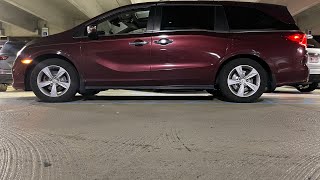
- Honda Odyssey (2011-2017) — B1380 specifically points to a 'Tailgate Closer Unit Neutral Switch Circuit Malfunction'. The issue is almost always water intrusion damaging the tailgate control module.
- Kia Optima (2019-2020) — TSB WTY036 addresses B1380 as a 'Side Airbag Front Driver Resistance Circuit Short to Ground'. Kia extended the warranty for this specific repair to 15 years/unlimited miles.
Manufacturer-Specific Notes

- General Motors (Chevrolet, GMC, Buick, Cadillac): GM consistently uses B1380 to indicate a fault in the accessory power circuit. It is frequently linked to known wiring harness chafe points or blown 5-amp fuses that cause a complete no-start condition.
- Honda / Acura: Honda assigns B1380 to specific component circuits. On an Odyssey, it indicates a failure in the power tailgate system, usually caused by water leaking onto the control module.
- Hyundai / Kia: B1380 indicates a short to ground in the driver-side airbag circuit, making it a critical safety issue. Kia issued an extended warranty for this specific high-resistance connector fault.
- Ford / Lincoln: Ford uses B1380 for varied issues, ranging from a fault in the low-speed radiator fan relay circuit to a problem with the alternator L-terminal circuit.
Real Owner Stories
2011 Chevy Silverado 1500 with a no-start and security light.
The truck would not crank, and the security lock icon was illuminated. The owner replaced the ignition switch, but the problem persisted.
What they tried:
- Attempted the 10-minute security relearn procedure.
- Replaced the ignition switch based on code B1380-06.
Outcome: The owner eventually found a blown 5-amp fuse labeled 'DLIS' in the under-hood fuse box. Replacing this $1 fuse resolved the no-start condition instantly.
Lesson: On GM trucks with a B1380 no-start, always check the small 2A or 5A fuses in the engine bay before replacing expensive components.
2008 Chevy Express Van with an intermittent no-crank.
The van intermittently refused to crank. A mechanic had already tried replacing fuse boxes without success.
What they tried:
- Replaced fuse boxes.
- Traced a loss of power on the red/white wire at the theft deterrent module.
Outcome: A technician found the wire corroded and broken under the driver's side floor mat, right where the driver's foot rests. Repairing the single broken wire fixed the van.
Lesson: For Chevy Express vans, pull back the driver's floor mat and inspect the wiring harness for damage before suspecting major components.
2020 Honda Odyssey with a dead power tailgate.
After a water leak from the third-row seatbelt area, the power tailgate completely stopped working via all buttons.
What they tried:
- Opened the tailgate manually from the inside.
- Removed the driver's side rear trim panel to access the Power Tailgate Control Unit.
Outcome: The control unit showed heavy corrosion from water intrusion. Replacing the unit restored the power tailgate function.
Lesson: On Honda Odysseys, B1380 is frequently caused by water leaking onto the control module behind the driver's side rear trim.
How to Prevent This Code From Triggering
- Protect Vulnerable Wiring Harnesses (During any repair or accessory installation) — Many B1380 faults come from wires rubbing on sharp metal. Secure harnesses away from edges or wrap them with high-temperature cloth harness tape.
- Keep Water Drains Clear (Annually, especially in the fall) — Clogged sunroof and cowl drains cause water to overflow into the cabin, destroying electronics and causing the corrosion that triggers B1380.
- Ensure Proper Installation of Aftermarket Accessories (Whenever installing new electronics) — Never use low-quality 'T-tap' connectors. Always run a separate fused circuit, or solder and heat-shrink any required wire taps.
- Regularly Clean the Undercarriage (Seasonally, especially after winter) — Washing road salt off the underbody prevents the corrosive brine from destroying wiring harnesses and ground straps.
Frequently Asked Questions
Can I fix a B1380 code myself?
Yes, if the cause is a simple blown fuse. However, finding and repairing a short in a wiring harness requires a multimeter and electrical diagnostic skills. Stop DIY and visit a professional if the repair requires replacing and programming the Body Control Module (BCM).
What are common mistakes when diagnosing B1380?
The most common mistake is replacing the expensive Body Control Module (BCM) when the true cause is a blown 2-amp fuse. Another pitfall is failing to check for poorly installed aftermarket accessories. Always rule out wiring shorts and aftermarket alarms before condemning the BCM.
My car won't start and the security light is on with code B1380. Is it my key?
No, it is usually not the key. The BCM uses the accessory power circuit to confirm the ignition is on before checking the key's transponder. A wiring fault blocks this signal, causing the BCM to enable the security system and prevent starting.
If I replace the fuse and it blows again, what does that mean?
A repeatedly blowing fuse indicates a persistent short circuit. A power wire is directly touching a ground point on the car's frame or another wire. You must locate and repair the damaged wire to fix the problem permanently.
Why would an accessory circuit problem stop my car from starting?
Modern Body Control Modules (BCMs) require an accessory power signal from the ignition switch to verify the key position. If a wiring fault interrupts this signal, the BCM's logic prevents it from sending the 'start' command to the starter relay. This immobilizes the vehicle to prevent theft or electrical damage.
Is B1380 a serious problem?
Severity depends entirely on the manufacturer. It is a minor annoyance if it only affects a radio, but a major issue if it causes a GM no-start condition. On Kia and Hyundai models, it indicates a disabled airbag and is a critical safety hazard.
My mechanic wants to replace the BCM for B1380. What should I do?
Ask the mechanic to confirm they checked all 2-amp and 5-amp fuses and performed a thorough inspection of the ignition switch wiring. GM specifically warns against replacing the BCM for this code before ruling out these cheaper causes. If they haven't done electrical testing, get a second opinion.
My scanner shows B1380-01 or B1380-06. What do the extra numbers mean?
These are failure type bytes that pinpoint the exact electrical fault. For example, '-01' means 'Short to Battery', while '-06' means 'Short to Ground or Open'. This extra detail helps technicians narrow down the diagnosis immediately.
Key Takeaways
- B1380 indicates a fault in the wiring that powers an accessory, rather than a failure of the accessory itself.
- On GM trucks and SUVs, B1380 frequently triggers a 'no-start' condition instantly fixed by replacing a blown 2-amp or 5-amp 'DLIS' fuse.
- Over 80% of complex B1380 codes stem from a wiring harness rubbing against a sharp metal edge or corroding from water intrusion.
- Manufacturer definitions vary wildly: B1380 disables the ignition on a Chevy, disables the driver's airbag on a Kia, and breaks the power tailgate on a Honda.
Helpful Videos


The information in this article is provided for general reference and educational purposes only. Vehicle specifications, procedures, and part compatibility can vary by production date, trim level, and region. Always consult your vehicle's factory service manual and verify part numbers before purchasing or performing repairs. Safety-critical components such as airbags, seat belts, and braking systems should be installed by a qualified professional.
- 🎬 Helpful Videos
- What Does B1380 Mean?
- Can I Drive With B1380?
- Common Causes
- Symptoms
- Diagnostic Flowchart
- Common Fixes & Costs
- DIY vs Professional
- Used vs. New Parts: Buying Guide
- What Happens If You Wait — Timeline
- Cost of Not Fixing It
- Diagnosis Steps
- When This Code Triggers (Freeze-Frame Conditions)
- Related Codes
- Climate & Environmental Factors
- How to Talk to a Mechanic About This Code
- Where to Take It: Dealer vs Independent vs Chain
- When to Walk Away From the Repair
- What Scan Tool You Need for This Code
- How to Clear the Code After You Fix It
- Will This Fail Emissions / State Inspection?
- Most Commonly Affected Vehicles
- Manufacturer-Specific Notes
- Real Owner Stories
- 2011 Chevy Silverado 1500 with a no-start and security light.
- 2008 Chevy Express Van with an intermittent no-crank.
- 2020 Honda Odyssey with a dead power tailgate.
- How to Prevent This Code From Triggering
- Frequently Asked Questions
- Can I fix a B1380 code myself?
- What are common mistakes when diagnosing B1380?
- My car won't start and the security light is on with code B1380. Is it my key?
- If I replace the fuse and it blows again, what does that mean?
- Why would an accessory circuit problem stop my car from starting?
- Is B1380 a serious problem?
- My mechanic wants to replace the BCM for B1380. What should I do?
- My scanner shows B1380-01 or B1380-06. What do the extra numbers mean?
- Key Takeaways
- 🎟️ Get 5% Off