

B1379 on 2005-2008 Suzuki Forenza: Airbag Light and Passenger Seat Sensor Fault
On a 2005-2008 Suzuki Forenza, code B1379 almost always means the passenger seat occupant sensor mat has failed. This is a known issue covered by Suzuki TSB #SUZ_013175. The fix is to replace the sensor, which is part of the seat cushion assembly. Aftermarket emulators exist as a cheaper alternative, but they permanently enable the passenger airbag.
- Code B1379 on a 2005-2008 Suzuki Forenza points directly to a faulty passenger seat weight sensor (OCS mat).
- This is a critical safety issue, as it disables the passenger airbag's decision-making process.
- The repair involves replacing the entire passenger seat bottom cushion, a job best left to a professional due to the complexities of the SRS system and the need for post-repair calibration.
- This was a known issue acknowledged by Suzuki with a TSB and warranty extension; while the extension is likely expired, it confirms the nature of the problem.
- Aftermarket bypass emulators are a common, cheaper alternative but permanently enable the passenger airbag, which has significant safety trade-offs.
What's Unique About the 2005-2008 Suzuki FORENZA
The Suzuki Forenza and its sibling, the Reno, are known for issues with the passenger seat sensor mat. The problem was so widespread that Suzuki issued a Technical Service Bulletin (TSB SUZ_013175) and a special warranty extension (coded 'ZH') specifically to address DTC B1379, among others. This isn't a random failure; it's a documented pattern of the sensor mat breaking down from normal use over time. Owners report the issue starting intermittently before becoming a constant warning light.
Diagnostic Flowchart
Tap your situation to follow the diagnostic path that matches what you're seeing on this vehicle.
Symptoms You May Notice
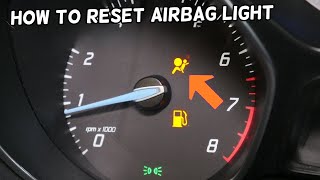
- Airbag warning light is illuminated on the instrument cluster.
- The 'PASS AIR BAG OFF' or similar passenger airbag status indicator may behave incorrectly (e.g., stay off when a light object is in the seat, or stay on with an adult passenger).
- In some cases, the airbag light may initially be intermittent, turning off if a passenger shifts their weight in the seat, but it eventually stays on permanently.
- Replacing the main SRS control module without first diagnosing the seat sensor.
- Attempting to clear the code without fixing the underlying hardware fault. SRS codes are 'hard codes' and the light will return immediately if the fault persists.
- Replacing the seat cushion but failing to perform the necessary zero-point calibration, causing the light to remain on.
Most Likely Causes
- Failed Passenger Occupant Classification System (OCS) Sensor Mat 🔴 High Probability The sensor mat, embedded in the seat cushion, is prone to developing electrical open circuits from the repeated flexing caused by a passenger sitting down and getting up. This was a known defect acknowledged by Suzuki through a warranty extension. Many owners of the Forenza and its platform-mate, the Reno, have reported this exact failure.
How to confirm: A professional scan tool capable of reading Suzuki-specific SRS codes is needed to confirm B1379. The diagnostic procedure then involves testing the sensor's wiring and connector before condemning the sensor mat itself. Live data on the scan tool can show if the sensor is registering weight changes.
Typical fix: Replace the entire passenger seat bottom cushion assembly, which contains the new, integrated sensor mat. After installation, the system requires a 'zero point calibration' with a compatible scan tool.
Est. part cost: $200-$500
Rare But Worth Checking
- Damaged Wiring or Connectors: Before replacing the seat cushion, always inspect the wiring harness under the passenger seat. Items stored under the seat or kicked by rear passengers can damage the 3-pin sensor connector or wires, causing the same code. The connector is typically white with white, red, and brown wires.
- Faulty SRS Control Module: This is extremely rare and very expensive to replace. The SRS module should only be considered as the cause after the sensor mat and all related wiring have been thoroughly tested and ruled out.
Diagnosis Steps
- Confirm the presence of code B1379 using a scan tool that can read Suzuki SRS (airbag) system codes.
- Visually inspect the wiring and connectors under the front passenger seat for any obvious damage, corrosion, or loose connections. Pay close attention to the 3-pin connector for the OCS mat.
- Disconnect the battery before proceeding with any SRS component testing or replacement.
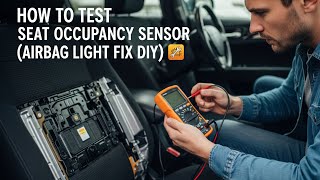
- Follow the specific diagnostic test procedure in the Suzuki Forenza factory service manual to test the OCS sensor mat. This may involve checking resistance values at the sensor connector. 🎬 Watch: How to test the seat occupancy sensor yourself.
- If using an advanced scan tool, check the live data for the OCS system to see if it responds to weight being placed on and removed from the passenger seat.
- If the wiring is intact and the sensor mat fails the diagnostic tests, it is faulty and needs replacement.
- After replacement, the new sensor MUST be calibrated using a Suzuki-compatible scan tool (a function often called 'Zero Point Calibration' or 'Seat Weight Sensor Rezero'). This step is critical for the system to work correctly.
Parts You'll Likely Need
- Passenger Seat Cushion Assembly with OCS Sensor
(OEM #85501-85Z00)— This is the primary failure point for code B1379. The sensor is integrated into the seat cushion foam and is not typically sold separately by the OEM. This part number has been widely discontinued.
Trusted brands: Suzuki (OEM)
OEM price range: $300-$600
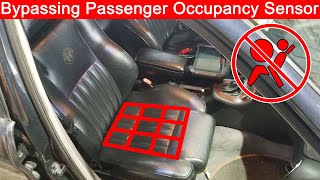
Aftermarket price range: $200-$400 - OCS Sensor Emulator/Bypass Module — Due to the high cost and discontinuation of the OEM seat cushion, many owners opt for an aftermarket emulator. This device plugs into the OCS sensor connector and tricks the SRS module into thinking an adult is always seated, thus keeping the passenger airbag permanently active. 🎬 See this walkthrough for installing a seat sensor emulator. This is a non-standard repair and carries safety implications, as the airbag will deploy in a crash even if the seat is empty or occupied by a child.
Trusted brands: Airbag360
Aftermarket price range: $50-$100
Technical Service Bulletins (TSBs) & Recalls
- SUZ_013175: A manufacturer TSB that extends warranty coverage for repairs related to DTC B1379 on 2005-2008 Suzuki Forenza and Reno vehicles.
Platform-Specific Known Issues
- Suzuki issued Technical Service Bulletin #SUZ_013175, which added DTC B1379 to a special warranty extension program (ZH) for 2005-2008 Forenza and Reno models due to the high failure rate of the passenger seat sensor. While this warranty is long expired, it serves as official acknowledgment of the defect.
- A recall for a similar OCS sensor mat failure was issued for other Suzuki models like the Grand Vitara and SX4, but not the Forenza/Reno, despite owners reporting identical problems.
Mechanic-Grade Diagnostic Values
- OCS Sensor Mat Resistance (Simulated) — expected: ~2.3k Ohms (simulating an 80kg / 176lb person). Failure: An open circuit (infinite resistance) or a reading that does not change with weight are indicators of a failed mat. This value is for DIY diagnostic purposes only.
Scan Tool Commands That Help
- Suzuki SDT-II / compatible aftermarket (e.g., Autel, Snap-on): Zero Point Calibration — This function must be performed after replacing the passenger seat cushion/OCS sensor. It sets the baseline 'empty seat' value for the system.
- Suzuki SDT-II / compatible aftermarket (e.g., Autel, Snap-on): Sensitivity Check — Performed after the Zero Point Calibration to verify the sensor correctly detects weight. This typically requires using a set of specified weights (e.g., 66 lbs) to confirm the sensor reading is within the expected range.
Wiring & Ground Locations
- OCS Sensor Connector — Under the front passenger seat.. This is the main connection point for the faulty sensor. It's a 3-pin connector, typically white, with Red, Brown, and White wires. Checking for damage or corrosion here is a critical first step.
- G201 — Left side of the dash.. This is a primary interior ground point. While not exclusively for the SRS system, a poor connection here could potentially cause erratic behavior in various interior modules, including the SRS controller.
- G104 — Lower right side of the engine.. This is a major chassis ground. A compromised ground here can lead to widespread electrical issues, although it's a less likely cause for a specific code like B1379.
Helpful Videos
We Have This Part in Stock

The information in this article is provided for general reference and educational purposes only. Vehicle specifications, procedures, and part compatibility can vary by production date, trim level, and region. Always consult your vehicle's factory service manual and verify part numbers before purchasing or performing repairs. Safety-critical components such as airbags, seat belts, and braking systems should be installed by a qualified professional.
- Suzuki FORENZA:
- 🎬 Helpful Videos
- 🛍️ Shop This Part
- What's Unique About the 2005-2008 Suzuki FORENZA
- Diagnostic Flowchart
- Symptoms You May Notice
- Most Likely Causes
- Rare But Worth Checking
- Diagnosis Steps
- Parts You'll Likely Need
- Technical Service Bulletins (TSBs) & Recalls
- Platform-Specific Known Issues
- Mechanic-Grade Diagnostic Values
- Scan Tool Commands That Help
- Wiring & Ground Locations
- 🎟️ Get 5% Off