

OBD-II Code B1378: Side Airbag Resistance Too High
The Ultimate 2026 Guide to Diagnosing and Fixing B1378
- Code B1378 instantly disables your driver's side airbag, leaving you unprotected in a side-impact collision.
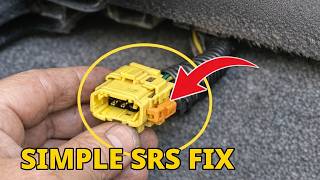
- Over 80% of B1378 faults stem from a loose or bumped yellow electrical connector located directly under the driver's seat.
- Always disconnect the negative battery terminal and wait 30 minutes before touching SRS wiring to prevent accidental airbag deployment.
- Hyundai, Kia, and Chevrolet Aveo models are highly susceptible to this code due to known wiring harness vulnerabilities.
- B1378 is a 'hard code' that requires an SRS-capable OBD-II scanner to clear; the dashboard light will never turn off on its own.
What Does B1378 Mean?

B1378 indicates the Supplemental Restraint System Control Module (SRSCM) detected abnormally high electrical resistance in the driver's side airbag circuit. The system logs this as a 'hard code,' instantly illuminating the airbag warning light and deactivating the driver's side airbag to prevent unpredictable deployment.
Technical definition: Side Airbag Front-Driver Resistance too High. The SRSCM detected resistance in the driver's side airbag squib circuit above the manufacturer's specified threshold. Normal operating resistance for a squib is 1.5Ω to 3.5Ω. On most vehicles, this code sets when resistance equals or exceeds 5.75Ω for more than 4 seconds.
Can I Drive With B1378?
Yes, But With Caution. You can drive the car, but the driver's side airbag is deactivated and has a 100% chance of failing to deploy in a side-impact collision. The risk is entirely to occupant safety, not mechanical function. Limit driving to transit to a repair shop.
Common Causes

- Loose or disconnected under-seat electrical connector (Very Common) — The yellow connector under the driver's seat frequently becomes unplugged due to items stored under the seat, vacuuming, aggressive seat adjustments, or rear passengers kicking the wires.
- Corroded connector pins or damaged wiring harness (Common) — Moisture corrodes the connector pins, or the thin wires leading to the connector stretch and break from repeated seat movement, creating high electrical resistance.
- Internal shorting bar failure in connector (Less Common) — Airbag connectors contain a shorting bar to prevent static discharge when unplugged. If this bar fails to retract properly when plugged in, it introduces resistance issues requiring connector replacement.
- Faulty side airbag module (squib) (Less Common) — The pyrotechnic airbag unit inside the seat bolster (squib) fails internally over time, developing high resistance and requiring full assembly replacement.
- Previous improper repair (Rare) — If the seat was previously removed and the connector was not securely locked, it vibrates loose. Improper wire splicing during a past repair also introduces high resistance.
- Faulty Airbag Control Module (SRSCM) (Rare) — The main computer controlling the airbag system fails and incorrectly reports a resistance issue. This is diagnosed only after ruling out all wiring and connector faults.
Symptoms

- Airbag warning light is on — The primary symptom. The light stays illuminated on the dashboard permanently while the fault exists.
- Failed vehicle safety inspection — Vehicles automatically fail mandatory state safety inspections if the airbag warning light is illuminated.
- Warning message on instrument cluster — Modern vehicles display text messages such as 'Check Airbag System' or 'SRS Service Required'.
- Driver's side airbag is disabled (scan-tool only — no driver-felt sign) — The SRSCM deactivates the side airbag to prevent accidental deployment, compromising vehicle safety.
Diagnostic Flowchart

Tap your situation to follow the diagnostic path that matches what you're seeing on this code.
Common Fixes & Costs
- Reconnect and secure under-seat connector — Parts: $0-$5, Labor: $100-$200, ~1.0 hr book time (DIY)
- Install manufacturer connector repair kit — Parts: $25-$75, Labor: $150-$300, ~1.5 hr book time (Intermediate)
- Repair damaged wiring harness — Parts: $10-$50, Labor: $125-$250, ~1.5 hr book time (Intermediate)
- Replace side airbag assembly (in seat) — Parts: $500-$1300, Labor: $150-$300, ~2.0 hr book time (Professional)
- Replace Airbag Control Module (SRSCM) — Parts: $600-$1200, Labor: $150-$300, ~1.5 hr book time (Professional)
Used vs. New Parts: Buying Guide
When a used part is worth it: Used OEM connector pigtails from a salvage yard are cost-effective alternatives to new dealer parts. Never buy used airbag modules.
Donor-vehicle mileage cap: roughly under 100000 miles for the part to have meaningful remaining life.
Donor quality checklist:
- Ensure used connectors have zero corrosion and intact locking tabs.
- NEVER buy a used airbag (squib). It is dangerous, often illegal to ship, and its history is unknown.
Decision logic:
- If The part is the airbag pyrotechnic squib/module itself. → Always buy new from the manufacturer. Never use a salvaged part.
- If The part is the Airbag Control Module (SRSCM). → Have your original module professionally reset. If replacement is necessary, buy new OEM to avoid costly dealer VIN programming.
- If The part is a connector pigtail. → A new aftermarket pigtail or a clean, used OEM pigtail from a salvage yard are both acceptable.
Warranty tradeoff: Used salvage parts carry 30-90 day warranties. New aftermarket parts carry 1-year warranties. New OEM parts carry the manufacturer's 1-year warranty.
Worst-case if a used part fails: $200-$400 if an improperly repaired connector fails, requiring repeat diagnosis and labor.
What Happens If You Wait — Timeline
- Immediately: The SRSCM detects high resistance, logs code B1378, illuminates the airbag warning light, and disables the driver's side airbag. (MPG impact: 0%% · Added cost: $0 (Safety risk is the immediate consequence))
- 0-12 months: The vehicle automatically fails its annual safety inspection in states that mandate them, preventing registration renewal. (MPG impact: 0%% · Added cost: $150-$300 (Cost for diagnosis and connector repair to pass inspection))
- 6-24 months: Repeated movement of a loose connection causes fretting corrosion on the pins or wire fatigue. A simple reseat repair escalates into a mandatory connector replacement. (MPG impact: 0%% · Added cost: $200-$400 (Cost of splicing a new connector pigtail))
- Long-term: The driver ignores the permanent airbag light. If a second, unrelated SRS fault occurs (e.g., passenger airbag failure), the driver receives no new warning. (MPG impact: 0%% · Added cost: N/A (Compounded safety risks))
Cost of Not Fixing It
- Immediately: The driver's side airbag is deactivated and will not deploy in a side-impact collision. (Added cost: N/A (Safety Risk))
- Next state inspection: The vehicle automatically fails the safety portion of state inspections (e.g., NY, VA, PA), preventing legal registration renewal. (Added cost: $150-$1500 (Cost of required repair to pass inspection))
- Long-term: Ignoring the warning light masks new, unrelated SRS faults that occur later, as the warning light is already illuminated. (Added cost: N/A (Compounded Safety Risk))
Diagnosis Steps
- Check for Technical Service Bulletins (TSBs)
Manufacturers frequently release bulletins for this code. Check for TSBs related to your specific vehicle before proceeding, as they often dictate a specific connector repair kit.
Tools: Smartphone or computer (Beginner) - Perform a Visual Inspection
Look under the driver's seat for loose objects that bumped the wiring. Check for obviously disconnected or damaged wires leading to the bright yellow airbag connector.
Tools: Flashlight (Beginner) - Disconnect the Battery (CRITICAL SAFETY STEP)
Before touching any airbag wiring, disconnect the negative terminal of the 12V battery and wait exactly 30 minutes. This discharges the system's backup capacitors, preventing accidental airbag deployment.
Tools: 10mm wrench or socket (Beginner) - Inspect and Reseat the Connector
Unplug the yellow connector under the driver's seat. Inspect the pins for corrosion. Clean with electrical contact cleaner if dirty. Plug it back in firmly until it clicks, ensuring the locking tab engages.
Tools: Electrical contact cleaner, dielectric grease (Intermediate) - Reconnect Battery and Clear Codes
Reconnect the battery terminal. Use an OBD-II scanner with SRS capabilities to clear the B1378 code. Start the car to confirm the airbag light turns off. Stop DIY and go to a shop if the light returns.
Tools: OBD-II scanner (with SRS function) (Intermediate) - Analyze Live SRS Data (Professional Step)
Navigate to the live data stream for 'Driver Side Airbag Resistance'. Normal reading is 1.5Ω - 3.5Ω. A reading of 'Open' or > 5.0Ω confirms a hard fault in the wiring or module.
Tools: Professional OBD-II scanner (with SRS live data) (Advanced) - Isolate the Fault with a Dummy Resistor (Professional Step)
Disconnect the battery and unplug the side airbag connector. Insert a 2.0Ω - 2.5Ω airbag diagnostic resistor into the vehicle-side harness. Reconnect the battery and clear the code. If the code clears, the seat's airbag module is faulty. If it remains, the wiring to the SRSCM is damaged.
Tools: Airbag dummy resistor set (2.0-3.0Ω) (Advanced) - Test Circuit Resistance (Professional Step)
Never probe an airbag module directly with a multimeter. With the airbag and SRSCM disconnected, measure the resistance of the wiring harness from the seat to the SRSCM. Resistance > 1.0Ω indicates a damaged wire requiring repair.
Tools: High-impedance multimeter, vehicle wiring diagrams (Advanced)
When This Code Triggers (Freeze-Frame Conditions)
- System State: Ignition ON (The SRSCM performs a continuous self-test and resistance check on all airbag circuits whenever the ignition is in the 'ON' or 'RUN' position.)
- Fault Detection Time: Continuous (The SRSCM constantly monitors circuit integrity. A high resistance reading exceeding the threshold for just 4 seconds sets the code.)
- Battery Voltage: 9-16 Volts (The SRSCM requires stable voltage. Voltage drops below 9V during engine cranking occasionally trigger false resistance codes.)
- Code Type: Active / Hard Code (B1378 stores as an active, hard code. The airbag warning light remains illuminated until the fault is repaired and manually cleared with a scan tool.)
Related Codes
- B1382 — Identical fault ('Resistance Too High') for the passenger's side front side-airbag. If both appear together, both under-seat connectors were likely knocked loose simultaneously.
- B1379 — Indicates 'Side Airbag Front-Driver Resistance Too Low' (a short circuit). B1378 points to a broken wire or loose plug, while B1379 points to wires touching each other or ground.
- B1380 / B1381 — Indicates a short in the driver's side airbag circuit to Ground (B1380) or Battery (B1381). Requires inspecting the harness for damaged insulation touching the chassis.
- B1448 — Occupant Classification System (OCS) sensor fault. If paired with B1378, it points to severe wiring damage under both front seats.
Climate & Environmental Factors
- High Humidity and Moisture: Moisture penetrates connector seals over time, corroding the electrical pins. This corrosion increases resistance, directly causing a B1378 fault.
- Extreme Temperature Cycles: Repeated heating and cooling causes plastic connectors to expand and contract, eventually loosening pin tension and creating an intermittent connection.
How to Talk to a Mechanic About This Code
Say this: "My airbag light is on, and my scanner shows code B1378 for high resistance in the driver's side airbag. Based on my research, the most common cause is the yellow connector under the driver's seat. Please start the diagnosis by inspecting that connector's integrity and wiring before quoting expensive module replacements."
This directs the technician to the most likely and cheapest fix first, preventing them from immediately quoting an expensive airbag module replacement. It establishes a logical diagnostic path.
Avoid saying:
- 'My airbag light is on, can you just fix it?'
- 'I think I need a new airbag.'
- 'Just do whatever it takes to turn the light off.'
Questions to ask before authorizing the repair:
- Did you check the under-seat connector and wiring first? What did you find?
- Does this require a simple reseat, or do you need to splice in a pigtail repair kit?
- If you recommend an airbag module replacement, how did you rule out the wiring harness as the cause?
- Will you provide a written estimate breaking down parts and labor before beginning work?
Where to Take It: Dealer vs Independent vs Chain
- Dealer:
Ideal if a TSB applies or module programming is required, but unnecessarily expensive for a simple connector reseat.
Best for: Vehicles under warranty., Cases where a known Technical Service Bulletin (TSB) applies., Complex diagnostics requiring module replacement and VIN-specific programming.
Downsides: Highest labor rates., Often defaults to replacing entire seat assemblies rather than performing simple wiring repairs. (Typical cost: +50% vs. baseline) - Independent Shop:
Best fit for most B1378 scenarios. An experienced independent mechanic quickly identifies and fixes connector issues for a reasonable price.
Best for: Out-of-warranty vehicles., Diagnosing and fixing common connector and wiring faults., Cost-effective labor rates.
Downsides: May lack the proprietary tools to program a new SRSCM if one is ultimately needed. (Typical cost: +0% vs. baseline) - Chain Shop:
Avoid for B1378 diagnosis. They are generally unequipped to troubleshoot and repair critical pyrotechnic safety systems.
Best for: Simple maintenance like oil changes or tires.
Downsides: Technician skill with complex SRS systems is highly inconsistent., Lacks advanced diagnostic tools to go beyond reading the code. (Typical cost: -10% vs. baseline)
When to Walk Away From the Repair
If the estimated repair cost for the airbag system exceeds 40-50% of the car's private-party value, consider selling it as-is with full disclosure.
- Car worth $4000, fix is $200: Fix it. This is a minor cost to restore a critical safety feature.
- Car worth $5000, fix is $1800: Borderline. Get a second opinion to confirm the diagnosis. Consider selling 'as-is' if the diagnosis is confirmed.
- Car worth $2500, fix is $1500: Walk away. The repair is not economically viable.
What Scan Tool You Need for This Code

Minimum: A scanner capable of reading and clearing Supplemental Restraint System (SRS) codes. Basic engine-only code readers will NOT work.
Standard $20 OBD-II readers only communicate with the engine computer. They cannot access the Airbag Control Module (SRSCM) to see or clear the B1378 code.
Budget: BlueDriver Pro Scan Tool (~$100) — Connects to a smartphone via Bluetooth. Reads and clears SRS codes for most major brands and views live resistance data.
Mid-range: Foxwell NT630 Plus (~$150) — A powerful handheld scanner providing deep SRS diagnostics, live data viewing, and code clearing without requiring a smartphone.
Professional: Autel MaxiCOM MK808 (~$500) — Professional tablet scanner offering comprehensive all-system diagnostics, live data graphing, and bi-directional controls to pinpoint the exact point of high resistance.
Rent vs buy: Auto parts stores generally do NOT rent out SRS-capable scanners due to liability. Buying a budget-friendly SRS scanner pays for itself after one use.
How to Clear the Code After You Fix It
- Ensure the physical fault (loose connector, damaged wire) is repaired.
- Reconnect the 12V battery.
- Connect an OBD-II scan tool with SRS capabilities to the vehicle.
- Navigate to the Supplemental Restraint System (SRS) module.
- Select 'Clear DTCs' or 'Erase Fault Codes'.
- Cycle the ignition off, wait 30 seconds, then turn it back on to confirm the airbag light stays off.
Drive cycle: A drive cycle is not required. The airbag module performs a self-test immediately at startup. If the repair is successful and the code is cleared, the light stays off.
Readiness monitors affected: None
Watch out for:
- Using a basic engine code reader that cannot access SRS codes.
- Forgetting to clear the code after the repair; SRS codes never clear themselves.
- Clearing the code without fixing the underlying high resistance, causing the light to reappear instantly.
Will This Fail Emissions / State Inspection?
No — by itself this code doesn't fail OBD inspection (but it can keep readiness monitors from setting, which causes a separate fail).
- California: An airbag light does NOT cause a failure of the emissions-only 'smog check.' The SRS system is excluded from emissions testing.
- New York: An illuminated airbag warning light is currently an advisory item, not a strict cause for inspection failure, though shop interpretations vary.
- Texas: The airbag system is not a required item on the Texas vehicle safety inspection checklist. A vehicle passes with the light on.
- Virginia / Pennsylvania: In states with comprehensive annual safety inspections, an illuminated airbag light is an automatic failure.
Most Commonly Affected Vehicles
- Kia Sedona (2017-2018) — TSB ELE259 (Warranty Extension WTY025) addresses codes B1378 and B1382 due to high resistance in the side airbag connector.
- Hyundai Sonata (2011-2015) — Highly prone to under-seat airbag connector issues. The repair is almost always reseating or cleaning the yellow connector.
- Kia Rio (2012-2017) — The under-seat connector is a well-documented cause of B1378 in these models.
- Hyundai Accent (2012-2017) — Prone to the code due to wiring and connector placement. The SRSCM sets the code when resistance equals or exceeds 6Ω.
- Hyundai Tucson (2005-2015) — A frequent issue traced directly to the under-seat wiring harness.
- Chevrolet Aveo (2004-2008) — TSB 07-09-41-007A recommends installing an updated side airbag connector service kit to prevent high resistance caused by seat movement.
- Ford Focus / Escape (2005-2012) — Ford's Restraint Control Module (RCM) is highly sensitive to low battery voltage, logging false B1378 codes during engine cranking.
- Nissan Altima / Rogue (2008-2015) — Nissan vehicles indicate this fault with a flashing airbag light, often traced back to under-seat wiring harness issues.
Manufacturer-Specific Notes
- Hyundai / Kia: This code is exceptionally common and almost always caused by the yellow connector under the front seats. The resistance threshold for triggering the code is typically 5.75Ω - 6.1Ω.
- General Motors (Chevrolet): GM acknowledges that seat movement causes momentary high resistance in Aveo models. TSB 07-09-41-007A dictates splicing in service kit P/N 19150129 as a permanent repair.
- Ford: The Restraint Control Module (RCM) is highly sensitive to voltage drops. A weak battery causes transient low voltage spikes during startup, incorrectly logging as a B1378 resistance fault.
- Nissan: Nissan vehicles indicate an SRS fault with a flashing airbag light. A specific ignition key sequence enters self-diagnostic mode, but an SRS scanner is still required to clear the code.
Real Owner Stories
2013 Hyundai Sonata with B1378 & B1382
Airbag light illuminated. A scan revealed B1378 (driver side) and B1382 (passenger side), indicating high resistance in both front side airbags.
What they tried:
- Visual inspection under both front seats.
Outcome: The yellow connectors under both seats were disconnected. The owner suspects a rear passenger kicked them loose. Reconnecting both plugs securely until they clicked and clearing the codes with an SRS scanner resolved the issue completely.
Lesson: If both driver and passenger side codes appear simultaneously, the cause is almost certainly the under-seat connectors. It is highly improbable both airbag modules fail at the exact same time.
2006 Chevrolet Aveo at 100K+ miles
Airbag light appeared intermittently, then stayed on permanently. A basic code reader pulled no codes, but a shop scanner found B1378.
What they tried:
- Attempted diagnosis with a generic $20 OBD-II scanner, which failed to read SRS modules.
Outcome: A shop diagnosed a known Aveo connector defect covered by GM TSB 07-09-41-007A. Seat movement caused high resistance. The fix required splicing in a new service kit (P/N 19150129). The repair cost $150 at an independent shop.
Lesson: Standard engine code readers cannot read or clear airbag codes. Always check for Technical Service Bulletins (TSBs), as manufacturers often provide specific repair kits for known harness defects.
2004 Hyundai Santa Fe with a persistent B1378
Airbag light remained on with code B1378. Reseating the under-seat connector and substituting the airbag with a 2.8Ω diagnostic resistor failed to clear the code.
What they tried:
- Reseated under-seat connector.
- Used a dummy resistor to simulate a functional airbag.
- Checked continuity on the wiring harness between the seat and the SRSCM.
Outcome: The technician found a broken wire near the SRSCM module inside the center console. Repairing the wire at the module end and clearing the codes permanently turned off the light.
Lesson: If reseating the connector or using a dummy resistor fails, the fault lies 'upstream' in the wiring harness between the seat and the control module. Stop DIY efforts and seek professional electrical diagnosis at this stage.
How to Prevent This Code From Triggering
- Secure Under-Seat Wiring (Once) — Use zip ties to gently secure the wiring harness to a fixed point on the seat frame, away from moving seat rails. This prevents the harness from being kicked, stretched, or snagged.
- Install a Physical Guard (Once) — Zip-tie a flexible piece of plastic sheeting to the rear of the seat's underside frame to create a barrier that prevents rear passengers' feet from contacting the yellow airbag connector.
- Clear Under-Seat Storage (Daily habit) — Never store water bottles, umbrellas, or shoes under the front seats. These objects roll during driving and strike the connector with enough force to dislodge it.
- Apply Dielectric Grease During Service (During any related repair) — Apply a small amount of dielectric grease to the connector's outer rubber seal (not the metal pins) to waterproof the connection and prevent moisture-induced pin corrosion.
Frequently Asked Questions
Is it safe to drive with code B1378?
The vehicle operates normally, but driving is unsafe. The B1378 code deactivates the driver's side airbag, leaving you unprotected in a crash.
Can I fix the B1378 code myself?
Yes, if the cause is a loose under-seat connector. Always disconnect the negative battery terminal and wait 30 minutes before touching any wiring. Stop DIY and consult a professional if reseating the connector fails.
Why is the airbag connector under the seat?
Modern vehicles house side-impact airbags directly inside the seat bolsters. The under-seat connector links the vehicle's main wiring harness to this seat-mounted airbag module.
How much does it cost to fix code B1378?
Costs range from $0 for a DIY connector reseat to $1,500 for a professional airbag module replacement. A standard shop diagnosis and connector repair averages $150 to $300. Splicing a new pigtail kit typically costs $200 to $350.
Will clearing the code fix the problem?
No. If the high resistance fault remains, the airbag light returns immediately after clearing the code and cycling the ignition. You must repair the physical connection first.
I fixed the connector but the light is still on. What now?
SRS systems store 'hard codes' that never turn off automatically. You must manually clear the code from the SRSCM's memory using an OBD-II scanner with SRS capabilities.
What's the difference between a 'hard code' and a 'soft code'?
A soft code clears itself once the system detects the fault is gone. A hard code remains permanently stored in the module's memory until manually erased by a diagnostic tool, even after a successful repair.
Key Takeaways
- Code B1378 instantly disables your driver's side airbag, leaving you unprotected in a side-impact collision.
- Over 80% of B1378 faults stem from a loose or bumped yellow electrical connector located directly under the driver's seat.
- Always disconnect the negative battery terminal and wait 30 minutes before touching SRS wiring to prevent accidental airbag deployment.
- Hyundai, Kia, and Chevrolet Aveo models are highly susceptible to this code due to known wiring harness vulnerabilities.
- B1378 is a 'hard code' that requires an SRS-capable OBD-II scanner to clear; the dashboard light will never turn off on its own.
Helpful Videos


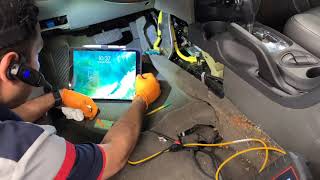

The information in this article is provided for general reference and educational purposes only. Vehicle specifications, procedures, and part compatibility can vary by production date, trim level, and region. Always consult your vehicle's factory service manual and verify part numbers before purchasing or performing repairs. Safety-critical components such as airbags, seat belts, and braking systems should be installed by a qualified professional.
- 🎬 Helpful Videos
- What Does B1378 Mean?
- Can I Drive With B1378?
- Common Causes
- Symptoms
- Diagnostic Flowchart
- Common Fixes & Costs
- Used vs. New Parts: Buying Guide
- What Happens If You Wait — Timeline
- Cost of Not Fixing It
- Diagnosis Steps
- When This Code Triggers (Freeze-Frame Conditions)
- Related Codes
- Climate & Environmental Factors
- How to Talk to a Mechanic About This Code
- Where to Take It: Dealer vs Independent vs Chain
- When to Walk Away From the Repair
- What Scan Tool You Need for This Code
- How to Clear the Code After You Fix It
- Will This Fail Emissions / State Inspection?
- Most Commonly Affected Vehicles
- Manufacturer-Specific Notes
- Real Owner Stories
- 2013 Hyundai Sonata with B1378 & B1382
- 2006 Chevrolet Aveo at 100K+ miles
- 2004 Hyundai Santa Fe with a persistent B1378
- How to Prevent This Code From Triggering
- Frequently Asked Questions
- Is it safe to drive with code B1378?
- Can I fix the B1378 code myself?
- Why is the airbag connector under the seat?
- How much does it cost to fix code B1378?
- Will clearing the code fix the problem?
- I fixed the connector but the light is still on. What now?
- What's the difference between a 'hard code' and a 'soft code'?
- Key Takeaways
- 🎟️ Get 5% Off