

B1370 on 2017 Chevrolet Silverado: Ignition Circuit Fault Causes and Fixes
On a 2017 Silverado, code B1370 almost always indicates a wiring problem, not a failed part. The most likely causes are corroded terminals at the underhood fuse block (X50A), a damaged wire under the driver's door sill plate, or a poor connection at the Serial Data Gateway Module (SDGM). The fix is typically a targeted wiring repair, not an expensive module replacement. This is a well-documented issue on the K2XX platform.
- B1370 is a wiring and connection problem, not a component failure, in the vast majority of cases.
- Do not replace the BCM or other expensive modules until you have thoroughly inspected the wiring and connectors at the underhood fuse block and under the driver's sill plate.
- The diagnosis and repair are guided by GM Technical Service Bulletins PIT5391 and 20-NA-212.
- Symptoms are widespread and electrical, including a no-start, dead gauges, and inoperative radio/HVAC.
- Due to the complexity of the electrical system, professional diagnosis is strongly recommended if the issue isn't immediately obvious at the known failure points.
What's Unique About the 2017-2017 Chevrolet SILVERADO
On this K2XX generation of Silverado and its platform mates (Sierra, Tahoe, Suburban, Escalade), code B1370 is rarely caused by a simple component failure like an ignition switch. General Motors has issued multiple Technical Service Bulletins (TSBs), such as PIT5391 and 20-NA-212, that acknowledge specific weak points in the truck's electrical system. The diagnostic path almost always leads to inspecting known problem areas like the underhood fuse block connectors (X50A), the wiring harness under the driver's sill plate, and the Serial Data Gateway Module (SDGM) connectors before considering module replacement.
Diagnostic Flowchart
Tap your situation to follow the diagnostic path that matches what you're seeing on this vehicle.
Symptoms You May Notice
- No-crank or a start-then-immediately-stall condition.
- Multiple warning lights on the instrument panel, such as 'Service 4WD' and 'Service Airbag'.
- Instrument panel gauges may be inoperative or fluctuate wildly.
- HVAC controls are inoperative or blank.
- Radio display is blank.
- No audible 'click' sound from the turn signals, even if exterior lights work.
- Audible relay clicking sound from the dash area while driving.
- Check Engine Light (MIL) does not illuminate when the key is turned to 'ON'.
- Steering Wheel Controls (SWC) are not illuminated or are inoperative.
- Replacing the Body Control Module (BCM) without first performing a thorough inspection of the fuse block connectors and sill plate wiring as detailed in TSBs.
- Replacing the ignition switch, which is rarely the cause of this specific code on this platform.
- Replacing the battery or starter without diagnosing the underlying electrical fault causing the no-crank symptom.
Most Likely Causes
- Poor Terminal Connection at Underhood Fuse Block (X50A) 🔴 High Probability This is a primary failure point identified in GM TSB PIT5391A and its revisions. Terminals can back out, lose tension, or corrode, interrupting the Ignition 1 voltage signal. The TSB specifically calls out connector X2, terminal M7 (Circuit 439) and connector X4, terminal M5 (Circuit 5199) as potential culprits.
How to confirm: Disconnect the battery. Unplug the large connectors (specifically connector X2 and X4) at the underhood fuse block (driver's side of engine bay). Inspect for any terminals that are bent, loose, corroded (green/white crust), or pushed out of place. A gentle 'tug test' on the wires can reveal a loose terminal.
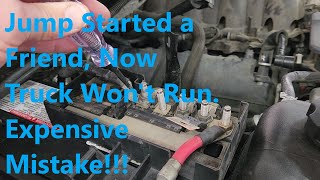
Typical fix: Repair or replace the affected terminal using a proper terminal extractor tool. In severe cases of corrosion or damage, the entire fuse block may need replacement. 🎬 Watch this walkthrough on how to replace the underhood fuse block. Ensure the connector is fully seated and locked upon reassembly.
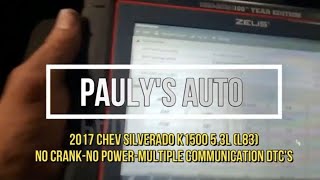
Est. part cost: $5-$350 - Damaged or Corroded Wire in Driver's Sill Plate Harness 🔴 High Probability The wiring harness that runs under the driver's door sill plate is susceptible to moisture intrusion from wet shoes or clogged sunroof drains, and physical damage from foot traffic. TSB PIT5391A specifically identifies the pink wire (Circuit 5199) in this location as a common 🎬 See how to diagnose no-crank and communication issues on this platform. point of failure due to corrosion causing an open circuit.
How to confirm: Remove the driver's side door sill trim panel and carefully peel back the carpet. Unwrap the harness tape and visually inspect the wiring for signs of corrosion (green, powdery residue), chafing, or obvious breaks, paying close attention to the pink wires.
Typical fix: Cut out the damaged section of wire. Splice in a new piece of wire using sealed, weatherproof butt connectors and protect the repair with heat shrink tubing to prevent future moisture damage.
Est. part cost: $5-$20 - Poor Connection at Serial Data Gateway Module (SDGM) 🟡 Medium Probability TSB PIT5586B (superseded by later versions) points to loose, bent, or backed-out terminals at the SDGM connectors (X1 or X2) as a cause for widespread communication issues that can trigger B1370. The module can also enter a 'logic lock' state.
How to confirm: Locate the SDGM, typically mounted above the pedals under the driver's side of the dashboard. Disconnect the battery, then unplug the connectors (often one gray, one black) and inspect the terminals for damage or a poor fit. Sometimes, simply disconnecting the module's fuse can reset a logic lock temporarily.
Typical fix: Repair any bent or loose terminals and ensure the connectors are fully seated. If the module has a software issue, it may require reprogramming by a dealer. If the module itself is faulty (diagnosed by exclusion), it will require replacement and programming.
Est. part cost: $5-$200 - Faulty KR73 Ignition Main Relay ⚪ Low Probability The KR73 relays supply power to the Ignition 1 circuit. There are two: one in the underhood fuse block (X50A) and one in the left instrument panel fuse block (X51L). While relays can fail, it is far less common than the wiring and terminal issues for this specific code.
How to confirm: Locate the KR73 relays in both fuse boxes. Swap the suspect relay with an identical known-good relay from a non-critical circuit (like the horn) and see if the symptoms change. If the problem is resolved, the relay is faulty.
Typical fix: Replace the faulty relay with a new one. An example part number is ACDelco 19119299.
Est. part cost: $10-$25
Rare But Worth Checking
- Failed Body Control Module (BCM): The BCM is the 'power mode master' for the vehicle. While it can fail internally, this should be considered a diagnosis of last resort after all wiring, terminal, and relay checks have been exhausted and confirmed good.
- Blown Fuse: In some cases, a simple blown fuse related to the ignition, BCM, or SDGM circuits can cause this code. Always check all related fuses in the underhood, driver's side, and passenger's side fuse blocks before beginning complex wiring diagnostics. 🎬 Watch this quick guide to help you locate specific fuses.
- Failed Underhood Fuse Block (Internal Fault): Beyond just terminal corrosion, the fuse block itself has an internal circuit board with non-serviceable relays and traces that can fail. If a specific Ignition 1 circuit is dead but the corresponding fuse and relay are good, the block itself may be the culprit.
Diagnosis Steps
- Scan for all codes using a professional scanner capable of reading B-codes, C-codes, and U-codes. Note B1370 and all accompanying communication codes.
- Verify the symptoms, such as a no-start condition, dead gauges, and inoperative HVAC/radio.
- Inspect all fuses in the underhood (X50A), driver's side (X51L), and passenger's side interior fuse blocks related to the BCM, ignition (IGN), instrument panel (IPC), and radio.
- Disconnect the negative battery terminal.
- Following TSB PIT5391, inspect the large connectors at the Underhood Fuse Block (X50A) for corrosion, backed-out pins, or damage. Pay special attention to connector X2, terminal M7 (Circuit 439) and connector X4, terminal M5 (Circuit 5199).
- Inspect the connectors at the Left I/P Fuse Block (X51L) for similar terminal issues, specifically X1 terminal 42 and X2 terminal 44.
- Following TSB PIT5391, remove the driver's side door sill plate and peel back the carpet. Carefully unwrap and inspect the wiring harness (especially the pink wire, Circuit 5199) for corrosion or breaks.
- If no issues are found, inspect the X1 and X2 connectors at the Serial Data Gateway Module (SDGM) under the driver's dash for similar terminal issues, per TSB PIT5586.
- If wiring and terminals are confirmed to be good, test the KR73 Ignition Main Relays by swapping them with known-good relays.
- If all other steps fail to identify the issue, the problem may be an internal failure of the BCM or the underhood fuse block, which may require professional diagnosis.
Parts You'll Likely Need
- Wiring Repair Supplies — The most common fix is repairing a corroded or broken wire in the driver's sill plate harness or a damaged terminal at a connector.
Trusted brands: 3M, Tesa (for harness tape)
OEM price range: $5-$20
Aftermarket price range: $5-$20 - Underhood Fuse Block
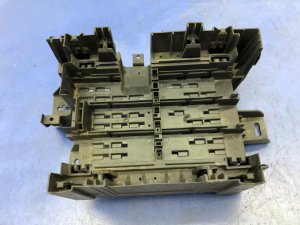
(OEM #84460793)— If terminal corrosion is severe, the block is melted, or it has an internal fault, it may need to be replaced. This part number fits many 2017-2019 GM trucks but always verify with VIN.
Trusted brands: ACDelco, GM Genuine Parts
OEM price range: $130-$260
Aftermarket price range: $100-$200 - Ignition Main Relay (KR73) — A less common but possible cause. If swapping the relay resolves the issue, a new one is needed.
Trusted brands: ACDelco
OEM price range: $15-$30
Aftermarket price range: $10-$20
Related Codes That Often Appear With This One
- U0140 — Lost Communication With Body Control Module. This often appears with B1370 because the root cause (a power supply or wiring issue) affects the BCM's ability to communicate.
- U0155 — Lost Communication With Instrument Panel Cluster (IPC). This is a direct result of the IPC losing power or data from the Ignition 1 circuit failure.
- U0164 — Lost Communication With HVAC Control Module. This explains why the climate controls go dead when B1370 is present.
- B1325 — Device Power Circuit Malfunction. This code is also cited in TSB PIT5391A and points to a widespread power distribution problem originating from the same root cause.
- C0364 / U0403 — Codes related to the Transfer Case Control Module. The 'Service 4WD' message appears because the TCCM also loses its Ignition 1 power source, as noted in TSB PIT5391.
Technical Service Bulletins (TSBs) & Recalls
- PIT5391A / B / F: Addresses no-crank/stall conditions from loss of Ignition 1 voltage. Points directly to terminal issues at the X50A/X51L fuse blocks and corrosion of Circuit 5199 (pink wire) under the driver's sill plate. Specifically calls out connector X2, terminal M7 (Circuit 439) on the underhood fuse block.
- 20-NA-212 (supersedes PIT5586): Addresses widespread communication issues, including B1370, caused by logic locks or poor terminal connections at the Serial Data Gateway Module (SDGM). Correction can involve reprogramming the module or repairing terminals at the X1/X2 connectors.
- 16-NA-083: Notes that B1370 can sometimes be set as a history code during normal remote start operation and should be disregarded if no symptoms are present.
Platform-Specific Known Issues
- The K2XX platform (2014-2019 Silverado/Sierra) is known for wiring corrosion under the driver's sill plate and terminal fretting/corrosion at the underhood fuse block, both of which are primary causes for code B1370.
Mechanic-Grade Diagnostic Values
- Voltage on 'Device Ignition 1' circuit (e.g., Circuit 5199 or 439, often a pink wire) — expected: Battery Voltage (~12.6V) with Key ON, Engine OFF. 0V with Key OFF.. Failure: 0V or significantly less than battery voltage with Key ON indicates an open or short to ground. Voltage greater than 0V with Key OFF indicates a short to power.
- Resistance of Ignition 1 Circuit wire (e.g., between BCM and fuse block) — expected: Less than 1.0 ohm.. Failure: Resistance higher than 1.0 ohm indicates corrosion, a break in the wire, or a poor terminal connection.
Hidden / Shadow Codes Worth Checking
- B1370 04: Device Ignition 1 (ON and START) Circuit Open. This indicates the BCM has detected a break in the circuit. (see via A professional scan tool like GM GDS2 is required to view these symptom bytes.)
- B1370 06: Device Ignition 1 (ON and START) Circuit Short to Ground or Open. This indicates the BCM has detected the circuit is either open or shorted to ground. (see via A professional scan tool like GM GDS2 is required to view these symptom bytes.)
Scan Tool Commands That Help
- GM GDS2 (Global Diagnostic System 2): Control Functions > Command KR73 Ignition Main Relay — This bidirectional test allows a technician to command the ignition relays ON and OFF from the scan tool. If the relay clicks and voltage appears on its output circuit, it confirms the BCM and control side of the circuit are working, isolating the fault to the power distribution side (terminals, wiring).
Wiring & Ground Locations
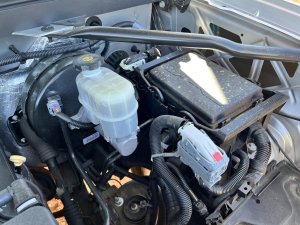
- X50A — Underhood Fuse Block, located on the driver's side of the engine bay.. This is a central power distribution point. TSB PIT5391A specifically calls out inspecting its connectors for terminal issues. Key points are Connector X2, Pin M7 (Circuit 439) and Connector X4, Pin M5 (Circuit 5199).
- X51L — Left Instrument Panel Fuse Block, located inside the cabin on the driver's side of the dashboard.. This block contains the second KR73 Ignition Main Relay and distributes Ignition 1 voltage. TSB PIT5391A points to inspecting its connectors, specifically X1 Pin 42 (Circuit 5199).
- Driver's Sill Plate Harness — Under the plastic trim panel on the floor next to the driver's seat.. TSB PIT5391A explicitly identifies Circuit 5199 (a pink wire) in this harness as being prone to corrosion and damage from moisture and foot traffic, causing an open circuit and setting code B1370.
- G218 — Under the driver's side of the dashboard, near the A-pillar and speaker.. This is a major ground point for the BCM and other interior modules. A poor connection here can cause a wide range of electrical issues, including those associated with B1370. TSB PIT5405C identifies a poor ground at G218 as a cause for various electrical malfunctions.
Real Owner Repair Stories
- GM-Trucks.com forum user (2014 Chevrolet Silverado) — No crank, no start, multiple warning lights.
❌ Tried (didn't work) Checking fuses and relays.
✅ What actually fixed it The dealer found and repaired a corroded pink wire (Circuit 5199) under the driver's side sill plate/floor area, as described in TSB PIT5391A. - GM-Trucks.com forum user (2015 GMC Sierra) — Intermittent no-start, B1370 code, and a flood of U-series communication codes.
❌ Tried (didn't work) Initial wiring checks did not reveal the issue.
✅ What actually fixed it The entire underhood fuse block (X50A) was replaced. The owner noted that the internal relays and circuits were not serviceable, and the block itself had failed internally. - YouTube channel 'Global Commerce CA' (2008 Chevy Express (similar electrical architecture)) — No crank, security light on, codes B1370 and B1380.
❌ Tried (didn't work) Replacing fuse boxes, Suspecting a bad key
✅ What actually fixed it A broken red and white wire was found in the harness under the carpet, near the brake pedal area, where a driver's foot would rest. The wire had worn through and corroded from years of stress and moisture. Splicing and repairing the broken wire resolved all symptoms.
OEM Part Supersession History
23232162, 84012731, 84044647→84219289— This is the part number for the Battery Distribution Engine Compartment Fuse Block (Underhood Fuse Block). The supersession indicates revisions and updates by the manufacturer.23176467, 23443945→23459420— This is the part number for the Instrument Panel Wiring Harness Junction Block Assembly (Left I/P Fuse Block). The supersession indicates revisions by the manufacturer.
Helpful Videos

Used OEM Parts in Stock



New Aftermarket Parts Available


The information in this article is provided for general reference and educational purposes only. Vehicle specifications, procedures, and part compatibility can vary by production date, trim level, and region. Always consult your vehicle's factory service manual and verify part numbers before purchasing or performing repairs. Safety-critical components such as airbags, seat belts, and braking systems should be installed by a qualified professional.
- Chevrolet SILVERADO:
- 🎬 Helpful Videos
- 🛍️ Shop This Part
- What's Unique About the 2017-2017 Chevrolet SILVERADO
- Diagnostic Flowchart
- Symptoms You May Notice
- Most Likely Causes
- Rare But Worth Checking
- Diagnosis Steps
- Parts You'll Likely Need
- Related Codes That Often Appear With This One
- Technical Service Bulletins (TSBs) & Recalls
- Platform-Specific Known Issues
- Mechanic-Grade Diagnostic Values
- Hidden / Shadow Codes Worth Checking
- Scan Tool Commands That Help
- Wiring & Ground Locations
- Real Owner Repair Stories
- OEM Part Supersession History
- 🎟️ Get 5% Off