

OBD-II Code B1366: A Manufacturer-Specific Fault
The Ultimate Guide: What B1366 Means for Ford, VW, Hyundai/Kia, and More
- Code B1366 is manufacturer-specific, meaning an ignition switch fault on a Ford, a rain sensor failure on a VW, or a disabled passenger seatbelt pretensioner on a Hyundai/Kia.
- Diagnose Ford stalling or no-start symptoms by performing a voltage drop test on the ignition switch; a reading over 0.5V confirms the electrical switch has failed.
- Fix VW or Audi automatic wiper failures by replacing the $20 silicone gel pad (Part # 8U0-955-609) behind the rearview mirror before buying a $150 replacement sensor.
- Test a Hyundai or Kia passenger seatbelt pretensioner with a multimeter; a reading outside the normal 2.0 to 3.0 ohm range requires professional replacement of the pyrotechnic assembly.
- Never replace a $500 Body Control Module (BCM) or SRS module without first verifying the integrity of the wiring harness and pigtail connectors, which cause 90% of B1366 codes.
What Does B1366 Mean?
OBD-II code B1366 is a manufacturer-specific code, meaning its definition changes completely depending on your vehicle. For Ford, Lincoln, and Mercury, it indicates an 'Ignition Switch Circuit Fault' where the Body Control Module (BCM) detects an erratic signal from the ignition switch. For Volkswagen and Audi, it signifies a 'Rain/Light Recognition Sensor Fault.' For Hyundai and Kia, it points to an 'Open Circuit in the Passenger-Side Seat Belt Pretensioner.' Always verify the definition for your specific vehicle before attempting any diagnosis.
Technical definition: There is no universal SAE/ISO definition for B1366. Ford defines it as 'Ignition Switch Circuit Fault.' Hyundai/Kia defines it as 'Pretensioner Front-Passenger Open,' indicating high resistance (an open circuit) in the passenger pretensioner. Volkswagen/Audi defines it as 'Rain/Light Recognition Sensor Fault,' indicating a communication error with the windshield-mounted sensor module. Suzuki defines it as 'Intake Camshaft Position System Performance' or 'Curtain-Air Bag Circuit Low Resistance'.
Can I Drive With B1366?
Yes, But With Caution. Driving with code B1366 depends entirely on the manufacturer. If it is a Ford with an ignition fault, the primary danger is the engine stalling while driving, causing an immediate loss of power steering and assisted braking. For a Hyundai/Kia with a pretensioner fault, the vehicle drives normally, but the passenger seatbelt will not tighten correctly in a crash, drastically increasing injury risk. For a VW with a rain sensor fault, it is safe to drive, but you must operate wipers and headlights manually.
Common Causes
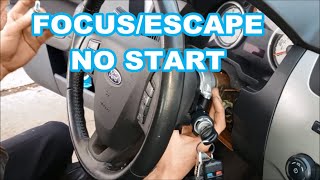
- Worn or Faulty Ignition Switch (Ford) (Very Common) — The internal contacts of the ignition switch wear out from thousands of key cycles, leading to poor connections and erratic voltage signals. This is the most frequent cause on affected Ford, 🎬 Watch: How to replace a faulty Ford ignition switch. Lincoln, and Mercury vehicles.
- Degraded Rain/Light Sensor Gel Pad (VW/Audi) (Common) — The silicone gel pad bonding the rain/light sensor to the windshield degrades, developing air bubbles or cloudiness. This prevents the sensor from reading light and moisture correctly.
- Faulty Seat Belt Pretensioner (Hyundai/Kia) (Common) — The pyrotechnic charge or internal wiring of the seat belt pretensioner fails, creating an open circuit. This is a critical safety component requiring professional replacement.
- Damaged Wiring or Connectors (Common) — Wires connected to the ignition switch, rain sensor, or seatbelt pretensioner fray, short, or break. The pigtail connector itself becomes loose, corroded, or damaged from heat, especially at the ignition switch.
- Faulty Ignition Lock Cylinder Housing (Ford) (Common) — The mechanical lock cylinder housing wears out or breaks. This causes a sloppy fit with the key and prevents the housing from properly actuating the separate electronic ignition switch.
- Blown Fuse or Faulty Relay (Less Common) — A fuse protecting the ignition, BCM, or SRS (airbag) circuit blows, or a related relay fails, interrupting power to the affected component.
- Improperly Installed Aftermarket Accessories (Uncommon) — Poorly installed remote starters, alarms, or dash cams that tap into ignition or lighting circuits interfere with module communication and trigger this code.
- Faulty Body Control Module (BCM) or SRS Module (Rare) — The control module (BCM for ignition/rain sensor, SRS for pretensioner) fails. This is rare and should only be considered after proving all other components and wiring are functional.
Symptoms
- Engine Stalls or Fails to Start (Ford) — The engine shuts off unexpectedly while driving, or the starter fails to engage due to a lost 'RUN' or 'START' signal from the ignition switch.
- Airbag/SRS Warning Light is On (Hyundai/Kia) — The Supplemental Restraint System (SRS) light illuminates and stays on, indicating a disabled passenger pretensioner.
- Automatic Wipers and Headlights Inoperative (VW/Audi) — Automatic functions fail, requiring manual operation, often accompanied by an 'Automatic headlight control fault' dashboard message.
- Flickering Electrical Accessories (Ford) — The radio, power windows, or climate control cut out intermittently as the ignition switch fails to provide a stable signal in the 'ACC' or 'RUN' positions.
Diagnostic Flowchart
Tap your situation to follow the diagnostic path that matches what you're seeing on this code.
Common Fixes & Costs
- Replace Ignition Switch (Ford) — Parts: $40-$150, Labor: $120-$250, ~1.5 hr book time (Intermediate)
- Replace Rain Sensor Gel Pad (VW/Audi) — Parts: $15-$40, Labor: $50-$100, ~0.5 hr book time (DIY)
- Replace Seat Belt Pretensioner Assembly (Hyundai/Kia) — Parts: $150-$350, Labor: $250-$500, ~1.2 hr book time (Professional)
- Replace Rain/Light Sensor (VW/Audi) — Parts: $100-$250, Labor: $150-$350, ~0.8 hr book time (Intermediate)
- Repair Damaged Wiring or Connector Pigtail — Parts: $20-$70, Labor: $150-$350, ~2 hr book time (Intermediate)
DIY vs Professional
- Replace Ignition Switch (Ford) — Beginner:
Tools: Socket set, trim removal tools, Torx bits (sometimes security Torx), multimeter. - Replace Seat Belt Pretensioner (Hyundai/Kia) — Beginner:
Tools: Socket set, trim removal tools, multimeter, advanced OBD-II scanner for SRS reset. - Replace Rain/Light Sensor (VW/Audi) — Beginner:
Tools: Trim removal tools, Torx driver. - Replace Rain Sensor Gel Pad (VW/Audi) — Beginner:
Tools: Trim removal tools, plastic razor blade, isopropyl alcohol, lint-free cloths.
Used vs. New Parts: Buying Guide
When a used part is worth it: A used OEM VW/Audi rain/light sensor from a low-mileage vehicle is reliable, provided it is installed with a new gel pad. Never buy a used Ford ignition switch or Hyundai/Kia seat belt pretensioner.
Donor-vehicle mileage cap: roughly under 60000 miles for the part to have meaningful remaining life.
Donor quality checklist:
- For rain sensors, ensure the part number is an exact match, as different part numbers are not compatible.
- Avoid buying used seat belt pretensioners under any circumstances. They are single-use pyrotechnic safety devices, and their history is unknown.
Decision logic:
- If The part is a seat belt pretensioner (Hyundai/Kia) → ALWAYS buy new from a reputable source (OEM recommended). Do not consider used.
- If The part is an ignition switch (Ford) → Buy new. The low cost of new aftermarket parts outweighs the risk and short lifespan of a used part.
- If The part is a rain/light sensor (VW/Audi) → A used OEM part is acceptable if from a low-mileage vehicle, but it MUST be paired with a new adhesive gel pad.
Warranty tradeoff: Used parts typically come with a 30-90 day warranty at best. New aftermarket parts often carry a 1-year to limited lifetime warranty. New OEM parts offer the best guarantee of fitment and quality.
Worst-case if a used part fails: $200-$500 if a used part fails shortly after installation, primarily due to repeated labor costs.
What Happens If You Wait — Timeline
- 0-1 month: (Ford) Intermittent no-crank or a single stall while driving. (VW) Auto wipers/lights fail. (Hyundai/Kia) SRS light comes on, passenger safety systems are immediately disabled. (MPG impact: 0%% · Added cost: $0)
- 1-3 months: (Ford) Stalling becomes more frequent, especially over bumps. No-start condition requires multiple key cycles. (VW) No change; system remains inoperative. (Hyundai/Kia) No change; safety system remains disabled, risk continues. (MPG impact: 0-2% (due to inefficient starting)% · Added cost: $0-50 (Increased wear on starter and battery from repeated attempts).)
- 3-6 months: (Ford) Vehicle is now unreliable, frequently fails to start, and is a high risk for stalling in traffic. The connector pigtail begins to overheat and melt. (VW/Hyundai/Kia) No change in vehicle function, but continued failure to pass state safety inspections. (MPG impact: 0%% · Added cost: $150-350 (Potential damage to the ignition switch connector, requiring a new pigtail in addition to the switch).)
- 6+ months: (Ford) Vehicle becomes completely undrivable with a permanent no-start condition, requiring a tow. (Hyundai/Kia) The ongoing critical safety risk culminates in drastically increased injury potential if an accident occurs. (MPG impact: 0%% · Added cost: $200+ (Towing fees plus the original repair cost).)
Cost of Not Fixing It
- Immediate: (Ford) Extreme safety risk. The engine stalls unpredictably, causing a loss of power steering and brakes. (Hyundai/Kia) Critical safety failure. The passenger airbag and seatbelt pretensioner will not deploy in an accident. (Added cost: Potential for catastrophic accident or injury.)
- 1-6 Months: (Ford) Increased wear on the starter and battery from repeated starting attempts. Electrical surges from a faulty switch damage sensitive electronics like the BCM. (VW) Continued inconvenience of manual wiper/headlight operation. (Added cost: $50 - $1000+)
- 6+ Months: (Ford) The vehicle becomes completely undrivable with a total no-start condition. (Hyundai/Kia) Continued driving with a disabled primary safety system. (All) Failure to pass mandatory state safety inspections. (Added cost: Towing fees plus the original repair cost.)
Diagnosis Steps
- Verify Code Definition & Check for Other Codes
Confirm the B1366 definition for your exact make and model. Scan all vehicle modules (BCM, SRS, PCM) for other DTCs. Codes like B1600, P1260 (Ford), or B1367 (Hyundai) provide critical context.
Tools: Advanced OBD-II Scanner (Beginner) - Pro Tip (Ford): Perform Ignition Switch 'Wiggle Test'
Start the engine. While the vehicle is in park, lightly wiggle the ignition key without turning it. If the engine stumbles, stalls, or dashboard lights flicker, the ignition switch or lock cylinder housing is worn and is the culprit.
Tools: None (Beginner) - Visually Inspect the Component and Wiring
For Ford, inspect the ignition switch and connector for melting. For VW, inspect the rain sensor gel pad for air bubbles or cloudiness. For Hyundai/Kia, inspect the passenger seat belt pretensioner connector (usually yellow) for damage.
Tools: Flashlight, Trim Removal Tools (Intermediate) - Pro Tip (Ford): Ignition Switch Voltage Drop Test
Connect a multimeter's red lead to the positive battery terminal and the black lead to the ignition circuit output fuse in the fuse box. Turn the key to 'RUN' and activate accessories. A reading over 0.5V indicates high resistance and a failed switch.
Tools: Multimeter, Vehicle-Specific Wiring Diagram (Advanced) - Pro Tip (Hyundai/Kia): Test Pretensioner Resistance
Disconnect the battery. Disconnect the passenger pretensioner connector. Measure the resistance across the two pins on the pretensioner side. A good pretensioner reads between 2.0 and 3.0 ohms. A reading of infinity (O.L.) confirms a faulty pretensioner.
Tools: Multimeter, Trim Removal Tools (Advanced) - Pro Tip (VW): Test Rain/Light Sensor Circuit
Back-probe the sensor connector. Check for 12V on the power wire and near 0V on the ground wire. The third wire is a LIN-Bus data line requiring an oscilloscope to check for a square wave data signal.
Tools: Multimeter, Oscilloscope (recommended), Wiring Diagram (Advanced) - Test the Battery
A weak battery causes numerous electrical codes. Ensure the battery voltage is between 12.4-12.6V with the engine off and that it holds a load.
Tools: Multimeter or Battery Tester (Beginner) - Inspect Relevant Fuses
Locate and visually inspect all fuses related to the system in question: Ignition, BCM, and SRS. Test with a multimeter for continuity.
Tools: Owner's Manual, Multimeter (Beginner) - Advanced (Ford): Monitor Ignition Switch PIDs
Monitor the BCM PIDs for the ignition switch state (e.g., 'IGN_SW_POS'). Cycle the key through OFF, ACC, RUN, and START. The PID value must change instantly. Wiggle the key in 'RUN'; if the PID value flickers, it confirms an intermittent switch fault.
Tools: Advanced OBD-II Scanner (with Live Data) (Advanced)
When This Code Triggers (Freeze-Frame Conditions)
- Ignition Status (Ford): Signal Loss (Code sets when the BCM loses the 'RUN' signal while driving (e.g., hitting a bump) or fails to see a valid transition from 'RUN' to 'START' during cranking.)
- SRS Self-Test (Hyundai/Kia): Resistance > 6.0 ohms (The code logs during the initial key-on self-check when the SRS control module performs a resistance test on the pretensioner circuit and finds it to be open.)
- Rain/Light Sensor Command (VW): No Response / Implausible Signal (Fault logs when the Body Control Module requests a status from the rain/light sensor and receives no response or an invalid signal.)
- Battery Voltage: 11.5-14.5V (The fault occurs during normal operating voltage. However, low battery voltage sometimes triggers false B-codes across various modules.)
Related Codes
- B1367 / B1368 (Hyundai/Kia) — These codes are sisters to B1366. B1366 is 'Pretensioner Open Circuit,' while B1367 is 'Resistance Too High' and B1368 is 'Resistance Too Low.' They all point to a fault in the same component.
- P1260 (Ford) — Theft Detected, Vehicle Immobilized. P1260 is an effect, while B1366 is often the cause. The BCM detects an invalid signal from the ignition switch (B1366), assumes a theft is in progress, and instructs the PCM to immobilize the engine.
- B1600 / B1681 (Ford) — PATS Transponder Signal Not Received. These codes point to the anti-theft system not reading the chip in the key. If the theft light is off or solid and it won't start, the issue is more likely the ignition switch contacts (B1366).
- U1900 (Ford) — CAN Communication Bus Fault. This is a network error. If B1366 appears with U1900, it implies the ignition fault is causing the BCM to lose power or malfunction, disrupting its communication on the network.
Climate & Environmental Factors
- Extreme Cold: Causes metal and plastic components within an ignition switch to contract, leading to poor electrical contact or mechanical binding. It also reduces battery efficiency, exacerbating starting problems.
- High Heat: Causes metal components in an ignition lock cylinder or switch to expand, leading to a stiff or stuck key. Prolonged heat dries out internal lubricants and accelerates the degradation of plastic connectors.
- High Humidity: Accelerates corrosion on electrical connectors and pins. On VW/Audi models, humidity trapped between the rain sensor and the glass causes erratic wiper activation even without rain.
How to Talk to a Mechanic About This Code
Say this: "This depends on your vehicle. For a Ford: 'I have a B1366 code with intermittent stalling and no-start. I've performed a 'wiggle test' and it seems to be the ignition switch. Can you diagnose the switch, connector, and lock cylinder housing?' For a Hyundai/Kia: 'My airbag light is on and I have a B1366 code. I need a diagnostic and resistance test on the passenger seat belt pretensioner circuit.' For a VW/Audi: 'I have a B1366 and my auto wipers aren't working. Can you inspect the rain sensor's gel pad before quoting a full sensor replacement?'"
This specific language shows you've done your research, directs the mechanic to the most likely cause, and prevents them from starting with expensive, unnecessary diagnostics. It frames the conversation around a specific, testable component.
Avoid saying:
- 'My check engine light is on, can you look at it?' (Too vague, invites a broad, expensive diagnostic fee).
- 'The car is acting weird, just fix whatever is wrong.' (Gives the shop a blank check to replace parts).
- 'My friend said it might be the...' (Undermines your credibility; state the code and symptoms instead).
Questions to ask before authorizing the repair:
- Can you provide a detailed, written estimate breaking down parts and labor costs?
- For a Ford, what was the result of the voltage drop test on the ignition switch?
- For a Hyundai/Kia, what was the measured resistance on the pretensioner? Was the new part tested before installation?
- For a VW, did you find air bubbles in the gel pad? Will calibration be required for the new sensor?
- What warranty do you offer on this specific repair, for both parts and labor?
Where to Take It: Dealer vs Independent vs Chain
- Dealer:
Recommended for the Hyundai/Kia SRS fault due to the pyrotechnic component. A reasonable, but expensive, choice for the other faults.
Best for: Hyundai/Kia airbag system (SRS) repairs due to safety/liability., Complex VW/Audi diagnostics if ADAS calibration is needed., Vehicles still under any potentially related warranty.
Downsides: Highest labor rates., May default to replacing an entire assembly (e.g., VW rain sensor) when only a small part (gel pad) has failed. (Typical cost: +50% vs. baseline) - Independent Shop:
Best overall fit for the Ford ignition fault and VW rain sensor fault (especially just the gel pad). Use caution for the Hyundai/Kia SRS repair; ensure they are experienced and equipped for it.
Best for: Out-of-warranty Ford ignition switch repairs., VW rain sensor issues, especially if you can find a German car specialist., Cost-conscious owners of older vehicles.
Downsides: Quality and experience can vary greatly; check reviews., May not have specific SRS reset tools for Hyundai/Kia., Some refuse to work on airbag systems. (Typical cost: +0% vs. baseline) - Chain Shop:
AVOID for all variants of code B1366. The risk of misdiagnosis, improper repair of a safety system (Hyundai/Kia), or lack of specific knowledge (VW) is too high.
Best for: Simple, unrelated maintenance like oil changes or tires.
Downsides: Technician skill varies dramatically., High pressure to upsell common items (e.g., selling a battery or starter for the Ford fault)., Generally not equipped for or trained in SRS or complex body module diagnostics. (Typical cost: -10% vs. baseline)
When to Walk Away From the Repair
If the estimated repair cost exceeds 40-50% of the car's private-party value, pause and evaluate your options.
- Car worth $4000, fix is $450: Fix it. This cost is well below the threshold and resolves a major drivability (Ford) or safety (Hyundai/Kia) issue.
- Car worth $2500, fix is $500: Likely fix it. While this is 20% of the car's value, the repair is critical for safety or basic function. Consider other needed repairs before deciding.
- Car worth $1500, fix is $500: Borderline. At 33% of the car's value, you must consider if the rest of the car is in good condition. If the engine and transmission are strong, the repair is likely worth it.
What Scan Tool You Need for This Code
Minimum: A scanner that can read manufacturer-specific Body (B) and SRS (Airbag) trouble codes. A basic reader that only shows Powertrain (P) codes will not see B1366.
A standard $20 code reader shows 'No Codes Found' because it cannot access the Body Control Module (BCM) or Supplemental Restraint System (SRS) module where this code is stored. You need a tool that communicates with all vehicle systems.
Budget: BlueDriver Pro (~$100) — Connects to your smartphone via Bluetooth. It can read and clear BCM and SRS codes for most major brands (Ford, VW, Hyundai/Kia included), and provides live data to help diagnose the Ford ignition issue.
Mid-range: Foxwell NT510 Elite (~$180) — A powerful handheld scanner. Critically, it can perform advanced functions like ABS/SRS resets, which is often required after replacing the Hyundai/Kia pretensioner. It can also read manufacturer-specific live data PIDs for Ford and VW diagnostics.
Professional: Autel MaxiCOM MK808 / Launch X431 Series (~$450-600) — These are professional-level tools that offer full-system access, bidirectional controls (to command components to test function), and advanced coding/reset functions for all B1366 variants. They provide dealer-level diagnostic capabilities for serious DIYers or small shops.
Rent vs buy: Auto parts stores like O'Reilly or AutoZone offer free loaner tool programs, but their basic OBD-II scanners typically do NOT read SRS or BCM codes. For this specific code, you will likely need to buy a capable scanner or pay for a professional diagnosis.
How to Clear the Code After You Fix It
- Reconnect the battery if it was disconnected for the repair.
- Use an OBD-II scan tool to clear the Diagnostic Trouble Code (DTC) from the specific module (BCM for Ford/VW, SRS for Hyundai/Kia).
- For Hyundai/Kia SRS codes, a professional scan tool is required; standard code readers cannot clear SRS faults.
- For VW, cycle the ignition off and on; if the fault was fixed, the warning disappears on its own.
- Perform a drive cycle to ensure the fault does not return and to allow vehicle readiness monitors to run.
Drive cycle (~20 minutes): A general drive cycle includes a cold start (engine off for 8+ hours), 2-3 minutes of idling, 10-15 minutes of mixed city/highway driving (steady speeds between 45-65 mph), and several normal decelerations to a stop. The main goal is to confirm the repair under normal operating conditions.
Readiness monitors affected: This is a Body (B) code, which does not directly affect emissions readiness monitors like the Catalyst or O2 sensor monitors., However, if the battery was disconnected to perform the repair, all readiness monitors reset to 'Not Ready' status.
Before emissions retest: drive at least 50 miles to fully set monitors.
Watch out for:
- Using a basic OBD-II reader that cannot access or clear codes from the BCM or SRS module.
- Simply disconnecting the battery will not reliably clear an SRS code; the fault is re-detected on the next key cycle if not properly cleared with a scanner.
- Not confirming the fix was successful. If the underlying issue (e.g., a loose connector) remains, the code returns immediately.
Will This Fail Emissions / State Inspection?
No — by itself this code doesn't fail OBD inspection (but it can keep readiness monitors from setting, which causes a separate fail).
- California: While a B-code itself doesn't affect the smog check's OBD-II data portion, if an SRS/airbag light is illuminated, the vehicle fails the visual/functional safety inspection part of the test.
- New York: According to the NY DMV, an illuminated airbag warning light is an advisory item and not grounds for rejection of the safety inspection. However, individual inspectors sometimes raise concerns.
- Texas: The airbag/SRS light is not a required inspection item in Texas, so a vehicle with this light on typically passes the safety inspection, provided other items like the horn and lights are functional.
- General: In many states with strict safety inspections (e.g., Virginia, Massachusetts, Pennsylvania), any illuminated safety warning light, including the airbag/SRS light, is an automatic failure.
Most Commonly Affected Vehicles
- Ford Explorer (2002-2010) — Extremely common issue. The electrical ignition switch (Motorcraft SW-6958) is separate from the lock cylinder and is a known failure point causing no-start and stalling.
- Ford F-150 (2004-2008) — Prone to ignition switch failure. Often accompanied by a melted pigtail connector (Motorcraft WPT-957). The 'wiggle test' is a very effective diagnostic for these trucks.
- Ford Focus (2000-2007) — Ignition switch problems are a well-documented weak point, leading to B1366 and a variety of starting/stalling issues.
- Volkswagen Golf (2010-2018) — Defines B1366 as a Rain/Light Sensor fault. Often caused by a degraded gel pad (OEM # 8U0-955-609). Replacement sensors are year-specific.
- Kia Rio (2012-2017) — On these models, B1366 indicates 'Pretensioner Front-Passenger Open.' This is a fault in the airbag system, not the ignition. The OEM part number for the passenger pretensioner is often 88841-1W510.
- Hyundai Getz (2002-2011) — For this model, B1366 indicates an open circuit in the passenger-side seat belt pretensioner. The specified resistance for a good pretensioner is 1.9-4.7 ohms.
- Chevrolet Cobalt (2005-2010) — While not always logging B1366 specifically, these models are notorious for ignition switch failures that produce the exact same symptoms of stalling and no-start.
- Suzuki SX4 (2007-2013) — Defines B1366 as 'Curtain-Air Bag Circuit Low Resistance,' another airbag system fault, or as an unrelated powertrain code for Intake Camshaft Position.
Manufacturer-Specific Notes
- Ford, Lincoln, Mercury: The most common definition is 'Ignition Switch Circuit Fault.' It is a very frequent code related to starting and stalling issues on these brands. Ford has a long history of ignition switch-related recalls.
- Volkswagen, Audi: This code means 'Rain/Light Recognition Sensor Fault.' It has nothing to do with starting the vehicle. The issue is often the inexpensive gel pad (8U0-955-609) between the sensor and the windshield, not the sensor itself.
- Hyundai, Kia: Defines B1366 as 'Pretensioner Front-Passenger Open.' This is a critical safety system code for the passenger seat belt. Diagnosis involves a multimeter test for resistance, which should be 2-3 ohms on a good part.
- General Motors (re: Chevrolet Cobalt): The Chevrolet Cobalt and other GM vehicles from the mid-2000s were subject to one of the largest automotive recalls in history for faulty ignition switches that caused identical symptoms to the Ford B1366 fault (stalling while driving).
Real Owner Stories
2009 Ford Focus with 150K miles - Intermittent No-Start
Car would intermittently fail to crank. Sometimes it would start after waiting a few minutes, other times it needed a jump. Battery tested good. Owner suspected a bad starter.
What they tried:
- Replaced the battery, but the problem persisted.
- Attempted to replace the starter, but found it difficult to access.
- Read forums and learned about the 'wiggle test'. Wiggling the key in the ignition while trying to start it caused the car to crank and start.
Outcome: Owner replaced the ignition switch (not the lock cylinder) for around $50 in parts. The no-start issue was completely resolved.
Lesson: For a Ford with a no-crank/no-start issue, always perform the 'wiggle test' before suspecting the starter. A faulty ignition switch is a very common, cheaper, and easier fix.
2015 VW Golf with 75K miles - Auto Wipers/Lights Failed
The 'Automatic Headlight Control Fault' warning appeared on the dash. Automatic wipers and headlights stopped working, though they could be operated manually.
What they tried:
- Owner first replaced the rain/light sensor with a new one (Part # 5Q0955547) and a new gel pad, but the fault code B1366 returned immediately.
- After more research, they discovered that for post-2016 models, a different part number ending in 'B' (5Q0-955-547-B) was required.
Outcome: The owner returned the incorrect sensor and purchased the correct 'B' version. After installation, the code was cleared and did not return. The auto lights and wipers functioned correctly. The total cost was about $150 for the correct sensor.
Lesson: On VW/Audi models, rain/light sensor part numbers are extremely specific to the model year and installed options. A part number that looks identical might have a different suffix ('A', 'B', etc.) that makes it incompatible. Always verify the exact OEM part number for your VIN before purchasing.
2012 Kia Rio with 90K miles - Airbag Light On
The SRS/Airbag warning light came on and stayed on. A basic code reader couldn't pull the code, but a more advanced scanner at a local shop revealed B1366 - 'Pretensioner Front-Passenger Open'.
What they tried:
- First, the owner checked the yellow connector under the passenger seat, unplugging and replugging it, but the light remained.
- A mechanic tested the resistance of the passenger seat belt pretensioner and found it was an open circuit (infinite resistance), confirming the part had failed internally.
Outcome: The mechanic replaced the entire passenger-side seat belt pretensioner assembly with a new OEM part for approximately $450 (parts and labor). After installation, the SRS module was reset with a professional scan tool, and the airbag light went off.
Lesson: An airbag light on a Hyundai/Kia is a critical safety issue that disables the system. Don't assume it's just a loose connector. A resistance test is definitive, and replacement of pyrotechnic components like pretensioners should be left to professionals.
How to Prevent This Code From Triggering
- Lighten your keychain (Ford). (Daily habit) — Excessive weight from heavy keychains puts constant strain on the internal components of the ignition lock cylinder and the electrical switch, accelerating wear and tear and leading to premature failure.
- Use dielectric grease on connectors. (During any related electrical repair) — Applying a thin layer of non-conductive dielectric grease to the seals of electrical connectors (like those for the rain sensor or pretensioner) prevents moisture intrusion, which is a primary cause of corrosion and bad connections.
- Insist on a new gel pad during windshield replacement (VW/Audi). (At every windshield replacement) — Auto glass shops may be tempted to reuse the old rain sensor gel pad. This is a mistake. An old pad will have imperfections and air bubbles that will trigger a B1366 fault. Always insist on a new OEM pad (e.g., 8U0-955-609).
- Avoid spilling liquids on or near seats (Hyundai/Kia). (Daily habit) — The SRS control module and seat belt pretensioner connectors are often located under the front seats. Spilling drinks causes moisture to seep into these critical connectors, leading to corrosion and high-resistance faults like B1366.
- Turn the key gently. (Every time you start the car) — Forcing the key or snapping it quickly into the start position causes mechanical stress on the ignition lock housing and the contacts inside the electrical switch, leading to cracks or premature wear.
Frequently Asked Questions
My car has a B1366 code, but it's for an airbag or rain sensor. Is that right?
Yes. B1366 is manufacturer-specific, indicating a Rain/Light sensor fault on VW/Audi or a passenger seat belt pretensioner circuit fault on Hyundai/Kia. Always verify the code's exact definition for your specific make and model.
What's the difference between an ignition switch and an ignition lock cylinder?
The lock cylinder is the mechanical keyway, while the ignition switch is the separate electronic component it turns. On Fords with code B1366, the electronic switch usually fails, though a worn lock cylinder sometimes fails to engage it properly. Diagnose which part is faulty before replacing either.
I replaced the ignition switch on my Ford, but the B1366 code came back. What did I miss?
First, check the pigtail connector at the switch for melted plastic or loose pins. Next, inspect the mechanical ignition lock cylinder housing for cracks preventing it from actuating the new switch. Finally, perform a voltage drop test to find high resistance in the wiring.
What is the gel pad on a VW rain sensor and can I just replace that?
The gel pad is a clear silicone layer ensuring perfect optical contact between the sensor and the windshield. It frequently develops air bubbles that disrupt the sensor's readings. Replacing this inexpensive pad (Part # 8U0-955-609) often fixes a VW B1366 code without needing a new sensor.
What resistance should a good Hyundai or Kia seatbelt pretensioner have?
A functional pretensioner measures between 2.0 and 3.0 ohms using a multimeter. A B1366 open circuit code displays infinite resistance (O.L.), confirming internal failure.
Is it dangerous to drive with a B1366 code?
Yes, depending on the manufacturer. A Ford ignition fault causes dangerous engine stalls that disable power steering and brakes. A Hyundai/Kia pretensioner fault disables critical passenger safety systems during a crash, while a VW rain sensor fault poses no safety risk.
My mechanic wants to replace the BCM for $800. Is that necessary?
It is highly unlikely. The BCM or SRS module rarely fails and should only be replaced after thoroughly testing the primary component (ignition switch, rain sensor, pretensioner) and its wiring. Always diagnose the most common and least expensive parts first.
Key Takeaways
- Code B1366 is manufacturer-specific, meaning an ignition switch fault on a Ford, a rain sensor failure on a VW, or a disabled passenger seatbelt pretensioner on a Hyundai/Kia.
- Diagnose Ford stalling or no-start symptoms by performing a voltage drop test on the ignition switch; a reading over 0.5V confirms the electrical switch has failed.
- Fix VW or Audi automatic wiper failures by replacing the $20 silicone gel pad (Part # 8U0-955-609) behind the rearview mirror before buying a $150 replacement sensor.
- Test a Hyundai or Kia passenger seatbelt pretensioner with a multimeter; a reading outside the normal 2.0 to 3.0 ohm range requires professional replacement of the pyrotechnic assembly.
- Never replace a $500 Body Control Module (BCM) or SRS module without first verifying the integrity of the wiring harness and pigtail connectors, which cause 90% of B1366 codes.
Helpful Videos

The information in this article is provided for general reference and educational purposes only. Vehicle specifications, procedures, and part compatibility can vary by production date, trim level, and region. Always consult your vehicle's factory service manual and verify part numbers before purchasing or performing repairs. Safety-critical components such as airbags, seat belts, and braking systems should be installed by a qualified professional.
- 🎬 Helpful Videos
- What Does B1366 Mean?
- Can I Drive With B1366?
- Common Causes
- Symptoms
- Diagnostic Flowchart
- Common Fixes & Costs
- DIY vs Professional
- Used vs. New Parts: Buying Guide
- What Happens If You Wait — Timeline
- Cost of Not Fixing It
- Diagnosis Steps
- When This Code Triggers (Freeze-Frame Conditions)
- Related Codes
- Climate & Environmental Factors
- How to Talk to a Mechanic About This Code
- Where to Take It: Dealer vs Independent vs Chain
- When to Walk Away From the Repair
- What Scan Tool You Need for This Code
- How to Clear the Code After You Fix It
- Will This Fail Emissions / State Inspection?
- Most Commonly Affected Vehicles
- Manufacturer-Specific Notes
- Real Owner Stories
- 2009 Ford Focus with 150K miles - Intermittent No-Start
- 2015 VW Golf with 75K miles - Auto Wipers/Lights Failed
- 2012 Kia Rio with 90K miles - Airbag Light On
- How to Prevent This Code From Triggering
- Frequently Asked Questions
- My car has a B1366 code, but it's for an airbag or rain sensor. Is that right?
- What's the difference between an ignition switch and an ignition lock cylinder?
- I replaced the ignition switch on my Ford, but the B1366 code came back. What did I miss?
- What is the gel pad on a VW rain sensor and can I just replace that?
- What resistance should a good Hyundai or Kia seatbelt pretensioner have?
- Is it dangerous to drive with a B1366 code?
- My mechanic wants to replace the BCM for $800. Is that necessary?
- Key Takeaways
- 🎟️ Get 5% Off