

B1304 on 2012-2016 Land Rover Range Rover Evoque: EPAS Low Voltage Causes and Fixes
Code B1304-16 on a 2012-2016 Evoque means the Electronic Power Steering (EPAS) module has detected low voltage. The most common causes are a weak battery, failing alternator, or corroded ground points. Always start by testing the battery and charging system before inspecting wiring or the expensive steering rack.
- B1304-16 is an electrical fault, not a mechanical one. It means the power steering module is not getting enough voltage.
- Before considering an expensive steering rack replacement, thoroughly test the battery and alternator. This is the most likely and cheapest fix.
- Inspect and clean all relevant ground connections, especially those mentioned in TSB SSM71278, as corrosion can cause this fault.
- Driving with this fault is dangerous. A sudden loss of power steering can make the vehicle very difficult to control.
- If the steering rack does need replacement, it must be programmed to your vehicle's VIN by a professional with the correct tools.
What's Unique About the 2012-2016 Land Rover RANGE ROVER EVOQUE

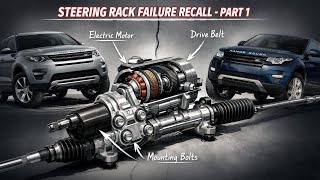
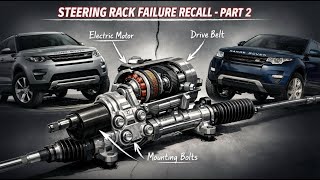
The Evoque (L538 chassis) uses a fully Electronic Power Assisted Steering (EPAS) system, which is highly sensitive to vehicle voltage. Unlike older hydraulic systems, any drop in electrical power, especially during high-draw events like an engine crank or an ECO stop-start, can immediately trigger this fault and impact steering feel. This platform is also subject to a non-safety recall (N642 in North America) for corroding aluminum bolts that secure the EPAS motor to the steering rack, which can shear and cause a sudden loss of power steering. 🎬 Watch: See how these aluminum bolts fail on the rack. While the recall addresses a mechanical fastening issue, the underlying system's sensitivity to voltage remains a key diagnostic characteristic for code B1304-16.
Diagnostic Flowchart

Tap your situation to follow the diagnostic path that matches what you're seeing on this vehicle.
Symptoms You May Notice
- Steering feels heavy or stiff, especially at low speeds.
- Complete loss of power steering assistance.
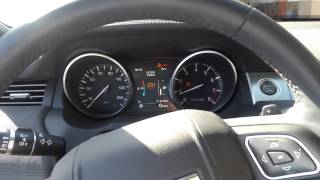
- "Power Steering Assistance Reduced" or similar warning message on the instrument cluster.
- Audible warnings or chimes from the instrument pack.
- The power steering may fail intermittently, especially during or after an engine crank or an ECO stop-start event.
- A grinding or clicking noise when turning the steering wheel, which can occur if the EPAS motor bolts have sheared (related to recall N642).
- Replacing the steering rack immediately. The code B1304-16 is a 'circuit voltage below threshold' fault, which points to an electrical supply problem, not necessarily a mechanical or internal electronic failure of the rack itself. Always diagnose the battery, alternator, and grounds first, as these are the most common and least expensive fixes.
Most Likely Causes

- Weak or Failing Battery 🔴 High Probability EPAS systems draw significant current, and Land Rover electronics are notoriously sensitive to low voltage. A battery that can still crank the engine may not provide stable enough voltage for all modules, especially during a start cycle. TSB SSM71278 lists low battery voltage at the PSCM, particularly during engine crank, as a primary cause.
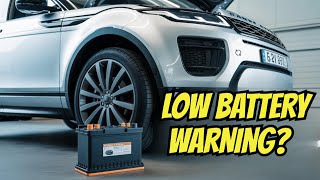
How to confirm: Perform a comprehensive battery test using a digital tester (like the JLR-approved EXP-1080) that measures state of health (SOH) and state of charge (SOC). Voltage should be above 12.4V at rest. A load test is the most definitive way to confirm. 🎬 Watch this before replacing your battery to save money. The battery must be fully charged before testing for an accurate result.
Typical fix: Replace the vehicle's 12V AGM battery. After replacement, the Battery Monitoring System (BMS) must be reset using a compatible OBD tool to inform the vehicle of the new battery, ensuring proper charging strategy.
Est. part cost: $200-$400 - Failing Alternator 🟡 Medium Probability If the alternator is not recharging the battery correctly, the overall system voltage will drop while the engine is running, triggering faults in sensitive modules like the PSCM.
How to confirm: With the engine running, measure the voltage at the battery terminals. A healthy alternator should produce between 13.5V and 14.5V.
Typical fix: Replace the alternator. It is critical to fully recharge the battery before or immediately after installing a new alternator to prevent premature failure of the new unit.
Est. part cost: $400-$800 - Corroded or Loose Ground Terminals 🟡 Medium Probability Land Rover TSB SSM71278 specifically calls out high resistance at EPAS-related ground points as a cause for this code. For the Evoque (L538), these are grounds G1D122A, G1D122B, G1D122AZ, and G1D108. These are often located in the wheel arches and are susceptible to corrosion.
How to confirm: Visually inspect the main battery ground, engine-to-chassis ground strap, and the specific EPAS ground points mentioned in TSB SSM71278 for looseness or corrosion. These are often found behind the front wheel arch liners. Perform a voltage drop test across the ground connections to check for high resistance.
Typical fix: Disconnect the battery. Remove the ground stud/bolt, clean the contact surfaces of the terminal and chassis to bare metal, replace any corroded washers or bolts, and re-tighten to the specified torque of 9Nm.
Est. part cost: $5-$20 - Loose or Damaged Wiring Harness to EPAS Module ⚪ Low Probability The wiring harness leading to the steering rack can become loose or damaged, causing an intermittent connection and voltage drop. TSB SSM71278 also notes to check for poor pin connections at connector C11-G1.
How to confirm: Inspect the wiring harness and connector at the power steering rack for any signs of damage, chafing, or looseness. Wiggling the harness while an assistant turns the wheel may replicate the fault. Perform a pin drag test on connector C11-G1 to check for proper tension.
Typical fix: Repair the damaged section of the harness or secure the loose connector. This may involve re-seating the connector, repairing pins, or replacing a section of wire.
Est. part cost: $0-$150
Rare But Worth Checking
- Internal Failure of the EPAS Rack/Motor/Module: This is the most expensive repair and should only be considered after all electrical power and ground issues have been ruled out. The Power Steering Control Module (PSCM) is integrated into the steering rack assembly and is not typically serviced separately. A used rack cannot be easily reprogrammed, as the VIN is stored in the module, requiring a new or specialized virginized unit.
Diagnosis Steps
- Read all Diagnostic Trouble Codes (DTCs) from all vehicle modules using a JLR-compatible scanner (like SDD or Pathfinder). Note all U-codes and B-codes present, especially B1304-16.
- Perform a full battery and charging system test as per TSB SSM71278. Connect a diagnostic charger. Test the battery's state of health and charge using a JLR-approved tester like the EXP-1080. If it fails or shows 'Re-charge Re-test', follow the TSB procedure before replacing.
- With the engine running, verify alternator output is between 13.5V and 14.5V at the battery terminals.
- Inspect the battery terminals and main chassis ground for corrosion or looseness. Clean and tighten as necessary.
- Locate and inspect the specific EPAS ground points for the Evoque (L538 chassis): G1D122A, G1D122B, G1D122AZ, and G1D108. These are typically behind the front wheel arch liners. Clean any corrosion and ensure they are tight (torque to 9Nm).
- Check the main fuses for the EPAS system. For the Evoque, this includes a large 80-amp fuse in the engine bay power distribution box and a smaller 5-amp fuse (Fuse 16) in the interior fuse box.
- Inspect the wiring harness and connector (C11-G1) going to the EPAS motor on the steering rack for damage, chafing, or loose connections. Perform a pin drag test to ensure good contact.
- If all power and ground circuits are confirmed to be good and the battery and alternator are healthy, the fault may be internal to the steering rack assembly, which contains the motor and control module.
Parts You'll Likely Need
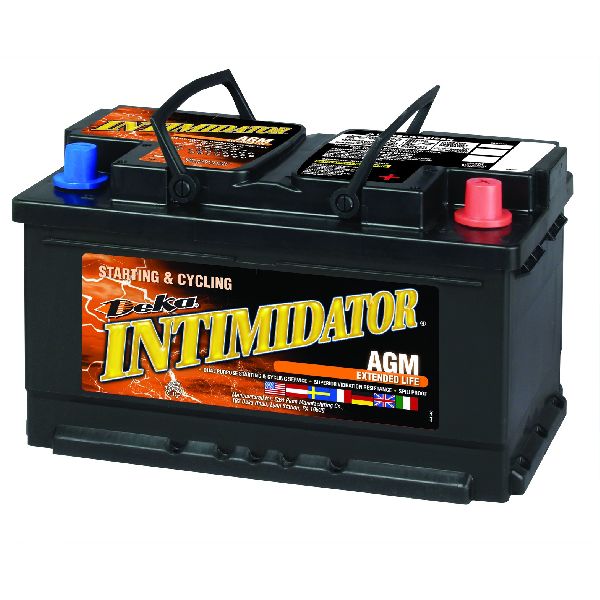
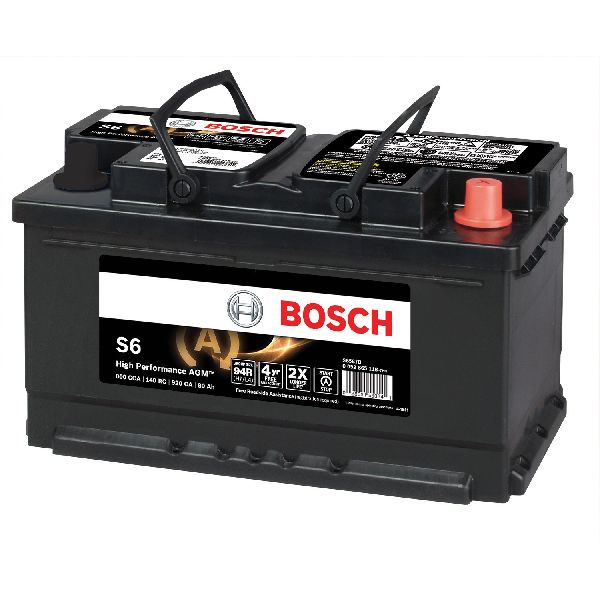
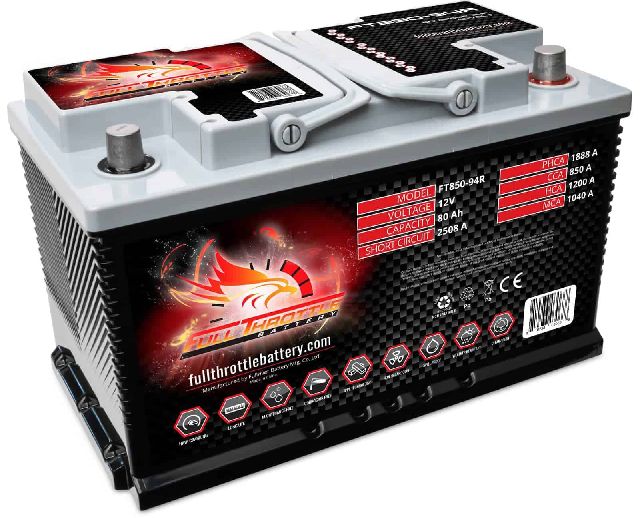
- 12V AGM Battery — A weak battery is the most frequent cause of low voltage codes in modern Land Rovers. The BMS must be reset after replacement.
Trusted brands: Interstate, Bosch, DieHard, Land Rover Genuine
OEM price range: $300-$450
Aftermarket price range: $200-$350 - Alternator
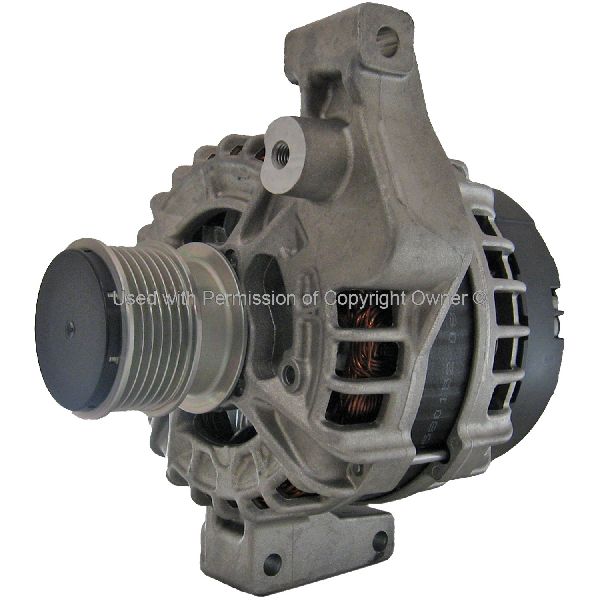
(OEM #LR067840 (For 2.0L Gas, supersedes LR028121, LR031027), LR028116 (For 2.2L Diesel))— A failing alternator will not provide sufficient voltage to run the vehicle's systems and charge the battery, leading to this fault. Part numbers vary by engine.
Trusted brands: Denso, Bosch, Land Rover Genuine
OEM price range: $900-$1100
Aftermarket price range: $400-$700 - Electric Power Steering Rack Assembly
(OEM #LR118268 (Fits from VIN CH623033), LR088700 (Fits up to VIN CH630089))— This is the last resort if all electrical supply issues are ruled out. The control module is integrated into the rack. A replacement rack must be programmed to the vehicle's VIN to function. Part numbers are VIN-specific.
Trusted brands: Land Rover Genuine
OEM price range: $2500-$5000
Related Codes That Often Appear With This One
- U3001-00 — This code for 'Power Steering Control Module (PSCM) system improper shutdown' is frequently logged alongside B1304-16, as the low voltage condition can cause the module to shut down incorrectly.
- U0131-00 — Indicates 'Lost Communication with PSCM'. If the power steering module loses power due to low voltage, other modules on the vehicle's network (like the Chassis Control Module) will log this code.
- U3003-62 — This code for 'Battery Voltage Signal Compare Failure' directly supports the diagnosis of a power supply issue, as it indicates a discrepancy in the voltage readings between modules.
- B1304-04 — This variant indicates 'Electronic Power Assisted Steering System - System Internal Failures' and may be logged with the primary B1304-16 code, pointing towards a potential issue within the rack itself, though still often triggered by external voltage problems.
Technical Service Bulletins (TSBs) & Recalls
- SSM71278: Addresses heavy steering and DTC B1304-16. Points to low battery voltage, wiring issues, or high resistance at specific ground points (G1D122A, G1D122B, G1D122AZ, G1D108 for Evoque) as primary causes.
Platform-Specific Known Issues
- TSB SSM71278 - Primary Diagnostic Guide: This service message is the most important document for this fault. It directly addresses B1304-16 and guides technicians to check the battery, charging system, and specific ground points before considering steering rack replacement.
- Recall N642 - Corroding EPAS Motor Bolts: A recall was issued for corroding aluminum bolts securing the EPAS motor to the steering rack. These can shear, causing a noisy or complete loss of power steering. In many cases, dealers attempting the recall find the bolts snap during removal, necessitating a complete steering rack replacement under the recall campaign. This issue can sometimes be misdiagnosed as an electrical fault initially due to the shared symptoms.
- Battery Management System (BMS) Reset: When replacing the battery on an Evoque, it is crucial to reset the BMS with a capable diagnostic tool. Failure to do so can lead to improper charging of the new battery, causing its premature failure and a return of low-voltage faults like B1304.
Mechanic-Grade Diagnostic Values
- EPAS Ground Stud Torque — expected: 9Nm. Failure: Loose or over-tightened fixings can cause high resistance.
- EPAS Module Power Feed (Connector C11AG-1, Red Wire) — expected: Battery Voltage (approx. 12.4V+ KOEO, 13.5V-14.5V KOER). Failure: Voltage drop under load (e.g., turning the wheel) indicates high resistance in the power supply circuit.
- EPAS Module Ground Circuit (Connector C11AG-2, Black Wire) — expected: Less than 0.1V (100mV) voltage drop between the connector pin and the negative battery terminal.. Failure: A reading higher than 0.1V indicates high resistance in the ground circuit, a common cause of this code.
Hidden / Shadow Codes Worth Checking
- B1304-16: Electronic Power Assisted Steering (EPAS) system circuit voltage below threshold. This is the primary code for this issue. (see via JLR SDD or Pathfinder diagnostic tool.)
- B1304-04: Electronic Power Assisted Steering System - System Internal Failures. Often logged with B1304-16. (see via JLR SDD or Pathfinder diagnostic tool.)
- U3001-00: Power Steering Control Module (PSCM) system improper shutdown. A common companion code caused by the voltage drop. (see via JLR SDD or Pathfinder diagnostic tool.)
- U0420-68: Chassis Control Module (CHCM) invalid data received from PSCM. Indicates the PSCM is sending bad data, likely due to low power. (see via JLR SDD or Pathfinder diagnostic tool.)
Scan Tool Commands That Help
- JLR SDD / Pathfinder: Clear All Stored DTCs — After performing a repair, to clear the B1304 and related codes. A hard reset (battery disconnect) may not be sufficient.
- JLR SDD / Pathfinder: Configure new module - Power Steering Control Module — This is mandatory after replacing the steering rack assembly. The new module must be programmed with the vehicle's VIN to function.
- JLR SDD / Pathfinder: Service Functions -> Body systems -> Enable Protected Outputs — In rare cases, if a related module like the BCM detects a persistent short circuit, it may disable the power feed to a circuit. This function is used to re-enable the output after the short has been repaired.
- JLR SDD / Pathfinder: Update ECU - Power Steering Control Module — If a TSB indicates a software update is available to correct erroneous fault logic, particularly on later models or for specific conditions like post-wading faults.
Wiring & Ground Locations

- G1D108 — In the engine compartment, near the battery.. This is a primary ground point for the vehicle's electrical system, and high resistance here can cause widespread voltage issues.
- G1D122A / G1D122B — Behind the front wheel arch liners.. These are the specific ground points for the EPAS ECU. Corrosion here is a direct and common cause of code B1304-16.
- C11-G1 — The main electrical connector at the EPAS steering rack assembly.. This connector carries the main power and ground for the EPAS motor. TSB SSM71278 specifically calls for checking pin condition here. Pin C11AG-2 is the ground feed via a 10.0 gauge black wire to G1D122A.
Real Owner Repair Stories
- SA Diagnostic's on YouTube (2014 Land Rover Sport (similar EPAS system)) — Loud noise when turning the steering wheel, heavy steering, and fault code B1304.
✅ What actually fixed it The bolts securing the EPAS motor to the steering rack had corroded and snapped, causing the motor to become loose and the drive belt to slip. The fix required drilling out the broken bolts and re-securing the motor. This is the same failure mode addressed by recall N642 on the Evoque. - Land Rover UK Forums user 'motorsportphoto' (2013 Evoque SD4) — Power steering fail message, code B1304-04, intermittent failure that returns after a few minutes of idling.
❌ Tried (didn't work) Letting the car sit for a few hours (fault would temporarily clear then return).
✅ What actually fixed it The user back-probed the power connector to the PSCM and confirmed a steady 14.8V, ruling out a wiring/alternator issue. The conclusion was an internal failure of the PSCM, requiring steering rack replacement. This is a valuable story showing that even with good voltage at the module, the module itself can be the point of failure.
When the Usual Fixes Don't Work
- In at least one owner's experience, the B1304 fault appeared for the first time just weeks after the dealer performed the recall service (N642) to replace the EPAS motor bolts. While the dealer claimed the subsequent rack failure was unrelated, the timing is highly coincidental and suggests that the recall work, which involves manipulating the EPAS motor, could potentially disturb the assembly and contribute to a premature failure of the integrated PSCM module.
OEM Part Supersession History
LR026259→LR088700 (via LR039246, LR053750)— Revisions to improve reliability or manufacturing.
Heads up: LR088700 fits LHD vehicles up to VIN CH630089. It is not compatible with later vehicles.Unknown→LR118268— Part for refreshed models.
Heads up: LR118268 fits LHD vehicles from VIN CH630090. It is not compatible with earlier vehicles.
Model Year Variations Within This Range
- 2014-2016: For the 2014 model year, the Evoque received a new 9-speed ZF automatic transmission, replacing the previous 6-speed. It also introduced a new standard 'Active Driveline' 4WD system with torque vectoring, which can decouple the rear axle above 22 mph for efficiency.
- 2016-2018: A software update was issued under TSB LTB01261NAS2/2019 to address issues with the auto stop/start system. As ECO stop/start events are a known trigger for the B1304 voltage fault, this software difference in later models is significant.
Helpful Videos


Used OEM Parts in Stock

New Aftermarket Parts Available



The information in this article is provided for general reference and educational purposes only. Vehicle specifications, procedures, and part compatibility can vary by production date, trim level, and region. Always consult your vehicle's factory service manual and verify part numbers before purchasing or performing repairs. Safety-critical components such as airbags, seat belts, and braking systems should be installed by a qualified professional.
- Land Rover RANGE ROVER EVOQUE:
- 🎬 Helpful Videos
- 🛍️ Shop This Part
- What's Unique About the 2012-2016 Land Rover RANGE ROVER EVOQUE
- Diagnostic Flowchart
- Symptoms You May Notice
- Most Likely Causes
- Rare But Worth Checking
- Diagnosis Steps
- Parts You'll Likely Need
- Related Codes That Often Appear With This One
- Technical Service Bulletins (TSBs) & Recalls
- Platform-Specific Known Issues
- Mechanic-Grade Diagnostic Values
- Hidden / Shadow Codes Worth Checking
- Scan Tool Commands That Help
- Wiring & Ground Locations
- Real Owner Repair Stories
- When the Usual Fixes Don't Work
- OEM Part Supersession History
- Model Year Variations Within This Range
- 🎟️ Get 5% Off