

OBD-II Code B1303: Accessory Delay Relay Circuit Open
The Ultimate Guide: What B1303 means, why it triggers, and how to fix it for any vehicle.
- Code B1303 indicates a broken circuit in the accessory delay relay, which normally keeps your radio and windows powered for about 10 minutes after turning off the ignition.
- On 2010-2020 Hyundai models, B1303 is a critical safety hazard indicating a failed accelerator pedal sensor that triggers limp mode and requires an immediate $150 pedal replacement.
- Fix the standard accessory fault by spending $15 to swap the accessory delay relay with an identical one from your fuse box, such as the horn relay.
- If a new relay and fuse do not restore power, expect a $200 to $1,200 repair for a failed control module, such as a Dodge TIPM or a 2002-2005 Ford Explorer instrument cluster.
What Does B1303 Mean?

B1303 means the Body Control Module (BCM) detects a broken electrical path (an 'open circuit') to the accessory delay relay. This relay keeps power flowing to the radio and power windows for a short time after you turn off the ignition, a feature known as Retained Accessory Power (RAP).
Technical definition: The SAE/ISO definition is 'Accessory Delay Relay Coil Circuit Open.' The control module cannot detect continuity in the circuit that energizes the relay's internal coil.
Can I Drive With B1303?
Yes, But With Caution. For most vehicles, yes. B1303 disables convenience features like the radio and does not impact engine operation. However, on 2010-2020 Hyundai models, this code flags a critical accelerator pedal failure that triggers limp mode, making it unsafe to drive. On certain BMWs, it indicates an ABS fault requiring immediate repair.
Common Causes

- Faulty Accessory Delay Relay (Very Common) — The relay is an electromechanical switch that wears out. The internal coil winding breaks, or the switch contacts burn out, severing the circuit.
- Blown Fuse (Common) — A short circuit or electrical overload blew the fuse protecting the accessory delay circuit or the BCM.
- Corroded Wiring or Sockets (Often from Water Intrusion) (Common) — Moisture from windshield or sunroof leaks corrodes wires, relay sockets, or ground connections under the dash, physically breaking the electrical path.
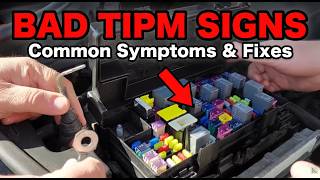
- Internal Fuse Box (TIPM/CJB) Failure (Less Common) — The internal circuit board of the fuse box develops microscopic cracks or bad solder joints. This is exceptionally common in 2009-2018 Dodge and Ram vehicles.
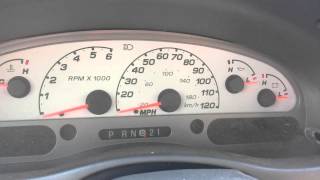
- Faulty Body Control Module (BCM) or Instrument Cluster (Rare) — The control module itself fails. On 2002-2005 Ford Explorers, the instrument cluster controls this relay and is a notorious failure point.
- Faulty Ignition Switch (Rare) — A worn ignition switch fails to send the 'key-off' signal to the BCM, preventing the accessory delay sequence from initiating.
Symptoms
- Radio and power windows turn off immediately with the key — The Retained Accessory Power (RAP) function fails completely. Accessories lose power the second the ignition is turned off.
- Accessories stay on indefinitely, causing a dead battery — If the relay physically sticks in the 'closed' position, it keeps accessories powered overnight, draining the battery.
- Sudden loss of engine power (Limp Mode) — CRITICAL: On 2010-2020 Hyundai models, B1303 indicates an accelerator pedal sensor failure, forcing the engine into limp mode.
- ABS and Traction Control warning lights illuminate — CRITICAL: On certain BMW models, this code flags an ABS wheel speed sensor fault, compromising braking safety.
- Random electrical glitches (horn, wipers, locks) — In Dodge/Ram vehicles with a failing TIPM, you experience multiple unrelated electrical issues simultaneously.
Diagnostic Flowchart

Tap your situation to follow the diagnostic path that matches what you're seeing on this code.
Common Fixes & Costs
- Replace Accessory Delay Relay — Parts: $10-$30, Labor: $0, ~0.1 hr book time (DIY)
- Replace Blown Fuse — Parts: $1-$5, Labor: $0, ~0.1 hr book time (DIY)
- Replace Hyundai Accelerator Pedal Assembly — Parts: $80-$160, Labor: $100-$150, ~1.0 hr book time (DIY)
- Repair Damaged Wiring or Connector — Parts: $5-$30, Labor: $120-$300, ~1.5 hr book time (Intermediate)
- Repair or Replace Control Module (BCM/TIPM/Cluster) — Parts: $200-$1200, Labor: $150-$400, ~2.5 hr book time (Professional)
Used vs. New Parts: Buying Guide
When a used part is worth it: For simple plug-in relays, a used part from a salvage yard is a low-risk, cost-effective option. For complex modules (BCM/TIPM), a used part only makes sense if the vehicle is older than 10 years and you can verify the exact part number matches.
Donor-vehicle mileage cap: roughly under 100000 miles for the part to have meaningful remaining life.
Donor quality checklist:
- Match the part number exactly; superseded numbers rarely interchange without dealer programming.
- Avoid electronic modules from flood-damaged or collision vehicles.
- Verify the used part includes at least a 30-day warranty.
- For instrument clusters, be aware the mileage transfers from the donor car, causing legal and resale issues.
Decision logic:
- If The failed part is a simple, external relay. → Used or new aftermarket are both excellent, low-cost choices.
- If The failed part is a BCM, TIPM, or Instrument Cluster. → A professionally remanufactured unit with a warranty is the best balance of cost and reliability. Used parts are highly risky due to unknown history and programming needs.
- If The failed part is a Hyundai Accelerator Pedal Assembly. → Buy a new OEM or high-quality aftermarket part. Given its critical safety function, a used part is unacceptable.
Warranty tradeoff: Used parts typically carry a 30-day warranty. Remanufactured parts offer 1-year or lifetime warranties. New OEM parts carry a 1-2 year warranty.
Worst-case if a used part fails: $500-$1500 if a used BCM/TIPM fails after the warranty period, requiring repeat labor and a second module purchase.
What Happens If You Wait — Timeline
- Immediate (Standard Accessory Fault): The Retained Accessory Power (RAP) feature stops working. The radio and windows turn off immediately with the ignition. (MPG impact: 0%% · Added cost: $0)
- 1-6 months (If caused by a slow water leak): The initial B1303 code is joined by intermittent electrical glitches (flickering lights, horn honking) as corrosion spreads within the BCM or fuse box. (MPG impact: 0%% · Added cost: $50 (to fix the leak now))
- 6+ months (If water leak is ignored): Catastrophic failure of the BCM or TIPM. The vehicle may not start, or multiple systems fail completely due to extensive circuit board corrosion. (MPG impact: N/A (vehicle inoperable)% · Added cost: $800 - $2000 for module replacement and programming.)
- Immediate (Hyundai/BMW Critical Fault): On a Hyundai, the car suddenly enters 'limp mode' with no warning, drastically reducing power. On a BMW, the ABS system is compromised. (MPG impact: N/A% · Added cost: Potential cost of an accident due to sudden power loss or brake failure.)
Cost of Not Fixing It
- Immediate: Loss of convenience features like Retained Accessory Power. The radio and windows turn off instantly with the key. (Added cost: $0)
- Ongoing (Standard Vehicles): If the root cause is a water leak affecting the BCM or fuse box, ignoring it leads to widespread corrosion and catastrophic module failure. (Added cost: $1000+)
- Immediate (Hyundai/BMW variants): For affected Hyundai models, this indicates a critical accelerator pedal failure causing sudden limp mode in traffic. For BMWs, it compromises braking. (Added cost: Potential cost of an accident.)
Diagnosis Steps
- Verify the Code Definition for Your Vehicle
Use an OBD-II scanner to confirm B1303. CRITICAL: If you drive a Hyundai, Kia, or BMW, stop here. This code indicates a severe safety fault (accelerator pedal or ABS) for those brands, not an accessory issue.
Tools: OBD-II Scanner (with B-code capability) (Beginner) - Inspect Fuses and Swap the Relay
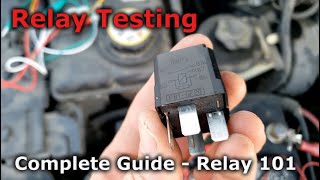
Check your owner's manual for the 'Accessory Delay' or 'RAP' fuse and relay. If the fuse is intact, swap the accessory relay with an identical one from the fuse box (like the horn relay). If the accessories work, replace the bad relay.
Tools: Owner's Manual, Fuse Puller (Beginner) - Inspect the Relay Socket for Damage
Remove the relay and shine a flashlight into the socket. Look for green/white corrosion, melted plastic, or female terminals that are spread too wide to grip the relay pins tightly.
Tools: Flashlight (Beginner) - Test Relay Coil Resistance
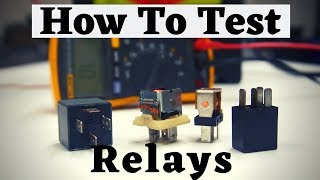
Set a multimeter to Ohms (Ω). Touch the probes to the relay's coil terminals (pins 85 and 86). A healthy coil reads between 50 and 200 Ohms. A reading of 'OL' (Over Limit) confirms the internal coil is broken.
Tools: Multimeter (Intermediate) - Check Socket Power and Ground
With the relay removed, set your multimeter to DC Volts. Pin 30 in the socket must show constant battery voltage (~12V). Turn the ignition on and off; the control pin (85 or 86) must receive a ~12V signal from the BCM. Lack of voltage indicates a wiring or module failure.
Tools: Multimeter, Vehicle Wiring Diagram (Intermediate) - Test Control Circuit Integrity
Disconnect the BCM connector. Set the multimeter to Ohms and check for continuity on the control wire between the BCM pin and the relay socket pin. A reading of 'OL' confirms a broken wire in the harness.
Tools: Multimeter, Vehicle Wiring Diagram (Advanced) - Inspect the Controlling Module
If the relay, fuses, and wiring test perfectly, the control module (BCM, TIPM, or Instrument Cluster) has failed internally. Remove the module and inspect it for water damage, corrosion, or burnt circuit board traces.
Tools: Basic Hand Tools (Advanced)
When This Code Triggers (Freeze-Frame Conditions)
- Ignition Status: Off/Run to Off Transition (The code sets when the ignition is turned off and the BCM attempts to activate the accessory delay relay but detects no current flow.)
- BCM Command State: Commanded ON (The Body Control Module sends the voltage signal to energize the relay coil.)
- Battery Voltage: 11.5V - 14.5V (Sufficient system voltage must be present for the BCM to attempt to operate the relay.)
- Door Ajar Switch: Closed (Door Shut) (The system is designed to stay active after key-off until a door is opened. The fault logs before a door-open signal is received.)
Related Codes
- B1302 — Indicates 'Accessory Delay Relay Coil Circuit Failure.' This is a general code for an open, short, or high resistance, whereas B1303 specifically isolates an open circuit.
- B1304 — Indicates 'Accessory Delay Relay Coil Circuit Short To Battery.' The control wire is touching a power source, showing constant voltage instead of the 0V expected with an open circuit.
- B1305 — Indicates 'Accessory Delay Relay Coil Circuit Short To Ground.' The control wire is constantly grounded, showing permanent continuity to the chassis.
- P2138 — Throttle/Pedal Position Sensor Voltage Correlation. On Hyundai models, this powertrain code always accompanies B1303 to trigger the check engine light and limp mode.
Climate & Environmental Factors
- Water Intrusion: Moisture from failing windshield or sunroof seals drips directly onto fuse boxes and BCMs, corroding pins and circuit boards to break the electrical path.
- Thermal Cycling: Daily hot and cold temperature swings cause expansion and contraction, eventually cracking the delicate solder joints inside modules like the Dodge TIPM or Ford instrument cluster.
- Extreme Cold: Freezing temperatures make plastic wire insulation brittle and increase electrical resistance in aging circuits, occasionally triggering false open-circuit codes.
How to Talk to a Mechanic About This Code
Say this: "I have a B1303 code and my accessories aren't working correctly. I'd like to book a diagnostic appointment to trace the accessory delay relay circuit. Please test the relay, its wiring, and the control signal before assuming the BCM or TIPM is bad."
This signals you've done research and directs the mechanic to follow a logical diagnostic path instead of jumping to the most expensive conclusion (module replacement).
Avoid saying:
- 'My radio isn't working right.' (too vague)
- 'Just fix the B1303 code.' (invites part-swapping without diagnosis)
- 'I think I need a new computer.' (suggests an expensive repair you may not need)
Questions to ask before authorizing the repair:
- What were the voltage and ground readings at the relay socket (pins 30, 85, 86)?
- If you recommend a BCM/TIPM replacement, did you test the control wire for continuity between the module and the relay socket?
- Can you show me the damaged wiring or the failed component?
- What is the warranty on the recommended repair, including parts and labor?
Where to Take It: Dealer vs Independent vs Chain
- Dealer:
Recommended for the critical Hyundai/BMW variants or if a complex module replacement with programming is confirmed.
Best for: Vehicles under warranty., The Hyundai/BMW variants of B1303, which are critical safety issues., Confirmed BCM/TIPM failures requiring manufacturer-specific programming.
Downsides: Highest labor rates ($150-$250/hr)., Often defaults to replacing an entire module when a wiring repair is the true cause. (Typical cost: +50% vs. baseline) - Independent Shop:
Best fit for most common B1303 scenarios, provided you choose a shop with proven electrical diagnostic expertise.
Best for: Out-of-warranty vehicles where the fault is likely a relay, fuse, or wiring issue., Diagnosing common pattern failures, like the Ford Explorer cluster or Dodge TIPM issues.
Downsides: Diagnostic skill for complex electrical issues varies greatly. Look for ASE-certified technicians specializing in electrical work. (Typical cost: +0% vs. baseline) - Chain Shop:
AVOID for initial diagnosis. Only use if the fix is a known, simple part replacement.
Best for: You have already diagnosed a bad relay and just need it replaced.
Downsides: Technicians lack the in-depth electrical training needed for circuit tracing., High pressure to sell parts leads to misdiagnosis. (Typical cost: -10% vs. baseline)
When to Walk Away From the Repair
If the estimated repair cost exceeds 50% of the car's private-party market value, seriously consider selling or trading in the vehicle instead of repairing it.
- Car worth $3000, fix is $1800: Walk away. The repair cost is 60% of the car's value. It is not a sound financial decision.
- Car worth $15000, fix is $1200: Fix it. The repair is less than 10% of the vehicle's value and well below the threshold.
- Car worth $5000, fix is $2500: Borderline. This is exactly 50%. Get a second opinion and assess the car's overall health before deciding.
What Scan Tool You Need for This Code
Minimum: A scanner that reads and clears Body Control Module (BCM) codes, listed as 'B' codes. Basic engine-only code readers will not see this fault.
A standard $20 code reader only checks for 'P' (Powertrain) codes and reports 'No Codes Found,' leading you to believe there is no issue.
Budget: BlueDriver Pro or Foxwell NT301 (~$70) — Reads and clears engine, ABS, SRS, and BCM codes. Excellent entry points for diagnosing B-codes.
Mid-range: Innova 5610 or Autel MaxiCOM MK808S (~$350) — Offers bidirectional control, allowing you to command the accessory delay relay ON and OFF directly from the scan tool to test its function and circuit integrity.
Professional: Autel MS906Pro or Launch X431 Series (~$1200+) — Provides full dealer-level diagnostics, including module programming necessary if you replace a BCM or TIPM.
Rent vs buy: AutoZone and O'Reilly Auto Parts offer a loaner tool program where you 'buy' a scanner and get a full refund upon return. Ensure their loaner models read Body ('B') codes.
How to Clear the Code After You Fix It
- Fix the underlying electrical fault (e.g., replace relay, repair wire).
- Use an OBD-II scan tool capable of reading 'B' codes to clear the fault from the Body Control Module.
- Cycle the ignition from Off to On, then back to Off. Verify the radio remains powered until a door is opened.
Drive cycle (~5 minutes): A specific driving cycle is not required. Turn the ignition on, then turn it off. The radio should remain powered. Open the driver's door to turn it off. If the function works and the code does not return, the repair is complete.
Readiness monitors affected: None
Watch out for:
- Using a basic $20 engine-only code reader that cannot communicate with the BCM to clear the code.
- Disconnecting the battery to clear the code, which resets emissions monitors and fails to fix the root cause.
- Replacing the relay without checking for a blown fuse first.
Will This Fail Emissions / State Inspection?
No — by itself this code doesn't fail OBD inspection (but it can keep readiness monitors from setting, which causes a separate fail).
- General Note: A 'B' (Body) code like B1303 does not illuminate the Check Engine Light and will not cause an OBD-II emissions failure. However, if the fault is on a Hyundai, it is accompanied by powertrain code P2138, which DOES illuminate the light and causes an automatic failure.
- California: The B1303 code itself will not fail a Smog Check. However, if you disconnected the battery to clear it, OBD-II readiness monitors reset, and the vehicle fails until a full drive cycle is completed.
- New York: NYS inspections check for the illumination of the Malfunction Indicator Light. As B1303 alone does not trigger this light, it passes.
- Texas: In emissions-testing counties, the inspection looks for active powertrain codes. B1303 passes unless it is the Hyundai variant setting a 'P' code.
Most Commonly Affected Vehicles

- Ford Explorer / Explorer Sport Trac (2002-2005) — Extremely common issue caused by cracked solder joints on the instrument cluster's internal circuit board. Symptoms include intermittent power to the radio, windows, and the cluster itself.
- Ford F-150 (2009-2014) — The accessory delay relay (Relay R03) is located in the passenger compartment fuse panel. Failures are typically the relay itself or the fuse box.
- Ford F-250/F-350 Super Duty (2008-2016) — Often related to a failing Body Control Module (BCM), which also causes parasitic battery drains and erratic lighting behavior.
- Chevrolet / GMC Silverado / Sierra 1500 (2007-2013) — The Retained Accessory Power (RAP) relay is soldered permanently inside the Body Control Module (BCM). A B1303 code here requires BCM repair or replacement.
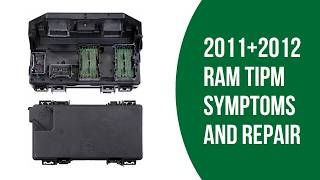
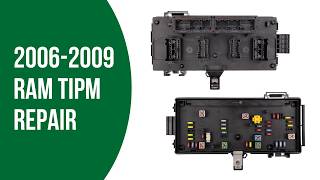
- Dodge / Ram Ram 1500/2500/3500 (2009-2018) — These trucks suffer from a notoriously high TIPM failure rate. The accessory delay relay is internal to the TIPM. Symptoms affect lights, wipers, and door locks simultaneously.
- Nissan Leaf (2019-2022) — B1303 is defined as 'MULTI AV' and points to an internal failure of the audio-visual control unit, causing the main infotainment screen to malfunction.
- Audi A4, A5, S5 (2023-2024) — Code B13034A ('Incorrect Component Installed') is stored due to a gesture-controlled trunk feature being discontinued mid-production. It is informational and requires no repair.
- Hyundai Genesis, Elantra, i30 (2010-2020) — CRITICAL: Code B1303 is defined as 'Accelerator Pedal Position Signal Error'. It causes severe hesitation and forces the vehicle into limp mode. Requires a new accelerator pedal assembly.
Manufacturer-Specific Notes
- Hyundai: B1303 means 'Accelerator Pedal Position Signal Error.' This is a critical safety issue that triggers limp mode and requires immediate replacement of the pedal assembly.
- BMW: B1303 indicates a fault with an ABS wheel speed sensor or its circuit. It is accompanied by ABS/DSC warning lights and compromises braking performance.
- Audi: For 2023+ models, B13034A means 'Incorrect Component Installed' related to a discontinued trunk feature. It is not a fault and requires no repair.
- General Motors (Chevrolet/GMC): GM calls this system 'Retained Accessory Power' (RAP). On 2007+ trucks, the RAP relay is soldered inside the BCM, making it non-serviceable and requiring full module replacement.
- Chrysler/Dodge/Jeep/Ram: The accessory delay function is controlled by the Totally Integrated Power Module (TIPM). TIPMs have a massive failure rate, often requiring a $500+ remanufactured unit to fix a single bad relay.
- Ford: On 2002-2005 Explorers, the accessory delay relay is controlled by the instrument cluster. Cracked solder joints in the cluster are the primary cause of B1303 for these vehicles.
Real Owner Stories
2013 Hyundai Elantra at 95K miles
The car suddenly refused to accelerate past 20 MPH, forcing the driver to pull over. The issue was intermittent, happening one day and gone the next.
What they tried:
- A local shop explained 'limp mode' but found no engine codes.
- The dealership could not replicate the problem and suggested a $200 transmission fluid flush.
Outcome: The root cause was a failing Accelerator Pedal Position Sensor (APPS), the known cause for code B1303 on these models. Replacing the $150 pedal assembly permanently fixed the limp mode.
Lesson: On a Hyundai, B1303 with limp mode is definitively the accelerator pedal sensor. Do not let a shop misdiagnose it as a transmission issue.
2004 Ford Explorer at 120K miles
The radio and power windows randomly stopped working. Occasionally, the entire instrument cluster went dead while driving, then flickered back on.
What they tried:
- Replaced the accessory delay relay and checked all fuses, which did not fix the issue.
- Searched online forums and found identical symptoms linked to the cluster.
Outcome: The problem was cracked solder joints on the back of the instrument cluster circuit board. The owner sent the cluster to a mail-in repair service for $200, resolving all symptoms.
Lesson: For 2002-2005 Ford Explorers, B1303 combined with intermittent cluster/radio issues is a textbook failed instrument cluster. A mail-in repair service is the most cost-effective solution.
2014 Dodge Ram 1500 at 115K miles
After heavy rain, the running lights refused to turn off after parking, draining the battery. The issue became frequent during high humidity.
What they tried:
- Cycled the ignition on/off, which sometimes worked.
- Disconnected the battery overnight to prevent draining.
- Inspected the engine bay for obvious water entry but found none.
Outcome: Diagnosed as an internal failure of the TIPM. Moisture entered the module, causing corrosion and a relay to stick. The owner replaced the TIPM for $1,200 at the dealer.
Lesson: On Dodge/Ram trucks, bizarre electrical issues occurring after rain strongly indicate TIPM failure. The root cause is often a leaking third brake light seal.
How to Prevent This Code From Triggering
- Clean sunroof drains and the cowl area below the windshield. (Once a year (Fall)) — Debris clogs these drains, causing water to overflow into the cabin and drip directly onto the BCM or interior fuse box. This water intrusion is a primary cause of B1303.
- Inspect and clean main battery and chassis ground connections. (Every 2-3 years or during battery replacement) — Corroded ground connections create high resistance, causing voltage drops and erratic behavior from sensitive electronic modules like the BCM.
- Apply dielectric grease to the pins of a new relay. (When replacing a relay) — In engine bay fuse boxes exposed to humidity, dielectric grease seals out moisture, preventing pin corrosion that leads to open circuits.
- Address windshield and rear brake light seal leaks immediately. (As needed) — On many trucks (especially Dodge/Ram), a leaking third brake light seal allows water to enter the cab and run along wiring, destroying the TIPM or BCM.
Frequently Asked Questions
What does 'open circuit' mean in simple terms?
An open circuit is a physical break in an electrical wire or path. Electricity cannot reach the component, preventing the relay coil from energizing.
Why does my scanner say B1303 is an accelerator pedal or ABS problem?
Manufacturers reuse OBD-II codes for different systems. A B1303 on a Ford is an accessory relay, but on a Hyundai, it indicates a dangerous accelerator pedal fault. Always verify the code's exact definition for your specific vehicle year and make.
I replaced the relay and fuse, but B1303 is still there. What's next?
The fault lies in the wiring or the control module. Perform a voltage drop test to check for high resistance, then test the control wire's continuity from the BCM to the relay socket.
Can a bad accessory delay relay drain my battery?
Code B1303 specifically indicates an open circuit, which does not drain the battery. However, if the relay's internal switch physically sticks closed, it keeps accessories powered on and kills the battery overnight.
Is the Accessory Delay Relay the same as the Retained Accessory Power (RAP) relay?
Yes, these are different names for the exact same system. General Motors uses the term Retained Accessory Power (RAP), while Ford and others call it the accessory delay system.
What is a TIPM and why is it so expensive?
The Totally Integrated Power Module (TIPM) used in Chrysler/Dodge vehicles combines the fuse box with a central computer. Because relays are soldered directly to its internal circuit board, a single relay failure often requires replacing the entire $500+ module.
My car is in 'limp mode'. Could B1303 be the cause?
Yes, but only if you drive a Hyundai or Kia where B1303 indicates an accelerator pedal fault. For all other manufacturers, B1303 is a convenience feature issue and does not affect engine performance.
Key Takeaways
- Code B1303 indicates a broken circuit in the accessory delay relay, which normally keeps your radio and windows powered for about 10 minutes after turning off the ignition.
- On 2010-2020 Hyundai models, B1303 is a critical safety hazard indicating a failed accelerator pedal sensor that triggers limp mode and requires an immediate $150 pedal replacement.
- Fix the standard accessory fault by spending $15 to swap the accessory delay relay with an identical one from your fuse box, such as the horn relay.
- If a new relay and fuse do not restore power, expect a $200 to $1,200 repair for a failed control module, such as a Dodge TIPM or a 2002-2005 Ford Explorer instrument cluster.
Helpful Videos


![How To Test and Diagnose Relays and Wiring [4 & 5 Pin]](https://img.youtube.com/vi/S-DwV0HLsE4/mqdefault.jpg)


The information in this article is provided for general reference and educational purposes only. Vehicle specifications, procedures, and part compatibility can vary by production date, trim level, and region. Always consult your vehicle's factory service manual and verify part numbers before purchasing or performing repairs. Safety-critical components such as airbags, seat belts, and braking systems should be installed by a qualified professional.
- 🎬 Helpful Videos
- What Does B1303 Mean?
- Can I Drive With B1303?
- Common Causes
- Symptoms
- Diagnostic Flowchart
- Common Fixes & Costs
- Used vs. New Parts: Buying Guide
- What Happens If You Wait — Timeline
- Cost of Not Fixing It
- Diagnosis Steps
- When This Code Triggers (Freeze-Frame Conditions)
- Related Codes
- Climate & Environmental Factors
- How to Talk to a Mechanic About This Code
- Where to Take It: Dealer vs Independent vs Chain
- When to Walk Away From the Repair
- What Scan Tool You Need for This Code
- How to Clear the Code After You Fix It
- Will This Fail Emissions / State Inspection?
- Most Commonly Affected Vehicles
- Manufacturer-Specific Notes
- Real Owner Stories
- 2013 Hyundai Elantra at 95K miles
- 2004 Ford Explorer at 120K miles
- 2014 Dodge Ram 1500 at 115K miles
- How to Prevent This Code From Triggering
- Frequently Asked Questions
- What does 'open circuit' mean in simple terms?
- Why does my scanner say B1303 is an accelerator pedal or ABS problem?
- I replaced the relay and fuse, but B1303 is still there. What's next?
- Can a bad accessory delay relay drain my battery?
- Is the Accessory Delay Relay the same as the Retained Accessory Power (RAP) relay?
- What is a TIPM and why is it so expensive?
- My car is in 'limp mode'. Could B1303 be the cause?
- Key Takeaways
- 🎟️ Get 5% Off