

B1299 on 2019-2020 Ram 1500: Park Assist Sensor 12 Failure Causes and Fixes
This code indicates a signal failure from Park Assist Sensor #12. The most common fix is replacing the faulty sensor after ensuring it is clean and free of debris. However, wiring issues, particularly breaks or corrosion in the bumper harness, are also a known cause. Official service bulletins suggest a software update may be required in some cases to prevent erroneous codes.
- B1299 specifically points to a signal failure in Park Assist Sensor #12.
- Always start diagnosis by thoroughly cleaning the sensor face to remove any dirt, snow, or ice.
- If cleaning doesn't work, the most likely cause is a failed sensor. A sensor swap with a neighbor is a good no-cost diagnostic step.
- If a new sensor doesn't fix the issue, the problem is very likely in the wiring harness or a connector.
- Be aware that Ram has issued software updates to fix erroneous sensor codes; a trip to the dealer may be necessary.
What's Unique About the 2019-2020 Ram 1500

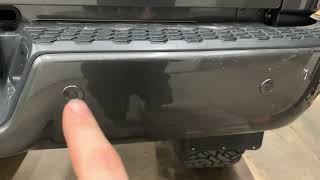
What's unique about this code on the 5th Generation (DT) Ram 1500 is the specific reference to 'Sensor 12' in official Technical Service Bulletins (TSBs). Many general repair sources and diagrams for Ram trucks claim the sensor numbering skips from 11 to 1, omitting a #12. However, 🎬 Watch: See where all the sensors are located on your Ram. Mopar's own diagnostic and parts documentation confirms that the system allows for up to twelve sensors (six front, six rear) and explicitly lists "Positions 7, 12" for part number 6MK25TZZAA. The existence of TSBs #08-240-25, #08-082-20, and #08-047-19 for the 2019 model year confirms that on certain configurations, likely those with advanced or 360-degree parking systems, a 12th sensor is present and monitored. This discrepancy often causes confusion during diagnosis.
Diagnostic Flowchart

Tap your situation to follow the diagnostic path that matches what you're seeing on this vehicle.
Generation note: The 2019-2020 model years include both the new 5th Generation Ram 1500 (code 'DT') and the previous generation, sold as the 'Ram 1500 Classic' (code 'DS'). This guide and the cited TSBs specifically reference the 5th Gen 'DT' platform. While the Classic may experience similar issues, part numbers and specific diagnostic procedures may differ.
Symptoms You May Notice

- "Service Park Assist System" message on the instrument cluster
- Park Assist system is inoperative.
- The ParkSense on/off switch indicator light stays illuminated
- False obstacle detection by the front sensors.
- Unexpected automatic braking when backing up.
- Audible chimes and warnings like "ParkSense Temporarily Unavailable".
- Warning light on the dashboard flashes and then stays on solid.
- Replacing the Park Assist Module before diagnosing the sensor and wiring.
- Replacing a sensor without first cleaning it thoroughly.
- Using cheap, incompatible aftermarket sensors that do not communicate correctly with the Ram's system, sometimes causing multiple sensor codes to appear or providing erratic performance.
Most Likely Causes

- Faulty Parking Sensor #12 🔴 High Probability The sensors are exposed to weather, road debris, and high-pressure car washes, which can lead to moisture intrusion and internal failure of the ultrasonic transceiver over time.
How to confirm: After cleaning the sensor, swap it with an adjacent, working sensor (e.g., #11). Clear the codes and re-test. If the trouble code moves to the new position (e.g., B1298 for sensor #11), the sensor itself is confirmed to be faulty. A faint clicking or buzzing sound can often be heard from a working sensor.
Typical fix: Replace the individual parking sensor. 🎬 See this walkthrough on how to replace a faulty sensor. The new sensor may need to be painted to match the bumper color, as OEM replacements typically come unpainted.
Est. part cost: $30-$100 - Wiring Harness or Connector Issue 🟡 Medium Probability The bumper wiring harnesses are exposed to the elements, making them susceptible to corrosion, chafing, or impact damage. A known weak point on some Ram models is a large harness connector located behind the rear wheel well liner. Wires can also break inside the loom near the bumper due to stress and vibration, which can be hard to spot visually.
How to confirm: Visually inspect the wiring leading to sensor #12 and the main harness connectors. Check for green/white corrosion, pinched wires, or physical damage. A multimeter can be used to check for the 8V supply, ground, and signal continuity at the sensor connector. In one documented case, a technician found three broken wires inside the harness sheathing that were not visible from the outside.
Typical fix: Repair the damaged section of the wiring harness by soldering and using heat-shrink tubing or replace the corroded connector pigtail. In some cases, the entire bumper harness may need to be replaced. Applying dielectric grease to connectors during reassembly is a recommended preventative measure.
Est. part cost: $20-$250 - Obstructed Sensor Face 🟡 Medium Probability Due to their location on the bumpers, sensors are easily covered by dirt, mud, snow, ice, or thick road salt spray, which interferes with the ultrasonic signal.
How to confirm: Visually inspect the face of the parking sensors for any physical contamination or obstruction. Even a clear coat of ice can be enough to trigger a fault.
Typical fix: Thoroughly clean the sensor face with a soft cloth and car wash soap. Clear the codes and re-test the system. This can sometimes be done by turning the ParkSense option off and on in the Uconnect settings.
Est. part cost: $0 - Park Assist Module (PAM) Software Glitch ⚪ Low Probability TSB 08-047-19 explicitly states that for vehicles built on or before April 11, 2019, DTCs including B1299-25 may be set erroneously and that a software enhancement will remove these DTCs. TSB 08-082-20 was issued to address false detections from front sensors caused by the system 'locking onto rain'.
How to confirm: This can only be confirmed by a dealership or a qualified shop with access to Ram's service software (wiTECH). They can check if the vehicle's PAM has the latest software version installed by referencing the TSBs.
Typical fix: Reprogram or 'flash' the Park Assist Module with the updated software specified in the TSB.
Est. part cost: $0 (if under warranty) - $200
Rare But Worth Checking
- Faulty Park Assist Module (PAM): While possible, a hardware failure in the control module is unlikely to cause a fault for only a single sensor. This should only be considered after thoroughly ruling out the sensor, wiring, and software.
- Blown Fuse: A blown fuse would typically disable the entire Park Assist system, not just a single sensor. On some Ram trucks, the fuse for the park assist system is fuse F95 in the main engine compartment fuse box.
Diagnosis Steps
- Read the fault codes with an OBD-II scanner capable of reading B-codes (Body codes) to confirm B1299-25 is the active fault.
- Locate Park Assist Sensor #12. Mopar parts diagrams confirm this position exists on vehicles with the full sensor suite. On rear bumpers, sensor numbering starts with #8 on the passenger outer side, and #12 is often the driver's side outer sensor.
- Visually inspect and thoroughly clean the face of Sensor #12 and its surrounding bezel of any dirt, snow, ice, or other debris.
- Clear the fault code and test the system by driving in reverse near an object. If the code returns, proceed to the next step.
- If accessible, swap Sensor #12 with an adjacent sensor (like #11). Clear the codes and re-test. If the code changes to B1298 (for sensor #11), the original sensor is bad. If the code remains B1299, the problem is in the wiring or module.
- Inspect the wiring connector at Sensor #12 for corrosion or damage. Follow the harness back, looking for any signs of chafing, breaks, or damage. Pay special attention to the main harness connector (a 24-way connector, possibly XY630A) located behind the driver's side rear wheel liner, a known spot for water intrusion.
- If wiring looks intact, use a multimeter to check for ~8V power supply on the correct pin at the sensor connector with the ignition on.
- If the sensor and wiring appear to be good, consult a dealership to check for any available software updates for the Park Assist Module as specified in TSBs #08-240-25, #08-082-20, or #08-047-19, especially for trucks built before mid-April 2019.
Parts You'll Likely Need
- Park Assist Sensor
(OEM #6MK25TZZAA)— This is the component that generates the signal. Internal failure of the sensor is the most common reason for a waveform fault code. This part number supersedes several previous numbers.
Trusted brands: Mopar
OEM price range: $95-$145
Aftermarket price range: $25-$70 - Rear Bumper Wiring Harness Connector Kit
(OEM #68353351AA)— If the main harness connector behind the wheel liner is corroded, this service kit may be needed for repair.
Trusted brands: Mopar
OEM price range: $40-$70
Aftermarket price range: N/A
Related Codes That Often Appear With This One
- B1298 — This code is for sensor #11. If seen with B1299, it could indicate a problem common to both sensors, such as damage to that section of the bumper or a wiring harness issue affecting multiple sensors.
- B1297 — This code is for sensor #10. Seeing multiple codes for adjacent sensors (e.g., B1297, B1298, B1299) strongly suggests a wiring harness or connector problem rather than multiple simultaneous sensor failures.
Technical Service Bulletins (TSBs) & Recalls
- 08-240-25: Addresses B1299-25 and an inoperative Park Assist system.
- 08-082-20: Mentions B1299-25 in the context of false detections from front sensors, sometimes caused by the system 'locking onto rain'.
- 08-047-19: Connects B1299-25 to unexpected automatic braking during reverse maneuvers and notes that a software update can fix erroneously set codes on early-build 2019 models.
Platform-Specific Known Issues
- TSB #08-240-25 notes that code B1299-25 can occur when the customer complaint is that the Park Assist is inoperative.
- TSB #08-082-20 addresses false detections from front sensors due to 'locking onto rain,' which may involve a software update for the PAM.
- TSB #08-047-19 indicates that for trucks built on or before April 11, 2019, this DTC may be set erroneously and can be resolved by reprogramming the PAM.
Mechanic-Grade Diagnostic Values
- Park Assist Sensor Supply Voltage — expected: Approximately 8V. Failure: Voltage significantly lower than 8V or 0V indicates an open or short in the supply circuit. Voltage at battery level could indicate a short to power.
- Sensor Supply Circuit Resistance to Ground — expected: Greater than 10,000 ohms (10 kΩ). Failure: Resistance less than 10 kΩ indicates a short to ground in the power supply circuit for the sensors.
Scan Tool Commands That Help
- wiTECH: Reprogram the PAM — Used to apply software updates from TSBs (like 08-047-19) that fix erroneous DTCs or improve system performance. This is a required step if the vehicle falls within the TSB's production date range and exhibits the described symptoms.
- wiTECH: Restore BCM Proxi Configuration — This procedure is often required after flashing or replacing the Park Assist Module (PAM) to ensure all vehicle modules recognize the new software or hardware and communicate correctly.
- wiTECH: Read PAM DTCs — Used to retrieve manufacturer-specific body codes like B1299-25. A generic OBD-II reader may not see these codes, making a dealer-level tool necessary for initial diagnosis.
Wiring & Ground Locations
- Park Assist Sensor Connector — Directly on the back of each park assist sensor within the bumper.. This is the primary point for testing voltage, ground, and signal for a specific sensor. It is a 3-wire connector.
- Main Bumper Harness Connector — Located behind the driver's side rear wheel well liner, connecting the bumper harness to the main body harness.. This connector is a common point for corrosion and water intrusion, which can cause faults in multiple sensors simultaneously or intermittently. A fault here can cause a B1299 code.
- F95 Fuse — In the cabin fuse box (Body Control Module area), not the underhood Power Distribution Center.. This 10A fuse provides power to the Rear Camera and Park Assist system. While a blown fuse would likely disable the whole system, an intermittent connection or low voltage here could cause faults.
- Park Assist Module (PAM) — On some Ram trucks, the module is located in the headliner, requiring removal of the headliner for access. On 2019+ models, it has been reported behind the driver's side trim panel near the door sill.. This is the control unit for the system. All sensor wiring terminates here. Access is required for module replacement or to test circuits directly at the module connector if a wiring break is suspected.
Real Owner Repair Stories
- Ford Expedition Forum user (Ford Expedition (Note: Different vehicle, but same B1299 'short to ground' code and diagnostic principle)) — Park assist system inoperative with a B1299 code, reminder message appears on every startup.
❌ Tried (didn't work) The user noted the issue persisted for years after a dealer repair for a collision., Running a module self-test with FORScan confirmed the fault but didn't fix it.
✅ What actually fixed it The user identified the root cause as a poorly repaired wiring harness from a previous collision. The dealer technician had spliced the wires with heat shrink, but the repair failed after a couple of weeks, causing the B1299 code to return. The final fix required a proper repair of the damaged bumper harness.
OEM Part Supersession History
6mk25kbuaa, 6mk25kxjaa, 6mk25p79aa, 6mk25p82aa, 6mk25pr4aa, 6mk25vcaaa, 6mk25wasaa, 6mk25wcqaa, 6mk25whcaa, 6mk25ws2aa→6MK25TZZAA— Part consolidation and potential design/manufacturing improvements over time.
Heads up: The listed part numbers are all replaced by 6MK25TZZAA, which is the current service replacement. Using the older, superseded part numbers is not recommended.
Model Year Variations Within This Range
- 2019 (built on or before April 11, 2019): Vehicles built before this date may erroneously set code B1299-25. The fix is not a part replacement but a software update for the Park Assist Module (PAM) as outlined in TSB 08-047-19.
Helpful Videos
We Have This Part in Stock


The information in this article is provided for general reference and educational purposes only. Vehicle specifications, procedures, and part compatibility can vary by production date, trim level, and region. Always consult your vehicle's factory service manual and verify part numbers before purchasing or performing repairs. Safety-critical components such as airbags, seat belts, and braking systems should be installed by a qualified professional.
- Ram 1500:
- 🎬 Helpful Videos
- 🛍️ Shop This Part
- What's Unique About the 2019-2020 Ram 1500
- Diagnostic Flowchart
- Symptoms You May Notice
- Most Likely Causes
- Rare But Worth Checking
- Diagnosis Steps
- Parts You'll Likely Need
- Related Codes That Often Appear With This One
- Technical Service Bulletins (TSBs) & Recalls
- Platform-Specific Known Issues
- Mechanic-Grade Diagnostic Values
- Scan Tool Commands That Help
- Wiring & Ground Locations
- Real Owner Repair Stories
- OEM Part Supersession History
- Model Year Variations Within This Range
- 🎟️ Get 5% Off