

B1296 on 2013-2020 Ram 1500: Park Assist Sensor 9 Failure Causes and Fixes
On a 2013-2020 Ram 1500, code B1296 almost always means the #9 park assist sensor is either dirty or has failed. This sensor is the inner one on the rear passenger side bumper. Start by thoroughly cleaning the sensor. If the code returns, the sensor likely needs replacement, which is a straightforward DIY job with parts costing between $25 and $150. The sensor can be accessed from under the bumper without removing it.
- B1296 specifically refers to the inner park assist sensor on the rear passenger side bumper.
- The most common causes are a dirty sensor face or a failed sensor.
- Diagnosis is straightforward: clean the sensor, then swap it with a neighbor to confirm failure before buying a new part.
- The repair is DIY-friendly as the sensor can be accessed from under the bumper without removing it.
- If multiple rear sensors fail at once, the primary suspect is the 24-way wiring connector behind the driver's side rear wheel liner, which is known to corrode.
What's Unique About the 2013-2020 Ram 1500

Ram's diagnostic system is quite specific, pinpointing not only the exact sensor at fault (#9) 🎬 Watch: Identify the exact location of each sensor but also the failure type (waveform error, short, etc.). Multiple Technical Service Bulletins (TSBs) issued by the manufacturer highlight that this code is frequently triggered by simple environmental factors like snow, mud, or ice obstructing the sensor face. This suggests that owners should always start with the simplest fix—cleaning the sensor—before assuming a part has failed. The repair is also notably accessible, as sensors can be replaced by reaching under the bumper without its removal.
🎬 See this walkthrough on replacing a sensor from under the bumperDiagnostic Flowchart
Tap your situation to follow the diagnostic path that matches what you're seeing on this vehicle.
Generation note: This range covers the end of the 4th generation Ram 1500 (2013-2018, 'DS' platform) and the beginning of the 5th generation (2019-2020, 'DT' platform). The B1296 code and its primary causes are relevant to both generations, but sensor part numbers and specific locations of wiring connectors may differ slightly. The diagnostic approach is identical for both. The Park Assist Module (PAM) is located in the headliner on 4th gen models but is under the driver's side dash near the A-pillar on 5th gen (DT) models.
Symptoms You May Notice
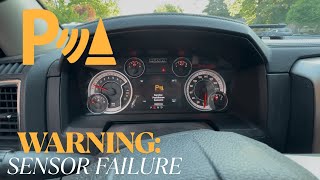
- "Service Park Assist" or "ParkSense Unavailable" message on the instrument cluster display.
- The park assist system automatically deactivates.
- A constant, steady tone when shifting into reverse, indicating a system fault.
- No beeping or alerts when approaching an obstacle while parking.
- Erratic beeping or false alerts from the park assist system, sometimes after a car wash.
- Replacing the Park Assist Control Module (PACM) first. The module is rarely the point of failure; the issue is almost always with the external sensor or its wiring.
Most Likely Causes

- Obstructed Park Assist Sensor 🔴 High Probability The sensors are exposed on the bumper and susceptible to collecting road grime, snow, ice, or even thick wax. Manufacturer TSB 9003059 specifically calls this out as a primary check for waveform failure codes like B1296-25.
How to confirm: Visually inspect sensor #9 for any physical obstruction. The sensor face must be clean to function correctly.
Typical fix: Thoroughly clean the face of the sensor with soap and water. Use a scan tool to clear the code and test the system by shifting into reverse.
Est. part cost: $0 - Failed Park Assist Sensor #9 🟡 Medium Probability Like any electronic component exposed to the elements, these sensors can fail internally over time due to moisture intrusion, vibration, or internal shorts.
How to confirm: If cleaning the sensor doesn't resolve the issue, swap sensor #9 with an adjacent sensor (e.g., #8 or #10). Clear the codes and see if the fault follows the sensor (e.g., a new code B1295 or B1297 appears). If it does, the sensor is bad. This is a common and effective DIY diagnostic step confirmed by many owners.
Typical fix: Replace the faulty park assist sensor. The sensors are held in the bumper with plastic tabs and are a plug-and-play replacement that can be done from underneath the truck without removing the bumper.
Est. part cost: $25-$150 - Damaged Wiring or Connector ⚪ Low Probability The wiring harness is located behind the bumper, where it can be susceptible to damage from road debris, moisture, or corrosion. A specific weak point is the main inline 24-way connector (XY630A) behind the rear left wheel liner, which is known for corrosion and pushed-out terminals. Pinch points where the harness is secured to the bumper are also common failure locations.
How to confirm: Visually inspect the wiring harness leading to sensor #9. Check for chafed, pinched, or broken wires. Disconnect the sensor and the main harness connector (XY630A) to check for corrosion, bent pins, or water intrusion. TSB S2108000060 REV A specifically advises a 'pull test' on the terminals in this connector.
Typical fix: Repair the damaged section of wire, which may involve soldering and heat-shrinking the broken wire. If corrosion is found in the connector, clean the terminals. In severe cases, the connector or a pigtail may need to be replaced. A service kit (part #68353351AA) is available for the main XY630A connector.
Est. part cost: $10-$50
Rare But Worth Checking
- Failed Park Assist Control Module (PACM): This is extremely rare. The module is the last component to suspect after all sensors and wiring have been thoroughly tested and confirmed to be good. On Ram 1500s, the PACM is located in the headliner (4th Gen 'DS') or under the driver's side dash (5th Gen 'DT'), making it more difficult to access.
- Incompatible Aftermarket Sensor: Some owners have reported that after replacing a failed sensor with a new one, multiple sensor codes appear. This can happen if an incompatible or poor-quality aftermarket sensor is used, even if it physically fits. One owner on RamForum.com experienced this when replacing a single bad sensor, causing all new sensors to throw codes until the old ones were reinstalled.
Diagnosis Steps

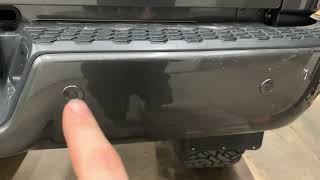
- Identify Sensor #9: On Ram trucks, the rear sensors are numbered 8, 9, 10, and 11, running from the passenger side to the driver's side. Sensor #9 is the inner sensor on the passenger side of the rear bumper.
- Inspect and Clean: Thoroughly clean the face of sensor #9 with soap and water to remove any dirt, snow, or ice. High-pressure washing has been known to cause temporary issues by soaking connectors.
- Clear Codes and Retest: Use a scan tool to clear the diagnostic trouble codes. Put the vehicle in reverse to see if the "Service Park Assist" message and the B1296 code return.
- Perform Sensor Swap Test: If the code returns, swap sensor #9 with sensor #10 (the inner sensor on the driver's side). This can be done from under the bumper. Clear the codes again. If the code changes to B1297 (fault on sensor #10), the original sensor is confirmed to be faulty. If code B1296 returns, the problem is in the wiring or module.
- Inspect Wiring: If the problem remains with the #9 position after the swap, carefully inspect the wiring harness for that sensor. Follow it back to the main 24-way connector (XY630A) behind the rear left wheel well. Disconnect it and check for green corrosion or pushed-out pins as described in TSB S2108000060 REV A. Pay close attention to harness pinch points near the bumper mounts.
- Test Sensor Circuit Voltage: Disconnect the sensor connector. With the ignition on, measure the voltage of the sensor supply circuit. It should be above 8.0 volts. If voltage is low, check for an open or high resistance in the supply wire from the PAM.
- Replace the Faulty Component: Based on the test results, replace the failed park assist sensor or repair the damaged wiring.
Parts You'll Likely Need
- Park Assist Sensor
(OEM #6MK25TZZAA)— This is the most common point of failure for code B1296 after ruling out obstructions. The sensor itself fails internally. Note that this part number is often for paint-to-match or black textured finishes and supersedes many previous numbers. Another common number is 1EW63TZZAA. Always verify with VIN.
Trusted brands: Mopar, Bosch, Standard Motor Products, Dorman
OEM price range: $90-$150
Aftermarket price range: $25-$75
Related Codes That Often Appear With This One
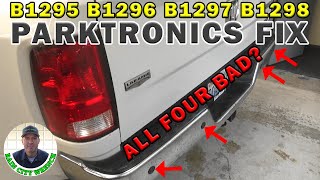
- B1295, B1297, B1298 — These codes correspond to other rear park assist sensors (#8, #10, and #11). If multiple codes are present, it may point to a common issue like a damaged main wiring harness or corrosion in the 24-way connector (XY630A) that affects all sensors, rather than multiple individual sensor failures.
- B1296-12, B1296-92 — These are additional suffix codes indicating specific faults. B1296-12 is 'Circuit Short to Battery', and B1296-92 is 'Performance or Incorrect Operation'. They often appear alongside the primary code and help pinpoint whether the issue is electrical (short) or performance-related (intermittent signal).
Technical Service Bulletins (TSBs) & Recalls
- S2108000060 REV A: The most critical TSB for this issue. It points to inspecting the 24-way connector XY630A behind the rear left wheel liner for corrosion or loose terminals as a fix for multiple park sensor codes, including B1296-11. It also provides the service kit part number (68353351AA) for connector repair.
- 9003059: Advises checking for and cleaning snow/mud/ice from sensors as the first step for B1296-25 and related waveform codes.
- 08-071-14 / 08-082-20 / 08-242-25: These TSBs primarily serve to define the code B1296-25 as 'PTS SENSOR 9 - Signal Shape / Waveform Failure' across different model years.
Platform-Specific Known Issues
- A well-documented issue is corrosion within the main 24-way inline harness connector, identified as XY630A. TSB S2108000060 REV A instructs technicians to inspect this gray connector, located behind the rear left wheel liner, for loose terminals (by performing a pull test) and corrosion. This single point of failure can cause multiple sensor codes (B1295, B1296, etc.) to appear simultaneously.
- A user on YouTube demonstrated a successful repair where the wiring harness was pinched and broken near the sensor connector, causing codes for two sensors. After soldering the broken wire, the system returned to normal function.
Mechanic-Grade Diagnostic Values
- Park Assist Sensor Supply Voltage — expected: Above 8.0 volts. Failure: Voltage below 8.0V indicates an open or high resistance in the supply circuit from the Park Assist Module (PAM).
- Park Assist Sensor Ground Circuit Resistance — expected: Below 5.0 ohms. Failure: Resistance above 5.0 ohms indicates an open or high resistance in the ground circuit.
- Park Assist Sensor Signal Circuit for Short to Ground — expected: Above 10k Ohms. Failure: Resistance below 10k Ohms indicates a short to ground in the signal wire.
- Park Assist Sensor Signal Circuit for Short to Voltage — expected: Below 1.0 volt. Failure: Voltage above 10.0 volts indicates a short to battery voltage.
Hidden / Shadow Codes Worth Checking
- B1296-11: PTS Sensor 9 - Circuit Short To Ground. This indicates the signal wire from the sensor is making contact with a ground source. (see via Advanced OBD-II scanner or dealer tool like wiTECH.)
- B1296-12: PTS Sensor 9 - Circuit Short To Battery. This indicates the signal wire is shorted to a power source. (see via Advanced OBD-II scanner or dealer tool like wiTECH.)
- B1296-25: PTS Sensor 9 - Signal Shape / Waveform Failure. This means the signal from the sensor is present but corrupted or nonsensical. Often caused by obstructions or internal sensor failure. (see via Advanced OBD-II scanner or dealer tool like wiTECH.)
- B1296-92: PTS Sensor 9 - Performance Or Incorrect Operation. A general performance code indicating the sensor is not functioning correctly, often set as a secondary code to a more specific electrical fault. (see via Advanced OBD-II scanner or dealer tool like wiTECH.)
Scan Tool Commands That Help
- wiTECH: Reprogram PAM — Used to update the Park Assist Module software to the latest version, which can resolve software glitches or false alerts as described in several TSBs.
- wiTECH: Restore Configuration and Align Proxi — This procedure is necessary after replacing the Park Assist Module to ensure it communicates correctly with the rest of the vehicle's systems.
- wiTECH / Advanced Scanner: Read/Erase DTCs from Park Assist Module — Essential for reading the specific B-codes and their suffixes, and for clearing codes after a repair to verify the fix.
Wiring & Ground Locations

- Park Assist Sensor Connector — Directly on the back of each park assist sensor, inside the bumper.. This 3-pin connector is the primary connection point for the sensor. It is exposed to moisture and road debris, making it a potential point of failure due to corrosion or loose pins.
- Park Assist Module (PAM/PTS) - 4th Gen (DS) — Located in the headliner, requiring removal of trim pieces to access.. This is the control unit for the system. While module failure is rare, knowing its location is critical for advanced diagnostics like checking for power/ground at the module or replacement.
- Park Assist Module (PAM/PTS) - 5th Gen (DT) — Located under the driver's side of the dashboard, near the A-pillar.. The location changed for the 5th generation. Accessing this module is necessary for testing the circuits if a wiring fault is suspected between the module and the rear bumper.
- Rear Park Assist Jumper Harness Connector — Located between the frame rails at the rear of the truck. The sensor harness plugs into this factory-installed connector.. This is another connection point that can be subject to corrosion or damage, potentially affecting all rear sensors.
Real Owner Repair Stories
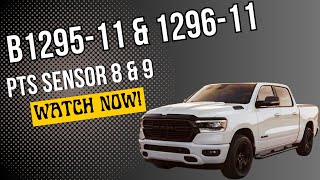
- YouTube channel 'Troubleshoot Your Vehicle' (2021 Ram 1500) — "Service Park Assist" message with codes B1295-11 and B1296-11 (faults for sensors 8 and 9).
❌ Tried (didn't work) Swapping the suspect sensors (#8 and #9) with known good sensors from other positions (#10 and #11). The fault codes B1295 and B1296 remained, indicating the problem was not the sensors themselves.
✅ What actually fixed it A visual inspection of the wiring harness revealed three broken wires inside the loom at a pinch point near the bumper. The wires were completely broken. The final fix was soldering the broken wires back together and sealing them with heat shrink tubing, which resolved all codes. - RamForum.com user (2016 Ram 1500) — "Service Park Sensor Rear" message immediately after going above 10 mph. Codes B1295-12, B1296-12, B1297-12, and B1298-12 were present.
❌ Tried (didn't work) Replacing all four rear sensors with aftermarket parts from 1A Auto. This caused all four sensors to report a 'short to battery' code.
✅ What actually fixed it The user suspected the aftermarket sensors were incompatible with the Ram system, even though they were advertised as compatible. The issue points to a logic or communication problem between the non-OEM sensors and the Park Assist Module.
When the Usual Fixes Don't Work
- In one documented case for a 2021 Ram 1500 showing codes B1295-11 and B1296-11, the common fixes (cleaning, swapping sensors) did not work. The fault codes remained for the same sensor positions even with known-good sensors installed. The actual cause was found to be three broken wires inside the harness loom where it was secured to the bumper. This highlights that if a sensor swap test does not move the fault, a wiring inspection for breaks, not just corrosion at connectors, is the critical next step.
OEM Part Supersession History
Multiple (e.g., 1EW631AUAA, 1EW63DX8AA, etc.)→1EW63TZZAA— Part consolidation and updates over many model years and vehicle lines.
Heads up: 1EW63TZZAA is a widely used 'paint-to-match' sensor. While it physically fits many vehicles from 2009-2022, forum reports suggest potential communication issues on some trucks when mixing with older OEM sensors or using certain aftermarket versions, leading to multiple fault codes.Multiple (e.g., 68366715AC, 68480723AA)→68480723AD— Software and hardware revisions for the Park Assist Module (PAM).
Heads up: Using an incorrect module can lead to system failure or require a Proxi alignment with wiTECH to function. Always match the part number to the vehicle's VIN and sales codes.
Model Year Variations Within This Range
- 2013-2018 (DS Platform): The Park Assist Module (PAM) is located in the headliner.
- 2019-2020 (DT Platform): The Park Assist Module (PAM) was relocated to under the driver's side dashboard, near the A-pillar. The sensor connectors and some part numbers may also differ from the previous generation.
Helpful Videos
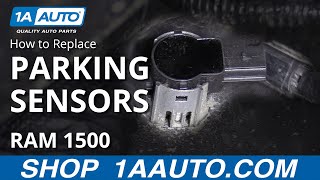
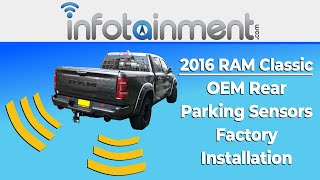
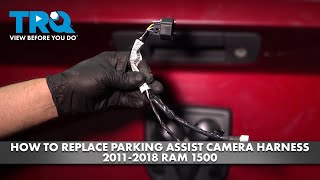
We Have This Part in Stock

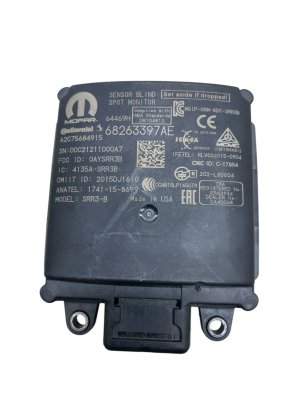

The information in this article is provided for general reference and educational purposes only. Vehicle specifications, procedures, and part compatibility can vary by production date, trim level, and region. Always consult your vehicle's factory service manual and verify part numbers before purchasing or performing repairs. Safety-critical components such as airbags, seat belts, and braking systems should be installed by a qualified professional.
- Ram 1500:
- 🎬 Helpful Videos
- 🛍️ Shop This Part
- What's Unique About the 2013-2020 Ram 1500
- Diagnostic Flowchart
- Symptoms You May Notice
- Most Likely Causes
- Rare But Worth Checking
- Diagnosis Steps
- Parts You'll Likely Need
- Related Codes That Often Appear With This One
- Technical Service Bulletins (TSBs) & Recalls
- Platform-Specific Known Issues
- Mechanic-Grade Diagnostic Values
- Hidden / Shadow Codes Worth Checking
- Scan Tool Commands That Help
- Wiring & Ground Locations
- Real Owner Repair Stories
- When the Usual Fixes Don't Work
- OEM Part Supersession History
- Model Year Variations Within This Range
- 🎟️ Get 5% Off