

B1295 on 2013-2020 Ram 1500: Park Assist Sensor 8 Failure Causes and Fixes
Code B1295 on a 2013-2020 Ram 1500 points to a fault with Park Assist Sensor #8, located on the passenger side of the rear bumper. The most common fix is cleaning the sensor face. If that fails, swapping the sensor with an adjacent one to confirm failure, followed by replacement, is the next step. An aftermarket sensor costs around $25-$60 and is a simple DIY job. Wiring issues at the sensor connector or a main inline harness connector (XY630A) are also common culprits.
- B1295 specifically refers to Park Assist Sensor #8, which is on the outer passenger side of the rear bumper.
- The first and easiest step is to thoroughly clean the sensor face.
- If cleaning doesn't work, swapping the sensor with a neighbor (like #9) is the best way to confirm if the sensor itself is faulty.
- Wiring issues, especially at the sensor connector or the main inline connector (XY630A) behind the left rear wheel well, are a common cause if the sensor is good.
- After replacing parts, the stored trouble code may need to be cleared with a capable scanner before the ParkSense system will function again.
What's Unique About the 2013-2020 Ram 1500

The 2013-2020 Ram 1500 spans two truck generations (DS and DT), but the park assist system architecture is similar. These sensors are mounted directly in the bumpers, making them highly susceptible to dirt, moisture, car washes, and minor impacts. Ram has issued multiple Technical Service Bulletins (TSBs) for signal failures, acknowledging the commonality of this issue. A key point for Ram trucks is the specific sensor numbering: the rear sensors are numbered 8, 9, 10, and 11 from the passenger side to the driver side. The front sensors are numbered 1 through 6 from driver to passenger. Sensors 7 and 12 are skipped in the sequence.
🎬 Watch: Visual guide to Ram sensor numbering and locationsDiagnostic Flowchart

Tap your situation to follow the diagnostic path that matches what you're seeing on this vehicle.
Generation note: This range covers the end of the fourth generation Ram 1500 (2013-2018, 'DS') and the start of the fifth generation (2019-2020, 'DT'). While the overall park assist system function is the same, part numbers for sensors and modules may differ. For example, the DS generation often uses part number 5YV68TZZAA, while the DT generation may use 6MK25TZZAA. The diagnostic approach and common causes (sensor failure, wiring) are consistent across both generations.
Symptoms You May Notice

- "Service Park Assist System" or "ParkSense Temporarily Unavailable" message on the instrument cluster.
- Park assist system automatically turns off or will not activate.
- No audible beeping when approaching obstacles while parking.
- The light on the ParkSense deactivation button stays illuminated, indicating the system is off.
- In some cases with intermittent faults, the system may give false warnings, beeping continuously as if an object is present when nothing is there.
- Replacing the wrong sensor. It is critical to correctly identify Sensor #8 as the one on the outer passenger side of the rear bumper.
- Replacing the Park Assist Module (PAM) when the fault is a simple wiring or sensor issue.
- Replacing sensors but failing to clear the stored DTCs. On many occasions, even after the physical repair, the system will remain disabled until the fault code is cleared with a capable OBD-II scanner.
Most Likely Causes

- Obstructed Sensor Face 🔴 High Probability Sensors are located on the bumper and easily get covered in dirt, mud, snow, ice, or even a thick coat of wax, which can disrupt the ultrasonic waves.
How to confirm: Visually inspect the face of sensor #8 on the rear passenger-side bumper. Clean it with a soft cloth and water.
Typical fix: Thoroughly clean the sensor. TSB #9003059 specifically recommends this as the first step for B1295-25 and other related codes.
Est. part cost: $0 - Failed Park Assist Sensor 🟡 Medium Probability Constant exposure to weather, high-pressure car washes, and road debris can cause the sensor's internal electronics to fail over time.
How to confirm: Swap the suspected bad sensor (#8) with a known good one from another position (e.g., #9, the inner passenger side). Clear the codes. If the fault code changes to B1296 (for sensor #9), the sensor itself is faulty. Another method is the 'Listen and Touch Test': with the ignition on and in reverse, a working sensor will emit a faint clicking or buzzing sound that can be heard or felt with a fingertip. A screwdriver can be used to amplify the clicking sound.
Typical fix: Replace the faulty park assist sensor. This is a simple DIY task that involves reaching behind the bumper, disconnecting the electrical connector, and releasing two plastic tabs to push the sensor out.
Est. part cost: $25-$60 (Aftermarket), $150-$255 (OEM) - Wiring or Connector Issue 🟡 Medium Probability The wiring harness is located behind the bumper, where it's exposed to moisture and physical damage, leading to corrosion, pinched wires, or broken connections.
How to confirm: Unplug the sensor and inspect the connector for green/white corrosion or bent pins. Inspect the wiring harness for any visible breaks, chafing, or pinch points, especially where it passes through the frame or near the bumper brackets. A known issue is corrosion at the main inline connector (XY630A) behind the left rear wheel liner, as detailed in TSB S2108000060 REV A.
Typical fix: Clean the connector terminals with a contact cleaner and apply dielectric grease. If corrosion is severe or wires are broken, the connector pigtail or a section of the harness may need to be repaired or replaced. A service kit (part #68353351AA) is available for the XY630A connector.
Est. part cost: $5-$75
Rare But Worth Checking
- Park Assist Module (PAM) Failure: This is very rare. The module that controls the sensors can fail, but all other possibilities should be exhausted first. On 4th gen (DS) models, it's often under the driver's side dash near the e-brake pedal. On 5th gen (DT) models, it's located behind the driver's side kick panel near the door sill.
- Park Assist Module (PAM) Software Glitch: For 2014 models specifically, TSB 08-071-14 addresses overly sensitive sensors and lists B1295-25 as one of the potential DTCs. The fix is a software update for the PAM, which must be performed by a dealer. While less common, it's a possibility if all hardware checks out.
Diagnosis Steps
- Read the trouble codes with a scanner capable of reading Body (B) codes to confirm B1295 is present. Note the suffix (-25 for waveform failure, -11 for short to ground, etc.).
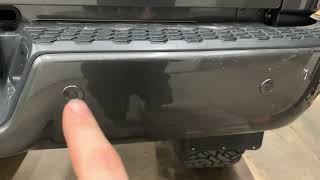
- Locate Park Assist Sensor #8 on the outer passenger side of the rear bumper.
- Thoroughly clean the face of the sensor with soap and water. Clear the codes and test the system.
- Perform the 'Listen and Touch Test'. With the ignition on and transmission in Reverse, listen for a faint clicking/buzzing from each sensor. Sensor #8 being silent indicates it's likely dead.
- If the code returns or the sensor is silent, perform a sensor swap. Exchange sensor #8 with an adjacent sensor (like #9, the inner passenger side). Clear the codes and re-test. If the code changes to B1296 (for sensor #9), the original sensor is bad and needs replacement.
- If the B1295 code remains after swapping sensors, the problem is in the wiring to that specific location.
- Disconnect the sensor and inspect its 3-pin electrical connector for corrosion, moisture, or bent pins. Clean with electrical contact cleaner and apply dielectric grease upon reassembly.
- Trace the wiring harness from the sensor toward the main chassis. Pay close attention to TSB S2108000060 REV A, which points to the gray 24-way inline connector XY630A, located behind the rear left wheel liner. Disconnect and inspect this connector for corrosion or pushed-out terminals.
- If wiring and sensor are confirmed good, and the vehicle is a 2014 model, consider TSB 08-071-14, which suggests a PAM software update for this code.
- If all else fails, the final, though unlikely, step would be to test the Park Assist Module itself.
Parts You'll Likely Need

- Park Assist Sensor
(OEM #5YV68TZZAA (DS generation), 6MK25TZZAA (DT generation))— The sensor itself is the most common point of failure after ruling out dirt and debris. Exposure to the elements and vibration eventually causes the internal electronics to fail.
Trusted brands: Mopar, Dorman, Standard Motor Products (SMP), TRQ
OEM price range: $150-$255
Aftermarket price range: $25-$60 - Rear Park Assist Jumper Harness
(OEM #68397412AA)— If the wiring harness that connects the four rear sensors is damaged from impact, corrosion, or chafing, it may need to be replaced as a unit.
Trusted brands: Mopar
OEM price range: $50-$80
Aftermarket price range: $30-$50
Related Codes That Often Appear With This One
- B1296, B1297, B1298 — These codes correspond to the other rear park assist sensors (#9, #10, #11). If a single event like a wiring harness issue at the main XY630A connector occurs, multiple sensors can fault at the same time.
- B1295-11 — This indicates a 'Circuit Short to Ground' for sensor #8, pointing more directly to a wiring problem rather than an internal sensor failure.
- B1295-12 — This indicates a 'Circuit Short to Battery' for sensor #8, also pointing to a wiring fault.
Technical Service Bulletins (TSBs) & Recalls
- 08-242-25 (2020-08-06): Lists B1295-25 as PTS Sensor 8-Signal Shape/Waveform Failure.
- 9003059 (2017-03-29): Recommends cleaning sensors of obstructions for B1295-25 and other related codes.
Platform-Specific Known Issues
- NHTSA Communication S2108000060 REV A points to a problematic inline gray 24-way connector (XY630A) located behind the rear left wheel liner. This connector is prone to corrosion and can cause open/short circuits for multiple rear sensors, including the one that triggers B1295. A user on RamForum.com also pointed to a large multi-pin connector behind the left front wheel well liner as a source of intermittent sensor issues.
- A user on RamForum.com shared a detailed story where a pinched harness from a previous body shop repair caused intermittent false readings, which then became a hard fault after inspection. Replacing the harness and clearing the stored B1297-11 DTC with a scanner resolved the issue, highlighting that the system may not reset on its own.
Mechanic-Grade Diagnostic Values
- Park Assist Sensor Supply Voltage — expected: ~8.5 Volts. Failure: Voltage significantly lower than 8V or 0V indicates a wiring or module issue.
- Resistance between Signal and Ground circuits at PAM connector — expected: Above 10k Ohms. Failure: Resistance below 10k Ohms indicates a short in the wiring or a faulty sensor.
Scan Tool Commands That Help
- wiTECH or equivalent advanced scanner: Read Active DTCs / Clear DTCs — Essential for diagnosis. A basic code reader may not see Body (B) codes. After a repair, the fault must be cleared from the Park Assist Module (PAM) to restore system function.
- wiTECH or equivalent advanced scanner: View Live Data / Waveform — For a B1295-25 (Signal Shape/Waveform Failure), viewing the signal from each sensor on an oscilloscope or advanced scan tool can visually confirm a bad sensor. A faulty sensor's waveform will look distinctly different from the others.
Wiring & Ground Locations
- Sensor Connector (3-Pin) — Directly on the back of each park assist sensor.. This is the most common point for corrosion or damage. The three pins are typically Supply Voltage (~8.5V), Signal, and Ground.
- XY630A — Gray 24-way inline connector located behind the rear left wheel liner.. This is a known trouble spot mentioned in a TSB. It serves as a junction for the rear bumper harness. Corrosion here can cause faults for sensor #8 and others simultaneously.
- G923A — Main body ground, often located in the vicinity of the left rear of the vehicle frame or body.. A service manual diagnostic for a short-to-ground code (B1295-11) involves checking the signal circuit for a short to the module's ground circuit, which terminates at a chassis ground like this one.
- Park Assist Module (PAM) Connector C2 — On the Park Assist Module itself. Under the driver's dash (DS) or behind the driver's kick panel (DT).. This is where a technician would back-probe circuits to test for voltage, resistance, or shorts without having to access the sensor end of the harness.
Real Owner Repair Stories
- YouTube channel 'Fetch A Wrench' (2021 Ram (DT Generation)) — Service Park Assist message with codes B1295-11 and B1298-11.
❌ Tried (didn't work) Swapping the suspect sensors (#8 and #11) with known good sensors from other positions (#9 and #10). The fault codes remained for the same locations, proving the sensors themselves were good.
✅ What actually fixed it A visual inspection of the wiring harness revealed a pinched and broken wire near a harness clip on the bumper. The technician soldered the broken wire, sealed it with heat shrink, and taped the harness. This resolved the codes and restored system function.
OEM Part Supersession History
5YV68AXRAA (and many others)→5YV68TZZAA— Standard part revision and consolidation over time. This part number is associated with the DS generation and is often sold with different suffixes for various paint colors.
Heads up: While many part numbers are listed as replaced by 5YV68TZZAA, it is critical to verify the part by VIN. The different suffixes often denote specific factory paint colors (e.g., GW7 for white, KXJ for black). Using a generic black sensor on a painted bumper will work electrically but will not match cosmetically.
Model Year Variations Within This Range
- 2013-2018 (DS Generation): The Park Assist Module (PAM) is typically located under the driver's side dashboard, near the emergency brake pedal assembly.
- 2019-2020 (DT Generation): The Park Assist Module (PAM) was relocated to behind the driver's side kick panel, near the door sill.
- 2014: A specific TSB (08-071-14) was issued for this model year addressing overly sensitive sensors and listing B1295-25 as a potential code. The fix is a software reflash of the PAM, which is unique to this model year's potential issues.
Helpful Videos

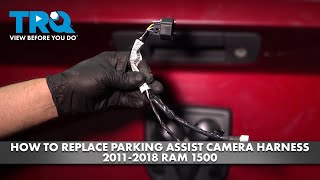
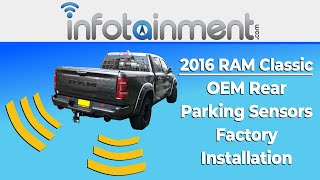
We Have This Part in Stock

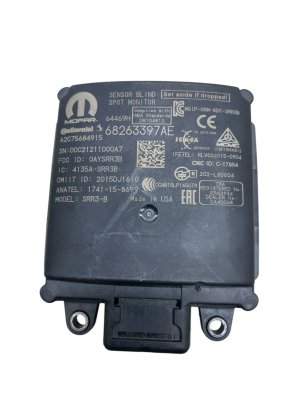
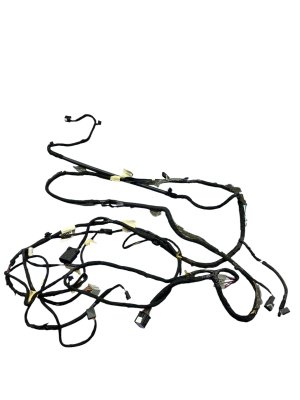

The information in this article is provided for general reference and educational purposes only. Vehicle specifications, procedures, and part compatibility can vary by production date, trim level, and region. Always consult your vehicle's factory service manual and verify part numbers before purchasing or performing repairs. Safety-critical components such as airbags, seat belts, and braking systems should be installed by a qualified professional.
- Ram 1500:
- 🎬 Helpful Videos
- 🛍️ Shop This Part
- What's Unique About the 2013-2020 Ram 1500
- Diagnostic Flowchart
- Symptoms You May Notice
- Most Likely Causes
- Rare But Worth Checking
- Diagnosis Steps
- Parts You'll Likely Need
- Related Codes That Often Appear With This One
- Technical Service Bulletins (TSBs) & Recalls
- Platform-Specific Known Issues
- Mechanic-Grade Diagnostic Values
- Scan Tool Commands That Help
- Wiring & Ground Locations
- Real Owner Repair Stories
- OEM Part Supersession History
- Model Year Variations Within This Range
- 🎟️ Get 5% Off