

B1292 on 2014-2017 Ram 3500: Park Assist Sensor Failure Causes and Fixes
Code B1292 on a 2014-2017 Ram 3500 points to a signal failure from Park Assist Sensor #5. The most common cause is an obstructed sensor, followed by a faulty sensor. Start by cleaning the sensor; if that fails, replacement is the likely fix, costing $30-$150 for the part.
- B1292 on a 2014-2017 Ram 3500 points to the front park assist sensor second from the passenger side.
- Always start diagnosis by thoroughly cleaning the sensor face, as obstructions are the most common cause.
- The most effective DIY diagnostic is to swap the suspect sensor with an adjacent one to see if the fault code follows the sensor.
- If cleaning or swapping the sensor doesn't work, inspect the wiring harness for damage, especially for pinch points near the frame.
- After any repair, the stored fault code must be cleared with a capable scanner to restore system function.
What's Unique About the 2014-2017 Ram 3500
On Ram 3500 trucks of this era, the parking sensors are mounted in the bumpers where they are highly exposed to the elements. As a result, they are very susceptible to being blocked by mud, snow, ice, or road grime. Manufacturer Technical Service Bulletin (TSB) #9003059 specifically calls out checking for and cleaning these types of obstructions as a primary diagnostic step for this code, suggesting it's a very common issue for this platform. Additionally, the wiring harness for the front bumper sensors is routed in a way that can make it vulnerable to debris, moisture, and corrosion, particularly at the main harness connector and where it passes near frame components.
Diagnostic Flowchart
Tap your situation to follow the diagnostic path that matches what you're seeing on this vehicle.
Symptoms You May Notice
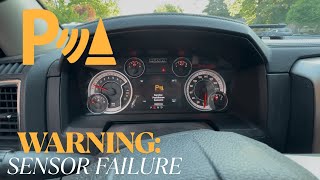
- "Service Park Assist System" or "ParkSense Unavailable" message on the instrument cluster display.
- The park assist system automatically turns off or will not activate.
- No beeping or incorrect, constant beeping when in reverse or at low speeds.
- The park assist indicator light on the dashboard switch may be illuminated or flashing.
- A constant, steady tone when the vehicle is put into reverse, indicating a system fault. 🎬 Watch: How to check the fuse for your park assist.
- Replacing the Park Assist Module (PAM) before testing the individual sensors and wiring. The module is expensive and rarely the cause of a single sensor fault.
- Replacing a sensor without first cleaning it. Obstructions are a very common cause and cleaning is free.
- Replacing a sensor when the actual fault is a broken or chafed wire in the harness leading to it.
Most Likely Causes
- Obstructed or Dirty Park Assist Sensor 🔴 High Probability The sensors are located on the bumper and are frequently exposed to mud, snow, ice, and heavy road spray, as noted in TSB #9003059. Even a layer of wax from a car wash can sometimes cause an issue.
How to confirm: Visually inspect the face of the sensor identified as #5 (front bumper, second from passenger side) for any physical obstruction. The sensor must be perfectly clean to function.
Typical fix: Thoroughly clean the sensor face with a soft cloth, water, and mild soap. Clear the code and re-test. It may be necessary to clear the stored DTC with a capable scanner before the system will function again.
Est. part cost: $0 - Faulty Park Assist Sensor 🟡 Medium Probability Internal failure of the sensor can occur due to age, moisture intrusion, or vibration. The electronics inside the sensor that generate and receive the ultrasonic waves can fail, leading to the 'waveform failure' code.
How to confirm: After cleaning, if the code persists, swap the suspect sensor (#5) with an adjacent one (e.g., #4 or #6). They are identical parts. Clear codes and re-test. If the code changes to B1291 (for sensor #4) or B1293 (for sensor #6), the sensor is confirmed bad. If B1292 returns, the problem is in the wiring.
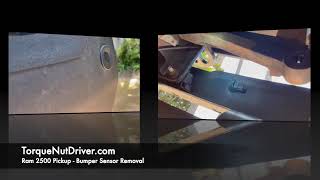
Typical fix: Replace the faulty park assist sensor. This is typically a plug-and-play part, held in by two small plastic clips accessible from behind the bumper. 🎬 See this quick walkthrough on removing the bumper sensors.
Est. part cost: $30-$150 - Damaged Wiring or Connector ⚪ Low Probability The wiring harness to the bumper is somewhat exposed to road debris, moisture, and corrosion, which can lead to chafed or broken wires, or corroded connector pins. Forum users have reported the harness getting pinched between the bumper and the frame, causing shorts.
How to confirm: Visually inspect the wiring harness leading to the sensor for any signs of damage, pinching, or abrasion. Disconnect the sensor and check the 3-pin connector for corrosion, moisture, or pushed-out pins. A multimeter can be used to check for continuity and shorts to ground or power in the harness between the sensor connector and the main bumper harness connector.
Typical fix: Repair the damaged section of wire or replace the connector pigtail. In some cases, the entire front bumper harness may need to be replaced if damage is extensive.
Est. part cost: $15-$150
Rare But Worth Checking
- Faulty Park Assist Module (PAM): This is rare. The module that controls the sensor system can fail, but all sensors and wiring should be thoroughly tested before condemning the module. This is typically the last item to be replaced. For the 2014-2017 model years, the PAM is often located behind the driver's side kick panel or in the headliner on some models.
- Aftermarket Bumper or Accessory Interference: Installing an aftermarket bumper, grille guard, or push bar can cause the sensor to constantly detect an obstruction, triggering a fault code. In these cases, the sensor may be functioning correctly but its view is blocked. The system may need to be disabled by a dealer if the obstruction cannot be cleared.
Diagnosis Steps
- Read the specific Body DTCs with a capable OBD-II scanner (like AlfaOBD) to confirm B1292 is active. Note if it has a suffix like '-25' (waveform failure), '-11' (short to ground), or '-12' (short to battery).
- Locate Park Assist Sensor #5 on the front bumper (the second sensor in from the passenger side).
- Thoroughly clean the face of the sensor with a soft cloth and mild detergent, removing all dirt, ice, or mud.
- Clear the DTCs using the scan tool and test the park assist system by putting the vehicle in reverse or driving slowly forward. Note that the system may not re-enable until the code is cleared.
- If the code returns, perform a 'swap test'. Disconnect and remove sensor #5 and an adjacent sensor (like #6). Install sensor #5 in position #6 and sensor #6 in position #5. The sensors are held by two clips and can be removed from behind the bumper.
- Clear codes again and re-test. If the code has changed to B1293 (for sensor #6), then the original sensor #5 is faulty and needs replacement.
- If code B1292 returns after the swap, the problem lies in the wiring 🎬 Watch: How to diagnose and fix common park assist failures. to that specific sensor location.
- Inspect the wiring connector for sensor #5 for corrosion, damage, or loose pins. Trace the wiring back as far as possible, looking for cuts, abrasions, or pinch points, especially where the harness meets the frame.
- If wiring appears intact, use a multimeter to test for proper supply voltage (approx. 8V), ground, and for a short or open in the signal wire between the sensor connector and the Park Assist Module.
- If all sensors and wiring check out, the Park Assist Module itself may be at fault, though this is uncommon.
Parts You'll Likely Need
- Park Assist Sensor
(OEM #1EW63TZZAA)— This is the most common part to fail if cleaning the sensor does not resolve the code. This part number is a generic, unpainted sensor that fits many Chrysler/Dodge/Jeep/Ram vehicles and supersedes many previous colored part numbers.
Trusted brands: Mopar, Dorman, Bosch, Crown Automotive, Standard Motor Products
OEM price range: $100-$250
Aftermarket price range: $30-$70
Related Codes That Often Appear With This One
- B128E-25, B128F-25, B1290-25, B1291-25, B1293-25, etc. — These codes correspond to other park assist sensors on the vehicle. Seeing them together can indicate a widespread issue like an obstruction across the entire bumper (e.g., heavy snow), a damaged main harness, a corroded main connector, or a software issue. TSB 9003059 lists these codes together as a related family of faults.
Technical Service Bulletins (TSBs) & Recalls
- 9003059: States that for a B1292-25 code, the primary step is to check for and clean any snow, mud, ice, or other obstructions from the park assist sensors.
- 08-047-19 (Superseded by 08-082-20): While this TSB applies to 2019+ models, it confirms that B1292-25 is the correct code for a 'PTS Sensor 5-Signal Shape/Waveform Failure' and that software updates can sometimes resolve erroneous codes, showing a history of software-related issues with this system.
Platform-Specific Known Issues
- Per TSB #9003059, these vehicles are known to set Park Assist Sensor codes (including B1292-25) due to simple obstructions like snow, mud, or ice, and the first recommended step is always to clean the sensors.
- A user on RamForum.com confirmed that installing an aftermarket bumper with a push bar immediately triggered B1292 and B128F, confirming that physical obstructions are a direct cause.
- Another forum user discovered their rear sensor harness was pinched between the bumper and the frame after a visit to a body shop, causing multiple sensor faults. This highlights the vulnerability of the harness routing.
Mechanic-Grade Diagnostic Values
- Park Assist Sensor Supply Voltage — expected: Approx. 8.0V - 8.5V. Failure: Significantly lower or no voltage indicates an open or short in the supply circuit.
- Park Assist Sensor Signal Circuit Voltage — expected: < 10.0 Volts. Failure: Voltage above 10.0V indicates a short to battery, which sets a B1292-12 code.
- Park Assist Sensor Signal Circuit Resistance to Ground — expected: High resistance / Open circuit (>10k Ohms). Failure: Resistance below 10k Ohms indicates a short to ground, which sets a B1292-11 code.
- Park Assist Sensor Ground/Return Circuit Resistance — expected: < 5.0 Ohms. Failure: Resistance above 5.0 Ohms indicates an open or high resistance in the ground circuit.
Hidden / Shadow Codes Worth Checking
- B1292-11: PTS Sensor 5 - Circuit Short To Ground. This indicates the sensor's signal wire is making contact with a ground source. (see via A professional scan tool (like wiTECH) or an advanced DIY tool (like AlfaOBD) capable of reading manufacturer-specific body codes.)
- B1292-12: PTS Sensor 5 - Circuit Short To Battery. This indicates the sensor's signal wire is making contact with a power source. (see via A professional scan tool (like wiTECH) or an advanced DIY tool (like AlfaOBD) capable of reading manufacturer-specific body codes.)
- B1292-92: PTS Sensor 5 - Performance or Incorrect Operation. This is a more general fault indicating the sensor is not operating as expected, which could be due to internal faults or intermittent connection issues. (see via A professional scan tool (like wiTECH) or an advanced DIY tool (like AlfaOBD) capable of reading manufacturer-specific body codes.)
Scan Tool Commands That Help
- AlfaOBD / wiTECH: Read DTCs from Parktronics (PTS) Module — This is the first step to identify the specific fault code, including the crucial suffix (-11, -12, -25, -92), which directs further diagnosis toward a wiring short, sensor performance, etc.
- AlfaOBD / wiTECH: Clear Faults in Parktronics (PTS) Module — After performing a repair (like cleaning, swapping, or replacing a sensor/harness), the codes must be cleared. The system may not re-activate until stored faults are erased.
Wiring & Ground Locations
- Fuse F95 — In the main under-hood fuse box (Totally Integrated Power Module - TIPM), located in front of the battery on the driver's side.. This fuse supplies power to the Park Assist Module (PAM/PTS). If it's blown, the entire system will be inoperative and may set various codes. It's a primary check for a dead system.
- Front Bumper Harness — Runs along the inside of the front bumper, connecting all front sensors to a main connector before routing back to the main body harness.. This harness is highly susceptible to damage from road debris, moisture, and being pinched between the bumper and frame. A break or chafe in the wiring for sensor #5 will cause code B1292, even if the sensor itself is good.
Real Owner Repair Stories
- YouTube channel 'Fetch A Wrench' (2021 RAM (diagnosis is applicable to 4th gen)) — Service Park Assist message with multiple rear sensor codes (B1295-11, B1298-11, etc.).
❌ Tried (didn't work) Swapping the sensors from the failing positions to known good positions. The codes remained for the original positions (e.g., B1298-11 stayed), proving all the sensor hardware was functional.
✅ What actually fixed it A visual inspection of the wiring harness revealed three broken wires where the harness was pinched/abraded. The final fix was soldering the broken wires, sealing them with heat shrink, and re-taping the harness. This resolved all codes. - Carly user 'magdalenawolf3' (2015 Ram 2500 Diesel) — The control module for the parking assist system completely shut down, affecting both the ultrasonic sensors and rearview camera.
✅ What actually fixed it The main wiring harness connection to the control module was found to be corroded due to water intrusion near the rear bumper. The fix required removing the bumper to access and replace the corroded harness connector and terminals.
OEM Part Supersession History
Various color-matched PNs (e.g., 1EW631AUAA, 1EW63DX8AA, 1EW63RXFAA, etc.)→1EW63TZZAA— Consolidation of many pre-painted part numbers into a single, unpainted (paint-to-match) service part for inventory simplification.
Heads up: The 1EW63TZZAA sensor is the universal replacement for front or rear sensors on this platform and is fully compatible. It comes unpainted and must be painted to match the vehicle.
Model Year Variations Within This Range
- 2014-2017: The physical location of the Park Assist Module (PAM) can vary. While often cited as being behind the driver's side kick panel, some Ram models of this era have the module located in the headliner, above the driver. Diagnosis requires confirming the location for the specific vehicle being serviced.
Helpful Videos
We Have This Part in Stock


The information in this article is provided for general reference and educational purposes only. Vehicle specifications, procedures, and part compatibility can vary by production date, trim level, and region. Always consult your vehicle's factory service manual and verify part numbers before purchasing or performing repairs. Safety-critical components such as airbags, seat belts, and braking systems should be installed by a qualified professional.
- Ram 3500:
- 🎬 Helpful Videos
- 🛍️ Shop This Part
- What's Unique About the 2014-2017 Ram 3500
- Diagnostic Flowchart
- Symptoms You May Notice
- Most Likely Causes
- Rare But Worth Checking
- Diagnosis Steps
- Parts You'll Likely Need
- Related Codes That Often Appear With This One
- Technical Service Bulletins (TSBs) & Recalls
- Platform-Specific Known Issues
- Mechanic-Grade Diagnostic Values
- Hidden / Shadow Codes Worth Checking
- Scan Tool Commands That Help
- Wiring & Ground Locations
- Real Owner Repair Stories
- OEM Part Supersession History
- Model Year Variations Within This Range
- 🎟️ Get 5% Off