

OBD-II Code B1273: LIN Bus Communication Failure (Climate Control or Sunroof)
The Ultimate 2026 Guide: What B1273 means, why it triggers, and how to fix it for good.
- B1273 indicates a module is offline due to a communication failure, not necessarily an internal electrical short.
- On Ford and GM vehicles, a clicking dashboard noise confirms a failed $30 HVAC blend door actuator is causing the code.
- On Toyota and Lexus models, B1273 paired with code B2325 guarantees a failed sliding roof (sunroof) control module.
- Volkswagen and Audi vehicles log the equivalent code 01273 when the fresh air blower motor or its J126 controller fails.
- Test the dedicated system fuse and verify 12V power at the component connector before spending $400+ on a replacement module.
What Does B1273 Mean?

Code B1273 signifies that your car's main computer, typically the Body Control Module (BCM), lost communication with a specific sub-module on the Local Interconnect Network (LIN) bus. Most often, this is a climate control component (like a blend door actuator) or the sunroof control module. When the main computer sends a signal to the sub-module and gets no response for 10 seconds, it flags the fault and stores this code.
Technical definition: The official SAE/OBD-II definition for B1273 is a communication failure on a Local Interconnect Network (LIN) bus. It indicates a primary ECU, such as the Body Control Module (BCM), stopped receiving data from a specific slave module for 10 seconds. The exact module at fault (e.g., Sliding Roof ECU, Climate Control Actuator) varies by manufacturer.
Can I Drive With B1273?
Yes. This code does not affect the engine's operation or the vehicle's primary safety systems like brakes or steering. You can continue to drive, but features like your air conditioning, heater, defroster, or sunroof will not work correctly. In extreme weather, a non-functional defroster poses a severe visibility risk.
Common Causes


- Faulty Climate Control Blend Door Actuator (Very Common) — This is the most frequent cause on Ford and GM vehicles. The small electric motor fails internally (often a broken plastic gear), breaking communication with the BCM.
- Failed Sliding Roof (Sunroof) ECU (Very Common) — On Toyota and Lexus models, this code points directly to a communication loss with the sunroof's dedicated control module. The module fails, preventing sunroof operation and triggering the code.
- Water Intrusion (Common) — Clogged sunroof drains force water into the headliner, destroying the sunroof's electronic control unit and corroding connectors.
- Damaged Wiring or Loose Connector (Common) — A LIN bus wire chafes, breaks, or corrodes from moisture. This physical interruption severs the signal path between the main computer and the component.
- Blown Fuse (Less Common) — The affected component relies on a dedicated fuse. If this fuse blows, the component loses power and drops off the network, setting the code.
- Low or Unstable Battery Voltage (Less Common) — A weak or failing battery causes unpredictable communication glitches across electronic modules. Low voltage disrupts the sensitive LIN bus, logging intermittent B1273 codes.
- Faulty Instrument Panel Junction Block (Rare) — On Toyota/Lexus models, the LIN signal passes through the main junction block (fuse box) in the cabin. An internal fault within this block interrupts the communication line to the target ECU.
- Improperly Installed Aftermarket Accessories (Rare) — Aftermarket remote starters or alarms incorrectly tapped into the vehicle's data lines interfere with LIN bus communication, causing modules to report false errors.
- Faulty Body Control Module (BCM) (Very Rare) — The master computer itself fails. If it stops sending or receiving signals on the communication network, it mistakenly reports a fault with a sub-module.
Symptoms

- HVAC system inoperative or erratic — Air blows from the wrong vents, temperature gets stuck on hot or cold, or the fan speed becomes uncontrollable.
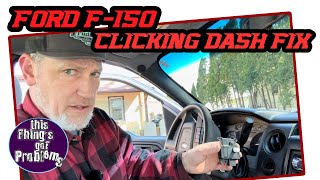
- Ticking/clicking noise from the dashboard — This sound in Ford and GM vehicles is the classic sign of a failing blend door actuator with a broken internal gear.
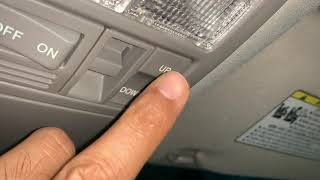
- Sunroof is inoperative — The sunroof refuses to open, close, or tilt, and the switch light remains unlit.
- Window auto up/down feature is disabled — On Lexus models, a fault in the sunroof ECU disables the one-touch automatic window functions.
- Check Engine Light or warning light is on — The Malfunction Indicator Lamp (MIL) or a specific body/chassis warning light illuminates on the dashboard.
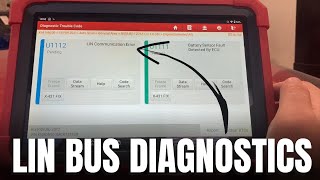
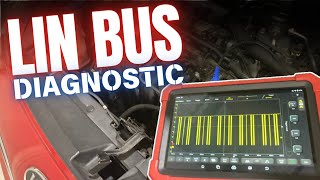
- LIN Bus Voltage Out of Spec (scan-tool only — no driver-felt sign) — A multimeter on the LIN bus wire shows a steady 0V (short to ground) or 12V (open circuit) instead of a fluctuating 7-9V. 🎬 Watch: A professional walkthrough of LIN bus communication diagnostics.
Diagnostic Flowchart
Tap your situation to follow the diagnostic path that matches what you're seeing on this code.
Common Fixes & Costs
- Replace Blend Door Actuator — Parts: $25-$75, Labor: $150-$350, ~2.5 hr book time (DIY)
- Replace Sliding Roof (Sunroof) ECU/Motor Assembly — Parts: $400-$800+, Labor: $350-$800, ~5.5 hr book time (Intermediate)
- Replace HVAC Control Module — Parts: $80-$250, Labor: $100-$200, ~1.2 hr book time (DIY)
- Repair Damaged Wiring or Connector — Parts: $5-$25, Labor: $120-$400, ~2.5 hr book time (Intermediate)
- Replace Blown Fuse — Parts: $1-$5, Labor: $0, ~0.2 hr book time (DIY)
- Perform Component Initialization or Recalibration — Parts: $0, Labor: $0-$150, ~0.8 hr book time (DIY)
Used vs. New Parts: Buying Guide
When a used part is worth it: For expensive components like a sunroof motor/ECU assembly ($400+ new), a used part from a low-mileage vehicle is cost-effective. For cheap parts like blend door actuators (under $75 new), the labor cost makes buying new mandatory to avoid repeat failures.
Donor-vehicle mileage cap: roughly under 80000 miles for the part to have meaningful remaining life.
Donor quality checklist:
- Match the part number exactly, as modules are year/model specific.
- For sunroof components, avoid donors from regions with high rainfall to reduce the risk of prior water damage.
- Ask the seller for a video of the part operating before removal.
Decision logic:
- If Part is a blend door actuator → Buy new. They contain plastic gears that wear out; a used part has unknown remaining life.
- If Part is an expensive sunroof motor/ECU and budget is tight → A used part from a reputable salvage yard with a warranty is a reasonable choice.
- If Vehicle is newer and you plan to keep it long-term → Buy a new OEM or high-quality aftermarket part for longevity and warranty.
Warranty tradeoff: Used parts typically come with a 30-90 day warranty for the part only. New aftermarket parts offer a 1-year to limited lifetime warranty. New OEM parts offer the best guarantee at the highest cost.
Worst-case if a used part fails: $400 - $1000 if a used sunroof motor fails after installation, forcing you to pay for headliner removal a second time.
What Happens If You Wait — Timeline
- Immediate: The affected component stops working. A warning light appears. For an HVAC actuator, a clicking noise begins. (MPG impact: 0%% · Added cost: $0)
- 1-3 months (if caused by water leak): Intermittent water intrusion begins. The headliner becomes stained after heavy rain. The module works intermittently as corrosion forms on the connector pins. (MPG impact: 0%% · Added cost: $150 - $400 (Cost for professional drain cleaning and drying of minor headliner dampness).)
- 3-9 months (if caused by water leak): Sustained water leakage leads to severe corrosion on the module's circuit board. Mold grows in the headliner. The module fails completely. (MPG impact: 0%% · Added cost: $800 - $2,000+ (Cost to replace the failed module, plus extensive labor for mold remediation).)
- 6+ months (if ignoring a clicking actuator): A continuously clicking blend door actuator's plastic gear strips completely. The door jams in one position (e.g., full heat in summer). (MPG impact: 0%% · Added cost: $250 - $600 (The repair cost is not significantly higher, but you lose all control of the HVAC system).)
Cost of Not Fixing It
- Immediate: Loss of function for the affected component. A non-functional defroster creates a severe safety hazard in certain weather conditions. (Added cost: 0)
- 1-6 months: If caused by clogged sunroof drains, continued leakage spreads corrosion to nearby electronics, wiring harnesses, and the headliner, drastically increasing repair costs. (Added cost: $500 - $2000+)
- 6+ months: A clicking blend door actuator eventually breaks completely, jamming the door in an undesirable position (e.g., full heat in summer). (Added cost: $200 - $600)
Diagnosis Steps
- Scan and Identify the Faulty Module
Use an OBD-II scanner capable of reading Body ('B') codes. The code's description specifies which module lost communication (e.g., 'Sliding Roof ECU Communication Stop'). Pro Tip for Toyota/Lexus: If a scan tool won't communicate with the engine off, toggle a courtesy light switch at 1.5-second intervals to wake up the network.
Tools: OBD-II Scanner (capable of reading manufacturer-specific codes) (Beginner) - Listen for Noises (HVAC Issues)
Turn the car on and cycle through all temperature and airflow settings. Listen for clicking or ticking sounds behind the dashboard. This sound guarantees a failing blend door actuator.
Tools: None (Your ears) (Beginner) - Check Fuses First
Consult your owner's manual to find the cabin and engine bay fuse boxes. Visually inspect the fuses for the system identified in Step 1 (e.g., 'S/ROOF', 'HVAC'). A blown fuse is a simple, frequently overlooked fix.
Tools: Owner's Manual, Fuse Puller or Pliers (Beginner) - Visually Inspect Wiring and Connectors
Locate the component (e.g., blend door actuator behind the glove box, sunroof motor in the headliner). Unplug its connector and inspect the pins for corrosion or moisture. Follow the wiring harness to check for chafing or breaks.
Tools: Flashlight, Trim Removal Tools (Intermediate) - Test for Power and Ground at the Component
Using a multimeter and wiring diagram, check for power and ground at the component's connector. With the key on, you must find one pin with 12+ volts and another with near-zero resistance to the chassis. A lack of power or ground points to a wiring issue, not a faulty module.
Tools: Multimeter, Vehicle-Specific Wiring Diagram (Intermediate) - Test the LIN Bus Communication Circuit (Voltage)
With the component plugged in and ignition on, probe the LIN wire with a multimeter. A healthy LIN bus shows a rapidly fluctuating voltage averaging 7V-10V. A wire shorted to ground reads 0V. An open circuit reads a steady 12V. For precision, use a multimeter with a 'Peak Min/Max' function to verify a 12V maximum and 1V minimum.
Tools: Multimeter (with back-probe pins), Wiring Diagram (Advanced) - Test the LIN Bus Communication Circuit (Resistance)
Disconnect the battery, BCM, and component. Set your multimeter to Ohms (Ω). Measure resistance between the LIN bus pin at the component connector and a clean chassis ground. A good circuit reads over 10 kΩ. A low reading confirms a short to ground. Next, measure resistance between the LIN pin at the BCM and the component. This must read below 1 Ω, confirming continuity.
Tools: Multimeter, Wiring Diagram (Advanced) - Isolate the Fault by Substitution
If all wiring, power, and ground tests pass, the component itself failed. Substitute the suspect part (e.g., sunroof ECU, blend door actuator) with a known-good part. If the code disappears, you found the culprit, avoiding an unnecessary BCM replacement.
Tools: Known-Good Replacement Part (Intermediate)
When This Code Triggers (Freeze-Frame Conditions)
- Battery Voltage: 11.5V - 14.5V (The system voltage must be within a normal operating range for communication to be attempted.)
- Ignition Status: ON / RUN (The BCM attempts to communicate with LIN bus modules only when the ignition is on.)
- Time Since Ignition ON: > 10 seconds (The code sets after the master module fails to receive a response from the slave module for 10 seconds.)
- Module Command Status: Command Sent (The fault logs when the BCM sends a request to the specific module and receives no valid response.)
Related Codes
- B2325 — On Toyota/Lexus vehicles, seeing B1273 and B2325 together guarantees the fault is in the sliding roof ECU or its circuit.
- B1081 — This Ford-specific code indicates the module is online but detected an internal electrical fault. If you only have B1081, the wiring to the module is likely okay.
- U0156 — B1273 is a fault on a sub-network (LIN bus), while U0156 is a fault on the main vehicle network (CAN bus). Seeing them together points to a failing BCM causing faults on multiple networks.
- B1206 — On Toyota models, this code for 'Power Window Master Switch Communication Stop' appearing alongside B1273 indicates a broader network problem or a shared wiring fault.
Climate & Environmental Factors
- High Humidity / Heavy Rain: Clogged sunroof drain tubes cause water to overflow, leak into the headliner, and drip directly onto the sunroof motor/ECU, causing corrosion and failure.
- Extreme Cold: Cold temperatures make the plastic gears inside blend door actuators brittle. Subjected to the motor's torque, they break, triggering the dashboard clicking noise.
- Dusty/Dirty Environments: Dirt contaminates the grease on sunroof tracks, causing the mechanism to bind. This puts extra strain on the sunroof motor, leading to premature failure.
How to Talk to a Mechanic About This Code
Say this: "I have a B1273 code, and my [sunroof is not working / climate control is clicking]. I'd like to schedule a diagnostic to confirm which module lost communication on the LIN bus and to check for power, ground, and signal at the component before recommending a replacement."
This signals you understand the code relates to a specific body electronic module. It directs the technician to perform a proper diagnosis rather than just swapping an expensive part based on the code alone.
Avoid saying:
- 'My check engine light is on, can you look at it?' (too vague, this isn't a check engine light issue)
- 'My A/C is broken, just fix it.' (invites part swapping without diagnosis)
- 'Whatever you think is best.' (gives up all control over the repair process)
Questions to ask before authorizing the repair:
- Did you confirm the module has 12V power and a good ground at its connector?
- Did you test the LIN bus wire for shorts to ground or power, or for an open circuit?
- If the module needs to be replaced, does the new part require an initialization procedure, and is that included in the labor estimate?
- What is the warranty on the recommended part and the labor?
Where to Take It: Dealer vs Independent vs Chain
- Dealer:
A safe, but expensive, choice. Recommended if your vehicle requires post-repair programming or if you suspect a complex issue involving multiple modules.
Best for: Vehicles under warranty, Complex electrical issues on newer German or luxury brand vehicles, Repairs that require manufacturer-specific software for coding or initialization.
Downsides: Highest labor rates, typically 1.5-2x more than independent shops., More inclined to replace an entire assembly rather than attempting a wiring repair. (Typical cost: +50% vs. baseline) - Independent Shop:
Best fit for most cases. A good independent shop with strong electrical diagnostic skills handles this code effectively at a much lower cost than a dealer.
Best for: Out-of-warranty vehicles with common, well-documented B1273 causes (e.g., Ford blend door actuator, Toyota sunroof motor)., Owners looking for a balance of expertise and cost., Getting a second opinion on a costly dealer estimate.
Downsides: Diagnostic skill with complex electronics varies greatly; look for ASE certifications on electrical work., May lack the latest manufacturer-specific tools for initialization on brand new models. (Typical cost: +0% vs. baseline) - Chain Shop:
Avoid for diagnosis. Only consider for a simple part swap if you are 100% sure of the failed component.
Best for: Simple part replacement IF you have already performed a confident self-diagnosis (e.g., an easily accessible blend door actuator).
Downsides: Not equipped or trained for in-depth electrical or network communication diagnostics., High pressure to upsell and misdiagnose the issue, leading to unnecessary repairs. (Typical cost: -10% vs. baseline)
When to Walk Away From the Repair
If the estimated repair cost exceeds 40% of your car's current private-party value, pause and consider your options.
- Car worth $4000, fix is $2000: Walk away. A $2000 sunroof repair on a $4000 car is not economical. The car's value does not increase by the cost of the repair.
- Car worth $15000, fix is $650: Fix it. A $650 blend door actuator repair is well below the threshold and restores important functionality.
- Car worth $3000, fix is $500: Borderline. This is a judgment call. If the car is otherwise in great shape, the repair is worthwhile. If it has other pending issues, it might be time to sell.
What Scan Tool You Need for This Code

Minimum: A scanner that can read manufacturer-specific Body ('B') codes. Basic code readers that only handle Powertrain ('P') codes will not see B1273.
A cheap, engine-only code reader is completely blind to this fault. B1273 is a Body code, and you need a tool that communicates with the Body Control Module (BCM). Without this, you cannot diagnose the problem.
Budget: BlueDriver Pro (~$100) — Connects to your smartphone via Bluetooth to read and clear enhanced codes (Body, ABS, Airbag) for major brands. It confirms the B1273 code and provides freeze-frame data.
Mid-range: XTOOL D7 (~$350) — Provides full system diagnostics to read/clear B-codes, plus bidirectional control. This allows you to actively command a module, like telling a blend door actuator to move, confirming if the part or the wiring is the problem.
Professional: Autel MaxiCOM MK808 / Launch X431 CRP919E (~$450-600) — Offers full bidirectional control, advanced diagnostics, and the service functions needed for post-repair initialization. If you replace a Toyota sunroof ECU, these tools perform the necessary relearn procedures.
Rent vs buy: For a one-time check, AutoZone's Fix Finder service allows you to borrow a scanner that reads Body codes for free with a deposit. If you plan on doing your own repairs, buying a tool like the BlueDriver is a worthwhile investment.
How to Clear the Code After You Fix It
- Reconnect battery if disconnected during repair.
- Use an OBD-II scan tool to clear the B1273 code from the Body Control Module.
- Perform any required initialization/recalibration procedure for the new part (e.g., sunroof initialization, HVAC actuator recalibration).
- Operate the repaired component through its full range of functions multiple times to verify the fix.
Drive cycle (~10 minutes): A specific drive cycle is not required. After clearing the code, turn the ignition on and test the affected system to ensure it communicates. The code reappears instantly if the fault remains.
Readiness monitors affected: None
Watch out for:
- Disconnecting the battery fails to clear the code from the BCM's memory.
- Forgetting to perform the necessary initialization for the new part, making a good part seem faulty.
- The code returns instantly if the root cause (like a wiring short) was ignored.
Will This Fail Emissions / State Inspection?
No — by itself this code doesn't fail OBD inspection (but it can keep readiness monitors from setting, which causes a separate fail).
- California: This code will NOT cause a failure of the OBD-II smog check, which looks for powertrain ('P') codes. However, a non-functional defroster fails the visual/functional safety inspection.
- New York: The NYS inspection's OBD-II scan focuses on emissions readiness. A 'B' code like B1273 will not cause an automatic failure. However, a broken defroster fails the safety portion of the inspection.
- Texas: The OBD-II scan for Texas state inspections targets emissions-related faults. B1273 will not trigger a failure. A non-operational defroster is a required item and causes a safety inspection failure.
Most Commonly Affected Vehicles
- Ford F-150, Explorer, Expedition (2009-2020) — Extremely common for temperature or mode blend door actuators to fail. A clicking from the dash is the tell-tale sign.
- Toyota Camry, Sequoia, Highlander, RAV4 (2007-2021) — This code frequently points to a communication failure with the Sliding Roof ECU. Replacement requires an initialization procedure.
- Lexus SC430, IS250/350, RX350 (2002-2015) — Often related to the sliding roof ECU communication stopping. Matching part numbers is critical for older models.
- Chevrolet / GMC Silverado, Sierra, Tahoe, Suburban (2003-2014) — Prone to failures in the HVAC control module and various door actuators. A recalibration procedure temporarily resolves actuator position errors.
- Volkswagen / Audi Golf, Jetta, Passat, Tiguan, A4, Q5 (2006-2016) — The equivalent code (01273) points to a failure of the Fresh Air Blower motor (V2) or its integrated Blower Control Module (J126).
- Hyundai / Kia Palisade, Sonata, Optima (2015-2022) — On the Palisade, software updates for the Integrated Central Control Unit (ICU) resolve body module communication issues (TSB 22-BE-002H).
- BMW Various F and G chassis models (2012-2024) — Similar LIN bus communication faults trigger from components like the active grille shutter system. Repair requires coding and programming with specialized software.
- Dodge / Chrysler / Jeep Various (2005-2015) — Uniquely, some Dodge/Chrysler/Jeep vehicles define B1273 as a fault in the Heated Oxygen Sensor (HO2S) heater circuit, a highly unusual exception.
Manufacturer-Specific Notes
- Ford: Almost exclusively relates to a failed blend door actuator in the HVAC system. A ticking noise from the dash is the classic symptom. Recalibration is needed after replacement.
- Toyota / Lexus: Most commonly associated with a communication failure of the sliding roof (sunroof) control module. After replacing the assembly, an initialization procedure is required.
- General Motors (Chevy/GMC): Often points to a faulty HVAC control module or mode door actuator. GM issued TSB PIT5698C providing detailed LIN bus diagnostic procedures.
- Volkswagen / Audi: Uses code 01273, which almost always points to the fresh air blower motor or its control module located behind the glove compartment.
- Hyundai: For the 2020-2022 Palisade, TSB 22-BE-002H updates the Integrated Central Control Unit (ICU) software to resolve body module communication issues.
- Dodge / Chrysler: Unusually defines B1273 as a fault in the O2 sensor heater circuit, normally a 'P' (powertrain) code. Do not confuse this with the common LIN bus definition.
Real Owner Stories
2010 Toyota Sequoia with inoperative sunroof
The sunroof suddenly stopped working. Upon scanning, the owner found code B1273 (Sliding Roof ECU Communication Stop).
What they tried:
- Checked the fuses related to the sunroof, which were all good.
- Inspected the wiring harness connectors at both the main body ECU and the sunroof motor assembly for visible damage.
- Performed resistance and voltage checks on the LIN bus wire, which passed, proving the wiring was intact.
Outcome: The owner replaced the sliding roof drive gear sub-assembly. After installation and initialization, the sunroof functioned perfectly and the code cleared.
Lesson: On Toyota/Lexus vehicles, B1273 almost always points to the sunroof ECU/motor assembly itself. After confirming power, ground, and wiring integrity, replacing the motor assembly is the direct fix.
2011 Ford F-150 with dashboard clicking noise
A persistent clicking sound came from the passenger side of the dashboard, and the climate control was stuck blowing air from the defroster vents only.
What they tried:
- Identified the noise as a classic symptom of a failed blend door actuator.
- Attempted to recalibrate the HVAC system by disconnecting the battery for 15 minutes, but the clicking and code returned immediately.
Outcome: The owner purchased a new blend door actuator (Dorman 604-252) for $30. They replaced the faulty actuator behind the glove box in 2 hours. The clicking stopped, HVAC functions returned, and the B1273 code cleared.
Lesson: For Ford and GM vehicles, a clicking noise from the dash guarantees a failed blend door actuator. It's an inexpensive part and a manageable DIY repair that directly resolves the code.
2008 Lexus SC430 with multiple misdiagnosis attempts
The convertible hardtop and sunroof stopped working. The owner took it to a Lexus dealer for diagnosis.
What they tried:
- The dealer found code B1273, verified power and ground to the ECU, and recommended replacing the expensive roof ECU.
- The owner checked the 7.5A MPX-B1 fuse in the passenger-side junction box, which was fine.
- Instead of buying a new ECU, the owner sourced a used, known-good ECU to test.
Outcome: Swapping in the used ECU resolved the problem, confirming the original ECU failed. The owner avoided paying for a brand-new part when a used one worked perfectly.
Lesson: For costly ECUs, substituting a known-good part (even a used one) is the most definitive and cost-effective diagnostic step before committing to a high-priced replacement.
How to Prevent This Code From Triggering
- Clean sunroof drains annually (Once per year, or twice if parked under trees) — Prevents water from overflowing drain channels and leaking into the headliner, the #1 cause of sunroof ECU failure. Use compressed air or a flexible drain snake.
- Operate the HVAC system through all modes regularly (Once a month) — Cycles all blend door actuators through their full range of motion. This prevents plastic gears from seizing, which causes the motor to strip a gear when commanded to move.
- Clean and lubricate sunroof tracks (Once per year) — Removes dirt that causes the sunroof mechanism to bind. This reduces strain on the motor and its integrated ECU. Use a heat-resistant grease like white lithium.
- Maintain a healthy battery and clean terminals (Every 6 months) — Low system voltage causes random communication glitches on the LIN bus. Cleaning battery terminals and ensuring the battery holds ~12.6V prevents phantom faults.
- Protect electrical connectors in vulnerable areas (During any related repair) — Applying dielectric grease to electrical connectors near sunroofs or A-pillars creates a barrier that prevents corrosion and water intrusion.
Frequently Asked Questions
Can I fix a B1273 code myself?
Yes, replacing a blown fuse or a clicking blend door actuator are common DIY repairs. Diagnosing wiring issues or replacing a sunroof motor assembly requires advanced skills and trim removal tools. Stop DIY and consult a shop if you cannot find a 12V power source at the component connector.
What is a LIN bus?
A Local Interconnect Network (LIN) is a low-cost, single-wire communication network used to connect 'smart' sensors and actuators to a main computer. It operates as a sub-network alongside the vehicle's main CAN bus.
What are common misdiagnosis mistakes for B1273?
The most frequent mistake is replacing an expensive module without confirming basic power and ground first. Always test the dedicated fuse and verify 12V power at the component's connector. Also, test the main battery, as low voltage causes phantom communication codes.
Does the new part need to be reprogrammed or recalibrated?
Yes, many replacement modules require initialization. GM and Ford HVAC actuators need a recalibration procedure, while Toyota/Lexus sunroof ECUs require initialization to learn open/closed limits. Skipping this step makes a brand-new part appear faulty.
How do I initialize a Toyota sunroof?
Reconnect the battery and turn the ignition on. Press and hold the 'TILT UP' button until the roof tilts fully up, then down, then slides fully open and closed.
How much does it cost to diagnose this code?
Expect a diagnostic fee of $120 to $180 at most independent repair shops. This covers the 1-2 hours of labor required to trace the fault to the specific module and verify wiring integrity.
Is B1273 a serious problem?
Mechanically, no. It will not leave you stranded or damage your engine. However, a non-functional defroster creates a severe visibility hazard in cold or humid climates.
Key Takeaways
- B1273 indicates a module is offline due to a communication failure, not necessarily an internal electrical short.
- On Ford and GM vehicles, a clicking dashboard noise confirms a failed $30 HVAC blend door actuator is causing the code.
- On Toyota and Lexus models, B1273 paired with code B2325 guarantees a failed sliding roof (sunroof) control module.
- Volkswagen and Audi vehicles log the equivalent code 01273 when the fresh air blower motor or its J126 controller fails.
- Test the dedicated system fuse and verify 12V power at the component connector before spending $400+ on a replacement module.
Helpful Videos



The information in this article is provided for general reference and educational purposes only. Vehicle specifications, procedures, and part compatibility can vary by production date, trim level, and region. Always consult your vehicle's factory service manual and verify part numbers before purchasing or performing repairs. Safety-critical components such as airbags, seat belts, and braking systems should be installed by a qualified professional.
- 🎬 Helpful Videos
- What Does B1273 Mean?
- Can I Drive With B1273?
- Common Causes
- Symptoms
- Diagnostic Flowchart
- Common Fixes & Costs
- Used vs. New Parts: Buying Guide
- What Happens If You Wait — Timeline
- Cost of Not Fixing It
- Diagnosis Steps
- When This Code Triggers (Freeze-Frame Conditions)
- Related Codes
- Climate & Environmental Factors
- How to Talk to a Mechanic About This Code
- Where to Take It: Dealer vs Independent vs Chain
- When to Walk Away From the Repair
- What Scan Tool You Need for This Code
- How to Clear the Code After You Fix It
- Will This Fail Emissions / State Inspection?
- Most Commonly Affected Vehicles
- Manufacturer-Specific Notes
- Real Owner Stories
- 2010 Toyota Sequoia with inoperative sunroof
- 2011 Ford F-150 with dashboard clicking noise
- 2008 Lexus SC430 with multiple misdiagnosis attempts
- How to Prevent This Code From Triggering
- Frequently Asked Questions
- Can I fix a B1273 code myself?
- What is a LIN bus?
- What are common misdiagnosis mistakes for B1273?
- Does the new part need to be reprogrammed or recalibrated?
- How do I initialize a Toyota sunroof?
- How much does it cost to diagnose this code?
- Is B1273 a serious problem?
- Key Takeaways
- 🎟️ Get 5% Off