

OBD-II Code B1272: HVAC Vent Door Actuator Circuit Failure
What B1272 means, why it triggers, and how to fix it
- Code B1272 indicates a failed 12-volt electric actuator motor controlling the fresh air and recirculation door inside your dashboard.
- Listen for a repetitive clicking noise behind the glovebox; this confirms the actuator's internal plastic gears have stripped and require replacement.
- Verify the code definition for your specific vehicle make, as Toyota and Lexus use B1272 to indicate a power seat communication failure rather than an HVAC issue.
- A vehicle with a B1272 code remains mechanically safe to drive, but a stuck recirculation door eliminates windshield defrosting capabilities in cold or humid weather.
- Perform a mandatory HVAC system calibration using a bidirectional scan tool or battery reset after installing a new actuator to prevent immediate repeat failures.
What Does B1272 Mean?
Code B1272 indicates the climate control computer detects a malfunction in the electric actuator motor controlling the HVAC vent door. This door switches airflow between fresh outside air and recirculated cabin air. The computer triggers the code when the actuator's internal position sensor feedback does not match the commanded position.
Technical definition: The official SAE/OBD-II definition is "Servo Motor Potentiometer Vent Circuit Failure." This means the HVAC, Body Control Module (BCM), or Powertrain Control Module (PCM) detects an electrical circuit fault for the vent door actuator. The failure typically originates in the actuator's internal position sensor (potentiometer), which provides door location feedback.
Can I Drive With B1272?
Yes, But With Caution. Your car is mechanically safe to drive, but the climate control system will not function correctly. This becomes a significant safety hazard in cold or humid weather, as a stuck recirculation door eliminates your ability to defrost the windshield, leading to zero visibility.
Common Causes
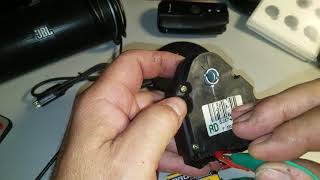
- Failed Recirculation/Vent Door Actuator (Very Common) — The small electric motor moving the air door is the primary failure point. Internal plastic gears strip or break, causing a clicking noise, or the internal motor burns out. Cheap aftermarket replacements also fail prematurely due to inferior plastics.
- Damaged Wiring or Loose Connectors (Common) — Wires routing to the actuator pinch, fray, or corrode. Moisture accumulation near the floorboards accelerates connector corrosion.
- Broken or Jammed Vent Door (Less Common) — The actuator functions properly, but the plastic door it moves is physically broken or jammed by debris falling into the vents.
- Failed HVAC System Calibration (Less Common) — Installing a new actuator without running a calibration procedure leaves the control module blind to the door's start and end points, immediately triggering a position error code.
- Poor System-Wide Vehicle Grounds (Less Common) — A corroded main ground connection for the engine, chassis, or HVAC module causes unpredictable electrical voltage drops, triggering control module communication errors.
- Blown Fuse (Rare) — A short circuit in the wiring or a failing actuator drawing excessive amperage blows the HVAC or BCM fuse.
- Failed HVAC Control Module (Rare) — The computer module controlling the actuator fails internally. Thoroughly test all wiring and the actuator before condemning the module.
Symptoms
- Clicking, Ticking, or Knocking Noise from the Dashboard — A repetitive clicking sound behind the glove box confirms an actuator with stripped plastic gears is slipping as it tries to move the door.
- Inability to Switch Between Fresh and Recirculated Air — The recirculation button does nothing, or the indicator light flashes to indicate a system fault.
- Difficulty Defrosting Windows — A system stuck in recirculation mode cannot pull in dry outside air, causing windows to fog up rapidly and creating a severe safety hazard.
- Inconsistent Temperature or Airflow — The system pulls only hot outside air, making the A/C feel weak, or directs airflow to the wrong vents because the door is jammed.
- Check Engine Light or Flashing A/C Light (also visible on scanner) — The vehicle's main warning light or a flashing light on the A/C button illuminates to alert you to the stored fault.
Diagnostic Flowchart
Tap your situation to follow the diagnostic path that matches what you're seeing on this code.
Common Fixes & Costs
- Replace Recirculation Door Actuator
— Parts: $35-$150, Labor: $150-$1500+, ~0.5-8.0 hr book time
(Intermediate)
Jeep Grand Cherokee (2011-2018): OEM Mopar: 68214880AA (Alt: Dorman 604-029)
Ford F-150 (2009-2014): OEM Motorcraft: YH-1933 (Alt: Dorman 604-252)
Chevrolet/GMC Trucks (2007-2013): OEM ACDelco: 15-73952 (Alt: Dorman 604-108) - Perform HVAC System Calibration/Relearn — Parts: $0, Labor: $0-$150, ~0.3-1.0 hr book time (DIY)
- Repair Wiring or Connector — Parts: $5-$30, Labor: $150-$300, ~1.0-2.0 hr book time (Intermediate)
- Replace Blown Fuse — Parts: $1-$5, Labor: $0-$50, ~0.1 hr book time (DIY)
- Replace HVAC Control Module — Parts: $200-$700, Labor: $150-$300, ~1.0-1.5 hr book time (Professional)
Used vs. New Parts: Buying Guide
When a used part is worth it: Given the high labor cost for inaccessible actuators and the low cost of new aftermarket parts, using a used actuator is never recommended unless the part takes less than 30 minutes to access.
Donor-vehicle mileage cap: roughly under 50000 miles for the part to have meaningful remaining life.
Donor quality checklist:
- Match the part number exactly.
- Avoid parts from vehicles with high mileage.
- Visually inspect the plastic gears for stress cracks.
Decision logic:
- If Labor to access the part is more than 1.5 hours. → Buy a new OEM part. The risk of repeat labor costs far outweighs the savings on a used part.
- If The actuator is easily accessible behind the glove box. → A new aftermarket part is still the safest choice, but a verified low-mileage used part is an acceptable budget option.
- If The part has a known high failure rate with plastic gears. → Strongly favor a new part, as even low-mileage used parts are near failure.
Warranty tradeoff: Salvage yards offer a 30-90 day warranty on the part only. New aftermarket parts offer 1-year to lifetime warranties.
Worst-case if a used part fails: $150-$1500+ if a used part fails after installation, requiring a repeat of the full labor cost.
What Happens If You Wait — Timeline
- 0-1 month: Intermittent clicking sound at startup. Code is pending. Function is mostly normal. (Added cost: $0)
- 1-3 months: Clicking becomes frequent. Recirculation function becomes unreliable. Warning light illuminates. (Added cost: $0)
- 3-6 months: Actuator fails completely. Clicking stops as the motor burns out. Door is stuck in one position, severely compromising defrost performance. (Added cost: $0 - $250)
- 6+ months: Vehicle is perpetually unsafe to drive in conditions requiring defrost. The only escalating cost is the eventual, mandatory repair. (Added cost: Cost of eventual repair)
Cost of Not Fixing It
- Immediate: Loss of control over fresh/recirculated air, creating a critical safety issue if the defrost function fails in cold weather. Annoying clicking noise from the dashboard. (Added cost: $0)
- 1-6 months: Reduced A/C performance if stuck on fresh air in a hot climate, or poor heating if unable to recirculate cabin air. Increased strain on the blower motor if the door jams in a partially closed position. (Added cost: $0 - $250)
- 6+ months: Continued discomfort and safety hazard. The issue will not resolve itself, but it does not cause cascading failure of major components like the A/C compressor. (Added cost: Cost of eventual repair)
Diagnosis Steps
- Verify the Code and Symptoms
Connect an OBD-II scanner to the diagnostic port and confirm B1272 is active. Test the recirculation button and listen for dashboard clicking noises to confirm the mechanical failure.
Tools: OBD-II Scanner (Beginner) - Check Fuses
Locate the fuse boxes using the owner's manual. Visually inspect the fuses for the HVAC system, Body Control Module (BCM), and climate control, replacing any blown fuses.
Tools: Owner's Manual, Fuse Puller or Pliers (Beginner) - Locate the Actuator
Find the recirculation door actuator on the HVAC case, typically behind the glove box. Remove the glove box assembly and lower trim panels to gain visual access.
Tools: Screwdriver, Trim Removal Tools (Intermediate) - Visually Inspect and Listen
Have a helper press the recirculation button while you observe the actuator. Look for physical movement and listen for clicking. Inspect the wiring harness for melting or corrosion, and wiggle the connector to check for loose pins.
Tools: Flashlight (Intermediate) - Analyze Live Data with a Bidirectional Scan Tool
Connect a bidirectional scanner, navigate to the HVAC module, and view the 'Vent Door Position' live data (usually 0.5V to 4.5V). Command the door to open and close; if the voltage remains stuck or jumps erratically, the actuator or circuit is faulty.
Tools: Bidirectional Scan Tool (Advanced) - Test the Electrical Circuit with a Multimeter
Disconnect the actuator and turn the ignition on. Probe the connector terminals to verify a 5-volt reference signal from the control module and a solid ground (less than 1.0 ohm). Missing voltage indicates a wiring or module fault.
Tools: Multimeter, Vehicle-Specific Wiring Diagram (Advanced) - Test the Actuator Motor and Potentiometer Directly
Apply 12V directly to the actuator's motor pins; it must spin smoothly. Connect a multimeter set to Ohms across the 5V reference and signal pins while manually turning the gear; resistance must sweep smoothly without dropping to open loop (OL).
Tools: Power Probe or Jumper Wires, Multimeter (Advanced) - Perform HVAC System Calibration
After replacing the actuator, initiate the 'HVAC Actuator Relearn' function using a bidirectional scan tool. Alternatively, disconnect the battery for 15 minutes, reconnect, turn the key to 'ON', and wait 2 minutes without touching controls to force a manual relearn.
Tools: Bidirectional Scan Tool or Basic Hand Tools (Intermediate)
When This Code Triggers (Freeze-Frame Conditions)
- Condition 1: Ignition ON, Engine Running (The code sets when the vehicle is running and the HVAC system is active.)
- Condition 2: HVAC Control Change (The fault is detected when the driver presses the recirculation button and the module does not see the expected change in the actuator's position sensor voltage.)
- Condition 3: System Self-Test (The code sets during a system self-test at vehicle startup. The HVAC module commands all actuators through their full range of motion to verify operation.)
- Condition 4: Voltage Mismatch (The fault logs when the feedback voltage from the actuator's position sensor falls outside the expected 0.5V to 4.5V range or remains static when commanded to move.)
Related Codes
- B1273 — Indicates an 'Open' circuit for the vent servo motor. Diagnose by checking for a broken wire or disconnected plug using a multimeter.
- B1274 — Points to a 'Short to Battery' in the vent servo motor circuit. Test by checking for 12V+ on the actuator's signal wire where it should not exist.
- B1275 — Points to a 'Short to Ground' in the vent servo motor circuit. Diagnose by checking for continuity between the signal wire and a known good chassis ground.
- B1081 — Defined as 'Temperature Door Actuator Mechanical Failure'. Ford issued TSB 20-2236 for this code on 2015-2019 F-150s, indicating a binding door.
Climate & Environmental Factors
- High Humidity: Humid climates force the A/C system to run longer to dehumidify cabin air. This increased duty cycle accelerates wear on actuator motors.
- Extreme Temperature Cycles: Frequent swings between hot and cold cause dashboard plastics to expand and contract. This thermal stress fatigues plastic actuator gears, causing them to shatter.
How to Talk to a Mechanic About This Code
Say this: "I have an OBD-II code B1272 and the symptoms are a repetitive clicking noise from the passenger side dashboard and my recirculation button isn't working. I'd like to schedule a diagnostic to confirm if it's the recirculation door actuator."
Describes the specific code and classic symptoms, pointing the technician directly to the actuator rather than a vague and expensive 'A/C problem' diagnostic.
Avoid saying:
- 'My A/C is making a weird noise.'
- 'My check engine light is on, can you just fix it?'
- 'I think I need more Freon.'
Questions to ask before authorizing the repair:
- Can you confirm my vehicle's definition for B1272?
- Does the actuator require removing the dashboard?
- Will you test the 5-volt reference wiring before replacing the part?
- Does the estimate include an HVAC system calibration?
- What is the warranty on the part and labor?
Where to Take It: Dealer vs Independent vs Chain
- Dealer:
Recommended only if the vehicle is under warranty or requires complex module programming.
Best for: Vehicles under warranty., Complex electrical issues without obvious clicking symptoms., Repairs requiring full dashboard removal.
Downsides: Labor rates are 1.5-2x higher than independent shops., Only offer expensive OEM parts. (Typical cost: +50% vs. baseline) - Independent Shop:
Best fit for most B1272 repairs. Experienced technicians diagnose and repair this efficiently at a lower cost.
Best for: Out-of-warranty vehicles., Diagnosing common HVAC actuator failures., Offering a choice between OEM and aftermarket parts.
Downsides: Quality varies; choose an ASE-certified shop specializing in HVAC. (Typical cost: +0% vs. baseline) - Chain Shop:
Not recommended. The risk of misdiagnosis or skipping the mandatory calibration procedure is too high.
Best for: Simple, routine maintenance like oil changes and brake pads.
Downsides: Technician skill varies dramatically., Lack advanced diagnostic tools for BCM codes and actuator calibrations. (Typical cost: -10% vs. baseline)
When to Walk Away From the Repair
If the estimated repair cost exceeds 40-50% of your car's private-party value, consider selling the vehicle.
- Car worth $3500, fix is $1800: Walk away. The repair involves full dashboard removal, which is not economically sensible.
- Car worth $15000, fix is $1200: Fix it. The repair is less than 10% of the vehicle's value.
- Car worth $6000, fix is $450: Fix it. The actuator is easily accessible, and the cost is well below the threshold.
What Scan Tool You Need for This Code
Minimum: An OBD-II scanner capable of reading Body Control Module (BCM) codes. Basic $20 engine code readers cannot see B1272.
B1272 is a 'B' (Body) code, not a 'P' (Powertrain) code. You need a bidirectional tool to command the actuator and perform the mandatory calibration after replacement.
Budget: BlueDriver Pro Scan Tool (~$100) — Reads and clears B-codes and displays live data. It is NOT bidirectional and cannot perform a forced calibration.
Mid-range: XTOOL D7 / Kingbolen K7 (~$300-400) — Offers full bidirectional control to command the actuator and initiate the 'HVAC Actuator Relearn' special function.
Professional: Autel MaxiCOM MK808BT / Innova 5610 (~$450-700) — Provides OEM-level diagnostics, robust bidirectional controls, detailed live data graphing, and guided component test procedures.
Rent vs buy: Auto parts stores offer free scanning, but their tools rarely read B-codes or perform bidirectional calibration. Buying a mid-range bidirectional tool is necessary for DIY repair.
How to Clear the Code After You Fix It
- Perform HVAC system calibration as per Step 8 of the Diagnosis section.
- Use an OBD-II scan tool to clear the B1272 fault code from the BCM or HVAC module.
- If the battery was disconnected, drive the vehicle for 50-100 miles to reset emissions readiness monitors.
Drive cycle (~30 minutes): A specific drive cycle for a B-code is not required. To reset emissions monitors after a battery disconnect, perform a standard OBD-II drive cycle: a cold start, 10 minutes of city driving, and 20 minutes of steady highway driving.
Readiness monitors affected: Catalyst monitor, O2 sensor monitor, Evaporative system monitor
Before emissions retest: drive at least 100 miles to fully set monitors.
Watch out for:
- Clearing the code without performing the repair causes the code to return immediately.
- Disconnecting the battery clears the code but erases all emissions readiness monitors, causing an automatic emissions test failure.
- Skipping the HVAC calibration after replacing the part causes the new actuator to bind and re-trigger the code.
Will This Fail Emissions / State Inspection?
No — by itself this code doesn't fail OBD inspection (but it can keep readiness monitors from setting, which causes a separate fail).
- California: A B1272 code alone will not fail a smog check. However, if the battery was disconnected to clear the code, the vehicle fails because the OBD-II readiness monitors read 'Not Ready'.
- New York: The NYVIP3 inspection checks for illuminated Malfunction Indicator Lamps (MIL). A B-code is not an automatic fail unless it illuminates the MIL. Resetting the battery causes a failure due to unset readiness monitors.
- Texas: An illuminated Check Engine Light is an automatic failure. If the code does not trigger the light, it passes, provided all readiness monitors are set to 'Ready'.
Most Commonly Affected Vehicles
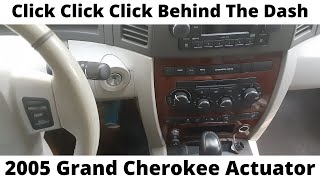
- Jeep Grand Cherokee & Wrangler (2005-2018) — Extremely common failure on the Grand Cherokee (WK/WK2) and Wrangler (JK). The recirculation door actuator fails first, causing a loud clicking from the passenger side dash.
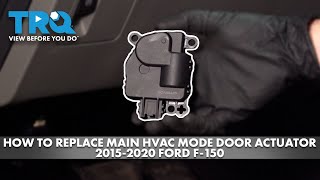
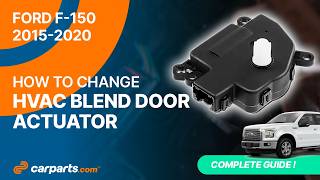
- Ford F-150, Explorer, Expedition (2004-2014) — These models suffer frequent blend and mode door actuator failures. F-150 labor estimates range from $800 to $1500 due to dashboard removal requirements.
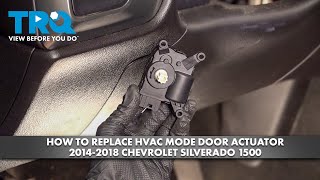
- Chevrolet / GMC Silverado, Sierra, Tahoe, Suburban (2003-2013) — Actuator failure is ubiquitous. Replace all accessible actuators simultaneously if the dashboard is removed to save future labor costs.
- Toyota / Lexus Land Cruiser, ES350, SC430 (2001-2010) — On these vehicles, B1272 indicates a 'Power Seat ECU Communication Stop'. This is a power seat memory system fault, completely unrelated to the HVAC system.
- Honda Civic, CR-V (2006-2011) — The main recirculation actuator is a known failure point, often causing a clicking noise from the passenger side dashboard.
- Volkswagen Golf, Jetta (2010-2016) — On specific VW models, B1272 indicates an 'Open Circuit' for the roof antenna, affecting radio reception rather than HVAC.
- Subaru Outback, Forester (2019-2023) — These models suffer from poor chassis grounds causing cascading electrical faults, including HVAC module communication errors.
- Nissan Titan, Armada (2004-2015) — Faulty wiring, relays, or a failing Intelligent Power Distribution Module (IPDM) trigger erratic actuator failures.
Manufacturer-Specific Notes
- Toyota / Lexus: B1272 means 'Power Seat ECU Communication Stop'. It indicates a communication problem between the power seat control module and the main body computer. Diagnosis involves checking power seat fuses and wiring.
- Ford: On 7.3L Power Stroke diesels, code P1272 (Powertrain) means 'Cylinder 2 High To Low Side Open', an injector fault. Ford also issued TSB 20-2236 for 2015-2019 F-150s regarding binding temperature doors.
- Volkswagen: On models like the Golf, B1272 defines as 'Connection between Antenna Amp 1 for Radio and Antenna - Open Circuit'. This is a roof antenna issue resulting in poor radio reception.
- Jeep: Jeep recalled certain 2023 Grand Cherokee models (NHTSA 24V-436) for HVAC blower motors with damaged connectors causing defrost failure, highlighting related HVAC electrical vulnerabilities.
Real Owner Stories
2011 Honda CR-V at ~100K miles
Owner noticed that pressing the recirculation button did not stop outside smells from entering the cabin. The indicator light worked, but the flap was not closing completely.
What they tried:
- Removed the glove box to access the recirculation actuator and door.
- Observed the actuator moving but the door linkage seemed to have popped out of place, preventing a full seal.
Outcome: The owner manually snapped the plastic linkage from the actuator arm back into the door flap's socket. No parts were replaced. The system then operated correctly.
Lesson: Visually inspect the actuator and door linkage before buying parts. The physical connection often pops out of place.
GMC Terrain with multiple failures
Owner replaced the blend door actuator five times in one year. The part would work for a while, then start clicking randomly and fail shortly after, even with no input from the temperature controls.
What they tried:
- Replaced the actuator multiple times with aftermarket parts.
- Replaced the HVAC control module with a used part that had a different model number.
Outcome: The issue was finally resolved after discovering the replacement HVAC control module was the wrong part number. Even though it looked identical, internal differences caused it to send incorrect signals, burning out the actuators. Installing the correct module fixed the problem.
Lesson: When replacing electronic modules, the part number must be an exact match to prevent incorrect voltage signals.
2008 Lexus SC430 with no symptoms
The convertible top failed to operate. The owner took the car to be scanned and found code B1272, but no codes related to the convertible top. There were no HVAC symptoms.
What they tried:
- Disconnected the battery to try and reset the top's computer, which may have triggered the B1272.
- A shop hooked up a Techstream scanner, and the top began working again.
Outcome: The B1272 code on this Lexus meant 'Power Seat ECU Communication Stop'. The communication error likely occurred when the battery was disconnected. Once the codes were cleared and communication was re-established, the issue was resolved.
Lesson: Always verify the code definition for your exact make and model to avoid misdiagnosing an unrelated system.
2017 Chevy Equinox with dashboard clicking
Owner heard a loud clicking/clunking noise from the dashboard when changing temperature from hot to cold. The temperature control was erratic.
What they tried:
- Owner removed the failed actuator and disassembled it for inspection.
Outcome: A single plastic tooth, the size of a grain of rice, had broken off one of the internal gears. This tiny broken piece caused the gear to slip and make the clicking noise. Replacing the entire actuator assembly ($48 CAD) resolved the problem.
Lesson: Actuator failure is almost always caused by a shattered internal plastic gear, confirming the physical part must be replaced.
How to Prevent This Code From Triggering
- Replace the cabin air filter regularly (Every 12,000 miles or annually) — A clogged filter restricts airflow, forcing actuators to work harder against increased pressure.
- Cycle HVAC settings periodically (Monthly) — Moving all doors through their full range prevents plastic gears and hinges from seizing.
- Avoid making rapid, repeated changes to controls (Daily habit) — Forcefully switching from max hot to max cold puts unnecessary stress on small plastic gears.
- Clean debris from the cowl area (Seasonally) — Leaves and pine needles travel into the HVAC box and physically obstruct door movement, causing actuators to bind.
- Use high-quality replacement parts (During any repair) — OEM or top-tier aftermarket parts use superior plastics that withstand heat and vibration better than cheap alternatives.
Frequently Asked Questions
Can I fix a B1272 code myself?
Yes, if the cause is a blown fuse or an easily accessible actuator located directly behind the glove box. However, many actuators are buried deep inside the dashboard, requiring extensive disassembly. The high labor cost at a repair shop reflects this difficulty.
What is the clicking noise I hear in my dashboard?
That is the classic sound of a failing door actuator. The internal plastic gears have stripped, causing the motor to slip and click as it attempts to move the door.
Can you reset a blend door actuator?
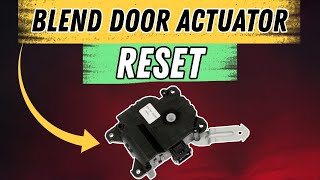
Yes, a reset or calibration is required after replacement. Disconnect the car battery for 15 minutes or use a bidirectional scan tool to trigger the 'HVAC Actuator Relearn' process. This forces the HVAC module to relearn the start and end positions of all doors.
My car makes a clicking noise but has no code, could it still be the actuator?
Yes, the actuator often fails mechanically before it fails electrically. The gear teeth slip and click, but the position sensor may not register a large enough error to trigger a code immediately. This noise guarantees the actuator will fail completely soon.
What are the most common misdiagnosis mistakes for B1272?
The biggest mistake is ignoring manufacturer-specific definitions, as B1272 is a power seat issue on Toyotas and a radio antenna fault on VWs. Another common error is replacing the actuator without testing the wiring for a 5-volt reference signal first.
How much does it cost to diagnose a B1272 code?
Most repair shops charge a standard diagnostic fee of $150 to $200 to scan the BCM codes, verify the symptoms, and pinpoint the exact failure point.
Is a recirculation door actuator the same as a blend door actuator?
They are physically similar but perform different jobs. A recirculation actuator switches between outside and inside air, while a blend door actuator mixes hot and cold air. Code B1272 specifically targets the vent/recirculation door actuator.
Key Takeaways
- Code B1272 indicates a failed 12-volt electric actuator motor controlling the fresh air and recirculation door inside your dashboard.
- Listen for a repetitive clicking noise behind the glovebox; this confirms the actuator's internal plastic gears have stripped and require replacement.
- Verify the code definition for your specific vehicle make, as Toyota and Lexus use B1272 to indicate a power seat communication failure rather than an HVAC issue.
- A vehicle with a B1272 code remains mechanically safe to drive, but a stuck recirculation door eliminates windshield defrosting capabilities in cold or humid weather.
- Perform a mandatory HVAC system calibration using a bidirectional scan tool or battery reset after installing a new actuator to prevent immediate repeat failures.
Helpful Videos

The information in this article is provided for general reference and educational purposes only. Vehicle specifications, procedures, and part compatibility can vary by production date, trim level, and region. Always consult your vehicle's factory service manual and verify part numbers before purchasing or performing repairs. Safety-critical components such as airbags, seat belts, and braking systems should be installed by a qualified professional.
- 🎬 Helpful Videos
- What Does B1272 Mean?
- Can I Drive With B1272?
- Common Causes
- Symptoms
- Diagnostic Flowchart
- Common Fixes & Costs
- Used vs. New Parts: Buying Guide
- What Happens If You Wait — Timeline
- Cost of Not Fixing It
- Diagnosis Steps
- When This Code Triggers (Freeze-Frame Conditions)
- Related Codes
- Climate & Environmental Factors
- How to Talk to a Mechanic About This Code
- Where to Take It: Dealer vs Independent vs Chain
- When to Walk Away From the Repair
- What Scan Tool You Need for This Code
- How to Clear the Code After You Fix It
- Will This Fail Emissions / State Inspection?
- Most Commonly Affected Vehicles
- Manufacturer-Specific Notes
- Real Owner Stories
- 2011 Honda CR-V at ~100K miles
- GMC Terrain with multiple failures
- 2008 Lexus SC430 with no symptoms
- 2017 Chevy Equinox with dashboard clicking
- How to Prevent This Code From Triggering
- Frequently Asked Questions
- Can I fix a B1272 code myself?
- What is the clicking noise I hear in my dashboard?
- Can you reset a blend door actuator?
- My car makes a clicking noise but has no code, could it still be the actuator?
- What are the most common misdiagnosis mistakes for B1272?
- How much does it cost to diagnose a B1272 code?
- Is a recirculation door actuator the same as a blend door actuator?
- Key Takeaways
- 🎟️ Get 5% Off