

OBD-II Code B1271: A Comprehensive Guide for All Makes
What B1271 means, its multiple definitions, and how to diagnose and fix it
- Code B1271 is manufacturer-specific, most commonly indicating a failed instrument cluster (Toyota), a locked radio (GM), or a dead battery charge indicator (Jeep 4xe).
- For 2004-2009 Toyota Prius models, a single failing 100µF 16V capacitor on the combination meter circuit board causes 90% of B1271 codes.
- On GM vehicles, B1271 triggers the 'TheftLock' radio system after a battery disconnect or radio swap, requiring a $75-$200 professional VIN relearn to fix.
- Driving a Toyota with an active B1271 code is illegal and unsafe, as the blank dashboard removes your speedometer, fuel gauge, and critical engine warning lights.
What Does B1271 Mean?

B1271 is a body-related diagnostic trouble code (DTC) whose meaning varies significantly by manufacturer. It signals a fault in the vehicle's electronic communication or body control systems. For Toyota, it indicates the instrument cluster has lost communication. For General Motors (GM), it means the radio's anti-theft system is active. For 2019-2023 Jeep Wrangler 4xe models, it points to an internal failure of the battery charge indicator.
Technical definition: The SAE/ISO definition for B1271 is not standardized. For Toyota, it is "Combination Meter ECU Communication Stop." For General Motors, it is "Theft Protection Active" or "Theft Locked." For Jeep Wrangler 4xe, it is "Charge Level Indicator Internal Fault." For SAAB, it is "Anti Theft Error - Wrong car Environment."
Can I Drive With B1271?
No — Do Not Drive. Do not drive. Depending on the vehicle, this code often signifies a blank instrument cluster (no speedometer, fuel gauge, or warning lights) or a locked radio. Driving without a functional speedometer is unsafe, illegal in most jurisdictions, and risks speeding tickets. The loss of warning lights means you will miss critical engine or safety alerts.
Common Causes

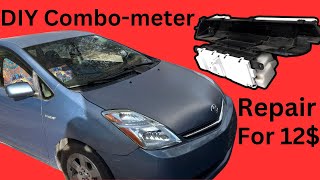
- Failed Capacitor in Toyota Instrument Cluster (Very Common) — On 2004-2009 Toyota Prius models, a specific 100µF electrolytic capacitor on the instrument cluster's circuit board fails. This causes a short that leads to an intermittent or complete loss of the dashboard display, especially in cold weather. 🎬 Watch: How to repair your 2nd Gen Prius combo meter.
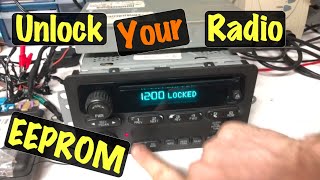
- Radio VIN Mismatch (GM TheftLock) (Very Common) — On many GM vehicles, the radio is electronically tethered to the original vehicle's VIN. If a used radio is installed, or if the 12V battery is replaced or disconnected, the radio loses this pairing, displays "LOC" or "Locked," 🎬 See this guide on how to reset a Chevrolet radio. and sets code B1271.
- Low or Unstable Battery Voltage (Common) — A weak, failing, or recently replaced 12V battery causes electrical glitches and communication faults between modules. System voltage dropping below 12.4V triggers this code, which remains as a history code even after the battery is replaced.
- Internal Failure of Battery Charge Indicator (Jeep 4xe) (Common) — On 2019-2023 Jeep Wrangler 4xe models built on or before November 21, 2022, the dash-mounted Battery Charge Indicator (BCI) module fails internally. Jeep issued TSB 08-100-23 to address this specific defect.
- Faulty Instrument Cluster Assembly (Less Common) — Beyond a single capacitor, the entire instrument cluster (combination meter) fails due to cracked solder joints or processor faults, requiring a full replacement or professional rebuild.
- Shorted or Open CAN Bus Wiring (Less Common) — The Controller Area Network (CAN bus) connects all modules. A chafed, corroded, or broken wire causes a short to ground or an open circuit, disrupting communication and triggering B1271.
- Faulty Networked Module (including BCM) (Rare) — The Body Control Module (BCM) or another module on the same communication line (like the A/C amplifier) fails internally. This disrupts the entire network, causing other modules to report a communication loss.
- Faulty HVAC Actuator (Potentiometer) (Rare) — On specific European vehicles, particularly Alfa Romeo, B1271 indicates a short-to-ground in the defrost door actuator's position sensor within the climate control system.
Symptoms

- Instrument cluster display is blank or intermittent — The entire dashboard display, including the speedometer, fuel gauge, and odometer, goes dark permanently or sporadically. This is the primary symptom for Toyota vehicles.
- Radio is locked and displays "LOC" or "Theftlock Active" — The factory radio will not function and shows a locked message on its display. This is the hallmark symptom for GM vehicles.
- Jeep 4xe battery charge indicator lights are off — On affected Jeep Wrangler 4xe models, the dashboard lights showing the high-voltage battery's state of charge fail to illuminate.
- Car is difficult to turn off — On Toyota Prius models, the vehicle fails to power down correctly when the power button is pressed, requiring the button to be held for several seconds to force a shutdown.
- Secondary electrical functions fail — Because the instrument cluster acts as a communication gateway, its failure causes the rear hatch to lock, the backup camera to go black, or the reverse beeper to mute.
- Various warning lights appear on the dash — The red triangle of death, VSC, or brake system warning lights illuminate without a clear mechanical cause.
Diagnostic Flowchart
Tap your situation to follow the diagnostic path that matches what you're seeing on this code.
Common Fixes & Costs
- Repair Toyota combination meter (capacitor replacement) — Parts: $5-$15, Labor: $150-$450, ~2.5 hr book time (DIY)
- Replace Toyota combination meter (Remanufactured or New) — Parts: $150-$950, Labor: $150-$250, ~1.5 hr book time (Professional)
- Reset/Relearn GM radio VIN (TheftLock) — Parts: $0, Labor: $75-$200, ~1 hr book time (Professional)
- Replace Jeep Wrangler 4xe Battery Charge Indicator (BCI) — Parts: $60-$100, Labor: $100-$150, ~0.6 hr book time (DIY)
Used vs. New Parts: Buying Guide
When a used part is worth it: For a GM radio, a used unit from an auto recycler is cost-effective but requires professional VIN reprogramming. For a Toyota instrument cluster, a professionally repaired or remanufactured unit is superior to a used one, as a used part will soon develop the identical capacitor failure.
Donor-vehicle mileage cap: roughly under 100000 miles for the part to have meaningful remaining life.
Donor quality checklist:
- Verify the part number matches exactly.
- Purchase from a seller offering a warranty and return policy.
- Ensure the donor vehicle was not scrapped due to flood or fire damage.
- For a used instrument cluster, the odometer reading will be from the donor car and must be legally reprogrammed.
Decision logic:
- If The part is a Toyota Instrument Cluster → Choose a mail-in remanufacturing service for your original part to retain mileage and get an upgraded capacitor. A used part is a high-risk gamble.
- If The part is a GM Radio → A used part is acceptable, but factor in the $75-$200 cost for a shop to perform the VIN relearn procedure.
- If The part is a simple module like the Jeep BCI → A used part from a low-mileage donor is a reasonable, low-risk way to save money.
Warranty tradeoff: Used parts from salvage yards typically have a 30-90 day warranty. Remanufactured electronics often come with a 1-year or lifetime warranty. New OEM parts carry a 1-year warranty.
Worst-case if a used part fails: $300-$500 if a used part fails after installation, accounting for repeat labor costs and a second replacement part.
What Happens If You Wait — Timeline
- 0-6 months (Toyota Cluster): Intermittent failure of the instrument cluster, typically on cold mornings. The display comes back to life after the car's interior warms up. No other symptoms. (MPG impact: 0%% · Added cost: $0)
- 6-12 months (Toyota Cluster): Failures become more frequent and less temperature-dependent. The car becomes difficult to power off. The rear hatch or backup camera stops working intermittently. (MPG impact: 0%% · Added cost: $0-$50 (inconvenience, potential need for other diagnostics))
- 12+ months (Toyota Cluster): The instrument cluster fails completely. There is no speedometer, fuel gauge, or warning lights. The car is illegal and unsafe to drive. An unseen critical warning leads to engine damage. (MPG impact: N/A (Vehicle should not be driven)% · Added cost: $150 (speeding ticket) to $8000+ (engine replacement from missed warning))
- Immediate (GM Radio / Jeep BCI): For GM radio lock and Jeep BCI failure, the event is immediate. After battery power loss (GM) or internal failure (Jeep), the component simply stops working. The failure does not degrade over time. (MPG impact: 0%% · Added cost: $75-$200 (cost to unlock GM radio) or $150-$250 (cost to replace Jeep BCI))
Cost of Not Fixing It
- Immediate: For Toyota/cluster failure: Driving without a speedometer is illegal and unsafe. Loss of warning lights means a separate critical failure (like low oil pressure) goes unnoticed, leading to catastrophic engine damage. (Added cost: $150 (speeding ticket) to $8000+ (new engine))
- Immediate: For GM/radio failure: Loss of audio, navigation, and hands-free phone functions. Does not impact other vehicle systems. (Added cost: Negligible)
- 1-3 months: For Toyota/cluster failure: Repeatedly forcing the car to shut down strains the 12V battery and electronics. A non-functional cluster causes related systems like ABS or VSC to disable as a safety precaution. (Added cost: $200-$400 (new 12V battery and diagnostic fees))
- Long-term: Ignoring a communication fault masks developing issues. A wiring short triggering B1271 eventually affects other critical modules on the CAN bus, leading to widespread electrical problems. (Added cost: $500-$2500 (complex electrical diagnosis and module replacement))
Diagnosis Steps

- Identify Primary Symptom & Vehicle
Observe the vehicle. Is the Toyota Prius dash blank? Is the GM radio locked? Is the Jeep 4xe charge indicator out? The vehicle make and primary symptom dictate the exact meaning of code B1271.
Tools: None (Beginner) - Check the 12V Battery and Fuses
Use a multimeter to test the 12V battery. A reading below 12.4 volts (engine off) indicates a weak battery causing communication faults. Check fuses related to the instrument panel, radio, and BCM (e.g., DOME and MPX-B fuses on a Prius).
Tools: Multimeter, fuse puller (Beginner) - Perform a Comprehensive Code Scan
Use an OBD-II scanner capable of reading Body (B) and Network (U) codes. Look for related codes like U0155 (Lost Communication with Instrument Panel) or C1241 (Low Voltage). Note if B1271 is 'current' or 'history'.
Tools: Advanced OBD-II Scanner (Beginner) - For Toyota: Test Combination Meter Power/Ground
Access the connectors behind the combination meter. With the ignition ON, use a multimeter to verify 10-14V at the power pin and continuity to ground (less than 1 Ω) at the ground pin. If power and ground are present but the dash is blank, the meter is faulty.
Tools: Trim removal tools, multimeter, vehicle-specific wiring diagram (Advanced) - For GM Radios: Attempt a TheftLock Reset
A VIN relearn procedure is required. Connect a professional-grade scan tool (like a GM Tech2) to reprogram the radio to the vehicle's VIN. Basic code readers cannot perform this function.
Tools: Professional Scan Tool or specialized programmer (Intermediate) - For Jeep 4xe: Confirm with TSB
If the code is B1271-00 and the vehicle was built on or before November 21, 2022, TSB 08-100-23 directs the immediate replacement of the Battery Charge Indicator (BCI) module.
Tools: OBD-II Scanner (Beginner) - Pro Tip: Test the CAN Bus Resistance
Disconnect the 12V battery. Set a multimeter to Ohms (Ω) and measure resistance between Pin 6 (CAN High) and Pin 14 (CAN Low) of the OBD-II port. A healthy network reads 60 Ω. A reading of 120 Ω indicates an open circuit; 0 Ω indicates a short.
Tools: Multimeter (Advanced) - Pro Tip: Test CAN Bus Voltage
Reconnect the battery and turn the ignition ON. Set a multimeter to DC Volts. Check voltage between Pin 6 and ground, then Pin 14 and ground. A healthy high-speed CAN bus shows ~2.5V-3.5V on CAN-H and ~1.5V-2.5V on CAN-L.
Tools: Multimeter (Advanced)
When This Code Triggers (Freeze-Frame Conditions)
- Ignition Status: ON / RUN (Code sets within seconds of powering on the vehicle as modules fail their initial communication check-in.)
- ECU Voltage: 9.5V - 11.5V (A low voltage state during startup causes modules to fail to initialize properly, triggering a communication fault.)
- Vehicle Speed: 0 mph (The fault most often occurs at startup before the vehicle moves.)
- Time Since Code Clear: < 1 minute (If the fault is hard-set (like a failed cluster), the code reappears immediately after being cleared and the ignition is cycled.)
Related Codes
- U0155 — Means "Lost Communication with Instrument Panel Control (IPC) Module." Seeing this alongside B1271 strongly confirms the instrument cluster is the fault.
- C1241 / B1318 — Indicates "Low Battery Positive Voltage." A weak 12V battery causes random communication failures triggering B1271. Always fix voltage codes first.
- U0140 — Means "Lost Communication With Body Control Module (BCM)." If present with multiple 'U' codes, the BCM or main CAN bus wiring is the root cause.
- B1266 / B1267 — On Lexus/Toyota, these indicate a short on the communication bus. Repair these shorts before troubleshooting B1271, as they cause the communication stop.
Climate & Environmental Factors
- Cold Temperature: For the 2004-2009 Toyota Prius, the B1271 fault is significantly more likely to occur in cold weather. The failing electrolytic capacitor's performance degrades at low temperatures, preventing the combination meter from powering on. The unit begins working again as the cabin warms up.
- High Mileage / On-Time: For the Toyota Prius, failure correlates with high mileage or total 'on' time of the instrument cluster, as the electronic components degrade over time.
How to Talk to a Mechanic About This Code
Say this: "{'for_toyota_prius': "I have a [Your Year] Toyota Prius with a blank instrument cluster and a B1271 code. I suspect it's the common combination meter failure. Can you provide a quote for installing a remanufactured unit, not a new one?", 'for_gm_vehicle': "My [Your Year] [Your Model] radio displays 'Locked' after a battery change, setting a B1271 code. I need a quote for a VIN relearn procedure to unlock the radio.", 'for_jeep_4xe': 'My [Your Year] Jeep Wrangler 4xe has a B1271 code, and the battery charge indicator lights are out. Can you confirm TSB 08-100-23 applies and quote replacing the BCI module?'}"
This signals to the shop that you have done your research, points them directly to the most likely cause, and frames the repair request appropriately. It prevents an open-ended, costly diagnostic process.
Avoid saying:
- 'My check engine light is on.' (Too vague, invites a wide-ranging and expensive diagnosis)
- 'Just fix whatever is wrong.' (Gives the shop a blank check)
- 'My dashboard is blank.' (Better, but not as specific as mentioning the likely faulty part)
Questions to ask before authorizing the repair:
- For Toyota: Does your quote involve repairing my existing circuit board, installing a remanufactured unit, or a new OEM part? What is the warranty?
- For GM: Is the price you quoted a flat fee for the VIN relearn service? Does this require any new hardware?
- For Jeep: Can you confirm the part number you are using is the updated one specified in the TSB?
- Will you clear the B1271 code and verify that the symptoms are gone after the repair?
Where to Take It: Dealer vs Independent vs Chain
- Dealer:
Best for: GM radio VIN relearn procedures, as they are guaranteed to have the correct tools., Jeep 4xe repairs, especially if the vehicle is under warranty or covered by a TSB., Vehicles with complex, intermittent electrical issues requiring factory-specific diagnostic workflows.
Downsides: Significantly higher labor rates and part costs., Will almost always recommend a full, new component replacement (e.g., a new $1200 Prius cluster) rather than a cost-effective repair. (Typical cost: +50% vs. baseline) - Independent Shop:
Best fit for most scenarios, especially out-of-warranty Toyota repairs. For GM radio unlocks, confirm the shop has a bidirectional tool capable of the VIN relearn first.
Best for: Toyota combination meter replacement using a more affordable remanufactured unit., Out-of-warranty vehicles where cost is a major factor., Finding shops that specialize in electronics repair for board-level fixes.
Downsides: Quality and expertise vary widely; vet shops carefully., You must confirm they own the specific diagnostic tools required, such as a GM-compatible scanner for a radio relearn. (Typical cost: +0% vs. baseline) - Chain Shop:
AVOID. These shops are generally not equipped for the specific electronic repairs or programming required by the most common B1271 faults.
Best for: Simple, routine maintenance like oil changes or tire rotations.
Downsides: Technicians lack the specialized tools or experience for manufacturer-specific electronic faults like B1271., High pressure to upsell and a tendency to replace parts without a precise diagnosis. (Typical cost: -10% vs. baseline)
When to Walk Away From the Repair
If the estimated repair cost exceeds 40-50% of the car's private-party market value, seriously consider selling or trading in the vehicle instead of repairing it.
- Car worth $4500, fix is $1200: Walk away from this specific quote. A $1200 dealer quote for a Prius cluster is too high relative to the car's value. Seek a $150-$450 repair from an independent shop or mail-in service.
- Car worth $7000, fix is $150: Fix it. A $150 GM radio unlock fee is a minor cost to restore full functionality and is well below the repair threshold.
- Car worth $3000, fix is $600: Borderline. The repair is 20% of the car's value. If the vehicle is otherwise in good condition, the repair is worth it. If it needs other significant work, consider selling.
What Scan Tool You Need for This Code
Minimum: A scanner that reads manufacturer-specific Body ('B') codes. A basic engine-only ('P' code) reader from a parts store will not see the B1271 code.
The cheapest code readers only access the Powertrain Control Module. B1271 is stored in a body-related module, requiring a tool that communicates with the BCM, Instrument Cluster, or Radio.
Budget: BlueDriver Pro or Kingbolen Ediag Elite (~$70) — These Bluetooth dongles connect to a smartphone app and read codes from all modules, including Body, Chassis, and Network. This is sufficient to confirm the B1271 code.
Mid-range: Foxwell NT510 Elite or ThinkScan Plus S4/S7 (~$250) — These handheld tools offer full-system diagnostics to read/clear B-codes and view live data. They offer limited bidirectional controls but are NOT guaranteed to perform the GM VIN relearn.
Professional: Autel MaxiCOM MK808BT or Launch X431 CRP919XBT (~$450-600) — These professional-level tools feature full bidirectional control. They perform the special 'Radio Setup' or 'VIN Relearn' function required to unlock GM radios.
Rent vs buy: For a one-time diagnosis to read the code, buying a budget pick is cost-effective. If you have a GM radio that needs unlocking, paying a shop $150 is cheaper than buying a $500 pro tool.
How to Clear the Code After You Fix It
- Reconnect the 12V battery if it was disconnected for the repair.
- Use an OBD-II scan tool capable of reading body codes to clear the B1271 fault.
- For GM radios, perform the VIN relearn procedure with a specific scan tool; simply clearing the code is not enough.
- Cycle the ignition off and then on, and wait 30 seconds to verify the code does not return.
Drive cycle (~5 minutes): For communication codes, a formal drive cycle is not required. A 'key-on, key-off' cycle is sufficient. After clearing the code, turn the ignition off, remove the key, wait 10 seconds, then turn the ignition back to 'ON'. All modules attempt to communicate; if successful, the code stays clear.
Readiness monitors affected: None directly, A faulty instrument cluster acting as a network gateway prevents the ECM from communicating, blocking all emissions readiness monitors from setting.
Before emissions retest: drive at least 50 miles to fully set monitors.
Watch out for:
- Disconnecting the battery will not clear a B1271 code from memory in most vehicles.
- For GM radios, the 'LOC' message remains until a VIN relearn is performed, even if the B1271 code is cleared.
- If the code returns immediately, the root cause (e.g., bad capacitor, broken wire) has not been fixed.
Will This Fail Emissions / State Inspection?
Yes — this code typically fails an OBD-II emissions inspection.
- California: An illuminated check engine light results in an automatic failure. If the B1271 fault is due to a non-communicating instrument cluster, the smog station's equipment cannot connect to the vehicle's OBD-II system, resulting in a failure.
- New York: NYS inspection includes an OBD-II check for all 1996 and newer vehicles. An active MIL is an automatic failure.
- Texas: In counties requiring emissions testing, an illuminated Check Engine Light is an automatic failure. If the code is cleared, the vehicle must be driven until readiness monitors set, or it fails for being 'Not Ready'.
Most Commonly Affected Vehicles

- Toyota Prius (2004-2009) — Extremely common due to a failing capacitor on the combination meter circuit board. Symptoms are significantly worse in cold weather.
- Jeep Wrangler 4xe (JL) (2019-2023) — B1271 means the Battery Charge Indicator (BCI) module has failed. TSB 08-100-23 applies to vehicles built on or before November 21, 2022.
- Chevrolet Equinox (2010-2012) — Triggers the B1271 "Theft Protection Active" code if the radio is replaced or after battery power is lost. Requires a VIN relearn procedure.
- GMC Terrain, Acadia, Sierra (2008-2015) — Models using the TheftLock radio system set B1271 if the battery is disconnected, requiring a dealer or programmer to unlock.
- Cadillac CTS (2008-2013) — Affected by the radio's anti-theft system VIN mismatch issue, displaying a 'Theft Locked' message.
- Toyota Highlander (2004-2007) — Experiences the 'Combination Meter ECU Communication Stop' issue, similar to the Prius, leading to a blank dash.
- SAAB 9-5 (2007-2010) — Sets code B1271 for 'Anti Theft Error' when the Infotainment Head Unit (IHU) has a mismatched theft protection code.
- Subaru Outback, Impreza, Crosstrek (2012-2017) — Known for communication failures between the Body Integrated Unit (BIU) and the instrument cluster, presenting similar dead gauge symptoms.
Manufacturer-Specific Notes
- Toyota: On 2004-2009 Prius models, a blank dashboard and code B1271 is almost certainly a failed capacitor on the combination meter circuit board. Toyota issued TSB T-SB-0172-09 Rev2 for this defect.
- General Motors (Chevrolet, GMC, Buick, Cadillac): This code is strictly related to the radio's "TheftLock" anti-theft feature. It requires a VIN relearn procedure with a dealer-level scan tool after a radio swap or power loss.
- Jeep: On 2019-2023 Wrangler 4xe PHEV models, B1271 means the Battery Charge Indicator (BCI) module on the dash has failed. A TSB exists for this known manufacturing defect.
- Lexus: While many Lexus models share the combination meter issue with Toyota, B1271 sometimes points to an internal malfunction in the GPS or AV control unit's Real-Time Clock (RTC).
Real Owner Stories
2007 Toyota Prius with 110K miles - Intermittent to Dead Dashboard
The instrument cluster started going out intermittently, eventually failing to turn on at all for over a month.
What they tried:
- Received a quote from a Toyota dealership for $1200 to replace the combination meter.
- Another local shop declined the repair.
- The owner researched the DIY capacitor fix.
Outcome: The owner successfully repaired the original combination meter by soldering a new capacitor onto the circuit board, resolving all symptoms for under $15.
Lesson: For the common Toyota B1271 issue, a DIY capacitor replacement is a very low-cost but high-skill fix. Less-skilled owners should use a mail-in repair service ($150-$250) which is far cheaper than a dealer replacement.
2012 Chevy Equinox - Radio Died After Alternator Failure
After replacing a failed alternator, the factory touchscreen radio was completely dead. All vehicle sounds, including the turn signal click, were gone.
What they tried:
- Troubleshooting included disconnecting the battery and checking fuses. None worked.
- Purchased an identical used replacement radio from a salvage yard. This restored vehicle sounds but the screen displayed 'locked'.
Outcome: The owner paid a local GM dealership a $150 fee to perform a VIN relearn procedure, successfully unlocking the used radio.
Lesson: When replacing a modern GM radio, you must budget for the professional VIN relearn procedure. The anti-theft system cannot be bypassed by simple means.
2005 Toyota Prius with 230K miles - B1271 as a "History" Code
A Prius that sat for 2 years was revived with a new 12V battery. A professional scan showed a 'Gateway Fault' with B1271 stored in history. The dashboard worked perfectly.
What they tried:
- The owner was concerned the history code indicated an impending failure.
- A forum expert advised that B1271 is triggered by low voltage events and remains as a history code without an active problem.
Outcome: The owner monitored the situation. With no active symptoms, no repair was needed. The code was a ghost from the dead battery and jump-start.
Lesson: Differentiate between 'current' and 'history' codes. A history B1271 with no active symptoms, especially after a low-voltage event, requires no action. Do not replace parts based on history codes alone.
2021 Jeep Wrangler 4xe - Sudden Power Loss and Electrical Faults
A new 4xe with 35 miles lost power while driving. The dash lit up with engine and charger fault messages, and the vehicle was stuck in Park.
What they tried:
- The vehicle was towed to the dealership.
- The dealership discovered missing high-voltage battery cover bolts, suggesting a factory defect.
Outcome: Due to the severity of the failure, the dealership nullified the lease and refunded the down payment.
Lesson: While B1271 on a 4xe typically points to a simple BCI module failure, it can be part of a larger cascade of electrical faults. Severe electrical failures on new hybrids must be addressed immediately under warranty.
How to Prevent This Code From Triggering
- Maintain 12V Battery Health (Test annually after 3 years) — Low or unstable voltage is a primary cause of random communication glitches between electronic modules, triggering B1271.
- Use a Battery Memory Saver During Replacement (Whenever changing the 12V battery) — On GM vehicles, this device provides constant power to electronics, preventing the radio from losing its VIN pairing and entering 'TheftLock' mode.
- Inspect and Clean Battery Terminals and Ground Straps (Every oil change) — Corroded terminals create high resistance, leading to voltage drops that cause modules to malfunction and set communication codes.
- Address Cabin Water Leaks Promptly (As needed) — Water intrusion drips onto fuse boxes or the Body Control Module (BCM), causing corrosion and short circuits that lead to network failures.
Frequently Asked Questions
Can I fix a B1271 code myself?
For a Toyota Prius with a blank dash, replacing the capacitor is a popular DIY repair if you have good soldering skills. For a GM radio lock, you need a professional scan tool or a trip to a shop. For a Jeep 4xe, replacing the BCI module is a simple unbolt/re-bolt procedure.
What are common misdiagnosis mistakes for B1271?
The biggest mistake is not understanding the code is manufacturer-specific. Technicians often replace the BCM when the actual fault is the instrument cluster (Toyota) or the radio (GM). Another error is chasing a 'history' code caused by a past dead battery as if it were an active fault.
How do I unlock my GM radio after the battery died?
You must perform a VIN relearn procedure. This requires a trip to a dealer or a well-equipped independent shop with a GM-compatible scan tool like a Tech 2. Alternatively, some companies sell single-use OBD-II programmers specifically for this task.
Why did my Toyota Prius dashboard go completely blank?
This is a very common failure in 2004-2009 models caused by a single 100µF capacitor failing on the instrument cluster's circuit board. This interrupts power to the display, requiring a board-level repair or cluster replacement.
How much does it cost to fix a B1271 code?
For a Toyota Prius, a professional repair of the instrument cluster costs $150-$450, while a full dealer replacement exceeds $1000. For a GM radio unlock, expect to pay a shop $75-$200. For a Jeep 4xe, the replacement BCI part and labor total $160-$250.
Is it illegal to drive with a broken speedometer?
Yes, in most jurisdictions, operating a vehicle on public roads with a non-functional speedometer is illegal. It is a safety violation that results in traffic tickets and failed safety inspections.
Why does my Jeep Wrangler 4xe have a B1271 code?
This code on a 4xe indicates the dash-mounted Battery Charge Indicator (BCI) has an internal fault. Jeep issued Technical Service Bulletin 08-100-23 for vehicles built before late 2022, recommending module replacement.
Can a weak battery cause a B1271 code?
Yes, low or unstable voltage from a failing 12V battery disrupts communication between electronic modules. This causes a B1271 code to be stored, often as a 'history' code. Always test and replace a weak battery before diagnosing complex module failures.
Key Takeaways
- Code B1271 is manufacturer-specific, most commonly indicating a failed instrument cluster (Toyota), a locked radio (GM), or a dead battery charge indicator (Jeep 4xe).
- For 2004-2009 Toyota Prius models, a single failing 100µF 16V capacitor on the combination meter circuit board causes 90% of B1271 codes.
- On GM vehicles, B1271 triggers the 'TheftLock' radio system after a battery disconnect or radio swap, requiring a $75-$200 professional VIN relearn to fix.
- Driving a Toyota with an active B1271 code is illegal and unsafe, as the blank dashboard removes your speedometer, fuel gauge, and critical engine warning lights.
Helpful Videos


The information in this article is provided for general reference and educational purposes only. Vehicle specifications, procedures, and part compatibility can vary by production date, trim level, and region. Always consult your vehicle's factory service manual and verify part numbers before purchasing or performing repairs. Safety-critical components such as airbags, seat belts, and braking systems should be installed by a qualified professional.
- 🎬 Helpful Videos
- What Does B1271 Mean?
- Can I Drive With B1271?
- Common Causes
- Symptoms
- Diagnostic Flowchart
- Common Fixes & Costs
- Used vs. New Parts: Buying Guide
- What Happens If You Wait — Timeline
- Cost of Not Fixing It
- Diagnosis Steps
- When This Code Triggers (Freeze-Frame Conditions)
- Related Codes
- Climate & Environmental Factors
- How to Talk to a Mechanic About This Code
- Where to Take It: Dealer vs Independent vs Chain
- When to Walk Away From the Repair
- What Scan Tool You Need for This Code
- How to Clear the Code After You Fix It
- Will This Fail Emissions / State Inspection?
- Most Commonly Affected Vehicles
- Manufacturer-Specific Notes
- Real Owner Stories
- 2007 Toyota Prius with 110K miles - Intermittent to Dead Dashboard
- 2012 Chevy Equinox - Radio Died After Alternator Failure
- 2005 Toyota Prius with 230K miles - B1271 as a "History" Code
- 2021 Jeep Wrangler 4xe - Sudden Power Loss and Electrical Faults
- How to Prevent This Code From Triggering
- Frequently Asked Questions
- Can I fix a B1271 code myself?
- What are common misdiagnosis mistakes for B1271?
- How do I unlock my GM radio after the battery died?
- Why did my Toyota Prius dashboard go completely blank?
- How much does it cost to fix a B1271 code?
- Is it illegal to drive with a broken speedometer?
- Why does my Jeep Wrangler 4xe have a B1271 code?
- Can a weak battery cause a B1271 code?
- Key Takeaways
- 🎟️ Get 5% Off