

OBD-II Code B1246: HVAC Blend/Mode Door Actuator Circuit Failure
The Ultimate Guide to What B1246 Means, Why It Triggers, and How to Fix It for Good
- Code B1246 flags an electrical circuit failure in an HVAC actuator, the 5-volt motor controlling your cabin's airflow direction and temperature.
- Listen for a repetitive clicking noise behind the dashboard lasting 10-30 seconds on startup; this confirms stripped plastic gears inside the actuator.
- Never replace an actuator without first performing a 30-minute battery disconnect to rule out a free software calibration glitch.
- Verify your specific manufacturer definition before buying parts: B1246 means a rear A/C fault on a Honda Odyssey, but on a Toyota, the similar C1246 code indicates a critical ABS brake failure.
What Does B1246 Mean?

B1246 is a Body Diagnostic Trouble Code (DTC) signaling an electrical fault in an HVAC actuator circuit. These small electric motors control airflow direction (mode door) or temperature (blend door). The code triggers when the climate control module receives an unexpected or missing electrical signal from the actuator, indicating a failed motor, a broken internal position sensor, or damaged wiring.
Technical definition: The SAE/ISO definition for B1246 varies by manufacturer but universally indicates an HVAC door actuator circuit malfunction. Ford defines it as 'Panel/Floor Mode Door Actuator Circuit Failure.' Hyundai/Kia defines it as 'Air Mix Potentiometer Short (High),' meaning the position sensor voltage is stuck above 4.9V. In all cases, the control module detects an open, short-to-ground, short-to-power, or out-of-range signal.
Can I Drive With B1246?
Yes, But With Caution. Yes, you can drive with this code. It primarily affects climate control comfort and does not impact core engine performance. However, a failure preventing the defroster from working creates a severe visibility hazard in cold or humid weather. Note: On Toyota vehicles, the similar code C1246 indicates a critical ABS brake system fault requiring immediate attention.
Common Causes

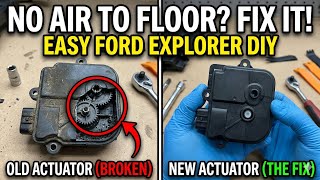
- Failed Blend/Mode Door Actuator (Very Common) — The actuator's internal electric motor or plastic gears are the most frequent failure point. The gears strip, causing a clicking noise, or the integrated position sensor wears out, sending an erratic voltage signal back to the control module.
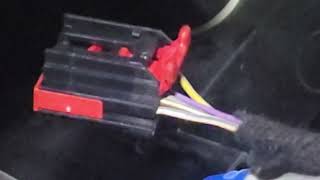
- Damaged Wiring or Corroded Connectors (Common) — Wires leading to the actuator chafe or break from dashboard vibration. Additionally, moisture from leaking windshields or clogged sunroof drains corrodes the connector pins, creating an open or short circuit.
- Binding or Jammed HVAC Door (Less Common) — The physical plastic door inside the HVAC plenum warps or gets blocked by debris. This puts excessive strain on the actuator motor, causing it to burn out or report a fault because it cannot reach its commanded position.
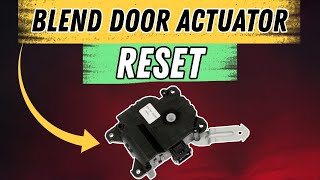
- Software or Calibration Glitch (Less Common) — The HVAC control module sometimes loses its memory of the actuator's end-points. A system reset forces the module to relearn the door's full range of motion, resolving the code without parts replacement. 🎬 Watch: How to reset and recalibrate your HVAC actuators.
- Failed Climate Control Module (HVAC/FCIM) (Very Rare) — The main control module commanding the actuator fails internally. Consider this only after definitively ruling out the actuator, wiring, and connectors.
Symptoms

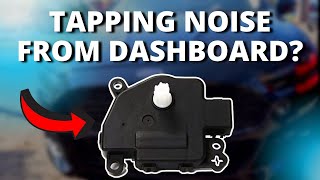
- Clicking, Ticking, or Grinding Noise from Dashboard — A repetitive clicking sound behind the dashboard lasting 10-30 seconds upon startup or when changing climate settings. This confirms stripped gears inside the actuator. 🎬 Watch: Common symptoms of a failing blend door actuator.
- Incorrect Air Temperature — The air temperature ignores your setting. For example, the A/C is set to cold, but the air is warm because the blend door is stuck open to the heater core.
- Air Blows from Wrong Vents — Airflow remains stuck on the floor or defroster regardless of the dashboard vent selection.
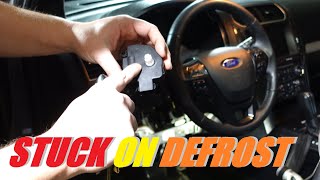
- Inability to Defrost Windshield — Air does not blow onto the windshield when defrost is selected, creating a severe safety hazard in cold or humid conditions.
- Check Engine Light or Service Message — The vehicle illuminates the check engine light or displays a specific HVAC service message on the instrument cluster.
Diagnostic Flowchart
Tap your situation to follow the diagnostic path that matches what you're seeing on this code.
Common Fixes & Costs
- Replace Blend/Mode Door Actuator
— Parts: $40-$150, Labor: $150-$1000, ~1.0-8.0 hr book time
(Intermediate)
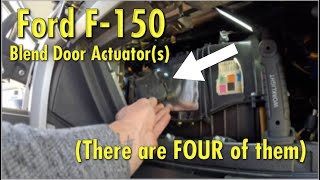
Ford F-150 (2015-2020): OEM Mode Door: FL3Z-19E616-C; Temp Door: FL3Z-19E616-B (Alt: Dorman 604-288, Dorman 604-289)
Ford Explorer (2011-2019): OEM AA5Z-19E616-C (Alt: Dorman 604-234)
Acura MDX (2007-2013, Rear): OEM 79160-SZA-305 (Alt: Dorman 604-612) - HVAC System Recalibration — Parts: $0, Labor: $0-$150, ~0.5 hr book time (DIY)
- Repair Wiring or Connector — Parts: $10-$50, Labor: $150-$450, ~1.0-3.0 hr book time (Intermediate)
- Repair Binding HVAC Door — Parts: $50-$250, Labor: $800-$1800, ~8.0-12.0 hr book time (Professional)
- Replace Climate Control Module (FCIM/HVAC) — Parts: $200-$800, Labor: $150-$300, ~1.0-2.0 hr book time (Professional)
Used vs. New Parts: Buying Guide
When a used part is worth it: Buying a used blend door actuator is never recommended. The part is a high-wear item with plastic gears that degrade over time. The small cost savings do not justify the high risk of paying for labor twice.
Donor-vehicle mileage cap: roughly under 20000 miles for the part to have meaningful remaining life.
Donor quality checklist:
- Source only from a very low-mileage wrecked vehicle.
- Match the part number exactly. Actuators for different positions (mode vs. blend) look identical but are not interchangeable.
- Avoid parts from regions with extreme temperature swings, which accelerate plastic gear failure.
Decision logic:
- If The labor to access the actuator is more than 1 hour → Buy a new OEM part. The labor cost dwarfs the part cost, making reliability paramount.
- If The actuator is easily accessible (under 1 hour labor) → A new premium aftermarket part is acceptable, but OEM remains preferred for longevity.
- If The part has a known wear-out failure mode (plastic gears) → Always buy new. Used parts have an unknown remaining lifespan.
Warranty tradeoff: Used parts carry a 30-day warranty that does not cover labor. New aftermarket parts offer 1-year to lifetime warranties. New OEM parts carry a 1-2 year warranty.
Worst-case if a used part fails: $1000 if a used part fails behind the dashboard, requiring a full repeat of the labor.
What Happens If You Wait — Timeline
- 0-2 Weeks: A clicking noise begins intermittently on startup. Temperature or airflow control becomes inconsistent. The B1246 code is stored. (MPG impact: 0%% · Added cost: $0)
- 2 Weeks - 3 Months: The clicking becomes constant for 10-30 seconds on startup. The actuator fails completely, getting stuck in one position. You lose control of temperature or airflow. (MPG impact: 0-1%% · Added cost: $50 in wasted fuel if A/C runs unnecessarily.)
- 3-9 Months: A non-functional defroster becomes a significant safety hazard in cold or wet weather, escalating from a comfort issue to a collision risk. (MPG impact: 0-1%% · Added cost: $100+ in potential fines for obstructed view.)
- 9+ Months: If the root cause is a binding door, continued stress warps or breaks the plastic door inside the HVAC case. The repair escalates from a $150 actuator to a $1,500 dashboard removal. (MPG impact: 0-1%% · Added cost: $1000-$2000 in escalated labor costs.)
Cost of Not Fixing It
- Immediate: Loss of comfort control. Inability to use the windshield defroster creates a severe safety hazard in cold or humid weather. (Added cost: $0)
- 1-6 months: A stuck blend door causes the A/C compressor to run unnecessarily against the heater core, leading to a minor decrease in fuel economy. (Added cost: $20-$100 in wasted fuel)
- 6+ months: If the root cause is a binding HVAC door, ignoring it destroys the actuator. Repeatedly replacing only the actuator wastes money without solving the underlying mechanical issue. (Added cost: $200-$1000 in repeat repairs)
Diagnosis Steps

- Confirm the Code and Manufacturer Definition
Use an OBD-II scanner capable of reading Body ('B') codes to confirm B1246. Note the manufacturer-specific definition. It points to a front mode door on a Ford, a rear temperature door on an Acura, or a specific short circuit on a Hyundai. This prevents diagnosing the wrong part.
Tools: OBD-II Scanner (with Body/Chassis code capability) (Beginner) - Attempt a System Reset/Recalibration
Disconnect the negative battery terminal for 30 minutes to clear software glitches. Reconnect power, turn the key to 'On' (without starting), and wait 3 minutes for the system to self-calibrate before touching any controls.
Tools: Wrench (10mm or appropriate size for battery terminal) (Beginner) - Listen for Actuator Operation
With the ignition on (engine off), cycle the climate controls from full hot to full cold, and vent to defrost. Listen carefully behind the dash. A loud clicking indicates a stripped gear; absolute silence suggests a dead motor or severed wiring.
Tools: None (Beginner) - Visually Inspect the Actuator and Wiring
Locate the specific actuator identified in Step 1. Remove lower dash panels or the glove box to access it. Inspect the wiring harness and connector for chafing, corrosion, or looseness. Wiggle the connector to see if it restores operation.
Tools: Flashlight, Trim Removal Tools, Screwdrivers (Intermediate) - Test or Swap the Actuator
Plug a new actuator into the electrical connector before physically installing it into the HVAC case. Command the system to change modes. If the new actuator's gear turns, the old actuator is bad. If it doesn't move, you have a wiring or module issue.
Tools: New Actuator (Intermediate) - [PRO TIP] Test the Electrical Circuit and Feedback Voltage
Using a multimeter, back-probe the actuator connector. Verify a 5-volt reference, a solid ground (<0.1V), and module power. Command the system from full cold to full hot. The signal wire voltage must sweep smoothly (e.g., 0.5V to 4.5V). A stuck voltage (near 5V or 0V) confirms a failed internal sensor.
Tools: Multimeter, Vehicle-Specific Wiring Diagram, Back-probe pins (Advanced) - [PROFESSIONAL] Use a Bi-Directional Scan Tool
Perform an 'Actuation Test' with a professional scan tool. Command the actuator to specific positions (0%, 50%, 100%) while monitoring live data PIDs. If the commanded position changes but the live feedback percentage remains stuck, the actuator or circuit is definitively faulty.
Tools: Bi-Directional Scan Tool (Professional)
When This Code Triggers (Freeze-Frame Conditions)
- System State: Key On (Code sets during the HVAC module's power-on self-test before the engine starts.)
- Actuator Command: Change in Setting (Fault triggers when the user changes temperature or mode, and the module doesn't receive the expected feedback voltage change.)
- Signal Voltage: > 4.9 Volts (On Hyundai/Kia models, the code sets when the actuator's feedback signal shorts high for more than 300 milliseconds.)
- System Status: Fail-Safe Active (Once set, the module enters a fail-safe mode, locking the temperature to full hot or full cold based on the last known setting.)
Related Codes
- B1249 — Indicates a 'Blend Door Failure' (mechanical fault). If B1246 (circuit) and B1249 (mechanical) appear together, the actuator has definitively failed to move the door due to internal breakage.
- B1081 — On Ford vehicles, 'Temperature Door Actuator - Motor Stuck' often appears with B1246. B1081 indicates the physical door is binding, while B1246 points to the resulting electrical fault in the overworked actuator.
- U0140 — Indicates 'Lost Communication with Body Control Module (BCM)'. If B1246 appears with U0140, the root cause is a network communication problem, not a broken actuator.
Climate & Environmental Factors
- High Humidity and Water Leaks: Moisture from clogged sunroof drains or bad windshield seals corrodes electrical connector pins, causing short circuits or increased resistance in the actuator's feedback circuit.
- Extreme Temperature Cycles: Repeated swings from freezing to extreme heat make the actuator's plastic gears brittle, leading to stripped teeth. It also warps the larger HVAC plenum doors, causing them to bind.
- Cold Weather: Freezing temperatures stiffen the grease inside the actuator, increasing friction and overloading the small electric motor until it burns out.
How to Talk to a Mechanic About This Code
Say this: "I have an HVAC issue and my scanner shows code B1246. I'm experiencing [symptom, e.g., 'a clicking noise from the passenger side dash']. I'd like to book a diagnostic to confirm if the cause is a failed actuator, a wiring problem, or a binding door."
This specifies the exact code and frames the work as a targeted diagnosis. It shows you are aware of multiple potential causes, discouraging a shop from blindly replacing parts without testing.
Avoid saying:
- 'My A/C is broken.'
- 'My check engine light is on, can you look at it?'
- 'Just fix whatever is wrong.'
Questions to ask before authorizing the repair:
- Based on the code, which specific actuator is failing?
- What is the estimated labor time? Does it require removing the dashboard?
- Did you test the wiring and connector to rule them out?
- Can you confirm the blend door moves freely by hand once the old actuator is removed?
- What is the warranty on the replacement part and the labor?
Where to Take It: Dealer vs Independent vs Chain
- Dealer:
Recommended if the repair requires dashboard removal, involves a complex TSB, or concerns Acura/Honda rear A/C issues.
Best for: Vehicles under warranty., Repairs involving known manufacturer TSBs (like the Ford binding door issue)., Complex jobs requiring dashboard removal., Diagnosing manufacturer-specific quirks (e.g., Acura rear A/C).
Downsides: Highest labor rates, often 1.5-2x an independent shop., More likely to replace a full wiring harness rather than repair a single wire. (Typical cost: +50% vs. baseline) - Independent Shop:
Best fit for most B1246 scenarios, especially for out-of-warranty vehicles where the actuator is accessible without dash removal.
Best for: Out-of-warranty vehicles with easily accessible actuators., Cost-conscious owners., Straightforward actuator replacements or wiring repairs.
Downsides: Quality varies; vet the shop via reviews and ASE certifications., May be less familiar with manufacturer-specific TSBs. (Typical cost: +0% vs. baseline) - Chain Shop:
Not recommended. The diagnostic complexity (wiring vs. actuator vs. binding door) is a poor fit for the chain shop business model.
Best for: Simple, unrelated maintenance like oil changes or tires.
Downsides: Technician skill varies dramatically., Least likely to perform in-depth electrical diagnosis., High risk of misdiagnosis and repeat failures. (Typical cost: -10% vs. baseline)
When to Walk Away From the Repair
If the estimated repair cost for the B1246 fault exceeds 40% of your car's private-party value, seriously consider selling the car as-is.
- Car worth $3500, fix is $1500: Walk away. A $1500 repair (indicating dashboard removal) on a $3500 car is a poor investment.
- Car worth $15000, fix is $350: Fix it. A $350 repair for an accessible actuator restores full functionality for a fraction of the car's value.
- Car worth $6000, fix is $1200: Borderline. Get a second opinion to confirm the diagnosis and cost. Consider the car's overall condition and other needed repairs.
What Scan Tool You Need for This Code
Minimum: A scanner that reads and clears Body ('B') control module codes. A basic $20 code reader that only handles Powertrain ('P') codes will not see B1246.
A basic P-code reader shows 'No Codes Found' even when B1246 is active. You need a tool that communicates with the BCM or HVAC modules.
Budget: BlueDriver Pro (~$100) — Reads and clears B-codes, provides manufacturer-specific definitions, and displays live data from the actuator's position sensor to confirm a stuck voltage.
Mid-range: Topdon ArtiDiag Pro / Foxwell NT1009 (~$350) — Adds bi-directional control. Allows you to command the actuator to move directly from the scanner, providing definitive proof of whether the actuator or wiring is at fault.
Professional: Autel MaxiCOM MK906BT / Launch X431 CRP919XBT (~$500-1200) — Provides OE-level bi-directional control, advanced coding functions for module replacement, and detailed live data graphing.
Rent vs buy: Auto parts store loaner tools are often basic models that cannot read B-codes. For this specific code, you must buy a capable scanner like the BlueDriver.
How to Clear the Code After You Fix It
- Use an OBD-II scan tool to clear the Body Control Module (BCM) or HVAC module faults.
- Disconnect the negative battery terminal for 30 minutes to reset all modules.
- Perform the manufacturer-specific HVAC actuator recalibration procedure.
Drive cycle (~5 minutes): Turn the ignition to 'ON' (engine off). Wait 2 minutes for the system to self-calibrate. Slowly cycle the temperature control from full cold to full hot, and cycle the mode control through all positions, pausing at each setting for 10 seconds. If the code does not return, the repair is successful.
Readiness monitors affected: None
Watch out for:
- Clearing the code with a scanner does not fix the problem; it returns as soon as the faulty actuator is commanded to move.
- Forgetting to perform the HVAC recalibration after replacing a part causes the new actuator to behave erratically.
- Disconnecting the battery erases radio presets and powertrain emissions readiness monitors.
Will This Fail Emissions / State Inspection?
No — by itself this code doesn't fail OBD inspection (but it can keep readiness monitors from setting, which causes a separate fail).
- California: A Body code (B-code) like B1246 does not cause a smog check failure unless it illuminates the main Check Engine Light.
- New York: NYS inspection fails for an illuminated Check Engine Light. If B1246 does not trigger the CEL, it passes.
- Texas: OBD-II scans look for powertrain-related codes (P-codes). A B1246 code alone does not cause a failure.
Most Commonly Affected Vehicles

- Ford F-150 (2015-2020) — Extremely common issue related to the panel/floor mode door actuator. Can also be caused by a binding temperature blend door (setting code B1081). Warning: On some trims, B1246 flags a 'GSM Antenna Circuit Open' in the Telematics unit, unrelated to HVAC.
- Ford Explorer (2011-2019) — Frequently experiences failures of the compact-style blend door actuators due to internal contact and gear degradation.
- Acura MDX (2007-2013) — B1246 specifically points to a problem in the REAR climate control system's air mix control linkage or motor. Diagnosing the front dashboard actuators is a guaranteed misdiagnosis.
- Honda Odyssey (2007-2017) — Similar to the Acura MDX, code B1246 refers exclusively to the REAR climate control's air mix motor circuit.
- Chevrolet Silverado 1500 (2007-2013) — Commonly suffers from actuator failures causing clicking noises. The faulty part is usually located on the lower driver's side of the HVAC case.
- Hyundai / Kia Santa Fe / Sorento (2010-2015) — Defines B1246 as 'Air Mix Potentiometer Short (High)-Driver', indicating the feedback voltage is stuck above 4.9V. The failsafe locks the temperature to full cold or full hot.
- Toyota RAV4 / Prius / Camry (2004-2015) — CRITICAL WARNING: Toyota vehicles use C1246, not B1246. C1246 indicates a 'Master Cylinder Pressure Sensor Malfunction' in the ABS system. This is a critical braking safety fault, completely unrelated to HVAC.
Manufacturer-Specific Notes
- Ford: On 2015+ F-150s, B1246 sometimes means 'GSM Antenna Circuit Open' in the Telematics Control Unit, completely unrelated to climate control. Additionally, Ford TSB 23-2115 acknowledges a binding blend door issue that destroys actuators, requiring dashboard removal to fix the door itself.
- Acura/Honda: On models with rear climate control (MDX, Odyssey), B1246 almost always refers to the REAR system's air mix actuator. Technicians unaware of this waste hours tearing apart the front dashboard.
- Hyundai/Kia: Provides a highly specific definition: 'Air Mix Potentiometer Short (High)-Driver.' This confirms a short-to-power (>4.9V) in the feedback sensor circuit for the driver's side temperature actuator.
- Toyota: EXTREME CAUTION: Toyota uses C1246, indicating a 'Master Cylinder Pressure Sensor Malfunction' in the ABS/VSC system. This is a critical safety fault affecting braking. Confusing it with an HVAC code is dangerous.
Real Owner Stories
2010 Ford F-150 FX4 with clicking noise
Owner heard a loud clicking noise from the center of the dash after starting the truck.
What they tried:
- Removed the lower driver-side actuator, but the clicking continued.
- Discovered a previous owner jammed wood against an actuator to stop the noise.
Outcome: The issue was the blend door actuator located behind the radio, a $40 part. The owner learned that disconnecting one actuator doesn't stop a different failing actuator from making noise.
Lesson: On vehicles with dual climate control, isolate the sound's exact location before disassembly. A clicking noise resonates through the dash, making it easy to replace the wrong part.
2012 Acura MDX with B1246 and no rear A/C control
Scanner showed code B1246. Front climate control worked perfectly, but rear temperature was stuck.
What they tried:
- Initially assumed the code related to the main dashboard actuators.
- Researched and found Acura B1246 specifically points to the rear air mix motor.
Outcome: The owner correctly replaced the rear air mix motor (OEM #79160-SZA-305), avoiding hours of wasted labor on the front dashboard.
Lesson: Always check the manufacturer-specific definition. Diagnosing the front system for an Acura B1246 code is a guaranteed misdiagnosis.
2017 GMC Terrain with repeated actuator failures
Owner replaced the same blend door actuator five times in a single year. Each new aftermarket actuator failed within weeks.
What they tried:
- Continuously swapped the actuator under warranty.
- Observed the system defaulting to a 3/4 heat position upon failure.
Outcome: The community identified the root cause: a physically binding blend door inside the HVAC case. The stiff door overworked and destroyed the new actuators.
Lesson: If an actuator fails repeatedly, the physical door is binding. Before installing another actuator, move the door linkage by hand. If it sticks, the HVAC case requires repair.
How to Prevent This Code From Triggering
- Replace the Cabin Air Filter Annually (Every 12 months or 15,000 miles) — A clogged filter restricts airflow, forcing the blower motor and actuators to work harder. It also allows debris into the HVAC case, which physically jams the blend doors.
- Cycle the HVAC System Regularly (Weekly) — Move the temperature from full hot to full cold and switch through all vent positions. This prevents actuator gears and door pivots from seizing due to inactivity.
- Perform an HVAC System Recalibration (After any battery replacement or jump-start) — Losing power makes the HVAC module forget actuator positions. A reset forces the system to re-learn travel limits, preventing software-induced fault codes.
- Keep Cowl and Sunroof Drains Clear (Every 6 months) — Clogged drains cause water to leak into the cabin and drip onto dashboard electronics, corroding actuator connectors and causing B1246.
Frequently Asked Questions
Can I fix code B1246 myself?
Yes, if the actuator is accessible (like behind the glove box), you can replace it with basic tools. If the repair requires removing the entire dashboard, take it to a professional shop.
How much does it cost to fix B1246?
Parts cost $40 to $150, but labor dictates the final bill. An accessible actuator costs $150 to replace, while one buried in the dash exceeds $1,000. Always request a quote based on the specific actuator's location.
Will clearing the code fix the problem?
No. B1246 indicates a persistent hardware or electrical circuit failure. Clearing the code turns the light off temporarily, but it returns immediately once the climate control system attempts to move the faulty actuator.
I replaced the actuator, but the code came back. What now?
First, perform an HVAC system recalibration to ensure the module knows the new actuator's endpoints. Second, manually check that the physical blend door isn't binding, which instantly destroys new actuators. Finally, test the wiring harness for a short or open circuit.
What's the difference between B1246 and an Acura maintenance code like B1 or B2?
They are completely different systems. B1246 is a diagnostic fault code indicating a broken HVAC circuit. Acura maintenance codes like 'B12' are routine service reminders for oil changes and tire rotations.
Is it okay to use a cheaper aftermarket actuator?
Professional technicians strongly recommend using OEM (Original Equipment Manufacturer) actuators. Cheap aftermarket parts have higher failure rates and slightly different internal electrical resistances, causing immediate calibration errors.
Can a weak or bad battery cause a B1246 code?
A weak battery causes random communication codes, but rarely triggers a specific circuit code like B1246 directly. However, if the code appeared immediately after a battery replacement, a simple system recalibration usually fixes it.
Key Takeaways
- Code B1246 flags an electrical circuit failure in an HVAC actuator, the 5-volt motor controlling your cabin's airflow direction and temperature.
- Listen for a repetitive clicking noise behind the dashboard lasting 10-30 seconds on startup; this confirms stripped plastic gears inside the actuator.
- Never replace an actuator without first performing a 30-minute battery disconnect to rule out a free software calibration glitch.
- Verify your specific manufacturer definition before buying parts: B1246 means a rear A/C fault on a Honda Odyssey, but on a Toyota, the similar C1246 code indicates a critical ABS brake failure.
Helpful Videos



The information in this article is provided for general reference and educational purposes only. Vehicle specifications, procedures, and part compatibility can vary by production date, trim level, and region. Always consult your vehicle's factory service manual and verify part numbers before purchasing or performing repairs. Safety-critical components such as airbags, seat belts, and braking systems should be installed by a qualified professional.
- 🎬 Helpful Videos
- What Does B1246 Mean?
- Can I Drive With B1246?
- Common Causes
- Symptoms
- Diagnostic Flowchart
- Common Fixes & Costs
- Used vs. New Parts: Buying Guide
- What Happens If You Wait — Timeline
- Cost of Not Fixing It
- Diagnosis Steps
- When This Code Triggers (Freeze-Frame Conditions)
- Related Codes
- Climate & Environmental Factors
- How to Talk to a Mechanic About This Code
- Where to Take It: Dealer vs Independent vs Chain
- When to Walk Away From the Repair
- What Scan Tool You Need for This Code
- How to Clear the Code After You Fix It
- Will This Fail Emissions / State Inspection?
- Most Commonly Affected Vehicles
- Manufacturer-Specific Notes
- Real Owner Stories
- 2010 Ford F-150 FX4 with clicking noise
- 2012 Acura MDX with B1246 and no rear A/C control
- 2017 GMC Terrain with repeated actuator failures
- How to Prevent This Code From Triggering
- Frequently Asked Questions
- Can I fix code B1246 myself?
- How much does it cost to fix B1246?
- Will clearing the code fix the problem?
- I replaced the actuator, but the code came back. What now?
- What's the difference between B1246 and an Acura maintenance code like B1 or B2?
- Is it okay to use a cheaper aftermarket actuator?
- Can a weak or bad battery cause a B1246 code?
- Key Takeaways
- 🎟️ Get 5% Off