

OBD-II Code B1242: A/C, Remote Entry, or Sensor Circuit Failure
What B1242 means, why it triggers, and how to fix it
- Code B1242 indicates a failed A/C recirculation door on Ford/GM, a broken keyless entry receiver on Toyota, or a faulty A/C evaporator sensor on Hyundai/Kia.
- Always use a BCM-capable OBD-II scanner to read the manufacturer-specific definition of B1242 before buying replacement parts.
- Replacing a Ford F-150 recirculation actuator costs upwards of $2,000 at a dealer due to an 8-hour dashboard removal, though DIY shortcuts reduce this to 2 hours.
- A stuck HVAC actuator draws continuous power and drains a healthy car battery within 2 to 3 days if left unrepaired.
What Does B1242 Mean?

B1242 is a body trouble code (B-code) that points to an electrical circuit problem, but its meaning changes significantly depending on your car's manufacturer. For most Ford, Lincoln, and GM vehicles, it signals a fault with the air recirculation door in your A/C system. For Toyota, Lexus, and Scion, it indicates a problem with the wireless remote entry system. On many Hyundai and Kia vehicles, it points to a fault with the A/C evaporator temperature sensor.
Technical definition: The official SAE/ISO definition for B1242 varies by manufacturer. The most common definition is "Air Flow Recirculation Door Driver Circuit Failure." For Toyota, it is defined as "Wireless Door Lock Tuner Circuit Malfunction," triggered when the main body ECU does not receive a confirmation signal from the door control receiver within 1 second of sending a command. For Hyundai and Kia, it is "Evaporator Sensor Open (High)," which sets when the sensor's voltage reading exceeds 4.9V for 0.3 seconds, indicating an open circuit.
Can I Drive With B1242?
Yes. Yes, you can still drive your car. This code affects comfort features like your A/C or keyless entry, not the engine's performance or safety systems. However, a faulty HVAC actuator sometimes gets stuck in a loop and draws continuous power, creating a parasitic drain that kills your battery overnight.
Common Causes

- Faulty Recirculation/Blend Door Actuator (Very Common) — This small electric motor controls the door that switches between fresh and recirculated air. It is the most common failure point for the HVAC-related version of this code, caused by worn internal plastic gears or a burnt-out motor.
- Faulty Wireless Door Lock Receiver (Common) — Specific to Toyota and Lexus, this module receives the signal from your key fob. It frequently fails due to water intrusion from a bad window seal or clogged sunroof drain, which corrodes the circuit board located in the rear pillar.
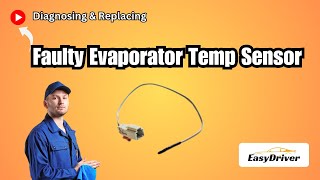
- Faulty Evaporator Temperature Sensor (Common) — On Hyundai and Kia models, this thermistor tells the climate control unit how cold the evaporator core is to prevent freezing. A failed sensor reports an open circuit or high voltage reading, triggering the code.
- Damaged Wiring or Loose Connectors (Common) — Wires fray, short to ground, or corrode over time, especially behind the dashboard or near door pillars. A bad connection prevents the control module from communicating with the actuator, sensor, or receiver.
- Jammed Recirculation Door (Less Common) — Debris, a dislodged cabin air filter, or a foreign object can fall into the HVAC housing and physically block the recirculation door. The control module detects the lack of movement as a circuit failure.
- Weak Vehicle Battery or Low Voltage (Rare) — A failing car battery causes low voltage conditions that lead to erratic behavior in electronic modules. This triggers false body codes like B1242 and must be checked before replacing expensive modules.
- Faulty Body Control Module (BCM) (Rare) — The BCM is the main computer for your car's comfort features. It rarely fails, but physical damage or a software glitch can trigger this code. A battery reset or dealer software reflash sometimes resolves the issue.
Symptoms

- Keyless Entry Remote Fails — Your key fob stops locking or unlocking the doors, even after replacing its battery. This is the primary symptom for the Toyota-specific version of the code. 🎬 See how to troubleshoot and fix your Toyota keyless entry receiver.
- Recirculation Button Doesn't Work or Blinks — When you press the button to switch between fresh and recirculated air, nothing happens or the indicator light blinks and turns off.
- A/C Performance is Weak or Inconsistent — The air conditioning blows warm air when stopped because it is stuck pulling in hot outside air. On Hyundai/Kia models, the compressor fails to engage entirely to prevent the evaporator from freezing.
- Clicking or Ticking Noise From Dashboard — A failing recirculation door actuator makes a repetitive clicking or grinding sound from behind the glove box as broken internal gears try to move the door.
- Check Engine Light or Other Warning Light (also visible on scanner) — A body control module, security, or climate control system warning light illuminates on your dashboard.
Diagnostic Flowchart
Tap your situation to follow the diagnostic path that matches what you're seeing on this code.
Common Fixes & Costs
- Replace Recirculation/Blend Door Actuator
— Parts: $25-$110, Labor: $100-$2500, ~1.5 hr book time
(Intermediate)
: OEM
: OEM - Replace Wireless Door Lock Receiver
— Parts: $150-$650, Labor: $100-$250, ~1.2 hr book time
(Intermediate)
: OEM - Replace Evaporator Temperature Sensor
— Parts: $25-$95, Labor: $150-$850, ~4.6 hr book time
(Intermediate)
: OEM - Repair Damaged Wiring or Connectors — Parts: $10-$30, Labor: $150-$400, ~2.5 hr book time (Intermediate)
- Professional Diagnosis — Parts: $0, Labor: $125-$165, ~1.0 hr book time (Professional)
Used vs. New Parts: Buying Guide
When a used part is worth it: Buy a used electronic module (like a Toyota wireless receiver) from a salvage yard to save $100-$500. For mechanical parts like an HVAC actuator, always buy new ($25-$60) because the high labor cost of replacement makes a used part too risky.
Donor-vehicle mileage cap: roughly under 100000 miles for the part to have meaningful remaining life.
Donor quality checklist:
- Match the OEM part number exactly, as variations exist by trim level.
- Avoid actuators from high-mileage vehicles due to worn internal plastic gears.
- Check electronic modules for water damage or corrosion on the casing and pins.
Decision logic:
- If The part is an HVAC actuator requiring high labor (e.g., F-150 dash removal) → Buy a new OEM or high-quality aftermarket part. The risk of repeating the labor is not worth the savings.
- If The part is an expensive electronic module (e.g., Toyota receiver) and the vehicle is over 10 years old → Buy a used part, provided you can reprogram the keys to it.
- If The part is an easily accessible sensor or actuator (e.g., Lincoln Town Car recirc door) → A used part is a low-risk, budget-friendly option.
Warranty tradeoff: Used parts from salvage yards carry a 30-90 day warranty. New aftermarket parts offer a 1-year to limited lifetime warranty. New OEM parts have a 1-year warranty.
Worst-case if a used part fails: $200-$2000 if a used part fails after installation, primarily due to repeated labor costs.
What Happens If You Wait — Timeline
- 0-1 month: Code is set. An immediate loss of function occurs: the key fob stops working, the A/C recirc button fails, or the A/C cuts out intermittently. (MPG impact: 0%% · Added cost: $0)
- 1-4 months: A faulty Ford/GM actuator gets stuck in a loop and creates a parasitic battery drain. The owner experiences a dead battery if the car sits for 2-3 days. (MPG impact: 0%% · Added cost: $20-$300 for jump starts or battery replacement.)
- 4-12 months: Being stuck on fresh air makes the A/C ineffective in hot climates. Relying solely on the physical key increases wear on the door lock cylinder. (MPG impact: 0-1%% · Added cost: $50-$150 for lock cylinder repair.)
- 12+ months: A persistent parasitic drain shortens the life of the alternator. A continuous water leak (Toyota issue) leads to mold in the cabin and corrosion of other electronics. (MPG impact: 0-1%% · Added cost: $300-$1000+ for alternator replacement or mold remediation.)
Cost of Not Fixing It
- Immediate: Loss of A/C recirculation, weak A/C performance, or inability to use the keyless entry remote. (Added cost: $0)
- 1-3 Months: A failed HVAC actuator gets stuck in a loop, creating a parasitic drain that slowly kills the battery. This requires a jump start or a new battery. (Added cost: $150-$300 for a new battery)
- 6+ Months: Persistent discomfort and inconvenience. Relying solely on the physical key increases wear on the door lock cylinder. (Added cost: $50-$150 for lock cylinder repair)
Diagnosis Steps

- Verify the Symptom and Code Definition
Confirm which system is failing (keyless entry, A/C recirculation, or A/C cooling). Use a BCM-capable OBD-II scanner to confirm B1242 is the primary code and check its specific definition for your vehicle make.
Tools: OBD-II Scanner (capable of reading B-codes) (Beginner) - Check Fuses
Locate the fuse box and inspect the fuses related to the HVAC system, Body Control Module (BCM), and keyless entry system (often labeled 'DOME' or 'ECU-B'). A blown fuse causes this code.
Tools: Fuse puller or needle-nose pliers (Beginner) - Listen for the Actuator (HVAC issue)
With the engine on and fan running, press the recirculation button. Listen behind the glove box for a faint clicking or whirring sound. Repeated clicking indicates broken internal gears. Silence indicates a dead motor or lack of power.
Tools: None (Beginner) - Visually Inspect the Component
Access the HVAC actuator behind the glove box, the wireless entry receiver in the rear C-pillar, or the evaporator sensor under the dash. Look for physical damage, corroded connectors, or water intrusion.
Tools: Screwdrivers, trim removal tools (Intermediate) - Pro Tip: Test the Component Circuit at the Connector
Use a multimeter to perform circuit checks. For a Toyota receiver, check for 10-14V at the +B pin and continuity to ground (Below 1 Ω) at the GND pin. For a Ford actuator, check for ~12V at the power supply pin. For a Hyundai sensor, check for a 5V reference signal.
Tools: Multimeter (Advanced) - Pro Tip: Check for Open/Short in Harness
If power and ground are good but the signal is missing, check the wiring harness. Disconnect the component and the control module. Check for continuity between the corresponding pins (resistance below 1 Ω). Check for a short to ground by measuring resistance from the signal pin to the chassis (10 kΩ or higher).
Tools: Multimeter (Advanced) - Pro Tip: Test Hyundai/Kia Evaporator Sensor Resistance
Disconnect the sensor and measure its resistance. A typical sensor reads 12.1 kΩ at 20°C (68°F) and 8.3 kΩ at 30°C (86°F). An infinite resistance reading indicates an open sensor, confirming the fault.
Tools: Multimeter, Temperature Chart for specific model (Advanced) - Pro Tip: Perform an Advanced Sensor/Signal Test
For a Hyundai sensor, back-probe the signal wire. A reading over 4.9V confirms an open circuit fault. For a Toyota receiver, check for a 4.5V to 5.5V pulse signal on the DATA line when a key fob button is pressed.
Tools: Multimeter (with back-probe pins), Oscilloscope (optional) (Advanced) - Pro Tip: Monitor Live Data with a Scan Tool
For Ford HVAC issues, monitor the PID for the commanded position of the recirculation door versus the actual position reported by the actuator. A mismatch indicates a failed actuator or jammed door.
Tools: Advanced OBD-II Scan Tool with Live Data/PID support (Advanced) - Test the Component Itself
If the wiring checks out, the component is the culprit. Apply 12V directly to an actuator's motor pins to see if it moves. Test a sensor's resistance against manufacturer specifications.
Tools: Multimeter, power probe (optional) (Advanced)
When This Code Triggers (Freeze-Frame Conditions)
- System Voltage: 11.5-14.5V (The code sets when the Body Control Module is powered on, immediately after the ignition is turned to 'ON' or 'RUN'.)
- Time Since Ignition On: 1-5 seconds (The fault is detected during the BCM's initial self-test sequence after the vehicle starts or a command is sent.)
- Commanded State: On/Off or Lock/Unlock (For an HVAC actuator, the code sets when the module commands the door to move and receives no feedback. For a keyless receiver, it sets when the BCM sends a command and gets no response.)
- Fault Status: Active/Current (B1242 indicates a 'hard fault'—an open or shorted circuit that is continuously present.)
Related Codes
- B1081 — A Ford-specific code for a 'Temperature Blend Door Actuator.' B1242 refers to the air inlet (recirculation) door, while B1081 refers to the temperature blend door.
- B1263 / B1264 — Relates to other HVAC servo motor circuits. If you have B1242 alongside these, it suggests a systemic problem like a faulty Climate Control Module or a shared ground issue.
- B1231-B1235 — Relates to other HVAC blend door or sensor circuits. Multiple B-codes point to a wider electrical issue or a physical obstruction jamming multiple doors.
- U0155 — Means 'Lost Communication With Instrument Panel Cluster.' If you have B1242 and a U-code, the root cause is a network-wide problem. Diagnose the U-code first.
Climate & Environmental Factors
- High Humidity / Rain: Water leaks past seals and drips onto the Toyota wireless receiver module, causing corrosion and short circuits. High humidity also affects electronic circuits inside key fobs over time.
- Extreme Cold: Cold temperatures make plastic components, such as the internal gears of an HVAC actuator, brittle and prone to breaking under stress.
How to Talk to a Mechanic About This Code
Say this: "I have a [Year] [Make] [Model] with a B1242 code, and the symptom is [key fob not working / A/C recirc button broken / A/C cuts out]. I'd like to schedule a diagnostic appointment to confirm the specific circuit failure before replacing any parts. Please check for power, ground, and signal at the [wireless receiver / recirculation actuator / evaporator sensor] connector."
This signals you understand the code has multiple meanings. It directs the technician to the correct system for your vehicle and requests a specific, logical diagnostic procedure rather than just swapping parts.
Avoid saying:
- 'My check engine light is on, can you look at it?' (This is a body code, not a check engine light issue).
- 'Just fix whatever's wrong.'
- 'My buddy on a forum said to replace the actuator.'
Questions to ask before authorizing the repair:
- Did you confirm which of the three common failures for B1242 this is?
- Before condemning the part, did you verify it has proper power, ground, and a command signal from the control module?
- For a Toyota receiver, was there evidence of water damage, and does the quote include reprogramming the keys?
- For a Ford F-150 actuator, is the high labor cost due to dashboard removal, and are there any less-invasive shortcut methods you use?
- What is the warranty on both the part and the labor for this repair?
Where to Take It: Dealer vs Independent vs Chain
- Dealer:
Recommended for module programming or TSB-related work. They have brand-specific knowledge and tools, which is crucial for this code, but it is the most expensive option.
Best for: Vehicles under warranty., Complex repairs requiring module programming (e.g., replacing a Toyota wireless receiver)., Known issues covered by a Technical Service Bulletin (TSB).
Downsides: Highest labor rates., More likely to replace a whole assembly rather than perform a circuit-level repair. (Typical cost: +50% vs. baseline) - Independent Shop:
Best fit for most B1242 repairs, especially on Ford and Hyundai/Kia. Find a reputable shop with ASE-certified technicians for electrical systems (A6) and HVAC (A7) to ensure they diagnose the circuit correctly.
Best for: Out-of-warranty vehicles., Straightforward part replacements like easily accessible actuators or sensors., Owners looking for the best value.
Downsides: Quality and expertise vary widely; ensure the shop has strong electrical diagnostic skills., May not have specialized tools for module programming on all makes. (Typical cost: +0% vs. baseline) - Chain Shop:
Not Recommended. The diagnostic complexity and make-specific nature of B1242 are a poor fit for the chain shop model. There is a high risk of incorrect diagnosis, leading you to waste money on parts that do not solve the problem.
Best for: Routine maintenance like oil changes, tires, and brakes.
Downsides: Technicians lack specialized diagnostic training for complex, manufacturer-specific body codes., High pressure to meet sales targets leads to misdiagnosis and unnecessary parts replacement. (Typical cost: -10% vs. baseline)
When to Walk Away From the Repair
If the estimated repair cost exceeds 40-50% of the car's private-party value, seriously consider selling or trading it in. Since B1242 is a non-critical comfort issue, your personal threshold might be even lower.
- Car worth $8000, fix is $450: Fix it. The repair cost is a small fraction of the car's value.
- Car worth $4000, fix is $2000: Walk away. The repair is 50% of the car's value. This is a classic 'walk away' scenario for a Ford F-150 needing a dash-out actuator replacement.
- Car worth $2500, fix is $700: Borderline. The repair is ~28% of the car's value. If the car is otherwise reliable, fixing it makes sense. If it has other pending issues, it is better to sell.
What Scan Tool You Need for This Code
Minimum: A scanner that reads manufacturer-specific Body Control Module (BCM) codes.
A cheap OBD-II engine code reader ($20-$40) will NOT see B-codes like B1242. It will show 'No Codes Found,' leaving you to believe there is no issue. You must have a tool capable of communicating with the BCM.
Budget: BlueDriver Pro or Ancel BD310 (~$100) — These Bluetooth scanners connect to a smartphone app and read/clear codes from the BCM. This confirms the B1242 code and its definition for your specific vehicle.
Mid-range: Foxwell NT510 Elite or ThinkScan Plus S4 (~$150) — These handheld tools offer BCM code reading plus live data streaming. For a Ford, you watch the commanded vs. actual position of the actuator. For a Hyundai, you see the live voltage from the evaporator sensor.
Professional: Autel MaxiCOM MK808 / Launch X431 CRP919XBT (~$450-700) — Provides full bidirectional control, allowing you to command the actuator to move directly from the tool. They also include advanced functions like key programming, required after replacing a Toyota wireless receiver.
Rent vs buy: Most free loaner tools from auto parts stores are basic engine code readers and will NOT work for this code. Buying a budget-level BCM-capable scanner (~$100) is your best bet.
How to Clear the Code After You Fix It
- Use an OBD-II scan tool to clear the code from the Body Control Module.
- Disconnect the vehicle's battery for 15-30 minutes to force a module reset.
- Operate the affected system 5-10 times (press the recirculation button or lock/unlock doors) to confirm the fix.
Drive cycle (~10 minutes): A specific drive cycle is not required. After clearing the code, start the vehicle and activate the repaired function. If the fault is fixed, the code will not return.
Readiness monitors affected: None. Body codes do not affect emissions-related readiness monitors.
Watch out for:
- Forgetting to clear the code with a scanner after the repair.
- Replacing a Toyota wireless receiver without performing the key fob re-registration procedure.
- Assuming the code is gone just because the warning light is off. Always re-scan the BCM.
Will This Fail Emissions / State Inspection?
No — by itself this code doesn't fail OBD inspection (but it can keep readiness monitors from setting, which causes a separate fail).
- California: This code does NOT cause a smog check failure. B-codes (Body) are excluded from the emissions inspection.
- New York: A B1242 code does not cause a failure of the NYS emissions inspection.
- Texas: This code does not cause a failure. Texas inspections check for emissions-related trouble codes that illuminate the Malfunction Indicator Lamp (MIL).
Most Commonly Affected Vehicles
- Toyota Corolla, Camry, Tundra, Sienna, Prius (2001-2012) — These models experience B1242 as a 'Wireless Door Lock Tuner Circuit Malfunction' due to a water-damaged receiver in the rear pillar.
- Hyundai Santa Fe, i20, Veracruz, Tucson (2009-2012) — B1242 is defined as 'Evaporator Sensor Open (High),' pointing to a failed A/C temperature sensor.
- Ford F-150, F-Super Duty, Explorer (2009-2022) — B1242 points to the recirculation door actuator. On 2015+ F-150s, the official repair is extremely labor-intensive.
- Lincoln Town Car (2003-2011) — Sets B1242 for a failed recirculation door actuator (Part 9W1Z19E616D), accessible behind the glove compartment.
- Kia Sorento (2008-2012) — Uses B1242 to indicate a fault with the evaporator temperature sensor circuit.
- Dodge Ram 1500/2500/3500 (2009-2018) — Prone to blend and mode door actuator failures. A stuck actuator causes a parasitic battery drain.
- Chevrolet Suburban, Tahoe, Silverado, Impala (2007-2014) — Known for frequent HVAC actuator failures. A faulty recirculation actuator triggers B1242.
- Pontiac Vibe (2009-2010) — Shares a platform with the Toyota Matrix; the code points to a 'Wireless Door Lock Tuner Circuit Malfunction'.
Manufacturer-Specific Notes

- Toyota/Lexus/Scion: B1242 almost always means 'Wireless Door Lock Tuner Circuit Malfunction,' not an HVAC problem. The cause is a water-damaged receiver module.
- Ford/Lincoln/Mercury: B1242 indicates a failure in the 'Air Inlet Door Actuator Circuit.' Ford issued TSB 23-2115 for related HVAC issues on 2015-2022 F-Series trucks.
- Hyundai/Kia: B1242 means 'Evaporator Sensor Open (High).' Diagnosis focuses on the evaporator temperature sensor and its wiring.
- Jaguar: Specifically points to a 'Recirculating air flow door actuator - circuit failure'. Other HVAC codes alongside it indicate a faulty climate control module.
Real Owner Stories
2008 Toyota Camry with 150K miles
Keyless entry remote suddenly stopped working. The lock/unlock buttons inside the car worked fine, but the key fob did nothing. Code B1242 was present in the Body Control Module.
What they tried:
- Replaced key fob battery (no change).
- Checked fuses labeled 'DOME' and 'ECU-B' (all were good).
- Inspected the wireless door lock receiver located in the passenger-side C-pillar.
Outcome: The owner discovered water stains on the trim panel near the receiver. The receiver's circuit board showed visible corrosion. A used receiver was purchased online for $60. After installing the used part, the owner performed a manual key fob re-registration procedure, and the remote function was restored.
Lesson: On a Toyota with B1242, the problem is almost always the wireless receiver. Check for signs of water leaks from sunroof drains or window seals, as this is the root cause of the failure.
2011 Ford F-150 with 120K miles
A/C recirculation button was inoperative, and a constant clicking noise came from behind the glove box. Code B1242 was confirmed.
What they tried:
- Received a dealer quote of over $1,800 to replace the recirculation door actuator, citing 8+ hours of labor to remove the dashboard.
- Searched owner forums for alternatives and found a common DIY shortcut.
Outcome: The owner removed the glove box and used a small oscillating tool to cut a section of the plastic HVAC housing to access the actuator. The actuator (Part #FL3Z-19E616-E) was replaced in under 2 hours. The clicking stopped and A/C functions returned to normal.
Lesson: For F-150s with extremely high labor costs for actuator replacement, owner forums provide well-documented shortcuts that save over $1,500 in labor.
2012 Hyundai Santa Fe with 95K miles
The A/C blew cold for 15-20 minutes and then switched to blowing ambient air. Code B1242, defined as 'Evaporator Sensor Open (High)', was stored.
What they tried:
- A shop suspected low refrigerant and quoted $250 for a recharge, but the owner declined.
- The owner researched the Hyundai-specific meaning of B1242.
- Using a multimeter, they tested the sensor's resistance and found an open circuit, confirming the failure.
Outcome: The sensor was accessible by removing the glove box. The owner replaced the sensor (Part #97143-1M000) for under $40 in less than an hour. The A/C system returned to normal operation.
Lesson: Misdiagnosis is common if the code's manufacturer-specific meaning isn't known. On a Hyundai/Kia, B1242 symptoms are caused by a faulty sensor tricking the system into thinking the evaporator is freezing.
How to Prevent This Code From Triggering
- Replace the cabin air filter annually or every 15,000 miles. (Once per 1-2 years) — A clean filter prevents debris from entering the HVAC housing, where it physically jams the recirculation door or puts extra strain on the actuator motor.
- Regularly clean sunroof drains and inspect window/trunk seals. (Annually) — Clogged sunroof drains or dried-out seals allow water to leak into the C-pillar, directly onto the Toyota wireless receiver module, causing corrosion.
- Exercise the HVAC system modes periodically. (Monthly) — Cycling through all HVAC functions moves the actuators through their full range of motion, preventing internal plastic gears from seizing.
- Maintain a healthy vehicle battery. (Ongoing) — Low system voltage causes unpredictable behavior in electronic modules, leading to false codes and calibration loss.
Frequently Asked Questions
What is the most common misdiagnosis for B1242?
The biggest mistake is failing to verify the code's specific meaning for the vehicle's make and model. Technicians waste hours diagnosing an HVAC actuator on a Toyota when the code actually points to the keyless entry system. Always test the component's wiring for power, ground, and signal before replacing parts.
Can a bad actuator or sensor for code B1242 drain my car battery?
Yes. A faulty HVAC door actuator gets stuck and continuously tries to move, even with the ignition off. This creates a parasitic draw that drains the battery overnight, leaving you stranded.
I replaced the part but the code is still there. What's next?
If a new part fails to clear the code, re-verify the wiring harness for hidden damage or a weak ground connection. Ensure replacement modules or receivers underwent the required recalibration or key programming procedures. Finally, test the sending module (like the BCM or HVAC control head) for faults.
Can I just replace the battery in my key fob to fix this?
If your remote fails, changing the fob battery is the first logical step. However, the B1242 code specifically points to a fault in the receiver circuit inside the car, not the transmitter. A new fob battery will not fix this specific code.
Why does my A/C blow cold on the highway but warm when I'm stopped?
This classic symptom occurs when the recirculation door is stuck on the fresh air setting. At highway speeds, enough cool air is forced through the system to provide some cooling. When stopped, the A/C cannot overcome the constant intake of hot ambient air.
Can I replace a wireless door lock receiver with a used one?
Yes, but it is not plug-and-play. A used receiver is programmed to the key fobs from its original car. You must reprogram your existing key fobs to the used receiver using a specialized scan tool or manual procedure.
Is the recirculation door actuator the same as the blend door actuator?
No, but they are similar parts located near each other. The recirculation door actuator controls the source of the air (fresh outside air vs. recirculated inside air). The blend door actuator mixes hot and cold air to control the final output temperature.
The repair seems expensive. Can I just ignore this code?
Yes, you can ignore this code without causing damage to your vehicle's core powertrain components. It is a non-critical fault that only affects your comfort and convenience. The only indirect risk is a parasitic battery drain if a faulty actuator is the root cause.
Key Takeaways
- Code B1242 indicates a failed A/C recirculation door on Ford/GM, a broken keyless entry receiver on Toyota, or a faulty A/C evaporator sensor on Hyundai/Kia.
- Always use a BCM-capable OBD-II scanner to read the manufacturer-specific definition of B1242 before buying replacement parts.
- Replacing a Ford F-150 recirculation actuator costs upwards of $2,000 at a dealer due to an 8-hour dashboard removal, though DIY shortcuts reduce this to 2 hours.
- A stuck HVAC actuator draws continuous power and drains a healthy car battery within 2 to 3 days if left unrepaired.
Helpful Videos

The information in this article is provided for general reference and educational purposes only. Vehicle specifications, procedures, and part compatibility can vary by production date, trim level, and region. Always consult your vehicle's factory service manual and verify part numbers before purchasing or performing repairs. Safety-critical components such as airbags, seat belts, and braking systems should be installed by a qualified professional.
- 🎬 Helpful Videos
- What Does B1242 Mean?
- Can I Drive With B1242?
- Common Causes
- Symptoms
- Diagnostic Flowchart
- Common Fixes & Costs
- Used vs. New Parts: Buying Guide
- What Happens If You Wait — Timeline
- Cost of Not Fixing It
- Diagnosis Steps
- When This Code Triggers (Freeze-Frame Conditions)
- Related Codes
- Climate & Environmental Factors
- How to Talk to a Mechanic About This Code
- Where to Take It: Dealer vs Independent vs Chain
- When to Walk Away From the Repair
- What Scan Tool You Need for This Code
- How to Clear the Code After You Fix It
- Will This Fail Emissions / State Inspection?
- Most Commonly Affected Vehicles
- Manufacturer-Specific Notes
- Real Owner Stories
- 2008 Toyota Camry with 150K miles
- 2011 Ford F-150 with 120K miles
- 2012 Hyundai Santa Fe with 95K miles
- How to Prevent This Code From Triggering
- Frequently Asked Questions
- What is the most common misdiagnosis for B1242?
- Can a bad actuator or sensor for code B1242 drain my car battery?
- I replaced the part but the code is still there. What's next?
- Can I just replace the battery in my key fob to fix this?
- Why does my A/C blow cold on the highway but warm when I'm stopped?
- Can I replace a wireless door lock receiver with a used one?
- Is the recirculation door actuator the same as the blend door actuator?
- The repair seems expensive. Can I just ignore this code?
- Key Takeaways
- 🎟️ Get 5% Off