

OBD-II Code B1239: HVAC Actuator or Airbag Crash Data Fault
What B1239 means, why it triggers, and how to fix it. *Important: This code has two very different meanings depending on your vehicle's make and the system that stored the code.*
- Code B1239 indicates either a climate control actuator failure or a critical airbag system fault from a past collision, depending on your vehicle's make.
- Use a 4-system OBD-II scanner to determine which module stored the code; basic $20 engine readers cannot read B-codes.
- If stored in the SRS module, the airbags are disabled; fix this by mailing the module to a professional reset service for $50-$150 rather than paying $800+ for a new one.
- If stored in the HVAC module, listen for a clicking dashboard noise indicating a stripped $30 blend door actuator, which often requires $300-$1000 in labor to access.
What Does B1239 Mean?

This code number is used by different manufacturers for two separate systems. On Ford, Honda, and Acura vehicles, it indicates an electrical problem with a small motor, called an actuator, that directs airflow in your climate control system. On Nissan, Mazda, Chevrolet, and BMW models, it is a critical code indicating the Airbag Control Module stored crash data after an accident and requires a reset or replacement.
Technical definition: The formal SAE/OBD-II definition varies by manufacturer and the control module that stores it. Common definitions include: * **HVAC System:** "Airflow Blend Door Driver Circuit Failure" or "An Open or Short in the Mode Control Motor Circuit." This is stored in the Body Control Module (BCM) or HVAC Control Module. * **SRS/Airbag System:** "Airbag Diagnostic Sensor Unit is Malfunctioning" or "Control Unit Collision Decision Active." This is stored in the Supplemental Restraint System (SRS) or Airbag Control Module (ACM/RCM).
Can I Drive With B1239?

Yes, But With Caution. If the code is for the HVAC system, driving is safe but your climate control will malfunction, posing a visibility risk if you cannot defrost the windshield. If it is for the SRS/Airbag system, the airbags are disabled and will not deploy in an accident. Do not drive until the airbag module is serviced.
Common Causes

- HVAC Blend/Mode Door Actuator Failure (Very Common) — This is the most frequent cause for the HVAC-related code. The small electric motor or the plastic gears inside it wear out and stop working, preventing the system from directing air to the correct vents or controlling the temperature.
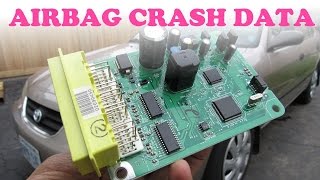
- Airbag Module Crash Data Stored (Common) — For the SRS version of this code, the only cause is a past collision significant enough to be recorded by the Airbag Control Module. The module stores this crash data and will not clear the code until it is professionally reset or replaced. 🎬 See how specialists reset airbag modules after a crash.
- Damaged Wiring or Loose Connections (Less Common) — Applies to the HVAC system. Wires leading to the blend or mode door actuator fray, short, or disconnect deep within the dashboard. This interrupts the signal from the climate control unit.
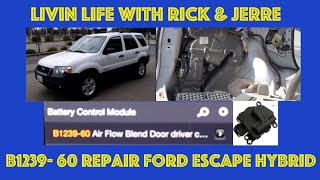
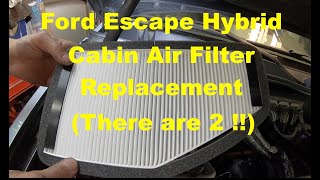
- Clogged HVAC Air Filter (Ford Hybrid) (Less Common) — On Ford Escape and Mariner Hybrids, the B1239 code is for the battery cooling system. A dirty or clogged air filter for this system restricts airflow, causing the actuator to overwork and trigger a fault code before the actuator actually fails.
- Jammed or Obstructed HVAC Door (Rare) — A foreign object, such as a pen or debris, falls into the vents and physically blocks the movement of the blend or mode door. The actuator tries to move the door, fails, and triggers the code.
- Occupant Classification System (OCS) Fault (Rare) — In conjunction with the SRS-related B1239 code, a fault exists in the passenger seat weight sensor system (OCS). After a collision, OCS components like sensors in the seat track or the bladder require inspection or replacement before addressing the main B1239 code.
- Faulty HVAC Control Module (Very Rare) — The climate control unit itself (the part with the knobs and buttons) fails and sends incorrect signals to the actuator, causing the B1239 code.
Symptoms

- Airbag Warning Light is On — This is the primary symptom if the code is related to the SRS/Airbag system. The light stays on continuously and will not turn off.
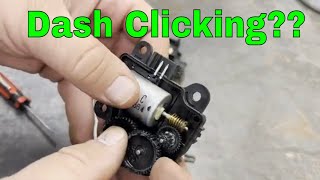
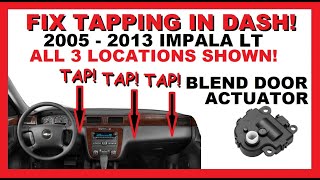
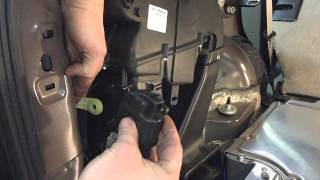
- Clicking or knocking noise from the dashboard — As the gears inside a failing HVAC actuator strip or break, they make a repetitive clicking or tapping sound from behind the dash when you start the car or change climate settings. 🎬 Watch: How to find and replace clicking HVAC actuators.
- Air blows from the wrong vents — For an HVAC fault, you set the system to the dash vents, but the air only comes out at the floor or defrost.
- Temperature is stuck on hot or cold — If the blend door actuator fails, you lose the ability to adjust the air temperature, leaving it stuck on full heat or full cold.
- Wrench light on (Ford Hybrid models) — On Ford Escape and Mariner Hybrids, this code relates to the battery cooling system's blend door and illuminates the wrench warning light, sometimes accompanied by reduced engine power.
Diagnostic Flowchart
Tap your situation to follow the diagnostic path that matches what you're seeing on this code.
Common Fixes & Costs
- Reset Airbag Control Module — Parts: $0, Labor: $50-$150, ~1.5 hr book time (Intermediate)
- Replace HVAC Blend/Mode Door Actuator — Parts: $20-$150, Labor: $300-$1000, ~3.0 hr book time (Professional)
- Replace Hybrid Battery Air Filter — Parts: $15-$40, Labor: $20-$50, ~0.3 hr book time (Beginner)
- Replace Airbag Control Module — Parts: $200-$900, Labor: $100-$270, ~1.5 hr book time (Professional)
- Repair HVAC Wiring — Parts: $5-$20, Labor: $100-$300, ~1.5 hr book time (Intermediate)
Used vs. New Parts: Buying Guide
When a used part is worth it: For an HVAC actuator, a used part from a low-mileage vehicle is a cost-effective option if easily accessible. For an Airbag Control Module, buying used is NOT recommended unless you send it to a professional service to be reset and verified. A used module contains hidden crash data or is incompatible.
Donor-vehicle mileage cap: roughly under 60000 miles for the part to have meaningful remaining life.
Donor quality checklist:
- For actuators, match the part number exactly; there are often multiple, similar-looking actuators in one dash.
- For airbag modules, never install a used module directly from a donor car without having it professionally inspected and reset first.
- Verify the used part comes with a return policy or warranty.
Decision logic:
- If The part is an Airbag Control Module → Buy a new OEM part or send your original module for a professional reset service. Avoid used modules for direct installation.
- If The part is an HVAC actuator and labor is high (dashboard removal required) → Buy a new OEM or high-quality aftermarket part to avoid paying for the difficult labor twice if a used part fails prematurely.
- If The part is an easily accessible HVAC actuator (e.g., behind glove box) → A used part from a low-mileage vehicle is a reasonable budget option.
Warranty tradeoff: A professional airbag module reset service typically includes a warranty or guarantee on the service. New OEM parts carry a manufacturer's warranty. Used parts from a salvage yard often have a limited 30-90 day warranty.
Worst-case if a used part fails: $500-1000+ if a used HVAC actuator fails after a dashboard-out installation, requiring a repeat of the expensive labor. For a faulty used airbag module, the cost is a non-functional safety system.
What Happens If You Wait — Timeline
- Immediate (SRS Fault): The airbag light turns on and stays on. The entire SRS system, including all airbags and seatbelt pretensioners, is disabled by the control module as a fail-safe. (MPG impact: 0%% · Added cost: N/A (Critical safety risk. The cost is a non-functional safety system in an accident.))
- 0-2 months (HVAC Fault): An intermittent clicking noise starts, or the temperature/airflow is occasionally incorrect. The actuator's internal gears begin to wear, or a circuit fault is intermittent. Symptoms come and go. (MPG impact: 0%% · Added cost: $0)
- 2-6 months (HVAC Fault): The clicking becomes constant whenever the car starts or settings are changed. Temperature or airflow is permanently stuck. The actuator gears are fully stripped, or the motor has burned out. The clicking continues for a period after the car is turned off. (MPG impact: 0%% · Added cost: $50-$250 (If the actuator creates a parasitic drain, it weakens and eventually destroys the car's battery, requiring replacement.))
- 6+ months (HVAC Fault): The clicking noise stops as the actuator motor completely burns out. The HVAC system remains non-functional in one or more modes. The primary risk, aside from discomfort, is the inability to defrost the windshield, which is a safety hazard. (MPG impact: 0%% · Added cost: $50-$250 (The risk of battery damage from a parasitic drain remains until the faulty actuator is disconnected or replaced.))
Cost of Not Fixing It
- Immediate (SRS Fault): The entire supplemental restraint system (airbags, pretensioners) is disabled and will not deploy in an accident. This represents a critical failure of the vehicle's primary safety systems. (Added cost: N/A (Safety Risk))
- Immediate (HVAC Fault): Loss of climate control functions, such as the ability to direct air to the windshield for defrosting/defogging, which is a safety hazard in cold or humid weather. Inability to control cabin temperature leads to discomfort. (Added cost: Negligible)
- 1-6 months (HVAC Fault): A failing actuator continues to click or attempt to move, causing a continuous small drain on the battery. This shortens battery life over time and is a severe annoyance. (Added cost: $0 - $250 (Potential cost of a new battery if drained repeatedly))
Diagnosis Steps
- Identify the System with an Advanced Scanner
Use an advanced OBD-II scanner that reads manufacturer-specific codes from individual modules (Body, HVAC, SRS). Determine which module stored the B1239 code. If it is the SRS or Airbag module, proceed to Step 2. If it is the BCM or HVAC module, skip to Step 3.
Tools: Advanced OBD-II Scanner (Beginner) - Confirm Crash Data (SRS)
If the code is in the SRS module, it confirms crash data is stored. Standard scan tools cannot erase this code and return an error like 'cannot execute routine'. The only solution is to have the module reset by a specialist or replaced. Stop diagnosis here for SRS faults.
Tools: Advanced OBD-II Scanner (Professional) - Listen for Actuator Noises (HVAC)
Turn the key to the 'on' position without starting the engine. Change the temperature from hot to cold and switch between different vent modes. Listen carefully for a repetitive clicking or grinding sound from the dashboard, which strongly points to a failing actuator with stripped gears.
Tools: None (Beginner) - Check the Fuse (HVAC)
Find the fuse for the HVAC system in your vehicle's fuse box. If the fuse is blown, replace it and see if the problem resolves. A blown fuse indicates a short circuit in the wiring or a failing actuator drawing too much current.
Tools: Owner's manual, fuse puller or pliers (Beginner) - Perform HVAC Self-Diagnosis (If Equipped)
Many vehicles, especially Honda/Acura, have a built-in self-diagnostic function for the climate control system initiated with a specific sequence of button presses on the HVAC panel. Run this test to confirm the fault lies with the mode or blend door motor circuit.
Tools: Vehicle-Specific Instructions (Beginner) - Visually Inspect the Actuator (HVAC)
Locate the blend or mode door actuator(s). You often need to remove trim panels or the glove box. Once located, watch the actuator while a helper changes the climate settings to see if it attempts to move.
Tools: Trim removal tools, flashlight (Intermediate) - Test the Actuator Circuit with a Multimeter (HVAC)
Disconnect the actuator's electrical connector. Identify the power, ground, and signal wires. With the key on, check for reference voltage (typically 5V or 12V) and a solid ground. Command the actuator to move using the HVAC controls; you should see the command signal voltage change. If power or ground is missing, the fault is upstream.
Tools: Multimeter, vehicle-specific wiring diagram (Advanced) - Check Actuator Resistance (HVAC)
With the actuator disconnected, use a multimeter to measure the resistance across the motor terminals. A typical range is between 4 and 30 ohms. A reading of infinity (OL) indicates an open circuit within the motor, while a reading near zero ohms indicates a short. Both confirm a failed actuator.
Tools: Multimeter, vehicle-specific repair manual (Advanced) - Monitor Live Data PIDs (HVAC)
Using an advanced scan tool, access the live data stream for the BCM or HVAC module. Monitor PIDs such as 'Blend Door Position Command' and 'Blend Door Position Feedback'. The feedback value must closely track the command value. A feedback value that is stuck indicates a problem with the actuator or its circuit.
Tools: Advanced OBD-II Scanner (Advanced) - Back-Probe and Scope the Actuator Motor (HVAC)
For definitive diagnosis, back-probe the motor control wires at the actuator connector. Using an oscilloscope, command the actuator to move. You should see a square wave pattern as the control module sends a pulse-width modulated (PWM) signal to the motor. A flat line indicates no signal from the module.
Tools: Oscilloscope, back-probe pins, wiring diagram (Professional)
When This Code Triggers (Freeze-Frame Conditions)
- Fault Trigger: Varies (For HVAC, the code sets when the climate control unit commands a change and does not receive the expected feedback from the actuator. For SRS, the code sets instantly upon the module determining a collision event occurred.)
- System Voltage: 11.5-14.5V (The fault occurs during normal operating voltage. It is not caused by a low voltage condition, although erratic voltage sometimes triggers intermittent electrical faults.)
- Engine RPM: 0 - 3000 RPM (An HVAC fault triggers with the key on, engine off, or while driving at any RPM. An SRS fault triggers by a crash event, which happens at any RPM, including zero.)
- Vehicle Speed: 0 - 70+ mph (An HVAC fault is independent of vehicle speed. An SRS fault triggers by deceleration data from impact sensors, which relates to but is not solely dependent on vehicle speed at impact.)
Related Codes
- B1240 — Often appears with the HVAC version of B1239 on Honda/Acura vehicles. B1239 indicates an electrical circuit failure (open/short), while B1240 points to a mechanical problem like a stuck door or linkage. If you have B1239, test the wiring first; if you have B1240, inspect the physical movement of the door first.
- B1249 — A related Ford HVAC code for "Blend Door Failure." While B1239 points to an electrical circuit failure, B1249 indicates a mechanical failure. To differentiate, if the actuator gets power but doesn't move, suspect a B1239 fault. If the actuator moves but airflow doesn't change, the door is broken off the shaft, indicating a B1249 fault.
- B1231 — A related SRS/Airbag code for Ford/Mazda meaning "Crash Detected." It is the Ford/Mazda equivalent of the B1239 airbag code on a Nissan. Both are hard codes that confirm a collision event was stored and require the module to be reset or replaced.
- B0052 — A GM-specific SRS code for "Deployment Commanded." This is GM's equivalent of the B1239 airbag code. Both confirm an accident occurred and the airbag module recorded the event. The diagnostic path is identical: the module must be reset or replaced.
Climate & Environmental Factors
- Cold Weather: Cold temperatures cause the lubricant inside an HVAC actuator to thicken and stiffen, increasing internal friction. This makes the motor work harder to move the door, accelerating gear wear and leading to failure, often presenting as a clicking noise that is more prominent on cold starts.
- High Humidity: Temperature fluctuations in humid environments cause condensation to form inside the actuator housing. This moisture leads to corrosion on the internal metal components and electrical contacts, causing intermittent operation or complete failure.
How to Talk to a Mechanic About This Code
Say this: "This depends on the fault. If it's an SRS/Airbag code: 'I have a B1239 code in my SRS module, which I believe is stored crash data. I would like a quote to remove the module, allow me to send it for a reset service, and then reinstall it.' If it's an HVAC code: 'I have a B1239 code in my HVAC module and I hear a clicking from the dash. I need a diagnosis to confirm which actuator has failed and a labor quote for its specific replacement.'"
For SRS, this immediately frames the conversation around the cost-effective 'reset' option, preventing a default high quote for a new module. For HVAC, it shows you know the labor cost is the main variable and forces the shop to diagnose rather than guess.
Avoid saying:
- My airbag light is on, how much to fix it?
- My A/C is broken, can you look at it?
- Just replace the airbag module.
Questions to ask before authorizing the repair:
- For SRS: Will you reinstall my original module after I have it reset by a third-party service?
- For SRS: If you don't work with reset services, what is the total cost for a new, VIN-programmed module, installed?
- For HVAC: Which specific actuator (blend, mode, defrost) has failed and where is it located in the dash?
- For HVAC: Does your labor estimate include removing the dashboard? If so, how many hours are you quoting for that?
- What is your warranty on this repair, for both parts and labor?
Where to Take It: Dealer vs Independent vs Chain
- Dealer:
Use for HVAC work only if you're not price-sensitive. For SRS faults, a dealer should be the last resort due to their preference for high-cost replacement over resetting the module.
Best for: Vehicles under warranty, Complex electrical issues that accompany the B1239 code, When a new, VIN-programmed airbag module is the only option
Downsides: Will almost always recommend expensive module replacement over reset for SRS faults., Highest labor rates for HVAC actuator replacement. (Typical cost: +50% vs. baseline) - Independent Shop:
The best choice for most scenarios. For an HVAC fault, a trusted local mechanic offers the best balance of skill and price. For an SRS fault, they are the ideal partner to perform the labor of removing and reinstalling the module that you will manage the resetting of.
Best for: Out-of-warranty vehicles, HVAC actuator replacement, especially if dashboard removal is needed, Removing and reinstalling an airbag module that you are sending out for a reset
Downsides: Quality and experience with dashboard work varies widely., May not have the tools to program a new airbag module if one is required. (Typical cost: +0% vs. baseline) - Chain Shop:
AVOID for this code, unless you have personally confirmed the failed HVAC actuator is extremely easy to access. They are not suited for the SRS fault or complex HVAC labor.
Best for: Easily accessible HVAC actuators (e.g., behind the glovebox)
Downsides: Generally not equipped for or experienced with dashboard removal., Will not handle airbag module diagnosis or replacement., High pressure to upsell leads to incorrect diagnosis. (Typical cost: -10% vs. baseline)
When to Walk Away From the Repair
If the estimated repair cost exceeds 40-50% of the car's private-party value, you should pause and consider your options.
- Car worth $3000, fix is $1500: Walk away. A $1500 repair for a dashboard-out HVAC actuator replacement on a $3000 car is not a good investment. Sell as-is with full disclosure.
- Car worth $10000, fix is $1200: Fix it. An expensive HVAC repair is still well below the threshold for a $10,000 vehicle.
- Car worth $5000, fix is $350: Fix it. This represents an airbag module reset ($100 service + $250 labor for removal/reinstallation). This is a critical safety repair and a wise investment.
What Scan Tool You Need for This Code
Minimum: A scanner that reads and clears codes from the SRS (Airbag) and BCM (Body Control) modules. A basic engine-only code reader is NOT sufficient for this code.
A $20 engine code reader cannot tell you which module (HVAC or SRS) stored the B1239 code. This is the most critical diagnostic step. You will be completely blind to the problem without a tool that scans all vehicle systems.
Professional: Autel MaxiCOM MK808Z / MK900-BT (~$450) — Offers full bidirectional control to command actuators, view detailed live data, and perform system recalibrations after a part is replaced. For SRS faults, it performs the necessary post-repair system checks after a reset module is reinstalled.
Rent vs buy: For this code, renting is a poor option. The free loaner tools at stores like AutoZone are typically basic engine code readers that cannot access SRS or BCM modules. You must buy a scanner with at least 4-system (Engine, ABS, SRS, Transmission) capability to properly diagnose B1239.
How to Clear the Code After You Fix It
- For HVAC Fault: Reconnect all components, clear the code with an advanced OBD-II scanner, and run the HVAC self-test function if available.
- For SRS Fault: Reinstall the professionally reset or new module, reconnect the battery (negative terminal last), and use a scanner to clear any remaining 'soft' codes from other modules. The B1239 'hard' code in the SRS module cannot be cleared with a scanner.
Drive cycle (~15 minutes): For an HVAC repair, a specific drive cycle is not required. After clearing the code, operate all HVAC functions through their full range of motion several times to confirm the repair. For an SRS repair, after the module is reset/replaced, the airbag light self-tests and turns off within 7 seconds of starting the car.
Readiness monitors affected: Not applicable. B-codes (Body) do not affect emissions readiness monitors.
Watch out for:
- Attempting to clear a B1239 SRS/airbag code with a standard scanner; it will not work as it indicates stored crash data.
- Forgetting to perform a recalibration or self-test after replacing an HVAC actuator, causing it to malfunction.
- Not disconnecting the battery for at least 15 minutes before working on any airbag system components.
Will This Fail Emissions / State Inspection?
No — by itself this code doesn't fail OBD inspection (but it can keep readiness monitors from setting, which causes a separate fail).
- California: The B1239 code itself will not fail a standard smog check, which is focused on emissions. However, if the vehicle requires a more comprehensive 'Vehicle Safety Systems Inspection' (e.g., for a salvage title), a missing or non-functional airbag system will cause a failure.
- New York: A law was passed to make an illuminated airbag warning light grounds for safety inspection failure. Previously, it was only an advisory.
- Texas: During the annual safety inspection, the airbag warning lamp must illuminate and then turn off. If the light stays on, the vehicle will fail the inspection.
- Virginia: State policy indicates that the airbag light being on does not, by itself, cause a failure. However, the system is inspected for tampering or being rendered inoperable, which causes a failure. An illuminated light indicates the system is inoperable, creating a gray area, but it is generally considered a failing item.
Most Commonly Affected Vehicles
- Ford Escape Hybrid, Mariner Hybrid (2005-2008) — Prone to B1239 for the traction battery's auxiliary blend door actuator. TSB 07-25-12 was issued for this. The part has been revised multiple times; the latest part number suffix is 'F'.
- Honda Odyssey, CR-V, Insight, Accord (2008-2017) — Frequently experiences B1239 for an open or short in the mode control motor circuit. On the 2011-2017 Odyssey, this specifically affects airflow direction.
- Nissan Versa, Frontier, 370Z, NV2500, Altima, Rogue (2013-2020) — On these models, B1239 is the standard code indicating crash data is stored in the airbag control module. It is not an HVAC code for this brand.
- Acura TL, RDX (2009-2014) — These models set a B1239 code for a fault in the mode control motor circuit, similar to their Honda counterparts. Diagnosis involves using the HDS (Honda Diagnostic System) to run a self-test.
- Chevrolet Various Models (2010-2020) — On many Chevrolet models, B1239 is an airbag code indicating crash data has been stored and the module requires service.
- Mazda Tribute Hybrid, Various Models (2008-2011) — The Tribute Hybrid, a twin to the Ford Escape Hybrid, shares the B1239 code for the battery cooling blend door actuator. On other Mazda models, it appears as an SRS crash data code.
- BMW Various Models (2010-2020) — Like with other makes, B1239 appears in the SRS module after a collision, signifying that crash data is locked and needs to be cleared.
- Jaguar Various Models (e.g., X-Type, XF) (2001-2015) — On some Jaguar models, B1239 is defined as an HVAC-related "Air flow blend door actuator - circuit failure".
Manufacturer-Specific Notes
- Ford: On Escape and Mariner Hybrids (2005-2008), this code is for the hybrid battery's cooling system, not cabin comfort. It triggers a wrench light and reduced power mode. TSB 07-25-12 was issued for this exact issue, advising replacement of the 'Traction Battery Auxiliary Mode Door Actuator'.
- Honda/Acura: These brands define B1239 specifically as a fault in the "Mode Control Motor Circuit," which controls whether air goes to the face, floor, or defrost vents. It is less commonly used for temperature blend issues on these makes. A self-diagnostic function run from the control panel helps confirm the fault.
- Nissan: Nissan commonly uses B1239 as a dedicated "crash data" code for the Airbag Control Module. It explicitly means the vehicle has been in an accident and the module needs service; it is not used for HVAC issues on this brand. Separate recalls exist for Takata airbag inflators and Occupant Classification System (OCS) issues on many Nissan models, which present alongside SRS module faults.
- Mazda: On the Tribute Hybrid (2008-2011), B1239 mirrors the Ford Escape Hybrid, pointing to the battery cooling blend door actuator. On other models, Mazda uses B1239 to indicate crash data is stored in the SRS module, similar to Nissan.
Real Owner Stories
2008 Ford Escape Hybrid with Wrench Light
The yellow wrench light appeared on the dashboard, sometimes accompanied by reduced engine power, particularly in stop-and-go traffic. A scan revealed code B1239.
What they tried:
- Initially suspected the rear battery A/C vent actuator motor.
- Upon accessing the actuator in the rear cargo area, the owner discovered a small, dirty air filter for the battery cooling system.
- The owner cleaned the filter and housing before considering actuator replacement.
Outcome: After cleaning the battery cooling system's air filter, the B1239 code and wrench light did not return. This simple, no-cost cleaning step resolved the issue without needing to replace the actuator.
Lesson: On Ford Escape/Mariner Hybrids (2005-2008), always inspect and replace the hybrid battery air filter (Motorcraft FP-49) first when a B1239 code appears. A clogged filter is a common cause and a much cheaper and easier fix than replacing the actuator.
2012 Chevy Impala with Clicking Dash and Dead Battery
A repetitive clicking noise was heard from the dashboard, even after the car was turned off. The next day, the car battery was dead.
What they tried:
- After jump-starting the car, the owner used a scan tool which confirmed a fault with a blend door actuator.
- The actuator continued to click with the car off, identifying it as a parasitic drain that was killing the battery.
- The owner replaced the faulty driver-side blend door actuator.
Outcome: Replacing the faulty actuator stopped the clicking noise and resolved the parasitic battery drain. After replacement, a recalibration procedure was run with the scan tool to ensure the new actuator functioned correctly.
Lesson: A clicking HVAC actuator can be more than an annoyance; it can be a parasitic drain that kills your battery. If you hear clicking from the dash after the car is off, it's a strong sign an actuator is stuck and needs to be replaced to prevent being stranded.
2014 Honda NWGN with Intermittent Electrical Issues
The owner experienced several seemingly unrelated issues: the turn signal, seat belt, and reverse gear beeps would sometimes stop working, and the auto idle-stop feature failed. A scan tool showed code B1239: 'An Open or Short in the Mode Control Motor Circuit'.
What they tried:
- The owner had the engine and filters cleaned with air and had a recent oil change, none of which resolved the issue.
- A scan tool identified the B1239 code, but the mechanic initially thought the beeping issue was a separate problem with the instrument panel speaker.
- The owner confirmed all HVAC vents were blowing air correctly, making the diagnosis confusing.
Outcome: The forum discussion pointed towards an electrical fault in the mode control motor circuit as the root cause, which causes intermittent strange behavior in other body electrical systems on some Honda models. The resolution required further diagnosis of the wiring to the mode control motor.
Lesson: On Honda vehicles, a B1239 code for the mode control motor circuit sometimes manifests with other strange electrical symptoms beyond just incorrect airflow. An intermittent open or short affects shared circuits or the Body Control Module, leading to confusing issues.
Post-Accident Nissan with Airbag Light On
After a collision, the airbag warning light was illuminated and would not turn off. A diagnostic scan showed code B1239, indicating crash data was stored in the Airbag Control Module (ACM).
What they tried:
- The owner was advised that a standard scan tool could not clear this 'hard code'.
- The two options were to replace the module at a high cost from the dealer or send the original module to a specialized service for a reset.
Outcome: The owner chose to use a mail-in reset service. They removed the ACM from the vehicle, shipped it to the service, and received the reset module back within a few days. After reinstalling the original, reset module, the B1239 code was gone and the airbag light functioned normally. The cost was around $50 for the service plus shipping, saving hundreds compared to a new module.
Lesson: For Nissan and many other makes, B1239 in the SRS module is not a component fault but a confirmation of stored crash data. Do not waste money on a new module; use a reputable mail-in reset service for a fraction of the cost ($50-$150) to make your existing module fully functional again.
How to Prevent This Code From Triggering
- Replace the cabin air filter regularly. (Every 12-15 months or 15,000 miles.) — A clean filter ensures proper airflow, reducing the strain on the entire HVAC system, including the actuators which don't have to work against high pressure.
- On Ford/Mazda Hybrids, replace the battery cooling air filter. (Every 20,000-30,000 miles.) — Specifically for the B1239 code on these vehicles, a clean battery air filter prevents the auxiliary blend door actuator from overworking and failing prematurely.
- Operate HVAC controls gently and deliberately. (Daily habit.) — Avoid snapping the temperature or mode dials from one extreme to the other. Smooth, deliberate adjustments put less stress on the plastic gears and motor of the actuator, extending its life.
- Cycle through all HVAC modes periodically. (Once a month.) — Using all vent and temperature settings regularly helps keep the lubricant on the actuator gears distributed and prevents the doors and linkages from seizing up due to lack of use.
- Pay attention to the airbag light during startup. (Every time you start the car.) — There is no direct maintenance for the SRS module itself. The best prevention is to ensure any airbag light fault (from a bad sensor, clock spring, etc.) is fixed immediately. Driving with a fault masks a more serious issue or leads to inspection failure.
Frequently Asked Questions
Can I reset the B1239 airbag code myself?
No. This code is stored as "hard data" and cannot be cleared with a standard OBD-II scanner. The airbag control module must be physically removed and sent to a specialist for a reset service.
Why is the labor cost so high to replace an HVAC actuator?
The part itself is cheap, but it is often located deep inside the dashboard. Mechanics frequently must remove the entire dashboard assembly to access the actuator. This turns a $30 part replacement into a multi-hour, expensive job.
I have a Ford Escape Hybrid with code B1239. Do I have to replace the actuator?
Not necessarily. On these specific vehicles, the code is for the battery cooling system. Inspect and replace the hybrid battery's auxiliary air filter first, as a clogged filter restricts airflow and triggers this code.
What happens if I ignore the B1239 airbag code?
The entire airbag system is disabled as a safety precaution. None of the airbags or seatbelt pretensioners will deploy in a collision. This is a critical safety issue that requires immediate attention.
Can a weak battery cause code B1239?
No. This code points to a specific electrical circuit failure (HVAC) or stored crash data (SRS). While a weak battery triggers temporary erroneous codes in some modules, it does not cause a hard crash code or a persistent actuator circuit fault.
I hear a clicking sound in my dash but have no check engine light. Is it B1239?
Yes. B1239 is a Body (B) code, which does not trigger the main Check Engine Light. The clicking sound is a classic symptom of a failing HVAC actuator with stripped gears.
Can I clear the B1239 crash code by disconnecting the battery?
No. Disconnecting the battery will not clear hard crash data from the Airbag Control Module. This data is stored in non-volatile memory and persists without power. The module must be professionally reset or replaced.
Key Takeaways
- Code B1239 indicates either a climate control actuator failure or a critical airbag system fault from a past collision, depending on your vehicle's make.
- Use a 4-system OBD-II scanner to determine which module stored the code; basic $20 engine readers cannot read B-codes.
- If stored in the SRS module, the airbags are disabled; fix this by mailing the module to a professional reset service for $50-$150 rather than paying $800+ for a new one.
- If stored in the HVAC module, listen for a clicking dashboard noise indicating a stripped $30 blend door actuator, which often requires $300-$1000 in labor to access.
Helpful Videos


The information in this article is provided for general reference and educational purposes only. Vehicle specifications, procedures, and part compatibility can vary by production date, trim level, and region. Always consult your vehicle's factory service manual and verify part numbers before purchasing or performing repairs. Safety-critical components such as airbags, seat belts, and braking systems should be installed by a qualified professional.
- 🎬 Helpful Videos
- What Does B1239 Mean?
- Can I Drive With B1239?
- Common Causes
- Symptoms
- Diagnostic Flowchart
- Common Fixes & Costs
- Used vs. New Parts: Buying Guide
- What Happens If You Wait — Timeline
- Cost of Not Fixing It
- Diagnosis Steps
- When This Code Triggers (Freeze-Frame Conditions)
- Related Codes
- Climate & Environmental Factors
- How to Talk to a Mechanic About This Code
- Where to Take It: Dealer vs Independent vs Chain
- When to Walk Away From the Repair
- What Scan Tool You Need for This Code
- How to Clear the Code After You Fix It
- Will This Fail Emissions / State Inspection?
- Most Commonly Affected Vehicles
- Manufacturer-Specific Notes
- Real Owner Stories
- 2008 Ford Escape Hybrid with Wrench Light
- 2012 Chevy Impala with Clicking Dash and Dead Battery
- 2014 Honda NWGN with Intermittent Electrical Issues
- Post-Accident Nissan with Airbag Light On
- How to Prevent This Code From Triggering
- Frequently Asked Questions
- Can I reset the B1239 airbag code myself?
- Why is the labor cost so high to replace an HVAC actuator?
- I have a Ford Escape Hybrid with code B1239. Do I have to replace the actuator?
- What happens if I ignore the B1239 airbag code?
- Can a weak battery cause code B1239?
- I hear a clicking sound in my dash but have no check engine light. Is it B1239?
- Can I clear the B1239 crash code by disconnecting the battery?
- Key Takeaways
- 🎟️ Get 5% Off