

OBD-II Code B1212: Driver's Seat Belt Pretensioner Fault
What B1212 means, why it triggers, and how to fix it
- Code B1212 disables the driver's seat belt pretensioner, allowing a driver's head to strike the steering wheel at up to 21 MPH in a 35 MPH crash.
- The two most common causes are a failed internal squib in the seat belt buckle assembly or a stretched yellow wiring harness under the driver's seat.
- Diagnose the fault by reading live data with an SRS-capable scanner; a normal pretensioner circuit reads between 1.7 and 2.8 Ohms, while 65.5 Ohms indicates a complete open circuit.
- Clearing the code requires an SRS-capable OBD-II scanner, as simply disconnecting the 12V battery will not erase hard safety faults from the Restraints Control Module.
- Verify the code definition for your specific make, as Honda and Hyundai use B1212 for unrelated HVAC or parking sensor faults rather than airbag systems.
What Does B1212 Mean?

B1212 means the Restraints Control Module (RCM) detected an electrical fault in the driver's seat belt pretensioner circuit. The pretensioner is a pyrotechnic device that explosively tightens the seat belt within milliseconds of a crash, removing slack and positioning you correctly for the airbag. This fault disables the pretensioner, compromising the vehicle's choreographed safety sequence.
Technical definition: Code B1212 indicates a 'Driver Safety Belt Buckle Pretensioner Deployment Control Circuit Fault'. The RCM continuously monitors the resistance of the pretensioner's deployment loop. It sets this code when resistance, voltage, or a short falls outside a narrow expected range (typically 1.7 to 2.78 Ohms on Ford vehicles).
Can I Drive With B1212?
Yes, But With Caution. Yes, the vehicle will drive, but the active airbag light signifies a critical safety failure. The driver's seat belt pretensioner will not deploy in a crash, significantly increasing the risk of serious injury. In a 35 MPH crash test with the pretensioner disabled, a test dummy's head struck the steering wheel at 21 MPH. The control module often disables the entire Supplemental Restraint System (SRS) as a failsafe.
Common Causes

- Faulty Driver's Seat Belt Pretensioner Assembly (Very Common) — The pretensioner unit, usually integrated into the seat belt buckle receiver, 🎬 See how to remove and replace the pretensioner assembly. is the most frequent failure point. The internal squib (explosive charge) and resistor fail, causing an out-of-spec resistance reading. A live data reading of 65.5 Ohms or 'OL' (Over Limit) confirms a failed, open-circuit pretensioner.
- Damaged or Corroded Under-Seat Wiring/Connectors (Very Common) — The yellow wiring harness running under the driver's seat is highly vulnerable. Constant seat movement stretches or pinches the wires, while micro-vibrations cause 'fretting' (corrosion) on the connector pins. This creates high resistance or an open circuit.
- Previous Accident / Deployed Components (Common) — If the vehicle was in an accident severe enough to deploy the pretensioners, the B1212 code is permanently stored. Pretensioners are one-time-use components. Once fired, their internal circuit opens and they must be replaced.
- Water Intrusion (Spills/Leaks) (Less Common) — Spilled drinks, sunroof leaks, or moisture from wet footwear pool under the seat or carpet. This corrodes the electrical connectors, creating high resistance or shorting the circuit.
- Incorrect SRS Component Installed (Less Common) — If a repair was attempted with an incompatible seat belt pretensioner, the RCM detects a resistance mismatch and sets a fault code. SRS components are precisely calibrated for specific vehicle trims and years.
- Faulty Clock Spring (Rare) — While primarily for steering wheel components, a shorted clock spring sometimes causes network communication issues that affect the entire SRS system, indirectly triggering pretensioner codes.
- Faulty Restraints Control Module (RCM) (Rare) — Module failure is rare. Only consider this after definitively ruling out the pretensioner and all wiring. Induce a different fault (e.g., shorting the circuit) to see if the code changes; if it does, the RCM is functioning properly.
Symptoms

- Airbag / SRS Warning Light On — The dashboard airbag light illuminates constantly, indicating a hard fault in the Supplemental Restraint System (SRS).
- Pretensioner Fails to Deploy in a Crash — In a collision, the driver's seat belt will not tighten as designed, increasing the risk of the occupant striking the steering wheel or dashboard.
- Startup Chime or Message — The instrument cluster displays a specific warning message, such as 'Service Airbag System' or 'Service Restraints System', accompanied by a chime.
- Fault Code Stored in Memory (scan-tool only — no driver-felt sign) — An SRS-capable OBD-II scanner reads the B1212 code, often with a manufacturer-specific two-digit suffix (like :13 for open circuit) providing critical diagnostic clues.
- Inability to Communicate with RCM (scan-tool only — no driver-felt sign) — If the fault stems from a major wiring short or a failed module, a diagnostic scanner fails to establish communication with the Restraints Control Module.
Diagnostic Flowchart
Tap your situation to follow the diagnostic path that matches what you're seeing on this code.
Common Fixes & Costs
- Replace Driver's Seat Belt Buckle/Pretensioner Assembly — Parts: $150-$450, Labor: $150-$300, ~1.5 hr book time (Intermediate)
- Repair Wiring/Connector Under Seat — Parts: $10-$50, Labor: $120-$250, ~1.5 hr book time (Intermediate)
- Connector Pin Terminal Repair/Greasing — Parts: $5-$20, Labor: $100-$200, ~1 hr book time (Intermediate)
- Replace Clock Spring — Parts: $60-$400, Labor: $100-$200, ~1.2 hr book time (Professional)
- Replace Restraints Control Module (RCM) — Parts: $200-$700, Labor: $150-$350, ~2 hr book time (Professional)
Used vs. New Parts: Buying Guide
When a used part is worth it: For older, higher-mileage vehicles where a new OEM part is a significant portion of the car's value, a used OEM pretensioner from a reputable salvage yard is a cost-effective option. Ensure the donor vehicle was not in a flood and the part is an exact match.
Donor-vehicle mileage cap: roughly under 100000 miles for the part to have meaningful remaining life.
Donor quality checklist:
- Verify the part number is an exact match for your vehicle's VIN.
- Inspect the electrical connector for corrosion, moisture, or broken locking tabs.
- Ensure the part comes from a vehicle that did not have a deployed airbag or flood damage.
- Buy from a reputable auto recycler offering a warranty and clear return policy.
Decision logic:
- If The vehicle is under warranty or relatively new → Buy a new OEM part to ensure perfect compatibility and safety.
- If The budget is extremely tight and the vehicle is over 10 years old → A used OEM part from a trusted source is a viable alternative to having no functional safety system.
- If The part is a known high-failure item with no visible wear indicators → Favor a new OEM part, as the remaining lifespan of a used one is unknown.
Warranty tradeoff: Used parts typically come with a 30-90 day warranty covering only the part. New OEM parts installed by a dealer are covered by a 12-month/12,000-mile warranty on both part and labor.
Worst-case if a used part fails: $200-$400 if a used part is faulty or incorrect, including repeat labor and purchasing another part.
What Happens If You Wait — Timeline
- Immediate (0 seconds): The RCM detects the electrical fault during its power-on self-test. The airbag warning light illuminates, the B1212 code is stored, and the driver's seat belt pretensioner is disabled. (MPG impact: 0%% · Added cost: $0)
- 0 seconds - Until Repaired: The entire SRS system enters a failsafe mode, potentially disabling all airbags. The vehicle operates with a significantly increased risk of driver injury in a collision. (MPG impact: 0%% · Added cost: N/A - Critical safety risk.)
- At the next state safety inspection: The vehicle automatically fails safety inspections in jurisdictions like Virginia and Pennsylvania due to the illuminated airbag light, preventing legal registration renewal. (MPG impact: 0%% · Added cost: $300-$750 (Cost of required repair to pass inspection).)
- During a collision: The pretensioner does not fire. The driver's seatbelt fails to tighten, allowing the driver's body to strike the steering wheel or dashboard before the airbag fully inflates, drastically increasing injury severity. (MPG impact: 0%% · Added cost: Catastrophic. The cost manifests as severe or fatal injury.)
Cost of Not Fixing It
- Immediate: The driver's seat belt pretensioner is disabled and will not tighten the seatbelt in a crash. The entire SRS system, including all airbags, may also be deactivated by the RCM as a failsafe. (Added cost: N/A - Safety Risk)
- Ongoing: Significantly increased risk of severe or fatal injury to the driver in any collision, as they will not be properly restrained for airbag deployment. (Added cost: N/A - Safety Risk)
- Next Vehicle Inspection: The vehicle automatically fails the safety inspection in states that require one, such as Virginia and Pennsylvania. This prevents legal registration or sale. (Added cost: Cost of repair + re-inspection fees)
Diagnosis Steps

- Read Full Fault Code & Live Data
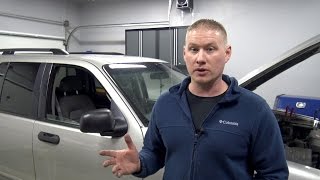
Use an OBD-II scanner that reads SRS/airbag codes. Note the full code, including the two-digit suffix (e.g., B1212:13). Access the live data stream and view the resistance for the 'Driver Seatbelt Pretensioner'. 🎬 Watch: The easiest way to diagnose Ford airbag faults. A normal reading is 2.0-3.0 Ohms. A high reading (e.g., 3.5+ Ohms) indicates high resistance, while an infinite/OL or ~65 Ohm reading indicates an open circuit.
Tools: SRS-Capable OBD-II Scanner (Beginner) - Visually Inspect Under the Driver's Seat
Look for obvious problems with the wiring going to the seat belt buckle. Check for pinched, frayed, or stretched wires, and ensure the main yellow connector is securely plugged in with the locking tab engaged.
Tools: Flashlight (Beginner) - Perform a 'Wiggle Test' on Wiring
With the scanner displaying the live resistance PID for the pretensioner, gently wiggle the wiring harness. Start at the connector under the seat and work along the harness. If the resistance value jumps wildly or goes to 'OL', you found the location of the intermittent connection or broken wire.
Tools: SRS-Capable OBD-II Scanner (Intermediate) - Depower the SRS System (CRITICAL STEP)
SAFETY FIRST: Disconnect the negative terminal of the car battery. Wait a minimum of 15-30 minutes before working on any airbag components. This allows the system's backup power capacitors to fully discharge, preventing accidental deployment.
Tools: Wrench set (Intermediate) - Test Pretensioner Resistance Directly
After depowering the system, disconnect the pretensioner connector under the seat. Using a digital multimeter set to Ohms, measure the resistance across the two pins on the pretensioner (buckle) side. A good pretensioner reads between 1.7 and 2.8 Ohms. An infinite reading (OL) means it is open and must be replaced.
Tools: Digital Multimeter (Intermediate) - Test Harness for Shorts and Opens
With the pretensioner and RCM connectors disconnected, test the vehicle-side harness. Check for continuity between each pretensioner wire and a clean chassis ground; there should be no continuity (>10,000 Ohms). Check for a short between the two wires themselves; there should be no continuity. Finally, check the resistance of each individual wire from the pretensioner connector to the RCM connector; each should read less than 0.5 Ohms.
Tools: Digital Multimeter (Advanced) - PRO TIP: Use a Resistor Tool for Isolation
Specialized SRS diagnostic kits include resistors matching the specified resistance of a known-good component (typically 2.0-3.0 Ohms). After depowering the system, unplug the pretensioner and plug the resistor into the vehicle-side harness connector. Re-power the system and clear the codes. If the code does not return, the fault is definitively in the pretensioner assembly.
Tools: SRS Diagnostic Resistor Kit, SRS-Capable OBD-II Scanner (Professional) - PRO TIP: Induce an Opposite Fault to Test RCM
If the original code was for an open circuit (e.g., B1212:13), use a fused jumper wire to briefly short the two pins on the vehicle-side harness connector. Re-power the system and scan for codes. If the code changes to a short circuit fault (e.g., B1212:11), the RCM and wiring to that point are good. If the code does not change, the fault is in the wiring or the RCM.
Tools: Fused Jumper Wire, SRS-Capable OBD-II Scanner (Professional) - Advanced Live Data Analysis
On Ford scan tools, monitor the specific PID for the driver's pretensioner (often labeled 'DEPLOY_18_R'). A reading between 1.7 and 2.78 ohms is normal. A reading of 4.0 ohms or higher indicates a high-resistance fault. A reading of 65.5 ohms is a default value indicating a complete open circuit. No voltage should be present on either circuit wire when measured against ground.
Tools: Advanced SRS-Capable OBD-II Scanner (Advanced)
When This Code Triggers (Freeze-Frame Conditions)
- SRS System State: Fault Present (The RCM detects the fault during its initial power-on self-test.)
- Ignition Status: Key On (The code is logged the moment the ignition is turned on, before the engine starts.)
- Fault Type: Open Circuit / High Resistance (Freeze frame accompanies a specific suffix code (e.g., :13, :1A) indicating the exact electrical failure mode.)
- Component Monitored: Driver Pretensioner Circuit (The data confirms which specific loop in the SRS system failed its resistance check.)
Related Codes
- B1213 — This is the identical fault code but for the passenger's side seat belt pretensioner. Ford TSB 12-5-11 addresses both B1212 and B1213, as the root cause is often a poor connection at shared body harness connectors.
- B1212:1A / B1212:13 — These Ford-specific suffixes indicate 'Circuit Open'. This points directly to a broken wire, unplugged connector, or a failed/fired pretensioner. This is the most common suffix for this fault.
- B1212:1B — This Ford-specific suffix indicates 'Circuit Resistance High'. This is often caused by corrosion in a connector or a failing pretensioner that hasn't fully opened yet. The wiggle test is very effective at finding this.
- B1212:11 — This Ford-specific suffix indicates 'Circuit Short to Ground'. This means the positive wire in the pretensioner circuit has made contact with the vehicle's chassis.
- B1212:12 — This Ford-specific suffix indicates 'Circuit Short to Battery'. This means the signal wire in the pretensioner circuit is receiving voltage when it shouldn't be.
- B0026 — A generic SAE code for 'Driver Frontal Stage 1 Deployment Control'. A basic scanner shows this, while a more advanced, manufacturer-specific tool provides the precise B1212 code for the same fault on a Ford.
Climate & Environmental Factors
- Humidity / Moisture: High humidity, water ingress from rain/snow, or liquid spills accelerate the corrosion of electrical connector pins under the seat and in kick panels. This corrosion creates high resistance in the pretensioner circuit, a direct cause of B1212 faults.
How to Talk to a Mechanic About This Code
Say this: "I have an airbag light on, and my scanner is showing code B1212 for the driver's seat belt pretensioner. I'd like to schedule a diagnostic to confirm the cause. I've already checked for loose items under the seat."
This signals you've done basic research, provides the specific SRS code, and focuses the technician's efforts. It shows you're an informed customer, reducing the chance of a vague, overpriced diagnosis.
Avoid saying:
- 'My airbag light is on, can you just fix it?'
- 'I'm not sure what's wrong, just do whatever it takes.'
- 'Can you just turn the light off?'
Questions to ask before authorizing the repair:
- What were the specific diagnostic steps you took?
- Did you find the fault in the pretensioner itself, the wiring, or a connector? What was the resistance reading?
- Is this repair covered by a Technical Service Bulletin (TSB)?
- What is the warranty on the parts and labor for this specific repair?
Where to Take It: Dealer vs Independent vs Chain
- Dealer:
Best for: Vehicles under any form of warranty., Complex cases where a TSB exists or when prior repairs at other shops have failed., When the Restraints Control Module (RCM) is suspected, as it requires brand-specific programming.
Downsides: Highest labor rates and OEM part prices., Defaults to replacing the entire pretensioner assembly even for a simple wiring or connector fault. (Typical cost: +50% vs. baseline) - Independent Shop:
Best fit for most out-of-warranty repairs. A reputable independent shop easily diagnoses and replaces a faulty pretensioner or repairs under-seat wiring, the most common fixes for B1212.
Best for: Out-of-warranty vehicles where the cause is common (bad pretensioner or under-seat wiring)., Cost-conscious owners seeking a balance of expertise and value.
Downsides: Shop must have an SRS-capable scan tool and technicians experienced with safety systems., Quality varies; vet shops based on reviews and ASE certifications. (Typical cost: +0% vs. baseline) - Chain Shop:
AVOID. This is a critical safety system fault requiring specific diagnostic capability beyond what most chain shops offer for brakes and oil changes.
Best for: Not recommended for SRS system diagnostics or repairs.
Downsides: Technicians lack the specialized training and tools for airbag systems., High pressure to upsell leads to unnecessary part replacements. (Typical cost: -10% vs. baseline)
When to Walk Away From the Repair
If the total repair cost exceeds 40-50% of the car's private-party value, sell the car as-is or trade it in. An active airbag light reduces a car's trade-in value by 20-40%.
- Car worth $5000, fix is $2200: Walk away. The repair cost is nearly half the car's value, and you're unlikely to recoup that cost on resale.
- Car worth $15000, fix is $750: Fix it. The repair cost is a small fraction of the vehicle's value and restores a critical safety feature.
- Car worth $3000, fix is $600: Borderline. If the car is otherwise in good condition, the repair is worthwhile to pass a safety inspection and maintain a safe vehicle. If it has other pending issues, it is time to sell.
What Scan Tool You Need for This Code

Minimum: A scanner that specifically reads and clears Supplemental Restraint System (SRS) / Airbag codes. A basic engine-only OBD-II reader will NOT work.
A standard $20 scanner cannot communicate with the Restraints Control Module (RCM). It shows 'no codes' even with the airbag light on. You need a tool that accesses the SRS system to see the B1212 code and its manufacturer-specific suffix, crucial for diagnosis.
Budget: Foxwell NT604 Elite / Autel AutoLink AL619 (~$90) — Reads and clears SRS/airbag codes, allowing you to see the B1212 fault and turn off the light after repair. Provides live data for basic diagnostics.
Mid-range: BlueDriver Pro / Foxwell NT510 Elite (~$120) — Offers enhanced diagnostics for specific makes (like Ford), providing live resistance data from the pretensioner circuit. Essential for performing a 'wiggle test' and confirming if the part or wiring is faulty before buying parts.
Professional: Autel MaxiCOM MK808 / MK906BT (~$500-1200) — Provides full bidirectional control, allowing you to perform advanced diagnostics like commanding module self-tests. Programs a new Restraints Control Module (RCM) if the original is faulty, a task lower-end scanners cannot do.
Rent vs buy: Most auto parts stores do NOT rent out SRS-capable scanners. Given that budget-friendly SRS scanners are affordable, buying one is the most practical option if you plan to diagnose the issue yourself.
How to Clear the Code After You Fix It
- Ensure the physical fault (e.g., bad pretensioner, broken wire) has been properly repaired.
- Reconnect the vehicle's negative battery terminal if it was disconnected for safety.
- Use an SRS-capable OBD-II scan tool to connect to the Restraints Control Module (RCM).
- Select the function to 'Clear DTCs' or 'Erase Fault Codes'.
- Cycle the ignition off, then on again. The airbag light illuminates for about 6-7 seconds for a self-test and then turns off.
Drive cycle (~1 minutes): No specific drive cycle is required. The RCM performs a complete self-test of all components each time the ignition is turned to the 'ON' position. If the repair was successful, the light stays off after the initial startup test.
Readiness monitors affected: None. Readiness monitors relate to the vehicle's emissions system, not the Supplemental Restraint System (SRS).
Watch out for:
- Disconnecting the battery will not clear a hard SRS fault code from the RCM's memory.
- A basic OBD-II code reader that only communicates with the powertrain control module (PCM) cannot read or clear SRS codes.
- If the airbag light returns immediately after clearing, the root cause of the fault has not been fixed.
Will This Fail Emissions / State Inspection?
Yes — this code typically fails an OBD-II emissions inspection.
- California: An airbag light will NOT fail the California Smog Check, as it is purely an emissions test. However, it is a critical safety failure that must be repaired.
- New York: According to the NYS DMV, an illuminated airbag warning lamp is an advisory item and not cause for rejection during a safety inspection. Individual station practices vary.
- Texas: For non-commercial vehicles, an airbag light is not an automatic failure item in the Texas safety inspection, which primarily checks lights, brakes, horn, and tires.
- Virginia: An illuminated airbag warning light indicates a system fault and causes the vehicle to fail the state's annual safety inspection.
Most Commonly Affected Vehicles
- Ford F-150 (2009-2014) — Extremely common issue. Often caused by the wiring harness under the driver's seat becoming stretched or damaged from normal seat movement. Intermittent faults are frequent.
- Ford Explorer (2011-2019) — A well-documented issue. TSB 12-5-11 was issued for 2011-2012 models, advising technicians to apply dielectric grease to pins in connectors C210, C211, and C310A to fix intermittent B1212 and B1213 codes.
- Ford Flex (2009-2019) — The driver's side seat belt pretensioner is a known high-failure part that triggers the B1212 code. Replacement of the buckle assembly is the most common repair.
- Ford E-Series Van (2008-2014) — Factory service manuals contain specific, detailed diagnostic routines for B1212, indicating it is a recognized issue requiring frequent diagnosis on these work vehicles.
- Mazda Various (2004-2015) — Due to extensive platform and component sharing with Ford during this era, many Mazda vehicles use the same SRS components and logic, exhibiting the identical B1212 pretensioner fault.
- Nissan Maxima, Altima (2002-2008) — On some Nissan models, a similar code, often P1212, is triggered. This is frequently related to the ABS system communicating with the ECU, not the airbags, and points to a blown ABS fuse.
- Honda Civic, Accord (2011-2024) — On many modern Hondas, B1212 is not an airbag code. It refers to a 'Short in Mode Control Motor Circuit' within the HVAC climate control system.
- Chevrolet / GMC Silverado, Sierra, Malibu, Envoy (2005-2010) — These vehicles are known for similar airbag circuit faults (e.g., B0012, B0013), but a common underlying cause is brittle plastic Connector Position Assurance (CPA) clips on airbag connectors that break.
Manufacturer-Specific Notes
- Ford: Ford uses B1212 almost exclusively for the driver's seat belt pretensioner circuit. They add a two-digit suffix (e.g., :11, :12, :13, :1A, :1B) specifying the exact electrical fault, which is extremely helpful for diagnosis.
- Hyundai: On many Hyundai models, B1212 indicates a 'Front Center Right Sensor Fault' related to the Forward/Backward Warning System (FBWS), a part of the parking assist system, and has nothing to do with the airbags.
- Toyota / Lexus: On some Toyota/Lexus models, B1212 indicates a non-SRS issue such as a communication failure between a door ECU and the main body ECU, or an abnormal tire temperature from the TPMS system.
- Honda: For Honda, B1212 is typically an HVAC code for the 'Mode Control Motor Circuit', which directs airflow in the cabin. It is not an airbag-related code.
- General Motors (GM): GM vehicles experience similar airbag circuit faults, frequently caused by small, brittle plastic locking tabs (Connector Position Assurance clips) on the wiring connectors that break over time.
Real Owner Stories
2012 Ford Explorer with intermittent B1212:13 code
Airbag light came on and off randomly. A scan revealed an intermittent B1212:13 (open circuit) fault. The owner was concerned a dealership would replace the pretensioner without solving the underlying wiring issue.
What they tried:
- The owner researched Ford TSB 12-5-11, which addresses this exact issue.
- The TSB advises applying dielectric grease to the pins of specific electrical connectors: C210, C211, and C310A.
Outcome: The owner located the connectors and performed the TSB procedure themselves, fixing the high-resistance connection and avoiding the cost of a new part.
Lesson: For intermittent faults, always search for Technical Service Bulletins (TSBs). A known wiring or connector issue is often the cause, and the TSB provides a targeted, low-cost repair procedure.
2014 Ford F-150 with constant airbag light
The airbag light was on constantly. The owner frequently stored items under the driver's seat.
What they tried:
- A visual inspection revealed the yellow wiring harness was stretched taut and the connector was partially unplugged.
- The owner disconnected the battery, waited 30 minutes, securely re-seated the connector, and ensured the locking tab clicked.
- They cleared the B1212 code with an SRS-capable scanner.
Outcome: The airbag light stayed off. The simple connector reseating fixed the problem caused by items pulling on the harness.
Lesson: The first diagnostic step is always a thorough visual inspection. Check for stretched wires or loose connectors under the driver's seat, as this is a very common and easy-to-fix cause.
Misdiagnosis on a 2011 Ford Explorer
Airbag light came on. The owner took it to the dealership for diagnosis.
What they tried:
- The dealership charged $200 for diagnosis.
- They recommended a $500 repair to 'grease the communicator underneath the center console'.
Outcome: The owner was skeptical of the vague diagnosis and high cost. This referenced the procedure in TSB 12-5-11, but the poor explanation led to a loss of trust.
Lesson: Ask for the specific fault code (e.g., B1212:13) and the exact repair procedure. A vague explanation like 'greasing a communicator' for $500 should be questioned. Ask if the repair relates to a known TSB.
How to Prevent This Code From Triggering
- Avoid storing items under the driver's seat (Daily habit) — Water bottles or umbrellas roll into and damage the sensitive pretensioner wiring and connector, causing a fault. This is a primary cause of B1212.
- Be mindful when moving the seat (When adjusting the seat) — Repeatedly moving the driver's seat to extreme forward and backward limits stretches and fatigues the wiring harness, eventually breaking an internal wire.
- Keep the floor area dry (During wet weather) — Preventing water from spills or leaks from pooling on the floor protects under-seat electrical connectors from moisture intrusion and corrosion.
- Apply dielectric grease to connector pins during repair (During any related service) — As recommended in Ford TSB 12-5-11, applying electrical grease to connector pins seals them from moisture, preventing the micro-corrosion that leads to high-resistance faults.
- Protect wiring with split-loom tubing (If wiring is exposed or repaired) — Encasing exposed wires in plastic split-loom tubing provides an extra layer of protection against chafing, pinching, and abrasion.
Frequently Asked Questions
Can I just clear the B1212 code?
You can clear the code with a scanner, but the RCM detects the fault again instantly and the airbag light returns. This is a 'hard fault' that requires physical repair. Simply clearing it does not fix the safety issue.
I replaced the pretensioner but the code came back. What now?
This indicates the fault is in the wiring or connectors between the pretensioner and the RCM. Check for relevant TSBs, like Ford's TSB 12-5-11, which advises applying electrical grease to specific connector pins. Otherwise, perform a 'wiggle test' while watching live data to locate the break.
What's the difference between a seat belt retractor and a pretensioner?
The retractor is the mechanism in the B-pillar that spools the seat belt webbing and locks during sudden stops. The pretensioner is a separate pyrotechnic device, often at the buckle, that actively pulls the belt tight in a crash. Some vehicles combine them into a single unit.
Is it safe to work on the airbag system myself?
Yes, but only if you follow safety procedures exactly. You MUST disconnect the negative battery terminal and wait at least 15-30 minutes for the system's backup power to discharge. Failure to do so causes accidental airbag deployment and serious injury.
Will replacing the faulty part turn off the airbag light?
No. After the physical repair, you must use an SRS-capable scanner to clear the B1212 fault code from the Restraints Control Module's memory. Once cleared, the RCM passes its self-test and the light stays off.
Can a bad battery cause a B1212 code?
It is highly unlikely. This code points to a specific circuit integrity fault (open, short, high resistance) within the SRS system, not a general low voltage condition. The fault remains present even after installing a new battery.
Why does my scanner show a resistance of 65.5 Ohms?
This is a default value used by many Ford and Mazda control modules to indicate an open circuit. When the RCM detects infinite resistance from an unplugged or failed component, it displays 65.5 Ohms in the live data PID. It is definitive proof of an open circuit fault.
Why is it important to check the code meaning for my specific car?
Manufacturers are not required to use the same definitions for 'B-codes'. Brands like Hyundai, Honda, and Toyota use B1212 for completely unrelated systems like parking sensors, HVAC motors, or tire pressure monitors. Misdiagnosis is guaranteed if you do not verify the definition for your exact make and model.
Key Takeaways
- Code B1212 disables the driver's seat belt pretensioner, allowing a driver's head to strike the steering wheel at up to 21 MPH in a 35 MPH crash.
- The two most common causes are a failed internal squib in the seat belt buckle assembly or a stretched yellow wiring harness under the driver's seat.
- Diagnose the fault by reading live data with an SRS-capable scanner; a normal pretensioner circuit reads between 1.7 and 2.8 Ohms, while 65.5 Ohms indicates a complete open circuit.
- Clearing the code requires an SRS-capable OBD-II scanner, as simply disconnecting the 12V battery will not erase hard safety faults from the Restraints Control Module.
- Verify the code definition for your specific make, as Honda and Hyundai use B1212 for unrelated HVAC or parking sensor faults rather than airbag systems.
Helpful Videos

The information in this article is provided for general reference and educational purposes only. Vehicle specifications, procedures, and part compatibility can vary by production date, trim level, and region. Always consult your vehicle's factory service manual and verify part numbers before purchasing or performing repairs. Safety-critical components such as airbags, seat belts, and braking systems should be installed by a qualified professional.
- 🎬 Helpful Videos
- What Does B1212 Mean?
- Can I Drive With B1212?
- Common Causes
- Symptoms
- Diagnostic Flowchart
- Common Fixes & Costs
- Used vs. New Parts: Buying Guide
- What Happens If You Wait — Timeline
- Cost of Not Fixing It
- Diagnosis Steps
- When This Code Triggers (Freeze-Frame Conditions)
- Related Codes
- Climate & Environmental Factors
- How to Talk to a Mechanic About This Code
- Where to Take It: Dealer vs Independent vs Chain
- When to Walk Away From the Repair
- What Scan Tool You Need for This Code
- How to Clear the Code After You Fix It
- Will This Fail Emissions / State Inspection?
- Most Commonly Affected Vehicles
- Manufacturer-Specific Notes
- Real Owner Stories
- 2012 Ford Explorer with intermittent B1212:13 code
- 2014 Ford F-150 with constant airbag light
- Misdiagnosis on a 2011 Ford Explorer
- How to Prevent This Code From Triggering
- Frequently Asked Questions
- Can I just clear the B1212 code?
- I replaced the pretensioner but the code came back. What now?
- What's the difference between a seat belt retractor and a pretensioner?
- Is it safe to work on the airbag system myself?
- Will replacing the faulty part turn off the airbag light?
- Can a bad battery cause a B1212 code?
- Why does my scanner show a resistance of 65.5 Ohms?
- Why is it important to check the code meaning for my specific car?
- Key Takeaways
- 🎟️ Get 5% Off