

OBD-II Code B1202: Fuel Sender Circuit Open
The Ultimate 2026 Guide to Diagnosing and Fixing B1202
- Code B1202 indicates a complete break in the fuel level sensor circuit, causing the dashboard fuel gauge to instantly drop to empty.
- For 2004-2008 Ford F-150s, inspect the $60 Fuel Pump Driver Module above the spare tire before assuming the in-tank fuel pump has failed.
- Never ignore a broken fuel gauge; running the tank dry overheats the electric fuel pump, turning a minor electrical issue into a $1,500 repair.
- Verify the B1202 definition for your specific make, as Hyundai, Kia, and Mazda use this exact code for unrelated climate control or power seat failures.
What Does B1202 Mean?

Code B1202 means the vehicle's main computer (IPC or BCM) detects an open electrical circuit for the fuel level sensor. The signal telling your dashboard how much gas is in the tank is completely lost. The computer interprets this infinite resistance as an empty tank and triggers the code.
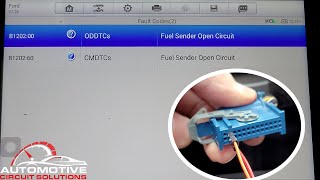
Technical definition: The SAE/ISO definition for B1202 is 'Fuel Sender Circuit Open'. A control module detects a complete break in the signal circuit from the fuel level sending unit. The sender uses a variable resistor that changes resistance based on fuel level; an open circuit represents infinite resistance. Note: Hyundai, Kia, Nissan, and Mazda use B1202 for entirely different systems, such as climate control or airbag sensors.
Can I Drive With B1202?
Yes, But With Caution. You can drive, but the fuel gauge will fail, creating a significant risk of unexpectedly running out of fuel. Running the tank dry starves the electric fuel pump of cooling and lubrication, causing it to overheat and fail—a repair costing $900-$2,100. Furthermore, engine misfires from fuel starvation send unburnt fuel into the exhaust, destroying the catalytic converter. Use the trip odometer to track mileage between fill-ups as a strict temporary measure and fix the code promptly.
Common Causes

- Faulty Fuel Level Sending Unit (Very Common) — The sending unit inside the fuel tank uses a float connected to a variable resistor. Over time, the resistor strip wears out, the float arm breaks, or sulfur contamination degrades the contacts, creating an open circuit.
- Damaged Wiring or Connectors (Common) — The wiring harness running from the fuel tank to the instrument cluster is exposed to road debris and salt. The main connector on top of the fuel pump module frequently corrodes, breaking the electrical connection.
- Faulty Instrument Panel Cluster (IPC) (Common) — On many Ford vehicles, the instrument cluster processes the fuel sender signal directly. Cracked solder joints on the cluster's internal circuit board prevent it from reading the signal, triggering B1202 even if the sender is perfect.
- Corroded In-Tank Connectors (Jaguar Specific) (Less Common) — Jaguar XF and XK models suffer from severe corrosion on the electrical connectors located inside the fuel tank. This interrupts the signal and requires splicing the wires directly to bypass the faulty connectors.
- Faulty Body Control Module (BCM) or Powertrain Control Module (PCM) (Rare) — The module responsible for interpreting the fuel level signal fails internally. Consider this only after exhaustively testing the sender, wiring, and cluster.
Symptoms

- Fuel Gauge Stuck on Empty — The computer interprets the open circuit's infinite resistance as an empty tank, dropping the needle to 'E' and triggering the low fuel light.
- Inaccurate or Erratic Fuel Gauge — The gauge fluctuates wildly or shows dashes on the Distance-to-Empty (DTE) display due to an intermittent open circuit in the wiring or sender.
- Check Engine Light On — The vehicle stores the B1202 code, often accompanied by the generic powertrain code P0463 (Fuel Level Sensor A Circuit High Input).
- 'Fuel Computer Data Error' Message — Ford vehicles often display this specific text warning on the dashboard information center.
- Fuel Level Sensor Voltage at 5V (scan-tool only — no driver-felt sign) — Viewed on a scan tool, the sensor voltage maxes out at 4.9-5.0V because the open circuit prevents the signal voltage from dropping.
Diagnostic Flowchart

Tap your situation to follow the diagnostic path that matches what you're seeing on this code.
Common Fixes & Costs
- Replace Fuel Level Sending Unit / Fuel Pump Module — Parts: $200-$700, Labor: $250-$600, ~2.6 hr book time (Advanced)
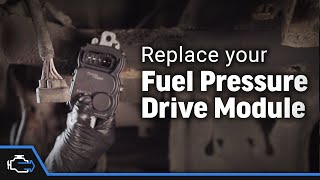
- Replace Fuel Pump Driver Module (FPDM) (Ford) — Parts: $50-$150, Labor: $50-$100, ~0.5 hr book time (Beginner)
- Repair or Replace Instrument Cluster — Parts: $170-$450, Labor: $100-$250, ~1.5 hr book time (Intermediate)
- Repair Damaged Wiring or Connector — Parts: $10-$100, Labor: $150-$400, ~2.0 hr book time (Intermediate)
Used vs. New Parts: Buying Guide
When a used part is worth it: A used fuel pump module from a low-mileage vehicle (under 80,000 miles) is a cost-effective option for older, out-of-warranty vehicles where new OEM parts are cost-prohibitive. Buy from a reputable salvage yard offering a 90-day warranty.
Donor-vehicle mileage cap: roughly under 80000 miles for the part to have meaningful remaining life.
Donor quality checklist:
- Verify the donor vehicle was not scrapped due to a fuel system failure.
- Inspect the electrical connector for corrosion or melted plastic.
- Match the part number exactly, as modules are specific to engine size and year.
Decision logic:
- If The part is a Fuel Pump Driver Module (FPDM) → Buy a new aftermarket 'OE Fix' part (like Dorman 590-001) featuring an improved design to prevent galvanic corrosion.
- If The part is the entire fuel pump assembly and the vehicle is over 10 years old → Buy a quality used part with a 90-day warranty to save 40-70% over new.
- If The part is an instrument cluster → Use a specialized mail-in repair service for your original unit to avoid expensive dealership reprogramming.
Warranty tradeoff: Used parts include a 30-90 day parts-only warranty. New aftermarket parts offer 1-year to lifetime warranties. New OEM parts offer 1-2 year warranties.
Worst-case if a used part fails: $400-$800 for repeat labor to replace a faulty used part.
What Happens If You Wait — Timeline
- 0-1 month: Code B1202 is set. The fuel gauge drops to empty, the low fuel light comes on, and the Distance-To-Empty display shows dashes. The driver must now guess the fuel level. (MPG impact: 0%% · Added cost: $0)
- 1-3 months: The first instance of running out of fuel occurs. This starves the fuel pump of cooling and lubrication, causing a temporary overheat. The driver requires towing or roadside assistance. (MPG impact: 0%% · Added cost: $100-$300)
- 3-6 months: Repeatedly running the tank low causes accelerated wear on the fuel pump. The pump starts to whine or struggle to maintain pressure, leading to hesitation or hard starts. (MPG impact: 0-5%% · Added cost: $300-$500)
- 6+ months: Catastrophic failure. A severe fuel starvation event causes the fuel pump to seize. The resulting engine misfires send unburnt fuel into the exhaust, melting the catalytic converter. (MPG impact: N/A% · Added cost: $1,700-$4,600)
Cost of Not Fixing It
- Immediate: Significant risk of being stranded due to an unreliable fuel gauge. (Added cost: $100-$300 for towing and emergency fuel delivery.)
- 1-3 Months: Premature fuel pump wear. Running the tank low causes the fuel pump to overheat and lose lubrication. (Added cost: $900-$2,100 for fuel pump replacement.)
- 3+ Months: Catalytic converter damage. Fuel starvation causes engine misfires, sending unburnt fuel into the exhaust and melting the converter substrate. (Added cost: $800-$2,500 for catalytic converter replacement.)
Diagnosis Steps

- Scan Codes and Identify the Module
Use an OBD-II scanner to confirm B1202 and note which module stored it (IPC, BCM, PCM). Diagnose any U-series communication codes first, as they indicate a network failure rather than a fuel system fault.
Tools: Manufacturer-Specific OBD-II Scanner (Beginner) - Perform an Instrument Cluster Self-Test
Activate the cluster diagnostic mode (usually by holding the trip button while turning the key 'ON'). If the fuel gauge needle sweeps smoothly, the gauge motor works, pointing the fault to the sender, wiring, or cluster logic board.
Tools: Vehicle Key (Beginner) - Test Fuel Level Sender Resistance at the Tank
Disconnect the fuel sender connector at the tank. Measure resistance across the signal and ground pins. An open circuit shows 'OL' (infinite resistance), condemning the sender. Normal readings vary (e.g., 40-250 Ohms for GM).
Tools: Digital Multimeter, Wiring Diagram (Intermediate) - Test Sender Resistance at the Instrument Cluster
If tank resistance is good, measure resistance between the fuel sender signal and ground pins at the back of the instrument cluster. An 'OL' reading here indicates a broken wire in the harness between the dash and the tank.
Tools: Digital Multimeter, Trim Removal Tools, Wiring Diagram (Advanced) - Visually Inspect the Fuel Tank Wiring Harness
Trace the wiring from the tank forward. Look for chafing, melted insulation, or severe corrosion, especially at the main connector on top of the fuel pump module.
Tools: Flashlight, Inspection Mirror (Beginner) - Check Reference Voltage and Ground
With the sender unplugged and key on, verify 5V or 12V reference voltage on the signal wire and less than 0.1V on the ground circuit. Missing voltage points to a wiring or control module fault.
Tools: Digital Multimeter (Intermediate) - Analyze Scan Tool Live Data
View the 'Fuel Level Sensor Voltage' PID. A B1202 open circuit typically shows a maxed-out voltage (e.g., 5.0V). A 0V reading indicates a short to ground or loss of power.
Tools: Advanced OBD-II Scanner (Advanced)
When This Code Triggers (Freeze-Frame Conditions)
- Fuel System Status: Closed Loop (The engine is fully warmed up and using O2 sensor data for fuel control.)
- Engine RPM: 700-2500 RPM (The code triggers at idle or during steady-state cruise.)
- Vehicle Speed: 0 - 65 mph (Fault is detected while stationary or driving.)
- Module Voltage: 11.0 - 16.5V (The vehicle's electrical system operates at normal voltage.)
Related Codes
- P0463 — 'Fuel Level Sensor A Circuit High Input.' The generic powertrain equivalent of B1202. Seeing B1202 in the cluster and P0463 in the PCM strongly indicates a communication issue, often caused by a faulty cluster.
- B1204 — 'Fuel Sender Short to Ground.' The direct opposite of B1202. A short to ground causes the gauge to read Full, while an open circuit causes it to read Empty.
- P0462 — 'Fuel Level Sensor A Circuit Low Input.' The powertrain equivalent of a short-to-ground code like B1204.
- U0155 — 'Lost Communication With Instrument Panel Cluster.' Diagnose this U-code first. It indicates a network failure, meaning the B1202 is just a symptom of the cluster being offline.
Climate & Environmental Factors
- Road Salt (Winter Climates): Road salt creates an electrolyte solution that attacks wiring harnesses and electrical connectors. It degrades wire insulation and corrodes metal pins, creating the open circuit that triggers B1202.
- Galvanic Corrosion: Occurs when two dissimilar metals contact in the presence of an electrolyte. The Ford F-150's original aluminum FPDM mounted directly to a steel frame is a prime example, causing the aluminum to corrode and fail.
- High Humidity: Sustained high humidity promotes moisture intrusion into poorly sealed electrical connectors, leading to pin corrosion over time.
How to Talk to a Mechanic About This Code
Say this: "I have a B1202 code and my fuel gauge is stuck on empty. I'd like to book a diagnostic appointment. Can you please test the resistance of the fuel sending unit at the tank and at the instrument cluster to determine if the fault is the sender, the wiring, or the cluster itself?"
This signals that you understand the different failure points and prevents a shop from immediately quoting a costly fuel pump replacement. It directs them to perform a specific, logical diagnostic procedure.
Avoid saying:
- 'My fuel gauge is broken, how much for a new fuel pump?'
- 'My check engine light is on, can you look at it?'
- 'Just fix whatever's wrong.'
Questions to ask before authorizing the repair:
- What was the Ohm reading at the sending unit connector versus the reading at the instrument cluster connector?
- If you are recommending a fuel pump replacement, can you show me the 'OL' (Open Line) reading on the multimeter from the old part?
- If the sending unit and wiring tested good, have you checked for Technical Service Bulletins related to instrument cluster failures for this model?
- What is the warranty on the recommended parts and labor?
Where to Take It: Dealer vs Independent vs Chain
- Dealer:
Recommended only if the vehicle is under warranty or has a complex, known TSB that an independent shop may not be equipped to handle.
Best for: Vehicles under warranty., Known manufacturer-specific issues covered by a TSB (like on a Jaguar)., Complex electrical issues requiring proprietary module programming.
Downsides: Highest labor rates, often 1.5-2x more than independent shops., May recommend replacing an entire expensive assembly instead of sending it for repair. (Typical cost: +50% vs. baseline) - Independent Shop:
Best fit for most B1202 repairs. An experienced independent technician efficiently diagnoses wiring, sender, or module faults without the high dealer cost.
Best for: Out-of-warranty vehicles where cost is a factor., Common failures on domestic brands (like a Ford FPDM or GM sending unit)., Electrical diagnostics, provided the shop has ASE-certified technicians specializing in electronics.
Downsides: Diagnostic equipment and technician skill vary widely., May not have access to the very latest manufacturer software for brand-new models. (Typical cost: +0% vs. baseline) - Chain Shop:
AVOID for initial diagnosis. The risk of a costly misdiagnosis is high. Only use if you are 100% certain a simple, accessible part is the cause.
Best for: Simple, straightforward part replacements like a Ford FPDM if you have already diagnosed the problem yourself.
Downsides: Technicians lack the deep diagnostic experience needed to differentiate between a sender, wiring, or cluster fault., High pressure to sell parts leads to misdiagnosis and unnecessary replacement of the entire fuel pump assembly. (Typical cost: -10% vs. baseline)
When to Walk Away From the Repair
If the estimated repair cost exceeds 40-50% of the car's private-party value (check Kelley Blue Book), it's often time to consider selling or scrapping the vehicle.
- Car worth $4000, fix is $2100: Walk away. The repair cost is over 50% of the car's value.
- Car worth $12000, fix is $1100: Fix it. The repair is well below the threshold and restores a critical function.
- Car worth $2500, fix is $950: Borderline. At nearly 40% of the vehicle's value, get a second opinion before proceeding. Consider if the car has other upcoming needs.
What Scan Tool You Need for This Code
Minimum: A scanner that reads manufacturer-specific Body ('B') codes and displays live data for the fuel system.
A basic $20 code reader only shows the generic P0463 code or no code at all. It cannot read the B1202 code from the instrument cluster, nor can it confirm the specific definition for your vehicle (fuel vs. HVAC/airbag). This leads to complete misdiagnosis.
Budget: BlueDriver Pro (~$90) — Connects to a smartphone app and reads enhanced codes (ABS, Airbag, B-codes) for most major brands. It allows you to view live data, such as Fuel Level Sensor Voltage, which is critical for diagnosing an open circuit.
Mid-range: Foxwell NT510 Elite / Autel MaxiCOM MK808 (~$180-350) — These handheld units offer deep manufacturer-specific diagnostics. They reliably read B-codes from the correct module (IPC/BCM), provide extensive live data graphing, and offer bidirectional controls to perform an instrument cluster self-test.
Professional: Autel MaxiSys Series / Launch X431 Series (~$500-1200) — Professional-level tools with full bidirectional control to actuate components, access to OE-level information and TSBs, and advanced functions like module coding necessary if an instrument cluster needs replacement.
Rent vs buy: Many AutoZone stores read codes for free or offer a 'loan-a-tool' program where you pay a refundable deposit for a scanner. Ensure the loaner tool reads manufacturer-specific 'B' codes.
How to Clear the Code After You Fix It
- Reconnect all disconnected components (e.g., battery, fuel pump connector).
- Use a compatible OBD-II scan tool to erase B1202 and related codes (like P0463).
- Perform a complete drive cycle to allow the vehicle's readiness monitors to run self-tests.
Drive cycle (~20 minutes): A general drive cycle includes: 1) Cold start (engine temp below 122°F). 2) Idle for 3 minutes. 3) Drive at a steady 55 mph for 10 minutes. 4) Perform stop-and-go city driving. 5) Coast down without aggressive braking. The fuel tank must be between 15% and 85% full for the EVAP monitor to run.
Readiness monitors affected: Evaporative System (EVAP), Catalyst (CAT), Oxygen Sensor (O2S)
Before emissions retest: drive at least 50 miles to fully set monitors.
Watch out for:
- Clearing the code resets readiness monitors to 'Not Ready', causing an immediate emissions test failure.
- The code returns instantly if the underlying open circuit is not repaired.
- The EVAP monitor requires multiple drive cycles over several days to set.
Will This Fail Emissions / State Inspection?
Yes — this code typically fails an OBD-II emissions inspection.
- California: An active Check Engine Light from the companion P0463 code is an automatic failure. You must complete a full drive cycle to set all readiness monitors before re-testing.
- New York: An illuminated Check Engine Light results in an automatic failure of the OBD-II emissions test.
- Texas: In the 17 counties requiring emissions testing, an active P0463 code causes an automatic failure.
Most Commonly Affected Vehicles
- Ford F-150 (2004-2008) — Highly prone to Fuel Pump Driver Module (FPDM) galvanic corrosion and internal instrument cluster solder joint failures. Always check the FPDM first.
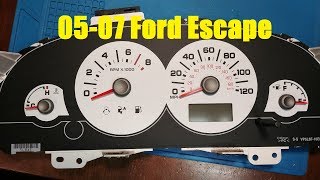
- Ford Escape (2008-2012) — Notorious for internal instrument cluster failures causing B1202 and P0463 codes. The fuel sending unit and wiring are almost always good.
- Jaguar XF, XK (2010-2012) — Commonly triggers B1202 due to corrosion on the in-tank fuel pump module's electrical connectors. TSB JTB-00220NAS2 recommends splicing wires directly.
- Chevrolet / GMC Silverado 1500, Sierra 1500 (1999-2007) — Notorious for fuel level sending unit failures where the resistor contacts wear out. GM issued Special Coverage Adjustment 10054D for some 2005-2007 models.
- Nissan Titan, Armada, Frontier (2005-2009) — Subject to safety recall 10V074000 for a faulty fuel level sending unit causing inaccurate readings and unexpected stalling.
- Subaru Outback (2010-2014) — Uses two fuel level sensors (main and sub-gauge). Failure of either causes inaccurate readings and triggers codes.
- Jeep Wrangler (YJ) (1987-1995) — The fuel sending unit is a very common failure item due to age. Replacement units often require modification to fit correctly.
Manufacturer-Specific Notes
- Ford: The Instrument Panel Cluster (IPC) is an active control module. A B1202 code is very often caused by an internal failure of the cluster's circuit board (cracked solder joints), not the sending unit.
- Jaguar: The most common cause on models like the XF is corrosion on the electrical connectors inside the fuel tank. The TSB fix eliminates the connectors entirely by splicing the wires directly.
- Hyundai / Kia: B1202 is NOT a fuel system code. It means 'Heater Water Temperature Sensor Open (High)'. The A/C control module sets this code if the sensor signal is over 4.9V.
- Nissan: On some models, B1202 refers to a fault in the 'Diagnosis Sensor Unit' related to the SRS (Airbag) system.
- Mazda: On certain models, B1202 is defined as 'Front-Rear Adjustment, Motor 1 (M1+). Signal Missing', relating to the power seat control module.
Real Owner Stories
2007 Ford F-150 at 155K miles - The Easy Fix
Owner experienced intermittent fuel gauge dropping to empty, sometimes accompanied by the truck cranking but not starting. Eventually, the truck wouldn't start at all.
What they tried:
- Initially ignored the intermittent gauge issue.
- When the truck failed to start, they researched forums and found information about the Fuel Pump Driver Module (FPDM).
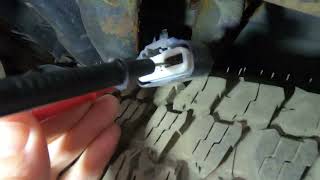
Outcome: Inspected the FPDM located on the frame rail above the spare tire and found it was severely corroded and cracked. Replaced the FPDM with a Dorman 590-001 unit, which includes spacers to prevent direct contact with the steel frame. The total repair took less than 30 minutes and cost under $100. The truck started immediately, and the fuel gauge returned to normal operation.
Lesson: On 2004-2008 Ford F-150s, the FPDM is a notorious failure point due to galvanic corrosion. Check this inexpensive and easy-to-replace part first before suspecting the in-tank fuel pump.
2008 Ford Escape at 120K miles - A Misdiagnosis Story
Fuel gauge suddenly dropped to empty, low fuel light came on, and the dash displayed 'Fuel Computer Data Error'. The code reader showed B1202 and P0463.
What they tried:
- Believing it was a standard fuel system problem, the owner paid a shop $700 to replace the entire in-tank fuel pump and sending unit assembly.
- The problem returned the very next day.
Outcome: After further research online, the owner discovered the common instrument panel cluster (IPC) failure on this model. Instead of going back to the first shop, they removed the cluster themselves and sent it to a mail-in electronics repair service for $180. The service repaired cracked solder joints on the cluster's circuit board. After reinstalling the repaired cluster, the fuel gauge worked perfectly and the codes were cleared.
Lesson: On many Ford vehicles from the 2000s, the IPC is an active module. A B1202/P0463 combination is very frequently an internal cluster fault, not a problem with the sending unit in the tank.
2011 Jaguar XF at 95K miles - The Unusual Root Cause
The fuel gauge became erratic and then failed completely, reading empty and triggering code B1202.
What they tried:
- The owner's mechanic initially quoted a price for a new fuel pump/sender assembly, assuming the sender had failed.
- The owner, after reading Jaguar-specific forums, learned about a Technical Service Bulletin (TSB JTB-00220NAS2) for this exact issue.
Outcome: The TSB indicated that the problem was not the sending unit itself, but corrosion on the small electrical connectors inside the fuel tank. The official fix is to access the fuel pump assembly, remove the faulty connectors, and splice the wires directly using special crimps and seals. The repair was labor-intensive but only required a few dollars in splicing materials, saving the owner from buying a $500+ fuel pump assembly.
Lesson: Manufacturer-specific TSBs are an invaluable resource. For certain Jaguar models, an in-tank wiring issue is the most common cause of B1202. Always check for TSBs before authorizing expensive part replacements.
How to Prevent This Code From Triggering
- Keep the fuel tank at least 1/4 full. (Daily habit) — The electric fuel pump relies on surrounding gasoline to cool and lubricate its motor. Consistently running the tank near empty causes the pump to overheat, leading to premature failure.
- Use a quality fuel system cleaner with Polyetheramine (PEA). (Every 5,000 miles or as directed.) — High-sulfur fuels leave deposits on the delicate resistor card of the fuel sending unit, causing erratic readings. A PEA-based cleaner dissolves these deposits and restores proper function.
- Apply dielectric grease to connectors. (When replacing parts or performing other maintenance.) — Applying a thin layer of dielectric grease into the connector body seals out moisture and oxygen, preventing the corrosion that leads to open circuits.
- Inspect and modify the FPDM on Ford F-150s (2004-2008). (Once, proactively.) — The original design mounts the aluminum FPDM directly to a steel frame member, causing severe galvanic corrosion. Proactively replacing it with a new module that includes rubber standoffs prevents this failure.
Frequently Asked Questions
My scanner shows B1202, but my car isn't a Ford or Jaguar. What does it mean?
Always verify the code definition for your specific vehicle. For Hyundai/Kia, B1202 is a 'Heater Water Temperature Sensor' fault, and for some Nissans, it's an airbag code. Using a generic code reader causes complete misdiagnosis.
Can I just replace the sending unit, or do I need the whole fuel pump assembly?
This depends entirely on the vehicle. Older trucks often have a separate sending unit, but most modern cars integrate it into the fuel pump module, requiring full assembly replacement. Either way, you must drop the fuel tank or access it under the rear seat.
Why does my fuel gauge drop to empty only when I hit a bump?
This indicates an intermittent open circuit. A loose connector, chafed wire, or a 'dead spot' on the sending unit's resistor momentarily breaks the connection when jostled. Wiggle the wiring harness while testing resistance to pinpoint the break.
Can I fix a B1202 code myself?
Replacing a Ford FPDM is a simple 30-minute beginner task. However, replacing a fuel pump module is a high-risk advanced job due to gasoline vapors and the physical difficulty of dropping a fuel tank. Stop DIY and go to a shop if you lack a safe way to drain and lower the tank.
Can bad gas cause a B1202 code?
Yes, high-sulfur fuel leaves deposits on the sender's resistor card, causing erratic readings or an open circuit. Before replacing parts, add a bottle of PEA-based fuel system cleaner (like Techron) to a full tank of high-quality gas. This often dissolves the deposits and restores the gauge.
Will my car fail an emissions inspection with a B1202 code?
Yes, in most states. While B1202 is a Body code, it almost always triggers the Powertrain code P0463, which illuminates the Check Engine Light and causes an automatic failure. Furthermore, emissions monitors require the fuel tank to be between 15% and 85% full to run, which the computer cannot verify.
How do I drive my car safely if the fuel gauge doesn't work?
Use your trip odometer as a strict temporary workaround. Reset it to zero every time you fill the tank completely, and refuel at 75% of your known maximum range (e.g., every 250 miles if your range is 350). Fix the issue promptly to avoid destroying your fuel pump.
Key Takeaways
- Code B1202 indicates a complete break in the fuel level sensor circuit, causing the dashboard fuel gauge to instantly drop to empty.
- For 2004-2008 Ford F-150s, inspect the $60 Fuel Pump Driver Module above the spare tire before assuming the in-tank fuel pump has failed.
- Never ignore a broken fuel gauge; running the tank dry overheats the electric fuel pump, turning a minor electrical issue into a $1,500 repair.
- Verify the B1202 definition for your specific make, as Hyundai, Kia, and Mazda use this exact code for unrelated climate control or power seat failures.
Helpful Videos


The information in this article is provided for general reference and educational purposes only. Vehicle specifications, procedures, and part compatibility can vary by production date, trim level, and region. Always consult your vehicle's factory service manual and verify part numbers before purchasing or performing repairs. Safety-critical components such as airbags, seat belts, and braking systems should be installed by a qualified professional.
- 🎬 Helpful Videos
- What Does B1202 Mean?
- Can I Drive With B1202?
- Common Causes
- Symptoms
- Diagnostic Flowchart
- Common Fixes & Costs
- Used vs. New Parts: Buying Guide
- What Happens If You Wait — Timeline
- Cost of Not Fixing It
- Diagnosis Steps
- When This Code Triggers (Freeze-Frame Conditions)
- Related Codes
- Climate & Environmental Factors
- How to Talk to a Mechanic About This Code
- Where to Take It: Dealer vs Independent vs Chain
- When to Walk Away From the Repair
- What Scan Tool You Need for This Code
- How to Clear the Code After You Fix It
- Will This Fail Emissions / State Inspection?
- Most Commonly Affected Vehicles
- Manufacturer-Specific Notes
- Real Owner Stories
- 2007 Ford F-150 at 155K miles - The Easy Fix
- 2008 Ford Escape at 120K miles - A Misdiagnosis Story
- 2011 Jaguar XF at 95K miles - The Unusual Root Cause
- How to Prevent This Code From Triggering
- Frequently Asked Questions
- My scanner shows B1202, but my car isn't a Ford or Jaguar. What does it mean?
- Can I just replace the sending unit, or do I need the whole fuel pump assembly?
- Why does my fuel gauge drop to empty only when I hit a bump?
- Can I fix a B1202 code myself?
- Can bad gas cause a B1202 code?
- Will my car fail an emissions inspection with a B1202 code?
- How do I drive my car safely if the fuel gauge doesn't work?
- Key Takeaways
- 🎟️ Get 5% Off