

OBD-II Code B1192: Varies by Manufacturer (Battery Sensor, Airbag, or Power Fault)
What B1192 means, why it triggers, and how to fix it on different vehicles
- Identify your specific manufacturer's definition first, as B1192 means a battery sensor failure on a Honda but indicates an unexpected power loss on a Land Rover.
- Replace the negative terminal battery sensor on 2013-2017 Hondas and Acuras before replacing the alternator, as this $130 part causes over 80% of B1192 charging system warnings.
- Stop driving immediately if B1192 triggers an airbag warning light, because the Supplemental Restraint System is disabled and will not deploy in a crash.
- Check the 7.5A Battery Management System fuse and inspect the negative battery terminal for corrosion before buying any replacement parts.
- Perform a Battery Management System (BMS) reset with a bidirectional scan tool after replacing the battery on BMW, Ford, or Land Rover vehicles to clear B1192 and prevent alternator damage.
What Does B1192 Mean?

Code B1192 means different things depending on the vehicle brand. For Honda and Acura, it signals the instrument cluster (Gauge Control Module) lost contact with the battery sensor over a communication wire. For Land Rover, the computer detected a sudden loss of battery power. On Chevrolet, it points to an audio system problem, while on other makes it indicates a fault in the airbag system.
Technical definition: Definitions vary strictly by manufacturer. Common definitions include: Honda/Acura: Gauge Control Module Lost Communication with the Battery Sensor. Land Rover: Battery disconnection installation control. Chevrolet: Audio Output Circuit #17 Low Voltage.
Can I Drive With B1192?
Yes, But With Caution. You can drive the vehicle, but limit trips to reaching a repair shop. If the code relates to an airbag fault, the airbags will not deploy in an accident, making the vehicle unsafe. If it relates to the charging system, you risk being stranded with a dead battery, causing premature alternator wear (a $400-$800 repair), or damaging sensitive electronics from voltage instability.
Common Causes

- Faulty Battery Sensor (Honda/Acura/Hyundai) (Very Common) — The battery sensor on the negative terminal fails frequently on modern Honda, Acura, and Hyundai vehicles, causing this code. This sensor manages the smart charging system and fails from internal faults or moisture intrusion, an issue documented in Honda TSB 17-057.
- Improper Battery Disconnection or Replacement (Common) — On Land Rovers, B1192 sets if the battery is disconnected without a memory saver tool, or if power interrupts unexpectedly. On BMWs, forgetting to reconnect the Intelligent Battery Sensor (IBS) after a battery change causes an immediate fault.
- Damaged Wiring Harness or Connector (Common) — The wires connecting the battery sensor to the car's computer (often a single LIN bus wire) fray, corrode, or break. The sensor's plastic connector also becomes brittle and cracks, causing a poor connection.
- Loose or Corroded Battery Terminals (Common) — A poor connection at the battery posts causes voltage drops and communication errors between modules, triggering this code. This is the foundational check for any electrical issue.
- Blown Fuse (Less Common) — A blown fuse for the Battery Management System (BMS) or the Gauge Control Module interrupts the circuit. On a Honda Odyssey or MDX, this is typically a 7.5A fuse in the under-hood fuse box.
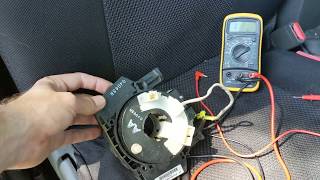
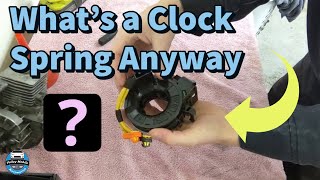
- Faulty Airbag System Component (Less Common) — On specific vehicles, a B-code in this range indicates a fault in the Supplemental Restraint System (SRS). A common failure is the clock spring in the steering wheel or a faulty seat belt pretensioner.
- BCM Software Glitch or Corruption (Rare) — After a battery drain or jump-start, the Body Control Module's memory corrupts, setting false communication codes. A hard reset of the module is required.
- Faulty Gauge Control Module (Rare) — If the battery sensor, wiring, and fuses are confirmed good, the gauge control module (instrument cluster) has an internal fault (like a bad LIN transceiver) preventing communication.
Symptoms

- Battery Drains or Won't Charge Properly — A failed battery sensor forces the alternator to charge incorrectly, leading to an undercharged or overcharged battery. This shortens battery life and strains the alternator.
- Loss of Electronic Memory — Radio presets, clock settings, and seat memory positions are lost after restarting the car, pointing to a recent power loss—a common trigger for this code on Land Rovers.
- Failure of Other LIN Bus Components — On systems where multiple components share a LIN bus (like Honda), a fault on the wire causes steering wheel control buttons or other connected features to stop working.
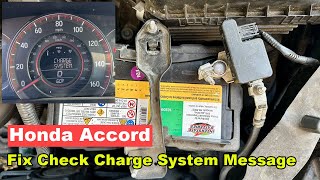
- 'Check Charging System' Message (also visible on scanner) — On Honda and Acura vehicles, this message appears on the dashboard display, leading many to incorrectly replace the alternator. 🎬 Watch: How to fix the Honda 'Check Charge System' message.
- Airbag / SRS Warning Light On (also visible on scanner) — An illuminated airbag light means the airbag system is disabled and will not deploy in an accident. This is an automatic MOT/state inspection failure.
- Flashing or Steady Battery Light (also visible on scanner) — On vehicles like the Hyundai Elantra, the battery light flashes intermittently even if the system charges correctly. A steady light indicates a constant fault.
- Auto Start/Stop System Disabled (also visible on scanner) — On modern vehicles with a Battery Monitoring System (BMS), a sensor fault disables the fuel-saving auto start/stop feature as a precautionary measure.
Diagnostic Flowchart
Tap your situation to follow the diagnostic path that matches what you're seeing on this code.
Common Fixes & Costs
- Replace Battery Sensor
— Parts: $50-$130, Labor: $60-$150, ~0.5 hr book time
(DIY)
: OEM
: OEM - Reset BCM / Clear Codes — Parts: $0, Labor: $0-$150, ~0.3 hr book time (DIY)
- Replace Negative Battery Cable with IBS (BMW)
— Parts: $250-$320, Labor: $150-$300, ~1.5 hr book time
(Professional)
: OEM - Replace Airbag Clock Spring — Parts: $50-$450, Labor: $100-$200, ~1.5 hr book time (Intermediate)
- Repair Damaged Wiring or Connectors — Parts: $5-$50, Labor: $120-$360, ~2 hr book time (Professional)
Used vs. New Parts: Buying Guide
When a used part is worth it: Buying a used battery sensor is not recommended. The failure is due to age and moisture intrusion, and a used part carries the same risks. For a clock spring, a used OEM part from a low-mileage, non-accident vehicle is a viable budget option.
Donor-vehicle mileage cap: roughly under 50000 miles for the part to have meaningful remaining life.
Donor quality checklist:
- For a clock spring, verify the donor vehicle was not in a front-end collision.
- Match the part number exactly; do not rely on visual similarity.
- Avoid buying used electronic sensors, as their failure mode is internal and age-related.
Decision logic:
- If The part is a Honda/Acura battery sensor. → Buy a new OEM or high-quality aftermarket part. The original design was flawed, and a new part is improved.
- If The part is an airbag clock spring and budget is the top priority. → A used OEM part is preferable to a cheap, no-name new aftermarket part.
- If The part is safety-critical (e.g., clock spring). → New OEM is the safest choice to ensure proper function of the airbag.
Warranty tradeoff: Used parts from salvage yards typically have a 30-90 day warranty. New aftermarket parts carry a 1-year to limited lifetime warranty. New OEM parts have a 1-year warranty.
Worst-case if a used part fails: $200-$500 if a used part fails after installation, requiring repeat labor costs.
What Happens If You Wait — Timeline
- 0-1 month: Code B1192 is set. 'Check Charging System' light appears intermittently. Auto Start/Stop feature is disabled. No other perceptible symptoms. (MPG impact: 0-2%% · Added cost: $0)
- 1-4 months: The charging system defaults to a constant, non-variable charging rate (around 14.4V). This overcharges the battery on long drives. The battery feels hot to the touch after driving. (MPG impact: 2-5%% · Added cost: $50-100 in wasted fuel and accelerated battery wear.)
- 4-12 months: Chronic overcharging or undercharging destroys the battery, requiring replacement. The alternator operates under constant load, accelerating wear on its internal voltage regulator and bearings. (MPG impact: 5-10%% · Added cost: $200-$400 for a new battery, plus potential towing costs.)
- 12+ months: The alternator fails from prolonged stress. The vehicle runs only on battery power and stalls within 30-60 minutes. Sustained voltage instability damages other sensitive electronics. (MPG impact: N/A (Vehicle may not run)% · Added cost: $600-$1200+ (New battery and alternator). Potential for $1500+ if other modules were damaged.)
Cost of Not Fixing It
- Immediate: If related to an airbag fault, the SRS system is disabled. This is a critical safety failure. (Added cost: N/A)
- 0-3 months: If related to the charging system, the battery is chronically undercharged or overcharged, significantly shortening its life. You risk being stranded. (Added cost: $150-$400 for a new battery and towing.)
- 3-12 months: A constantly failing battery sensor forces the alternator to work inefficiently, leading to premature failure of the alternator. (Added cost: $400-$800 for alternator replacement.)
- 6+ months: Sustained voltage instability from an unmanaged charging system damages sensitive electronic modules throughout the vehicle. (Added cost: $500-$2000+ for module replacement (e.g., BCM, PCM).)
Diagnosis Steps

- Identify Your Vehicle's System
Search your car's make, model, and 'B1192' to determine if you are dealing with a battery system issue (Honda), a power loss event (Land Rover), or an audio fault (Chevrolet).
Tools: Internet access (Beginner) - Inspect Battery Terminals and Sensor Connection
Verify the battery terminals are clean and tight. Check the negative terminal for a small electronic sensor; ensure its plug is secure and the wires are intact.
Tools: Wrench set, wire brush, safety glasses (Beginner) - Check Related Fuses
Locate the fuse box using your owner's manual. Check fuses related to the Battery Management System (BMS), instrument cluster, and airbag system (SRS). For Honda/Acura, check the 7.5A fuse in the under-hood fuse box.
Tools: Owner's manual, fuse puller or needle-nose pliers (Beginner) - Test the Battery and Alternator
Batteries that appear fine often fail under load. Have an auto parts store test your battery and alternator for free to rule out the foundational electrical system.
Tools: Multimeter (optional), or visit to an auto parts store (Beginner) - Perform a BCM Hard Reset
Disconnect the negative, then the positive battery cable. Touch the two cable ends together for 30 seconds (away from the battery) to drain residual power from the modules. Reconnect the positive, then the negative cable. This clears temporary software faults.
Tools: Wrench set (Intermediate) - Inspect Wiring Harnesses
Visually trace the wires from the battery sensor or under the seats (for airbag wiring). Look for chafing, melting, or corrosion on the connectors. Unplug and replug connectors under the seats to ensure a tight fit.
Tools: Flashlight (Intermediate) - Pro Tip: LIN Bus Voltage Analysis with Multimeter
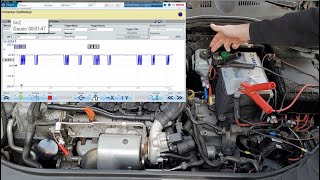
For Honda/Acura/GM, test the LIN communication wire at the battery sensor connector. Set a multimeter to DC Volts and Peak Min/Max. A healthy LIN bus toggles rapidly, showing a MAX voltage around 11-12V and a MIN voltage around 1V. A steady 12V means the sensor is not communicating. A steady 0V indicates a short to ground.
Tools: Multimeter with Min/Max function, vehicle-specific wiring diagram (Advanced) - Pro Tip: Isolate the Faulty Component on the LIN Bus
Disconnect the master module (e.g., Gauge Cluster) and all slave devices from the bus. Plug in one device at a time and check for the ~12V reference voltage on the LIN wire. The device that fails to produce voltage or brings the voltage down is the culprit.
Tools: Multimeter, wiring diagram, trim removal tools (Advanced) - Advanced: Check Scan Tool Live Data PIDs
Monitor live data PIDs related to the Battery Management System. Watch 'Battery State of Charge (SOC)' (>80% on a healthy battery), 'Battery Current' (negative with engine off, positive when charging), and 'Battery Temperature'. Static values (e.g., -40°F temperature) confirm a failed sensor.
Tools: Professional OBD-II scan tool with live data capability (Advanced) - Advanced: Wiring Continuity and Resistance Check
Disconnect the battery sensor and the corresponding module. Set a multimeter to Ohms (Ω). Check the continuity of the LIN bus wire from end to end (should be <1.0 Ω). Check for a short to ground by measuring resistance between the LIN wire and a chassis ground; the reading should be OL (Open Line).
Tools: Multimeter, vehicle-specific wiring diagram (Advanced)
When This Code Triggers (Freeze-Frame Conditions)
- Engine Coolant Temp: 180-200°F (The fault sets after the vehicle is fully warmed up and has been running for some time.)
- RPM: 1200-2500 (The code triggers during normal driving conditions, not necessarily at high RPM or idle.)
- Engine Load: 20-50% (Occurs under light to moderate engine load, consistent with steady cruising.)
- Vehicle Speed: 30-60 mph (Sets during city or highway cruise, where the charging system is actively managed.)
Related Codes
- P16E3 — A powertrain code for a 'Battery Sensor LIN Communication Error.' It is the exact same fault as B1192, but reported by the Powertrain Control Module (PCM) instead of the Gauge Control Module. Seeing them together confirms a battery sensor circuit failure.
- B1193 — On Acura/Honda, 'Lost Communication with Steering Switch' appears with B1192 because the battery sensor and steering switches share the same LIN bus circuit. A fault on the shared wire causes both codes.
- B11DB-87 — On Land Rover models, this 'Battery Monitoring System Fused Harness' fault points specifically to a blown inline fuse link near the positive battery terminal.
- U0111 — A generic 'Lost Communication With Battery Energy Control Module' network code. It confirms the main computer cannot get a signal from the battery sensor.
Climate & Environmental Factors
- Moisture and Humidity: Moisture intrusion is the primary cause of failure for the Honda/Acura battery sensor. Honda TSB 17-057 notes the original sensor case was not adequately sealed, allowing rain or humidity to short-circuit the internal electronics.
- Cold Weather: Cold temperatures reduce a battery's chemical efficiency by up to 30%, forcing the charging system to work harder. This increased electrical load exposes a weak or failing sensor, triggering the B1192 code during winter.
- Road Salt and Corrosion: Road salt accelerates the degradation of the battery sensor's connector and wiring. Salt spray corrodes the connector pins, leading to high resistance or a complete loss of communication.
How to Talk to a Mechanic About This Code
Say this: "I have a [Make/Model] with a 'Check Charging System' light and a B1192 code. I'd like to schedule a one-hour diagnostic to confirm the cause. On my Honda, I suspect the battery sensor is the issue, not the alternator. On my BMW/Land Rover, I believe it needs a BMS reset or battery registration after a recent battery change."
This language shows you've done your research and guides the mechanic toward the most likely, and often cheapest, fix. It prevents them from immediately quoting an expensive alternator replacement on a Honda or overlooking a simple software reset on a European car.
Avoid saying:
- My battery light is on, I think I need a new alternator.
- My car is acting weird, can you just fix it?
- I read on a forum that it's the sensor, just replace that part.
Questions to ask before authorizing the repair:
- What was the result of the battery and alternator load test?
- For a Honda: Did you test the LIN bus voltage at the battery sensor? What did you find?
- For a BMW/Land Rover: Do you have the equipment to perform a battery registration or BMS reset? Is that included in the labor cost?
- Can you show me the failed part and explain why it has failed?
- What is the warranty on the parts and labor for this repair?
Where to Take It: Dealer vs Independent vs Chain
- Dealer:
Recommended for BMW/Land Rover owners who need a battery registration, or if the vehicle is under warranty.
Best for: Vehicles under warranty., Complex electrical issues on German brands (BMW, Audi) that require battery registration or specific software updates., Recalls and Technical Service Bulletin (TSB) related work, like the Honda battery sensor recall.
Downsides: Typically the highest labor rates., Less willing to perform smaller repairs (like a wire fix) and more likely to suggest replacing a full assembly. (Typical cost: +50% vs. baseline) - Independent Shop:
Best fit for most common instances of this code, especially on Honda/Acura. Find an indie that specializes in your car's brand.
Best for: Out-of-warranty vehicles with common, well-documented issues like the B1192 on a Honda Accord., Owners who have a trusted relationship with a local mechanic., General electrical diagnosis and part replacement.
Downsides: Quality and expertise vary widely; a shop that doesn't specialize in your brand lacks the specific tools for issues like BMS resets., May not have immediate access to OEM parts. (Typical cost: +0% vs. baseline) - Chain Shop:
AVOID for diagnosing B1192. While they test a battery for free, do not authorize repair based on their diagnosis alone. They are not equipped for the software-related aspects of this code.
Best for: Simple, clear-cut part replacements where diagnosis is not required., Free battery and alternator testing.
Downsides: Technicians lack the deep diagnostic experience for complex electrical or manufacturer-specific codes., Unlikely to have the necessary software for BMW/Land Rover battery registration or BMS resets. (Typical cost: -10% vs. baseline)
When to Walk Away From the Repair
If the estimated repair cost exceeds 50% of the car's private-party value (use Kelley Blue Book or Edmunds), consider selling or trading it in. For older cars (>150,000 miles), this threshold is lower, around 40%.
- Car worth $4500, fix is $600: Fix it. A $600 repair for a BMW IBS cable replacement is well below the 50% threshold ($2250) and restores critical functionality.
- Car worth $8000, fix is $250: Fix it. A $250 repair for a Honda battery sensor is a small investment to keep a reliable car on the road.
- Car worth $3000, fix is $1800: Walk away. If the B1192 code is part of a larger electrical issue requiring extensive wiring repair or module replacement, the cost is over the 50% threshold.
What Scan Tool You Need for This Code
Minimum: A scanner that reads manufacturer-specific 'B' (Body) codes. A basic code reader that only pulls 'P' (Powertrain) codes will not see B1192.
A $20 generic scanner shows 'No Codes' even when the B1192 is active in the Body Control Module or Gauge Cluster. You need a tool that accesses these other modules.
Budget: BlueDriver Pro (~$100) — Reads and clears enhanced codes (including 'B' codes) for most major brands, provides live data, and gives repair suggestions. It confirms the B1192 code exists but cannot perform special functions like battery registration.
Mid-range: Foxwell NT510/NT530 or ANCEL BM700 (for BMW) (~$150) — These brand-specific tools offer full-system diagnostics and crucial bidirectional functions. For a BMW, this tool performs the necessary battery registration after replacement, paying for itself in one use compared to a dealer visit.
Professional: Autel MaxiCOM MK808BT or Launch X431 series (~$450-600) — These professional-grade tools provide full bidirectional control, access to all modules, and perform nearly all service functions, including BMS resets and battery registration for a wide range of makes and models.
Rent vs buy: Chain auto parts stores do not rent out scanners capable of reading 'B' codes or performing BMS resets. If your car requires a battery registration, buying a mid-range tool is cheaper than a single trip to the dealer.
How to Clear the Code After You Fix It
- Reconnect battery (if disconnected for repair).
- Use a capable OBD-II scan tool to clear the Diagnostic Trouble Code from all modules (BCM, PCM, SRS).
- Perform a drive cycle to allow the system's self-tests to run and confirm the fix.
Drive cycle (~30 minutes): A general drive cycle involves a cold start (engine off for at least 1 hour), 2-3 minutes of idling, 15-20 minutes of mixed driving including steady highway speeds (50-60 mph), and a period of coasting deceleration.
Readiness monitors affected: This is a 'B' code and does not directly affect emissions readiness monitors., However, if the battery was disconnected, all emissions readiness monitors reset and must complete before passing a smog test.
Before emissions retest: drive at least 50 miles to fully set monitors.
Watch out for:
- Clearing the code without fixing the root cause results in the code returning immediately.
- Forgetting to perform a BMS reset on vehicles that require it (Ford, BMW, Land Rover) after a battery or sensor replacement.
- Using a basic code reader that only clears 'P' codes, leaving the 'B' code active in the Body Control Module.
Will This Fail Emissions / State Inspection?
No — by itself this code doesn't fail OBD inspection (but it can keep readiness monitors from setting, which causes a separate fail).
- California: An illuminated airbag (SRS) light is not part of the Smog Check inspection. However, if the battery was disconnected to perform the repair, emissions readiness monitors reset, and the vehicle fails until a drive cycle is completed.
- New York: An illuminated SRS/airbag warning light is grounds for safety inspection failure.
- Texas: The airbag warning light is not a required item for the state safety inspection, and the vehicle passes. Emissions testing is separate from the safety inspection.
Most Commonly Affected Vehicles

- Honda Accord (2013-2016) — A faulty battery sensor is extremely common. TSB 17-057 and NHTSA Campaign 17V423000 address the original sensor case failing to seal against moisture.
- Honda Odyssey (2011-2017) — These vehicles frequently experience a loss of communication between the gauge control module and the battery sensor.
- Acura MDX (2010-2013) — Acura issued TSB 10-012 requiring the replacement of the entire negative battery cable assembly (part 06326-STX-A00) to resolve B1192.
- Acura ZDX (2010-2013) — Subject to TSB 10-012 for a failing battery sensor assembly. The corrective action replaces the negative battery cable.
- Land Rover Various (Discovery, Range Rover Sport, etc.) (2010-2023) — This code indicates the Body Control Module detected an improper battery disconnection. It appears after service and requires a BMS reset with a scan tool.
- Hyundai Elantra (2012-2017) — Owners report an intermittent flashing battery light resolved by replacing the battery sensor (part 37180-F2000 or 37180-3X001).
- BMW Various (3-Series, 5-Series, X-models) (2006-2018) — Sets a fault for the Intelligent Battery Sensor (IBS). The small blue communication connector on the negative terminal is often left unplugged during battery service.
- Ford F-150 (2015-2020) — A failure of the Battery Monitoring System (BMS) sensor produces a charging system warning and disables auto start/stop. A BMS reset is required after battery replacement.
Manufacturer-Specific Notes
- Honda / Acura: This code is almost exclusively caused by a failed battery sensor on the negative battery cable. Do not replace the alternator before checking the sensor. NHTSA Campaign 17V423000 led to a recall for certain 2013-2016 Accords for this issue.
- Land Rover: The code appears after the battery is disconnected without using a memory saver device. It indicates an unexpected power loss and is fixed by clearing the code and performing a BMS reset.
- BMW: The Intelligent Battery Sensor (IBS) fault is often caused by the small blue communication connector on the negative terminal being left unplugged during a battery replacement. A new battery or IBS must be 'registered' with the vehicle's computer.
- Ford: A failure of the Battery Monitoring System (BMS) disables auto start/stop and displays a 'Check Charging System' message. After replacing the battery, a BMS reset procedure using a specific button sequence or a scan tool is mandatory.
- Chevrolet / GM: For some models, B1192 means 'Audio Output Circuit Low Voltage,' which is unrelated to the battery. On newer GM vehicles with a battery monitor, a similar 'Service Battery Charging System' message points to a faulty battery current sensor.
Real Owner Stories
2013 Honda Accord with 115K miles - The Classic Fix
Owner reported the 'Check Charging System' light came on intermittently in damp weather. The battery was two years old and tested good. Auto start/stop stopped working.
What they tried:
- An auto parts store tested the battery and alternator and said both were fine.
- A mechanic suspected a bad alternator, quoting $650 for replacement.
- Owner researched the code and found Honda TSB 17-057 regarding the faulty battery sensor.
Outcome: Owner purchased the OEM replacement battery sensor (part #38920-T2A-A04) for $95 and replaced it in 20 minutes using a 10mm wrench. The warning light went away immediately. Auto start/stop functionality was restored.
Lesson: On a modern Honda with a charging system warning, B1192 points to the battery sensor, not the alternator. Check for TSBs before agreeing to an expensive alternator replacement.
2014 Land Rover Discovery - Post-Service Glitch
Immediately after having the battery replaced at an independent shop, the 'Low Battery' warning appeared on the dash. The code B1192 was stored.
What they tried:
- Returned to the shop, who re-checked the battery and connections, finding no issues.
- The shop cleared the code, but it returned the next day.
- Owner researched Land Rover forums and learned about the required BMS reset.
Outcome: The owner purchased an iCarsoft LR V4.0 scan tool for ~$180 and performed the 'Battery Replacement' function in the BMS menu. The warning light went out and did not return. The shop had neglected this crucial step.
Lesson: On modern European vehicles, replacing the battery is a two-step process: physical installation and a software reset. Failure to perform the BMS reset causes the car to improperly charge the new battery.
2011 BMW 328i (E90) - The Misleading No-Start
Car would not crank or start, but all lights and radio worked. There was no clicking from the starter. The owner assumed a dead battery.
What they tried:
- Replaced the battery, but the no-start condition persisted. The new battery was not registered.
- A mobile mechanic scanned the car and found a fault for the Intelligent Battery Sensor (IBS).
- The mechanic disconnected the small blue plug on the IBS sensor attached to the negative terminal.
Outcome: With the IBS connector unplugged, the car started immediately. The root cause was a failed IBS sending a false signal to the CAS (Car Access System) that prevented the car from starting. Replacing the IBS and registering the battery resolved the issue permanently.
Lesson: On BMWs, a faulty IBS causes a no-start condition that mimics a dead battery. Unplugging the sensor's communication wire is a diagnostic trick to see if the car will start.
How to Prevent This Code From Triggering
- Apply Dielectric Grease to the Battery Sensor Connector (Whenever the battery is replaced or serviced) — Dielectric grease seals electrical connectors from moisture and corrosion. Since the primary failure mode for battery sensors is moisture intrusion, applying grease into the connector housing prevents water from shorting the pins.
- Use a Computer Memory Saver During Battery Replacement (Every time the main vehicle battery is disconnected) — A memory saver provides temporary 12V power to the vehicle's modules. This prevents the Body Control Module from detecting an unexpected power loss, which triggers code B1192 on Land Rover vehicles.
- Ensure Proper Grounding for Accessories (When installing any aftermarket electronics (amps, lights, etc.)) — On vehicles with a Battery Monitoring System, all current draw must pass *through* the sensor on the negative terminal. Connecting an accessory's ground wire directly to the battery's negative post bypasses the sensor, confusing the BMS and leading to undercharging. Accessories must be grounded to the chassis.
- Perform Periodic Battery Terminal Cleaning (Every 12 months or at every oil change) — Corrosion on battery terminals creates resistance, causing voltage drops and communication errors. Regularly cleaning the terminals and the battery sensor connection ensures a solid connection for the sensitive sensor communication lines.
Frequently Asked Questions
Why does OBD-II code B1192 mean different things on different cars?
The 'P' codes (Powertrain) are standardized by law, but 'B' (Body), 'C' (Chassis), and 'U' (Network) codes are not. Manufacturers use them for their own specific systems. This is why B1192 points to a battery sensor on a Honda, a power disconnect on a Land Rover, or an audio fault on a Chevrolet.
My Honda has code B1192 and a 'Check Charging System' light. Is my alternator bad?
Probably not. On these vehicles, the B1192 code almost always points to a problem with the battery sensor on the negative terminal, not the alternator or the battery itself. Many people mistakenly replace the alternator when the much cheaper sensor is the real issue.
I just replaced my battery and now this code appeared. What went wrong?
On a Land Rover, disconnecting the battery without a memory saver triggers this code as a 'power loss' event that needs clearing. On a BMW, the small blue connector for the Intelligent Battery Sensor (IBS) on the negative terminal was likely left unplugged. On a Ford, you must perform a 'BMS Reset' procedure to clear the code.
Will my car pass inspection with code B1192?
It depends on the cause and your state's laws. If the code triggers the Airbag/SRS warning light, it is an automatic failure of any safety inspection in states like Pennsylvania and Virginia. If it only triggers a charging system message, it passes safety inspections but requires fixing to prevent battery damage.
Can I just replace my car's battery to fix this code?
Replacing the battery does not fix the root cause. If the code stems from a faulty sensor or wiring, the problem remains. If the code set because of a power interruption, you must clear it with a scan tool after installing the new battery.
What is 'crash data' and how does it relate to airbag codes?
If a vehicle is in a collision, the Airbag Control Module stores 'crash data' that locks the module and keeps the airbag light on. This data cannot be cleared with a standard scan tool and requires specialist service to reset the module. This safety feature ensures the system is inspected after an impact.
What is a LIN bus?
A LIN bus (Local Interconnect Network) is a simple communication wire connecting various sensors to a main computer module. On many Hondas, the battery sensor, steering wheel buttons, and other components talk to the gauge cluster on this single wire. A fault in one component or the wire itself causes communication codes for others on the same bus.
Key Takeaways
- Identify your specific manufacturer's definition first, as B1192 means a battery sensor failure on a Honda but indicates an unexpected power loss on a Land Rover.
- Replace the negative terminal battery sensor on 2013-2017 Hondas and Acuras before replacing the alternator, as this $130 part causes over 80% of B1192 charging system warnings.
- Stop driving immediately if B1192 triggers an airbag warning light, because the Supplemental Restraint System is disabled and will not deploy in a crash.
- Check the 7.5A Battery Management System fuse and inspect the negative battery terminal for corrosion before buying any replacement parts.
- Perform a Battery Management System (BMS) reset with a bidirectional scan tool after replacing the battery on BMW, Ford, or Land Rover vehicles to clear B1192 and prevent alternator damage.
Helpful Videos
![Avoid Expensive Shop Repairs: DIY Reset the Ford Vehicle Battery Monitoring System [BMS]](https://img.youtube.com/vi/QTtb7rKaZTE/mqdefault.jpg)

The information in this article is provided for general reference and educational purposes only. Vehicle specifications, procedures, and part compatibility can vary by production date, trim level, and region. Always consult your vehicle's factory service manual and verify part numbers before purchasing or performing repairs. Safety-critical components such as airbags, seat belts, and braking systems should be installed by a qualified professional.
- 🎬 Helpful Videos
- What Does B1192 Mean?
- Can I Drive With B1192?
- Common Causes
- Symptoms
- Diagnostic Flowchart
- Common Fixes & Costs
- Used vs. New Parts: Buying Guide
- What Happens If You Wait — Timeline
- Cost of Not Fixing It
- Diagnosis Steps
- When This Code Triggers (Freeze-Frame Conditions)
- Related Codes
- Climate & Environmental Factors
- How to Talk to a Mechanic About This Code
- Where to Take It: Dealer vs Independent vs Chain
- When to Walk Away From the Repair
- What Scan Tool You Need for This Code
- How to Clear the Code After You Fix It
- Will This Fail Emissions / State Inspection?
- Most Commonly Affected Vehicles
- Manufacturer-Specific Notes
- Real Owner Stories
- 2013 Honda Accord with 115K miles - The Classic Fix
- 2014 Land Rover Discovery - Post-Service Glitch
- 2011 BMW 328i (E90) - The Misleading No-Start
- How to Prevent This Code From Triggering
- Frequently Asked Questions
- Why does OBD-II code B1192 mean different things on different cars?
- My Honda has code B1192 and a 'Check Charging System' light. Is my alternator bad?
- I just replaced my battery and now this code appeared. What went wrong?
- Will my car pass inspection with code B1192?
- Can I just replace my car's battery to fix this code?
- What is 'crash data' and how does it relate to airbag codes?
- What is a LIN bus?
- Key Takeaways
- 🎟️ Get 5% Off