

OBD-II Code B1182: Tire Pressure Monitoring System (TPMS) Fault
What B1182 means, why it triggers, and how to fix it
- Code B1182 indicates a total communication failure in the Tire Pressure Monitoring System (TPMS), disabling your vehicle's ability to warn you of a flat tire.
- Unplug all aftermarket 12V electronics, such as USB chargers and dash cams, before replacing parts to rule out Radio Frequency Interference (RFI) jamming the 315MHz or 433MHz signals.
- Replace all 4 or 5 TPMS sensors simultaneously if one fails, as their internal non-replaceable batteries share a predictable 5-to-10-year lifespan.
- Check your dashboard warning lights immediately; if the Airbag light is illuminated on a Nissan, Infiniti, or Toyota, B1182 indicates a critical safety restraint fault, not a tire issue.
- Differentiate between TPMS warnings: a light that flashes for 60 to 90 seconds before turning solid indicates a system fault like B1182, while an instantly solid light means a tire is underinflated.
What Does B1182 Mean?

B1182 indicates the vehicle's Body Control Module (BCM) has detected a general fault within the Tire Pressure Monitoring System (TPMS). It triggers when the control module loses communication with all tire pressure sensors simultaneously. When active, the vehicle cannot provide real-time tire pressure data or warn you of a flat tire.
Technical definition: B1182 translates to 'Tire Pressure Monitoring System (TPMS) Fault'. It indicates a general system failure where the control module receives no valid data from any wheel-mounted sensors, rather than a fault with a single sensor. Ford vehicles often list it with a subtype like B1182:00.
🎬 See this walkthrough for fixing Ford Tire Pressure Monitor faults.Can I Drive With B1182?

Yes, But With Caution. Yes, but drive with caution. Your low tire pressure warning system is disabled, increasing the risk of driving on a dangerously underinflated tire and suffering a blowout. Manually check your tire pressures, including the spare, before driving and at least once a week until the system is repaired.
Common Causes

- Multiple TPMS sensors have dead batteries (Very Common) — Each TPMS sensor contains a non-replaceable battery lasting 5-10 years. Since all sensors are the same age, they fail in a similar timeframe. The B1182 code sets when the BCM loses communication with all of them.
- Spare tire TPMS sensor failure (Common) — Many trucks and SUVs (like Toyota and Ford models) equip the full-size spare tire with a TPMS sensor. Often forgotten, its battery dies or its pressure drops critically low, triggering a system-wide fault.
- Radio Frequency Interference (RFI) (Common) — TPMS sensors communicate wirelessly (315 MHz or 433 MHz). Strong radio signals from aftermarket electronics like cheap cell phone chargers, dash cams, or power inverters jam the signal, preventing the receiver from hearing the sensors.
- Damaged, incompatible, or improperly programmed sensors (Less Common) — Sensors break during tire installation. New sensors might use the wrong frequency (e.g., 315MHz vs. 433MHz) or lack proper programming to the BCM, causing the system to reject them.
- Failed Tire Pressure Monitoring (TPM) Module or Receiver (Less Common) — The receiver module listening for sensor signals fails due to internal faults, software corruption, or water intrusion. This causes a complete loss of communication with all sensors.
- Wiring or connector issue (Rare) — A damaged wire or corroded connector at the TPM module causes a total loss of communication. This occurs most often on modules mounted underneath the vehicle, exposed to road salt and moisture.
- Faulty Body Control Module (BCM) (Rare) — In some vehicles, TPMS logic integrates directly into the BCM. A BCM fault causes the TPMS to malfunction, usually accompanied by other BCM-related codes.
- Software or Firmware Glitches (Rare) — A software glitch within the BCM or TPMS module triggers this code, sometimes after a battery replacement or jump-start. A module reflash with updated software resolves it.
Symptoms

- Flashing, then solid TPMS warning light — The TPMS symbol flashes for 60-90 seconds after startup, then remains illuminated. This sequence 🎬 Watch: Understanding the difference between solid and flashing TPMS lights. specifically indicates a system fault, whereas a solid light from startup means a tire is low on air.
- Warning message on the instrument cluster — A message such as 'Tire Pressure Monitor Fault,' 'Service TPMS System,' or 'TPM Malfunction' appears on the driver information display.
- Tire pressure readings are missing — The vehicle's individual tire pressure display shows dashes ('--') or remains blank for all tires.
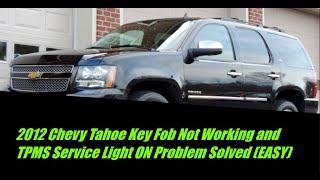
- Remote Keyless Entry (RKE) Malfunction — On older GM and Ford models, the TPMS and Remote Keyless Entry receivers share a module. A failure here causes both the TPMS to fault and the key fob to stop working. 🎬 Watch: Diagnosing GM trucks with TPMS and keyless entry failures.
- Inability to perform TPMS relearn procedure (scan-tool only — no driver-felt sign) — Attempts to retrain the sensors using a scan tool or built-in procedure fail. The vehicle does not chirp the horn or flash the lights to confirm a successful train.
Diagnostic Flowchart
Tap your situation to follow the diagnostic path that matches what you're seeing on this code.
Common Fixes & Costs
- Remove sources of Radio Frequency Interference (RFI) — Parts: $0, Labor: $0, ~0.1 hr book time (Beginner)
- Replace all TPMS sensors (including spare) — Parts: $120-$300 (for a set of 4-5 aftermarket sensors), Labor: $100-$250 (includes mounting and balancing), ~1.5 hr book time (Professional)
- Reprogram or Relearn Existing TPMS Sensors — Parts: $0, Labor: $50-$150, ~0.5 hr book time (Professional)
- Replace the TPMS Module/Receiver — Parts: $150-$500, Labor: $100-$250 (requires programming), ~1.2 hr book time (Professional)
- Repair Wiring or Connector at TPMS Module — Parts: $10-$50, Labor: $150-$400, ~2 hr book time (Advanced)
Used vs. New Parts: Buying Guide
When a used part is worth it: Never buy used TPMS sensors. The internal battery is a wear item with a 5-10 year lifespan, giving a used sensor an unknown and shortened remaining life. For a failed TPMS module/receiver on an older vehicle, a used part from a reputable auto recycler is a cost-effective option.
Donor-vehicle mileage cap: roughly under 80000 miles for the part to have meaningful remaining life.
Donor quality checklist:
- For a used module, match the part number exactly.
- Verify the donor vehicle's history to ensure it wasn't scrapped for electrical or water damage.
- Ask about the warranty period, typically 30-90 days for used electronic parts.
Decision logic:
- If The failed part is a TPMS sensor → Always buy new. The cost savings of a used sensor are negligible compared to the risk of premature failure and paying for labor a second time.
- If The failed part is the TPMS module and the vehicle is over 10 years old → A used module is an acceptable risk to save money, provided the part number matches and it comes with a short-term warranty.
- If The failed part is the TPMS module and it requires dealer programming → Favor a new part, as some dealers refuse to program a used module.
Warranty tradeoff: Used sensors have no warranty and are not recommended. Used modules typically have a 30-90 day warranty. New aftermarket sensors often come with a 1-2 year warranty. New OEM parts carry a 1-year manufacturer warranty.
Worst-case if a used part fails: $200-$400. If a used sensor fails shortly after installation, you pay for the labor to dismount, replace, and re-balance the tire all over again.
What Happens If You Wait — Timeline
- Immediate: The TPMS warning light flashes and then stays on, and the car's computer stores code B1182. The system is now disabled, providing no warnings for low tire pressure. (MPG impact: 0%% · Added cost: $0)
- 0-3 months: Without warnings, one or more tires become underinflated due to natural air loss (1-2 PSI/month). This increases rolling resistance and begins to cause uneven tire wear on the outer edges. (MPG impact: 1-3%% · Added cost: $25-$75 (in wasted fuel))
- 3-9 months: Continued driving on tires underinflated by 25% or more dramatically accelerates tread wear, reducing tire lifespan by up to 25%. Fuel economy loss becomes more significant. The risk of hydroplaning and poor braking performance increases. (MPG impact: 3-8%% · Added cost: $150-$400 (in wasted fuel and premature replacement of one or two tires))
- 9+ months: Severe underinflation causes excessive heat buildup in the tire's sidewall, leading to internal structural damage and a high risk of a sudden blowout, especially at highway speeds. A blowout causes loss of control and secondary damage to the fender, suspension, and brake lines. (MPG impact: 5-10%+% · Added cost: $500-$5000+ (cost of replacing a destroyed tire and wheel, plus potential body and suspension repairs from a blowout accident))
Cost of Not Fixing It
- Immediate: No warning for low tire pressure, increasing the risk of a tire blowout and loss of vehicle control. (Added cost: $0)
- 0-3 months: Driving on unknowingly underinflated tires reduces fuel economy and causes accelerated, uneven tire wear. (Added cost: $50-$300 (in wasted fuel and premature tire replacement))
- 3+ months: A sudden tire blowout at speed causes catastrophic damage to the wheel, suspension, fender, and brake lines, often leading to an accident. (Added cost: $500-$5000+ (cost of a new wheel and tire, suspension repairs, bodywork, and accident-related costs))
Diagnosis Steps
- Perform a Radio Interference Check
Unplug ALL aftermarket 12V accessories, especially USB chargers, dash cams, and power inverters. These devices create radio frequency interference (RFI) that jams TPMS signals. Clear the codes and drive the vehicle to see if the fault returns.
Tools: None (Beginner) - Scan for All Codes in All Modules
Use a professional-grade OBD-II scanner to read Body (B), Chassis (C), and Network (U) codes. A basic engine code reader will not see B1182. Look for accompanying codes like B124D (single sensor fault) or U-codes (communication network fault).
Tools: OBD-II Scanner (with BCM/TPMS capability) (Beginner) - Check for Technical Service Bulletins (TSBs)
Search manufacturer TSBs for code B1182 for your specific year and model to identify known software issues, updated parts, or revised diagnostic procedures.
Tools: Online access to TSB database (Intermediate) - Activate and Analyze Sensors with a TPMS Tool
Use a specialized TPMS tool to 'wake up' and read each sensor's data directly at the wheel, including the spare tire. A healthy sensor battery reads approximately 3.0V. A sensor that does not respond or shows a 'Low' battery status is dead and requires replacement.
Tools: TPMS Diagnostic Tool (Intermediate) - Attempt a Sensor Relearn Procedure
Follow the vehicle-specific procedure to put the system into 'learn mode'. If the procedure fails and no sensors register, suspect a systemic issue like a bad receiver module, severe RFI, or a wiring problem.
Tools: TPMS Relearn Tool (Intermediate) - Inspect the TPMS Module and Wiring
Locate the TPMS module (often behind the glove box, under the rear bumper, or above the headliner). Inspect the connectors for corrosion, moisture, or physical damage to the wiring harness.
Tools: Basic hand tools, flashlight (Advanced) - Test Module Power and Ground
Using a multimeter and wiring diagram, back-probe the TPMS module connector. With the key on, confirm battery voltage (typically 12V) on the power wire and less than 0.1V on the ground wire. A loss of either disables the entire system.
Tools: Multimeter, vehicle wiring diagram (Advanced) - Check CAN Bus Communication
Check the CAN bus network wires at the module's connector. Using a multimeter, look for approximately 2.3V on CAN Low and 2.7V on CAN High. Incorrect voltage indicates a network wiring problem or a module dragging the network down.
Tools: Multimeter or Oscilloscope, vehicle wiring diagram (Professional)
When This Code Triggers (Freeze-Frame Conditions)
- Vehicle Speed: 20-50 mph (The fault logs after driving for several minutes above 20 mph, the threshold where the TPMS module expects sensor signals.)
- Module Voltage: 11.5-14.5V (The code sets with system voltage in the normal operating range, confirming the module has power.)
- Time Since Key On: 5-15 minutes (The code appears after 5-15 minutes of driving, representing the receiver's timeout period for waiting on sensor data.)
- Ambient Temperature: Any, but more common in cold (Freeze frame data frequently shows the fault triggering during the first drive on a cold day, as low temperatures severely weaken aging sensor batteries.)
Related Codes
- B124D — Appears with B1182 on Ford vehicles. B124D indicates the TPMS module lost communication with 1-3 sensors, while B1182 indicates a loss of ALL sensors. B124D points to individual sensor failure; B1182 alone points to a global issue like the module, power, or RFI.
- C0750, C0755, C0760, C0765 — These are GM-specific codes for Left Front, Right Front, Left Rear, and Right Rear sensor malfunctions. They point directly to a faulty sensor, making diagnosis easier. If all are present, it points to a central module issue.
- B1342 — On many Ford/GM vehicles, this code means the ECU/BCM is defective. If you see B1342 alongside B1182, the root cause is a failed Body Control Module, not the TPMS sensors or receiver.
- U0140 — Indicates 'Lost Communication With Body Control Module'. If present with B1182, the BCM is offline or the CAN bus network has a fault. The TPMS fault is merely a symptom. Diagnose the U0140 code first.
Climate & Environmental Factors
- Cold Temperatures: Cold weather slows the chemical reaction inside the sensors' lithium-ion batteries, reducing voltage output and signal strength. A weak battery that functions in summer lacks the power to transmit in freezing temperatures, causing an intermittent B1182 code that disappears as the tires warm up.
- High Humidity / Road Salt: Moisture and road salt act as electrolytes between the dissimilar metals of the valve stem, valve core, and sensor body, causing galvanic corrosion. This seizes the components, damages the sensor's seal, and destroys the valve stem during tire service.
How to Talk to a Mechanic About This Code
Say this: "I have a B1182 code and a flashing TPMS light. Please start by checking for RFI and use a TPMS tool to verify the battery status of all sensors, including the spare, before recommending part replacements."
This shows you understand the common causes (RFI, dead batteries) and prevents a shop from immediately quoting an expensive module replacement. It directs them to perform specific, low-cost diagnostic steps first.
Avoid saying:
- 'My tire light is on, can you fix it?'
- 'Just replace all the sensors.'
- 'I have no idea what's wrong, just do whatever it takes.'
Questions to ask before authorizing the repair:
- Did you test all the sensors with a TPMS tool, and what was the battery status for each?
- If you are recommending sensor replacement, are you replacing all of them, and does the price include the TPMS service/rebuild kits?
- If you are recommending a module replacement, did you confirm it has proper power and ground and that there are no communication codes?
- What is the warranty on the new sensors/parts and the labor?
Where to Take It: Dealer vs Independent vs Chain
- Dealer:
Recommended only if initial diagnostics at a tire shop fail or if module programming is required.
Best for: Vehicles under warranty., Complex cases involving module replacement and programming., When the B1182 code is accompanied by an Airbag light (critical for Nissan/Toyota).
Downsides: Highest cost for parts and labor, often 1.5-2x more than other shops., May default to replacing all sensors with expensive OEM parts when a simpler fix exists. (Typical cost: +75% vs. baseline) - Independent Shop:
Good option, but call ahead to confirm they have advanced TPMS diagnostic tools and experience with your vehicle brand.
Best for: Out-of-warranty vehicles where cost is a concern., Shops with good reviews and ASE-certified technicians who own modern TPMS tools.
Downsides: Quality and tool capability vary widely., May not have experience with manufacturer-specific quirks or module programming. (Typical cost: +0% vs. baseline) - Chain Shop:
Acceptable for the most common fix (sensor replacement), as they do it frequently. Be cautious of upselling and return immediately if the light comes back on after service.
Best for: Straightforward sensor replacement, especially when buying new tires.
Downsides: High pressure to upsell; may recommend replacing all sensors when only one is bad., Technician skill can be inconsistent; risk of damaged wheels or improperly programmed sensors. (Typical cost: -10% vs. baseline)
When to Walk Away From the Repair
If the estimated repair cost for the TPMS system exceeds 25-30% of your car's private-party value, and the car is older than 10 years, you might consider not fixing it and instead checking your tire pressure manually on a regular basis. However, this will cause a failure at state safety inspections.
- Car worth $4000, fix is $550: Borderline. This repair is ~14% of the car's value. It's worth fixing for safety and resale value, but get a second opinion to ensure the cost is fair.
- Car worth $15000, fix is $600: Fix it. The repair cost is a small fraction of the vehicle's value and is a critical safety feature.
- Car worth $2500, fix is $500: Consider walking away. The repair is 20% of the car's value. If the vehicle has other issues, it may not be worth the investment. If the car is otherwise reliable, the fix is still recommended for safety.
What Scan Tool You Need for This Code
Minimum: An OBD-II scanner that can read Body Control Module (BCM) codes. A basic engine-only code reader WILL NOT see the B1182 code.
A standard $20 scanner only reads Powertrain (P-codes) like 'Check Engine' lights. B1182 is a Body (B-code), stored in a different module. Without the ability to read B-codes, you cannot confirm this is your issue.
Budget: Foxwell NT510 Elite / MUCAR Scanners (~$90) — Reads and clears B-codes from the BCM, confirming the B1182 fault. It allows you to perform the first, most basic step of diagnosis yourself.
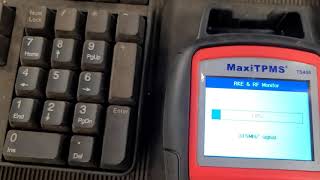
Mid-range: Autel MaxiTPMS TS508WF / Foxwell T1000 (~$250) — This is a dedicated TPMS tool. It reads BCM codes, but more importantly, it wirelessly activates and tests each sensor at the wheel to check its battery life, pressure, and temperature, and performs the relearn procedure.
Professional: Autel MaxiCOM MK900-TS / Foxwell NT809TS (~$500-900) — Combines a full-system bidirectional diagnostic scanner with a pro-level TPMS tool. It reads codes from every module, programs new blank sensors, performs advanced diagnostics on the TPMS module, and handles any relearn procedure.
Rent vs buy: You cannot rent the necessary specialty TPMS tools. Auto parts stores may rent a basic OBD-II scanner, but it likely won't read the B-codes needed for B1182. If you are a serious DIYer, buying a midrange TPMS tool for around $200-$300 is a good investment.
How to Clear the Code After You Fix It
- Use a capable OBD-II scan tool to erase the B1182 code from the Body Control Module.
- Perform the vehicle-specific TPMS relearn procedure using a TPMS tool to register the new sensor IDs to the vehicle's computer.
- Inflate all tires to the pressure listed on the door jamb placard.
- Perform a drive cycle to confirm the fix.
Drive cycle (~20 minutes): Drive the vehicle for 15-20 minutes at speeds consistently above 20 mph. This gives the TPMS module time to receive data from all newly programmed sensors and confirm system functionality.
Readiness monitors affected: None. TPMS is a body system and does not affect emissions readiness monitors.
Watch out for:
- Clearing the code without fixing the root cause results in the code returning immediately.
- Disconnecting the battery does not clear a B1182 code from the BCM's memory.
- Forgetting to perform the TPMS relearn procedure after installing new sensors prevents the system from working.
Will This Fail Emissions / State Inspection?
No — by itself this code doesn't fail OBD inspection (but it can keep readiness monitors from setting, which causes a separate fail).
- General Rule: A TPMS fault light does NOT fail an emissions or 'smog' test, which only checks powertrain codes. However, it WILL fail a state 'safety' inspection in many jurisdictions.
- California: A TPMS light does NOT cause a failure on a California Smog Check. The inspection only concerns emissions-related components.
- New York: An illuminated TPMS warning light WILL cause a vehicle to fail the annual safety inspection.
- Texas: A TPMS warning light is not a cause for failure in the Texas safety inspection. The inspection checks tire tread depth and condition, but not the monitoring system itself.
Most Commonly Affected Vehicles
- Ford F-150 (2009-2020) — Extremely common. Often appears with code B124D. B1182 indicates a total system communication loss, while B124D points to a fault with a specific sensor. The 2009-2014 models use a 315MHz sensor, while 2015+ models use either 315MHz or 433MHz sensors.
- Ford Explorer (2011-2019) — Very susceptible to RFI from accessories plugged into the 12V power outlets. For the 2011-2015 models, a common issue is a faulty TPMS module located behind the glove box.
- Ford Edge (2011-2018) — Often reported as a 'Tire Pressure Monitoring System Sensor Fault' on the dash display. The automatic relearn process sometimes fails, requiring a manual relearn with a tool.
- Ford Fiesta (2014-2019) — This code appears when the Body Control Module loses communication with the sensors, often due to sensor age. The sensors for these years are typically 433MHz.
- Ford Expedition (2007-2017) — On these models, the code is a primary indicator that the original sensor batteries have failed. The spare tire sensor is a frequent cause.
- Toyota Highlander, RAV4, Sienna (2006-2015) — CRITICAL: On some Toyota models, B1182 indicates a 'Short to Ground in Driver Side Squib 2nd Step Circuit' related to the AIRBAG system, not the TPMS. If the airbag light is on, this is the cause. For TPMS issues, a blinking light is often caused by a dead sensor in the full-size spare tire.
- Chevrolet / GMC Silverado, Sierra, Suburban, Tahoe (2007-2018) — These vehicles set a B1182 code when the TPMS module (RCDLR) loses contact with all sensors due to age or internal failure. A failing RCDLR also causes key fob issues.
- Nissan / Infiniti Titan, Armada, QX56 (2004-2015) — CRITICAL: On these vehicles, B1182 is NOT related to tires. It defines a 'Seat Belt Buckle Pre-tensioner LH Circuit' fault in the airbag (SRS) system. If the airbag light is on, the problem is with the driver's seat belt buckle wiring or assembly.
- BMW X5, 3-Series, 1-Series (2006-2014) — Triggers a 'TPM Malfunction' warning. The cause is often a failure of the central RDC (Tire Pressure Control) receiver module, commonly located in a wheel well or under the rear bumper, making it highly prone to water damage.
Manufacturer-Specific Notes
- Ford: B1182 is Ford's default code for total TPMS communication loss. Ford systems are extremely sensitive to radio frequency interference (RFI) from aftermarket 12V electronics. A recall for the 2020 Escape (Campaign 20S59) addresses a faulty BCM causing this issue.
- Nissan / Infiniti: CRITICAL: On models like the Titan and Armada, B1182 is an AIRBAG code for a 'Seat Belt Buckle Pre-tensioner LH Circuit' fault. If the airbag light is on, this code is unrelated to tires. Check your VIN for related airbag recalls (e.g., PC944, PC740).
- Toyota / Lexus: CRITICAL: Similar to Nissan, some Toyota models use B1182 as an AIRBAG code for a 'Short to Ground in Driver Side Squib Circuit'. For actual TPMS faults, a blinking light often points to the sensor in the full-size spare tire, a very common and overlooked cause of system failure.
- General Motors (Chevrolet/GMC/Cadillac): The TPMS receiver integrates into the Remote Control Door Lock Receiver (RCDLR). A failure in this module simultaneously causes a TPMS fault message and disables the key fobs. If both symptoms appear at once, the RCDLR module is the culprit.
- Volkswagen / Audi: Many newer VW/Audi models use an 'indirect' TPMS with no wheel sensors, inferring low pressure via ABS wheel speed sensors. Older models with direct sensors require a manual reset using a button in the glovebox or center console after adjusting pressures.
Real Owner Stories
2013 Ford F-150 with 110,000 miles
The 'Tire Pressure Monitor Fault' message appeared on the dash. The TPMS light flashed for about a minute and then stayed on. All tire pressures were manually checked and confirmed correct.
What they tried:
- Attempted the onboard TPMS relearn procedure, which failed to complete.
- Took it to a tire shop, which used a TPMS tool to test the sensors.
Outcome: The TPMS tool confirmed the sensor in the full-size spare tire was dead. The other four were working but showed 'low battery' status. The owner replaced all five sensors at once. After replacement and relearn, the code cleared.
Lesson: Don't forget the spare tire. On vehicles with a full-size spare, its sensor is a common point of failure that triggers a system-wide fault. When one sensor battery dies, the others are near the end of their 5-10 year lifespan.
2012 Ford Explorer with 85,000 miles
An intermittent B1182 code and TPMS fault message appeared during longer drives. The fault sometimes cleared itself on the next startup.
What they tried:
- Suspected failing sensors and was quoted over $400 for replacement.
- Unplugged a recently purchased cheap, multi-port USB charger from the 12V outlet.
Outcome: After unplugging the USB charger, the B1182 code and fault message did not return. The charger created enough radio frequency interference (RFI) to jam the signals from the TPMS sensors. Replacing the cheap charger with a quality, shielded one permanently solved the problem for under $20.
Lesson: Always check for RFI before replacing expensive parts. Unplug all aftermarket 12V accessories and see if the fault disappears. This is the easiest and cheapest diagnostic step.
2008 Nissan Titan with 130,000 miles
The airbag warning light on the dashboard was blinking, and a scan revealed code B1182.
What they tried:
- Initially confused, as online searches for B1182 pointed to TPMS issues, but the TPMS light was not on.
- Further research specific to Nissan vehicles revealed B1182 is an airbag system code.
- The code definition was 'Seat Belt Buckle Pre-tensioner LH Circuit'.
Outcome: The owner found the wiring harness for the driver's side seat belt buckle was a known failure point. After replacing the seat belt buckle assembly for about $65 in parts, the airbag code cleared and did not return.
Lesson: Pay attention to which warning light is on. For many Nissan, Infiniti, and Toyota vehicles, B1182 is a critical airbag system code, not a TPMS code. If your airbag light is on, the problem is with the safety restraint system.
2011 Chevy Silverado with 145,000 miles
The TPMS fault light came on, and simultaneously, the key fobs stopped working to lock/unlock the doors.
What they tried:
- Replaced the batteries in the key fobs, which had no effect.
- Checked all tire pressures manually; they were fine.
- A scan showed code B1182 but no other specific sensor faults.
Outcome: Research indicated that on many GM trucks, the TPMS receiver and the Remote Control Door Lock Receiver (RCDLR) are the same module. Since both systems failed at once, the RCDLR module was the prime suspect. The owner had a shop replace the RCDLR module. This single repair fixed both the TPMS fault and the key fob issue.
Lesson: If multiple, seemingly unrelated systems fail at once, look for a shared control module. On GM vehicles, if the TPMS fails along with the key fobs, the RCDLR module is the most likely cause.
How to Prevent This Code From Triggering
- Replace TPMS Service Kits During Tire Changes (Every time a tire is dismounted from a wheel.) — Service kits cost only a few dollars and include a new valve core, cap, nut, and rubber grommet. Replacing them prevents air leaks and galvanic corrosion that destroys the sensor seal.
- Use Nickel-Plated Valve Cores and Proper Caps (During any tire service.) — Using a traditional brass valve core in an aluminum TPMS stem causes galvanic corrosion, seizing the core and damaging the sensor. Always use nickel-plated cores. Use plastic or aluminum caps, as decorative chrome-plated brass caps corrode and fuse to the stem.
- Torque Sensor Nuts to Specification (When installing new sensors.) — TPMS nuts have a very low torque spec, typically 35-70 inch-pounds. Overtightening cracks the sensor housing or damages the seal, causing leaks. Undertightening also causes leaks. Using a low-range inch-pound torque wrench is critical.
- Budget for Sensor Replacement with Tires (Every 5-10 years.) — TPMS sensor batteries are non-replaceable and last 5-10 years. Their lifespan aligns with 1-2 sets of tires. To avoid paying for labor twice, replace all TPMS sensors at the same time you get a new set of tires once the vehicle is over 7-8 years old.
- Limit Use of Stop-and-Go Driving When Possible (Daily habit) — Sensors transmit data more frequently when the vehicle changes speeds, such as in city traffic. Constant highway driving at a steady speed puts less strain on the batteries. This explains why vehicles with high city miles experience shorter sensor life.
Frequently Asked Questions
What's the difference between a flashing and a solid TPMS light?
A TPMS light that flashes for 60-90 seconds upon startup and then stays solid indicates a malfunction in the TPMS system itself, such as a dead sensor or faulty module. A light that is solid immediately upon startup means the system is working correctly and has detected an underinflated tire.
Does the spare tire have a TPMS sensor that can cause this code?
Yes. On many trucks and SUVs with a full-size spare, the spare has a sensor. If its battery dies or its pressure drops significantly, it triggers a B1182 fault and a flashing TPMS light, even if the four main tires are fine.
Why did all my sensors fail at once?
They likely did not fail at the exact same moment. The batteries in all sensors are the same age and endure the same conditions, so they fail within a similar timeframe. The system sets a general fault code like B1182 when it can no longer communicate with any of them.
I just got new tires and now I have this code. What happened?
There are three likely scenarios: the tire shop physically damaged the old sensors, they installed new sensors but did not properly program their unique ID codes to your vehicle, or they installed the wrong frequency sensor. Return to the shop that performed the work.
Can a cheap phone charger really cause this problem?
Yes. Low-quality electronics plugged into the 12V power outlet often lack proper RF shielding. They emit strong radio signals that overwhelm the TPMS receiver, preventing it from hearing the faint signals from the tire sensors. This is a very common cause for intermittent B1182 faults.
Will a B1182 code fail a state inspection?
In jurisdictions that require a functional TPMS for a vehicle safety inspection, an active TPMS warning light and a stored B1182 code causes the vehicle to fail. It does not cause a failure of an emissions or smog test.
Can I fix code B1182 myself?
A DIYer can perform basic diagnosis like checking tire pressures and removing aftermarket electronics to check for RFI. However, definitively testing and replacing sensors requires specialized TPMS tools and tire mounting equipment, making it a job for a professional shop.
Key Takeaways
- Code B1182 indicates a total communication failure in the Tire Pressure Monitoring System (TPMS), disabling your vehicle's ability to warn you of a flat tire.
- Unplug all aftermarket 12V electronics, such as USB chargers and dash cams, before replacing parts to rule out Radio Frequency Interference (RFI) jamming the 315MHz or 433MHz signals.
- Replace all 4 or 5 TPMS sensors simultaneously if one fails, as their internal non-replaceable batteries share a predictable 5-to-10-year lifespan.
- Check your dashboard warning lights immediately; if the Airbag light is illuminated on a Nissan, Infiniti, or Toyota, B1182 indicates a critical safety restraint fault, not a tire issue.
- Differentiate between TPMS warnings: a light that flashes for 60 to 90 seconds before turning solid indicates a system fault like B1182, while an instantly solid light means a tire is underinflated.
Helpful Videos




The information in this article is provided for general reference and educational purposes only. Vehicle specifications, procedures, and part compatibility can vary by production date, trim level, and region. Always consult your vehicle's factory service manual and verify part numbers before purchasing or performing repairs. Safety-critical components such as airbags, seat belts, and braking systems should be installed by a qualified professional.
- 🎬 Helpful Videos
- What Does B1182 Mean?
- Can I Drive With B1182?
- Common Causes
- Symptoms
- Diagnostic Flowchart
- Common Fixes & Costs
- Used vs. New Parts: Buying Guide
- What Happens If You Wait — Timeline
- Cost of Not Fixing It
- Diagnosis Steps
- When This Code Triggers (Freeze-Frame Conditions)
- Related Codes
- Climate & Environmental Factors
- How to Talk to a Mechanic About This Code
- Where to Take It: Dealer vs Independent vs Chain
- When to Walk Away From the Repair
- What Scan Tool You Need for This Code
- How to Clear the Code After You Fix It
- Will This Fail Emissions / State Inspection?
- Most Commonly Affected Vehicles
- Manufacturer-Specific Notes
- Real Owner Stories
- 2013 Ford F-150 with 110,000 miles
- 2012 Ford Explorer with 85,000 miles
- 2008 Nissan Titan with 130,000 miles
- 2011 Chevy Silverado with 145,000 miles
- How to Prevent This Code From Triggering
- Frequently Asked Questions
- What's the difference between a flashing and a solid TPMS light?
- Does the spare tire have a TPMS sensor that can cause this code?
- Why did all my sensors fail at once?
- I just got new tires and now I have this code. What happened?
- Can a cheap phone charger really cause this problem?
- Will a B1182 code fail a state inspection?
- Can I fix code B1182 myself?
- Key Takeaways
- 🎟️ Get 5% Off