

Ultimate Guide to OBD-II Code B1152: Body Control System Fault
What B1152 Means, In-Depth Diagnosis, and Pro-Level Fixes
- Code B1152 disables your vehicle's Supplemental Restraint System (SRS) due to an electrical fault in the passenger airbag indicator circuit.
- Driving with an active B1152 code is critically unsafe because the airbags will not deploy in a collision, increasing the risk of severe injury.
- Check the under-seat wiring connectors and the 10A-15A SRS fuses before assuming a major component failure, as loose connections cause over 50% of these faults.
- Wait exactly 15 minutes after disconnecting the battery before probing any SRS circuits with a digital multimeter to prevent accidental airbag deployment.
- Subaru owners with 2005-2009 models can often fix this code for $0 by resoldering cracked joints on the overhead console's printed circuit board.
What Does B1152 Mean?

B1152 is a manufacturer-specific Body-class trouble code signaling a fault in the Supplemental Restraint System (SRS). In 90% of cases, it points to an electrical malfunction in the passenger airbag ON/OFF indicator light circuit. The SRS module disables the entire airbag system as a safety precaution when it cannot verify the passenger airbag's active or deactivated status.
Technical definition: The official SAE/ISO definition for B1152 varies by manufacturer. For Toyota, Lexus, and Scion, it is 'Passenger Airbag ON/OFF Indicator Circuit Malfunction'. For Nissan, it indicates 'Left-hand Rear Roof Panel Airbag Module Circuit Shorted to Ground' or 'Lost Communication with Power Steering Control Module'. For Ford (variant B1152:4B), it is 'Gear Shift Lock Solenoid-Actuator Circuit A Low-Actuator Stuck'. For Honda and Acura, it flags a 'Gauge Control Module Internal Error (EEPROM)'. For Chevrolet/GM, it means the SRS module's 'Data Area is Full' following a collision.
Can I Drive With B1152?
No — Do Not Drive. While the vehicle physically drives, it is critically unsafe. This code indicates the Supplemental Restraint System (SRS) is compromised, and the airbags will NOT deploy in a collision. The risk of serious injury or death in an accident increases significantly. Driving with this light on guarantees an automatic safety inspection failure.
Common Causes

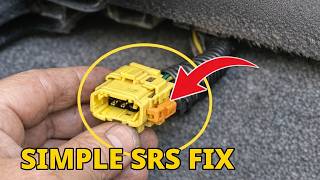
- Damaged or loose under-seat wiring (Very Common) — The wiring harness or connectors for the passenger airbag indicator light, located under the passenger seat or behind the dashboard, often loosen or suffer physical damage from items stored under the seat. 🎬 See how to fix a loose under-seat SRS connector.
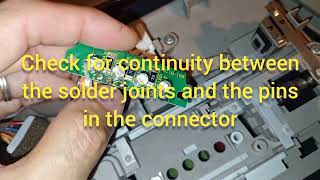
- Cracked solder joints on indicator panel PCB (Common) — On 2005-2009 Subaru models, lead-free solder joints on the passenger airbag indicator LED circuit board crack due to thermal cycling and vibration, creating an intermittent open circuit.
- Faulty passenger airbag ON/OFF indicator light (Common) — The indicator light assembly's internal LED or bulb burns out. The control module detects the open circuit or high resistance and sets the code.
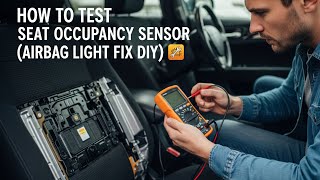
- Faulty Occupant Classification System (OCS) sensor (Common) — The sensor mat embedded in the passenger seat cushion fails. This sensor dictates whether the SRS module turns the passenger airbag on or off; a fault here triggers an immediate SRS warning. 🎬 Watch: DIY guide to testing the seat occupancy sensor.
- Blown SRS/OCS fuse (Less Common) — A blown dedicated fuse protecting the SRS or Occupant Classification System disables the system and triggers this code. This is the easiest component to check and replace.
- Defective clock spring (Less Common) — The clock spring behind the steering wheel maintains electrical connections for the driver's airbag. A failure here occasionally causes general SRS communication faults flagged as B1152.
- SRS module crash data lock (Rare) — After any collision, the SRS module stores permanent 'crash data' and locks the system, keeping the airbag light on. This requires professional module resetting or replacement.
- Faulty SRS Airbag Control Module (Rare) — The main SRS computer fails internally. Suspect this only after exhaustively ruling out all wiring, fuses, and sensors.
Symptoms

- Airbag warning light is on — The primary and often only symptom. The dashboard airbag light illuminates solidly or flashes.
- Passenger airbag OFF indicator malfunctions — The 'PASS AIRBAG OFF' light stays off when the seat is empty or stays on when an adult is seated.
- SRS system malfunction message — Modern vehicles display a text warning such as 'SRS Airbag System Malfunction' on the instrument cluster.
- Horn or steering wheel controls fail — If a defective clock spring causes the code, the horn, cruise control, and radio buttons stop working simultaneously.
- Inability to shift out of Park (Ford specific) — On Ford vehicles, the B1152:4B variant relates to the gear shift lock solenoid, physically preventing the shifter from moving out of Park.
Diagnostic Flowchart
Tap your situation to follow the diagnostic path that matches what you're seeing on this code.
Common Fixes & Costs
- Repairing or reconnecting under-seat wiring — Parts: $5-$30, Labor: $125-$250, ~1.5 hr book time (Intermediate)
- Resoldering cracked joints on the indicator's PCB (Subaru specific) — Parts: $1-$5, Labor: $150-$250, ~1.5 hr book time (Intermediate)
- Replacing the passenger airbag ON/OFF indicator assembly — Parts: $50-$200, Labor: $100-$200, ~1.2 hr book time (Intermediate)
- Resetting the SRS Airbag Control Module (Crash Data) — Parts: $0, Labor: $50-$150, ~1.0 hr book time (Professional)
- Replacing a faulty OCS sensor mat — Parts: $150-$450, Labor: $200-$400, ~2.5 hr book time (Professional)
- Replacing the SRS Airbag Control Module — Parts: $400-$800, Labor: $250-$600, ~2.0 hr book time (Professional)
Used vs. New Parts: Buying Guide
When a used part is worth it: A used OEM indicator assembly from a certified recycler is a cost-effective option for older vehicles. However, resetting your original SRS module is cheaper and avoids VIN programming issues compared to buying a used module.
Donor-vehicle mileage cap: roughly under 100000 miles for the part to have meaningful remaining life.
Donor quality checklist:
- Verify the part is from a vehicle where airbags did not deploy.
- Ensure the part was stored indoors, protected from moisture.
- Buy from a certified automotive recycler offering a warranty.
- Match the part number exactly; superseded numbers require dealer verification.
Decision logic:
- If The original part is an SRS module locked with crash data → Reset the original module via a mail-in service to avoid VIN programming costs.
- If The part is a simple indicator light assembly for an older car → A used part with an exact part number match is a smart choice.
- If The part is an OCS sensor mat → Buy new OEM only. The high labor cost of seat disassembly makes installing a potentially faulty used sensor too risky.
Warranty tradeoff: Used parts carry a 30-90 day warranty. New OEM parts carry a 1-year warranty.
Worst-case if a used part fails: $300-$600 if a used electronic module fails after installation, requiring repeat labor and a second part.
What Happens If You Wait — Timeline
- 0 seconds: The SRS control module disables the entire airbag system as a fail-safe, and the airbag warning light illuminates. (MPG impact: 0%% · Added cost: Immeasurable. The vehicle lacks its primary passive safety system until repaired.)
- Next vehicle inspection: The vehicle automatically fails its annual safety inspection, preventing legal registration. (MPG impact: 0%% · Added cost: $50-$100 in failed inspection fees and lost time.)
- Attempting to sell or trade-in: Dealers deduct the highest possible repair cost from trade-in value. Private sales are difficult due to the active safety defect. (MPG impact: 0%% · Added cost: $500-$2,000 reduction in vehicle value.)
- The day an accident happens: Airbags fail to deploy. Minor incidents result in severe injuries due to impact with the steering wheel or dashboard. (MPG impact: 0%% · Added cost: Tens of thousands of dollars in medical bills and potential long-term disability.)
Cost of Not Fixing It
- Immediate and Ongoing: The entire Supplemental Restraint System (SRS) is disabled. Airbags will NOT deploy in a collision. (Added cost: The potential cost of severe injury or death in an accident is immeasurable.)
- Next Vehicle Inspection: Automatic failure of the vehicle's safety inspection in most jurisdictions. (Added cost: $20-$50 for the failed inspection fee, plus the mandatory repair cost.)
- Vehicle Resale: Significantly reduced vehicle value. Selling a car with a known safety defect is difficult and reduces trade-in offers drastically. (Added cost: $500-$2000 reduction in resale value.)
Diagnosis Steps
- Read Fault Codes with an SRS-Capable Scanner
Use an OBD-II scanner capable of reading Supplemental Restraint System (SRS) codes. Standard engine readers cannot access these modules. Confirm B1152 and note the exact manufacturer-specific definition.
Tools: OBD-II Scanner (SRS compatible) (Beginner) - Check SRS and OCS Fuses
Check the owner's manual for the SRS and Occupant Classification System (OCS) fuse locations. Pull the fuses and inspect the filaments for breaks. Replace any blown fuses.
Tools: Fuse puller or needle-nose pliers (Beginner) - Observe the Passenger Airbag Indicator Light
Turn the ignition ON. The 'PASS AIRBAG OFF' light must illuminate for a few seconds during the self-test, then turn off if an adult is seated, or remain on if the seat is empty. Incorrect behavior confirms an indicator circuit fault.
Tools: None (Beginner) - Perform a Visual Wiring Inspection
With the ignition OFF, inspect the yellow SRS wiring connectors under the front passenger seat. Look for disconnected plugs, crushed wires, or corrosion. Inspect the wiring behind the glove box leading to the indicator light.
Tools: Flashlight (Beginner) - Test Indicator Circuit Resistance
Disconnect the battery and wait 15 minutes. Disconnect the SRS module and the passenger indicator light. Use a multimeter to measure resistance on the specified wires per the factory service manual. 'OL' indicates an open wire; below 1.0 ohm indicates a short.
Tools: Digital Multimeter, vehicle-specific wiring diagram (Advanced) - Check for Short to Ground
With the SRS module and indicator light disconnected, measure resistance between the indicator circuit wire terminal and a known good chassis ground. A reading below 1 MΩ indicates a short to ground in the harness.
Tools: Digital Multimeter, vehicle-specific wiring diagram (Advanced) - Perform a Voltage Drop Test on the Ground Circuit
Reconnect the battery and turn the ignition ON. Set the multimeter to a low DC voltage scale. Place the positive lead on the indicator light's ground pin and the negative lead on chassis ground. A reading above 0.1V (100mV) indicates excessive ground resistance.
Tools: Digital Multimeter, vehicle-specific wiring diagram (Advanced) - Substitute Component with a Dummy Resistor
Disconnect the suspected component (indicator light or clock spring) and insert a 2.2 to 3.0-ohm resistor into the vehicle-side connector pins. Clear the codes. If B1152 does not return, the component is faulty. If it returns, the wiring or module is faulty. WARNING: Probing the wrong circuit deploys airbags.
Tools: 2.2-3.0 Ohm Resistor, SRS-capable scanner (Professional) - Test the SRS Control Module
If all wiring, connectors, and components test good, the SRS control module is the culprit. Use a professional scan tool to check live data and confirm module communication. Replacement requires dealership-level programming.
Tools: Advanced diagnostic scan tool (Professional)
When This Code Triggers (Freeze-Frame Conditions)
- System State: Ignition ON (The fault is detected during the initial system self-test (Key-On-Engine-Off).)
- Time Since Ignition ON: < 10 seconds (The SRS module checks all components, including indicator lights, immediately after power-up.)
- Battery Voltage: 11.5V - 14.5V (Normal operating voltage. Low voltage during startup sets spurious codes.)
- Fault Status: Present / Active (Indicates the fault was detected during the current ignition cycle.)
Related Codes
- B1150 — Appears with B1152 in Toyota vehicles. B1150 points to a fault within the Occupant Classification System (OCS) ECU itself. If both are present, the OCS ECU is the primary suspect.
- B00A0 — Common on Nissan vehicles, indicating an 'Occupant Detection Sensor Unit Fault'. Appears when the OCS system needs a zero-point calibration reset.
- B0091 — Indicates a front impact sensor fault. A faulty impact sensor causes the SRS module to distrust inputs and set secondary codes like B1152.
- B1181 — A Toyota code indicating an open circuit in the driver-side squib (clock spring). Seeing this alongside B1152 suggests a general SRS module or power/ground supply failure.
Climate & Environmental Factors
- Thermal Cycling: Repeated expansion and contraction from temperature changes puts stress on rigid, lead-free solder until it cracks, creating an open circuit. This is the primary cause of Subaru PCB failures.
- High Humidity: Moisture penetrates connectors and circuit boards, leading to corrosion and oxidation. This increases resistance and triggers faults in sensitive SRS circuits.
- Extreme Cold: Cold temperatures cause metal contacts within electrical connectors to contract, creating loose or intermittent connections. The airbag light may illuminate when cold and turn off once the cabin warms up.
How to Talk to a Mechanic About This Code
Say this: "I have an airbag warning light on, and my scanner shows code B1152, pointing to the passenger airbag indicator circuit. I'd like to schedule a diagnostic to confirm the cause. Please start by checking the under-seat connectors and fuses before quoting a major component."
This signals you are informed about the specific code and directs the technician to perform a logical, cost-effective diagnosis rather than immediately quoting an expensive SRS module.
Avoid saying:
- 'My airbag light is on, can you just fix it?'
- 'I think I need a new airbag computer.'
- 'Just do whatever it takes to turn the light off.'
Questions to ask before authorizing the repair:
- What specific fault did the diagnostic scan confirm for code B1152?
- Did you inspect the wiring under the passenger seat and the indicator bulb itself?
- If the SRS module needs replacement, can my original module be reset instead?
- If an OCS sensor is replaced, does the quoted price include the mandatory zero-point calibration?
- What is the warranty on this specific SRS repair?
Where to Take It: Dealer vs Independent vs Chain
- Dealer:
Recommended if the fault requires a new SRS module or brand-specific programming. Excellent for definitive diagnosis if independent shops fail.
Best for: Vehicles under warranty., Complex manufacturer-specific faults like Honda gauge cluster failures., Repairs requiring module programming and calibration.
Downsides: Highest labor rates and parts costs., Defaults to replacing entire assemblies instead of repairing simpler components. (Typical cost: +50% vs. baseline) - Independent Shop:
Best fit for most B1152 scenarios. A reputable independent shop handles wiring issues and component replacements at a lower cost than the dealer. Verify they are equipped for SRS systems.
Best for: Out-of-warranty vehicles with suspected wiring or indicator light faults., Owners looking for better value and personalized service.
Downsides: The shop must possess an SRS-capable scan tool and ASE-certified technicians., May lack the latest tools to program a brand new SRS module. (Typical cost: +0% vs. baseline) - Chain Shop:
AVOID. The SRS is a complex and hazardous safety system outside the scope of chain shops.
Best for: Not recommended for SRS system diagnostics or repairs.
Downsides: Technicians lack specialized training for safety-critical SRS systems., Business model focuses on high-volume, simple jobs, not complex electrical diagnostics., High risk of misdiagnosis or refusal to work on the system. (Typical cost: -10% vs. baseline)
When to Walk Away From the Repair
If the estimated repair cost exceeds 50% of the car's private-party value after the fix, critically evaluate the repair. An active airbag light makes the car unsafe and reduces its immediate value to near zero for a private sale.
- Car worth $4000, fix is $2200: Walk away. The repair cost is over 50% of the car's functional value. It is not economically viable to invest this much into a $4,000 car.
- Car worth $12000, fix is $800: Fix it. The repair cost is well below the threshold and restores a critical safety feature, making the car sellable and safe.
- Car worth $2500, fix is $600: Borderline. This is a significant percentage of the car's value. If the rest of the car is in excellent shape, the repair is worthwhile. Get a second opinion on the repair cost.
What Scan Tool You Need for This Code

Minimum: A scanner that reads and clears SRS (Airbag) system codes. A basic engine-only code reader WILL NOT work for B1152.
A $20 engine code reader cannot communicate with the SRS module. You need a 4-system (Engine, ABS, SRS, Transmission) scanner to view the B1152 code and clear the light after repair.
Budget: Autel AutoLink AL619 (~$85) — Reads and clears codes from the SRS and ABS systems, turns off the warning light, and provides code definitions. A solid entry-level choice.
Mid-range: Foxwell NT510 Elite (~$180) — Provides full-system diagnostics, reads SRS codes, and views live sensor data from SRS components. Offers brand-specific software for deeper access.
Professional: Autel MaxiCOM MK808 / XTOOL D7 (~$450-600) — Offers full bidirectional control to command components. Performs advanced functions like OCS calibration and SRS module programming required after replacement.
Rent vs buy: Most auto parts stores do NOT rent scanners capable of reading SRS codes. Buying a budget-friendly SRS-capable scanner is a mandatory investment for this diagnosis.
How to Clear the Code After You Fix It
- Reconnect the battery if disconnected for repair.
- Use an SRS-capable OBD-II scan tool to read and clear the fault codes.
- Turn the ignition OFF, then turn it back to the ON position and wait 60 seconds for the system self-test to complete.
- Verify the dashboard airbag warning light turns off after the initial 6-second bulb check.
Drive cycle (~10 minutes): SRS codes do not require a driving cycle. The system performs a self-test upon every ignition cycle. After clearing the code, turn the car on and wait one minute; if the light stays off, the repair was successful.
Watch out for:
- Using a standard engine code reader that cannot access or clear SRS codes.
- Not waiting the required 60 seconds after clearing for the self-test to run.
- Clearing the code without fixing the underlying electrical fault, causing the light to return immediately.
Will This Fail Emissions / State Inspection?
No — by itself this code doesn't fail OBD inspection (but it can keep readiness monitors from setting, which causes a separate fail).
- California: An illuminated airbag light fails the safety inspection. The light must illuminate during the bulb check and turn off.
- New York: An illuminated airbag warning light is a safety defect and causes an automatic failure of the annual safety inspection.
- Texas: An airbag warning light is not currently a mandatory failure criteria, but individual inspection stations frequently refuse to pass the vehicle.
Most Commonly Affected Vehicles
- Toyota Sienna (2004-2010) — The indicator circuit is integrated into the center dash/A/C control assembly, making replacement expensive.
- Subaru Outback / Legacy (2005-2009) — Extremely prone to cracked solder joints on the overhead passenger airbag indicator LED circuit board.
- Toyota Highlander (2004-2007) — Frequently experiences passenger airbag indicator circuit failures requiring dash panel diagnosis.
- Toyota 4Runner (2005-2009) — The passenger airbag ON/OFF indicator light circuit is a known failure point.
- Nissan Note / Versa / Sentra / Rogue (2012-2020) — B1152 often relates to a short in a rear roof panel airbag module or OCS issues requiring a zero-point reset.
- Lexus GX470 (2008-2009) — Shares the 4Runner's SRS design and is equally susceptible to passenger indicator circuit faults.
- Honda CR-V / Accord (2005-2011) — Logs B1152 as a 'Gauge Control Module Internal Error', requiring replacement of the entire instrument cluster.
- Ford Edge / Fusion (2007-2011) — Logs variant B1152:4B for a gear shift lock solenoid failure, preventing the vehicle from shifting out of Park.
Manufacturer-Specific Notes

- Toyota/Lexus: The code almost exclusively points to the 'Passenger Airbag ON/OFF Indicator Circuit'. Because the light is integrated into larger dash assemblies, replacement is more involved than swapping a bulb.
- Subaru: On 2005-2009 models, the root cause is almost always cracked solder joints on the overhead console PCB. Reflowing the solder with an iron is a permanent, zero-cost fix.
- Nissan: B1152 has multiple unrelated definitions, including rear roof airbag shorts or power steering communication loss. A Nissan CONSULT scan tool is mandatory for accurate diagnosis.
- Honda/Acura: The code indicates an internal EEPROM failure within the instrument cluster itself. The entire gauge cluster must be replaced to resolve the airbag light.
- Ford: Variant B1152:4B indicates a 'Gear Shift Lock Solenoid' failure. This is entirely unrelated to the airbag system and manifests as a stuck shifter.
Real Owner Stories
2008 Subaru Outback at 115K miles - The Classic Solder Fix
Airbag warning light illuminated intermittently in cold weather. The overhead 'PASS AIRBAG OFF' light failed to illuminate when the seat was empty.
What they tried:
- Checked under-seat connectors, which were secure.
- Scanned the code, confirming B1152 for the passenger indicator circuit.
- Researched forums and found reports of cracked solder joints on the overhead indicator's circuit board.
Outcome: The owner removed the overhead console, extracted the small PCB, and reflowed the solder on the wire connections with a basic iron. The repair cost $0, took 45 minutes, and permanently resolved the code.
Lesson: For 2005-2009 Subarus, thermal cycling cracks brittle lead-free solder. This is a prime DIY repair before buying expensive parts.
2007 Honda CR-V at 95K miles - A Surprising Culprit
Airbag light stayed on permanently with no recent damage or symptoms.
What they tried:
- Took the vehicle to an independent mechanic for an SRS scan.
- The scanner returned code B1152 defined as 'Gauge Control Module Internal Error (EEPROM)'.
Outcome: The entire instrument cluster required replacement due to an internal memory chip failure. A used cluster was installed for $150, resolving the code.
Lesson: Always verify the manufacturer-specific definition. On Hondas, B1152 points to the instrument cluster, completely changing the diagnostic path.
2010 Ford Edge at 120K miles - The Misleading Code
The gear shifter locked in Park, and the airbag light illuminated.
What they tried:
- Used the manual shift lock override to drive to a shop.
- The shop scanned code B1152:4B - 'Gear Shift Lock Solenoid-Actuator Circuit A Low-Actuator Stuck'.
Outcome: The failure was the shifter lock solenoid, unrelated to the airbag system. Replacing the solenoid restored normal operation.
Lesson: On Fords, the suffix (e.g., ':4B') is critical. Do not diagnose the SRS system if the primary symptom is a stuck shifter.
2012 Toyota Sienna after minor fender-bender
Following a minor collision without airbag deployment, the airbag light remained on with code B1152.
What they tried:
- The body shop failed to clear the code with a standard scanner.
- The shop quoted $800 to replace the 'locked' SRS control module.
Outcome: The owner mailed the module to a reset service for $60. Reinstalling the cleared module permanently turned off the airbag light.
Lesson: Codes appearing after a collision indicate 'crash data'. Resetting the original module's memory is dramatically cheaper than replacement.
How to Prevent This Code From Triggering
- Prohibit storing items under the front seats (Always) — Prevents water bottles or shoes from crushing the sensitive wiring connectors for the Occupant Classification System (OCS).
- Use only thin, crash-tested seat protectors for child seats (When installing a child seat) — Thick, unapproved mats create pressure points that permanently damage the delicate OCS sensor mat inside the seat cushion.
- Address all water leaks immediately (As needed) — Water from clogged sunroof drains pools on the floor, corroding the SRS control module mounted on the central floor tunnel.
- Apply dielectric grease to under-seat connectors (If connectors are disconnected) — Prevents moisture intrusion and corrosion in humid climates, stopping high-resistance faults in sensitive SRS circuits.
Frequently Asked Questions
Is it safe to drive with code B1152?
No. The SRS module disables the entire airbag system as a fail-safe when this code is active. In an accident, the airbags will not deploy, drastically increasing the risk of severe injury. It also guarantees a failed safety inspection.
Will the airbags deploy unexpectedly if the light is on?
No, unexpected deployment is highly unlikely. The system intentionally disables the airbags when a fault is detected to prevent accidental deployment. The primary danger is non-deployment during a crash.
Can I just clear the code to turn the light off?
You can clear the code with a scanner, but the SRS module will detect the electrical fault during its next self-test and immediately turn the light back on.
My airbag light came on after my battery died. Is it related?
Yes, low voltage spikes from a weak battery trigger false fault codes in sensitive modules like the SRS computer. Fully charge or replace the battery, then clear the codes. If the light returns, a genuine fault exists.
What are common misdiagnosis mistakes for B1152?
The biggest mistake is replacing the expensive SRS control module before checking simple causes like under-seat wiring and fuses. Another error is forgetting to perform an OCS zero-point calibration after replacing a seat sensor.
What's the difference between a regular fault and 'crash data'?
A regular fault is an electrical issue that clears once repaired. 'Crash data' is a permanent record locked into the SRS module after a collision, even if airbags didn't deploy. Crash data requires professional module resetting or replacement.
Can I replace an airbag sensor myself?
This is not recommended for beginners due to the explosive hazard of airbag systems. You must disconnect the battery for at least 15 minutes to discharge capacitors before working. Incorrect handling causes accidental deployment or permanent system damage.
Why is my airbag light on but the passenger indicator seems to work correctly?
The SRS module detected an intermittent fault, such as a loose connector making temporary contact. The module stores the code and keeps the warning light on until it passes a specific number of consecutive, error-free self-checks.
Key Takeaways
- Code B1152 disables your vehicle's Supplemental Restraint System (SRS) due to an electrical fault in the passenger airbag indicator circuit.
- Driving with an active B1152 code is critically unsafe because the airbags will not deploy in a collision, increasing the risk of severe injury.
- Check the under-seat wiring connectors and the 10A-15A SRS fuses before assuming a major component failure, as loose connections cause over 50% of these faults.
- Wait exactly 15 minutes after disconnecting the battery before probing any SRS circuits with a digital multimeter to prevent accidental airbag deployment.
- Subaru owners with 2005-2009 models can often fix this code for $0 by resoldering cracked joints on the overhead console's printed circuit board.
Helpful Videos

The information in this article is provided for general reference and educational purposes only. Vehicle specifications, procedures, and part compatibility can vary by production date, trim level, and region. Always consult your vehicle's factory service manual and verify part numbers before purchasing or performing repairs. Safety-critical components such as airbags, seat belts, and braking systems should be installed by a qualified professional.
- 🎬 Helpful Videos
- What Does B1152 Mean?
- Can I Drive With B1152?
- Common Causes
- Symptoms
- Diagnostic Flowchart
- Common Fixes & Costs
- Used vs. New Parts: Buying Guide
- What Happens If You Wait — Timeline
- Cost of Not Fixing It
- Diagnosis Steps
- When This Code Triggers (Freeze-Frame Conditions)
- Related Codes
- Climate & Environmental Factors
- How to Talk to a Mechanic About This Code
- Where to Take It: Dealer vs Independent vs Chain
- When to Walk Away From the Repair
- What Scan Tool You Need for This Code
- How to Clear the Code After You Fix It
- Will This Fail Emissions / State Inspection?
- Most Commonly Affected Vehicles
- Manufacturer-Specific Notes
- Real Owner Stories
- 2008 Subaru Outback at 115K miles - The Classic Solder Fix
- 2007 Honda CR-V at 95K miles - A Surprising Culprit
- 2010 Ford Edge at 120K miles - The Misleading Code
- 2012 Toyota Sienna after minor fender-bender
- How to Prevent This Code From Triggering
- Frequently Asked Questions
- Is it safe to drive with code B1152?
- Will the airbags deploy unexpectedly if the light is on?
- Can I just clear the code to turn the light off?
- My airbag light came on after my battery died. Is it related?
- What are common misdiagnosis mistakes for B1152?
- What's the difference between a regular fault and 'crash data'?
- Can I replace an airbag sensor myself?
- Why is my airbag light on but the passenger indicator seems to work correctly?
- Key Takeaways
- 🎟️ Get 5% Off