

OBD-II Code B1140: Side Airbag Sensor Malfunction
What B1140 means, why it triggers, and how to fix it
- Code B1140 disables your entire airbag system, requiring immediate repair to restore passenger safety.
- Water intrusion under the passenger seat causes a large percentage of these faults by corroding the sensor wiring harness.
- Disconnect the battery and wait exactly 90 seconds before touching any yellow SRS connectors to prevent accidental deployment.
- Do not replace the $200 sensor until you verify the floor pan is completely dry and the connector pins are free of green corrosion.
What Does B1140 Mean?
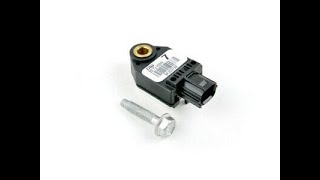
B1140 indicates the Airbag Control Module (ACM) detects a malfunction in the right-side airbag impact sensor. This sensor signals the computer during a side collision to deploy the side and curtain airbags. The active code compromises the system and illuminates the airbag warning light.
Technical definition: The SAE/ISO definition for B1140 is 'Side Airbag Sensor Assembly (Right-Hand) Malfunction'. The central computer detects an open circuit, short circuit, or internal failure in the right-side airbag sensor circuit. Toyota vehicles often display a sub-code, like B1140/32, providing specific diagnostic clues.
Can I Drive With B1140?
No — Do Not Drive. No. This code indicates a critical fault in the Supplemental Restraint System (SRS). The vehicle's computer disables the entire airbag system when this fault is detected. In a collision, none of your airbags will deploy.
Common Causes
- Water Intrusion and Corroded Wiring (Very Common) — Clogged sunroof drains or bad window seals allow water to pool under the passenger carpet. This moisture severely corrodes the sensor's electrical connector and wiring harness, interrupting the signal.
- Faulty Side Airbag Sensor (Very Common) — The sensor fails internally due to age, vibration, or manufacturing defects. This requires a direct replacement of the component. 🎬 Watch: Step-by-step guide to replacing a Toyota side impact sensor.
- Faulty Airbag Control Module (ACM) (Less Common) — The central computer fails to read the sensor signal. This requires module replacement and VIN-specific programming by a professional.
- Improper Previous Repairs (Less Common) — Poorly spliced wires or damaged connectors from a prior accident repair create incorrect circuit resistance, triggering the code.
- Blown SRS Fuse (Rare) — A blown Supplemental Restraint System fuse interrupts power to the module, triggering multiple SRS codes simultaneously.
- Low Battery Voltage (Rare) — Voltage dropping below 11.5V during engine startup causes the SRS module to fail its initial self-test, logging an erroneous code.
Symptoms
- Airbag/SRS Warning Light On — The dashboard light depicting a person with an airbag stays permanently illuminated. 🎬 See common reasons why your airbag light stays on.
- Failed State Safety Inspection — An active airbag light triggers an automatic safety inspection failure in states like New York, Texas, and Pennsylvania.
- Airbags Disabled (scan-tool only — no driver-felt sign) — The control module disables the entire airbag system as a fail-safe, leaving occupants unprotected. 🎬 Learn how to reset the SRS light after your repair.
Diagnostic Flowchart
Tap your situation to follow the diagnostic path that matches what you're seeing on this code.
Common Fixes & Costs
- Replace Side Airbag Sensor — Parts: $100-$300, Labor: $150-$300, ~1.5 hr book time (Intermediate)
- Repair Airbag Wiring Harness — Parts: $20-$50, Labor: $150-$300, ~2.0 hr book time (Advanced)
- Address Water Leaks — Parts: $10-$100, Labor: $100-$400, ~2.5 hr book time (Intermediate)
- Replace Airbag Control Module — Parts: $200-$800, Labor: $150-$300, ~1.5 hr book time (Professional)
Used vs. New Parts: Buying Guide
When a used part is worth it: Never. Salvaged airbag sensors are one-time-use safety components with unknown histories.
Donor quality checklist:
- Avoid used parts entirely for SRS components.
- Verify the new OEM part number is an exact match for your VIN.
Decision logic:
- If The part is a safety-critical sensor. → Always buy new OEM or a high-quality aftermarket equivalent.
Warranty tradeoff: Used parts carry a 30-day warranty at best. New OEM parts carry warranties of 1 year or longer.
Worst-case if a used part fails: $300 (Repeat labor costs) plus the incalculable cost of system failure in an accident.
What Happens If You Wait — Timeline
- Immediate: Code B1140 sets. The Airbag Control Module disables the entire supplemental restraint system. (MPG impact: 0%% · Added cost: $0)
- 0-12 months: The vehicle automatically fails its annual safety inspection, leading to potential fines. (MPG impact: 0%% · Added cost: $100-$200)
- 18+ months: Unaddressed water leaks cause catastrophic corrosion to the Airbag Control Module and rust through the floor pan. (MPG impact: 0%% · Added cost: $600-$2500+)
Cost of Not Fixing It
- Immediate: Complete deactivation of the entire airbag system. (Added cost: Incalculable (Risk of serious injury))
- 0-6 months: Failure of state safety inspection, preventing vehicle registration renewal. (Added cost: $100-$200 (Inspection re-test fees and fines))
- 6+ months: Unaddressed water leaks cause catastrophic corrosion to the Airbag Control Module and floor pan. (Added cost: $500-$2500+)
Diagnosis Steps
- Read Code with SRS Scanner
Use an SRS-capable OBD-II scanner to confirm B1140 is the primary code. Note any sub-codes (e.g., B1140/32) to pinpoint the exact circuit fault.
Tools: SRS-capable OBD-II Scanner (Beginner) - Perform Visual Inspection
Locate the right-side impact sensor under the passenger seat or inside the B-pillar. Pull back the carpet to check for pooled water, rust, or green corrosion on the sensor connector.
Tools: Flashlight, Trim Removal Tools (Beginner) - Check SRS Fuses
Locate the interior fuse box and inspect the dedicated SRS or airbag module fuses. Replace any blown fuses and rescan.
Tools: Owner's Manual, Fuse Puller (Beginner) - Swap Side Sensors
Disconnect the battery for 15 minutes. Swap the left and right side sensors, reconnect the battery, and rescan. If the code changes to B1141, the sensor is defective. If B1140 returns, the wiring or module is at fault.
Tools: Hand Tools, Trim Removal Tools, SRS Scanner (Advanced) - Test Sensor Circuit Continuity
Disconnect the battery and wait 15 minutes. Unplug the sensor and the Airbag Control Module. Measure resistance between the sensor connector and module connector; it must be under 1.0 ohm. Infinite resistance indicates a broken wire.
Tools: Multimeter, Wiring Diagram, Hand Tools (Advanced)
When This Code Triggers (Freeze-Frame Conditions)
- System State: Ignition ON (The SRS module performs a self-test every time the ignition turns on. B1140 sets during this initial check.)
- Battery Voltage: 11.5V - 14.5V (Voltage dropping below 11.5V during the startup self-test triggers erroneous SRS codes.)
- Fault Type: Open/Short/Invalid Resistance (Indicates if the module detected an open circuit, a short to ground, or an out-of-spec resistance value.)
Related Codes
- B1141 — Indicates a 'Side Airbag Sensor Assembly (Left-Hand) Malfunction.' Swapping sensors to see if the code changes to B1141 confirms a faulty sensor.
- B1100 — A general 'Airbag ECU Malfunction' code. Seeing B1100 alongside B1140 indicates the central module is failing.
Climate & Environmental Factors
- High Humidity / Water Intrusion: Moisture corrodes the sensitive pins of the sensor connectors. This corrosion creates unwanted resistance, triggering B1140 faults that are frequently misdiagnosed as a failed sensor.
- Extreme Cold: Temperatures below 0°F (-18°C) contract electrical connections, triggering false codes. Toyota issued TSB EL012-03 for 2001-2003 Highlanders specifically addressing this cold-weather module fault.
How to Talk to a Mechanic About This Code
Say this: "I have an airbag warning light on, and my scanner shows code B1140 for the right-side airbag sensor. Based on my research, a common cause is wiring corrosion from a water leak under the carpet. Could you please ensure the technician inspects the wiring and connector for corrosion before recommending a sensor replacement?"
This directs the shop to perform a thorough diagnosis rather than immediately replacing the most expensive part. It encourages honest troubleshooting.
Avoid saying:
- 'My airbag light is on, can you just fix it?'
- 'I think I need a new airbag sensor.'
Questions to ask before authorizing the repair:
- Did you find the root cause? Was it the sensor itself, the wiring, or the connector?
- Did you check for any signs of water intrusion under the passenger-side carpet?
- Can you show me the damaged part after it's been removed?
Where to Take It: Dealer vs Independent vs Chain
- Dealer:
A safe but expensive choice. Recommended if the repair requires programming a new control module.
Best for: Vehicles under warranty, Repairs requiring module programming
Downsides: Highest labor rates, Defaults to component replacement over wiring repair (Typical cost: +50% vs. baseline) - Independent Shop:
Best fit. An experienced independent shop is more likely to trace and fix a wiring issue, saving you money over an unnecessary sensor replacement.
Best for: Out-of-warranty vehicles, Electrical diagnostics and wiring repairs
Downsides: Requires vetting through reviews and ASE certifications (Typical cost: +0% vs. baseline) - Chain Shop:
Not recommended. Airbag repairs are safety-critical and require specialized knowledge.
Best for: Simple jobs like oil changes and brakes
Downsides: Technician skill with complex SRS systems is inconsistent (Typical cost: -10% vs. baseline)
When to Walk Away From the Repair
If the estimated repair cost exceeds 50% of your car's private-party market value, consider selling it instead of repairing it.
- Car worth $3000, fix is $650: Fix it. The cost is below the 50% threshold and is necessary for the vehicle to pass a safety inspection.
- Car worth $4000, fix is $2200: Walk away. The repair cost is over 50% of the car's value. The underlying issue indicates severe water damage.
What Scan Tool You Need for This Code
Minimum: An OBD-II scanner that reads and clears SRS (Airbag) codes.
A standard $20 engine code reader only reads 'P' (Powertrain) codes and cannot see 'B' (Body) codes like B1140.
Budget: BlueDriver Pro Bluetooth Scanner (~$100) — Connects to your smartphone to read and clear SRS codes on a wide range of manufacturers.
Mid-range: Foxwell NT630 Plus (~$150) — A dedicated handheld unit offering comprehensive SRS diagnostics, live sensor data, and fault clearing.
Professional: Autel MaxiSys MS906Pro (~$1200) — Provides dealership-level diagnostics, component actuations, and programming for a new Airbag Control Module.
Rent vs buy: Buying an affordable SRS-capable scanner like the BlueDriver is a worthwhile investment, as many auto parts store loaner tools cannot read airbag codes.
How to Clear the Code After You Fix It
- Ensure the underlying fault is repaired and the battery is reconnected.
- Use an SRS-capable OBD-II scan tool to select the 'Clear Codes' function.
- Cycle the ignition off, then turn it back to the 'ON' position.
- Observe the SRS light. It illuminates for a 5-second self-test and then turns off permanently.
Drive cycle (~10 minutes): SRS codes do not require a complex drive cycle. The system self-tests upon startup. A 10-minute test drive confirms the light stays off.
Readiness monitors affected: None. SRS codes do not affect emissions monitors.
Watch out for:
- Using a basic $20 engine code reader that cannot communicate with the SRS module.
- Failing to fix the root cause; the code returns immediately after clearing.
- Attempting to clear hard crash data with a standard scanner.
Will This Fail Emissions / State Inspection?
No — by itself this code doesn't fail OBD inspection (but it can keep readiness monitors from setting, which causes a separate fail).
- California: An airbag light does not cause a smog check failure, but technicians refuse dynamometer testing for safety reasons.
- New York: An illuminated airbag warning light is an automatic failure of the annual safety inspection.
- Texas: The airbag warning lamp is checked during the annual safety inspection. If it is on, the vehicle fails.
Most Commonly Affected Vehicles
- Toyota Highlander (2001-2003) — TSB EL012-03 documents extreme cold causing B1140. The fix is an updated Center Airbag ECU.
- Toyota Corolla (2003-2008) — Frequently reports B1140 due to a direct failure in the right-side airbag sensor circuit.
- Toyota Avalon (2000-2004) — Owners report simultaneous B1140 and B1141 codes, pointing to central wiring issues.
- Lexus RX (1999-2003) — Logs code B1140 when the right-side impact sensor fails. Often misdiagnosed as a bad Airbag ECU.
- Nissan Micra (1996-2007) — B1140 points to a 'Diagnosis Sensor Unit' fault within the Airbag Control Module, requiring a module reset.
- Ford Crown Victoria (2005-2011) — Relates to the side impact sensor (Part #5W1Z-14B345-AA). The sensor is identical for both sides, allowing diagnostic swapping.
Manufacturer-Specific Notes
- Honda / Acura: B1140 means 'Driver's Power Window Position Detect Circuit Malfunction.' This is a power window issue and has nothing to do with the airbag system.
- Toyota / Lexus: B1140 strictly refers to the right-hand (passenger side) impact sensor or its immediate circuit.
- Nissan: B1140 indicates an internal 'Diagnosis Sensor Unit' fault in the main Airbag Control Module, requiring a specialized reset service.
Real Owner Stories
2003 Toyota Highlander with B1140 in extreme cold
The airbag light appeared only on mornings below 0°F and cleared after the cabin warmed up.
What they tried:
- Initial diagnosis pointed to a faulty sensor.
- Research uncovered TSB EL012-03 for 2001-2003 Highlanders.
Outcome: The TSB confirmed extreme cold causes the center airbag ECU to incorrectly report a sensor fault. The fix was replacing the ECU, not the sensor.
Lesson: If a fault correlates with extreme temperatures, check for TSBs before replacing components.
Toyota owner finds wet carpet and corroded connector
SRS light illuminated with code B1140. The owner planned to order a new sensor but performed a visual inspection first.
What they tried:
- Pulled back the passenger carpet.
- Found dampness and green corrosion on the sensor's electrical connector.
Outcome: The owner cleaned the connector pins with contact cleaner, applied dielectric grease, and cleared the code. The root cause was a clogged sunroof drain.
Lesson: Always perform a visual inspection for water intrusion. A $10 can of contact cleaner saves you from a $200 sensor replacement.
How to Prevent This Code From Triggering
- Clean sunroof drains and door seals. (Twice a year) — Clogged drains cause water to pool on the floor, corroding the airbag sensors and wiring located under the carpet.
- Inspect and clean under-seat electrical connectors. (Every 30,000 miles) — Applying dielectric grease to under-seat connectors prevents moisture intrusion and poor contact.
Frequently Asked Questions
Is it safe to drive my car with a B1140 code?
No. The vehicle disables the entire SRS system as a precaution when this code triggers. In a crash, none of your airbags will deploy.
Will my front airbags still work if I have a B1140 code?
Assume they will not. A fault in one part of the Supplemental Restraint System causes the control module to disable the entire network. When the SRS light is on, all airbags are inactive.
How much does it cost to fix code B1140?
Replacing the sensor costs $250 to $600 for parts and labor. Wiring repairs average $150 to $300. A blown fuse costs under $5 to fix.
What is the most common misdiagnosis for B1140?
Mechanics often replace the sensor when the actual fault is a corroded connector caused by a water leak. Always inspect the wiring under the carpet for dampness before buying parts. Cleaning a connector is much cheaper than replacing a sensor.
Can I fix code B1140 myself?
You can safely perform basic visual inspections and fuse checks. However, leave wiring repairs and module replacements to professionals. Always disconnect the battery for 15 minutes before touching yellow airbag connectors to prevent accidental deployment.
Can I use a used airbag sensor from eBay or a junkyard?
Never use a salvaged airbag sensor. It is a one-time-use safety component that may have hidden internal damage or flood exposure. Always buy a new OEM or certified aftermarket part.
How do I reset the airbag light after fixing the problem?
Once repaired, clear the code using an SRS-capable OBD-II scanner. If the light returns immediately, the underlying fault still exists. Hard crash data requires a professional module reset service.
I have a Honda and got code B1140, but my airbag light isn't on. Why?
On Honda and Acura vehicles, B1140 indicates a fault in the driver's power window circuit, not the airbag system. You will likely experience issues with the auto up/down window feature. The airbag light remains off for this specific issue.
Key Takeaways
- Code B1140 disables your entire airbag system, requiring immediate repair to restore passenger safety.
- Water intrusion under the passenger seat causes a large percentage of these faults by corroding the sensor wiring harness.
- Disconnect the battery and wait exactly 90 seconds before touching any yellow SRS connectors to prevent accidental deployment.
- Do not replace the $200 sensor until you verify the floor pan is completely dry and the connector pins are free of green corrosion.
Helpful Videos

The information in this article is provided for general reference and educational purposes only. Vehicle specifications, procedures, and part compatibility can vary by production date, trim level, and region. Always consult your vehicle's factory service manual and verify part numbers before purchasing or performing repairs. Safety-critical components such as airbags, seat belts, and braking systems should be installed by a qualified professional.
- 🎬 Helpful Videos
- What Does B1140 Mean?
- Can I Drive With B1140?
- Common Causes
- Symptoms
- Diagnostic Flowchart
- Common Fixes & Costs
- Used vs. New Parts: Buying Guide
- What Happens If You Wait — Timeline
- Cost of Not Fixing It
- Diagnosis Steps
- When This Code Triggers (Freeze-Frame Conditions)
- Related Codes
- Climate & Environmental Factors
- How to Talk to a Mechanic About This Code
- Where to Take It: Dealer vs Independent vs Chain
- When to Walk Away From the Repair
- What Scan Tool You Need for This Code
- How to Clear the Code After You Fix It
- Will This Fail Emissions / State Inspection?
- Most Commonly Affected Vehicles
- Manufacturer-Specific Notes
- Real Owner Stories
- 2003 Toyota Highlander with B1140 in extreme cold
- Toyota owner finds wet carpet and corroded connector
- How to Prevent This Code From Triggering
- Frequently Asked Questions
- Is it safe to drive my car with a B1140 code?
- Will my front airbags still work if I have a B1140 code?
- How much does it cost to fix code B1140?
- What is the most common misdiagnosis for B1140?
- Can I fix code B1140 myself?
- Can I use a used airbag sensor from eBay or a junkyard?
- How do I reset the airbag light after fixing the problem?
- I have a Honda and got code B1140, but my airbag light isn't on. Why?
- Key Takeaways
- 🎟️ Get 5% Off