

OBD-II Code B1112: Supplemental Restraint System (SRS) Voltage Issue
The Definitive Guide to Understanding, Diagnosing, and Fixing Code B1112
- Code B1112 triggers when the airbag control module voltage drops below 9.0V, most frequently caused by a dying battery or failing alternator.
- Driving with an active B1112 code disables your entire airbag system and seatbelt pre-tensioners, increasing frontal crash fatality risk by 29%.
- Manufacturer definitions for B1112 vary wildly; it means 'Low Battery Voltage' on a Hyundai, but indicates a 'Twilight Sentinel' headlight fault on many GM trucks.
- Never replace the $800 Airbag Control Module without first performing a free battery load test and checking the 15-amp interior SRS fuses.
What Does B1112 Mean?

Code B1112 indicates the Supplemental Restraint System Control Module (SRSCM)—the computer controlling your airbags—detects a power supply problem. The voltage it receives is either too low, too high, or the circuit is compromised. This triggers the dashboard airbag warning light and completely disables the airbag system. Consequently, the airbags will not deploy during an accident, placing occupants at a significantly higher risk of injury or death.
Technical definition: The formal definition of B1112 varies wildly by manufacturer. For Hyundai and Kia, it means 'Battery Voltage Low,' triggering when the SRSCM detects input voltage below 9.0V for a set period. For General Motors, it indicates a fault in an unrelated system like the twilight sentinel (automatic headlight sensor). For Fiat or Chrysler, it points to a 'Run Relay Command - Circuit Current Above/Below Threshold,' indicating a short or open ignition circuit detected by the Body Control Module (BCM). Using a scanner with manufacturer-specific code definitions is mandatory for an accurate diagnosis.
Can I Drive With B1112?
Yes, But With Caution. You can mechanically drive the vehicle, but doing so carries a severe safety risk. Code B1112 disables the entire airbag system and seatbelt pre-tensioners, meaning they will not deploy in a crash. Frontal airbags reduce driver fatalities by 29%, and driving with this light active strips you of this protection. Furthermore, an active airbag light guarantees an automatic failure during state safety inspections in jurisdictions like Virginia and Pennsylvania. Tow the vehicle or drive directly to a repair facility.
Common Causes

- Weak or Failing Battery (Very Common) — The most frequent cause is a dying battery. The airbag module requires stable voltage. An old or drained battery triggers this code during engine startup when voltage drops significantly below the 9.0V threshold.
- Faulty Charging System (Alternator) (Common) — A failing alternator fails to charge the battery, causing overall system voltage to drop below the minimum threshold required by the SRSCM.
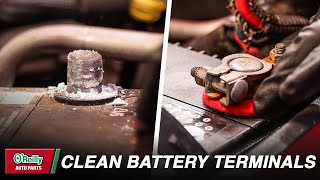
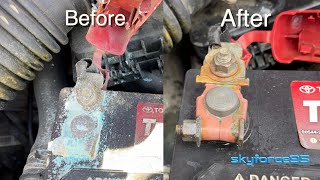
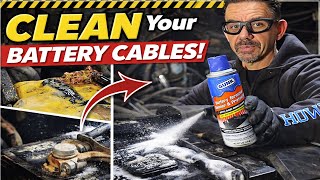
- Corroded or Loose Battery Terminals/Grounds (Common) — Corrosion on battery terminals or a loose main chassis ground strap 🎬 Watch: How to clean corroded battery terminals and grounds creates high electrical resistance. This starves the airbag module of adequate voltage, even with a healthy battery and alternator.
- Blown Fuse (Common) — A blown fuse for the SRS, ignition, or related control module circuit cuts power instantly. This frequently occurs on Subaru models after a battery replacement, specifically blowing a 15A cabin fuse.
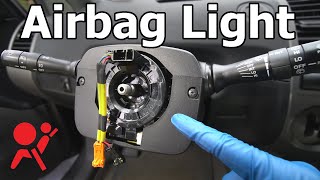
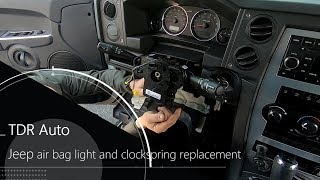
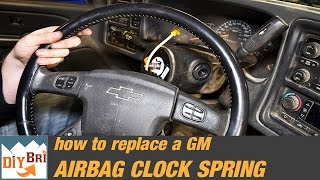
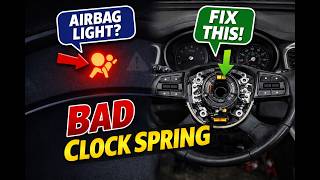
- Faulty Clock Spring (Less Common) — The clock spring is a coiled wire in the steering column connecting the driver's airbag. Internal wire breakage causes an open circuit, triggering B1112 on many Ford and Lincoln models.
- Damaged Wiring or Connectors (Less Common) — Wiring leading to the SRSCM degrades, frays, or disconnects. Yellow-sheathed wiring harnesses under the front seats (occupant sensors) and in the steering column are prime failure points.
- Parasitic Battery Drain (Less Common) — A module failing to 'go to sleep' drains the battery overnight. This creates a low-voltage state upon startup, which the SRSCM flags as code B1112.
- Faulty Airbag Control Module (SRSCM) (Rare) — In rare cases, the control module fails internally, incorrectly reporting a voltage issue. Only consider this after exhausting all wiring, battery, and alternator diagnostics.
Symptoms

- Airbag Warning Light is On — This is the most common and often the only direct symptom. The light, typically showing a person with a seatbelt and an airbag, remains illuminated on the dashboard.
- Vehicle Won't Start or Has Intermittent Starting Issues — If the root cause is a severely discharged battery, a faulty charging system, or a blown ignition fuse, you experience a no-start or intermittent crank-no-start condition.
- Horn, Cruise Control, or Steering Wheel Buttons Inoperative — In vehicles where B1112 links to a faulty clock spring (common in Fords), you lose functionality of the horn, cruise control, or audio buttons located on the steering wheel. 🎬 See how to replace a clock spring on Kia models
- Automatic Headlights Malfunction — On certain GM vehicles, this code specifically points to a problem with the 'Twilight Sentinel' (automatic headlight sensor), causing the headlights to stay on or fail to turn on automatically.
- Low System Voltage in Live Data (scan-tool only — no driver-felt sign) — Using a scan tool, a technician views the voltage reported by the SRSCM. A value below the manufacturer's threshold (e.g., 9.0V) confirms the fault condition.
Diagnostic Flowchart
Tap your situation to follow the diagnostic path that matches what you're seeing on this code.
Common Fixes & Costs
- Replace Vehicle Battery — Parts: $150-$350, Labor: $30-$80, ~0.7 hr book time (DIY)
- Replace Blown Fuse — Parts: $1-$5, Labor: $0-$50, ~0.2 hr book time (DIY)
- Clean or Repair Ground Connections — Parts: $5-$20, Labor: $50-$150, ~1 hr book time (DIY)
- Replace Clock Spring — Parts: $70-$450, Labor: $150-$300, ~1.5 hr book time (Intermediate)
- Repair Damaged Wiring or Connector — Parts: $10-$50, Labor: $150-$450, ~2.5 hr book time (Professional)
- Replace Airbag Control Module (SRSCM) — Parts: $450-$1,700, Labor: $140-$400, ~2 hr book time (Professional)
Used vs. New Parts: Buying Guide
When a used part is worth it: For a clock spring, a new aftermarket part is a better value than used OEM. For the Airbag Control Module (SRSCM), a used part only makes sense if guaranteed to be from a non-crashed vehicle, is an exact part number match, and you have access to a dealer who can reprogram it to your car's VIN. Having your original module professionally reset is safer than buying a used one.
Donor-vehicle mileage cap: roughly under 60000 miles for the part to have meaningful remaining life.
Donor quality checklist:
- Verify the donor vehicle was not in a crash and did not have airbags deployed.
- Ensure the part number on the SRSCM is an exact match.
- Avoid parts from flood-damaged or fire-damaged vehicles, as moisture ruins electronics.
- Purchase only from reputable automotive recyclers.
Decision logic:
- If The part is a clock spring → Buy a new high-quality aftermarket or OEM part. The labor cost to replace it makes saving money on a used part with unknown lifespan a poor gamble.
- If The part is the SRSCM and your original module is physically damaged → A used module is a budget option, but requires professional VIN programming. A new OEM module is the safest but most expensive choice.
- If The part is the SRSCM and your original module is not physically damaged → Send your original module to a reputable service for a reset. This is cheaper than a used module and avoids programming and compatibility issues.
Warranty tradeoff: Used parts typically have a 30-90 day warranty. New aftermarket parts carry a 1-year to limited lifetime warranty. New OEM parts carry a 12-month/12,000-mile warranty.
Worst-case if a used part fails: $500-$1000 if a used SRSCM is incorrect or fails after installation, requiring repeat labor and the purchase of another part.
What Happens If You Wait — Timeline
- Immediate: Code B1112 is set. The airbag warning light illuminates, and the entire Supplemental Restraint System (airbags, pre-tensioners) is disabled. (MPG impact: 0%% · Added cost: $0 (Safety Risk is the primary cost))
- 1-4 weeks (if caused by weak battery/alternator): The underlying electrical issue worsens. You experience slow engine cranking, especially on cold mornings. Headlights dim or flicker during idle. (MPG impact: 0-2%% · Added cost: $50-$150 (Cost of being stranded, requiring a tow or emergency jump-start))
- 1-3 months (if caused by failing alternator): The alternator stops charging the battery. The vehicle runs solely on battery power until completely depleted, stalling while driving. This damages the battery and potentially other sensitive electronics. (MPG impact: 2-5%% · Added cost: $400-$800 (Cost to replace a failed alternator and a ruined battery))
- 1-6+ months (if caused by failing clock spring): The internal wires of the clock spring continue to degrade. You progressively lose functions like the horn, cruise control, and steering wheel audio buttons. This is a severe safety hazard. (MPG impact: 0%% · Added cost: $250-$700 (Cost of replacing the clock spring assembly))
Cost of Not Fixing It
- Immediate: Airbag system is disabled. In the event of a crash, airbags will not deploy, and seatbelt pre-tensioners will not activate, drastically increasing the risk of serious injury or death. (Added cost: N/A (Safety Risk))
- Next Vehicle Inspection: Guaranteed failure of the vehicle's safety inspection in many states. This prevents you from legally registering or driving the vehicle. (Added cost: $20-$70 (Failed inspection fee) + cost of repair)
- Long-Term: There is no escalating parts damage from ignoring a B1112 code itself. The risk remains purely a critical safety failure. If the cause is a faulty clock spring, other steering wheel functions eventually fail. (Added cost: Negligible)
Diagnosis Steps

- Scan for All Trouble Codes
Use an OBD-II scanner that reads SRS (airbag) codes. A basic code reader will not suffice. Note the exact B1112 definition provided by the scanner and look for accompanying codes. For example, B1111 (Voltage High) appearing with B1112 points strongly to a faulty alternator.
Tools: OBD-II Scanner (SRS capable) (Beginner) - Perform a Comprehensive Battery and Charging System Test
Do not rely on a simple voltage check. Use a multimeter to test battery voltage with the car off (12.4-12.6V). Start the engine and check charging voltage (13.7-14.7V). Have an auto parts store perform a load test on the battery to check its health under stress.
Tools: Multimeter, Battery Load Tester (Beginner) - Check SRS and Ignition Related Fuses
Consult your owner's manual to locate the fuse boxes. Visually inspect and test all fuses related to the SRS, Airbag, BCM, and Ignition circuits. On Subarus, a 15A fuse in the interior fuse panel is a known failure point after a battery change.
Tools: Fuse puller, Multimeter (Beginner) - Inspect All Power and Ground Connections
Inspect battery terminals for corrosion. Clean them with a wire brush. Follow the main negative battery cable to where it bolts to the chassis and engine block. Remove the bolt, clean contact surfaces to bare metal, and re-tighten securely.
Tools: Wire brush, Socket set (Beginner) - Test Steering Wheel Functions
Check if the horn, cruise control, and steering wheel-mounted buttons work correctly. If they are inoperative alongside an airbag light, the clock spring is the primary suspect, especially on Ford, Lincoln, and Chrysler vehicles.
Tools: None required (Beginner) - Analyze Scan Tool Live Data
Using an advanced scanner, monitor live data PIDs for the SRSCM. Watch 'SRSCM Input Voltage'. This value must be nearly identical to 'Battery Voltage'. If the SRSCM voltage is significantly lower than battery voltage, it indicates high resistance in the power feed or ground circuit.
Tools: Advanced Bi-directional Scanner (Advanced) - Perform a Voltage Drop Test on Power and Ground Wires
To test the SRSCM ground, set your multimeter to DC millivolts (mV). With the system on, place one probe on the SRSCM ground pin and the other on the negative battery terminal. A reading over 100mV indicates a poor ground connection. Repeat for the power side; a reading over 200mV suggests a power feed wire problem.
Tools: Multimeter, Wiring Diagram, T-pins (Advanced) - Perform a Parasitic Draw Test
If the battery keeps dying, perform a parasitic draw test. Let the vehicle sit for 60 minutes. Disconnect the negative battery terminal. Place a multimeter (10A DC setting) in-line between the terminal and cable. A normal draw is under 50-85mA. If higher, pull fuses one by one until the draw drops.
Tools: Multimeter (with 10A capacity) (Advanced) - Inspect Wiring Harnesses and Connectors
Visually inspect all accessible wiring related to the SRS system, identified by bright yellow sheathing. Check connectors under the front seats, at the base of the steering column, and at the SRSCM itself. Look for damage, corrosion, or unseated connectors.
Tools: Flashlight, Inspection mirror (Intermediate)
When This Code Triggers (Freeze-Frame Conditions)
- Module Voltage: 7.0V - 9.0V (The code sets when the SRSCM voltage drops below the manufacturer's threshold (often 9.0V) for a specified duration.)
- Event: Engine Cranking (The trigger is the large voltage drop occurring when starting the engine, especially with a weak battery or in cold weather.)
- Ignition Status: ON / CRANK (The fault logs when the ignition is on and the module performs its self-checks or monitors system voltage.)
- Time: > 2 seconds (The low voltage condition must persist for a few seconds before the module flags it as a hard fault and illuminates the warning light.)
Related Codes
- B1111 — This code means 'Battery Voltage High'. If you see B1111 and B1112 together, it strongly suggests a problem with the charging system's voltage regulator. Test the alternator's output.
- B1102 — A general 'Battery Voltage Low' code, specific to the OCS in Hyundai/Kia vehicles. Seeing both B1102 and B1112 confirms the issue is with the vehicle's main power supply or a grounding problem.
- U0151 — This means 'Lost Communication with Restraints Control Module.' This is more severe than B1112. While B1112 means the module has low power, U0151 means the module is completely offline. Check main power and ground fuses first.
- B00A0 — This code relates to an 'Occupant Detection Sensor Unit' fault, common in Nissan vehicles. If seen with B1112, the voltage problem is specific to the passenger seat's Occupant Classification System (OCS).
Climate & Environmental Factors
- Cold Weather: Low temperatures reduce a battery's chemical efficiency and cranking power. At -18°C (0°F), a battery has only 40% of its cranking power available. This voltage drop during startup is a primary trigger for code B1112.
- High Humidity: Humid environments, especially coastal areas with salt air, accelerate corrosion on battery terminals, ground points, and connector pins. This corrosion increases electrical resistance, causing voltage drops at the SRSCM.
How to Talk to a Mechanic About This Code
Say this: "I have an airbag light on and my scanner shows code B1112, which I understand is a voltage issue for the SRS module. I'd like to schedule a diagnostic appointment. Please start by performing a comprehensive battery and charging system test, including a battery load test and checking for voltage drops at the module, before looking at more expensive SRS components."
This signals to the shop that you are an informed consumer. It directs them to follow a logical, cost-effective diagnostic path, starting with the most common and cheapest problems (battery, alternator, grounds) rather than immediately quoting an expensive and likely unnecessary SRS control module.
Avoid saying:
- 'My airbag light is on, can you just fix it?'
- 'I think I need a new airbag computer.'
- 'Just do whatever you think is necessary.'
Questions to ask before authorizing the repair:
- What were the results of the battery load test and the charging system output?
- Did you check the main power and ground connections for corrosion or looseness?
- Can you show me the voltage reading you are getting at the SRS control module itself?
- If you are recommending a module or clock spring, can you explain how you ruled out a simple wiring or power supply problem?
Where to Take It: Dealer vs Independent vs Chain
- Dealer:
Best for: Vehicles under warranty, Complex, manufacturer-specific electrical quirks, Repairs that require replacement and programming of the SRSCM
Downsides: Highest labor rates, Defaults to replacing expensive modules rather than performing detailed wiring or ground repairs (Typical cost: +50% vs. baseline) - Independent Shop:
Best fit for initial diagnosis. A good independent shop solves 80% of B1112 causes cost-effectively. If they diagnose a failed SRSCM, you still need the dealer for the final replacement and programming.
Best for: Out-of-warranty vehicles where cost is a factor, Diagnosing and repairing the most common causes of B1112 (battery, alternator, fuses, grounds), Shops with good reviews and ASE-certified technicians specializing in electrical diagnostics
Downsides: Lacks specific tools to reprogram a new SRS module if one is needed, requiring a second trip to the dealer, Quality and diagnostic capability vary widely from shop to shop (Typical cost: +0% vs. baseline) - Chain Shop:
Use for a free battery test, but AVOID for the actual SRS diagnosis and repair. Their limited diagnostic scope leads to an incorrect conclusion or a recommendation to go elsewhere.
Best for: Free or low-cost battery and alternator testing as a first step
Downsides: Technicians lack specialized training for SRS diagnostics, High pressure to upsell common items; misdiagnoses the electrical fault as something simpler, Not equipped to handle complex electrical or module-level repairs (Typical cost: -10% vs. baseline)
When to Walk Away From the Repair
If the estimated repair cost exceeds 50% of the car's private-party value, you should seriously consider selling or trading in the vehicle. However, because this is a critical safety issue, the decision is more urgent than with other codes.
- Car worth $5000, fix is $2500: Borderline. This repair cost is right at the 50% threshold. Get a second opinion to confirm the diagnosis before proceeding.
- Car worth $15000, fix is $700: Fix it. The repair cost is well below the threshold and restores a critical safety feature.
- Car worth $3000, fix is $1800: Walk away. The repair cost is over 50% of the car's value. It is not economical to invest this much into an aging vehicle.
What Scan Tool You Need for This Code

Minimum: A scanner that reads and clears SRS/Airbag (B-series) fault codes.
A standard $20 OBD-II reader only accesses the engine control unit (powertrain codes). It cannot communicate with the Supplemental Restraint System (SRS) module, so it will not see code B1112 or clear the airbag light.
Budget: BlueDriver Pro (~$100) — Reads and clears SRS/airbag codes on many major brands. It provides live data, allowing you to monitor system voltage as seen by the car's computers.
Mid-range: Foxwell NT510 Elite / NT630 Plus (~$180) — Provides robust SRS/ABS diagnostics, including reading/clearing codes and viewing live sensor data. Some models offer bi-directional controls to test specific components.
Professional: Autel MaxiCOM MK808 (~$500) — Offers comprehensive, dealer-level diagnostics for all vehicle modules, including SRS. It reads and clears codes, graphs live data, and performs special functions and resets.
Rent vs buy: Most auto parts stores do NOT rent out scanners with SRS capabilities. If this is a one-time fix, buying a budget-friendly SRS-capable scanner is your best bet. If you plan to do more DIY repairs, investing in a mid-range tool is a wise choice.
How to Clear the Code After You Fix It
- Ensure the underlying fault (e.g., weak battery, bad ground) is fully repaired.
- Reconnect the battery if it was disconnected for the repair.
- Use an SRS-capable OBD-II scan tool to read and clear the fault codes from the Restraints Control Module.
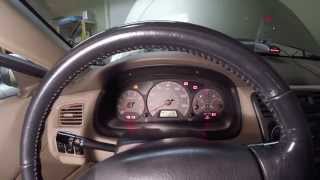
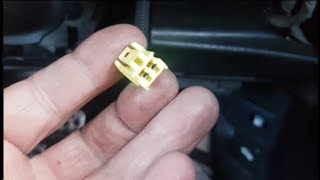
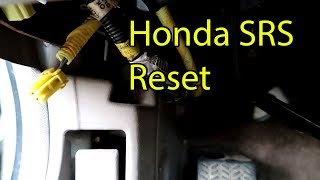
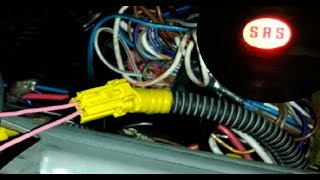
- For older Honda models, a manual reset procedure involving jumping the MES connector under the dashboard is required.
Drive cycle (~10 minutes): An SRS-specific drive cycle is not required. After clearing the code, start the vehicle. The SRS light illuminates for 6 seconds for a system self-check and then turns off. A short 10-minute drive confirms the light stays off.
Readiness monitors affected: None directly. The SRS system is separate from the powertrain readiness monitors required for emissions testing.
Before emissions retest: drive at least 50 miles to fully set monitors.
Watch out for:
- Using a basic code reader that cannot access or clear SRS (B-prefix) codes.
- Simply disconnecting the battery, which does not clear SRS fault memory.
- Not fixing the root cause of the low voltage, causing the code to return immediately after being cleared.
- On Hondas, failing to perform the specific manual reset sequence correctly.
Will This Fail Emissions / State Inspection?
No — by itself this code doesn't fail OBD inspection (but it can keep readiness monitors from setting, which causes a separate fail).
- California: An airbag light will NOT cause a failure of the California Smog Check, as the SRS system is not part of the emissions control equipment.
- New York: During a NYS safety inspection, an illuminated airbag light is recorded as an advisory notification to the driver but it is NOT a cause for inspection failure.
- Texas: The Texas safety inspection program checks the horn and other items, but an illuminated airbag light itself is not listed as a specific failure criterion in the standard inspection.
- Virginia / Pennsylvania: In states with comprehensive annual safety inspections like VA and PA, an illuminated airbag warning light indicates a fault in a key safety system and results in an automatic inspection failure.
Most Commonly Affected Vehicles
- Hyundai Elantra, Santa Fe, Tiburon, Terracan (2001-2018) — These models commonly report B1112 for low battery voltage. On some models, the code is triggered by the Weight Classification System (WCS) under the passenger seat.
- Ford F-150, Focus, Fusion, Explorer (2010-2018) — An airbag light with related codes often points to a faulty clock spring. TSB 12-5-11 was issued for some Explorers for intermittent airbag lights due to connector issues.
- Lincoln Town Car, MKZ (2005-2012) — Often related to airbag system faults, including clock spring and sensor wiring. TSB 23-2095 exists for some HEV models for battery control module software updates.
- Chevrolet / GMC Silverado, Sierra, Tahoe, Suburban, Colorado (1998-2014) — B1112 relates to a failure of the Twilight Sentinel sensor, which controls the automatic headlights. TSB 18-NA-102 addresses harness chafing issues on some models.
- Kia Picanto, Sorento, Optima (2005-2015) — These vehicles set B1112 when the SRSCM detects low ignition or battery voltage. An object under the passenger seat disturbs the Occupant Classification Sensor connector, triggering the fault.
- Subaru Impreza, Forester, Outback, Crosstrek (2012-2020) — A B1112 code, accompanied by a no-start condition, triggers after a battery replacement. The cause is a blown 15-amp fuse in the interior fuse panel.
- Nissan Altima, Sentra, Rogue (2007-2018) — B-codes relate to the Occupant Classification System (OCS). A B1112 points to a voltage issue within the OCS module or its wiring under the passenger seat. TSB NTB19-071B addresses related OCS faults.
- Honda Accord, Civic, CR-V (2001-2019) — Disconnecting the battery causes the SRS light to store a fault code that won't clear on its own. A manual reset procedure using a paperclip to jump the MES connector under the dash is required.
Manufacturer-Specific Notes
- Hyundai / Kia: The definition is 'Ignition Voltage Low' or 'Battery Voltage Low'. The problem is frequently a weak battery or failing alternator. The SRSCM sets the code if voltage is below 9.0V for a few seconds.
- General Motors (Chevrolet, GMC, Cadillac, Buick): This code associates with a failure of the 'Twilight Sentinel' or ambient light sensor. It is also caused by wiring harness chafing. Check TSB 18-NA-102 for harness repair procedures.
- Ford / Lincoln: B-codes in this range on Fords tie to the airbag system. Common culprits are a bad clock spring, faulty seat belt pre-tensioner connectors, or a bad Restraints Control Module (RCM).
- Subaru: A B1112 code appears after battery service, causing a no-start condition. Check the 15A fuse in the cabin fuse box (fourth from the top, left-hand column).
- Honda: A temporary low voltage event sets a 'permanent' SRS code that cannot be cleared by a standard scanner. A manual reset procedure involving jumping the MES connector under the dashboard is required.
Real Owner Stories
2018 Subaru Crosstrek - Easy Fix
Airbag light came on and the car would not start immediately after replacing the battery. The code was B1112.
Outcome: A forum search revealed a common issue with Subarus. The owner checked the 15-amp fuse in the interior fuse panel (fourth from the top in the left-hand column) and found it blown. Replacing this $2 fuse resolved the no-start condition and allowed the SRS code to clear.
Lesson: On Subaru models, always check the specific 15A interior fuse after any battery service (replacement or jump-start) before beginning a complex diagnosis for B1112.
2018 Nissan Sentra - Misdiagnosis Story
The battery died unexpectedly. After getting a jump-start and replacing the battery, the airbag light remained on, showing a low voltage code.
Outcome: The owner was skeptical because the problem started precisely when the battery died. The issue was a 'latched' low voltage code stored in the SRS module that was not properly cleared, rather than a complete system failure.
Lesson: Be skeptical of a major component replacement quote immediately following a simple battery event. Low voltage events set persistent codes requiring specific reset procedures, often misdiagnosed as catastrophic component failures.
BMW Z4 - The 'Latched' Code
After the battery went completely dead from leaving the key on, the owner jump-started the car. The car ran fine, but the airbag light illuminated and would not go away.
Outcome: This is a classic 'latched' SRS fault code. The low voltage event triggered the error, and once set, it cannot be cleared by consumer-level scan tools or by disconnecting power. It requires a manufacturer-specific tool to perform the reset function on the SRS module itself.
Lesson: An SRS light appearing after a dead battery that won't clear with a standard tool is not a hardware problem. It is a stored 'hard fault' requiring a powerful scan tool to reset.
How to Prevent This Code From Triggering
- Perform Annual Battery Load Test (Once per year (especially before winter)) — A load test is the only reliable way to gauge a battery's true health. It detects a weak battery that shows normal voltage but causes a voltage drop under the stress of starting the engine, which is the primary trigger for code B1112.
- Clean Battery Terminals and Apply Protectant (Every 12 months or at every oil change) — Corrosion on battery terminals acts as an insulator, creating high resistance that chokes off voltage to the entire vehicle, including the SRS module. Cleaning with a wire brush and applying terminal protector prevents this buildup.
- Inspect and Secure Main Ground Straps (Every 24 months) — The main chassis and engine ground straps are critical. A loose or corroded ground prevents a stable return path for current, causing erratic voltage drops across various modules. Ensure they are tight and connected to clean, bare metal.
- Use a Battery Tender for Long-Term Storage (Any time the vehicle is parked for more than 2-3 weeks) — Normal parasitic draw drains a battery over several weeks. A battery tender provides a low-amperage charge keeping the battery at an optimal level, preventing the low-voltage state that sets a B1112 code upon restart.
Frequently Asked Questions
Can I reset the airbag light myself?
Sometimes. If the code was from a temporary low voltage event, fixing the cause and clearing the code with an SRS-capable scanner works. On some vehicles like Honda, a special manual reset procedure is needed. If the fault is persistent, the light returns immediately.
Is a B1112 code dangerous?
The code itself is not dangerous, but its consequence is critical. It signifies your vehicle's airbags and restraint systems are disabled and will not function in an accident. This dramatically increases the risk of serious injury or death.
Why did the airbag light come on after my battery died or I got a jump-start?
During the low-voltage event, the airbag control module (SRSCM) detects the voltage drop and stores fault code B1112 in its memory. Even after installing a new battery, this 'latched' code remains stored. It must be actively cleared by a capable scan tool or a specific manual procedure.
What is a clock spring and why does it fail?
A clock spring is a coiled ribbon of wires inside your steering column. It allows the steering wheel to turn while maintaining a constant electrical connection for the driver's airbag, horn, and steering wheel buttons. It fails due to the mechanical stress of millions of rotations, causing internal wires to break.
Will my car fail a state inspection with a B1112 code?
In most states with vehicle safety inspections (like New York, Pennsylvania, and Virginia), an illuminated airbag warning light is an automatic failure. The system is considered a critical safety component. The light indicates it is not operational.
What is the most common misdiagnosis for a B1112 code?
The most common and costly misdiagnosis is replacing the Airbag Control Module (SRSCM) prematurely. A thorough technician always rules out simple causes first. Always test the battery, alternator, ground wires, and fuses before condemning an expensive electronic module.
My mechanic cleared the code but it came back. What now?
An immediate return of the code indicates a 'hard fault' or persistent problem. This rules out a temporary glitch and points toward a physical issue. Expect a broken wire, faulty clock spring, bad ground connection, or failing control module.
Could something under my seat cause the airbag light?
Yes, on many modern cars, the passenger seat contains an Occupant Classification System (OCS) with sensors and a control module. An object shoved under the seat easily snags and disconnects a wire or damages the sensor, triggering an SRS fault. Always check for obstructions under the front seats.
Key Takeaways
- Code B1112 triggers when the airbag control module voltage drops below 9.0V, most frequently caused by a dying battery or failing alternator.
- Driving with an active B1112 code disables your entire airbag system and seatbelt pre-tensioners, increasing frontal crash fatality risk by 29%.
- Manufacturer definitions for B1112 vary wildly; it means 'Low Battery Voltage' on a Hyundai, but indicates a 'Twilight Sentinel' headlight fault on many GM trucks.
- Never replace the $800 Airbag Control Module without first performing a free battery load test and checking the 15-amp interior SRS fuses.
Helpful Videos


The information in this article is provided for general reference and educational purposes only. Vehicle specifications, procedures, and part compatibility can vary by production date, trim level, and region. Always consult your vehicle's factory service manual and verify part numbers before purchasing or performing repairs. Safety-critical components such as airbags, seat belts, and braking systems should be installed by a qualified professional.
- 🎬 Helpful Videos
- What Does B1112 Mean?
- Can I Drive With B1112?
- Common Causes
- Symptoms
- Diagnostic Flowchart
- Common Fixes & Costs
- Used vs. New Parts: Buying Guide
- What Happens If You Wait — Timeline
- Cost of Not Fixing It
- Diagnosis Steps
- When This Code Triggers (Freeze-Frame Conditions)
- Related Codes
- Climate & Environmental Factors
- How to Talk to a Mechanic About This Code
- Where to Take It: Dealer vs Independent vs Chain
- When to Walk Away From the Repair
- What Scan Tool You Need for This Code
- How to Clear the Code After You Fix It
- Will This Fail Emissions / State Inspection?
- Most Commonly Affected Vehicles
- Manufacturer-Specific Notes
- Real Owner Stories
- 2018 Subaru Crosstrek - Easy Fix
- 2018 Nissan Sentra - Misdiagnosis Story
- BMW Z4 - The 'Latched' Code
- How to Prevent This Code From Triggering
- Frequently Asked Questions
- Can I reset the airbag light myself?
- Is a B1112 code dangerous?
- Why did the airbag light come on after my battery died or I got a jump-start?
- What is a clock spring and why does it fail?
- Will my car fail a state inspection with a B1112 code?
- What is the most common misdiagnosis for a B1112 code?
- My mechanic cleared the code but it came back. What now?
- Could something under my seat cause the airbag light?
- Key Takeaways
- 🎟️ Get 5% Off