

OBD-II Code B1106: Driver Airbag Circuit Fault
The Ultimate 2026 Guide to What B1106 Means, Why It Triggers, and How to Fix It
- Code B1106 means the SRS module detects infinite resistance (>5.0 ohms), completely disabling the driver's airbag.
- A broken clock spring causes over 80% of B1106 codes, often accompanied by a dead horn or failing steering wheel buttons.
- Diagnose the exact failure point by reading live SRS data and performing a steering wheel 'wiggle test' to watch for resistance spikes.
- Expect to pay $220 to $750 to replace a faulty clock spring, depending on your vehicle make and use of aftermarket parts.
What Does B1106 Mean?

Code B1106 means the Supplemental Restraint System (SRS) module detects an open circuit in the driver's side airbag wiring. The safety computer lost its electrical connection to the steering wheel airbag. This fault disables the entire airbag system and illuminates the dashboard SRS warning light.
Technical definition: SAE defines B1106 as 'Driver-Side Airbag Squib Circuit Open'. The 'squib' is the pyrotechnic initiator that inflates the airbag. An 'open' circuit means a broken electrical path creates infinite resistance. The SRS module continuously sends a low-current monitoring signal; if resistance exceeds the 3.5-5.0 ohm threshold, it flags the circuit as open and stores the code.
Can I Drive With B1106?
Yes, But With Caution. The vehicle drives normally, but this is a critical safety failure. The driver's airbag is 100% non-functional and provides ZERO protection in a frontal collision. Driving with an active airbag fault causes state safety inspection failures and carries severe insurance liability in an accident. Repair this immediately.
Common Causes

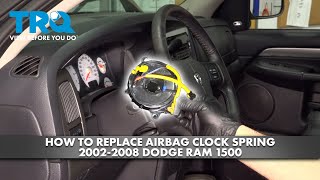
- Defective Airbag Clock Spring (Very Common) — The clock spring is a coiled ribbon cable behind the steering wheel maintaining electrical contact during rotation. Constant turning fatigues and breaks the internal wires, creating an open circuit. This causes over 80% of B1106 codes. 🎬 Watch: Step-by-step clock spring replacement on a Dodge Ram.
- Damaged or Loose Wiring/Connectors (Common) — Yellow SRS wires and connectors running from the module to the clock spring loosen or corrode. Improper reassembly after dashboard or steering column repairs frequently pinches or disconnects these wires.
- Low Battery Voltage Glitches (Common) — SRS modules are highly sensitive to voltage drops. A weak battery or recent jump-start triggers a precautionary 'soft code' even without physical damage. Modern vehicles require a battery monitor reset with a scan tool to clear this.
- Faulty Driver's Airbag Module (Less Common) — The airbag unit's internal squib (inflator) wiring fails, creating an open circuit directly inside the explosive device.
- Stored Crash Data in SRS Module (Less Common) — Previous accidents lock the SRS module with stored 'crash data'. This requires a professional reset service to clear the data and extinguish the light.
- Loss of Seat Position Sensor Calibration (BMW) (Less Common) — BMW SRS modules use seat position sensors to calculate deployment force. Battery changes or seat obstructions erase this calibration, triggering a general fault requiring a scan tool recalibration.
- Faulty SRS Control Module (Rare) — The main airbag computer fails internally due to water damage, severe voltage spikes, or component degradation.
Symptoms

- Airbag Warning Light On — The dashboard SRS or airbag icon remains permanently illuminated.
- Steering Wheel Controls & Horn Inoperative — The horn, cruise control, and radio buttons share the clock spring ribbon cable. A broken ribbon disables these simultaneously.
- Noise When Turning Steering Wheel — A physically snapped clock spring creates a scraping or clicking sound inside the steering column during rotation.
- Traction/Stability Control Light On — Vehicles with a Steering Angle Sensor (SAS) integrated into the clock spring lose communication, illuminating the ESC/Traction light.
Diagnostic Flowchart

Tap your situation to follow the diagnostic path that matches what you're seeing on this code.
Common Fixes & Costs
- Replace Airbag Clock Spring
— Parts: $100-$500, Labor: $120-$250, ~1.5 hr book time
(Intermediate)
Ram 1500 (2014): OEM Mopar: 68528301AA (supersedes 68110740AB/AC/AD/AE), 68050845AB (Alt: Dorman: 525-100, 525-125; Standard Motor Products: CSP246)
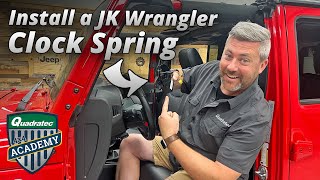
Jeep Wrangler (2012): OEM Mopar: 5156106AG (supersedes 5156106AB/AD/AE/AF) (Alt: Crown Automotive: 5156106AD; Dorman; Standard Motor Products)
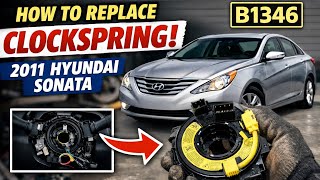
Hyundai Sonata (2013): OEM Hyundai: 93490-3X040 (supersedes 93490-3Q120) (Alt: Standard Ignition: CSP138; Import Direct: 18-2445) - Repair or Replace Wiring/Connector — Parts: $10-$50, Labor: $100-$300, ~1.5 hr book time (Intermediate)
- Replace Driver's Airbag Module — Parts: $200-$700, Labor: $100-$200, ~1 hr book time (Professional)
- Reset or Replace SRS Control Module — Parts: $50-$1,200, Labor: $100-$300, ~2 hr book time (Professional)
- Recalibrate Safety Systems — Parts: $0, Labor: $50-$250, ~0.8 hr book time (Professional)
DIY vs Professional
- Replace Airbag Clock Spring — Beginner:
Tools: Socket set, torque wrench, steering wheel puller, trim removal tools, SRS-capable scan tool. - Repair or Replace Wiring/Connector — Beginner:
Tools: Digital multimeter, wire strippers, crimpers, heat shrink, vehicle-specific wiring diagrams. - Reset or Replace SRS Control Module — Beginner:
Tools: Professional diagnostic tools, programming equipment, access to manufacturer software. - Replace Driver's Airbag Module — Beginner:
Tools: Socket set, torque wrench, trim removal tools.
Used vs. New Parts: Buying Guide
When a used part is worth it: A used OEM clock spring from a low-mileage vehicle saves money if the part number matches exactly. For SRS control modules, a used part requires a professional service to wipe crash data and reprogram the VIN. Never buy a used airbag.
Donor-vehicle mileage cap: roughly under 80000 miles for the part to have meaningful remaining life.
Donor quality checklist:
- Verify the exact part number; superseded numbers are often incompatible.
- Ensure the donor vehicle was not in a frontal collision.
- Confirm used SRS modules are professionally reset and cleared of crash data.
- Avoid used airbags entirely due to extreme safety risks.
Decision logic:
- If The required part is the airbag itself. → Buy new OEM only. It is unsafe and illegal for individuals to handle used pyrotechnic devices.
- If The required part is the clock spring and the vehicle is over 100k miles. → A new aftermarket part offers a good balance of cost and reliability with a better warranty than a used part.
- If The required part is the SRS Control Module. → Professionally reset your original module. If replacement is necessary, a new OEM module programmed by the dealer is the safest option.
Warranty tradeoff: Used parts carry a 30-90 day warranty. Aftermarket new parts offer 1-year to limited lifetime warranties. New OEM parts carry a 12-month manufacturer warranty.
Worst-case if a used part fails: $300-$600 if a used clock spring or improperly reset module fails, requiring repeat labor and parts.
What Happens If You Wait — Timeline
- Immediate: Code B1106 is stored and the airbag warning light illuminates. The driver's airbag is immediately disabled by the SRS module as a failsafe. (MPG impact: 0%% · Added cost: $0)
- 1-6 months: The primary fault causes other steering wheel-mounted functions like the horn or cruise control to fail, creating additional safety and convenience issues. (MPG impact: 0%% · Added cost: $0)
- At next state inspection: The vehicle fails its mandatory safety inspection due to the illuminated airbag light, preventing legal registration. (MPG impact: 0%% · Added cost: $50-$250 in potential fines and re-inspection fees.)
- In the event of a frontal collision: The driver's airbag does not deploy, drastically increasing the risk of serious injury or death. Insurance investigations deny coverage based on negligent maintenance. (MPG impact: 0%% · Added cost: Potentially thousands in denied claims, personal liability, and medical costs.)
Cost of Not Fixing It
- Immediate: The driver's airbag and potentially the entire SRS system are disabled. There is zero airbag protection for the driver in a frontal collision. (Added cost: N/A)
- 0-12 months: Vehicle fails mandatory state safety inspections, leading to fines or inability to legally register the vehicle. (Added cost: $25-$250 in fines.)
- In case of an accident: Increased risk of severe injury or death. Insurance companies investigate active faults and deny coverage based on negligent maintenance. (Added cost: Potentially thousands in denied claims or personal liability.)
Diagnosis Steps
- Read Codes and Live Data
Connect an SRS-capable scanner and monitor the 'Driver Squib Resistance' live data. Normal resistance is 2.0-3.3 ohms. A reading of 'Open', 'OL', or >5.0 ohms confirms the hard fault.
Tools: SRS-capable OBD-II Scan Tool (Beginner) - Perform the 'Wiggle Test'
Watch the live resistance data while slowly turning the steering wheel lock-to-lock. If resistance fluctuates wildly or jumps to 'Open', the clock spring is broken.
Tools: SRS-capable OBD-II Scan Tool (Beginner) - Safety First: Disconnect the Battery
CRITICAL: Disconnect the negative battery terminal and wait 15 minutes for the SRS backup capacitors to discharge. This prevents accidental airbag deployment.
Tools: Wrench set (Beginner) - Visually Inspect Connectors
Inspect the yellow SRS connectors under the dash and steering column for pushed-out pins, corrosion, or disconnected plugs.
Tools: Flashlight, Trim removal tools (Intermediate) - Isolate the Fault with a Resistor
Remove the airbag and plug a 2.5-ohm SRS diagnostic resistor into the clock spring connector. Reconnect the battery and clear codes. If B1106 disappears, the airbag module is faulty. If it returns, the clock spring or wiring is bad.
Tools: SRS diagnostic resistor (2.2-3.3 ohm), SRS-capable OBD-II Scan Tool (Advanced) - Clock Spring Loopback Test
Disconnect the clock spring. Measure resistance between the two pins on the steering wheel side while rotating the wheel. A jump to 'OL' confirms a broken internal ribbon.
Tools: Digital Multimeter (Advanced) - Continuity Test of Main Harness
Test continuity on each wire between the SRS module and the clock spring input. Infinite resistance indicates a broken wire requiring repair.
Tools: Digital Multimeter, Vehicle-specific wiring diagrams (Professional) - Final Diagnosis: SRS Module
If the airbag, clock spring, and wiring test perfectly, the SRS module requires replacement and VIN programming by a professional.
Tools: Professional diagnostic tools (Professional)
When This Code Triggers (Freeze-Frame Conditions)
- System State: KOEO (Key On, Engine Off) (The SRS module performs a self-test of all circuits immediately upon ignition power-on. Most B1106 codes set during this initial check.)
- Driver Squib Resistance: Over Limit / Infinite / > 5.0 Ohms (The freeze frame captures the resistance value triggering the fault, reading 'Over Limit' or extremely high for an open circuit.)
- System Voltage: 11.5V - 14.5V (The code sets during normal operating voltage. Voltage glitches sometimes store a soft code, but hard faults occur at standard voltage.)
- Fault Type: Active / Hard Fault (Unlike intermittent faults, B1106 is almost always an 'active' or 'hard' fault, meaning the open circuit is continuously present.)
Related Codes
- B1346 — A common manufacturer-specific code for 'Driver Airbag Resistance Too High', functionally identical to an open circuit. The diagnostic process is exactly the same.
- B0001 — A generic code for a 'Driver Frontal Stage 1 Deployment Control' fault. B1106 is a more specific version of B0001. The diagnostic steps for B1106 apply directly.
- B1107 / B1347 — These codes signify 'Driver-Side Airbag Squib Circuit Short to Ground' or 'Resistance Too Low', the exact opposite problem of B1106.
- Codes for Horn, Cruise, or Radio Controls — Having codes related to steering wheel-mounted components alongside B1106 dramatically increases the likelihood that the clock spring is the single point of failure.
Climate & Environmental Factors
- Extreme Cold: Low temperatures make the plastic ribbon and wire insulation inside the clock spring brittle. Mechanical stress during rotation fractures these components, causing an open circuit.
- High Humidity: Moisture accelerates corrosion on electrical connectors. Corrosion increases resistance and eventually causes an open circuit fault.
How to Talk to a Mechanic About This Code
Say this: "I have an airbag light on and the code is B1106 for the driver's airbag circuit. My horn and steering wheel controls are also not working, so I suspect a failed clock spring. I'd like to book a diagnostic to confirm the fault."
This signals you have done your research, points the mechanic directly to the most likely cause, and establishes a clear, specific goal for the diagnostic. It prevents an expensive 'fishing expedition'.
Avoid saying:
- 'My airbag light is on, can you just fix it?'
- 'I don't know what's wrong, just do whatever you think is best.'
- 'Can you just clear the code for me?'
Questions to ask before authorizing the repair:
- Did the scan tool's live data show the driver squib resistance as 'Open' or 'Over Limit'?
- Did you perform a 'wiggle test' by turning the steering wheel to confirm the resistance changes, pointing to the clock spring?
- What is the cost difference between an OEM and a quality aftermarket clock spring?
- If the steering angle sensor needs recalibration after the repair, is that included in the labor estimate?
- What is the warranty on the new part and your labor?
Where to Take It: Dealer vs Independent vs Chain
- Dealer:
Best fit only if the repair is covered by a warranty or recall. Otherwise, it's the most expensive option for a common repair.
Best for: Vehicles under warranty or with a known extended warranty for the clock spring (common for Hyundai, VW)., Complex electrical issues beyond a simple clock spring failure., Owners who prioritize OEM parts and manufacturer-certified procedures above all else.
Downsides: Highest labor rates and parts costs., Less willing to install aftermarket parts. (Typical cost: +50% vs. baseline) - Independent Shop:
Best fit for most situations. A reputable independent shop diagnoses and replaces a clock spring correctly and more affordably than a dealer.
Best for: Most out-of-warranty vehicles., Cost-conscious owners seeking a balance of quality and price., This is a very common repair that most competent independent shops handle easily.
Downsides: Quality and expertise vary, so check for ASE certifications and online reviews., Lacks specialized tools for very new or obscure models. (Typical cost: +0% vs. baseline) - Chain Shop:
Avoid. An SRS repair is a critical safety function requiring expertise not guaranteed at a typical chain shop.
Best for: Simple, routine maintenance like oil changes and tire rotations.
Downsides: Technician skill for specialized electrical and safety systems is inconsistent., High pressure to upsell services., Lacks the specific SRS-capable scan tools required for proper diagnosis and reset. (Typical cost: -10% vs. baseline)
When to Walk Away From the Repair
If the estimated repair cost exceeds 40% of your car's current private-party value, evaluate whether to fix it, sell it as-is, or trade it in.
- Car worth $8000, fix is $850: Fix it. The repair is only about 10% of the vehicle's value and restores a critical safety feature.
- Car worth $3500, fix is $850: Borderline. The repair is ~25% of the car's value. If the car is otherwise in good condition, it's likely worth fixing. Get a firm quote first.
- Car worth $2000, fix is $850: Walk away. The repair cost is nearly 50% of the car's value. It is not economically sensible to proceed unless there is strong sentimental attachment.
What Scan Tool You Need for This Code
Minimum: A scanner that reads and clears Supplemental Restraint System (SRS) / Airbag codes. It must access 'B' (Body) codes, not just 'P' (Powertrain) codes.
A standard $20 engine code reader does not see the SRS module and reports 'No Codes Found'. Loaner tools from parts stores often fall into this basic category and cannot diagnose airbag lights.
Budget: Autel AutoLink AL619 or Foxwell NT630 Plus (~$70-95) — Reads and clears SRS codes, displays live data to see the squib resistance, and turns off the airbag light after repair. This is sufficient for diagnosing a B1106.
Mid-range: BlueDriver Pro or Autel MaxiCOM MK808 (~$120-400) — Includes all budget-pick functions plus the ability to perform Steering Angle Sensor (SAS) recalibration, required after replacing a clock spring to prevent the stability control light from coming on.
Professional: Autel MaxiSys Series or Launch X431 Series (~$500-1500) — Provides full, dealer-level bidirectional control and diagnostics. This is overkill for a simple B1106 but essential for a professional shop diagnosing complex system faults.
Rent vs buy: Buy. Free loaner tools from places like AutoZone or O'Reilly are typically basic engine code readers that cannot access the SRS module. To diagnose an airbag light, you must own or borrow a scanner with specific SRS capabilities.
How to Clear the Code After You Fix It
- Perform physical repair of the open circuit (e.g., replace clock spring).
- Reconnect the vehicle battery.
- Use an SRS-capable OBD-II scan tool to connect to the Restraint Control Module.
- Select the function to 'Clear Codes' or 'Reset Faults'.
- Turn the ignition off, then back on to verify the airbag light performs its self-check and turns off.
Drive cycle (~15 minutes): An SRS-specific drive cycle is not required. The code clears immediately with a proper scan tool after the repair. A short 15-minute test drive ensures no other warning lights appear.
Readiness monitors affected: Not applicable to the SRS system.
Before emissions retest: drive at least 50 miles to fully set monitors.
Watch out for:
- Attempting to clear the code without fixing the physical open circuit; the code returns instantly.
- Using a basic OBD-II code reader that cannot communicate with the SRS module.
- Disconnecting the battery does not clear a hard SRS fault code.
- Forgetting to recalibrate the Steering Angle Sensor (SAS) after a clock spring replacement triggers a stability control warning light.
Will This Fail Emissions / State Inspection?
No — by itself this code doesn't fail OBD inspection (but it can keep readiness monitors from setting, which causes a separate fail).
- California: An airbag light does NOT cause a vehicle to fail its biennial smog check, which focuses strictly on emissions.
- New York: New York lists an illuminated airbag light as an 'advisory' item, but many stations fail the vehicle on general safety grounds.
- Texas: An illuminated airbag light is NOT an item on the state safety inspection checklist and does not cause a failure.
- Virginia: An illuminated airbag light is a cause for rejection and fails the mandatory annual safety inspection.
Most Commonly Affected Vehicles
- Ram 1500 (2010-2018) — Clock spring and steering column control module failures are extremely common, leading to multiple investigations and recalls.
- Chrysler/Dodge/Jeep Town & Country, Grand Caravan, Wrangler (2008-2016) — These FCA models share platform components and experience frequent clock spring failures. The repair procedure is identical across these models.
- Hyundai/Kia Various (Sonata, Elantra, Optima) (2011-2015) — Clock spring failures were so common that Hyundai extended the warranty to 15 years/unlimited miles for this component on many 2011-2014 Sonatas.
- Volkswagen Jetta, Passat, Golf (2010-2017) — Volkswagen issued a warranty extension (codes U36/U37) for the clock spring, extending coverage to 15 years/unlimited miles for some vehicles.
- Toyota Sienna, Camry, Corolla (2004-2011) — Older models experience failures in wiring connectors under the seat or in the clock spring. Beware of false warnings from the Pre-Collision System (PCS).
- Nissan Altima, Pathfinder, Micra (2002-2012) — B1106 often points to a 'Diagnosis Sensor Unit' fault, requiring the SRS module to be reset or replaced after an accident.
- BMW Various (1, 3, 5, X-Series) (2006-2018) — Often related to the seat position sensor losing calibration after a battery change or obstruction.
- Ford F-150, Focus, Fusion (2009-2016) — Clock spring and wiring harness issues are common culprits for the B1106 code in this generation.
Manufacturer-Specific Notes

- Subaru: On many Subaru models, B1106 indicates a 'Shift Lock Circuit Failure', preventing the gear shifter from moving out of Park. This is completely unrelated to the airbag system.
- General Motors (GM): For some GM vehicles, B1106 refers to an 'Audio [+] output #9 circuit range/performance' issue, related to the sound system, not the airbags.
- Jeep / Fiat / Chrysler: On certain models, B1106 defines an 'Ignition Status-Signal Plausibility Failure', pointing to a problem with the ignition switch signal received by the Body Control Module (BCM).
- Honda: On models like the Ridgeline, B1106 points to a 'Door Multiplex Control Unit Lost Communication With MICU' fault. Many other Honda models use P1106 for a Barometric Pressure (BARO) sensor issue.
Real Owner Stories
2011 Hyundai Sonata at ~140K miles
Airbag light came on intermittently at first, especially when turning, then stayed on. Horn and all steering wheel buttons also stopped working.
Outcome: The owner learned of Hyundai's extended warranty (15 years/unlimited miles) for the clock spring on this model. After escalating the issue, the dealer replaced the clock spring for free under warranty campaign TXXC.
Lesson: For common failures on specific models (Hyundai/Kia, VW, Jeep), always check for extended warranties or recalls related to the clock spring before paying for a repair.
2014 Jeep Wrangler JKU with B1B02/B1B06 codes
Airbag light was on constantly. A scan showed codes B1B02 and B1B06, which are manufacturer-specific codes for the driver airbag circuit being open.
Outcome: The owner replaced the clock spring themselves in about an hour using basic hand tools and a steering wheel puller. The codes cleared, and the airbag light went out, restoring function.
Lesson: For a common part like a clock spring on a popular vehicle, a used OEM part from a salvage yard saves massive costs if you have the DIY skills. Ensure the donor vehicle was not in a front-end collision.
2006 Hyundai Sonata with intermittent airbag light
Airbag light came on. A scan tool showed a 'History' code for 'passenger buckle pretensioner resistance too high'. The light had turned off for months after wiggling the seat but then returned permanently.
Outcome: The issue was an intermittent connection in the passenger seat belt buckle wiring. The SRS module requires the fault to be absent for a certain number of drive cycles before turning the light off. The persistent intermittent nature of the fault kept the light on.
Lesson: Don't be misled by a 'History' status on an SRS code. Unlike engine codes, the airbag light stays on until the fault is completely resolved and cleared. An intermittent wiring issue acts like a hard fault.
How to Prevent This Code From Triggering
- Avoid Turning Steering Wheel to Full Lock with Force (Daily habit) — Repeatedly hitting the steering stops puts maximum stress on the internal ribbon cable of the clock spring, accelerating fatigue and leading to breakage.
- Maintain Stable Battery Voltage (During vehicle life) — The SRS module is sensitive to low voltage or voltage spikes, which set soft codes or damage the module. Replace weak batteries promptly.
- Protect Steering Column from Moisture (During rain/cleaning) — On convertible or off-road vehicles, water intrusion into the steering column corrodes clock spring connectors. Using a cover prevents this.
- Handle Steering Column with Care During Other Repairs (During any dash or steering work) — Many clock springs are damaged inadvertently during other repairs. Never let the steering wheel hang by its wires, and ensure the clock spring is locked and centered before removal.
Frequently Asked Questions
Is it safe to drive with code B1106?
The vehicle drives, but it is highly unsafe. The driver's airbag is disabled and provides zero crash protection. You will also fail mandatory state safety inspections.
Will my car pass inspection with the airbag light on?
In states with comprehensive safety inspections (like VA or NY), an illuminated airbag light causes an automatic failure. In emissions-only states, it passes the OBD check but fails visual safety checks. Always check local regulations.
Can a bad clock spring cause other problems?
Yes. The clock spring houses wiring for multiple steering wheel components. If your horn, cruise control, and radio buttons fail alongside the airbag light, the clock spring is the definitive culprit.
What resistance should a good airbag circuit have?
A healthy airbag squib circuit measures between 2.0 and 3.3 ohms. Code B1106 triggers when resistance exceeds the module's threshold (typically >5.0 ohms or 'OL'), indicating a broken wire.
My airbag light came on after replacing the battery. What happened?
Voltage drops during a battery change trigger 'soft faults' in sensitive SRS modules. Clear the code with an SRS-capable scan tool. If it returns, a hard fault exists.
Can I use a used airbag or SRS module from a junkyard?
Never install a used airbag due to extreme safety risks and unknown histories. Used SRS modules are possible but require professional crash data wiping and VIN reprogramming. A dedicated module reset service is much safer.
Can I fix the B1106 code myself?
Replacing a clock spring is possible for advanced DIYers, but requires removing the explosive airbag assembly. You MUST disconnect the battery and wait 15 minutes before starting. Stop and hire a professional if you lack SRS experience.
Will clearing the code with a scanner fix the problem?
No. B1106 is a 'hard fault' indicating a physical broken wire. The code returns instantly after clearing until you replace the damaged clock spring or wiring.
Key Takeaways
- Code B1106 means the SRS module detects infinite resistance (>5.0 ohms), completely disabling the driver's airbag.
- A broken clock spring causes over 80% of B1106 codes, often accompanied by a dead horn or failing steering wheel buttons.
- Diagnose the exact failure point by reading live SRS data and performing a steering wheel 'wiggle test' to watch for resistance spikes.
- Expect to pay $220 to $750 to replace a faulty clock spring, depending on your vehicle make and use of aftermarket parts.
Helpful Videos

The information in this article is provided for general reference and educational purposes only. Vehicle specifications, procedures, and part compatibility can vary by production date, trim level, and region. Always consult your vehicle's factory service manual and verify part numbers before purchasing or performing repairs. Safety-critical components such as airbags, seat belts, and braking systems should be installed by a qualified professional.
- 🎬 Helpful Videos
- What Does B1106 Mean?
- Can I Drive With B1106?
- Common Causes
- Symptoms
- Diagnostic Flowchart
- Common Fixes & Costs
- DIY vs Professional
- Used vs. New Parts: Buying Guide
- What Happens If You Wait — Timeline
- Cost of Not Fixing It
- Diagnosis Steps
- When This Code Triggers (Freeze-Frame Conditions)
- Related Codes
- Climate & Environmental Factors
- How to Talk to a Mechanic About This Code
- Where to Take It: Dealer vs Independent vs Chain
- When to Walk Away From the Repair
- What Scan Tool You Need for This Code
- How to Clear the Code After You Fix It
- Will This Fail Emissions / State Inspection?
- Most Commonly Affected Vehicles
- Manufacturer-Specific Notes
- Real Owner Stories
- 2011 Hyundai Sonata at ~140K miles
- 2014 Jeep Wrangler JKU with B1B02/B1B06 codes
- 2006 Hyundai Sonata with intermittent airbag light
- How to Prevent This Code From Triggering
- Frequently Asked Questions
- Is it safe to drive with code B1106?
- Will my car pass inspection with the airbag light on?
- Can a bad clock spring cause other problems?
- What resistance should a good airbag circuit have?
- My airbag light came on after replacing the battery. What happened?
- Can I use a used airbag or SRS module from a junkyard?
- Can I fix the B1106 code myself?
- Will clearing the code with a scanner fix the problem?
- Key Takeaways
- 🎟️ Get 5% Off