

OBD-II Code B1102: Airbag System Low Battery Voltage
What B1102 means, why it triggers, and how to fix it
- Code B1102 disables your entire airbag system because the control module detects less than 9.0 volts of power.
- A dying 12V battery causes over 70% of B1102 codes, making a simple $150-$250 battery replacement the most likely fix.
- Never ignore this code; your airbags and seatbelt pre-tensioners will not deploy in a collision while B1102 is active.
- Disconnecting the battery will not clear a B1102 code; you must use an SRS-compatible OBD-II scanner to reset the module after repairs.
What Does B1102 Mean?

Trouble code B1102 means the airbag control module (Supplemental Restraint System or SRS module) detects insufficient voltage in its power supply circuit. Because airbags require a specific power threshold to deploy reliably, the module shuts the system down and illuminates the airbag warning light when voltage drops below 9.0 volts (or as low as 7.3 volts on some models) for more than four seconds.
Technical definition: The SAE/ISO definition for B1102 is "Battery Voltage Low." The Supplemental Restraint System Control Module (SRSCM) continuously monitors input voltage. If voltage drops below the manufacturer's specified threshold for a set duration, the SRSCM sets DTC B1102. If voltage returns to normal, the warning light sometimes turns off automatically, but the code remains stored in non-volatile memory as a history code.
Can I Drive With B1102?
Yes, But With Caution. You can physically drive the car, but the entire airbag system (SRS) is disabled. Airbags and seatbelt pre-tensioners will not activate in an accident. This presents a critical safety risk; addressing this code must be your top priority.
Common Causes

- Weak or dead 12V battery (Very Common) — The most frequent cause. An aging or discharged battery cannot supply the stable voltage the SRS module requires, especially during engine start-up when power demand peaks.
- Failing alternator (Common) — The alternator recharges the battery and powers electronics while the engine runs. A failing unit undercharges the battery, causing system-wide low voltage.
- Corroded or loose battery terminals (Common) — Corrosion acts as a resistor, choking the flow of electricity. This causes a voltage drop sufficient to trigger B1102 even with a perfectly healthy battery and alternator.
- Parasitic battery drain (Less Common) — A component drawing power after the ignition is off drains the battery overnight. This results in a low voltage state during the next startup.
- Damaged wiring or poor ground to the SRS module (Less Common) — The SRS module requires clean power and a tight chassis ground. Corroded wires or a loose ground bolt create resistance, causing the module to read voltage incorrectly.
- Aftermarket OBD-II devices (Uncommon) — Insurance trackers or cheap diagnostic dongles often interfere with the vehicle's data bus or cause parasitic drains, leading to low voltage.
- Faulty SRS control module (Rare) — The module itself fails and incorrectly reads voltage as low. Rule out all battery and wiring issues before replacing this expensive component.
Symptoms

- Airbag warning light is on — The primary and often only symptom. The light stays illuminated, indicating the airbag system is disabled.
- Slow engine cranking — If a weak battery or failing alternator is the root cause, the engine cranks sluggishly, especially in cold weather.
- Dimming or flickering lights — Headlights and interior lights dim at idle and brighten when revving the engine, indicating a failing alternator.
- Multiple warning lights — A severe voltage drop shuts down multiple modules simultaneously, triggering ABS, traction control, and power steering warnings alongside the airbag light.
- Airbag light stays on after jump-starting (also visible on scanner) — The severe voltage drop from a dead battery triggers the code. The light remains on even after the alternator takes over until cleared with a scanner.
Diagnostic Flowchart

Tap your situation to follow the diagnostic path that matches what you're seeing on this code.
Common Fixes & Costs
- Replace the 12V vehicle battery
— Parts: $150-$250, Labor: $0-$50, ~0.5 hr book time
(DIY)
General: OEM - Clean or replace battery terminals/cable ends — Parts: $5-$25, Labor: $0-$60, ~0.5 hr book time (DIY)
- Replace the alternator — Parts: $200-$600, Labor: $150-$300, ~2.0 hr book time (Intermediate)
- Repair wiring or ground for the SRS module — Parts: $10-$50, Labor: $150-$400, ~2.5 hr book time (Professional)
- Replace the SRS (Airbag) Control Module — Parts: $200-$800, Labor: $150-$350, ~1.5 hr book time (Professional)
DIY vs Professional
- Replace the 12V vehicle battery — Beginner:
Tools: Socket/wrench set (10mm, 12mm), terminal cleaning brush. - Clean or replace battery terminals/cable ends — Beginner:
Tools: Socket/wrench set, wire brush, battery terminal cleaner spray. - Replace the alternator — Beginner:
Tools: Socket/wrench set, serpentine belt tool, pry bar. - Repair wiring or ground for the SRS module — Beginner:
Tools: Multimeter, wire strippers, soldering iron, heat shrink tubing. - Replace the SRS (Airbag) Control Module — Beginner:
Tools: Socket set, trim removal tools, manufacturer-specific scan tool.
Used vs. New Parts: Buying Guide
When a used part is worth it: Buying a used 12V battery is only recommended as a temporary fix if you plan to sell the car immediately.
Donor quality checklist:
- Check the date stamp; avoid batteries older than 2 years.
- Inspect for physical damage, swelling, or leaking fluid.
- Test with a multimeter. A healthy resting battery must read at or above 12.5V.
Decision logic:
- If The vehicle is your primary transportation → Buy a new battery. The reliability and 3-year warranty are mandatory.
- If You are selling the car next week → A tested, refurbished battery is a cost-effective choice.
Warranty tradeoff: Used batteries offer a 30-day exchange at best. New batteries include a 2 to 4-year free replacement warranty.
Worst-case if a used part fails: $250 (Cost of a tow truck and the new battery you should have bought initially)
What Happens If You Wait — Timeline
- 0-1 week: The B1102 code sets and the airbag light turns on. If the alternator is failing, the car runs entirely on battery reserve. (MPG impact: 0%% · Added cost: $0)
- Within 1 hour of driving (if alternator failed): Headlights dim, the radio cuts out, and ABS/Power Steering lights illuminate as the battery drains completely. (MPG impact: N/A% · Added cost: $150 (Tow truck))
- 1-3 hours of cumulative operation: The engine stalls as voltage drops too low for the fuel injectors. Deep discharging permanently damages the battery. (MPG impact: N/A% · Added cost: $200 (Cost of a ruined battery))
- 3+ months (intermittent alternator): Unstable voltage spikes from a failing alternator permanently damage sensitive electronics like the ECU or SRS module. (MPG impact: N/A% · Added cost: $1000+ (Module replacement))
Cost of Not Fixing It
- Immediate: Complete deactivation of the SRS. Airbags and seatbelt pre-tensioners will not deploy in an accident, drastically increasing the risk of serious injury. (Added cost: N/A (Safety Risk))
- 0-3 months: If caused by a weak battery or alternator, you will be stranded with a no-start condition. (Added cost: $100-$250 (Towing and emergency service))
- 3+ months: Operating with a failing alternator puts excessive strain on the electrical system, destroying your new battery and potentially damaging sensitive electronic modules. (Added cost: $500-$2000 (Cost to replace a ruined battery and damaged computer modules))
Diagnosis Steps
- Read the Trouble Codes
Use an OBD-II scanner capable of reading SRS/Airbag codes to confirm B1102. Note any other codes (e.g., P0562, U0151) to confirm if the voltage drop is system-wide.
Tools: OBD-II Scanner (SRS-capable) (Beginner) - Test the Battery Voltage (Static Test)
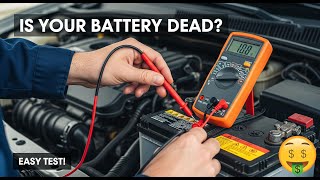
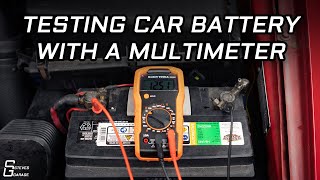
With the engine off for at least an hour, measure voltage across the battery terminals. A healthy battery reads 12.6V. Anything below 12.4V indicates a discharged or failing battery.
Tools: Multimeter (Beginner) - Test the Charging System (Dynamic Test)
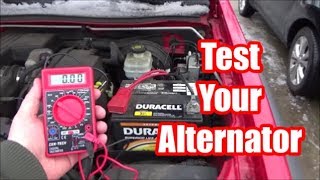
Start the engine and measure battery voltage again. It must read between 13.7V and 14.7V. If voltage stays below 13.2V, the alternator is failing.
Tools: Multimeter (Beginner) - Inspect the Battery Terminals
Check terminals for white or greenish corrosion. Ensure cable clamps are tight and cannot be moved by hand. Clean and tighten as necessary.
Tools: Gloves, eye protection, wire brush (Beginner) - Inspect for Aftermarket Devices
Check the OBD-II port under the dashboard. Unplug any insurance trackers or performance tuners, as they frequently cause parasitic battery drains.
Tools: Flashlight (Beginner) - Clear Codes and Re-test
If you recently jump-started the car or replaced the battery, use the SRS scanner to clear the B1102 code. Start the car to verify the light stays off.
Tools: OBD-II Scanner (SRS-capable) (Intermediate) - PRO TIP: Perform a Voltage Drop Test
Set your multimeter to 2V DC. Place the black probe on the negative battery post and the red probe on the engine block. Crank the engine. A reading above 0.2V indicates a bad ground cable.
Tools: Multimeter (Intermediate) - PRO TIP: Test for Parasitic Draw
If the battery drains overnight, disconnect the negative terminal. Connect your multimeter in series (10A setting). Wait 45 minutes for modules to sleep. Draw must be below 50mA (0.050A).
Tools: Multimeter with Amp setting (Advanced) - ADVANCED: Scan Tool Live Data Analysis
Access the SRS module live data. Compare the module's reported input voltage to your battery measurement. A significant discrepancy confirms a wiring fault specific to the SRS circuit.
Tools: OBD-II Scanner (SRS-capable with Live Data) (Advanced) - Inspect SRS Module Wiring and Ground
Locate the SRS module (usually under the center console). Inspect connectors for corrosion and verify the module's ground wire is tightly bolted to bare chassis metal.
Tools: Basic hand tools, trim removal tools, multimeter (Intermediate)
When This Code Triggers (Freeze-Frame Conditions)
- SRS Module Voltage: < 9.0V (The code sets when the module's input voltage drops below the manufacturer threshold.)
- Event: Engine Crank (Most often occurs during a cold start when a weak battery's voltage sags significantly under starter load.)
- System State: Ignition ON (The SRS module continuously monitors voltage whenever the ignition is on.)
- Time: > 4 seconds (The low voltage condition must persist for a set duration before the code is stored.)
Related Codes
- B1101 — Indicates "Battery Voltage High." Seeing both B1101 and B1102 points to a failing alternator voltage regulator fluctuating between overcharging and undercharging.
- U0151 — Means "Lost Communication With Restraints Control Module." A severe voltage drop shuts the SRS module down completely, causing other modules to log this communication error.
- P0562 — A generic powertrain code for "System Voltage Low." Seeing this alongside B1102 confirms the low voltage issue is system-wide, pointing directly to the battery or alternator.
- B1342 — Translates to "ECU is Defective." Severe voltage spikes sometimes trigger this spuriously. Fix the voltage issue first; if B1342 returns, the SRS module is permanently damaged.
Climate & Environmental Factors
- Cold Weather (Below 32°F / 0°C): Reduces a battery's chemical efficiency by 30-50%. Cold, thick engine oil also demands more power to start the engine, making a weak battery highly likely to trigger B1102.
- Hot Weather (Above 90°F / 32°C): Accelerates chemical degradation inside the battery, evaporating fluid and causing internal corrosion. Heat also increases alternator resistance, accelerating wear on its voltage regulator.
- High Humidity: Accelerates corrosion on battery terminals and chassis ground points. This corrosion increases electrical resistance, causing voltage drops that trigger the code.
How to Talk to a Mechanic About This Code
Say this: "I have an airbag warning light and code B1102 for low SRS voltage. Please start by load-testing the battery and charging system, and check for a parasitic draw before diagnosing the airbag module."
Signals that you understand the most common causes are simple electrical issues. It directs the technician to follow a cost-effective diagnostic path rather than immediately quoting an expensive module replacement.
Avoid saying:
- 'My airbag light is on, can you just fix it?'
- 'I think I need a new airbag computer.'
- 'Just do whatever it takes to turn the light off.'
Questions to ask before authorizing the repair:
- What were the exact voltage readings from the battery load test and charging system test?
- Did you perform a voltage drop test on the SRS module's power and ground circuits?
- If recommending an SRS module, have you definitively ruled out all wiring and ground issues?
- What is the warranty on this specific repair?
Where to Take It: Dealer vs Independent vs Chain
- Dealer:
Use only for warranty claims or if an independent shop cannot program a replacement SRS module.
Best for: Vehicles under warranty., When a new SRS module requires manufacturer-specific programming.
Downsides: Significantly higher labor and parts costs., Tendency to replace entire modules rather than repair wiring. (Typical cost: +50% vs. baseline) - Independent Shop:
Best first choice. An experienced independent mechanic handles 95% of B1102 causes at a much lower cost than the dealer.
Best for: Out-of-warranty vehicles., Diagnosing common electrical issues like batteries, alternators, and parasitic draws.
Downsides: May lack proprietary tools needed for SRS module programming on newer cars. (Typical cost: +0% vs. baseline) - Chain Shop:
Good for a free initial battery test. Do not authorize complex diagnostic work here.
Best for: Free battery and alternator testing., Purchasing and installing a new battery.
Downsides: Not equipped for in-depth SRS or electrical circuit diagnosis., High pressure to upsell unnecessary services. (Typical cost: -10% vs. baseline)
When to Walk Away From the Repair
If the estimated repair cost exceeds 50% of your car's private-party value, carefully consider your options.
- Car worth $3000, fix is $1500: Walk away. The repair cost is 50% of the car's value.
- Car worth $15000, fix is $250: Fix it. A new battery is a standard maintenance item.
- Car worth $6000, fix is $1200: Borderline. The cost is 20% of the car's value. Get a second opinion before replacing the SRS module.
What Scan Tool You Need for This Code
Minimum: A scanner capable of reading and clearing Supplemental Restraint System (SRS) codes.
Basic $20 code readers only access the engine computer. B1102 is stored in the SRS module, requiring an advanced scanner to read and clear.
Budget: BlueDriver Pro (~$90) — Connects via Bluetooth to read/clear SRS codes for most major brands and provides live module voltage data.
Mid-range: Autel MaxiLink ML619 (~$150) — A dedicated handheld unit offering comprehensive SRS and ABS diagnostics across a wide variety of vehicles.
Professional: Autel MaxiCOM MK808 (~$500) — Offers full-system, bi-directional diagnostics required for programming and calibrating a replacement SRS module.
Rent vs buy: Auto parts store loaner tools are usually basic engine readers that cannot clear SRS codes. Buying a budget SRS scanner is a smart investment.
How to Clear the Code After You Fix It
- Fix the underlying voltage issue (e.g., replace battery, alternator).
- Connect an SRS-capable OBD-II scan tool to the vehicle.
- Select the function to 'Clear Fault Codes' within the SRS/Airbag menu.
- Cycle the ignition off, then on.
- Verify the airbag light turns off after its initial 3-5 second self-check.
Drive cycle: A drive cycle is not required. The code must be cleared manually with a scan tool.
Readiness monitors affected: Not applicable. B1102 is a body code and does not affect emissions readiness monitors.
Watch out for:
- Using a basic engine code reader that cannot communicate with the SRS module.
- Attempting to clear the code by disconnecting the battery.
- Clearing the code without replacing the dying battery, causing the light to return on the next cold start.
Will This Fail Emissions / State Inspection?
No — by itself this code doesn't fail OBD inspection (but it can keep readiness monitors from setting, which causes a separate fail).
- California: Will not cause a smog check failure. The airbag system is exempt from emissions inspections.
- New York: Will not cause an emissions failure, but the inspector must note the illuminated airbag light on the safety inspection report.
- Texas: Will not cause an inspection failure. Texas safety inspections do not fail a vehicle for an illuminated airbag light.
Most Commonly Affected Vehicles
- Hyundai Santa Fe / Elantra / Accent (2006-2020) — Frequently reported in owner forums. On some 2011+ Santa Fe models, the threshold for the code is highly sensitive, triggering at 7.3V during startup.
- Kia Sorento / Rio / Forte (2008-2020) — Commonly associated with aging batteries. The voltage threshold is typically set between 9.0V and 10.6V.
- Subaru Outback / Forester / Impreza (2010-2020) — Known for parasitic battery drains from the Starlink Data Communications Module (DCM), leading to dead batteries and B1102 codes. Covered by a class-action settlement.
- Chevrolet / GM Cruze / Silverado / Equinox (2010-2024) — GM issued TSB 13-08-116-001E warning that aftermarket devices plugged into the OBD-II port cause battery drain and communication codes like B1102.
- Volkswagen Golf / Jetta / Passat (2005-2018) — Often triggered by a weak battery. Airbag faults are also caused by faulty wiring under the front seats, exacerbated by low voltage.
- BMW Various E, F, and G-chassis models (2005-2024) — Highly sensitive to voltage drops. Failing to register a new battery causes improper charging, leading directly to B1102 and related safety terminal faults.
- Mazda Various Models (2007-2024) — B1102 is often accompanied by history code U2064-FF, indicating a past low voltage event from an aging battery.
- Ford Various Models (2004-2024) — On older Fords, B1102 sometimes relates to mirror switches. You must use a scanner that correctly identifies the SRS/RCM system to avoid misdiagnosis.
Manufacturer-Specific Notes
- Hyundai / Kia: Highly sensitive to low voltage. The code rarely clears on its own after replacing the battery and requires an SRS-capable scan tool to reset the module.
- Subaru: B1102 is frequently caused by a parasitic drain from the 3G Starlink DCM constantly searching for a signal. Pulling the DCM fuse is a common diagnostic step.
- Ford / Lincoln: B1102 can mean "Mirror Power Fold Switch Input Short to Ground" on older models if read from the Driver Door Module instead of the Restraints Control Module.
- Chevrolet / GM: The airbag light sometimes turns off automatically (self-heals) after a set number of drive cycles once the underlying battery or alternator fault is repaired.
- Honda / Acura: Features a manual reset procedure using a paperclip to short pins on the diagnostic connector. A solid light after resetting indicates a hard fault requiring module replacement.
Real Owner Stories
2015 Kia Sorento - The Jump-Start Trigger
Airbag light illuminated the day after jump-starting the car in a cold parking lot. The car ran fine afterward.
What they tried:
- Ignored it, hoping it would reset.
- Disconnected the battery for an hour, but the light returned immediately.
Outcome: A mechanic scanned the car, finding a stored B1102 code. The battery tested at 12.1V and failed a load test. The owner replaced the battery ($180) and the mechanic cleared the code. The light stayed off.
Lesson: Jump-starting a dead battery is the most common trigger for B1102. The code permanently stores in the SRS module and requires a scanner to clear after replacing the battery.
2013 Hyundai Santa Fe - The Misdiagnosis
Owner found a B1102 code while scanning the car out of curiosity. The airbag light was NOT on, but the car cranked slowly.
What they tried:
- Researched SRS module replacement costs ($800+).
- Took it to a shop fearing a major electrical failure.
Outcome: The mechanic explained it was a 'history' code from a past low-voltage event. A battery test revealed the 5-year-old battery was failing. Replacing the battery ($220) solved the slow cranking and prevented a future breakdown.
Lesson: A B1102 code without an active warning light is a history code. Always test the battery and alternator before assuming an expensive module has failed.
2018 Subaru Outback - The Parasitic Drain
The battery died repeatedly after sitting for 2 days. After every jump-start, the airbag light stayed on. The dealer replaced the battery, but the issue returned.
What they tried:
- Dealer blamed short driving trips.
- Independent mechanic performed a parasitic draw test.
Outcome: The test revealed the Starlink Data Communications Module (DCM) was drawing over 100mA while searching for a defunct 3G network. The mechanic pulled the DCM fuse, permanently solving the battery drain and B1102 codes.
Lesson: If a new battery doesn't solve the problem, suspect a parasitic drain. Search your specific model for known electrical issues like the Subaru DCM flaw.
How to Prevent This Code From Triggering
- Keep battery terminals clean and tight (Every 6 months) — Prevents corrosion from acting as a resistor, ensuring full voltage reaches the vehicle's modules.
- Avoid frequent short trips (Daily habit) — Short trips prevent the alternator from fully recharging the battery after the heavy draw of starting the engine.
- Test battery voltage (Monthly) — Catching a battery that rests below 12.4V allows you to replace it before it leaves you stranded or triggers codes.
- Ensure battery is securely mounted (Every oil change) — Excessive vibration damages internal battery plates, leading to premature failure.
Frequently Asked Questions
Is it safe to drive my car with code B1102?
While the car drives normally, it is completely unsafe. Code B1102 disables your entire airbag system. In a crash, your airbags and seatbelt pre-tensioners will not deploy.
Can a new battery fix the B1102 code?
Yes, installing a new battery fixes the root cause if the old one was failing. However, the airbag light will remain on until you clear the stored code. You must use an SRS-compatible scanner to reset the module.
My airbag light came on after I jump-started my car. Is this related?
Yes, this is the most common trigger. The severe voltage drop from a dead battery logs the B1102 code in the SRS module's permanent memory. You must manually clear it with a scan tool even after the car is running.
Will disconnecting the battery reset the airbag light for code B1102?
No, disconnecting the battery will not reset the airbag light. The SRS module uses non-volatile memory and retains fault codes without power. You must use a compatible scan tool to clear the code.
What are the most common mistakes when diagnosing B1102?
The biggest mistake is replacing the expensive SRS control module before testing the battery and alternator. Always verify your 12V power supply and check for aftermarket devices draining the battery first.
My scanner shows code B1102, but my airbag light isn't on. What does that mean?
This indicates a 'history' code from a past low-voltage event. The system is currently functional, but the stored code warns that your battery or alternator is weakening. Test your charging system before it fails completely.
Can I use a cheap OBD-II scanner to diagnose and clear this code?
No. Basic $20 code readers only access the engine computer (powertrain codes). You need an advanced scanner capable of reading Supplemental Restraint System (SRS) codes to diagnose and clear B1102.
Can a bad ground cause code B1102?
Yes. The SRS module relies on a solid chassis ground to measure voltage accurately. A corroded or loose ground wire creates resistance, causing the module to read low voltage and trigger B1102 even with a healthy battery.
Key Takeaways
- Code B1102 disables your entire airbag system because the control module detects less than 9.0 volts of power.
- A dying 12V battery causes over 70% of B1102 codes, making a simple $150-$250 battery replacement the most likely fix.
- Never ignore this code; your airbags and seatbelt pre-tensioners will not deploy in a collision while B1102 is active.
- Disconnecting the battery will not clear a B1102 code; you must use an SRS-compatible OBD-II scanner to reset the module after repairs.
Helpful Videos

The information in this article is provided for general reference and educational purposes only. Vehicle specifications, procedures, and part compatibility can vary by production date, trim level, and region. Always consult your vehicle's factory service manual and verify part numbers before purchasing or performing repairs. Safety-critical components such as airbags, seat belts, and braking systems should be installed by a qualified professional.
- 🎬 Helpful Videos
- What Does B1102 Mean?
- Can I Drive With B1102?
- Common Causes
- Symptoms
- Diagnostic Flowchart
- Common Fixes & Costs
- DIY vs Professional
- Used vs. New Parts: Buying Guide
- What Happens If You Wait — Timeline
- Cost of Not Fixing It
- Diagnosis Steps
- When This Code Triggers (Freeze-Frame Conditions)
- Related Codes
- Climate & Environmental Factors
- How to Talk to a Mechanic About This Code
- Where to Take It: Dealer vs Independent vs Chain
- When to Walk Away From the Repair
- What Scan Tool You Need for This Code
- How to Clear the Code After You Fix It
- Will This Fail Emissions / State Inspection?
- Most Commonly Affected Vehicles
- Manufacturer-Specific Notes
- Real Owner Stories
- 2015 Kia Sorento - The Jump-Start Trigger
- 2013 Hyundai Santa Fe - The Misdiagnosis
- 2018 Subaru Outback - The Parasitic Drain
- How to Prevent This Code From Triggering
- Frequently Asked Questions
- Is it safe to drive my car with code B1102?
- Can a new battery fix the B1102 code?
- My airbag light came on after I jump-started my car. Is this related?
- Will disconnecting the battery reset the airbag light for code B1102?
- What are the most common mistakes when diagnosing B1102?
- My scanner shows code B1102, but my airbag light isn't on. What does that mean?
- Can I use a cheap OBD-II scanner to diagnose and clear this code?
- Can a bad ground cause code B1102?
- Key Takeaways
- 🎟️ Get 5% Off