

OBD-II Code B1100: Airbag Control Module Malfunction
The Ultimate Guide to What B1100 Means, Why It Triggers, and How to Fix It
- Code B1100 completely disables your vehicle's airbag system, increasing frontal crash fatality risk by 29%.
- The most common fix is replacing or resetting the Airbag Control Module, costing between $150 and $1,200.
- A dead battery or jump-start often triggers a false B1100 code that requires an SRS-capable scanner to clear.
- Never attempt DIY wiring repairs on the SRS system; improper resistance prevents airbag deployment and requires professional soldering.
What Does B1100 Mean?

Code B1100 indicates the vehicle's primary computer detected a critical internal error within the Airbag Control Module (also known as the Sensing and Diagnostic Module or SDM). This module receives crash sensor data and triggers airbag deployment. When B1100 triggers, the entire airbag system shuts down as a failsafe to prevent accidental deployment.
Technical definition: The SAE/ISO definition for B1100 is manufacturer-specific. Toyota and Lexus define it as "Airbag Sensor Assembly Malfunction". Other manufacturers define it as a communication error, an internal circuit fault, or a shared-housing system fault (like GM audio systems).
Can I Drive With B1100?
Yes, But With Caution. You can physically drive the vehicle, but it is extremely unsafe. The B1100 code completely disables the Supplemental Restraint System (SRS). In a crash, the airbags will not deploy. Frontal airbags reduce driver fatalities by 29%, and driving with this code active needlessly exposes occupants to a significantly higher risk of injury or death.
Common Causes

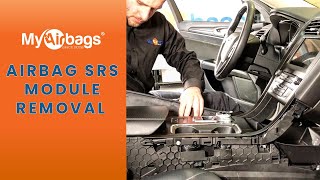
- Faulty Airbag Control Module (SRS Module) (Very Common) — An internal electronic or processor failure within the airbag control module itself. This happens due to 🎬 Watch: Step-by-step instructions for removing your airbag SRS module. age, voltage stress, or manufacturing defects.
- Stored Crash Data (Common) — If the vehicle was in an accident, the airbag module stores 'hard' crash data and locks itself, even if the airbags did not deploy. This sets a fault code and disables the system until the module is professionally reset or replaced.
- Low Battery Voltage or Voltage Spikes (Common) — A weak battery, improper jump-starting, or alternator problems cause a temporary, false code in the airbag module. If operating voltage drops below 9-10V, the module logs an internal fault.
- Wiring and Connection Issues (Common) — Damaged wires or loose, corroded connectors leading to the airbag control module trigger this code. Shorts to power, shorts to ground, or open circuits prevent the module from passing its self-test.
- Water Intrusion (Less Common) — Spilled liquids in the center console seep down and short the airbag control module. Clogged sunroof drains or bad window seals also cause water damage in footwells or under seats where modules reside.
- Faulty Clock Spring (Less Common) — The clock spring is a rotating connector in the steering column maintaining connection to the driver's airbag. A failure here triggers B1100, often alongside specific 'deployment loop' resistance codes.
- Corroded Front Crash Sensors (Rare) — Front-end sensors (FES) are susceptible to road salt and moisture corrosion. A failing sensor sends erratic data that the control module interprets as an internal fault.
- Improper Repairs or Aftermarket Interference (Rare) — Incorrectly patched sensor wiring from previous accident repairs, or improperly installed aftermarket electronics (alarms, remote starters) interfering with the CAN bus network, cause the module to set a fault code.
Symptoms

- Airbag Warning Light On — The airbag or SRS warning light stays illuminated on the dashboard after the initial startup sequence.
- Intermittent Airbag Light — The light turns on and off with changes in temperature, humidity, or vehicle movement, pointing to a poor connection or early-stage module failure.
- Horn or Steering Wheel Controls Not Working — If a faulty clock spring is the root cause, the horn, cruise control, or radio buttons on the steering wheel stop working.
- Flashing Airbag Light — In some vehicles, the airbag light flashes a specific pattern before staying on solid, indicating a diagnostic code is set.
- Airbags Will Not Deploy (scan-tool only — no driver-felt sign) — The Supplemental Restraint System is disabled as a failsafe. Airbags and seatbelt pretensioners will not activate in an accident.
Diagnostic Flowchart
Tap your situation to follow the diagnostic path that matches what you're seeing on this code.
Common Fixes & Costs
- Replace Airbag Control Module — Parts: $200-$1200, Labor: $150-$350, ~1.5 hr book time (Professional)
- Reset Airbag Control Module (Crash Data) — Parts: $50-$150, Labor: $100-$250, ~1.0 hr book time (Intermediate)
- Replace Clock Spring — Parts: $150-$700, Labor: $125-$250, ~1.5 hr book time (Intermediate)
- Repair Wiring or Connectors — Parts: $10-$50, Labor: $150-$500, ~2.5 hr book time (Professional)
- Replace Front Impact Sensor — Parts: $50-$250, Labor: $75-$150, ~0.8 hr book time (Beginner)
DIY vs Professional
- Replace Airbag Control Module — Beginner: No
Tools: Socket set, trim removal tools, SRS-capable scan tool for programming. - Reset Airbag Control Module — Beginner: No (removal/reinstall is Intermediate)
Tools: Socket set, trim removal tools. - Replace Clock Spring — Beginner: No (Intermediate)
Tools: Steering wheel puller, socket set, torque wrench, trim tools. - Repair Wiring or Connectors — Beginner: No
Tools: Multimeter, soldering iron, heat shrink tubing, wire strippers, wiring diagram. - Replace Front Impact Sensor — Beginner: Yes
Tools: Socket set or wrenches, trim clip removal tool.
Used vs. New Parts: Buying Guide
When a used part is worth it: A used OEM airbag control module is cost-effective ONLY if verified free of stored crash data and matching the exact part number. It makes sense for older vehicles where a new module exceeds the car's value.
Donor-vehicle mileage cap: roughly under 100000 miles for the part to have meaningful remaining life.
Donor quality checklist:
- Part number must be an exact match.
- Verify the donor vehicle was not in a flood or fire.
- The module must be guaranteed free of crash data.
- Avoid modules from vehicles with major collisions, even if airbags didn't deploy.
Decision logic:
- If The fault is stored crash data only (no hardware damage) → Reset your original module to avoid VIN programming issues.
- If A new OEM module is available for under $500 → Buy new to guarantee function and secure a warranty.
- If The vehicle is over 10 years old and the budget is tight → Buy a used module from a certified recycler, factoring in dealer programming costs.
Warranty tradeoff: Used parts carry a 30-90 day parts-only warranty. New OEM parts offer a 1-year warranty. Reset services often provide a lifetime guarantee on the service.
Worst-case if a used part fails: $300-600. If a used module is faulty, you pay for diagnostic and installation labor twice, plus another replacement part.
What Happens If You Wait — Timeline
- Immediate (0 seconds from fault detection): The SRS light illuminates, and the entire Supplemental Restraint System is disabled as a failsafe. The primary failure has already occurred. (MPG impact: 0%% · Added cost: $0 (Safety risk is the primary cost))
- 0-12 months: The vehicle fails its annual state safety inspection, preventing legal registration renewal. (MPG impact: 0%% · Added cost: $50 - $200 in fines and re-inspection fees.)
- During vehicle sale/trade-in: The vehicle's resale value is significantly reduced. An active airbag light is a major red flag for buyers. (MPG impact: 0%% · Added cost: $500 - $2000+ reduction in vehicle value.)
- Long-term (if caused by intermittent wiring/water issue): An ignored water leak or corroded wire worsens. Corrosion spreads, affecting nearby electronics and causing complex wiring harness failures. (MPG impact: 0%% · Added cost: $500 - $3000+ for complex wiring harness replacement.)
Cost of Not Fixing It
- Immediate: The entire Supplemental Restraint System (SRS), including all airbags and seatbelt pretensioners, is disabled. They will not deploy in a crash. (Added cost: N/A (Safety Risk))
- 0-12 months: Failure of mandatory state vehicle safety inspection. An illuminated airbag light prevents legal registration renewal in most jurisdictions. (Added cost: $50 - $200 (Fines and re-inspection fees))
- Long-term: Significantly reduced vehicle resale value. A vehicle with an un-repaired safety system fault receives a much lower trade-in offer. (Added cost: $1000+)
Diagnosis Steps

- Read Codes with an SRS-Capable Scanner
Use an OBD-II scanner that reads SRS/Body ('B' and 'U') codes. Basic engine readers cannot see this fault. Confirm B1100 is present. Diagnose communication (U-codes) first, as they cause B1100 to set.
Tools: OBD-II Scanner (SRS compatible) (Beginner) - Check Battery and Charging System
Ensure the battery is fully charged (>12.4V off) and the charging system works correctly (13.5V-14.5V running). Voltage below 9-10V causes control modules to set internal faults. Clear the code after fixing voltage issues.
Tools: Multimeter, Battery Charger (Beginner) - Visual Inspection of Module and Connectors
Locate the airbag control module (under the center console, front seats, or dashboard). Inspect for physical damage, liquid corrosion, or pushed-out pins. Check under front seats for disconnected harnesses.
Tools: Flashlight, Trim removal tools, Basic hand tools (Intermediate) - Inspect Wiring Harness Integrity
Inspect the wiring harness going to the airbag control module for pinched or frayed wires. Unplug and replug the main connector. SAFETY WARNING: Disconnect the battery and wait 30 minutes before handling SRS wiring to discharge backup capacitors.
Tools: Flashlight, Socket set (for battery) (Intermediate) - Test Module Power and Ground Circuits
With the battery disconnected and module unplugged, use a multimeter to check continuity between harness ground pins and chassis ground (<1 ohm). Reconnect the battery (module unplugged) and check for proper battery voltage at power supply pins.
Tools: Multimeter, Vehicle-specific wiring diagram (Advanced) - CAN Bus Network Health Check
If U-codes are present, check the CAN bus. With key on, check for ~2.6V on CAN High and ~2.4V on CAN Low at the DLC port. With battery disconnected, test resistance between DLC pins 6 and 14; a healthy network reads 60 ohms.
Tools: Multimeter, Vehicle wiring diagram (Professional) - Deployment Loop Resistance Test
If a deployment loop code (e.g., B0051) accompanies B1100, disconnect the battery and the specific airbag. Insert a 2.0-3.0 ohm resistor into the vehicle-side connector. Clear codes. If the resistance code disappears, the airbag is faulty.
Tools: SRS-safe Resistor Pack (2.0-3.5 ohms), Multimeter (Professional) - Analyze Live Data for Intermittent Faults
Graph the live data PID for the suspected circuit using an advanced scan tool. Wiggle wires or tap components. A sudden spike or drop in resistance confirms an intermittent connection issue.
Tools: Advanced Graphing Scan Tool (Advanced) - Module Reset or Replacement
If wiring, power, ground, and sensors test good, the airbag control module is faulty or stores crash data. Send the module to a specialist for a reset service, or replace it with a new unit requiring VIN programming.
Tools: OBD-II Scanner, Socket set, Trim removal tools (Advanced)
When This Code Triggers (Freeze-Frame Conditions)
- System Voltage: 9.0V - 16.0V (The SRS module performs a self-test at every key-on event. B1100 sets during this startup sequence if an internal error is detected. Low system voltage at startup is a frequent trigger.)
- Time Since Start: 0-7 seconds (The fault logs within seconds of turning the ignition key to the 'ON' position as the module runs its power-on self-test (POST).)
- Key-On Cycles: 1 (Unlike engine codes requiring multiple trips, a critical internal SRS module error sets immediately on the first key cycle where the fault is detected.)
- Fault Status: Present/Hard Code (Freeze frame data shows this as a 'present' or 'hard' code, meaning the fault is active and the SRS light illuminates immediately after clearing if the root cause remains.)
Related Codes
- B1000 — Indicates a general ECU failure. B1100 is specific to the airbag module's internal logic. If both are present, diagnose the specific B1100 first.
- B1100/31 — A Toyota-specific variation pointing exclusively to an internal malfunction in the center airbag sensor assembly, requiring module replacement.
- U-codes (e.g., U0151, U1000) — Indicate a CAN bus communication failure. A U-code suggests the module cannot communicate with other modules. Diagnose the communication network before replacing the airbag module.
- B0051 / B0053 — Indicate high or low resistance in a specific deployment loop. B0051 points to the driver's side circuit. Diagnosing the specific resistance fault clears the B1100 code.
Climate & Environmental Factors
- High Humidity / Water Intrusion: Moisture penetrates connectors or the module housing, causing corrosion and short circuits. Clogged sunroof drains or leaky window seals are common sources.
- Extreme Cold/Heat Cycles: Temperature changes cause electrical connectors to expand and contract, leading to loose connections. In cold weather, borderline components fall out of operating tolerance.
- Road Salt: Road salt causes a high incidence of front impact sensor failure due to corrosion. These sensors are directly exposed to road spray.
How to Talk to a Mechanic About This Code
Say this: "I have an airbag warning light on, and my scanner shows a B1100 code, pointing to an airbag control module malfunction. I checked the battery voltage, and it is good. Please investigate common causes like wiring issues, connector corrosion, or stored crash data before recommending a full module replacement."
This signals you are an informed customer. It directs the technician to perform a thorough diagnosis instead of jumping to the most expensive conclusion. Mentioning specific causes prevents unnecessary upselling.
Avoid saying:
- 'My airbag light is on, can you just fix it?'
- 'I think I need a new airbag computer, how much is that?'
- 'Just do whatever you think is necessary.'
Questions to ask before authorizing the repair:
- What specific tests did you perform to conclude the module is faulty and not a wiring or sensor issue?
- If the module needs replacement, is the new part an OEM module, and does the price include VIN programming?
- If you found stored crash data, is a module reset service an option instead of a full replacement?
- Can you provide a written estimate breaking down parts, labor, and diagnostic fees?
- What is the warranty on the parts and labor for this specific repair?
Where to Take It: Dealer vs Independent vs Chain
- Dealer:
Recommended if the issue requires programming or is on a newer vehicle. Dealers have specialized knowledge and direct access to factory service bulletins.
Best for: Vehicles under warranty or with a related recall, Complex, manufacturer-specific electrical issues (e.g., Subaru BIU faults), When VIN programming for a new module is required
Downsides: Highest labor rates, often 1.5-2x more than independent shops., Defaults to replacing entire assemblies rather than attempting nuanced wiring repairs. (Typical cost: +50% vs. baseline) - Independent Shop:
Best overall fit for most B1100 scenarios. A reputable independent shop with ASE-certified technicians provides quality diagnosis and repair at a lower cost than a dealer.
Best for: Out-of-warranty vehicles where cost is a major factor., Diagnosing common causes like wiring faults, sensor issues, or water damage., Removing a module to send out for a third-party reset service.
Downsides: Shop quality and technician expertise with SRS systems varies widely., Lacks expensive, brand-specific tools for module programming. (Typical cost: +0% vs. baseline) - Chain Shop:
AVOID. This is a safety-critical, complex electrical issue beyond the scope of chain lube or tire shops.
Best for: Simple, unrelated maintenance like oil changes or tires.
Downsides: Technicians lack specialized training for complex SRS diagnostics., Business model incentivizes quick parts replacement over detailed diagnostic work., Not equipped for module programming or intricate wiring repairs. (Typical cost: -10% vs. baseline)
When to Walk Away From the Repair
If the estimated repair cost for the airbag system exceeds 50-70% of your car's private-party value, sell or trade it in as-is. Insurance companies 'total' a car when repair costs hit this threshold.
- Car worth $3000, fix is $1800: Walk away. The repair cost is 60% of the car's value. Selling the car 'as-is' with full disclosure is the most economical option.
- Car worth $15000, fix is $2200: Fix it. The repair cost is less than 15% of the vehicle's value and is a critical safety repair that restores significant value.
- Car worth $5000, fix is $2500: Borderline. The repair is 50% of the car's value. Get a second opinion, explore a mail-in module reset service, or use a used part to lower the cost.
What Scan Tool You Need for This Code

Minimum: An OBD-II scanner with specific support for reading and clearing SRS (Airbag) system codes. It must have 'B' or Body code reading capability.
A standard $20-$50 engine code reader cannot communicate with the SRS module. It only reads 'P' (Powertrain) codes and shows 'No Codes Found' even with the airbag light on.
Budget: Autel MaxiAP AP200M / BlueDriver Pro (~$60) — These Bluetooth dongles pair with a smartphone app. They read and clear SRS codes, view freeze frame data, and check live data. This confirms the B1100 code and clears it after a simple fix.
Mid-range: Foxwell NT510 Elite / Autel ML629 (~$150) — These handheld scanners offer full system diagnostics. The Foxwell NT510 Elite offers brand-specific software with bi-directional controls to test specific components, differentiating a module failure from a wiring issue.
Professional: Autel MaxiCOM MK808 / Launch CRP919E (~$400-800) — Professional-grade tablet scanners providing full bi-directional control, advanced service functions like module programming, and comprehensive live data graphing. Essential for programming a new airbag module.
Rent vs buy: Auto parts stores do NOT rent out SRS-capable scanners due to liability. For a one-time fix, pay a shop a diagnostic fee ($100-$150). Buy a scanner only if you perform car repairs frequently.
How to Clear the Code After You Fix It
- Reconnect the battery after the physical repair is complete.
- Use an SRS-capable OBD-II scan tool to access the SRS module and select the 'Clear Codes' or 'Reset' function.
- Turn the ignition off, then back on to initiate the system self-test. The airbag light illuminates for a few seconds and turns off.
Drive cycle (~5 minutes): The SRS system does not require a complex drive cycle. A successful repair is confirmed if the airbag light turns off after the initial key-on self-test and stays off. Perform several key-on/key-off cycles to ensure the fault does not return.
Readiness monitors affected: None directly. Disconnecting the battery to perform the repair resets all engine-related readiness monitors to 'Not Ready'.
Before emissions retest: drive at least 50 miles to fully set monitors.
Watch out for:
- Disconnecting the battery does not clear a B1100 code.
- Basic engine code readers cannot communicate with or clear codes from the SRS module.
- The code returns immediately if the root cause remains unfixed.
Will This Fail Emissions / State Inspection?
Yes — this code typically fails an OBD-II emissions inspection.
- California: The airbag light is not part of the standard emissions (smog) check. However, California requires a separate safety inspection for salvaged vehicles where an active SRS light is an automatic failure.
- New York: The NYS DMV classifies an illuminated airbag warning lamp as an advisory item. The inspector informs you, but the vehicle passes the inspection.
- Texas: The airbag system is not on the official Texas vehicle safety inspection list. A vehicle with an illuminated airbag light passes state inspection.
Most Commonly Affected Vehicles
- Toyota Corolla (2003-2008) — Frequently cited for issues with the center airbag sensor assembly (code B1100/31), requiring module replacement.
- Toyota Tacoma (2001-2004) — The service manual details B1100/31 as a known issue pointing to an internal module failure.
- Lexus RX300/RX330/RX350 (1999-2009) — Owners deal with B1100 due to module failure or water intrusion from clogged sunroof drains saturating the carpet.
- Hyundai Genesis / Genesis Coupe (2010-2016) — Sets B1100 associated with part number 95910-B1100. A reset service is a common solution if crash data is the cause.
- Nissan Maxima / Versa (2004-2012) — The B1100 code indicates a generic 'Airbag Control Module Fault' for these models, usually related to stored crash data after an accident or internal hardware failure.
- Subaru Outback / Legacy (2005-2009) — B1100 indicates a 'System Error in Body Integrated Unit (BIU)'. The BIU controls body functions, and failure is triggered by a voltage drop.
- Toyota 4Runner / Lexus GX470 (2003-2006) — Recalled for an airbag control module causing inadvertent side curtain airbag deployment. This software issue requires module replacement.
- Ram 1500 / 2500 / 3500 (2013-2018) — Known for clock spring failures contributing to B1100. Clock spring replacement exceeds $800 at a dealer.
Manufacturer-Specific Notes
- Toyota/Lexus: B1100 (often B1100/31) points directly to an internal malfunction of the center airbag sensor assembly. It is rarely caused by external sensors or wiring.
- General Motors (GM): B1100 refers to an audio system output malfunction, unrelated to the airbag system. Use a scanner that correctly identifies the system setting the code.
- Subaru: B1100 indicates a general 'System error in body integrated unit (BIU)'. Triggered by low voltage, it causes issues with lights, locks, and the immobilizer system.
- Honda: B1100 is defined as a 'Communication Circuit Error (BUS Off)', pointing to a network problem. A single faulty component disrupts the CAN bus and causes the SRS light.
- Hyundai: Recalled 2011-2013 Sonata models because electrical overstress damages the Airbag Control Unit. The fix installs a wire filter kit to protect the module.
Real Owner Stories
2013 Kia Rio with ~80k miles - The Low Voltage Fix
Airbag light came on after the car battery died and required a jump-start.
What they tried:
- Wiggled connectors under the seats with no change.
- Attempted a manual reset procedure (key on/off cycles) which failed.
Outcome: The root cause was a 'hard' low-voltage fault code stored in the SRS module from the dead battery. The code was cleared using an SRS-capable OBD-II scanner, and the light stayed off.
Lesson: A low voltage event from a dead battery is a common trigger for airbag lights. A 'hard code' sets that requires an SRS-capable scanner to erase; a basic engine code reader will not work.
2005 Toyota Tacoma - Misdiagnosis Avoided
Airbag light on, code B1100. Dealer quoted $2,700 to replace the wiring harness, claiming the driver-side airbag sensor connector was corroded.
What they tried:
- Owner swapped the potentially corroded driver-side front impact sensor with the passenger-side sensor.
- Cleared the codes and the fault code moved to the passenger side, proving the sensor was bad, not the harness.
Outcome: The owner purchased a used sensor on eBay for $75 and replaced it. The code cleared, saving over $2,600.
Lesson: For faults related to a specific component, swapping the part from one side to the other is a powerful diagnostic technique. If the fault follows the part, you confirm the part is bad, not the wiring harness.
2004 Subaru Legacy - The Unusual Cause
After a flat battery, the car displayed an 'Er IU' message, cruise control failed, and a scanner showed code B1100 'Integ. Unit System Error'.
What they tried:
- Checked all fuses, which were intact.
- Attempted to clear the code with a standard analyzer, but it returned immediately.
Outcome: The B1100 code on this Subaru points to an error in the Body Integrated Unit (BIU). The low voltage event caused the BIU to log an internal fault. The fix required a specific Subaru-protocol reset procedure to clear the error.
Lesson: On Subarus, B1100 indicates a fault in a larger 'body computer' (BIU) controlling multiple systems. If you see unrelated electrical issues along with the airbag light, suspect a broader module fault triggered by low voltage.
How to Prevent This Code From Triggering
- Maintain a healthy battery and charging system (Annually) — Low voltage from a weak battery or voltage spikes from improper jump-starting cause permanent damage to the SRS control module.
- Clean sunroof and cowl drains (Annually, especially before a rainy season) — Clogged drains cause water to overflow into the cabin, soaking the carpet around control modules and leading to corrosion and failure.
- Be cautious with interior liquids (Daily habit) — Spilling drinks in the center console allows liquid to seep directly into the airbag module, causing short circuits and permanent damage.
- Ensure proper procedures during repairs (During any vehicle maintenance) — Always disconnect the battery before working near SRS components. Improper handling or wiring repairs cause persistent codes and compromise safety.
Frequently Asked Questions
Can I reset the airbag light myself?
You can clear the B1100 code with an SRS-capable OBD-II scanner, but the light returns immediately if the underlying problem remains. If a temporary low voltage event set the code, clearing it is a permanent fix.
Is it safe to drive with the B1100 code?
No. The B1100 code completely disables your airbag system. Driving without airbags increases your risk of severe injury or death in a crash.
What is the difference between resetting and replacing the airbag module?
Resetting clears stored crash data from your original module for $50-$150 via a mail-in service. Replacing involves buying a new or used module for $500-$1,500+ including parts, labor, and VIN programming. Resetting only works if the module lacks physical or electronic damage.
What are common mistakes when diagnosing a B1100 code?
A frequent mistake is replacing the airbag module without ruling out low battery voltage, water damage, or damaged wiring first. Another pitfall is ignoring other diagnostic codes. A separate sensor or communication code is often the true source of the problem.
Can I use a used airbag module from a junkyard?
Using a junkyard module is not recommended. Used modules often contain stored crash data or internal faults. Furthermore, modern modules require expensive dealership reprogramming to match your vehicle's VIN and options.
Will a B1100 code fail a safety inspection?
Yes. An illuminated airbag warning light is an automatic failure for vehicle safety inspections in nearly all jurisdictions.
My car was in a minor accident and now has this code, but the airbags didn't deploy. What should I do?
Even minor collisions trigger the airbag module to store 'hard codes' and lock itself as a safety measure. The module disables the SRS system and requires professional resetting or replacement. It will not function again until you complete this service.
Why did my airbag light turn on after hitting a pothole or a bump?
A sudden jolt disturbs loose or corroded electrical connectors, momentarily interrupting a circuit and logging a fault. Check the main module connector and any connectors under the front seats. These are the most common culprits for bump-induced airbag lights.
Key Takeaways
- Code B1100 completely disables your vehicle's airbag system, increasing frontal crash fatality risk by 29%.
- The most common fix is replacing or resetting the Airbag Control Module, costing between $150 and $1,200.
- A dead battery or jump-start often triggers a false B1100 code that requires an SRS-capable scanner to clear.
- Never attempt DIY wiring repairs on the SRS system; improper resistance prevents airbag deployment and requires professional soldering.
Helpful Videos

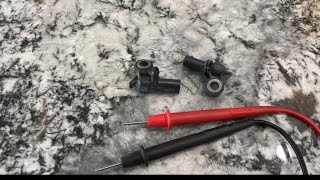

The information in this article is provided for general reference and educational purposes only. Vehicle specifications, procedures, and part compatibility can vary by production date, trim level, and region. Always consult your vehicle's factory service manual and verify part numbers before purchasing or performing repairs. Safety-critical components such as airbags, seat belts, and braking systems should be installed by a qualified professional.
- 🎬 Helpful Videos
- What Does B1100 Mean?
- Can I Drive With B1100?
- Common Causes
- Symptoms
- Diagnostic Flowchart
- Common Fixes & Costs
- DIY vs Professional
- Used vs. New Parts: Buying Guide
- What Happens If You Wait — Timeline
- Cost of Not Fixing It
- Diagnosis Steps
- When This Code Triggers (Freeze-Frame Conditions)
- Related Codes
- Climate & Environmental Factors
- How to Talk to a Mechanic About This Code
- Where to Take It: Dealer vs Independent vs Chain
- When to Walk Away From the Repair
- What Scan Tool You Need for This Code
- How to Clear the Code After You Fix It
- Will This Fail Emissions / State Inspection?
- Most Commonly Affected Vehicles
- Manufacturer-Specific Notes
- Real Owner Stories
- 2013 Kia Rio with ~80k miles - The Low Voltage Fix
- 2005 Toyota Tacoma - Misdiagnosis Avoided
- 2004 Subaru Legacy - The Unusual Cause
- How to Prevent This Code From Triggering
- Frequently Asked Questions
- Can I reset the airbag light myself?
- Is it safe to drive with the B1100 code?
- What is the difference between resetting and replacing the airbag module?
- What are common mistakes when diagnosing a B1100 code?
- Can I use a used airbag module from a junkyard?
- Will a B1100 code fail a safety inspection?
- My car was in a minor accident and now has this code, but the airbags didn't deploy. What should I do?
- Why did my airbag light turn on after hitting a pothole or a bump?
- Key Takeaways
- 🎟️ Get 5% Off