

OBD-II Code B1086: Air Distribution Damper Motor Circuit Malfunction
What B1086 means, why it triggers, and how to fix it
- Code B1086 traps your HVAC airflow in a single vent position, usually accompanied by a repetitive clicking noise from behind the dashboard.
- On Nissan and Infiniti vehicles, B1086 is a critical safety fault indicating an open circuit in the driver's seatbelt pretensioner, which completely disables the airbag system.
- A stripped plastic gear inside the air distribution actuator causes 80% of B1086 codes, but always attempt a free 60-second HVAC fuse-pull recalibration before buying parts.
- Actuator parts cost under $50, but labor dictates the final bill; accessible under-dash replacements cost $150, while full dashboard removals exceed $1,200.
What Does B1086 Mean?

Code B1086 indicates a failure in the small electric motor (the mode door actuator) that controls cabin airflow direction. This motor directs air to your feet, the main dash vents, or the windshield. When it fails, the airflow gets permanently stuck in one position or moves erratically, often accompanied by a clicking noise from the dashboard.
Technical definition: The SAE/ISO definition for B1086 is "Air Distribution Damper Motor Circuit Malfunction". The Heating, Ventilation, and Air Conditioning (HVAC) control module detects an electrical fault in the mode door motor circuit. Manufacturers like Ford and Mazda append a two-digit suffix (e.g., :07 for Mechanical Failure, :13 for Circuit Open) to pinpoint the exact electrical or mechanical failure type.
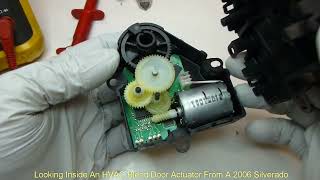
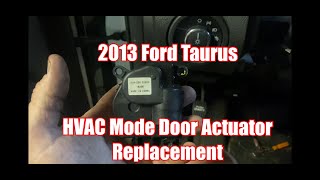
🎬 Watch: Ford Taurus mode door actuator replacement walkthroughCan I Drive With B1086?

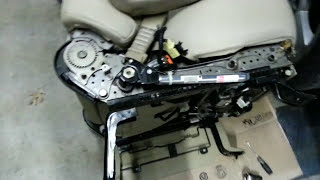
Yes, But With Caution. You can safely drive with a B1086 code in most vehicles, though it traps your climate control in a single airflow setting. However, if the airflow is stuck off the defrost setting during cold or wet weather, it creates a severe visibility hazard. On Nissan, Infiniti, and some Mercedes models, this code indicates a critical seatbelt pretensioner fault that disables the entire airbag system 🎬 Watch: How to fix the Nissan SRS airbag fault, requiring immediate repair.
Common Causes

- Failed Air Distribution Actuator (Very Common) — This causes over 80% of B1086 codes. The plastic gears inside the actuator strip and break, or the small electric motor burns out, causing a repetitive clicking noise and total failure to move the damper door.
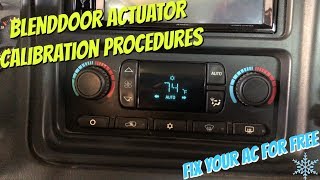
- Low Battery Voltage / Failed Initialization (Common) — During startup, the HVAC module calibrates the actuators to learn their end-points. A weak battery or recent power interruption causes this calibration to fail, forcing the module to lose track of the actuator's position and trigger a B1086 'ghost' code. 🎬 See this free recalibration procedure for GM trucks and SUVs
- Broken or Binding Damper Door (Less Common) — The physical plastic door inside the HVAC case breaks or jams. Debris from a failed cabin air filter, leaves, or foreign objects fall into the vents and block the door, putting excessive strain on the actuator motor until it fails.
- Wiring or Connector Issues (Less Common) — The electrical harness or connector plugging into the actuator suffers from corrosion, loose pins, or a short circuit. This interrupts power to the motor and often blows the dedicated HVAC fuse.
- Incorrect Part or Improper Installation (Rare) — If the code appears immediately after a DIY repair, the wrong actuator was installed, or the new actuator was not properly aligned ('clocked') with the damper door linkage during installation.
- Failed HVAC Control Module (Rare) — The climate control computer itself fails. It stops sending the correct 5-volt reference signals or fails to read the actuator's position feedback, requiring module replacement and reprogramming.
Symptoms

- Airflow stuck in one position — Air blows permanently from one set of vents (e.g., only the floor) regardless of the setting you choose on the climate control panel.
- Repetitive clicking or grinding noise — A loud, rhythmic clicking sounds from behind the dashboard when starting the car or changing climate settings. This confirms stripped plastic gears inside the actuator.
- Inconsistent or erratic operation — The airflow control works intermittently. This points to a loose wiring connection, a failing HVAC module, or an actuator motor in the early stages of failure.
- Airbag warning light is on (Nissan/Infiniti) (also visible on scanner) — On specific Nissan and Infiniti models, B1086 triggers the Airbag/SRS warning light instead of a climate control issue, indicating a disabled safety system.
Diagnostic Flowchart

Tap your situation to follow the diagnostic path that matches what you're seeing on this code.
Common Fixes & Costs
- Perform HVAC Recalibration — Parts: $0, Labor: $0-$120, ~0.5 hr book time (DIY)
- Replace Air Distribution Door Actuator
— Parts: $30-$100, Labor: $150-$1200+, ~1.5-10.0 hr book time
(Intermediate)
Ford F-150 (2015-2020): OEM FL3Z-19E616-C (Alt: Dorman 604-288, TRQ HCA40199)
Chevrolet / GMC Silverado / Sierra (2007-2018): OEM GM 84191641, AC Delco 15-74349 (Alt: Dorman 604-705, Duralast 604-211)
Ford Taurus (2010-2019): OEM Motorcraft YH-1779 (AA5Z-19E616-C) (Alt: Dorman 604-239, Four Seasons 73286) - Repair Damaged Wiring or Connector — Parts: $10-$50, Labor: $150-$350, ~1.0-2.5 hr book time (Intermediate)
- Repair/Clear Obstruction in HVAC Case — Parts: $0, Labor: $200-$1500+, ~2.0-10.0+ hr book time (Professional)
- Replace HVAC Control Module — Parts: $200-$600, Labor: $100-$250, ~0.8-1.5 hr book time (Professional)
DIY vs Professional
- Perform HVAC Recalibration — Beginner:
Tools: Owner's manual, fuse puller. - Replace Air Distribution Door Actuator — Beginner:
Tools: Socket set (7mm, 8mm, 10mm), Torx sockets (T20, T25), trim removal tools, flashlight. - Repair Damaged Wiring or Connector — Beginner:
Tools: Multimeter, wire strippers, soldering iron, heat shrink tubing, wiring diagrams.
Used vs. New Parts: Buying Guide
When a used part is worth it: Never buy a used air distribution actuator. The internal plastic gears are high-wear items that degrade over time. New aftermarket parts cost $20-$50, making the labor risk of installing a used part unjustifiable.
Donor-vehicle mileage cap: roughly under 40000 miles for the part to have meaningful remaining life.
Donor quality checklist:
- If forced to buy a used HVAC control module, ensure the donor vehicle was not scrapped for electrical flood damage.
- Match the part number exactly. Actuators look identical but feature different internal gear travel limits.
Decision logic:
- If The failed part is an air distribution actuator → Buy a new aftermarket or OEM part. The savings from a used part are erased if it fails and requires repeat labor.
- If The failed part is an expensive HVAC Control Module → A used module from a reputable recycler saves hundreds of dollars, though it may require dealer programming.
Warranty tradeoff: Used parts carry 30-day warranties. New aftermarket parts (like Dorman) offer limited lifetime warranties. OEM parts carry 1-2 year warranties.
Worst-case if a used part fails: $150-$1200+. If a used actuator fails, you pay the massive labor cost a second time.
What Happens If You Wait — Timeline
- 0-1 week: Code B1086 sets. A clicking noise begins, and airflow sticks in one position. On Nissan/Infiniti, the airbag light illuminates and the SRS system disables. (MPG impact: 0%% · Added cost: $0. The primary cost is the safety risk of disabled airbags or lack of windshield defrost.)
- 1 week - 3 months: The clicking noise becomes constant. The failing actuator motor draws excess current, creating a parasitic drain that weakens the battery. (MPG impact: 0%% · Added cost: $100-$250 for a replacement battery or tow if the parasitic drain kills the battery overnight.)
- 3-12 months: The actuator motor burns out completely, stopping the clicking but leaving airflow permanently stuck. Nissan owners accept massive liability by driving without airbags. (MPG impact: 0%% · Added cost: Financial risk shifts to liability. Insurance may deny claims if a known safety defect (airbags) was ignored.)
- 12+ months: No further mechanical damage occurs within the HVAC system. Driving without a key safety feature (defrost or airbags) becomes dangerously routine. (MPG impact: 0%% · Added cost: $1,000-$6,000+. The potential cost of a full airbag system replacement if an accident occurs that could have been mitigated by fixing the pretensioner.)
Cost of Not Fixing It
- Immediate: Loss of ability to direct airflow creates a severe visibility hazard if unable to defrost the windshield. On affected Nissan models, the airbag system is completely disabled. (Added cost: 0)
- 1-6 months: The failing actuator motor draws excess current as it repeatedly tries to move, potentially causing a parasitic drain that kills the battery overnight. (Added cost: 100-250)
- 6+ months: The actuator motor burns out completely. Driving without functional airbags (Nissan) or a working windshield defroster normalizes extreme safety risks. (Added cost: 0)
Diagnosis Steps
- Read the Full Fault Code (Including Suffix)
Use an advanced OBD-II scanner to read Body Control Module (BCM) and HVAC codes. Note the full code, including any two-digit suffix (e.g., B1086:13). This suffix dictates the entire diagnosis by identifying if the fault is mechanical (:07), an open circuit (:13), or a short (:11, :12).
Tools: Advanced OBD-II Scanner (Beginner) - Attempt an HVAC System Recalibration
Pull the specific HVAC or SJB fuse for 60 seconds, reinstall it, turn the ignition to 'ON' (without starting), and wait 2 minutes. This forces the system to recalibrate the actuators and instantly fixes glitches caused by recent battery replacements or low voltage.
Tools: Owner's Manual, Fuse puller (Beginner) - Listen and Visually Inspect the Actuator
Locate the air distribution actuator. Have a helper change the airflow settings while you listen and watch the actuator shaft. If you hear clicking but see no movement, the internal gears are stripped and the unit requires replacement.
Tools: Flashlight, Trim removal tools (Intermediate) - Test Damper Door Movement Manually
Remove the actuator and move the damper door's linkage by hand. It must move smoothly with minimal resistance. If it requires excessive force or feels gritty, a jammed door inside the HVAC case is the root cause, not the actuator.
Tools: Basic hand tools (Intermediate) - Check Live Data with a Scan Tool
Use a bi-directional scanner to view live data PIDs for the actuator's 'Commanded' and 'Actual' positions. Command the mode door to different positions. If the commanded value changes but the actual value remains static, it confirms a failed actuator or jammed door.
Tools: Advanced Bi-Directional Scanner (Advanced) - Test the Actuator's Electrical Circuit
Using a multimeter and wiring diagram, probe the actuator connector pins. Verify the presence of a 5-volt reference signal, a solid ground, and a signal wire whose voltage sweeps smoothly between 0.5V and 4.5V when commanded. Missing voltages indicate a wiring or HVAC module failure.
Tools: Multimeter, T-pins, Vehicle-specific wiring diagram (Advanced) - Test the Actuator Motor Directly
Apply power directly to the two motor pins on the removed actuator using a 9-volt battery and jumper wires. The motor must spin. Reverse the polarity to verify it spins in the opposite direction. If it fails to move, the internal motor is dead.
Tools: 9-volt battery, Jumper wires, Wiring Diagram (Intermediate) - Inspect the HVAC Module
If the actuator, door, and wiring pass all tests, inspect the HVAC control module connectors for corrosion or pushed-out pins. A failed module requires replacement and dealer programming.
Tools: Flashlight, Basic hand tools (Advanced)
When This Code Triggers (Freeze-Frame Conditions)
- Battery Voltage: 11.5V - 14.5V (The code triggers if voltage drops too low during the HVAC module's startup self-test.)
- Ignition Status: ON / RUN (The fault is detected immediately after the ignition turns on and the HVAC module attempts to calibrate the actuators.)
- Commanded Actuator Position: Any change (e.g., Panel to Defrost) (The code sets when the driver requests a mode change, but the module receives no position change feedback from the actuator sensor.)
- Time After Ignition ON: 0-30 seconds (Systems perform a self-test immediately after startup. Failures during this 30-second window are the most common trigger.)
Related Codes
- B1081 — Indicates a 'Left Temperature Damper Motor' fault. It often appears with B1086 on dual-zone systems. B1086 affects airflow direction (mode), while B1081 affects air temperature (blend).
- B11E7 — A Ford-specific code for 'Air Distribution Damper Motor - Motor Stuck'. If present alongside B1086:13, it confirms the motor has an internal open circuit and is mechanically jammed.
- B10B9 — Indicates a 'Blower Control Circuit' fault. A B10B9 fault affects fan speed (stuck on high or off entirely), whereas B1086 affects airflow direction while fan speed remains normal.
- B1083 — Indicates a 'Recirculation Damper Motor Circuit' fault. This actuator switches between fresh outside air and recirculated cabin air, performing a different function than the B1086 mode actuator.
Climate & Environmental Factors
- High Humidity: Moisture condenses inside the actuator housing, corroding internal motor contacts and degrading lubricants, which accelerates gear wear.
- Extreme Cold: Freezing temperatures make the plastic gears brittle and prone to snapping. Cold weather also thickens the internal grease, increasing strain on the motor until it burns out.
- Extreme Heat: Sustained high temperatures bake the plastic gears and break down internal lubricants, leading to premature mechanical failure.
How to Talk to a Mechanic About This Code
Say this: "I have a B1086 code and my airflow is stuck on the vents. For my Nissan, I know this is a seatbelt pretensioner code, so please check the SRS system. For any other vehicle, please confirm if it's the mode actuator or a jammed door before replacing parts."
This directs the technician to the correct system (HVAC vs. Airbag) and forces them to diagnose the root cause instead of blindly replacing the most obvious part.
Avoid saying:
- 'My A/C is making a funny noise.' (Too vague)
- 'Just fix the B1086 code.' (Invites parts-cannon behavior)
- 'My airbag light is on.' (Correct for Nissan, but sends mechanics down the wrong path on a Ford)
Questions to ask before authorizing the repair:
- Did you test the damper door movement by hand to confirm it's not jammed?
- Can you confirm you are replacing the 'mode' actuator, and not the 'blend' (temperature) actuator?
- For Nissan: Have you confirmed the fault is in the pretensioner itself and not a wiring issue?
- Does the estimate include an HVAC system recalibration after the part is replaced?
Where to Take It: Dealer vs Independent vs Chain
- Dealer:
Mandatory for the Nissan airbag variant due to safety liability. Recommended for difficult-to-access actuators.
Best for: Nissan/Infiniti vehicles where B1086 is a critical airbag system code., Complex repairs requiring full dashboard removal.
Downsides: Highest labor rates., May replace an entire assembly when a smaller component repair suffices. (Typical cost: +50% vs. baseline) - Independent Shop:
Best fit for the majority of HVAC-related B1086 issues, providing the best balance of cost and expertise.
Best for: Most common HVAC-related B1086 faults on out-of-warranty vehicles., Cases where the actuator is reasonably accessible (1-3 hour job).
Downsides: May lack specialized tools for SRS systems. (Typical cost: +0% vs. baseline) - Chain Shop:
Avoid for diagnostic work or the Nissan airbag fault. Acceptable only if you are certain the actuator is the failure point and it is easy to access.
Best for: Simple, accessible actuator replacements if you have already diagnosed the problem yourself.
Downsides: High risk of misdiagnosis (e.g., replacing the wrong actuator)., Not recommended for electrical diagnosis or dashboard disassembly. (Typical cost: -10% vs. baseline)
When to Walk Away From the Repair
If the estimated repair cost for B1086 exceeds 40% of your car's value, consider selling it, especially if the repair requires full dashboard removal.
- Car worth $4000, fix is $350: Fix it. This is a common, inexpensive repair that restores key functionality.
- Car worth $5000, fix is $1800: Walk away. The repair cost is a massive percentage of the car's value due to dashboard removal labor.
- Car worth $25000, fix is $1500: Fix it. The cost is a small fraction of the vehicle's value and necessary for safety (defrost).
What Scan Tool You Need for This Code
Minimum: A scanner that reads manufacturer-specific Body ('B') codes. Basic engine code readers will show 'No Codes Found'.
Cheap $20 scanners only read generic Powertrain ('P') codes. You need a tool that accesses the HVAC or Body Control Modules to see B1086 and its critical two-digit suffix.
Budget: BlueDriver Pro or ANCEL FD500 (~$90) — Reads and clears Body (B) codes, including ABS, Airbag, and HVAC modules. Sufficient to confirm the code and view live actuator data.
Mid-range: Foxwell NT510 Elite (~$160) — Offers bi-directional control, allowing you to command the actuator to move directly from the scan tool to confirm if the motor is dead or the door is jammed.
Professional: Autel MaxiCOM MK808S (~$500) — Provides full bi-directional control and special HVAC calibration functions. Runs automated tests that cycle all actuators to pinpoint the failure.
Rent vs buy: Parts store loaner tools often cannot read Body ('B') codes. You must buy a capable scanner, making the budget pick a mandatory investment for this issue.
How to Clear the Code After You Fix It
- Use an OBD-II scan tool to clear the Body Control Module (BCM) or HVAC module faults.
- Perform an HVAC actuator recalibration procedure (pull the designated fuse for 60 seconds, then turn the key to 'ON' for 2 minutes without starting the engine).
- Cycle through all airflow modes (Panel, Floor, Defrost) to confirm proper operation.
Drive cycle (~5 minutes): A specific drive cycle is not required. After clearing the code and recalibrating, test functionality immediately in the driveway. The fault returns instantly if the mechanical or electrical issue persists.
Readiness monitors affected: None. Body codes like B1086 do not affect emissions readiness monitors.
Watch out for:
- Clearing the code without fixing the jammed door or stripped gears guarantees the code returns immediately.
- Failing to perform the HVAC recalibration step after installing a new actuator prevents the system from recognizing the part.
- Clearing the B1086 airbag code on Nissan models requires a specialized scan tool; generic readers cannot clear SRS faults.
Will This Fail Emissions / State Inspection?
No — by itself this code doesn't fail OBD inspection (but it can keep readiness monitors from setting, which causes a separate fail).
- California: An HVAC-related B1086 code will not fail a smog check. However, if the code triggers the airbag light (Nissan models), it fails the safety inspection portion of the test.
- New York: An illuminated airbag light results in a safety advisement but does not cause an automatic failure of the NYS safety inspection. The HVAC fault does not affect emissions.
- Texas: Texas requires the airbag warning lamp to illuminate and turn off properly. An airbag light stuck on due to a Nissan B1086 fault causes an automatic safety inspection failure.
Most Commonly Affected Vehicles
- Ford F-150 (2009-2020) — Extremely common. On 2009-2014 models, the mode door actuator by the gas pedal is a frequent DIY fix. 2015-2020 models often require a fuse-pull recalibration in the passenger kick panel.
- Ford Taurus (2010-2019) — Prone to setting B1086 with :07 and :13 suffixes. The glove box actuator is easy to reach, but the driver's side unit requires dropping the steering column.
- Chevrolet / GMC Silverado / Sierra (2007-2018) — Known for widespread HVAC actuator failures. These trucks also suffer from broken wires in the driver's door hinge harness, causing related electrical faults.
- Ford Edge (2015-2020) — B1086 frequently appears alongside B1081 (temperature blend door), indicating multiple simultaneous actuator failures.
- Ford F-250/F-350 Super Duty (2011-2022) — The air distribution motor is a known failure item. Replacement on specific trims requires 10+ hours of labor due to its location deep within the dashboard.
- Hyundai / Kia Sonata, Genesis, Optima (2010-2017) — Experiences high failure rates of the mode door actuator, leading to clicking noises and stuck airflow.
- Volkswagen Passat (2012-2018) — The air distribution flap motor (V71) fails frequently. Replacement requires complete removal of the dashboard assembly, resulting in massive labor costs.
- Nissan Frontier / Titan / 350Z / Armada (2004-2015) — CRITICAL: On these models, B1086 indicates an open circuit in the driver's side seat belt pretensioner. This disables the airbag system and requires immediate repair. It is unrelated to the HVAC system.
Manufacturer-Specific Notes
- Ford: Ford appends two-digit suffixes (e.g., :07, :11, :12, :13) to B1086. These pinpoint whether the fault is mechanical, a short to ground, a short to power, or an open circuit, eliminating diagnostic guesswork.
- General Motors (GM): GM vehicles require a specific HVAC actuator recalibration procedure initiated by pulling the HVAC/ECAS fuse. This must be performed after replacing an actuator and often resolves ghost codes without parts replacement.
- Nissan / Infiniti: On models like the Frontier, Titan, and 350Z, B1086 is an SRS code indicating an 'Open Circuit for the Left-Hand Front Seat Belt Pretensioner'. This disables the airbags. Nissan issued recall R0616 for 2004-2006 Titans for related wiring issues.
- Mazda: Mazda uses a :71 suffix meaning 'Actuator Stuck'. Diagnosis involves verifying if the actuator motor runs continuously for over 15 seconds, indicating a jammed door or failed internal position sensor.
Real Owner Stories
2015 Ford Taurus with 94k miles - Misdiagnosis
Airflow was stuck on the dashboard vents. The mechanic scanned codes B1086:07 and B1086:13.
What they tried:
- The mechanic mistakenly replaced the driver's side temperature blend door actuator, but the airflow remained stuck.
Outcome: The owner learned that B1086 specifically points to the 'Air Distribution' (mode) actuator, not the 'Blend' (temperature) actuator. Replacing the correct mode actuator resolved the issue.
Lesson: Vehicles have multiple identical-looking actuators in the dashboard. Always confirm you are replacing the actuator responsible for airflow direction, not temperature, to avoid paying for useless parts.
2007 Nissan Maxima after rear-end collision - Airbag Light
The airbag light illuminated after a minor collision. A scan revealed code B1086: Pretensioner Left Front (Open).
What they tried:
- The dealership quoted a massive bill to replace all airbags.
Outcome: The issue was an open circuit in the driver's seat belt pretensioner. The computer disabled the airbag system as a precaution. Repairing the specific pretensioner wiring fixed the code and restored the airbags.
Lesson: On Nissan models, B1086 is a critical safety code for the airbag system, not the HVAC. Do not let a shop replace the entire airbag system for an isolated pretensioner wiring fault.
2017 Ford F-350 - Easy Fix (Recalibration)
Airflow was stuck on the feet and defrost vents. A FORScan tool showed codes B1086:7-28 and B1086:13-28.
What they tried:
- The owner manually tested the door, which moved freely. He performed an HVAC recalibration by pulling SJB fuse 15 for a minute, reinstalling it, and turning the ignition to 'ON' for two minutes.
Outcome: The recalibration procedure forced the HVAC module to relearn the actuator's end points, instantly resolving the issue for $0.
Lesson: Always attempt a free HVAC system reset before replacing parts, especially if the problem appeared after a battery change.
2008 Chevy Impala - Parasitic Drain
A clicking noise from the glove compartment continued for minutes after turning the car off, threatening to drain the battery.
What they tried:
- The owner pulled the HVAC fuse when parking overnight to prevent a dead battery until the actuator could be replaced.
Outcome: The failing actuator was stuck trying to reach its 'park' position after shutdown, causing a parasitic drain. Replacing the actuator permanently fixed the drain.
Lesson: A clicking actuator can kill your battery if it continues running after the car is off. Pulling the relevant fuse is a valid temporary workaround to prevent being stranded.
How to Prevent This Code From Triggering
- Replace the cabin air filter annually (Every 15,000 miles) — A disintegrating filter sheds debris into the HVAC case, jamming the damper doors and causing the actuator motor to burn out under extreme strain.
- Clear leaves and debris from the windshield cowl (Seasonally) — Debris bypasses the cowl screen and enters the HVAC intake, physically blocking the movement of the mode doors and destroying the actuator.
- Use 'Auto' climate settings (Daily) — Constantly manually cycling the mode door from defrost to panel puts unnecessary mechanical wear on the actuator's plastic gears. Letting the system manage itself prolongs gear life.
- Maintain a healthy battery (As needed) — Low voltage during startup corrupts the HVAC module's initialization process, putting stress on the actuators as they blindly search for their end-points.
Frequently Asked Questions
What are the most common misdiagnosis mistakes for a B1086 code?
The biggest mistake is replacing the actuator without testing if the physical damper door is jammed or if the wiring is faulty. The second major error occurs on Nissan vehicles, where technicians mistakenly diagnose the HVAC system instead of the critical seatbelt pretensioner safety fault. Always verify the manufacturer-specific definition of the code.
Can I fix a B1086 code myself?
Yes, provided the failed actuator is in an accessible location, such as behind the glovebox or lower dash panels. However, if the actuator requires removing the entire dashboard (common on VW Passats and some Ford Super Duties), it becomes a complex job best left to professionals. Always attempt a free fuse-pull recalibration first.
How much does it cost to fix code B1086?
Actuator parts cost between $30 and $100, making labor the primary expense. Accessible replacements cost $150 to $350, while complex jobs requiring full dashboard removal exceed $1,200. Expect an average professional repair bill around $450 to $750.
What is an HVAC recalibration and will it fix my problem?
Recalibration forces the HVAC module to relearn the full range of motion for all damper doors. It instantly fixes B1086 codes caused by corrupted software data following a dead battery or power interruption. It involves pulling a specific fuse for 60 seconds, but it cannot fix physically broken gears or jammed doors.
I replaced the actuator but the problem is still there. What now?
If a new actuator fails to resolve the code, the physical damper door inside the HVAC case is likely broken or jammed. Alternatively, you have a wiring short or a failed HVAC control module. You must perform electrical testing with a multimeter or visually inspect the door linkage to pinpoint the exact failure.
Is the 'Air Distribution Actuator' the same as a 'Blend Door Actuator'?
They are identical in appearance but perform different functions. The Air Distribution (Mode) Actuator dictates airflow direction (vents, floor, defrost), while the Blend Door Actuator controls temperature by mixing hot and cold air. You must identify and replace the specific actuator throwing the code to fix the issue.
Why is my car making a clicking noise from the dashboard?
A repetitive clicking noise is the hallmark symptom of stripped plastic gears inside a failing HVAC actuator. The motor continuously tries and fails to move the damper door, causing the gears to slip and click. This noise typically occurs when starting the car or changing climate settings.
Can a bad battery cause code B1086?
Yes, a weak battery causes low voltage drops during startup that interrupt the HVAC module's initialization process. This forces the module to lose track of the actuator's position, triggering a B1086 'ghost' fault. Always test your battery and perform an HVAC recalibration before buying replacement parts.
Key Takeaways
- Code B1086 traps your HVAC airflow in a single vent position, usually accompanied by a repetitive clicking noise from behind the dashboard.
- On Nissan and Infiniti vehicles, B1086 is a critical safety fault indicating an open circuit in the driver's seatbelt pretensioner, which completely disables the airbag system.
- A stripped plastic gear inside the air distribution actuator causes 80% of B1086 codes, but always attempt a free 60-second HVAC fuse-pull recalibration before buying parts.
- Actuator parts cost under $50, but labor dictates the final bill; accessible under-dash replacements cost $150, while full dashboard removals exceed $1,200.
Helpful Videos

The information in this article is provided for general reference and educational purposes only. Vehicle specifications, procedures, and part compatibility can vary by production date, trim level, and region. Always consult your vehicle's factory service manual and verify part numbers before purchasing or performing repairs. Safety-critical components such as airbags, seat belts, and braking systems should be installed by a qualified professional.
- 🎬 Helpful Videos
- What Does B1086 Mean?
- Can I Drive With B1086?
- Common Causes
- Symptoms
- Diagnostic Flowchart
- Common Fixes & Costs
- DIY vs Professional
- Used vs. New Parts: Buying Guide
- What Happens If You Wait — Timeline
- Cost of Not Fixing It
- Diagnosis Steps
- When This Code Triggers (Freeze-Frame Conditions)
- Related Codes
- Climate & Environmental Factors
- How to Talk to a Mechanic About This Code
- Where to Take It: Dealer vs Independent vs Chain
- When to Walk Away From the Repair
- What Scan Tool You Need for This Code
- How to Clear the Code After You Fix It
- Will This Fail Emissions / State Inspection?
- Most Commonly Affected Vehicles
- Manufacturer-Specific Notes
- Real Owner Stories
- 2015 Ford Taurus with 94k miles - Misdiagnosis
- 2007 Nissan Maxima after rear-end collision - Airbag Light
- 2017 Ford F-350 - Easy Fix (Recalibration)
- 2008 Chevy Impala - Parasitic Drain
- How to Prevent This Code From Triggering
- Frequently Asked Questions
- What are the most common misdiagnosis mistakes for a B1086 code?
- Can I fix a B1086 code myself?
- How much does it cost to fix code B1086?
- What is an HVAC recalibration and will it fix my problem?
- I replaced the actuator but the problem is still there. What now?
- Is the 'Air Distribution Actuator' the same as a 'Blend Door Actuator'?
- Why is my car making a clicking noise from the dashboard?
- Can a bad battery cause code B1086?
- Key Takeaways
- 🎟️ Get 5% Off