

B1082 on 2019-2020 Ford Ranger: Causes and Fixes for Temperature Control Faults
On a 2019-2020 Ranger, code B1082 with a clicking dash noise almost always means a failed component inside the main HVAC housing, not just a bad actuator. Ford's official fix, outlined in TSB SSM 51313, is to replace the entire HVAC housing assembly, a labor-intensive job costing over $2,000 as it requires removing the entire dashboard.
- B1082 on a 2019-2020 Ranger, especially with a clicking dash noise, points to a known issue covered by Ford TSBs.
- The problem is likely a failed component inside the main HVAC housing, not just the easily accessible actuator motor.
- The official, permanent fix is to replace the entire HVAC housing, a job requiring dash removal and costing $1700-$3000+.
- Simply replacing the actuator is often a temporary fix at best and will not solve the underlying mechanical bind in the housing.
What's Unique About the 2019-2020 Ford RANGER
This is a widely documented problem specific to 2019-2020 Rangers built on or before July 30, 2020. Ford has issued multiple Technical Service Bulletins (TSBs) for this issue. The root cause is often not the actuator motor itself, but a weak plastic bell crank inside the main HVAC housing that bends, jumps its linkage, or breaks, causing the blend door to jam. This is why simply replacing the actuator often fails to fix the problem, and Ford's recommended repair is a complete replacement of the HVAC housing assembly with an updated part.
Diagnostic Flowchart
Tap your situation to follow the diagnostic path that matches what you're seeing on this vehicle.
Symptoms You May Notice
- Clicking, snapping, or popping noise from behind the instrument panel, especially when changing temperature settings or turning the vehicle off.
- Inability to change air temperature on the passenger side (stuck on hot or cold).
- Air temperature does not match the setting on the climate control unit.
- In dual-zone climate systems, the driver's side works correctly while the passenger side does not.
- Airflow stops from passenger vents when temperature is adjusted.
- Replacing only the blend door actuator. On these specific Rangers, the clicking is a classic symptom of the internal housing failure. Replacing just the actuator without addressing the jammed door will lead to the new actuator failing or the problem remaining. This is the most common mistake made by owners and some shops.
Most Likely Causes
- Failed HVAC Housing Assembly (Internal Linkage/Door) 🔴 High Probability A design weakness in the internal plastic linkage (bell crank) affects models built before mid-2020, as documented in Ford TSBs SSM 51313, 50629, and 49264. The plastic crank bends and jumps over its linkage, causing a jam.
How to confirm: Listen for the characteristic clicking sound from the dash. 🎬 Watch: Hear the clicking noise and see the diagnostic process. If the sound is present and the vehicle's build date is on or before July 30, 2020, this is the most likely cause. The diagnosis is confirmed if replacing the actuator does not fix the issue.
Typical fix: Replace the entire air distribution/heater housing assembly with the updated part as per Ford's TSB. This is the only manufacturer-recommended permanent repair.
Est. part cost: $400-$600 for the OEM housing assembly (Base Part #18478). - Failed Right Temperature Blend Door Actuator 🟡 Medium Probability While the housing is the common root cause, the actuator can also fail independently or be damaged by the stress of trying to move a jammed door. In some cases, excess grease from the factory can contaminate the actuator's internal contacts.
How to confirm: Remove the actuator (located behind the glove box) and command temperature changes. If the actuator gear does not turn but it has power and ground, it has failed. If it turns when removed but the problem exists when installed, the door inside the housing is jammed.
Typical fix: Replace the right-side temperature blend door actuator. Note that this may be a temporary fix if the underlying housing issue is present on a pre-July 2020 build.
Est. part cost: $40-$100 for an OEM Motorcraft actuator. - Wiring Issue or Loose Connection ⚪ Low Probability
How to confirm: Inspect the wiring harness and connector at the blend door actuator for damage. Use a multimeter to test for proper voltage, ground, and signal at the connector when temperature changes are commanded. An open circuit is a possible fault.
Typical fix: Repair the damaged section of the wiring harness or clean and secure the connector.
Est. part cost: $5-$25
Rare But Worth Checking
- Faulty Front Controls Interface Module (FCIM): This is the climate control head unit itself. It's rare for it to fail in a way that isolates just one actuator circuit. This should only be considered after actuators and wiring have been ruled out completely. On some Ford platforms, this has been a known solution after replacing actuators did not work.
Diagnosis Steps
- Confirm the symptoms: Listen for a clicking noise from the passenger side of the dash when adjusting the temperature.
- Scan the FCIM for fault codes. Confirm if B1082 is present, and check for B1081 as well.
- Note the build date of your vehicle. If it was built on or before July 30, 2020, the TSB for the faulty HVAC housing is highly likely to be the cause.
- For due diligence, you can attempt to access and test the actuator. It is located behind the glove box area. Remove the glove box by pressing in the sides.
- Command temperature changes via the climate controls and observe if the actuator attempts to move or makes a clicking sound.
- If replacing just the actuator, perform a recalibration procedure. This can sometimes be done by removing the HVAC fuse or disconnecting the battery for several minutes, then restarting the vehicle and letting the system cycle.
- If a new actuator does not solve the problem or fails quickly, the HVAC housing assembly must be replaced as per Ford's TSB to permanently fix the issue.
Parts You'll Likely Need
- Climate Control Housing Assembly
(OEM #KB3Z-18478-A (Base Part #18478))— This is the official Ford-recommended fix to permanently resolve the underlying design flaw in the blend door linkage for vehicles built before mid-2020. It contains the redesigned internal components.
Trusted brands: Motorcraft
OEM price range: $400-$600
Aftermarket price range: Not Recommended - Temperature Blend Door Actuator (Right Side)
(OEM #MB3Z-19E616-F (replaces MB3Z-19E616-A))— This part may be replaced as a first step or if it has has failed, but it often does not solve the root problem on these specific vehicles. It is a necessary but often insufficient repair.
Trusted brands: Motorcraft, Dorman (e.g., 604-202)
OEM price range: $60-$90
Aftermarket price range: $40-$70
Related Codes That Often Appear With This One
- B1081 — B1081 is the code for the Left (Driver's Side) Temperature Damper Motor. The TSBs from Ford often list both codes together as the underlying housing issue can affect both blend doors simultaneously or sequentially.
Technical Service Bulletins (TSBs) & Recalls
- SSM 51313: The most recent TSB advising replacement of the air distribution housing/heater assembly for clicking noises and codes B1081/B1082. Explicitly states 'To avoid repeat repairs, replace the air distribution housing/heater assembly'.
- SSM 49264 / SSM 50629: Earlier versions of the TSB describing the same issue and repair procedure, confirming a known history of this problem. 🎬 Watch: A mechanic explains the SSM 49264 service bulletin details.
Platform-Specific Known Issues
- A series of Technical Service Bulletins (SSM 49264, SSM 50629, SSM 51313) were issued for 2019-2020 Rangers built on or before July 30, 2020, for this exact issue.
- The root cause is a weak plastic bell crank inside the main HVAC case that fails, causing the blend door to jam and setting code B1082 and/or B1081.
- There was also a safety recall (20S12) for the HVAC *blower motor* on some 2019 Rangers, which is a separate component from the blend door system but relates to the overall HVAC system.
- Owner reports on forums indicate dealer repair costs for the full TSB procedure can range from $1,700 to over $3,000. Some owners outside of warranty have received partial assistance from Ford, reducing their out-of-pocket cost.
Mechanic-Grade Diagnostic Values
- Right Temp Blend Door Actuator (C294A) Connector Pin Voltages — expected: Pin 1 (VT-GY): Battery Voltage. Pin 4 (BK-YE): Good ground (near 0V). Pin 2 (YE-GY): Fluctuating voltage/data signal (LIN Bus), best checked with an oscilloscope.. Failure: No voltage on Pin 1 indicates a power supply issue. High resistance on Pin 4 indicates a bad ground. A flat line or absent signal on Pin 2 when commanding temperature changes points to a wiring or FCIM fault.
Scan Tool Commands That Help
- Ford IDS/FDRS: FCIM > HVAC Actuator Calibration — This function must be run after replacing any blend door actuator or the HVAC housing assembly. It commands the module to learn the new actuator's end-stop positions. Failure to perform this step can result in the new part not functioning correctly or setting new codes.
- Ford IDS/FDRS: FCIM > On-Demand Self-Test — A preliminary diagnostic step to query the module for all active and stored faults. It will confirm the presence of B1082 and any related codes like B1081.
- High-End Bidirectional Scan Tool: Active Command > Right Temperature Door Position — Allows a technician to directly command the actuator to a specific position (e.g., 0%, 50%, 100%). If the actuator does not move when commanded but has power and ground, it confirms a failed actuator or an internal jam, bypassing the physical controls for testing.
Wiring & Ground Locations
- C294A — The electrical connector on the right temperature blend door actuator, located on top of the HVAC case behind the glove box.. This is the primary point for electrical testing. Verifying power, ground, and the LIN bus signal on its pins is essential to rule out a wiring or module issue before condemning the actuator or housing.
- G204 — At the base of the driver's side A-pillar, behind the kick panel.. This is a major ground point for multiple instrument panel components. While a failure here would likely cause more widespread issues, a poor ground can lead to erratic behavior in control modules like the FCIM, potentially contributing to actuator control problems.
- FCIM/FDIM — The climate control head unit in the center of the dashboard.. This module sends the command to the actuator over the LIN bus. In rare cases, a fault within this module can cause the code. On trucks without a large touchscreen, this module may be identified as the FDIM (Front Display Interface Module) in diagnostic tools.
Real Owner Repair Stories
- YouTube user 'slowstang 88' (2019 Ford Ranger) — Driver's side only blowing hot air (consistent with B1081, but the repair method is relevant to B1082).
❌ Tried (didn't work) The owner wanted to avoid the official dealer procedure of removing the entire dashboard due to warranty concerns and the risk of future rattles.
✅ What actually fixed it The owner performed a DIY shortcut by drilling an access hole through a metal dash support bracket to reach the rearmost screw of the actuator. This allowed him to remove and replace the faulty actuator without taking the entire dashboard out. He noted this was to avoid the full, labor-intensive TSB repair. - BobIsTheOilGuy Forum / TerrainForum user (Various GM/Ford models with similar HVAC case designs.) — Broken blend door shaft, inaccessible inside the HVAC case.
❌ Tried (didn't work) Replacing the actuator, which did not fix the problem because the internal door was broken.
✅ What actually fixed it A known 'hack' involves cutting a window into the side of the plastic HVAC case to access and replace the broken door/lever internally. The cut-out piece is then glued or plastic-welded back into place. This avoids the 10+ hour job of removing the dashboard and HVAC assembly.
OEM Part Supersession History
KB3Z-18478-AA→KB3Z-18478-A— This is the updated HVAC housing assembly with the redesigned, more durable internal blend door linkage meant to fix the issue described in TSB 51313.
Heads up: Using the old part number (or a used assembly from a pre-July 2020 vehicle) will reintroduce the original design flaw and lead to a repeat failure.
Model Year Variations Within This Range
- 2019 - July 30, 2020: Vehicles built on or before July 30, 2020, are equipped with the original HVAC housing (part base #18478) that is prone to internal linkage failure, as documented in TSB 51313. Vehicles built after this date have the updated housing from the factory.
Helpful Videos
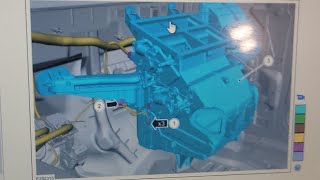
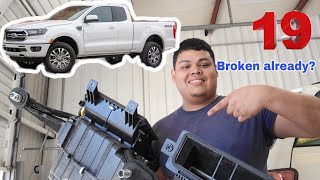
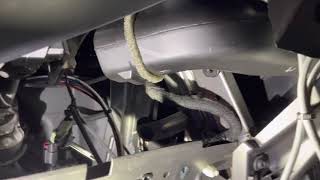
Used OEM Parts in Stock


New Aftermarket Parts Available
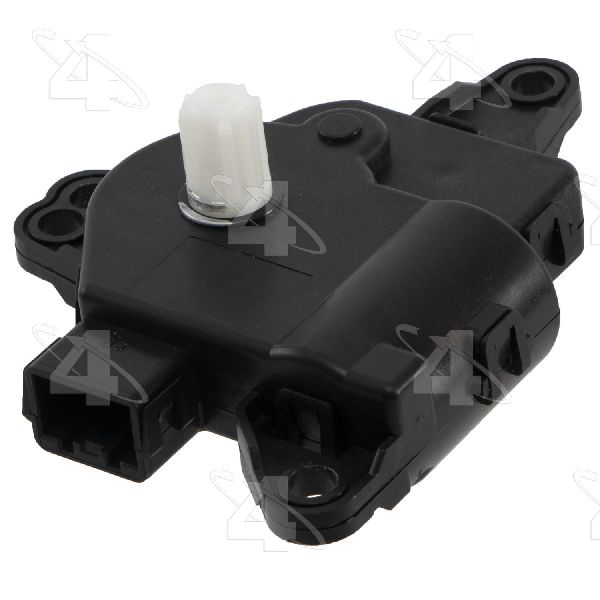

The information in this article is provided for general reference and educational purposes only. Vehicle specifications, procedures, and part compatibility can vary by production date, trim level, and region. Always consult your vehicle's factory service manual and verify part numbers before purchasing or performing repairs. Safety-critical components such as airbags, seat belts, and braking systems should be installed by a qualified professional.
- Ford RANGER:
- 🎬 Helpful Videos
- 🛍️ Shop This Part
- What's Unique About the 2019-2020 Ford RANGER
- Diagnostic Flowchart
- Symptoms You May Notice
- Most Likely Causes
- Rare But Worth Checking
- Diagnosis Steps
- Parts You'll Likely Need
- Related Codes That Often Appear With This One
- Technical Service Bulletins (TSBs) & Recalls
- Platform-Specific Known Issues
- Mechanic-Grade Diagnostic Values
- Scan Tool Commands That Help
- Wiring & Ground Locations
- Real Owner Repair Stories
- OEM Part Supersession History
- Model Year Variations Within This Range
- 🎟️ Get 5% Off