

OBD-II Code B1073: Airbag System 'Crash Signal' Fault
The Ultimate Guide to B1073: What It Means, Why It Triggers, and How to Fix It
- Code B1073 completely disables your vehicle's airbag system, requiring immediate repair before driving to avoid severe injury in a crash.
- Always verify the manufacturer-specific definition of B1073, as it means 'Crash Signal Open Circuit' on an Audi but 'Passenger Airbag Module Short' on a Nissan.
- Check the yellow wiring connectors under the front seats first; dislodging these with a water bottle or vacuum causes a large percentage of B1073 faults.
- Never use a standard $20 OBD-II engine reader for B1073; you must use an advanced scanner capable of reading and clearing Supplemental Restraint System (SRS) codes.
What Does B1073 Mean?

B1073 is a body trouble code indicating a critical failure in the Supplemental Restraint System (SRS). The airbag control module detects an open circuit, short to ground, or electrical fault in the crash signal circuit. The central computer cannot communicate with the crash sensors, completely disabling the airbag system as a failsafe.
Technical definition: The SAE/ISO definition of B1073 varies by manufacturer. For Volkswagen and Audi, it means 'Crash Signal Open Circuit' or 'Short to Ground'. For Nissan, it translates to 'Passenger Airbag Module or SRS Explosive Detonator Circuits Shorted To Each Other'. Always confirm the exact definition using a manufacturer-specific advanced diagnostic scanner.
Can I Drive With B1073?
No — Do Not Drive. Do not drive. Code B1073 indicates a critical Supplemental Restraint System (SRS) fault, meaning the airbags are disabled and will not deploy in a collision. This drastically increases the risk of serious injury or death. The vehicle will automatically fail safety inspections, making it illegal to drive in jurisdictions like New York, Texas, and the UK. While the engine runs normally, driving without functional airbags is a severe safety hazard.
Common Causes

- Disconnected Under-Seat Wiring (Very Common) — The yellow SRS wires under the front seats are easily dislodged by moving the seat or storing items underneath. This breaks the circuit and instantly triggers the code.
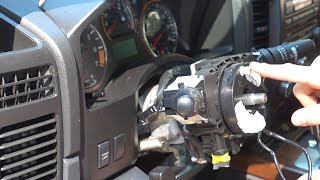
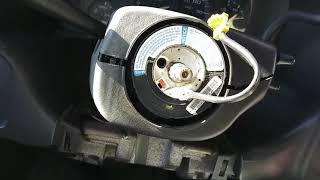
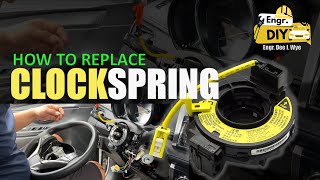
- Defective Clock Spring (Common) — The clock spring in the steering column maintains the electrical connection to the driver's airbag. When it breaks, it disables the driver's airbag squib and often knocks out steering wheel controls. 🎬 Watch: How to replace a clock spring and restore steering controls.
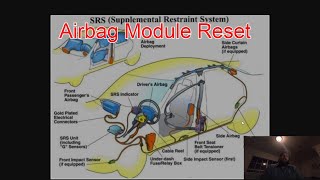
- Stored Crash Data (Common) — Even in minor collisions where airbags do not deploy, the SRS module registers the impact and stores 'crash data'. This acts as a permanent safety lock until the module is professionally reset or replaced. 🎬 Learn how professional services reset stored airbag crash data.
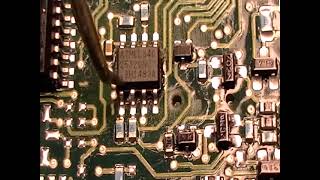
- Failed Airbag Control Module (Common) — The SRS module fails internally due to age, vibration, or moisture. Once the internal circuitry degrades, it loses communication with the crash sensors.
- Faulty Crash Sensor (Less Common) — Impact sensors in the doors, B-pillars, or front bumper fail from physical damage or corrosion, sending an incorrect signal to the airbag module.
- Water Intrusion and Corrosion (Less Common) — Leaks from a sunroof or windshield allow water to pool under the center console or seats, corroding the airbag control module and its connectors.
- Incompatible Replacement Component (Less Common) — Installing a used seat, clock spring, or airbag module with a different pinout or missing crash data programming triggers an immediate open circuit fault.
- Low Battery Voltage (Rare) — A weak battery causes a severe voltage drop during startup. The sensitive SRS module misinterprets this drop as a communication error and logs a fault.
Symptoms

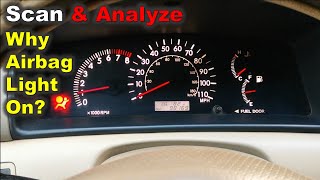
- Airbag warning light remains illuminated — The dashboard airbag icon stays on permanently, indicating an active SRS fault.
- Steering wheel controls fail — The horn, cruise control, and radio buttons stop working simultaneously, strongly indicating a broken clock spring.
- Flashing airbag light — On Nissan vehicles, the airbag light flashes in a specific diagnostic pattern instead of staying solid.
- Warning message on instrument cluster — Modern digital displays show a direct text warning like 'Airbag System Fault' or 'Service SRS System'.
- SRS/Airbag system disabled (scan-tool only — no driver-felt sign) — The entire airbag system deactivates as a safety precaution and will not deploy in an accident.
Diagnostic Flowchart
Tap your situation to follow the diagnostic path that matches what you're seeing on this code.
Common Fixes & Costs
- Securing Under-Seat Connectors — Parts: $0-$15 (contact cleaner), Labor: $100-$200 (diagnosis fee), ~0.8 hr book time (Beginner)
- Replacing the Clock Spring
— Parts: $60-$450, Labor: $150-$300, ~1.2 hr book time
(Professional)
: OEM F1ET-13N064-AD (Alt: Dorman 525-229)
: OEM 26101828 (Alt: Dorman 525-039) - Resetting the Airbag Control Module — Parts: $50-$150 (mail-in service), Labor: $100-$300 (removal/installation), ~1.5 hr book time (Professional)
- Replacing the Airbag Control Module
— Parts: $200-$800+, Labor: $150-$400 (includes programming), ~2.0 hr book time
(Professional)
: OEM 98820-4AT0A (Alt: Cardone (Remanufactured)) - Repairing Damaged Wiring — Parts: $5-$25, Labor: $150-$300, ~1.5 hr book time (Intermediate)
- Replacing a Crash Sensor
— Parts: $70-$350, Labor: $100-$250, ~1.3 hr book time
(Intermediate)
: OEM 4N0959345 (Alt: Bosch)
Used vs. New Parts: Buying Guide
When a used part is worth it: Used parts are acceptable for simple mechanical components like clock springs or crash sensors from low-mileage vehicles. Never buy a used Airbag Control Module without professional reprogramming.
Donor-vehicle mileage cap: roughly under 60000 miles for the part to have meaningful remaining life.
Donor quality checklist:
- Verify the donor vehicle was not involved in a flood, as moisture destroys electronics.
- Match the part number exactly. A single digit difference guarantees incompatibility.
- Ensure used Airbag Control Modules are guaranteed 'crash data-free'.
Decision logic:
- If The part is a clock spring or sensor AND savings exceed 50% → A used part from a reputable recycler is acceptable.
- If The part is the Airbag Control Module → Professionally reset your original module or buy a new OEM part. Used modules require expensive VIN programming.
- If The part is an actual airbag → Never buy used. The risk of a counterfeit or degraded unit is too high. Buy new OEM.
Warranty tradeoff: Used parts offer 30-90 day warranties. New aftermarket parts offer 1-year warranties. New OEM parts guarantee compatibility and safety.
Worst-case if a used part fails: $500-$1000 if a used module fails, requiring repeat labor and a new part.
What Happens If You Wait — Timeline
- Immediate: The SRS module detects the fault. The airbag warning light illuminates, and the entire airbag system is disabled as a failsafe. (MPG impact: 0%% · Added cost: $0 (Safety Risk is at maximum))
- Driving with the light on: The vehicle operates with no functional airbags, drastically increasing the risk of severe injury or death in a collision. (MPG impact: 0%% · Added cost: N/A (Sustained fatal safety risk))
- At the next vehicle inspection: The vehicle automatically fails state-mandated safety inspections, making it illegal to operate on public roads. (MPG impact: 0%% · Added cost: $50-$200 in fines and re-inspection fees.)
- At time of sale or trade-in: Dealers reduce trade-in offers by 20-40%. Selling privately requires disclosing the safety defect, creating legal liability. (MPG impact: 0%% · Added cost: $1,500 - $6,000 in lost vehicle value.)
Cost of Not Fixing It
- Immediate: Complete failure of the airbag system. Airbags will not deploy in a collision. (Added cost: N/A (Fatal Safety Risk))
- At next inspection: Guaranteed failure of state-mandated safety inspections, rendering the vehicle illegal to drive. (Added cost: $50-$200 in re-inspection fees and fines.)
- At time of sale: Significant reduction in vehicle resale value. Selling without disclosure creates severe legal liability. (Added cost: $1,000 - $5,000 in lost vehicle value.)
Diagnosis Steps

- Safety First: Disconnect the Battery
Disconnect the negative battery terminal and wait 15-30 minutes. This discharges the SRS backup capacitor, preventing accidental and potentially fatal airbag deployment.
Tools: Wrench set (Beginner) - Read the Manufacturer Fault Code
Use an SRS-capable OBD-II scanner to read the specific sub-code (e.g., B1073-13 for 'Open Circuit'). A basic $20 engine code reader cannot access this module.
Tools: Advanced OBD-II Scanner (Beginner) - Inspect Under-Seat Connectors
Check the large yellow wiring connectors under both front seats. Ensure they are firmly plugged in and free of pinched wires or debris.
Tools: Flashlight (Beginner) - Analyze Live Data for Clock Spring Failure
Access the SRS live data stream and monitor 'Driver Airbag Resistance' (normally 1.5-3.5 ohms). Slowly turn the steering wheel lock-to-lock. Sharp resistance spikes confirm a broken clock spring.
Tools: Advanced OBD-II Scanner (Advanced) - Inspect Door and Pillar Wiring
Examine the wiring harness inside the rubber door boots for fraying caused by repeated opening and closing. Check the wiring leading to the B-pillar crash sensors.
Tools: Flashlight, Trim removal tools (Intermediate) - Check for Technical Service Bulletins (TSBs)
Search for manufacturer TSBs related to B1073. Audi and VW have known software glitches that falsely trigger this code, requiring a dealership update.
Tools: Smartphone or Computer (Intermediate) - Inspect the Airbag Control Module
Locate the SRS module (usually under the center console). Inspect the unit and its connectors for green corrosion, dried liquid, or a musty smell indicating water damage.
Tools: Trim removal tools, Socket set, Flashlight (Professional) - Test Circuit Continuity (Professional Only)
Using a wiring diagram, test the 'Crash Signal' pins on the disconnected SRS module harness for continuity and resistance to ground. Never probe an active airbag circuit directly.
Tools: High-impedance multimeter, Wiring diagrams (Professional) - Test Airbag Squib Resistance (Professional Only)
Measure the resistance across the disconnected airbag squib terminals. Readings outside the 1.5-3.5 ohm range indicate a faulty squib. Never perform this without proper training.
Tools: High-impedance multimeter, Service manual (Advanced) - Check Crash Sensor Signal Voltage (Professional Only)
Identify the signal wire for the crash sensor. Check for near 0 volts on the signal line (indicating a short to ground) or abnormally high voltage (indicating an open circuit).
Tools: High-impedance multimeter, Wiring diagrams (Advanced)
When This Code Triggers (Freeze-Frame Conditions)
- Ignition Status: ON (The fault registers during the initial system self-check when the ignition is turned on.)
- System Voltage: 9V - 16V (The code sets if voltage drops too low during startup or spikes too high.)
- Fault Status: Present / Active (Indicates the fault is currently detected by the SRS module, not a historical glitch.)
- Ignition Cycles Since Fault: 0 (Increments with each engine start. A low number indicates a recent fault.)
Related Codes
- B1073-13 / B1073-14 — Sub-codes specifying the fault type. '13' means 'Open Circuit' (broken wire), while '14' means 'Short to Ground' (worn insulation touching the chassis).
- B0001 / B1346 — Points specifically to the driver's frontal airbag squib circuit. Diagnosis must focus entirely on the driver's airbag and clock spring.
- B0020 / B0028 — Specific to the passenger's side seat airbag circuits. Inspection must start under the passenger seat.
- B1000 / B1001 — Generic ECU communication failure codes. Indicates the entire airbag module is failing its self-test or has a configuration issue.
Climate & Environmental Factors
- High Humidity and Water Intrusion: Heavy rain or interior leaks introduce moisture to the airbag control module and connectors, causing corrosion and short circuits.
- Extreme Cold: Freezing temperatures cause wires and plastic connectors to contract and become brittle, leading to intermittent open circuits.
- Road Salt: Winter road salt accelerates corrosion on external crash sensors and lower chassis wiring harnesses.
How to Talk to a Mechanic About This Code
Say this: "I have an airbag warning light on, and my scanner shows a B1073 fault code. I'd like to schedule a diagnostic appointment. I know this is often a wiring issue under the seat, but it could also be the module or a sensor."
This proves you are an informed customer. It directs the shop to the SRS system, provides the exact code, and discourages them from immediately quoting a $2,000 module replacement.
Avoid saying:
- 'My airbag light is on, can you just turn it off?'
- 'Just fix whatever is wrong with the airbag system.'
- 'I have a B1073 code, please replace the airbag module.'
Questions to ask before authorizing the repair:
- What specific part failed and why? Can you show me the damaged wiring?
- If you recommend a module replacement, have you ruled out wiring and clock spring faults first?
- Please provide a detailed estimate breaking down parts, labor, and programming fees.
- What is the warranty on the parts and labor for this specific repair?
Where to Take It: Dealer vs Independent vs Chain
- Dealer:
Recommended only if the cause is a known software TSB or if a new control module requires online programming.
Best for: Vehicles under warranty., Repairs related to a known Technical Service Bulletin (TSB)., Complex issues on German vehicles requiring proprietary programming software.
Downsides: Highest labor rates and part costs., Defaults to replacing entire modules instead of offering cheaper reset services. (Typical cost: +50% vs. baseline) - Independent Shop:
Best fit for most B1073 scenarios. Ask if they are equipped to diagnose SRS systems before booking.
Best for: Out-of-warranty vehicles., Diagnosing common causes like under-seat wiring or clock springs., Shops specializing in automotive electronics.
Downsides: Quality varies; ensure the shop possesses advanced SRS diagnostic tools. (Typical cost: +0% vs. baseline) - Chain Shop:
AVOID. They are generally not equipped for the safety-critical nature of airbag systems.
Best for: Simple maintenance like oil changes or tires.
Downsides: Technicians lack specialized training for complex SRS diagnostics., High risk of misdiagnosis and unnecessary part replacements. (Typical cost: -10% vs. baseline)
When to Walk Away From the Repair
If the estimated repair cost for the airbag system exceeds 50% of the car's current private-party value, sell the car 'as-is' instead of repairing it.
- Car worth $4000, fix is $2000: Walk away. The repair cost is 50% of the car's value.
- Car worth $15000, fix is $1800: Fix it. The repair cost is only 12% of the vehicle's value and restores critical safety.
- Car worth $2500, fix is $1800: Walk away. The repair cost is 72% of the car's value.
What Scan Tool You Need for This Code

Minimum: A scanner that reads and clears Supplemental Restraint System (SRS) codes. A basic OBD-II engine reader will NOT work.
A standard $20 scanner only sees 'P' (Powertrain) codes. B1073 is a 'B' (Body) code stored in a separate SRS computer module.
Budget: Autel AutoLink AL619 (~$80) — Reads and clears SRS codes on most major brands and turns off the airbag light after a repair.
Mid-range: BlueDriver Pro (~$120) — Connects via Bluetooth to read/clear SRS codes and view live data, which is essential for diagnosing clock spring failures.
Professional: Autel MaxiCOM MK808 (~$350) — Offers bidirectional control to test SRS components and performs Steering Angle Sensor (SAS) calibration required after clock spring replacement.
Rent vs buy: Auto parts stores do NOT rent SRS scanners due to liability. Pay a shop's diagnostic fee for a one-time issue, or buy a scanner if you plan to DIY.
How to Clear the Code After You Fix It
- Ensure the physical fault (broken wire, faulty component) is repaired.
- Reconnect the battery.
- Connect an SRS-capable OBD-II scan tool to the vehicle.
- Select the 'Clear Codes' function within the Airbag/SRS module menu.
- Cycle the ignition off, then on. Verify the airbag warning light performs its 5-second self-check and turns off permanently.
Drive cycle (~5 minutes): SRS systems do not require a driving cycle. A simple ignition cycle (off for 30 seconds, then on) confirms the fix. If the light returns immediately, the fault remains.
Readiness monitors affected: None. SRS systems operate independently of OBD-II emissions monitors.
Watch out for:
- Using a basic engine code reader that cannot communicate with the SRS module.
- Failing to fix the root cause, causing the code to return instantly.
- Attempting to clear hard 'crash data' with a scanner instead of a professional reset service.
Will This Fail Emissions / State Inspection?
No — by itself this code doesn't fail OBD inspection (but it can keep readiness monitors from setting, which causes a separate fail).
- California: An airbag light does NOT cause a failure of the emissions-only Smog Check.
- New York: An illuminated airbag warning light is an automatic failure of the annual safety inspection.
- Texas: An illuminated airbag light causes the vehicle to fail the annual safety inspection.
- United Kingdom (MOT): An illuminated airbag warning light is a 'Major' defect and an automatic MOT failure.
Most Commonly Affected Vehicles
- Nissan Sentra, Frontier, Pathfinder, Altima (2013-2020) — B1073 specifically means 'Passenger Airbag Module or SRS Explosive Detonator Circuits Shorted To Each Other' on these models.
- Audi Q5, A6, Q3 (2018-2024) — Appears as 'Crash Signal Open or Short to Ground'. Often triggered by a software glitch requiring a TSB update or incompatible seat swaps.
- Ford Focus, F-150, Explorer (2011-2020) — Related to the Restraints Control Module (RCM). Ford modules are typically single-use and must be replaced after a crash.
- Hyundai / Kia Sonata, Optima, Sorento (2011-2018) — Circuit issues stem from under-seat wiring, faulty seat belt buckles, or the passenger occupant sensor mat.
- BMW 3-Series, 5-Series, X3, X5 (2006-2018) — Triggered by a faulty Battery Safety Terminal (BST) or seat occupancy mat sensors. Requires a BMW-specific scanner.
- Seat / Skoda Arona, Octavia (2017-2023) — Reported as 'crash signal open circuit', frequently appearing after installing an incompatible module from a donor car.
- Chrysler/Dodge/Jeep Various (2010-2014) — Traced to wiring under the seats or faulty clock springs. Part of a major recall (16V-668) for failing airbag control units.
Manufacturer-Specific Notes
- Nissan: Nissan has two definitions. For SRS, it means 'Passenger Airbag Module Short'. For engine systems, it means 'Intake Air Temperature Sensor High Input'. The airbag light differentiates the two.
- Volkswagen / Audi: Consistently defined as a 'Crash Signal' fault. A known TSB requires a software update to fix false triggers.
- Suzuki: Defined as 'TCM Lost Communication', meaning the transmission cannot communicate with the engine. This is completely unrelated to the airbag system.
- Alfa Romeo: Indicates a 'Volumetric Sensor Fault', which is part of the vehicle's anti-theft alarm system, not the SRS.
Real Owner Stories
2018 Nissan Xterra with flashing airbag light
The airbag light flashed continuously. The owner tried the manual key-on/key-off reset procedure, but the light returned immediately.
What they tried:
- Manual airbag light reset procedure.
- Noticed steering wheel illumination turned off when turning left.
Outcome: The secondary steering wheel symptom pointed directly to a faulty clock spring. Replacing the clock spring with an OEM part and clearing the codes resolved the B1073 fault.
Lesson: Always look for secondary symptoms. If the airbag light is accompanied by failing steering wheel buttons or horn, the clock spring is the culprit.
2018 Audi Q5 with B1073 after DIY seat swap
The owner swapped standard electric seats for manual SQ5 seats. The airbag light immediately illuminated with code B1073-14 (Open Circuit).
What they tried:
- Visually inspecting the wiring harnesses.
- Comparing pinouts of the old and new seat connectors.
Outcome: The replacement manual seats lacked the 'crash signal' wire present in the original electric seats. This created an open circuit. The owner had to swap back to the original seats to clear the code.
Lesson: Used components are rarely plug-and-play. Wiring differences in swapped seats trigger permanent SRS faults.
Nissan Altima with B1073 after a minor accident
Following a minor fender-bender where airbags did not deploy, the airbag light illuminated with code B1073.
What they tried:
- Received a $1,200 quote from a shop for a new airbag module.
Outcome: The owner used a $50 mail-in reset service. The service cleared the stored crash data from the original module, resolving the code permanently.
Lesson: Any collision stores crash data in the module. A professional reset service restores the module for under $100, avoiding a massive replacement bill.
How to Prevent This Code From Triggering
- Keep the area under the front seats clear. (Daily) — Water bottles or umbrellas rolling under the seats physically impact and disconnect the main SRS wiring harness, causing immediate faults.
- Maintain a healthy vehicle battery. (Every 6 months) — The SRS module is highly sensitive to low voltage. A weak battery causes voltage drops during startup, logging spurious communication faults.
- Address interior water leaks immediately. (As needed) — Leaking windshields or sunroofs allow water to pool on the airbag control module, causing irreversible corrosion.
- Apply dielectric grease to vulnerable connectors. (During related maintenance) — Applying dielectric grease to crash sensor seals prevents moisture intrusion and the resulting short circuits.
Frequently Asked Questions
Can I reset the airbag light myself?
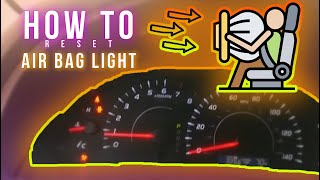
Sometimes, using a manual ignition sequence on specific makes like Nissan. However, if the underlying fault remains, the light returns immediately. Most vehicles require an advanced SRS-capable scan tool to clear the code.
Will disconnecting the battery clear the airbag code?
No. SRS fault codes are stored in non-volatile memory. You must repair the fault and clear the code with a proper scan tool.
My car was in a minor accident and the airbags didn't deploy, but now the light is on. Why?
Crash sensors register impacts and store 'crash data' in the airbag control module even if airbags do not deploy. This triggers the light and disables the system for safety. You must professionally reset or replace the module to restore functionality.
Can I use a secondhand airbag module to fix code B1073?
Do not use a secondhand module without professional reprogramming. Used modules contain crash data and are programmed to the donor vehicle's VIN. Installing an incompatible module causes system failure.
Can a low battery cause the airbag light to come on?
Yes. A weak battery causes voltage drops during startup, triggering temporary faults in the sensitive SRS module. Fully charge or replace the battery, then clear the code with a scanner.
Will I pass a safety inspection with the airbag light on?
No. An illuminated airbag warning light is an automatic failure for safety inspections in jurisdictions like New York, Texas, and the UK. The vehicle is legally considered unsafe to drive.
A shop quoted me over $2,500 to fix this code. Is that a scam?
Dealership module replacements easily reach $2,500, but the root cause is often a loose $0 under-seat connector. Always get a detailed diagnosis before approving expensive repairs. Consider a $50-$150 mail-in module reset service if the module is locked due to crash data.
What is a 'squib circuit'?
A squib is the precise explosive detonator that ignites the chemical propellant to inflate the airbag. The squib circuit is the dedicated wiring the control module uses to send the electrical detonation signal. A fault in this circuit completely disables that specific airbag.
Key Takeaways
- Code B1073 completely disables your vehicle's airbag system, requiring immediate repair before driving to avoid severe injury in a crash.
- Always verify the manufacturer-specific definition of B1073, as it means 'Crash Signal Open Circuit' on an Audi but 'Passenger Airbag Module Short' on a Nissan.
- Check the yellow wiring connectors under the front seats first; dislodging these with a water bottle or vacuum causes a large percentage of B1073 faults.
- Never use a standard $20 OBD-II engine reader for B1073; you must use an advanced scanner capable of reading and clearing Supplemental Restraint System (SRS) codes.
Helpful Videos

The information in this article is provided for general reference and educational purposes only. Vehicle specifications, procedures, and part compatibility can vary by production date, trim level, and region. Always consult your vehicle's factory service manual and verify part numbers before purchasing or performing repairs. Safety-critical components such as airbags, seat belts, and braking systems should be installed by a qualified professional.
- 🎬 Helpful Videos
- What Does B1073 Mean?
- Can I Drive With B1073?
- Common Causes
- Symptoms
- Diagnostic Flowchart
- Common Fixes & Costs
- Used vs. New Parts: Buying Guide
- What Happens If You Wait — Timeline
- Cost of Not Fixing It
- Diagnosis Steps
- When This Code Triggers (Freeze-Frame Conditions)
- Related Codes
- Climate & Environmental Factors
- How to Talk to a Mechanic About This Code
- Where to Take It: Dealer vs Independent vs Chain
- When to Walk Away From the Repair
- What Scan Tool You Need for This Code
- How to Clear the Code After You Fix It
- Will This Fail Emissions / State Inspection?
- Most Commonly Affected Vehicles
- Manufacturer-Specific Notes
- Real Owner Stories
- 2018 Nissan Xterra with flashing airbag light
- 2018 Audi Q5 with B1073 after DIY seat swap
- Nissan Altima with B1073 after a minor accident
- How to Prevent This Code From Triggering
- Frequently Asked Questions
- Can I reset the airbag light myself?
- Will disconnecting the battery clear the airbag code?
- My car was in a minor accident and the airbags didn't deploy, but now the light is on. Why?
- Can I use a secondhand airbag module to fix code B1073?
- Can a low battery cause the airbag light to come on?
- Will I pass a safety inspection with the airbag light on?
- A shop quoted me over $2,500 to fix this code. Is that a scam?
- What is a 'squib circuit'?
- Key Takeaways
- 🎟️ Get 5% Off