

OBD-II Code B1066: Manufacturer-Specific Body Control Fault
What B1066 means, why it triggers, and how to fix it
- Code B1066 has no universal definition; you must look up the exact manufacturer-specific meaning for your vehicle's make and year before diagnosing.
- On Nissan, Infiniti, and Suzuki vehicles, B1066 almost always indicates a disabled airbag system, while on Mercedes-Benz, it typically points to a de-synchronized sunroof.
- An active B1066 airbag code completely disables your Supplemental Restraint System (SRS), meaning airbags will not deploy in a crash.
- Rule out free or low-cost fixes first, such as a 10-second Mercedes sunroof re-learn or a $50 mail-in airbag module reset, before buying expensive replacement parts.
What Does B1066 Mean?

B1066 is a manufacturer-specific body control module (BCM) code with no universal definition. You must look up the exact meaning for your vehicle's make and year. It most frequently indicates a disabled airbag system, but on certain brands, it points to a de-synchronized sunroof, lighting failure, or internal network communication error.
Technical definition: The SAE/ISO J2012 definition for code B1066 is 'manufacturer-controlled.' On a Nissan, it typically means 'SRS Passenger Airbag Module Circuit Shorted to Power.' On a Mercedes-Benz, it means 'Sunroof System is Not Normalized' or 'Left turn signal lamp circuit fault.' On a Suzuki, it specifies 'Passenger Side-Air Bag Circuit Low Resistance'.
Can I Drive With B1066?
No — Do Not Drive. Driving with code B1066 is dangerous if it relates to the airbag system (its most common definition). An active airbag code completely disables the Supplemental Restraint System (SRS), meaning airbags and seatbelt pretensioners will not deploy in an accident. In many jurisdictions, an illuminated airbag warning light results in an automatic safety inspection failure, making the vehicle illegal to drive on public roads.
Common Causes

- Stored Crash Data in Airbag Module (Very Common) — Following a collision or electrical glitch, the SRS module permanently stores 'crash data' and disables the system. This is the most frequent cause of B1066 on Nissan and Infiniti vehicles.
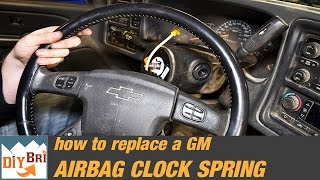
- Broken Clock Spring (Common) — The clock spring is a rotary electrical connector inside the steering column. The internal ribbon cable snaps from normal wear-and-tear, breaking the connection to the driver's airbag and triggering the code.
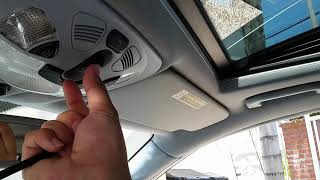
- De-synchronized Sunroof Module (Common) — On Mercedes-Benz vehicles, disconnecting or draining the battery causes the sunroof control module to 'forget' its open and closed limits. It requires a manual re-learn procedure to restore function. 🎬 Watch: How to perform the Mercedes sunroof relearn procedure.
- Failed Occupant Classification System (OCS) Sensor (Common) — Located in the passenger seat cushion, the OCS sensor detects passenger weight. A failed sensor or a loose connector under the seat triggers a passenger airbag-related B1066 code.
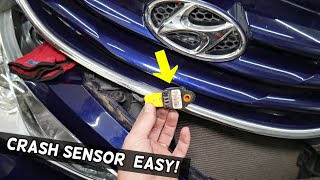
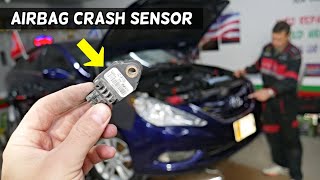
- Failed Side Impact Sensor (Less Common) — On Hyundai, Kia, and Suzuki models, B1066 points directly to a failed side impact accelerometer located inside the vehicle's B-pillar or C-pillar.
- Corroded Grounds or Pinched Wiring (Less Common) — A corroded ground strap for the SRS module or wiring pinched under a seat track creates high resistance or a short circuit, triggering intermittent B-codes.
- Turn Signal Circuit Failure (Less Common) — On specific Mercedes-Benz models, B1066 indicates a short or open circuit in a turn signal lamp, caused by a burnt-out bulb, corroded socket, or failed switch.
- Water Damage to Control Modules (Rare) — Clogged sunroof drains allow water to leak into the cabin, corroding the wiring harnesses and connectors for the body control or SRS modules.
Symptoms

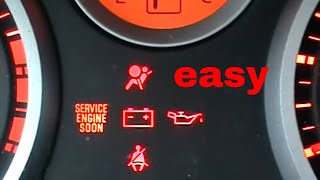
- Airbag warning light is on — The most common symptom. The SRS system is disabled, and airbags will not deploy in a crash.
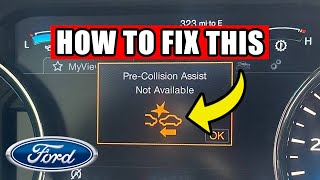
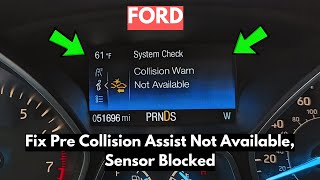
- 'Pre-Collision Assist Not Available' Warning — On Ford or Toyota vehicles, B1066 disables advanced driver-assistance systems (ADAS) like automatic braking, often due to a blocked radar sensor. 🎬 See how to fix a blocked Ford pre-collision sensor.
- Sunroof does not open/close correctly — The sunroof loses its one-touch functionality or refuses to move entirely. Highly specific to Mercedes-Benz.
- Turn signal malfunctions — A turn signal fails to illuminate or hyperflashes on the dashboard, indicating a circuit fault.
- Keyless entry failure — The vehicle refuses to unlock via the fob or start via the push-button due to a BCM communication breakdown.
- Circuit resistance out of range (scan-tool only — no driver-felt sign) — Live scanner data shows an airbag squib circuit resistance outside the normal 1.5-3.5 ohm specification, confirming a short or open circuit.
Diagnostic Flowchart
Tap your situation to follow the diagnostic path that matches what you're seeing on this code.
Common Fixes & Costs
- Reset Airbag Control Module (Mail-in Service) — Parts: $50 (service cost), Labor: $50-$150 (for removal/reinstallation), ~1.5 hr book time (Professional)
- Replace Clock Spring — Parts: $50-$400, Labor: $120-$176, ~1.5 hr book time (Intermediate)
- Perform Sunroof Normalization — Parts: $0, Labor: $0-$100, ~0.5 hr book time (DIY)
- Replace Side Impact Sensor — Parts: $40-$150, Labor: $100-$200, ~1.0 hr book time (Intermediate)
- Replace Airbag Control Module — Parts: $200-$600, Labor: $100-$200, ~1.5 hr book time (Professional)
Used vs. New Parts: Buying Guide
When a used part is worth it: A certified used OEM part is cost-effective for side impact sensors or clock springs on older vehicles. Never buy a used airbag module.
Donor-vehicle mileage cap: roughly under 80000 miles for the part to have meaningful remaining life.
Donor quality checklist:
- Verify the part number matches exactly.
- Buy from a certified recycler offering a warranty.
- Avoid parts from flood-damaged vehicles.
- Never buy a used airbag module unless sending it to a professional reset service.
Decision logic:
- If The part is a clock spring or sensor and the vehicle is > 100K miles → A certified used part is a reasonable choice to save money.
- If The part is the SRS Control Module → Prioritize resetting your original module. If replacement is necessary, buy a new OEM module to avoid VIN-locking issues.
- If The part is a deployable airbag itself → New OEM is the only guaranteed safe option.
Warranty tradeoff: Used parts have a 30-90 day warranty. New aftermarket parts offer 1-year to lifetime warranties. New OEM parts carry a 12-month warranty.
Worst-case if a used part fails: $500-1000 if a used SRS module or clock spring fails post-installation.
What Happens If You Wait — Timeline
- Immediate: Airbag warning light illuminates. The SRS control module disables the entire airbag system to prevent accidental deployment. (MPG impact: 0%% · Added cost: $0 (Safety risk is total))
- 0-6 months: Vehicle fails state safety inspection. The initial fault remains isolated. (MPG impact: 0%% · Added cost: $50-$300 in fines or failed inspection fees.)
- 6-12 months: An intermittent short circuit becomes permanent, causing a parasitic battery drain as the module repeatedly tries to self-test. (MPG impact: 0%% · Added cost: $150-$300 for a new battery and diagnostics.)
- 12+ months: Cascading electrical failure. A short circuit damages the Body Control Module (BCM) or other connected modules. (MPG impact: 0%% · Added cost: $500-$1500+ to replace damaged control modules.)
Cost of Not Fixing It
- Immediate: Airbag system is disabled. Airbags and seatbelt pretensioners will not deploy in a collision. (Added cost: $0 (Safety risk is total))
- 0-6 months: Vehicle fails state safety inspection, leading to fines or inability to legally register the vehicle. (Added cost: $50-$300 in fines or re-inspection fees.)
- 6+ months: An intermittent short circuit becomes permanent, causing a parasitic battery drain as the module repeatedly tries to self-test a failed circuit. (Added cost: $150-$300 for a new battery and diagnostics.)
Diagnosis Steps
- Confirm the Vehicle-Specific Definition & Check TSBs
Use your vehicle's make, model, and year to search for the exact definition of B1066. This dictates your entire diagnostic path. Simultaneously, search for Technical Service Bulletins (TSBs) related to the code.
Tools: Internet access (Beginner) - Perform a Targeted Visual Inspection
Based on the definition, inspect the affected area. For airbag codes, check for loose yellow connectors under the seats. For Ford ADAS codes, clean the front radar sensor. For lighting codes, check for burnt-out bulbs.
Tools: Flashlight (Beginner) - Attempt Sunroof Normalization (Mercedes Only)
If your code is 'Roof System not Normalized', hold the sunroof switch in the tilt up, slide open, and slide close positions for 5-10 seconds each until the system resets.
Tools: None (Beginner) - Check System-Specific Fuses
Locate the fuse box and check the fuses related to the failing system (SRS, Sunroof, or Turn Signals). Replace blown fuses with the exact same amperage.
Tools: Fuse puller or needle-nose pliers (Beginner) - Scan Live Data PIDs with an Advanced Tool
Use a bi-directional scanner to view live data from the SRS or BCM module. For airbag codes, monitor the resistance of the specific squib circuit. A normal reading is 1.5-3.5 ohms. 'OPEN' or >5.0 ohms indicates a broken wire; near 0.0 ohms indicates a short circuit.
Tools: Advanced OBD-II Scanner (Advanced) - Perform a Wiring Wiggle Test
While graphing live resistance data on your scanner, gently wiggle the wiring harness under the seats, in the door jambs, and at the steering column. If the resistance spikes or drops out on the graph, you have located the wiring fault.
Tools: Advanced OBD-II Scanner (Intermediate) - Measure Circuit Resistance with a Multimeter
Disconnect the battery for 15 minutes to disable the SRS system. Disconnect the suspect airbag component and the SRS module. Measure the resistance of the wiring between the two connectors. It should be less than 1 ohm. Higher readings confirm a wiring harness failure.
Tools: High-impedance Digital Multimeter, Vehicle-specific wiring diagrams (Professional) - Perform a Voltage Drop Test (Lighting Faults)
For a Mercedes turn signal B1066, test the circuit under load. Connect a multimeter across the positive wire at the bulb socket and the battery positive. With the signal on, a reading above 0.5V indicates excessive resistance (corrosion or bad switch).
Tools: Digital Multimeter (Advanced)
When This Code Triggers (Freeze-Frame Conditions)
- System Voltage: 11.5-12.5V (Key On, Engine Off (KOEO) during initial system self-test.)
- Ignition Cycles: Varies (Fault logs upon the first ignition cycle after the fault occurs (e.g., after battery reconnection for sunroof).)
- Vehicle Speed: 0 mph (BCM/SRS codes set during the startup self-check before the vehicle is in motion.)
- Component State: Active/Inactive (Code triggers when a specific component activates (e.g., turning the steering wheel for a clock spring fault).)
Related Codes
- B106B — On Mercedes-Benz, this code appears alongside B1066 to indicate a broader communication issue within the overhead control panel rather than just a de-synchronized sunroof.
- B1062 — On Suzuki vehicles, B1062 is the driver's side equivalent to the B1066 passenger side 'Low Resistance' code.
- B1209 / B1210 — Nissan-specific crash data codes. If these appear alongside B1066, the SRS module is locked and requires a professional reset service.
- B142E — On Ford vehicles, B142E indicates a 'Forward Looking Sensor Horizontal Alignment' fault, confirming the B1066 is due to radar sensor calibration rather than just dirt.
Climate & Environmental Factors
- Cold Weather: Extreme cold causes electrical connectors to contract, triggering intermittent open circuits in the airbag system. It also causes low battery voltage on startup, which triggers ADAS-related warnings on Ford vehicles.
- High Humidity / Rain: Moisture leads to corrosion on airbag sensor connectors and ground points, increasing circuit resistance and triggering B1066.
- Physical Contamination: Dirt, mud, and insect debris physically block forward-looking radar sensors, triggering 'Pre-Collision Assist Not Available' warnings without any actual component failure.
How to Talk to a Mechanic About This Code
Say this: "I have a B1066 code on my [Make/Model/Year]. Since this is a manufacturer-specific code, I need you to identify its exact definition for my car and quote me for that initial diagnosis."
This prevents a shop from jumping to the most expensive conclusion and focuses the conversation on a specific diagnostic charge rather than an open-ended repair.
Avoid saying:
- 'Just fix whatever's wrong'
- 'My airbag light is on, can you look at it?'
- 'Whatever you recommend'
Questions to ask before authorizing the repair:
- Now that you have the specific definition, what is the exact fault?
- If it's a 'crash data' issue, is resetting my original module an option?
- If it's a Mercedes sunroof, did you attempt the re-synchronization procedure first?
- Can you provide the resistance readings from the airbag circuit that's faulting?
- What is the warranty on this repair, for both the parts and the labor?
Where to Take It: Dealer vs Independent vs Chain
- Dealer:
A safe but expensive option. Necessary if a new SRS module needs programming.
Best for: Vehicles under warranty, Complex ADAS calibrations, Repairs requiring module programming with proprietary software
Downsides: Highest labor rates, Defaults to expensive module replacement over cost-effective resets. (Typical cost: +50% vs. baseline) - Independent Shop:
Best fit for most scenarios, provided the shop has modern diagnostic equipment.
Best for: Out-of-warranty vehicles, Diagnosing known issues like a clock spring or side impact sensor, Owners who want to use a mail-in reset service
Downsides: Ensure they have an advanced scanner capable of reading SRS/BCM codes. (Typical cost: +0% vs. baseline) - Chain Shop:
AVOID. This code requires specific diagnostic capabilities outside the scope of chain repair shops.
Best for: Simple maintenance like oil changes or tires.
Downsides: Technicians lack specialized training for complex body-control and SRS diagnostics., High risk of misdiagnosis. (Typical cost: -10% vs. baseline)
When to Walk Away From the Repair
If the total estimated repair cost exceeds 50% of your car's current private-party value, consider selling the vehicle as-is.
- Car worth $4000, fix is $1500: Fix it. The repair cost is significant but still well under the 50% threshold.
- Car worth $3000, fix is $1800: Walk away. The repair cost is over 50% of the vehicle's value.
What Scan Tool You Need for This Code

Minimum: A scanner that reads and clears manufacturer-specific codes from the Supplemental Restraint System (SRS) and Body Control Module (BCM).
A standard $20 code reader only accesses powertrain (P-codes). It CANNOT see 'B-codes' like B1066.
Budget: XTool A30D / Mucar BT200 Max (~$90) — These Bluetooth dongles offer full-system scanning, including SRS/BCM modules, and can clear the B1066 code after repair.
Mid-range: Foxwell NT604 Elite / Autel MaxiCOM MK808S (~$150-350) — Provides live data graphing to monitor airbag circuit resistance, which is crucial for diagnosing a faulty clock spring or wiring issue.
Professional: Autel MaxiCOM MK906BT / Launch X431 Series (~$500-1200) — Offers full bidirectional control, advanced coding functions for module replacement, and OEM-level diagnostics.
Rent vs buy: Parts store loaner tools are basic code readers that CANNOT read SRS/airbag codes. If this is a one-time fix, paying a shop $150 for a diagnosis is more economical than buying a mid-range scanner.
How to Clear the Code After You Fix It
- Ensure all SRS components are correctly connected.
- Reconnect the vehicle battery.
- Use an advanced bi-directional scan tool to clear the B1066 code from the BCM or SRS module.
- Cycle the ignition off and on to perform a system self-test.
Drive cycle (~15 minutes): A complex drive cycle is not required. After clearing the code, cycle the ignition off, wait 30 seconds, and turn it back on. If the airbag light turns off after 6 seconds, the repair is successful.
Readiness monitors affected: Not applicable. B-codes do not affect emissions readiness monitors.
Watch out for:
- Using a basic $20 OBD-II reader that cannot access or clear Body Control Module (BCM) or SRS codes.
- Attempting to clear a 'crash data' code without a professional module reset.
Will This Fail Emissions / State Inspection?
Yes — this code typically fails an OBD-II emissions inspection.
- California: An illuminated airbag warning light is an automatic failure of the safety inspection.
- New York: An illuminated airbag light is noted as an advisory but is not an automatic cause for rejection. However, shops may refuse to pass a vehicle with a known safety defect.
- Texas: As of 2025, non-commercial vehicles are exempt from annual safety inspections. However, driving with a disabled airbag system remains unsafe.
Most Commonly Affected Vehicles
- Mercedes-Benz C-Class (W203), S-Class (W220), CLK-Class (A209) (2001-2007) — Highly prone to the 'Roof System is not normalized' fault after battery replacement.
- Nissan NP300, Altima, Sentra, Rogue, Titan (2004-2020) — Almost exclusively indicates an airbag system fault, usually 'Passenger Airbag Module Circuit Shorted to Power' or stored crash data.
- Infiniti G35, G37, QX56 (2005-2020) — Shares the Nissan SRS system; B1066 points to a 'Passenger Airbag Module Circuit' fault requiring a module reset.
- Ford F-150, Explorer, Fusion (2015-2022) — Appears alongside a 'Pre-Collision Assist Not Available' message due to a blocked or misaligned forward radar sensor.
- Chevrolet / GM Silverado, Tahoe, Equinox (2014-2021) — Indicates a communication breakdown on the B-CAN (Body CAN) network between modules.
- Hyundai / Kia Sonata, Elantra, Optima, Sorento (2011-2019) — Frequently caused by a failed side impact sensor located on the B-pillar.
- Suzuki SX4, Swift (2007-2013) — Specifically means 'Passenger Side-Air Bag Circuit Low Resistance', indicating a short circuit in the passenger airbag wiring.
- Mazda Mazda3, Mazda6, CX-5 (2006-2016) — Often caused by a faulty seat track position sensor or intermittent cold-weather connection issues.
Manufacturer-Specific Notes

- Mercedes-Benz: B1066 usually means 'Roof System is not normalized' after a battery drain. Fix this instantly with a free DIY re-learn procedure.
- Nissan / Infiniti: This code indicates stored crash data in the SRS module. It cannot be cleared with a scanner; you must use a mail-in reset service.
- Ford: B1066 triggers the 'Pre-Collision Assist Not Available' warning. Always clean the front grille radar sensor and check battery voltage before replacing parts.
- Hyundai / Kia: B1066 points directly to a failed side impact sensor on the B-pillar or C-pillar.
Real Owner Stories
2004 Mercedes-Benz C230 with sunroof issue
After replacing a dead battery, the sunroof lost its one-touch open/close function.
What they tried:
- Scanned the vehicle and found code B1066: 'Roof System is not normalized'.
Outcome: The owner held the sunroof switch in the 'tilt up', 'slide open', and 'slide close' positions for 5 seconds each. This retaught the module, restored functionality, and cleared the code for free.
Lesson: On Mercedes-Benz vehicles, a B1066 code after a battery disconnect is a free DIY fix. Always perform the re-learn procedure before replacing parts.
2019 Ford F-150 with 'Pre-Collision Assist' warning
A 'PRE-COLLISION ASSIST UNAVAILABLE' warning appeared on the dashboard while driving.
What they tried:
- Inspected the forward-looking radar sensor in the front grille.
- Found a large, dead insect splattered directly over the sensor.
Outcome: Wiping the insect debris off the sensor instantly cleared the warning message and restored the system.
Lesson: For Ford ADAS faults, thoroughly clean the grille radar sensor and windshield camera before paying for a dealership diagnosis.
Nissan NP300 with airbag light on
The airbag light illuminated with code B1066 ('Passenger Airbag Module Circuit Shorted to Power'), indicating stored crash data.
What they tried:
- Attempted to clear the code with a standard scanner, which failed.
- Received a $800+ quote from the dealer for a new SRS module.
Outcome: The owner mailed the original module to a specialized reset service for $50. Reinstalling the reset module cleared the code permanently.
Lesson: Nissan/Infiniti B1066 codes usually require a professional module reset. Mail-in services are the most cost-effective solution and avoid dealership programming fees.
2013 Hyundai Sonata with airbag light on
The airbag warning light stayed on permanently without any prior accident.
What they tried:
- Scanned the car and found a B1066 code pointing to the side impact sensor.
- Located the sensor inside the B-pillar.
Outcome: The owner disconnected the battery, removed the B-pillar trim, and installed a new $60 OEM sensor (Part No. 95920-3K000). The airbag light turned off immediately.
Lesson: Hyundai/Kia B1066 codes frequently point to a failed side impact sensor. It is a plug-and-play component that DIYers can replace to save hundreds in labor.
How to Prevent This Code From Triggering
- Clean and Lubricate Sunroof Tracks (Once per year) — Prevents the sunroof motor from straining, which causes control module faults on Mercedes-Benz models.
- Keep Forward-Facing Sensors Clean (During every car wash) — Prevents dirt and bugs from blocking ADAS radar sensors and triggering 'Pre-Collision Assist Not Available' warnings.
- Exercise the Steering Wheel Lock-to-Lock (Monthly) — Distributes grease within the clock spring's internal ribbon cable, preventing binding and extending its life.
- Check Under Seats After Cleaning (After vacuuming or detailing) — Ensures Occupant Classification System (OCS) connectors are not accidentally disconnected or stressed.
- Clear Sunroof Drain Tubes (Once per year) — Prevents water from overflowing into the cabin and shorting out the SRS or body control modules.
Frequently Asked Questions
Can I just clear the B1066 code?
No. If the code is due to stored crash data on a Nissan or Infiniti, it permanently locks into the module and requires a professional reset service.
Is it safe to drive with the B1066 code?
No. If the code relates to the airbag system, your airbags and seatbelt pretensioners will not deploy in a crash. Many states will also fail your vehicle for a safety inspection.
My airbag light is on, but my horn works. Can it still be the clock spring?
Yes. The clock spring contains multiple independent circuits. The airbag circuit frequently fails while the horn and steering wheel button circuits remain intact.
Can I use a used airbag control module from a junkyard?
Do not use a junkyard SRS module. It is VIN-locked to the donor vehicle and often contains its own stored crash data. Mail your original module to a professional reset service instead.
How do I perform the sunroof re-learn on my Mercedes?
Push and hold the sunroof switch to the full 'tilt up' position for 5-10 seconds, then repeat for the 'slide open' and 'slide close' positions.
Why did my airbag light (B1066) come on without an accident?
The most common non-accident causes are a broken clock spring in the steering column or a loose connector under the passenger seat.
What does 'low resistance' mean for a Suzuki B1066 code?
It means the electrical circuit has a short. Electricity is bypassing the airbag igniter (squib) because two wires are touching due to chafed insulation or water intrusion.
My Ford says 'Pre-Collision Assist Not Available.' What should I do first?
Thoroughly clean the radar sensor in the front grille and the camera area on the windshield. Dirt, snow, or ice block the sensors and trigger this warning.
Key Takeaways
- Code B1066 has no universal definition; you must look up the exact manufacturer-specific meaning for your vehicle's make and year before diagnosing.
- On Nissan, Infiniti, and Suzuki vehicles, B1066 almost always indicates a disabled airbag system, while on Mercedes-Benz, it typically points to a de-synchronized sunroof.
- An active B1066 airbag code completely disables your Supplemental Restraint System (SRS), meaning airbags will not deploy in a crash.
- Rule out free or low-cost fixes first, such as a 10-second Mercedes sunroof re-learn or a $50 mail-in airbag module reset, before buying expensive replacement parts.
Helpful Videos

The information in this article is provided for general reference and educational purposes only. Vehicle specifications, procedures, and part compatibility can vary by production date, trim level, and region. Always consult your vehicle's factory service manual and verify part numbers before purchasing or performing repairs. Safety-critical components such as airbags, seat belts, and braking systems should be installed by a qualified professional.
- 🎬 Helpful Videos
- What Does B1066 Mean?
- Can I Drive With B1066?
- Common Causes
- Symptoms
- Diagnostic Flowchart
- Common Fixes & Costs
- Used vs. New Parts: Buying Guide
- What Happens If You Wait — Timeline
- Cost of Not Fixing It
- Diagnosis Steps
- When This Code Triggers (Freeze-Frame Conditions)
- Related Codes
- Climate & Environmental Factors
- How to Talk to a Mechanic About This Code
- Where to Take It: Dealer vs Independent vs Chain
- When to Walk Away From the Repair
- What Scan Tool You Need for This Code
- How to Clear the Code After You Fix It
- Will This Fail Emissions / State Inspection?
- Most Commonly Affected Vehicles
- Manufacturer-Specific Notes
- Real Owner Stories
- 2004 Mercedes-Benz C230 with sunroof issue
- 2019 Ford F-150 with 'Pre-Collision Assist' warning
- Nissan NP300 with airbag light on
- 2013 Hyundai Sonata with airbag light on
- How to Prevent This Code From Triggering
- Frequently Asked Questions
- Can I just clear the B1066 code?
- Is it safe to drive with the B1066 code?
- My airbag light is on, but my horn works. Can it still be the clock spring?
- Can I use a used airbag control module from a junkyard?
- How do I perform the sunroof re-learn on my Mercedes?
- Why did my airbag light (B1066) come on without an accident?
- What does 'low resistance' mean for a Suzuki B1066 code?
- My Ford says 'Pre-Collision Assist Not Available.' What should I do first?
- Key Takeaways
- 🎟️ Get 5% Off