

OBD-II Code B1057: Manufacturer-Specific Fault
What B1057 means, why it triggers, and how to fix it
- Identify your manufacturer's specific B1057 definition first, as it means a critical airbag failure on Nissans and Fords, but a minor HVAC issue on Chryslers.
- Do not drive if your vehicle defines B1057 as an airbag fault, because the driver's airbag is 100% disabled and will not deploy in a collision.
- Replace the steering column clock spring to resolve over 80% of airbag-related B1057 codes, especially if your horn or steering wheel buttons also stopped working.
- Listen for a clicking noise behind the dashboard on Chrysler and Dodge vehicles to instantly confirm a failed HVAC blend door actuator.
- Mail your locked SRS control module to a specialized reset service for roughly $50 if the B1057 code appeared immediately following a collision.
What Does B1057 Mean?
B1057 is a manufacturer-specific body code. For Nissan and Ford, it indicates a critical fault in the driver's airbag circuit. For Chrysler and Dodge, it points to a failed climate control (HVAC) blend door. For Honda, it signals a communication failure between electronic modules.
Technical definition: The SAE/ISO definition for B1057 is manufacturer-specific. Common definitions include 'Driver Airbag Module or SRS Explosive Detonator Circuits Shorted To Each Other' (Nissan/Infiniti), 'Driver Air Bag Cross Link to Another Firing Loop Fault' (Ford), 'Rear Blend Door Travel Range Too Large' (Chrysler/Dodge), and 'Relay Control Module Lost Communication with MICU' (Honda).
Can I Drive With B1057?
No — Do Not Drive. Driving is strongly discouraged. If the code relates to the airbag system (Ford, Nissan, Chevrolet), the driver's airbag and Supplemental Restraint System (SRS) are disabled. In a crash, the airbags will not deploy, drastically increasing the risk of fatal injury. For Chrysler/Dodge HVAC-related faults, driving is physically possible, but you will lack temperature control.
Common Causes
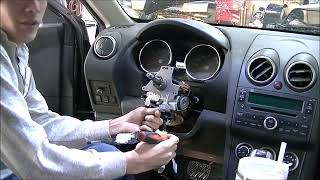
- Faulty Airbag Clock Spring (Very Common) — This is the most frequent cause for airbag-related B1057 codes. The clock spring is a rotating connector in the steering column that maintains an electrical connection for the airbag, horn, and steering wheel controls. The internal ribbon cable fatigues and breaks over time, causing an open circuit. 🎬 Watch: Step-by-step guide to replacing a Nissan clock spring.
- Faulty HVAC Blend Door Actuator or Linkage (Common) — On Chrysler, Dodge, and Jeep vehicles, this code triggers when the electric motor controlling the HVAC blend door fails, or the door's linkage breaks. The control module detects the door is not moving to its commanded position during self-calibration.
- Corrupted or Locked Airbag Control Module (SRS Module) (Common) — If the vehicle was in an accident, the Airbag Control Module stores crash data and locks itself, disabling the airbag system and triggering fault codes. This module requires a professional reset or replacement, as standard scan tools cannot clear this data.
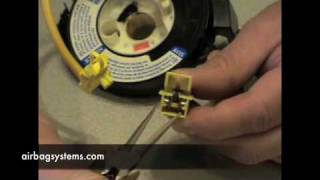
- Damaged Wiring or Loose Connectors (Less Common) — Wiring associated with the driver's airbag, clock spring, or HVAC actuator often becomes damaged, corroded, or disconnected. Yellow airbag connectors have special shorting bars that trigger faults if not fully seated.
- Low Battery Voltage or Poor Ground Connection (Less Common) — Body control and SRS modules are highly sensitive to system voltage. A weak battery, faulty alternator, or corroded main ground connection causes modules to lose communication or report spurious error codes, including Honda's communication-related B1057.
- Faulty Driver's Airbag Module (Rare) — The driver's airbag module in the steering wheel occasionally fails internally. This is the least common cause and should only be considered after thoroughly checking the clock spring and wiring.
- Faulty Steering Angle Sensor (SAS) (Rare) — The Steering Angle Sensor is often integrated into the clock spring assembly. A failure in the SAS portion creates electrical noise that the SRS module misinterprets as an airbag circuit problem, triggering a B1057 code alongside stability control warning lights.
Symptoms
- Airbag Warning Light is On or Flashing — This is the most common symptom. The light indicates a fault in the Supplemental Restraint System (SRS), which completely disables the airbags.
- Steering Wheel Controls Not Working — Because the clock spring carries signals for the horn, cruise control, and radio buttons, these features stop working simultaneously with the airbag light illuminating.
- Clicking or Grinding Noise from the Dashboard — Specific to the HVAC-related fault on Chrysler/Dodge vehicles, this noise is caused by a failing blend door actuator trying to move a stuck or broken door. 🎬 Watch: How to fix that clicking noise behind your dashboard.
- Incorrect Air Temperature or Airflow from Vents — In Chrysler/Dodge vehicles, the climate control blows the wrong temperature or routes air to the wrong vents because the blend door is stuck.
- Stability Control (ESC/VSC) Light On — If the fault relates to a bad clock spring that houses the steering angle sensor, the Electronic Stability Control light illuminates as well.
- Audible Rubbing or Grinding from Steering Column — As the internal ribbon of a clock spring fails, it makes a faint rubbing, scraping, or grinding noise when turning the steering wheel.
- DTC Stored in SRS or BCM (scan-tool only — no driver-felt sign) — The Diagnostic Trouble Code B1057 is stored in the memory of the Supplemental Restraint System (SRS) module or the Body Control Module (BCM).
Diagnostic Flowchart
Tap your situation to follow the diagnostic path that matches what you're seeing on this code.
Common Fixes & Costs
- Replace the Airbag Clock Spring — Parts: $80-$450, Labor: $120-$250, ~1.2 hr book time (Intermediate)
- Replace the HVAC Blend Door Actuator — Parts: $40-$150, Labor: $150-$600, ~2.5 hr book time (Professional)
- Reset the SRS Airbag Control Module — Parts: $50-$150, Labor: $50-$100, ~0.8 hr book time (DIY)
- Repair Damaged Wiring or Replace Connector — Parts: $10-$50, Labor: $100-$300, ~1.8 hr book time (Intermediate)
- Replace the SRS Airbag Control Module — Parts: $200-$700, Labor: $100-$300, ~1.5 hr book time (Professional)
Used vs. New Parts: Buying Guide
When a used part is worth it: For a clock spring or blend door actuator, buying used is not recommended. These are wear-and-tear items. The small cost savings are not worth the risk of premature failure and paying for the labor twice.
Donor-vehicle mileage cap: roughly under 20000 miles for the part to have meaningful remaining life.
Donor quality checklist:
- For a clock spring, avoid parts from vehicles with a deployed airbag, as the electrical surge damages the component.
- Match the part number exactly. Many clock springs look identical but have different internal wiring.
- Aftermarket new parts from reputable brands provide a better value than used OEM parts.
Decision logic:
- If The part is a clock spring or blend door actuator → Buy a new aftermarket or OEM part. The labor cost for replacement is too high to risk using a part with an unknown lifespan.
- If The part is an SRS Control Module → Send your original module for a reset service. A used module is VIN-locked and requires expensive dealer reprogramming.
Warranty tradeoff: Used parts typically have a 30-90 day warranty. New aftermarket parts come with a 1-year to lifetime warranty. The peace of mind favors buying new.
Worst-case if a used part fails: $300-$800 if a used part fails shortly after installation, primarily due to the cost of repeating the labor.
What Happens If You Wait — Timeline
- Immediate (Airbag Fault): Code B1057 sets, airbag warning light illuminates. The driver's airbag and potentially the entire SRS system are immediately disabled. (MPG impact: 0%% · Added cost: $0 (Safety risk is infinite))
- 0-2 months (HVAC Fault): Code sets. A faint, intermittent clicking noise begins in the dashboard. Temperature control becomes erratic or stuck in one position. (MPG impact: 0%% · Added cost: $0)
- 2-6 months (HVAC Fault): The clicking becomes constant as the broken plastic gears in the actuator continuously slip. This creates a parasitic battery drain, leading to a no-start condition. (MPG impact: 0%% · Added cost: $150-$300 (Cost of a new battery and potential tow).)
- 6+ months (HVAC Fault): The continuously grinding actuator breaks the plastic stop or linkage on the blend door itself. The repair escalates to removing the entire dashboard. (MPG impact: 0%% · Added cost: $1,200-$2,500+ (Dashboard removal labor is $800-$1200, plus parts).)
Cost of Not Fixing It
- Immediate: For airbag-related faults, the entire Supplemental Restraint System (SRS) is disabled. Airbags will not deploy in a collision, drastically increasing the risk of serious or fatal injury. (Added cost: N/A (Safety Risk))
- 0-3 months: For HVAC-related faults (Chrysler/Dodge), a continuously running actuator causes a parasitic battery drain, potentially leaving you stranded. (Added cost: $150-$300 for a new battery and towing.)
- 3+ months: For HVAC faults, the failing actuator places stress on the plastic blend door itself, potentially breaking the door or its linkage. This turns a $400 repair into a $1500+ repair requiring dashboard removal. (Added cost: $1000-$2000+)
Diagnosis Steps
- Identify Your Vehicle's Specific Definition
Use a search engine with your vehicle's make, model, and 'B1057' to find out what the code means for your specific car. The problem is either the airbag system (most common) or the HVAC system (Chrysler/Dodge).
Tools: Internet access (Beginner) - Scan for Other Codes
Use an advanced OBD-II scanner that reads Body (B) and Chassis (C) codes. Look for related codes to pinpoint the issue. Airbag code B1056 often appears with B1057, pointing to a wiring issue. On Hondas, a cluster of communication codes like B1055 and B1056 is common.
Tools: Advanced OBD-II Scanner (Beginner) - Test the Clock Spring Functionality (Basic)
If the code is airbag-related, check if your horn, cruise control, and steering wheel buttons work. If they are malfunctioning, the clock spring is the culprit. Note that the airbag circuit can fail even when other functions work perfectly.
Tools: None (Beginner) - Listen for HVAC Actuator Noises (Chrysler/Dodge)
Turn the key to the 'On' position without starting the engine. Change the temperature and vent settings and listen for a repetitive clicking or grinding sound from behind the dashboard. This confirms a failed blend door actuator.
Tools: None (Beginner) - Inspect Under-Seat and Steering Column Connectors
Loose connections cause many airbag circuit faults. Disconnect the battery, wait 15 minutes, then unplug and securely reconnect the yellow airbag connectors under the driver's seat and at the steering column base. Ensure locking tabs are fully engaged.
Tools: Basic hand tools (Beginner) - [PRO TIP] Analyze Live SRS Data Stream
Use an advanced scan tool to view the live data stream for the SRS module. Monitor 'Driver Airbag Resistance' while slowly turning the steering wheel lock to lock. A good clock spring shows a stable 2-4 ohms. If the value spikes to infinity (OL) or fluctuates wildly, the clock spring is failing.
Tools: Advanced OBD-II Scanner with Live Data (Advanced) - [PRO TIP] Perform a Clock Spring Continuity Test
Disconnect the battery and wait 15 minutes. Remove the driver's airbag and disconnect the clock spring's main harness connector. Set a multimeter to Ohms. Probe the two airbag circuit pins at the top connector. Rotate the steering wheel; the reading should remain stable under 2 ohms. An 'OL' reading indicates a broken circuit.
Tools: Multimeter, Basic hand tools, Trim removal tools (Professional) - [PRO TIP] Measure Chrysler Blend Door Actuator Voltage
Command the rear blend door to full hot and full cold using a scan tool. Back-probe the actuator's motor control pin with a multimeter set to DC volts. The voltage switches between 5V and 12V as the command changes. If voltage is present but the actuator clicks or doesn't move, the actuator has failed internally.
Tools: Advanced OBD-II Scanner, Multimeter, Back-probe pins (Advanced) - Check for Crash Data in the SRS Module
If the vehicle was in a collision, the SRS module stores crash data. A standard scanner cannot clear this. The module must be sent to a specialized service for a reset or replaced entirely.
Tools: Advanced OBD-II Scanner (Advanced)
When This Code Triggers (Freeze-Frame Conditions)
- System Voltage: 11.5V - 14.5V (The SRS or BCM module is performing its power-on self-test (POST) immediately after the ignition is turned to 'ON'.)
- Vehicle State: Key-On, Engine-Off or Engine Running (The fault is typically detected during the initial system check, which happens every time the car is started.)
- Component Status (Airbag): Open or Short Detected (For airbag faults, the module constantly monitors circuit resistance. The code sets the instant an out-of-spec reading is detected.)
- Component Status (HVAC): Calibration Failed (For Chrysler HVAC faults, the code sets after the BCM commands the blend door actuator through its calibration cycle and does not receive the expected feedback.)
Related Codes
- B1056 — Often appears with B1057 on Nissan/Ford vehicles. It indicates 'Driver Airbag Module Circuit Shorted to Ground'. B1057 indicates a short between the two circuits of the driver's airbag, while B1056 indicates a short from one circuit to the chassis ground.
- B1049 — This Ford-specific code for 'Driver Seatbelt Pretensioner Cross Link' appears with B1057. If both codes are present, it strongly suggests a cross-link fault where wires from these two different safety systems have shorted together.
- B1055 — On Honda vehicles, this code for 'Relay Control Module lost communication with MICU' frequently accompanies B1057. Seeing them together confirms the diagnostic path is to check the MICU (fuse box) and its network connections, not the airbag system.
- B1155 — On Chrysler/Dodge vehicles with an HVAC-related B1057, you see codes like B1155 pointing to a fault with a different mode door actuator. Seeing multiple actuator codes suggests a failure of the HVAC control module.
Climate & Environmental Factors
- High Humidity: Moisture penetrates electrical connectors for the SRS or HVAC systems, leading to corrosion and increased resistance. This causes intermittent faults and triggers codes in coastal or tropical regions.
- Cold Weather: In very cold temperatures, the plastic materials in a clock spring or blend door actuator become brittle and susceptible to cracking. The internal ribbon of a clock spring loses flexibility, increasing the chance of it snapping.
How to Talk to a Mechanic About This Code
Where to Take It: Dealer vs Independent vs Chain
- Dealer:
Recommended for warranty claims and complex electronic faults; otherwise, an independent shop is more cost-effective.
Best for: Vehicles under warranty or with a specific recall/extended warranty., Complex electrical or communication-related versions of the code., Post-collision repairs where module programming is required.
Downsides: Highest labor rates, often 1.5-2x more than independent shops., Defaults to replacing larger, more expensive assemblies rather than pinpointing a smaller component failure. (Typical cost: +50% vs. baseline) - Independent Shop:
Best fit for most B1057 scenarios, especially for the common clock spring and blend door actuator failures on out-of-warranty vehicles.
Best for: Out-of-warranty, common repairs like a clock spring or an accessible HVAC actuator., Owners looking for a balance of quality and cost.
Downsides: Quality and expertise vary; ensure the shop is ASE-certified and has an SRS-capable scan tool., Lacks access to the very latest manufacturer-specific tools for brand-new models. (Typical cost: +0% vs. baseline) - Chain Shop:
AVOID for any airbag-related B1057 fault. The safety risk is not worth the potential cost savings. Use with extreme caution even for the HVAC fault.
Best for: Extremely simple, accessible HVAC actuator replacements where you can see the part.
Downsides: High technician turnover and variable skill levels make them a significant risk for critical SRS/airbag system repairs., Business model encourages upselling, turning a simple diagnosis into a list of unneeded services. (Typical cost: -10% vs. baseline)
When to Walk Away From the Repair
If the estimated repair cost exceeds 40-50% of your car's private-party value, you should seriously consider selling or trading it in.
- Car worth $5000, fix is $600: Fix it. A clock spring repair is a critical safety fix and well below the threshold.
- Car worth $3000, fix is $1800: Walk away. An HVAC repair requiring dashboard removal costs 60% of the car's value. This is a classic money pit scenario.
- Car worth $15000, fix is $1800: Fix it. While expensive, the repair is only 12% of the vehicle's value and likely necessary for comfort and resale.
What Scan Tool You Need for This Code
Minimum: A scanner that reads and clears codes from the SRS (Airbag) and Body Control Modules. A basic engine-only (P-code) reader is useless for B1057.
A $20 engine code reader will not see Body (B) codes like B1057. You will think there are no codes, while a critical safety system is disabled. You must have a tool that accesses non-engine modules.
Rent vs buy: You cannot rent the necessary SRS-capable scanner from most auto parts stores. If this is a one-time repair, pay a shop for the initial diagnosis. Buy a mid-range scanner if you plan to do your own maintenance on modern cars.
How to Clear the Code After You Fix It
- Ensure the physical repair is complete.
- Reconnect the vehicle battery if it was disconnected for safety.
- Use an SRS-capable OBD-II scan tool to access the Airbag/Body Control Module.
- Select the function to 'Clear DTCs' or 'Reset Codes'. A standard engine code reader will not work.
- For Chrysler HVAC faults, run the 'Actuator Recalibration' function with a scan tool after replacing the part.
Drive cycle (~5 minutes): For B1057, a specific drive cycle is not required. The SRS and HVAC modules perform a self-test upon every startup. After clearing the code, turn the ignition off, then turn it back on. The airbag light illuminates for a few seconds and then turns off if the repair was successful.
Readiness monitors affected: None. This is a Body (B) code and does not affect the engine's emissions readiness monitors.
Watch out for:
- Using a basic OBD-II scanner that only reads Powertrain (P) codes. You need an advanced tool that communicates with the SRS/Body modules.
- Forgetting to clear the code after the repair. The light will not turn off on its own.
- Not addressing crash data stored in the SRS module after an accident. This data requires a professional reset service.
Will This Fail Emissions / State Inspection?
No — by itself this code doesn't fail OBD inspection (but it can keep readiness monitors from setting, which causes a separate fail).
- California: An airbag light will NOT cause a failure of the emissions-only smog check. The two systems are unrelated.
- New York: An illuminated airbag warning light is an automatic failure of the annual safety inspection. The DMV regulations explicitly list the airbag warning lamp as an inspection item.
- Texas: An airbag light will NOT cause a failure of the state inspection. The inspection checks emissions and basic safety items, but the SRS system is not on the list.
Most Commonly Affected Vehicles
- Nissan Rogue (2007-2020) — Prone to B1057 defined as 'Driver Airbag Module or SRS Explosive Detonator Circuits Shorted To Each Other', almost always caused by a failed clock spring.
- Nissan Altima / Cube / Qashqai / Tiida (2007-2012) — Frequently experiences B1057 due to clock spring failure. The clock spring part number for a 2010 Tiida is a common replacement item.
- Dodge / Chrysler Grand Caravan / Town & Country (2008-2016) — Commonly logs B1057 for a 'Rear Blend Door Travel Range Too Large' fault. This is due to a failed HVAC actuator, often part number 604-024, or a broken plastic stop on the door itself.
- Ford Freestyle / F-150 (2005-2008) — Often reports B1057 as a 'Driver Air Bag Cross Link to Another Firing Loop' fault, pointing to wiring or clock spring issues. Diagnosis involves checking for shorts between the two driver airbag circuits.
- Honda Accord / Civic (2003-2011) — On these models, B1057 means 'Relay Control Module Lost Communication with MICU'. It is a communication network error, not an airbag fault, pointing to a faulty under-dash fuse box.
- Hyundai Sonata / Elantra (2006-2014) — Airbag light issues are common, often related to the clock spring (which had a warranty extension in some years) or Occupant Classification System (OCS) sensor.
- Subaru Outback / Forester (2005-2012) — Subaru vehicles experience airbag light issues due to faulty seat belt tension sensors or bad solder joints on the passenger airbag indicator light assembly in the overhead console.
- Chevrolet Cruze / Malibu (2011-2016) — Logs B1057 pointing to issues with the driver airbag circuit, traced back to the clock spring or associated wiring. The diagnosis is identical to Nissan and Ford.
Manufacturer-Specific Notes
- Nissan / Infiniti: The airbag light flashes a specific pattern after the initial self-check. B1057 specifically means 'Driver Airbag Module or SRS Explosive Detonator Circuits Shorted To Each Other'. A recall (Campaign ID PG7BS) was issued for some 2017-2018 models where a broken clock spring caused unintended airbag deployment.
- Chrysler / Dodge / Jeep: This code is exclusively related to the HVAC system, not the airbags. It triggers during the system's self-calibration test at startup. An extended warranty (X64) was issued for some 2014-2015 Grand Caravan models, extending coverage for the right blend door actuator.
- Ford: Ford's definition 'Cross Link to Another Firing Loop' means the control module sees the driver's airbag circuit shorted to another safety component's circuit. This strongly suggests damaged wiring or a faulty clock spring where the internal ribbon has melted together.
- Honda: B1057 is a communication error with the Multiplex Integrated Control Unit (MICU). Symptoms are widespread electrical issues like non-working wipers or A/C, not an airbag problem. The presence of codes like B1055 confirms a B-CAN network communication issue.
- Hyundai: Hyundai issued a broad extended warranty (Campaign TXXJ) for the clock spring on many 2011-2014 models. The coverage was extended to 15 years with unlimited mileage. If the clock spring is the cause, the replacement is covered by the dealer.
Real Owner Stories
2011 Dodge Grand Caravan with 110K miles
Owner heard a constant clicking noise from the passenger side dashboard, and the A/C was stuck blowing hot air. The rear defrost light blinked on startup.
What they tried:
- Disconnected the battery to reset the HVAC system, but the clicking returned immediately.
- Replaced the passenger-side blend door actuator themselves after watching a tutorial video.
Outcome: Replacing the actuator fixed the temperature control issue. The owner learned that performing the HVAC calibration with a scan tool after installation is critical for longevity.
Lesson: On Chrysler/Dodge vans, a clicking dash and incorrect temperature is almost always a blend door actuator. A DIY replacement is possible, but calibration is required afterward.
2010 Nissan Qashqai with airbag light on
The airbag warning light stayed on. A scan revealed code B1057, 'Driver Airbag Module or SRS Explosive Detonator Circuits Shorted To Each Other'.
What they tried:
- Checked under-seat connectors, which were secure.
- A mechanic diagnosed a faulty clock spring by testing continuity through the steering column.
Outcome: The clock spring was replaced, and the B1057 code was cleared with a professional scan tool. The airbag light went off and stayed off.
Lesson: For Nissan's B1057 definition, the clock spring is the most common failure point. A continuity test with a multimeter is the definitive diagnosis.
2013 Hyundai Elantra with 85K miles
The airbag light illuminated, and the horn and steering wheel radio controls stopped working intermittently.
What they tried:
- Prepared to purchase a new clock spring for $150 plus labor.
- Searched for recalls and found Hyundai's extended warranty for the clock spring (Campaign TXXJ).
Outcome: The dealer confirmed the clock spring was the cause and replaced it for free under the 15-year, unlimited mileage warranty extension.
Lesson: Before paying for an airbag-related repair on a Hyundai, always check for warranty extensions. Hyundai extended the clock spring warranty to 15 years on many popular models.
2012 Subaru WRX with SRS light after DIY modification
After installing an aftermarket steering wheel, the SRS airbag light came on immediately. The owner feared they broke the clock spring.
What they tried:
- Posted on a forum asking if they needed a new clock spring.
- Disassembled the steering wheel again to re-check their work.
Outcome: The owner discovered one of the yellow airbag connectors was not fully seated. After securely plugging it in, the SRS light went away.
Lesson: If a B1057 code appears immediately after a repair, the most likely cause is a simple installation error. Re-check that all connectors are fully and securely seated before buying parts.
How to Prevent This Code From Triggering
- Perform periodic HVAC self-calibration/actuator cycling. (Every 6 months) — For Chrysler/Dodge systems, regularly cycling the temperature and vent controls prevents the plastic gears in the blend door actuators from seizing due to inactivity.
- Maintain proper battery health and clean terminal connections. (Annually) — SRS and Body Control Modules are sensitive to low voltage. A weak battery causes voltage drops during startup, leading to spurious communication codes like Honda's B1057.
- Be mindful of steering wheel rotation. (Daily habit) — Avoiding harsh, abrupt turns to the steering lock reduces stress on the internal ribbon of the clock spring, extending its life.
- Apply dielectric grease to accessible connectors. (During any related repair) — Applying dielectric grease to exposed connectors keeps out moisture, preventing corrosion that leads to high-resistance faults over time.
Frequently Asked Questions
Can I reset the B1057 code by disconnecting the battery?
No. If the fault is active, the code returns immediately upon reconnection. If the code is stored due to crash data, the module requires a specialized reset service.
Is it safe to drive with code B1057?
No. If the code is for the airbag system, your airbags are disabled and will not protect you in an accident. Have the vehicle serviced immediately.
My airbag light is on, but my steering wheel controls work fine. Could it still be the clock spring?
Yes. The clock spring contains multiple separate electrical circuits. The airbag circuit's ribbon often fails while the horn, audio, and cruise control circuits continue functioning perfectly.
How much does it cost to diagnose a B1057 code?
Most repair shops charge a diagnostic fee ranging from $100 to $200. This covers reading codes with an advanced scanner and performing initial circuit tests. Shops often apply this fee toward the final repair cost.
Can a bad clock spring cause other warning lights to come on?
Yes. In many vehicles, the clock spring houses the steering angle sensor. If it fails, it triggers the Electronic Stability Control (ESC) or traction control warning light alongside the airbag light.
I replaced the clock spring, but the airbag light is still on. What did I miss?
First, you must clear the code with an SRS-capable scan tool; it will not clear itself. Second, ensure all connectors are securely plugged in. Finally, if the car was in an accident, the SRS module may still hold crash data requiring a professional reset.
Can I use a used SRS module from a junkyard to fix my car?
This is strongly discouraged because most SRS modules are VIN-locked to the original vehicle. Installing a used module triggers new error codes and requires expensive dealer reprogramming. It is safer and more cost-effective to have your original module professionally reset.
What is the 'shorting bar' on an airbag connector?
The yellow airbag connectors contain a shorting bar that automatically connects the two circuit pins when unplugged. This prevents static electricity from accidentally deploying the airbag during service. Professionals use this feature to safely test the clock spring's continuity from the airbag side.
Key Takeaways
- Identify your manufacturer's specific B1057 definition first, as it means a critical airbag failure on Nissans and Fords, but a minor HVAC issue on Chryslers.
- Do not drive if your vehicle defines B1057 as an airbag fault, because the driver's airbag is 100% disabled and will not deploy in a collision.
- Replace the steering column clock spring to resolve over 80% of airbag-related B1057 codes, especially if your horn or steering wheel buttons also stopped working.
- Listen for a clicking noise behind the dashboard on Chrysler and Dodge vehicles to instantly confirm a failed HVAC blend door actuator.
- Mail your locked SRS control module to a specialized reset service for roughly $50 if the B1057 code appeared immediately following a collision.
Helpful Videos

The information in this article is provided for general reference and educational purposes only. Vehicle specifications, procedures, and part compatibility can vary by production date, trim level, and region. Always consult your vehicle's factory service manual and verify part numbers before purchasing or performing repairs. Safety-critical components such as airbags, seat belts, and braking systems should be installed by a qualified professional.
- 🎬 Helpful Videos
- What Does B1057 Mean?
- Can I Drive With B1057?
- Common Causes
- Symptoms
- Diagnostic Flowchart
- Common Fixes & Costs
- Used vs. New Parts: Buying Guide
- What Happens If You Wait — Timeline
- Cost of Not Fixing It
- Diagnosis Steps
- When This Code Triggers (Freeze-Frame Conditions)
- Related Codes
- Climate & Environmental Factors
- How to Talk to a Mechanic About This Code
- Where to Take It: Dealer vs Independent vs Chain
- When to Walk Away From the Repair
- What Scan Tool You Need for This Code
- How to Clear the Code After You Fix It
- Will This Fail Emissions / State Inspection?
- Most Commonly Affected Vehicles
- Manufacturer-Specific Notes
- Real Owner Stories
- 2011 Dodge Grand Caravan with 110K miles
- 2010 Nissan Qashqai with airbag light on
- 2013 Hyundai Elantra with 85K miles
- 2012 Subaru WRX with SRS light after DIY modification
- How to Prevent This Code From Triggering
- Frequently Asked Questions
- Can I reset the B1057 code by disconnecting the battery?
- Is it safe to drive with code B1057?
- My airbag light is on, but my steering wheel controls work fine. Could it still be the clock spring?
- How much does it cost to diagnose a B1057 code?
- Can a bad clock spring cause other warning lights to come on?
- I replaced the clock spring, but the airbag light is still on. What did I miss?
- Can I use a used SRS module from a junkyard to fix my car?
- What is the 'shorting bar' on an airbag connector?
- Key Takeaways
- 🎟️ Get 5% Off