

OBD-II Code B1049: Driver Airbag Circuit Open
The Ultimate 2026 Guide to Meaning, Diagnosis, and Repair
- Code B1049 disables the driver's airbag entirely; do not drive the vehicle until repaired to avoid severe injury in a crash.
- A broken clock spring causes over 90% of B1049 codes, which is confirmed if your horn and steering wheel buttons also stop working.
- Disconnect the negative battery terminal and wait 15 minutes before touching any yellow SRS connectors to prevent accidental airbag deployment.
- Diagnose the circuit using a 2.0-2.5 Ohm SRS load resistor instead of blindly replacing the $500+ airbag module.
What Does B1049 Mean?

The B1049 code means your car's Supplemental Restraint System (SRS) module detects an open circuit for the driver's side airbag. The electrical connection between the control module and the steering wheel airbag is broken or has excessively high resistance. Because of this critical fault, the computer disables the driver's airbag to prevent unintended deployment.
Technical definition: The official SAE/ISO definition for B1049 is "Driver Airbag Module (Squib) Circuit Open". The SRS control unit detects a break or resistance above the 3.0-4.0 ohm threshold in the squib circuit leading to the driver's airbag inflator. A true open circuit reads as infinite resistance (OL).
Can I Drive With B1049?
No — Do Not Drive. A B1049 code disables the driver's airbag. A single fault often disables the entire Supplemental Restraint System (SRS), including passenger airbags and seatbelt pretensioners. Driving with a disabled primary safety system poses a severe risk of injury or death in a crash and creates massive liability issues.
Common Causes

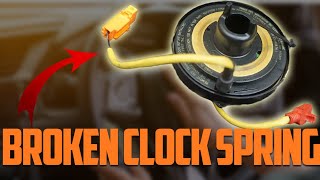
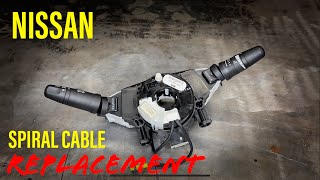
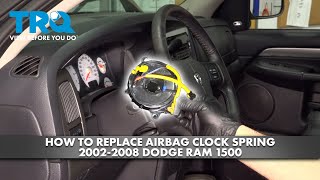
- Faulty Clock Spring (Spiral Cable) (Very Common) — This causes over 90% of B1049 codes. 🎬 Watch: How a clock spring works inside your steering wheel. The clock spring's coiled ribbon wire fatigues and breaks from constant steering wheel rotation. Early failure causes intermittent codes at specific wheel angles, progressing rapidly to a permanent open circuit.
- Poor Electrical Connection (Common) — Yellow SRS connectors behind the airbag module or at the steering column base become loose, corroded, or suffer bent pins, pushing circuit resistance above the 4.0-ohm threshold.
- Human Error / Damaged Wiring (Less Common) — Wiring gets pinched, cut, or the clock spring snaps due to over-rotation during unrelated dashboard, steering column, or aftermarket accessory repairs.
- Faulty Driver's Airbag Module (Rare) — The airbag inflator squib fails internally. Rule out the clock spring and wiring with a load resistor before replacing this expensive component.
- Faulty SRS Control Module (Very Rare) — The main SRS computer malfunctions. This is extremely rare and is usually accompanied by communication errors or multiple SRS codes.
Symptoms

- Airbag Warning Light is On or Flashing — The SRS/airbag light on your dashboard illuminates and stays on, or flashes continuously, indicating a hard system fault.
- Horn Not Working — The horn's electrical circuit passes through the clock spring. A broken clock spring ribbon severs the horn connection simultaneously.
- Steering Wheel-Mounted Controls Inoperative — Buttons for audio, cruise control, or phone functions on the steering wheel stop working due to the severed clock spring connection.
- Traction or Stability Control (VDC/ESC) Light is On — Modern clock springs integrate the Steering Angle Sensor (SAS). A failure disrupts the SAS signal, triggering the vehicle's stability control warning light.
- Grinding or Clicking Noise When Turning — A rubbing or clicking sound from the steering column occurs as the broken internal ribbon of the clock spring 🎬 See a breakdown of the most common broken clock spring symptoms. catches inside its housing.
Diagnostic Flowchart

Tap your situation to follow the diagnostic path that matches what you're seeing on this code.
Common Fixes & Costs
- Replace Clock Spring (Spiral Cable) — Parts: $30-$250, Labor: $150-$225, ~1.5 hr book time (Intermediate)
- Reseat or Clean Electrical Connectors — Parts: $0, Labor: $75-$150, ~0.8 hr book time (DIY)
- Repair Damaged Wiring — Parts: $5-$20, Labor: $150-$300, ~2 hr book time (Professional)
- Replace Driver's Airbag Module — Parts: $400-$1200, Labor: $75-$150, ~0.8 hr book time (Intermediate)
Used vs. New Parts: Buying Guide
When a used part is worth it: Buying a used clock spring is highly discouraged. It is a wear-and-tear item with a finite lifespan.
Donor-vehicle mileage cap: roughly under 40000 miles for the part to have meaningful remaining life.
Donor quality checklist:
- Verify the donor vehicle's mileage is very low.
- Ensure the part was removed with the steering wheel centered and locked to prevent internal damage.
- The part number must be an exact match, including all options (e.g., steering wheel controls, heated wheel).
Decision logic:
- If The cost of a new aftermarket part is under $100 → Buy new aftermarket. The small savings on a used part isn't worth the risk of premature failure.
- If The part is for a safety-critical system like an airbag → Strongly favor new OEM or a reputable new aftermarket brand over used.
Warranty tradeoff: Used parts typically offer a 30-90 day warranty at best, which does not cover labor costs. New aftermarket parts often come with a 1-year to limited lifetime warranty.
Worst-case if a used part fails: $200-$400 if a used part fails after installation, requiring repeat labor plus the cost of another part.
What Happens If You Wait — Timeline
- 0-1 month: Intermittent Fault: A micro-fracture in the clock spring ribbon causes an open circuit only at certain steering wheel angles. The airbag light flashes intermittently. (MPG impact: 0%% · Added cost: $0)
- 1+ months: Permanent Fault: The ribbon cable breaks completely. The airbag light is on constantly. The driver's airbag is permanently disabled. Horn and steering wheel controls are dead. (MPG impact: 0%% · Added cost: $0)
- During state inspection: Failed State Inspection: The vehicle automatically fails any state safety inspection that checks for an illuminated airbag warning light. (MPG impact: 0%% · Added cost: $50-$150 in inspection fees and lost time.)
Cost of Not Fixing It
- Immediate: Driver's airbag is disabled and will not deploy in a crash. (Added cost: $0)
- In case of an accident: Significantly increased risk of serious injury or death for the driver. Potential for insurance claim denial. (Added cost: Potentially infinite (medical bills, legal liability).)
- During state inspection: Automatic failure of state safety inspections that check for an illuminated airbag warning light. (Added cost: $50-$150 in inspection fees and lost time.)
Diagnosis Steps
- Read the Fault Codes
Use an OBD-II scanner capable of reading SRS/airbag system codes to confirm B1049 is active. Document any other codes (like B1054 or C1145) to guide the diagnosis.
Tools: OBD-II Scanner (with SRS capability) (Beginner) - Check Steering Wheel Functions
Test the horn, cruise control, and radio buttons. If these functions are dead alongside the airbag light, a faulty clock spring is the guaranteed cause.
Tools: None (Beginner) - Safety Depower: Disconnect the Battery
CRITICAL SAFETY STEP: Disconnect the negative battery terminal and wait exactly 15 minutes before working on any SRS component. This discharges the backup capacitors and prevents accidental airbag deployment.
Tools: 10mm Wrench (Beginner) - Visual Inspection of Connectors
Remove the steering column covers and the driver's airbag module. Inspect all yellow airbag connectors for looseness, corrosion, or pushed-out pins. Ensure they are securely latched.
Tools: Screwdriver/Torx set, Trim removal tools (Intermediate) - [PRO TIP] Circuit Test with SRS Load Resistor
Unplug the clock spring from the main vehicle harness. Insert a 2.0-2.5 Ohm SRS load resistor into the vehicle-side connector's airbag pins. Reconnect the battery and clear codes. If B1049 disappears, the wiring is good, and the clock spring or airbag module is definitively faulty.
Tools: SRS diagnostic resistor kit (2.0-2.5 Ohm), SRS-capable scanner (Advanced) - [PRO TIP] Component Resistance Measurement
With the clock spring or airbag module fully disconnected, use a multimeter on the Ohms setting. A healthy component measures between 2.0 and 3.0 Ohms. A reading of 'OL' (infinite resistance) proves an internal open circuit.
Tools: High-impedance Multimeter (Advanced) - Clock Spring Continuity Test (Dynamic)
Disconnect the clock spring. Connect multimeter probes to the input and output pins for the airbag circuit. Slowly rotate the clock spring from lock to lock. If the resistance jumps to infinity (OL) at any point, the internal ribbon is broken.
Tools: Multimeter, Vehicle-specific wiring diagram (Advanced) - Live Data PID Analysis
Using an advanced scan tool, view the live data for the driver's airbag squib circuit. A normal reading is 2.0-3.0 Ohms. A reading of 'High', 'OL', or >4.0 Ohms confirms the open circuit condition.
Tools: Advanced Bi-Directional Scan Tool (Advanced)
When This Code Triggers (Freeze-Frame Conditions)
- System State: Key-On, Engine Off (The SRS module performs a self-test immediately at ignition 'ON'.)
- Driver Airbag Resistance: Over Limit / > 4.0 Ohms (The module logs the code the instant it detects resistance above the threshold.)
- Fault Type: Current / Active (Indicates the open circuit is present right now, not a past event.)
- Battery Voltage: 11.5V - 14.5V (The self-test runs under normal operating voltage; low voltage is not the primary trigger.)
Related Codes
- B1054 — Driver Airbag Module Circuit Open (Stage 2). B1049 and B1054 almost always appear together in Nissan/Infiniti vehicles. Seeing both codes guarantees a failed clock spring.
- B1B02 / B1B06 — The Dodge/Chrysler/Jeep equivalents for a driver airbag circuit open fault. They point to the exact same diagnostic path and clock spring failure.
- B0001 — The generic SAE code for a 'Driver Frontal Stage 1 Deployment Control' circuit fault. B1049 is the specific, manufacturer-level code for the same problem.
- C1145 (or similar C-Codes) — Steering Angle Sensor (SAS) circuit failure. If the clock spring assembly includes the SAS, its failure triggers this code in the ABS/ESC module simultaneously with the airbag light.
Climate & Environmental Factors
- Mechanical Wear (Age): The internal ribbon cable has a finite lifespan of winding and unwinding. This mechanical fatigue causes 90% of clock spring failures, regardless of climate.
- High Humidity: Promotes corrosion on delicate SRS connector pins, increasing resistance until the module triggers an open circuit fault.
- Extreme Temperature Cycles: Causes wiring and connectors to expand and contract, loosening connections or fracturing the clock spring ribbon over time.
How to Talk to a Mechanic About This Code
Say this: "I have an airbag light on, and my scanner shows code B1049, a driver's airbag open circuit. My horn and steering wheel buttons also don't work. I suspect a failed clock spring. I'd like to book a diagnostic appointment to confirm the fault is in the clock spring before replacing parts."
This signals you understand the most likely cause. It focuses the technician on a specific, testable component (the clock spring) and discourages them from starting with expensive parts like the airbag module. Mentioning the horn provides strong corroborating evidence.
Avoid saying:
- 'My airbag light is on, can you fix it?' (Too vague, invites expensive diagnostics).
- 'I need a new airbag.' (The code points to the circuit, not the airbag itself).
- 'Just replace whatever is broken.' (Gives the shop a blank check).
Questions to ask before authorizing the repair:
- How did you confirm the clock spring was faulty? Did you use a load resistor to test the rest of the circuit?
- If the clock spring assembly includes the steering angle sensor, does it require calibration, and is that included in the quote?
- Can you guarantee this will clear the B1049 code and turn off the airbag light?
Where to Take It: Dealer vs Independent vs Chain
- Dealer:
Recommended if the vehicle is under warranty, subject to a recall, or requires complex steering angle sensor calibration.
Best for: Vehicles under warranty or covered by a recall., Complex repairs where the clock spring houses a steering angle sensor requiring proprietary calibration.
Downsides: Highest labor rates and part costs., Less willing to diagnose vs. simply replacing the entire assembly. (Typical cost: +50% vs. baseline) - Independent Shop:
Best fit for most out-of-warranty B1049 repairs. Most competent independent shops handle clock spring replacements efficiently.
Best for: Out-of-warranty vehicles where cost is a major factor., Straightforward clock spring replacements on common vehicles.
Downsides: May not have the latest tools to calibrate a new steering angle sensor. (Typical cost: +0% vs. baseline) - Chain Shop:
Not recommended. Airbag system repair is a safety-critical task requiring specific expertise.
Best for: Simple, routine maintenance.
Downsides: Technicians are rarely experienced with SRS diagnostics., Lack specific diagnostic tools like SRS load resistors. (Typical cost: -10% vs. baseline)
When to Walk Away From the Repair
If the estimated repair cost for the B1049 code exceeds 40-50% of your car's private-party value, evaluate whether the investment is worthwhile.
- Car worth $3500, fix is $750: Fix it. The repair cost is below the 50% threshold and restores a critical safety feature.
- Car worth $2000, fix is $900: Borderline. At 45% of the car's value, consider other factors. If the car is otherwise reliable, the repair is likely worth it.
- Car worth $1500, fix is $1000: Walk away. The repair cost is 67% of the car's value. It is not economical to invest this much into a low-value vehicle.
What Scan Tool You Need for This Code
Minimum: A scanner that specifically reads and clears Supplemental Restraint System (SRS) codes. A basic engine-only code reader will NOT work.
A standard $20 OBD-II scanner only sees 'P' (Powertrain) codes. B1049 is a 'B' (Body) code stored in the SRS module. You need a tool that communicates with the SRS computer to clear the code after repair.
Budget: BlueDriver Pro Bluetooth Scanner (~$100) — Reads and clears SRS codes on most major brands. It displays live data, helping confirm the diagnosis. Great for DIYers.
Mid-range: Foxwell NT630 Plus (~$130-200) — A dedicated handheld unit excellent for SRS diagnostics. It reads/clears codes, shows live data, and performs Steering Angle Sensor (SAS) calibration.
Professional: Autel MaxiCOM MK808S (~$400-550) — Offers full-system diagnostics, bidirectional control to test components, and performs SAS calibration. Suitable for serious DIYers or small shops.
Rent vs buy: Buying a mid-range scanner is cheaper than one hour of diagnostic labor at a shop. Since the tool is required to clear the light after the fix, renting is less practical.
How to Clear the Code After You Fix It
- Ensure all SRS components are reconnected.
- Reconnect the negative battery terminal.
- Use an SRS-capable OBD-II scan tool to access the SRS module.
- Select the function to 'Clear Codes' or 'Erase Faults'.
Drive cycle (~1 minutes): No drive cycle is required. The SRS system self-tests immediately at key-on. If the light stays on after clearing codes with a scanner, the physical fault remains.
Watch out for:
- Using a basic engine code reader that cannot communicate with the SRS module.
- Not fixing the underlying physical fault (the code returns instantly).
- Attempting manual key-on/key-off sequences, which are unreliable on modern vehicles.
Will This Fail Emissions / State Inspection?
No — by itself this code doesn't fail OBD inspection (but it can keep readiness monitors from setting, which causes a separate fail).
- California: An illuminated airbag light is grounds for a safety inspection failure, although it is not part of the Smog Check emissions test itself.
- New York: The annual safety inspection includes checking that the airbag warning lamp illuminates and then turns off. A continuously lit lamp is an automatic failure.
- Texas: As part of the annual safety inspection, the airbag warning lamp is checked. If it is on or flashing, the vehicle fails the inspection.
Most Commonly Affected Vehicles
- Nissan Rogue (2007-2020) — Extremely common issue, often appearing with code B1054. Always verify the part number for your specific vehicle options.
- Infiniti G35 / G37 (2003-2015) — Frequently logs both B1049 and B1054 codes simultaneously due to a single clock spring failure.
- Dodge / Ram Ram 1500/2500 (2003-2020) — Logs codes B1B02/B1B06. OEM part costs for Ram trucks are significantly higher than other makes, often exceeding $400.
- Nissan Titan (2004-2015) — A known weak point, often reported alongside code B1054.
- Ford F-150 / Super Duty (2009-2023) — A recall (23V-847) was issued for 2023 models for an insufficient weld in the clock spring causing an open circuit.
- Nissan Pathfinder (1996-2020) — Susceptible across multiple generations, indicating a long-term part vulnerability.
- Nissan X-Trail (2001-2021) — Clock spring failure is well-documented, almost always accompanied by an inoperative horn.
- Nissan Note / Versa (2004-2019) — Frequently reported as an intermittent fault in its early stages before failing completely.
Manufacturer-Specific Notes
- Nissan: Nissan vehicles are overwhelmingly the most common to display B1049. After repair, the light must be cleared with an SRS-capable scan tool; manual key-on/off resets fail on newer models.
- Dodge / Chrysler / Jeep: These brands use codes B1B02 and B1B06 to report the exact same clock spring failure. OEM replacement parts for Ram trucks frequently exceed $400.
- Infiniti: Shares Nissan's high failure rate. A 2017-2018 QX30 recall (17V-685) addressed a clock spring manufacturing defect causing open circuits.
- Ford: Recall 23V-847 covers 2023 F-150 and Super Duty trucks for insufficient clock spring welds causing airbag disconnection. Dealers replace it for free.
- Chevrolet: On 2005-2015 models like the Captiva or Aveo, B1049 indicates 'Left Rear Speaker Circuit Open' in the radio module, not an SRS fault.
Real Owner Stories
2009 Nissan Rogue with B1049 & B1054
Airbag light was on and the horn did not work when pressing the steering wheel pad. The horn did work with the panic alarm.
What they tried:
- A diagnostic scan confirmed active codes B1049 (Driver Airbag Module Open) and B1054 (Stage 2 Open).
- The mechanic confirmed the horn itself worked by applying direct power, isolating the fault to the steering column circuit.
Outcome: The diagnosis was a faulty clock spring. The presence of both B1049 and B1054 codes, combined with the horn failure, made this a guaranteed conclusion. The fix was replacing the clock spring.
Lesson: Seeing codes B1049 and B1054 together on a Nissan is a classic sign of clock spring failure. If the horn also doesn't work from the wheel but works with the alarm, the clock spring is the culprit.
2014 Ram 1500 with Airbag & ESC Lights
After the owner spun the disconnected steering wheel during another repair, the airbag and ESC warning lights came on.
What they tried:
- A local shop installed a new OEM clock spring and cleared the codes.
- Immediately after the repair, the ESC light came back on after driving a few miles.
Outcome: The initial B1049-equivalent code (B1B02) was fixed, but the new clock spring, which contains the steering angle sensor, was not calibrated correctly. The owner had to return to the shop for SAS recalibration.
Lesson: On modern trucks, the clock spring is an assembly that includes the steering angle sensor. Replacement fixes the B1049 code but creates a stability control issue if the sensor isn't calibrated with a scan tool.
Nissan Note with intermittent B1049
Airbag light flashed intermittently, and the horn sounded weak. A scan showed code B1049.
What they tried:
- The owner suspected the clock spring and replaced it with a used part from a junkyard.
- After swapping the part, the airbag light remained on.
Outcome: The problem was unresolved. The used clock spring was also faulty, and the 'hard code' in the SRS module was never cleared with an SRS-capable scan tool.
Lesson: Never use junkyard clock springs; they are high-risk parts. After any SRS repair, you must clear the codes with a scan tool that accesses the SRS module.
How to Prevent This Code From Triggering
- Lock the steering wheel during unrelated repairs. (During any service involving the steering wheel or column.) — The most common preventable cause of B1049 is accidentally snapping the clock spring's internal ribbon. Secure the clock spring with tape to prevent it from spinning freely.
- Avoid turning the steering wheel to full lock with excessive force. (Daily driving habit.) — Repeatedly hitting the steering stops with force puts additional stress on the clock spring's ribbon cable at its extension limits, accelerating mechanical fatigue.
- Keep cabin electronics wiring clean and secure. (During interior detailing or dash repairs.) — Prevents accidental snagging or pinching of the SRS harness. Avoid routing aftermarket device wiring near the yellow SRS harnesses.
Frequently Asked Questions
Is it safe to drive with code B1049?
No. The driver's airbag will not deploy in an accident. This creates an unacceptable safety risk requiring immediate repair.
How much does it cost to fix a B1049 code?
Replacing the clock spring costs $200 to $800+ at a shop, depending heavily on OEM part prices. DIY repairs with aftermarket parts cost $50 to $150.
Can I fix a B1049 code myself?
Yes, if you have mechanical experience and strictly follow safety procedures. Disconnecting the battery for 15 minutes is mandatory to prevent accidental airbag deployment.
My horn and steering wheel buttons also don't work. Is this related?
Yes. The clock spring bundles wiring for the airbag, horn, and steering wheel controls. Simultaneous failure of these components confirms a broken clock spring.
Why did the airbag light come back on right after I replaced the clock spring?
You likely snapped the new clock spring by failing to center it during installation. Alternatively, the SRS module requires a specialized scan tool to clear the stored hard code.
Do I absolutely have to disconnect the battery?
Yes. The SRS system uses powerful capacitors that hold a charge. Failing to wait 15 minutes after disconnection causes accidental airbag deployment.
What is an SRS resistor tool and why is it used?
It is a 2.0-2.5 ohm plug that mimics a functional airbag. Technicians use it to bypass components and pinpoint whether the open circuit is in the wiring or the airbag module itself.
Will clearing the code fix the problem?
No. B1049 indicates a permanent physical break in the circuit. The SRS module detects the open circuit during its startup self-test and instantly turns the light back on.
Can I use a clock spring from a junkyard?
Never. Used clock springs are wear items already near the end of their lifespan. Improper removal also breaks their internal ribbon, making them useless.
Key Takeaways
- Code B1049 disables the driver's airbag entirely; do not drive the vehicle until repaired to avoid severe injury in a crash.
- A broken clock spring causes over 90% of B1049 codes, which is confirmed if your horn and steering wheel buttons also stop working.
- Disconnect the negative battery terminal and wait 15 minutes before touching any yellow SRS connectors to prevent accidental airbag deployment.
- Diagnose the circuit using a 2.0-2.5 Ohm SRS load resistor instead of blindly replacing the $500+ airbag module.
Helpful Videos
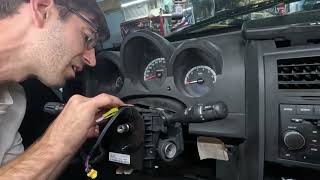

The information in this article is provided for general reference and educational purposes only. Vehicle specifications, procedures, and part compatibility can vary by production date, trim level, and region. Always consult your vehicle's factory service manual and verify part numbers before purchasing or performing repairs. Safety-critical components such as airbags, seat belts, and braking systems should be installed by a qualified professional.
- 🎬 Helpful Videos
- What Does B1049 Mean?
- Can I Drive With B1049?
- Common Causes
- Symptoms
- Diagnostic Flowchart
- Common Fixes & Costs
- Used vs. New Parts: Buying Guide
- What Happens If You Wait — Timeline
- Cost of Not Fixing It
- Diagnosis Steps
- When This Code Triggers (Freeze-Frame Conditions)
- Related Codes
- Climate & Environmental Factors
- How to Talk to a Mechanic About This Code
- Where to Take It: Dealer vs Independent vs Chain
- When to Walk Away From the Repair
- What Scan Tool You Need for This Code
- How to Clear the Code After You Fix It
- Will This Fail Emissions / State Inspection?
- Most Commonly Affected Vehicles
- Manufacturer-Specific Notes
- Real Owner Stories
- 2009 Nissan Rogue with B1049 & B1054
- 2014 Ram 1500 with Airbag & ESC Lights
- Nissan Note with intermittent B1049
- How to Prevent This Code From Triggering
- Frequently Asked Questions
- Is it safe to drive with code B1049?
- How much does it cost to fix a B1049 code?
- Can I fix a B1049 code myself?
- My horn and steering wheel buttons also don't work. Is this related?
- Why did the airbag light come back on right after I replaced the clock spring?
- Do I absolutely have to disconnect the battery?
- What is an SRS resistor tool and why is it used?
- Will clearing the code fix the problem?
- Can I use a clock spring from a junkyard?
- Key Takeaways
- 🎟️ Get 5% Off