

OBD-II Code B1033: Restraint System Malfunction
What B1033 means, why it triggers, and how to fix it
- Code B1033 disables your entire Supplemental Restraint System (SRS), meaning 0% of your airbags will deploy in a collision.
- Over 50% of B1033 triggers stem from a loose yellow electrical connector under the front seats, costing under $15 in dielectric grease to fix.
- B1033 definitions vary wildly by manufacturer; Ford often points to a pretensioner (flashing code 33), while Nissan usually indicates a corroded front crash zone sensor.
- A standard $20 engine code reader cannot see or clear B1033; you must use an SRS-capable scanner costing $70 or more to reset the Restraints Control Module.
- A single passenger-side fault, like a failed BMW occupancy mat, forces the Restraints Control Module to disable the driver's side airbags as a mandatory failsafe.
What Does B1033 Mean?

B1033 is a body trouble code indicating the Restraints Control Module (RCM) detects a critical fault in the safety restraint system. While the exact definition varies by manufacturer, it usually points to a failed seat belt pretensioner, a broken crash sensor, or damaged wiring. To prevent unpredictable or accidental deployment, the RCM completely disables the airbag system while this code is active.
Technical definition: The official SAE/ISO definition for B1033 is not standardized and varies significantly by manufacturer. Common definitions include: Ford: Passenger Side Air Bag Circuit High Resistance or Open (often displayed as a flashing light code '33'). GM: Electronic Front End Sensor 2 Fault. Nissan: Crash Zone Sensor circuit fault. Jeep/Fiat/Chrysler: F-CAN Malfunction (a communication error) or other circuit plausibility failures. Volkswagen/Audi: Pedestrian Protection Crash Sensor (passenger's side).
Can I Drive With B1033?

No — Do Not Drive. The vehicle drives normally, but it is critically unsafe. B1033 disables the entire Supplemental Restraint System (SRS), meaning zero airbags or seat belt pretensioners will deploy in a crash. Driving with this code exposes occupants to severe injury or death. Furthermore, a minor accident becomes a total loss if disabled airbags lead to extensive occupant injury, and selling a vehicle with an undisclosed SRS fault carries severe legal liability.
Common Causes

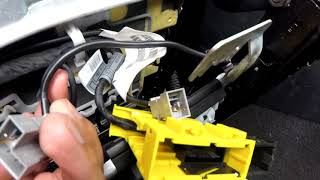
- Damaged or loose under-seat wiring/connectors (Very Common) — The most frequent cause is a poor connection in the wiring harness, specifically the yellow connectors under the front seats. Items stored under the seat bump and loosen these connectors over time, causing a high-resistance fault. On GM trucks, a broken Connector Position Assurance (CPA) plastic lock frequently causes this exact disconnect.
- Faulty Passenger Occupancy Sensor (OCM/ODS Mat) (Very Common) — On many BMW, Subaru, and Honda vehicles, the sensor mat in the passenger seat that detects an occupant fails. This degradation causes a permanent fault, disabling the passenger airbag and the entire SRS system. On BMWs, this is a frequent issue often addressed with a bypass emulator as a cost-effective fix. 🎬 See how to install a BMW seat occupancy mat bypass.
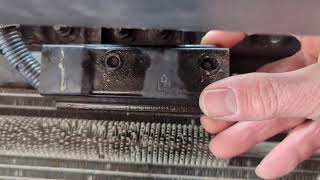
- Faulty front impact/crash zone sensor (Common) — For manufacturers like GM, Nissan, and Honda, this code points directly to a front crash sensor. Located near the front bumper, these sensors suffer damage from minor collisions, road debris, and severe corrosion from road salt in northern climates.
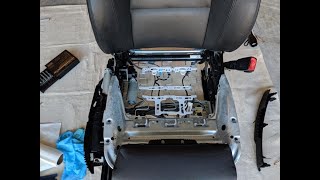
- Faulty seat belt pretensioner (Common) — The seat belt pretensioner contains a small pyrotechnic charge that tightens the belt in a crash. The control module constantly monitors the circuit to this charge. An internal failure in the pretensioner assembly, often due to age or an open circuit, triggers a fault code. 🎬 Watch: How to fix a seat belt pretensioner circuit code.
- Internal Software/Firmware Fault in RCM (Common) — The airbag control module experiences internal software corruption, logging a B1033 code. This happens spontaneously, from low voltage spikes during a battery change, or from stored crash data that locks the module. The module itself is not physically broken but requires reprogramming or resetting by a specialized service.
- Faulty Clock Spring (Less Common) — The clock spring is a rotary electrical connector in the steering column that allows the steering wheel to turn while maintaining a connection to the driver's airbag. A broken internal ribbon creates an open circuit. This often presents with a non-working horn or dead steering wheel controls.
- Cracked Solder Joints on Ancillary Components (Less Common) — On vehicles like the 2007-2009 Subaru Legacy/Outback, cracked solder joints on resistors within the overhead console's passenger airbag indicator LED panel trigger the airbag light. The RCM detects the lack of current from the non-functioning LEDs and logs a system fault.
- Faulty Restraints Control Module (RCM) Hardware (Rare) — The main computer for the airbag system fails internally due to hardware issues like water damage or voltage shock. Suspect this only after testing all wiring, sensors, and components. A module hardware failure requires a complete replacement and VIN programming.
Symptoms
- Airbag warning light is on — This is the most common and often the only symptom. The light remains solid or flashes on the dashboard, indicating a critical fault.
- "Service Airbag System" message — Many vehicles display a text message on the driver information center alongside the warning light.
- Airbag system is disabled — The presence of this code guarantees airbags and seat belt pretensioners will not activate during an accident.
- Passenger airbag 'OFF' light is illuminated inappropriately — If the fault lies with the passenger occupancy sensor, the 'Passenger Airbag OFF' light stays on even when an adult is in the seat, or stays off when the seat is empty.
- Horn or steering wheel controls not working — If a broken clock spring causes the fault, the electrical connections for the horn and steering wheel-mounted buttons also sever.
Diagnostic Flowchart
Tap your situation to follow the diagnostic path that matches what you're seeing on this code.
Common Fixes & Costs
- Secure or Clean Under-Seat Connector — Parts: $0-$15 (for dielectric grease or CPA clip), Labor: $50-$150 (for diagnosis and labor), ~1 hr book time (DIY)
- Replace Front Impact Sensor — Parts: $70-$350, Labor: $60-$200, ~1 hr book time (Intermediate)
- Replace Seat Belt Pretensioner Assembly — Parts: $150-$400, Labor: $100-$250, ~1.5 hr book time (Intermediate)
- Replace Passenger Occupancy Sensor Mat — Parts: $200-$700 (OEM part) or $20-$50 (bypass emulator), Labor: $300-$600 (requires removing seat and upholstery), ~4 hr book time (Professional)
- Replace/Reset Restraints Control Module (RCM) — Parts: $50-$150 (reset service) or $400-$1200+ (new module), Labor: $100-$300 (removal, installation, and programming), ~1.5 hr book time (Professional)
Used vs. New Parts: Buying Guide
When a used part is worth it: Used, non-deployed OEM SRS components (sensors, clock springs, modules) offer a cost-effective option, but ONLY if purchased from a certified automotive recycler who guarantees the part's history. It is extremely risky to buy used pyrotechnic devices (airbags, pretensioners) from unverified sources like online marketplaces.
Donor-vehicle mileage cap: roughly under 100000 miles for the part to have meaningful remaining life.
Donor quality checklist:
- Verify the part comes from a certified recycler (e.g., ARA certified).
- Ensure the part number is an exact match for your vehicle's VIN.
- Avoid parts with any signs of water damage, corrosion, or physical stress.
- A used Restraints Control Module (RCM) requires reprogramming to your vehicle's VIN by a professional.
Decision logic:
- If The part is an airbag or seat belt pretensioner → Strongly favor buying new OEM unless a certified, warrantied used part is the only option.
- If The part is an electronic module (RCM) → Used is acceptable, but budget for professional reprogramming costs.
- If The part is a sensor or connector → Used is generally acceptable if from a reputable source and visually inspected.
Warranty tradeoff: Used parts typically have a 30-90 day warranty. New OEM parts carry a 1-year or longer warranty. There are no legitimate aftermarket airbags, only new OEM and used OEM.
Worst-case if a used part fails: $500-$2000 if a used part is faulty or improperly programmed, requiring repeat labor and purchase of another part. The ultimate cost is a non-functional safety system.
What Happens If You Wait — Timeline
- 0-1 day (Immediate): Fault is detected during startup self-test. The airbag light illuminates and stays on. The entire SRS system, including all airbags and pretensioners, is disabled as a failsafe. (MPG impact: 0%% · Added cost: $0)
- 1 week - 3 months: The safety risk remains constant. If the root cause is corrosion, it worsens, potentially damaging connector pins and requiring a more expensive pigtail/harness repair instead of just cleaning. (MPG impact: 0%% · Added cost: $0 - $150 (potential for a simple cleaning to become a connector replacement))
- 3-12 months: Vehicle fails its annual safety inspection in many states, preventing legal registration renewal until the fault is fixed. This adds administrative costs and potential fines if driven with an expired registration. (MPG impact: 0%% · Added cost: $20 - $100 (failed inspection fees and lost time))
- Any time an accident occurs: The airbags and seatbelt pretensioners DO NOT DEPLOY. Occupants face a drastically higher risk of severe injury or death. A minor collision becomes a catastrophic event. The vehicle's value plummets, and the owner faces immense potential legal and financial liability. (MPG impact: 0%% · Added cost: $5,000 - $1,000,000+ (from loss of vehicle value, increased medical costs, and potential lawsuits))
Cost of Not Fixing It
- Immediate: The entire Supplemental Restraint System (airbags and pretensioners) is disabled. Occupants have no airbag protection in a crash, drastically increasing the risk of serious injury or death. (Added cost: N/A)
- During Annual Inspection: The vehicle automatically fails the safety inspection portion in states that require it (e.g., Texas, Virginia, Pennsylvania), preventing legal registration renewal. (Added cost: $20-$50 (for the failed inspection fee))
- During an Accident or Sale: A minor, repairable collision becomes a total loss due to higher insurance liability from occupant injuries. When selling, you face significant legal liability if the fault is undisclosed, and the vehicle's value drops by 20-40%. (Added cost: $5,000 - $1,000,000+ (potential liability and loss of vehicle value))
Diagnosis Steps
- Safety First: Disconnect the Battery
Before touching any part of the airbag system, disconnect the negative battery terminal and wait at least 15-30 minutes. This allows the system's backup power capacitors to fully discharge, preventing accidental deployment. This is a mandatory safety step.
Tools: 10mm wrench or socket (Beginner) - Scan for Specific Codes
Use an OBD-II scanner capable of reading SRS/airbag codes (B-codes, C-codes, U-codes). A basic engine code reader will not work. Confirm B1033 is the active code and document any related codes to pinpoint the exact fault location (e.g., driver's pretensioner vs. passenger's).
Tools: SRS-capable OBD-II Scanner (Beginner) - Inspect Under-Seat Connectors
Visually inspect the large, typically yellow, electrical connectors under both the driver and passenger seats. Check for looseness, damage, or corrosion. Unplug them, check for bent pins, apply a small amount of dielectric grease, and plug them back in firmly until they click. Verify the small plastic CPA lock is secure.
Tools: Flashlight, Dielectric Grease (Beginner) - Inspect Front Impact Sensors
Locate the front impact sensors, usually mounted on or near the radiator support behind the grille. Inspect the sensors and their connectors for physical damage, heavy corrosion, or loose wiring. These fail frequently after minor front-end impacts or in areas with heavy road salt usage.
Tools: Flashlight, basic hand tools for access (Intermediate) - Advanced Pro Tip: Component Resistance Test
Disconnect the suspect component (e.g., seat belt pretensioner). Using a high-quality multimeter set to Ohms (Ω), measure the resistance across the component's two pins. A healthy seat belt pretensioner or airbag squib typically has a resistance between 1.5 and 3.5 ohms. A reading of 'OL' (Open Loop) indicates a broken internal wire, while near zero indicates a short.
Tools: Multimeter, vehicle-specific wiring diagram (Advanced) - Advanced Pro Tip: Harness Resistance Test
Check for high resistance or shorts in the wiring harness. Disconnect the RCM and the component connector. Set your multimeter to Ohms and connect one lead to the pin at the component connector and the other to the corresponding pin at the RCM connector. A good wire has less than 1.0 ohm of resistance. Next, check for a short to ground; the reading should be 'OL'.
Tools: Multimeter, vehicle-specific wiring diagram, long probe leads (Advanced) - Advanced Pro Tip: Harness Voltage Drop Test
A voltage drop test finds issues that only appear under load. With the battery connected and the system ON (use extreme caution), back-probe the component connector. A voltage drop of more than 0.2V on the power side or 0.1V on the ground side indicates excessive resistance in the wiring or connections.
Tools: Multimeter, back-probe kit, vehicle-specific wiring diagram (Advanced) - Isolate with a Test Resistor
A professional technician uses a specific SRS test resistor (typically 2.2 ohms) to substitute a component. For example, they disconnect the driver's seat belt pretensioner and plug the test resistor into the vehicle harness connector. If clearing the codes makes B1033 disappear, it definitively proves the fault lies within the pretensioner itself.
Tools: SRS Test Resistor Kit (Professional) - Check for Stored Crash Data
If the vehicle was in a previous accident, the Restraints Control Module (RCM) stores "crash data" or "hard codes" that lock the system. This requires sending the module to a specialized service for resetting or replacing the module entirely. Standard shop scanners cannot clear these codes.
Tools: Advanced scan tool or module reset service (Professional)
When This Code Triggers (Freeze-Frame Conditions)
- SRS Module State: Self-Test Active (The fault is most often logged during the initial power-on self-test when the ignition is turned to 'ON'.)
- System Voltage: 12.0-14.8V (The code triggers from voltage outside the normal operating range, such as during a jump-start or with a failing battery.)
- Component Resistance: > 4.0 Ohms or < 1.5 Ohms (The module constantly monitors circuit resistance; a reading outside the typical 2-3 ohm range for an extended period logs the fault.)
- Vehicle State: Any (Unlike engine codes, SRS faults are not dependent on engine RPM, speed, or load. The system is monitored continuously whenever the ignition is on.)
Related Codes
- B1933 / LFC 33 — This is a Ford-specific code for 'Passenger Air Bag Circuit High Resistance or Open.' It is functionally the same as B1033 on many Fords and serves as a more precise definition of the fault, often indicated by 3 flashes, a pause, then 3 more flashes of the airbag light. Diagnosis for both codes is identical.
- B00- series codes (e.g., B0074, B0081) — Any code in the B0001-B00FF range relates to the SRS. These codes provide more specific location details than a general B1033. For example, while B1033 indicates a general fault, a code like B0074 specifies a 'Driver Seat Belt Pretensioner Deployment Control' fault, helping to narrow the diagnosis.
- U- series codes (e.g., U0151) — Communication codes (U-codes) indicate a loss of communication between modules. A U-code appearing alongside B1033 strongly suggests the root cause is a wiring problem, a faulty RCM, or a bad ground, rather than a failed sensor. For example, a broken wire prevents the RCM from receiving a signal from a crash sensor, logging both a B1033 and a U-code.
- B1034 / B1035 — On Nissan vehicles, these codes are close relatives to B1033 and point to faults within the front crash zone sensor system. B1034 indicates a fault with the left-hand sensor, while B1035 points to the right-hand sensor. Seeing any of these codes together reinforces that the diagnostic focus should be on the front impact sensors and their wiring harness.
Climate & Environmental Factors
- Road Salt: In cold climates where road salt is used, front impact sensors are highly susceptible to failure. The salt and moisture cause severe corrosion of the sensor housing and electrical connector pins, leading to open circuits or shorts.
- High Humidity: Humid environments accelerate corrosion in all electrical connectors, particularly the under-seat connectors if the vehicle has ever had water intrusion (e.g., from an open window or flooded carpets). This moisture leads to high resistance faults.
- Temperature Fluctuation: Extreme cycles of hot and cold cause plastic connectors and wire insulation to become brittle and crack over time. This leads to intermittent connections as components expand and contract, eventually causing a persistent fault.
How to Talk to a Mechanic About This Code
Say this: "I have an airbag warning light on, and my scanner shows code B1033. I need a diagnostic with a tool that can read SRS-specific codes to pinpoint the location. Based on my vehicle's make, I suspect it could be an under-seat connector, a front impact sensor, or a seatbelt pretensioner. Please start with a wiring and connector inspection before quoting component replacement."
This signals you've done your research, understand that a basic code reader is insufficient, and know the most common, simple failure points. It directs the technician to perform a proper diagnosis rather than immediately quoting an expensive, unnecessary part like a new airbag module.
Avoid saying:
- 'My airbag light is on, can you just turn it off?'
- 'Just fix whatever's wrong, I don't need the details.'
- 'My buddy said it's just a sensor, can you replace it?'
Questions to ask before authorizing the repair:
- What specific fault location did your SRS scanner identify (e.g., 'driver's side pretensioner circuit open')?
- Did you physically inspect the wiring and connector for that component before confirming the part itself has failed?
- If you are recommending a module replacement, have you confirmed that it isn't a 'crash data' issue that can be reset for a lower cost?
- Is the quoted price for a new OEM part, a used part, or an aftermarket part?
- Does the final price include clearing the hard fault from the RCM and calibrating any new sensors if required?
- Can you provide a written estimate that breaks down the cost of parts, labor, and diagnostic fees?
Where to Take It: Dealer vs Independent vs Chain
- Dealer:
Best for: Vehicles under warranty., Complex, manufacturer-specific faults (e.g., VW Pedestrian Protection, Jeep CAN bus errors)., Repairs requiring module replacement and VIN-specific programming.
Downsides: Highest labor rates, often 1.5-2x more than independent shops., May default to expensive module replacement instead of a more targeted wiring or sensor repair. (Typical cost: +50% vs. baseline) - Independent Shop:
Best fit for most scenarios. A reputable independent shop diagnoses and repairs the vast majority of B1033 faults more cost-effectively than a dealer. Vet the shop first and confirm they are equipped for SRS diagnostics.
Best for: Out-of-warranty vehicles where cost is a major factor., Diagnosing and fixing common B1033 causes like connectors, clock springs, and impact sensors.
Downsides: Shop quality and expertise vary widely. Ensure they are ASE certified and own a professional-grade SRS scan tool., May not have the tools to program a new RCM if one is needed. (Typical cost: +0% vs. baseline) - Chain Shop:
AVOID. Airbag system repairs are a safety-critical task that is beyond the scope of most chain shops. The risk of an incorrect or incomplete repair is too high.
Best for: Simple, unrelated maintenance like oil changes or tires.
Downsides: Technicians often lack the specialized training and tools for SRS diagnostics., High risk of misdiagnosis, leading to unnecessary parts replacement., They may be unable to clear the hard fault code from the RCM after a repair. (Typical cost: -10% vs. baseline)
When to Walk Away From the Repair
If the estimated repair cost exceeds 50% of the car's private-party value, you should seriously consider selling the car as-is or trading it in, especially if it has other pending maintenance needs.
- Car worth $3000, fix is $1800: Walk away. The repair cost is 60% of the car's value. It is not financially sensible to invest this much into an aging vehicle for a single repair.
- Car worth $12000, fix is $750: Fix it. The repair cost is only about 6% of the car's value and is a critical safety repair.
- Car worth $4500, fix is $200: Fix it. A low-cost repair (like cleaning a connector) on a critical safety system is always worthwhile.
What Scan Tool You Need for This Code

Minimum: A scanner that can read and clear codes from the Supplemental Restraint System (SRS) / Airbag module. A basic OBD-II engine code reader will not work.
A standard $20-$50 code reader only communicates with the Powertrain Control Module (engine and transmission). The airbag system uses a separate computer (the RCM), and B-codes like B1033 are invisible to basic scanners. You need a tool that explicitly lists 'SRS' or 'Airbag' diagnostic capability.
Budget: Autel AutoLink AL619 (~$70) — Reads and clears engine, ABS, and SRS codes. It retrieves the specific B1033 code and any related faults, allowing you to know the problem area before going to a shop. It also clears the light after a DIY repair.
Mid-range: Foxwell NT630 Plus / NT710 (~$150) — Provides all the functions of the budget pick, plus live data streaming for SRS components. This allows you to see resistance values in real-time to diagnose intermittent wiring issues or a faulty clock spring as the steering wheel is turned. Some models offer bi-directional tests.
Professional: Autel MaxiCOM MK808 / MK906BT (~$500-1200) — Offers full, professional-level diagnostics. It performs bi-directional control to test components, accesses manufacturer-specific codes, and performs module programming and configuration required when replacing a Restraints Control Module (RCM).
Rent vs buy: Most auto parts stores like AutoZone and Advance Auto Parts offer free 'check engine light' scanning, but their loaner tools typically cannot read SRS codes. You cannot rent a professional SRS scanner. If this is a one-time fix, your best option is to pay a shop for a diagnosis (~$100-$150) or buy a budget-tier SRS-capable scanner, which costs less than a single diagnostic fee.
How to Clear the Code After You Fix It
- Ensure the physical fault (e.g., loose connector, faulty sensor) has been corrected.
- Reconnect the battery if it was disconnected for the repair.
- Use an SRS-capable OBD-II scan tool to erase the fault code from the Restraints Control Module.
Drive cycle (~10 minutes): After clearing the code, perform at least one key cycle (turn the car off, then on again) to confirm the airbag light performs its self-check and turns off. A short test drive is recommended to ensure the fault does not return.
Watch out for:
- Disconnecting the battery will not reliably clear a hard SRS fault code; a scanner is required.
- If the code is due to stored crash data, it cannot be cleared with a standard scanner and the module must be professionally reset or replaced.
- The light returns immediately if the root cause of the fault has not been properly repaired.
Will This Fail Emissions / State Inspection?
No — by itself this code doesn't fail OBD inspection (but it can keep readiness monitors from setting, which causes a separate fail).
- California: An airbag light does NOT fail the emissions-only Smog Check. However, it is illegal for a dealer to sell a vehicle with a known safety defect, and private sellers face liability.
- New York: An illuminated airbag light is an 'advisory' item. The inspector notes it on the report, but it does NOT cause an inspection failure.
- Texas: An illuminated airbag light causes an automatic failure of the state's required annual safety inspection.
Most Commonly Affected Vehicles
- Ford F-150 (2009-2014) — Prone to faults in the pretensioner circuits. On 2008+ models, LFC 33 often indicates the DRIVER's side pretensioner, while LFC 34 is for the passenger side. The RCM is located under the center console. Replacement RCM part numbers include BL3Z-14B321-A and HL3Z-14B321-A.
- Chevrolet / GMC Silverado / Sierra 1500 (2007-2014) — Commonly experiences issues with loose under-seat connectors and faulty front impact sensors. TSB #08-09-41-002H was issued for broken CPA connector locks on the main SRS harness. A clockspring replacement is a common repair, costing around $330-$398 for these years.
- Nissan Titan / Sentra / Altima / Frontier (2004-2018) — On these models, B1033, B1034, or B1035 points specifically to a fault with the front 'Crash Zone Sensor' or its wiring. Corrosion of this sensor is common in salt-belt states. A reset service for the module is often required after a collision.
- BMW 3-Series (E90), 5-Series (E60), and others (2004-2013) — Very commonly affected by a failed passenger seat occupancy mat sensor, often logging a 93C3 code. The repair is labor-intensive, so many owners and independent shops opt to install an inexpensive bypass emulator that makes the car think the seat is always occupied. This ensures the airbag is always ready to deploy.
- Subaru Forester / Outback / Legacy (2007-2018) — Known for issues with the Occupant Detection System (ODS) sensor mat and harness. Recall WTK-74 was issued for the 2015-2018 Forester to replace the ODS harness. Older models (2007-2009 Legacy/Outback) suffer from cracked solder joints in the overhead passenger airbag light assembly.
- Volkswagen Golf (Mk7), Tiguan (2015-2022) — On modern VWs, B1033 is tied to the 'Pedestrian Protection' system and points to a fault with one of the dedicated crash sensors (part # G571) in the front bumper area. These are easily damaged in minor impacts or disturbed during bumper repairs.
- Honda Accord / Civic (2013-2017) — Logs codes for front impact sensors (Part # 77930-TR0-A11) after a collision or due to wiring damage. These sensors are located just behind the front grille. General 'Check Airbag System' warnings are also commonly caused by a faulty clock spring or occupant classification sensor.
- Ford Super Duty (F-250/F-350) (1999-2007) — Frequently logs a flashing light code '33', which corresponds to DTC B1933, for 'high resistance in the passenger airbag circuit'. This is caused by the passenger airbag module itself, its connector, or a burned-out bulb in the passenger airbag deactivation (PAD) switch on the dashboard.
- Jeep / Fiat / Chrysler Various (2010-2018) — On these vehicles, B1033 has less common meanings, such as a communication network (F-CAN bus) malfunction or a fault in an interior light circuit, so careful diagnosis is needed to avoid replacing unrelated parts.
Manufacturer-Specific Notes

- General Motors (Chevy/GMC): A common cause for this code is a small, broken plastic retainer clip (CPA) on the under-seat airbag connector. Technical Service Bulletin (TSB) #08-09-41-002H was issued for this exact problem on a wide range of 2005-2014 vehicles. The CPA retainer (Part #88988974) costs less than $15.
- Ford: On many F-Series trucks, this fault manifests as a flashing light code (LFC) of '33' or '34'. Depending on the model year, LFC 33 means the driver OR passenger side pretensioner/airbag circuit has high resistance. It is critical to consult the service manual for the specific year, as misdiagnosis is common.
- Nissan: Nissan uses B1033 to indicate a problem with a 'Crash Zone Sensor,' which is one of the front impact sensors located near the radiator. Corrosion is a major cause of failure for this part, especially in regions that use road salt.
- Subaru: Subaru issued a warranty extension (not a recall), campaign WTK-74, for the Occupant Detection System (ODS) on some 2015-2018 Forester and Impreza models, extending coverage to 10 years/120,000 miles. Other models suffer faults from cracked solder joints on the overhead passenger airbag light assembly.
- BMW: The passenger seat occupancy sensor mat is a very common failure point. BMW issued recall NHTSA 08V-384000 and subsequent warranty extensions for this issue on many 2004-2007 models. Many owners and independent shops opt to install a bypass emulator that tricks the system into thinking the seat is always occupied, ensuring the airbag will deploy in a crash.
- Volkswagen: On models like the Golf and Tiguan, B1033 is tied to the advanced 'Pedestrian Protection' system and points to a fault with one of the dedicated crash sensors for that system, which are easily damaged or disconnected during front bumper work.
Real Owner Stories
2008 Ford F-150 with Airbag Code 33
Airbag light came on with a flashing code of 3-3. An independent shop scanned it and told the owner it was a passenger-side pretensioner issue.
What they tried:
- Owner tested the passenger pretensioner and found high resistance (7.4 ohms).
- Replaced the passenger pretensioner with a used part that tested good (2.0 ohms), but the code remained.
- After more research, discovered that on a 2008 F-150, code 33 is for the DRIVER's side pretensioner, not the passenger's.
- Replaced the driver's side pretensioner with a junkyard part.
Outcome: After installing the correct (driver's side) pretensioner, the airbag light and code cleared automatically.
Lesson: Don't assume a code's meaning. For Ford trucks, the meaning of flashing airbag codes (like 33 and 34) changes between model years. Always verify the specific code definition for your exact year before buying parts.
BMW E90 with Airbag & Seatbelt Light (Code 93C3)
Airbag and seatbelt warning lights were constantly on, even with no one in the passenger seat. The code indicated a fault with the passenger seat occupancy mat.
What they tried:
- Considered replacing the sensor mat, which is an expensive and labor-intensive repair requiring seat disassembly.
- Researched alternatives and found many owners use a bypass emulator.
- Purchased a plug-and-play bypass emulator online for under $50.
Outcome: The owner installed the bypass emulator under the passenger seat in 5-10 minutes. After clearing the codes, the warning lights went away permanently. The only side effect is the passenger airbag is now always active.
Lesson: For common, expensive failures like the BMW occupancy mat, a cost-effective bypass emulator provides a practical solution, provided you understand the safety implication (the passenger airbag always deploys in a crash).
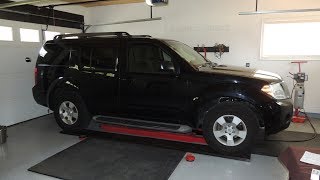
2008 Nissan Pathfinder with Blinking Airbag Light
The airbag light started blinking. Using the key-on/key-off diagnostic trick, the owner identified a flash code for the front crash zone sensor.
What they tried:
- The owner noted that a recall existed for this exact issue on the same model year, but Nissan claimed their specific vehicle was not covered.
- Purchased a new crash zone sensor for $119 and replaced it.
- The light remained on. The owner then suspected the wiring harness near the connector looked crimped.
Outcome: The problem persisted even after replacing the sensor, pointing towards a wiring issue or a need for a hard reset with a proper scan tool.
Lesson: Even if a code points to a specific sensor, always inspect the wiring and connectors leading to it for damage or corrosion. Also, a recall for your make/model/year doesn't guarantee your specific VIN is included.
How to Prevent This Code From Triggering
- Periodically inspect under-seat connectors (Every 1-2 years or during interior detailing) — Ensures the connectors haven't been kicked or bumped loose by rear passengers or items stored under the seat. A quick visual check prevents a future fault.
- Apply dielectric grease to connector seals (When a connector is unplugged for any reason) — Dielectric grease is non-conductive and seals out moisture and oxygen, preventing the pin corrosion that leads to high-resistance faults. This is especially important in humid climates or areas with road salt.
- Avoid placing hard/heavy items on the passenger seat (Daily habit) — On vehicles with sensitive passenger occupancy sensor mats (especially BMW, Subaru, Honda), placing heavy, sharp objects or kneeling on the seat damages the delicate sensor grid, leading to a costly repair.
- Be mindful of water intrusion (After heavy rain or car washes) — Ensure windows are fully closed and door seals are in good condition. Water leaking onto the floor gets into the under-seat connectors or the RCM itself, causing corrosion and module failure.
- Never store loose items under the front seats (Daily habit) — Items like water bottles, umbrellas, or tools roll around and strike the yellow SRS connectors, potentially dislodging them or breaking the plastic housing, which immediately triggers a system fault.
Frequently Asked Questions
Can I drive my car with a B1033 code?
No. While the car operates mechanically, it is critically unsafe. The airbag light indicates the entire safety restraint system is offline and will not deploy in an accident. You and your passengers face a drastically higher risk of injury or death.
What are common misdiagnosis mistakes for B1033?
A frequent mistake is immediately replacing a sensor when the code actually stems from a poor connection, damaged wire, or low battery voltage. Another pitfall is ignoring that the Restraint Control Module (RCM) requires a software reset after a collision, rather than a hardware replacement.
Will the airbag light go away if I fix the problem?
Rarely. On almost all modern vehicles, you must manually clear a hard SRS fault from the Restraints Control Module using an SRS-capable scan tool. The light will not turn off on its own after a physical repair.
Can a weak car battery cause the B1033 code?
Yes. A weak battery causes low voltage conditions that trigger spurious electronic fault codes, especially in the sensitive airbag system. Always test your battery before starting complex SRS repairs.
My code points to the passenger seat. Is it still unsafe for me to drive alone?
Yes. When the RCM detects a fault anywhere in the system, it disables the entire Supplemental Restraint System as a mandatory failsafe. The driver's airbags and seatbelt pretensioner will not deploy until you fix the fault and clear the code.
Is it safe to work on the airbag system myself?
Yes, but only if you follow strict safety procedures. Always disconnect the negative battery terminal and wait 30 minutes before touching any SRS component to discharge the backup capacitors. These systems contain pyrotechnic charges and require extreme care.
Can I sell a car with the airbag light on?
Selling a car with a known safety defect exposes you to significant legal liability. You must provide full written disclosure to the buyer, which drastically reduces the vehicle's value. Most dealerships will refuse the car as a trade-in.
Why are the airbag system connectors yellow?
Automakers use bright yellow connectors and wire looms for all SRS components as a universal warning. This color indicates you are handling the safety restraint system, which requires special precautions to prevent accidental deployment.
Key Takeaways
- Code B1033 disables your entire Supplemental Restraint System (SRS), meaning 0% of your airbags will deploy in a collision.
- Over 50% of B1033 triggers stem from a loose yellow electrical connector under the front seats, costing under $15 in dielectric grease to fix.
- B1033 definitions vary wildly by manufacturer; Ford often points to a pretensioner (flashing code 33), while Nissan usually indicates a corroded front crash zone sensor.
- A standard $20 engine code reader cannot see or clear B1033; you must use an SRS-capable scanner costing $70 or more to reset the Restraints Control Module.
- A single passenger-side fault, like a failed BMW occupancy mat, forces the Restraints Control Module to disable the driver's side airbags as a mandatory failsafe.
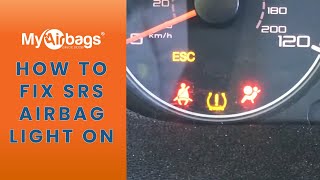
Helpful Videos

The information in this article is provided for general reference and educational purposes only. Vehicle specifications, procedures, and part compatibility can vary by production date, trim level, and region. Always consult your vehicle's factory service manual and verify part numbers before purchasing or performing repairs. Safety-critical components such as airbags, seat belts, and braking systems should be installed by a qualified professional.
- 🎬 Helpful Videos
- What Does B1033 Mean?
- Can I Drive With B1033?
- Common Causes
- Symptoms
- Diagnostic Flowchart
- Common Fixes & Costs
- Used vs. New Parts: Buying Guide
- What Happens If You Wait — Timeline
- Cost of Not Fixing It
- Diagnosis Steps
- When This Code Triggers (Freeze-Frame Conditions)
- Related Codes
- Climate & Environmental Factors
- How to Talk to a Mechanic About This Code
- Where to Take It: Dealer vs Independent vs Chain
- When to Walk Away From the Repair
- What Scan Tool You Need for This Code
- How to Clear the Code After You Fix It
- Will This Fail Emissions / State Inspection?
- Most Commonly Affected Vehicles
- Manufacturer-Specific Notes
- Real Owner Stories
- 2008 Ford F-150 with Airbag Code 33
- BMW E90 with Airbag & Seatbelt Light (Code 93C3)
- 2008 Nissan Pathfinder with Blinking Airbag Light
- How to Prevent This Code From Triggering
- Frequently Asked Questions
- Can I drive my car with a B1033 code?
- What are common misdiagnosis mistakes for B1033?
- Will the airbag light go away if I fix the problem?
- Can a weak car battery cause the B1033 code?
- My code points to the passenger seat. Is it still unsafe for me to drive alone?
- Is it safe to work on the airbag system myself?
- Can I sell a car with the airbag light on?
- Why are the airbag system connectors yellow?
- Key Takeaways
- 🎟️ Get 5% Off