

OBD-II Code B1032: A Comprehensive Guide to Driver Airbag Circuit Faults and Other Meanings
Why B1032 is the most confusing SRS code, what it means for your specific vehicle, and how to fix it for good
- Code B1032 disables your entire airbag system, meaning airbags and seatbelt pretensioners will not deploy in a crash.
- B1032 has at least 5 distinct manufacturer definitions, ranging from a Honda SRS communication failure to a Ram A/C sensor fault.
- A broken clock spring is the most common cause of an SRS-related B1032, confirmed if your horn and steering wheel buttons fail simultaneously.
- Test your battery before replacing expensive SRS modules, as voltage drops below 10.5V during startup frequently trigger false B1032 codes on Hondas.
- An active B1032 code triggers an automatic failure during state safety inspections in jurisdictions like New York and Massachusetts.
What Does B1032 Mean?

B1032 is a manufacturer-specific trouble code. Most commonly, it indicates the Supplemental Restraint System (SRS) detected a fault in the driver's side airbag circuit. This fault immediately deactivates the entire airbag system as a safety precaution, locking the airbag warning light ON until the underlying problem is resolved.
Technical definition: The SAE/ISO definition for B1032 varies by manufacturer. Common definitions include 'Driver Air Bag Initiator Circuit Resistance Low' (Suzuki), 'MICU Lost Communication with SRS Unit' (Honda), or 'Pedestrian Protection Crash Sensor Signal Implausible' (VW/Audi). In some cases, it points to non-safety faults like an A/C Evaporator Temperature Sensor (Dodge/Ram) or a seat heater (Mazda). This variability makes manufacturer-specific diagnosis mandatory.
Can I Drive With B1032?
No — Do Not Drive. Do not drive. When this code is active due to a Supplemental Restraint System (SRS) fault, the car's computer disables the entire airbag and seatbelt pretensioner system as a fail-safe. In a crash, the airbags will NOT deploy and the seatbelts will not lock correctly, dramatically increasing the risk of fatal injury. While the engine and brakes function normally, passive safety systems are completely offline.
Common Causes


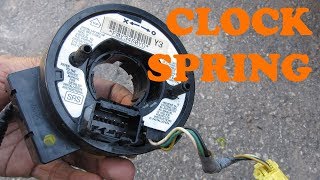
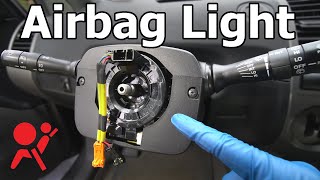
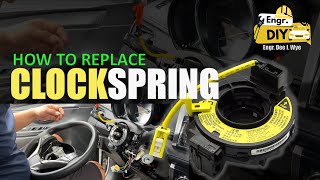
- Faulty Clock Spring (Spiral Cable) (Very Common) — The clock spring is a rotary electrical connector in the steering column maintaining connection to the driver's airbag, horn, and steering wheel controls. 🎬 Watch: How to replace a clock spring when the horn fails. The internal ribbon cables break over time, causing an open or high-resistance circuit that triggers B1032.
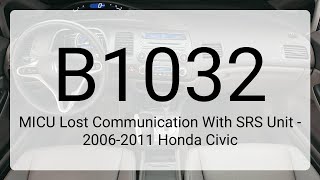
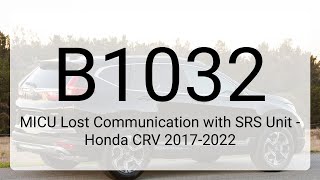
- Low Battery Voltage or Charging System Fault (Common) — Control modules are highly sensitive to system voltage. A weak battery or failing alternator causes intermittent communication failures between the SRS module and other computers. This is the primary cause on Honda vehicles, where B1032 signifies a communication loss with the MICU. 🎬 See this diagnostic guide for Honda MICU communication faults.
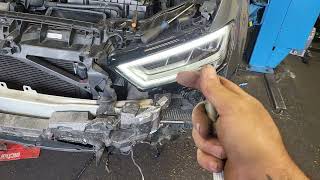
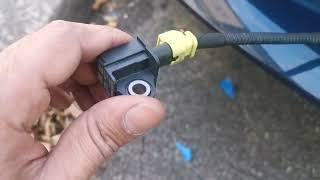
- Damaged Pedestrian Protection Sensor (VW/Audi) (Common) — On Volkswagen and Audi models, this code specifically points to the G570 pedestrian protection sensor on the driver's side. A minor frontal impact damages this sensor, causing an open or implausible signal fault. 🎬 Watch: Fixing the pedestrian protection sensor on an Audi.
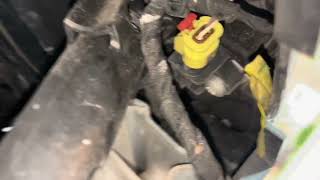
- Damaged Wiring or Loose Connectors (Common) — The SRS wiring harness, identified by bright yellow sheathing, becomes damaged, corroded, or disconnected. Connectors under the front seats, at the steering column, or at the SRS module itself interrupt the signal and trigger a fault code.
- Faulty Airbag Control Module (SRS Module) (Less Common) — The SRS module fails due to internal faults, electrical surges, or moisture damage. It also stores 'crash data' after an accident, locking the airbag light on permanently until the module is professionally reset or replaced.
- Defective Driver's Airbag Inflator (Less Common) — The airbag inflator contains an internal circuit with a specific resistance value. If this circuit fails, the resistance falls out of the monitored range, triggering a fault code. On Suzuki models, this is a primary definition for B1032.
- Faulty A/C Evaporator Temperature Sensor (Dodge/Ram) (Less Common) — On Dodge and Ram trucks, B1032 is an HVAC code for 'Evaporator Temperature Sensor Circuit High'. This is not an SRS fault and is accompanied by poor or inconsistent A/C performance.
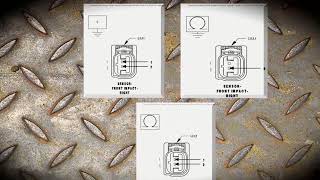
- Faulty Front Impact Sensor (Rare) — Collision sensors at the front of the vehicle detect impacts and signal the SRS module. These sensors or their wiring fail due to physical damage or corrosion, leading to a system fault code.
Symptoms

- Airbag or SRS Warning Light On — The warning light remains illuminated on the instrument cluster, indicating the safety system is disabled.
- Horn, Cruise Control, or Steering Wheel Buttons Not Working — If the clock spring fails, other components relying on its wiring, such as the horn and radio controls, fail simultaneously.
- Active Hood System Warning (VW/Audi) — On vehicles equipped with a pedestrian protection system, a sensor fault triggers a warning message related to the 'Active Hood' or pedestrian safety system.
- Inconsistent A/C Performance (Dodge/Ram) — For Dodge and Ram trucks where B1032 is an HVAC code, the air conditioning blows warm or cycles between cool and warm unexpectedly.
- Airbags Will Not Deploy (scan-tool only — no driver-felt sign) — The SRS module disables the entire system when a fault is present, meaning no airbags or seatbelt pretensioners activate in a collision.
Diagnostic Flowchart
Tap your situation to follow the diagnostic path that matches what you're seeing on this code.
Common Fixes & Costs
- Replace Clock Spring
— Parts: $75-$350, Labor: $150-$250, ~1.5 hr book time
(Intermediate)
Honda Civic (2006-2011): OEM
Honda Civic (2006-2011): OEM - Repair or Re-secure Wiring/Connectors — Parts: $5-$20, Labor: $150-$300, ~1.5 hr book time (DIY)
- Replace Pedestrian Protection Sensor (VW/Audi)
— Parts: $100-$250, Labor: $150-$300, ~2 hr book time
(Intermediate)
VW Golf/A3 (2015-2020): OEM
VW Golf/A3 (2015-2020): OEM - Replace A/C Evaporator Temperature Sensor (Dodge/Ram)
— Parts: $40-$80, Labor: $120-$180, ~1.2 hr book time
(Intermediate)
Ram 1500 (2011-2018): OEM
Ram 1500 (2011-2018): OEM - Reset Airbag Control Module (Clear Crash Data) — Parts: $0, Labor: $50-$150, ~0.5 hr book time (Professional)
- Replace Airbag Control Module (SRS Module) — Parts: $200-$1,200, Labor: $150-$350, ~1.8 hr book time (Professional)
Used vs. New Parts: Buying Guide
When a used part is worth it: A used OEM clock spring from a low-mileage vehicle (scrapped for reasons other than a frontal collision) is a cost-effective alternative to a new OEM part, especially for older vehicles where new parts are expensive.
Donor-vehicle mileage cap: roughly under 70000 miles for the part to have meaningful remaining life.
Donor quality checklist:
- Verify the donor vehicle's mileage and ensure it was not in a front-end collision.
- Match the part number exactly, including for models with or without steering wheel controls.
- Inspect the connectors for any signs of corrosion or damage.
- Ensure the used part is 'centered' and locked in place with its plastic tab for safe installation.
Decision logic:
- If The part is for a critical safety system like an airbag. → New OEM is the safest choice. Aftermarket quality is inconsistent for this component.
- If Budget is the absolute primary concern and the vehicle is over 10 years old. → A used OEM part from a reputable salvage yard is preferable to a new, cheap, unbranded aftermarket part.
- If The price difference between new aftermarket and new OEM is less than $100. → Buy the new OEM part for guaranteed compatibility and reliability.
Warranty tradeoff: Used parts typically offer a 30-90 day warranty. Aftermarket new parts usually have a 1-year to limited lifetime warranty. New OEM parts carry a 1-year warranty.
Worst-case if a used part fails: $200-$400 if a used or cheap aftermarket part fails prematurely, requiring repeat labor costs plus the cost of another part.
What Happens If You Wait — Timeline
- Immediate: The SRS warning light illuminates. The Airbag Control Unit detects a fault and disables the entire supplemental restraint system as a fail-safe. Airbags and seatbelt pretensioners will NOT deploy. (MPG impact: 0%% · Added cost: $0)
- 0-12 months: The vehicle fails any state-mandated safety inspection checking for warning lights, preventing registration renewal. In New York, an airbag light is an automatic failure. (MPG impact: 0%% · Added cost: $50-$200 in failed inspection fees, fines for an expired sticker, and re-inspection costs.)
- Ongoing: No further mechanical damage occurs. However, if the root cause is a failing clock spring, other functions like the horn or steering wheel controls fail over time. (MPG impact: 0%% · Added cost: The cost remains the extreme risk of driving without passive safety systems.)
- At the time of an accident: The passive safety systems do not activate. The risk of serious or fatal injury to occupants increases dramatically. (MPG impact: 0%% · Added cost: Incalculable)
Cost of Not Fixing It
- Immediate: Total failure of the Supplemental Restraint System (SRS). Airbags and seatbelt pretensioners will NOT deploy in an accident, dramatically increasing the risk of serious or fatal injury. (Added cost: Incalculable)
- 0-12 months: Guaranteed failure of state safety inspections in most jurisdictions checking for warning lights (e.g., NY, MA). This prevents vehicle registration renewal. (Added cost: $50-$200 in failed inspection fees and potential fines.)
- Long-term: No additional mechanical damage occurs to the vehicle. The primary cost remains the extreme safety risk and inability to pass inspections. The issue will not resolve itself. (Added cost: N/A)
Diagnosis Steps
- Read All Fault Codes from All Modules
Use a high-quality OBD-II scanner capable of reading manufacturer-specific SRS (B-prefix), Chassis (C-prefix), and Network (U-prefix) codes. A basic engine code reader is insufficient. Note all active and stored codes to understand the full context of the fault.
Tools: SRS-Capable Bi-Directional OBD-II Scanner (Beginner) - Check Steering Wheel Functions
Test the horn, cruise control, volume buttons, and any other steering wheel-mounted controls. If any of these are inoperative, a faulty clock spring is the primary suspect.
Tools: None (Beginner) - Inspect Under-Seat and Steering Column Wiring
Visually inspect the bright yellow SRS wiring loom under the driver's and passenger's seats, and under the steering column. Check for obvious damage, and ensure all connectors are clean and securely latched. Wiggle these connectors while monitoring the code status to identify intermittent connections.
Tools: Flashlight (Beginner) - Perform System Reset and Re-Check (Honda-Specific)
On Honda vehicles, B1032 indicates an intermittent communication loss. Use a scanner to clear the DTC. Turn the ignition completely OFF, then turn it to ON (II) and wait 6 seconds for the system to re-initialize. Re-scan for codes. If B1032 does not immediately return, the issue is intermittent and related to a loose connection or low battery voltage.
Tools: Honda-Specific Scanner (HDS or equivalent) (Intermediate) - Inspect and Test Vehicle-Specific Sensors
For VW/Audi, remove the front bumper cover to inspect the driver-side pedestrian protection sensor (G570) and its wiring for physical damage, common after a minor impact. For other makes, locate and inspect the relevant component identified by the manufacturer's definition of the code.
Tools: Socket set, Trim removal tools, Multimeter (Advanced) - Disconnect Battery and Inspect Connectors
SAFETY FIRST: Disconnect the negative battery terminal and wait 15-20 minutes for the SRS system's backup capacitors to fully discharge. Remove the necessary trim to access the primary connectors for the clock spring, SRS module, or vehicle-specific sensor. Check for corrosion, pushed-out pins, or damage.
Tools: Socket set, Screwdriver set, Trim removal tools (Intermediate) - Advanced: Scan Tool Live Data - Airbag Resistance
Using a bi-directional scanner, navigate to the SRS module's live data stream. Monitor the PID for 'Driver Air Bag Initiator Resistance'. The normal range is between 1.5 and 5.0 ohms. A reading outside this range (0 ohms indicating a short, or infinite/high ohms indicating an open) confirms a circuit fault.
Tools: SRS-Capable Bi-Directional OBD-II Scanner (Advanced) - Pro Tip: Test Clock Spring Resistance
With the battery disconnected and the airbag module safely removed, use a multimeter to measure the resistance of each circuit within the clock spring while slowly rotating it. A reading of 'OL' (Over Limit) or a value that jumps erratically indicates a broken internal wire. Each circuit should have a consistent, low resistance (under 1-2 ohms).
Tools: Multimeter, Service Manual with Pinouts (Advanced) - Pro Tip: Test Sensor Circuit Voltage & Resistance (Dodge/Ram HVAC)
For a Ram/Dodge with an active B1032 HVAC code, disconnect the Evaporator Temperature Sensor. Turn the ignition ON. Measure the voltage of the signal circuit wire; a reading above 0.2 volts suggests a short to voltage. Turn the ignition OFF and measure the resistance of the signal circuit between the HVAC module connector and the sensor connector. A reading above 5.0 ohms indicates an open wire.
Tools: Multimeter, Service Manual with Wiring Diagrams (Advanced) - Advanced: Test Honda CDS Communication Line
If a Honda B1032 code returns immediately after a reset, test the CDS communication line. Disconnect the battery, then disconnect the SRS unit connector and the Body Control Module (BCM/MICU) connector. Check for continuity between the designated CDS line pins on both connector ends. A lack of continuity indicates an open wire.
Tools: Multimeter, Service Manual with Wiring Diagrams & Pinouts (Advanced)
When This Code Triggers (Freeze-Frame Conditions)
- System Voltage: 10.5V - 12.0V (During engine crank/startup. Low voltage triggers communication-related SRS faults.)
- Ignition Status: ON (The SRS module performs a self-test every time the ignition turns to the 'ON' position.)
- Fault Status: Intermittent / Active (Sets as 'intermittent' for a loose connection, or 'active' for a permanent failure like a broken clock spring.)
- SRS Module State: System Disabled (When the fault is detected, the freeze frame shows the SRS system status as 'Disabled' or 'Faulted'.)
Related Codes
- B0026 / B0044 — These codes indicate a specific resistance problem (open/high or short/low) in the driver's airbag inflator stages. If you see these alongside B1032, the fault is almost certainly in the airbag inflator or its direct wiring, including the clock spring.
- B1038 / B1039 — On VW and Audi models, these codes for pedestrian protection igniters often appear with B1032. This indicates a wider issue with the pedestrian safety system in the front bumper, usually caused by a minor collision damaging multiple components.
- U0155 — A generic communication code for 'Lost Communication With Instrument Panel Cluster Control Module'. On a Honda, B1032 is a very specific code for communication loss between the SRS unit and the MICU. Seeing both points strongly to a network (CAN bus) problem or a faulty MICU.
- B1035 (Suzuki) — On Suzuki models like the Baleno, this code appears alongside B1032 when the SRS module has stored crash data. Clearing the codes requires a specialized tool to perform a 'Crash Erase' function.
Climate & Environmental Factors
- Cold Weather: Low ambient temperatures reduce a battery's chemical efficiency, leading to lower cranking voltage. This voltage drop during startup is misinterpreted by sensitive modules like the SRS computer as a fault, triggering communication codes like B1032 in Honda vehicles.
- High Humidity / Moisture: Moisture from rain, snow, or high humidity seeps into electrical connectors and modules. When combined with road salt, this moisture dramatically accelerates corrosion on connector pins, increasing circuit resistance and causing permanent faults.
How to Talk to a Mechanic About This Code
Say this: "I have an airbag warning light on and my scanner shows a B1032 code. I know this code means different things depending on the vehicle make. I need a proper diagnostic to determine if the cause is a clock spring, a wiring issue, a sensor, or a module communication problem specific to my [Your Vehicle Make]."
This signals to the shop that you've done your research and are aware of the code's complexity. It directs them to perform a thorough diagnosis rather than guessing or starting with the most expensive repair.
Avoid saying:
- My airbag light is on, can you just fix it?
- I think I need a new airbag.
- Just clear the code and see if it comes back.
Questions to ask before authorizing the repair:
- What specific definition of B1032 applies to my vehicle?
- What were the results of the diagnostic tests? Can you show me the fault code and any live data readings (like airbag resistance)?
- If you are recommending a clock spring, did you test the old one to confirm it's broken?
- If you are recommending a module replacement, have you confirmed all wiring and sensors are good first?
- Will the new part be OEM or aftermarket, and what is the warranty on both the part and the labor?
Where to Take It: Dealer vs Independent vs Chain
- Dealer:
Recommended for warranty work or complex, brand-specific faults requiring proprietary software and knowledge.
Best for: Vehicles under warranty., Complex manufacturer-specific versions of the code (e.g., VW Pedestrian Protection Sensor, Honda MICU communication loss, Mazda seat heater TSB)., Repairs requiring module programming/coding.
Downsides: Highest labor rates, typically 1.5x to 2x more than independent shops., Defaults to replacing entire assemblies instead of smaller failed components. (Typical cost: +75% vs. baseline) - Independent Shop:
Best overall fit for most common B1032 causes (like a clock spring) on out-of-warranty cars, provided you choose a reputable shop equipped for modern electronic diagnostics.
Best for: Out-of-warranty vehicles., Common, well-documented fixes like a clock spring or wiring repair., Owners looking for a better price and personalized service.
Downsides: Diagnostic capabilities for complex SRS systems vary widely; ensure the shop has modern, SRS-capable scan tools., Lacks access to the very latest manufacturer TSBs or proprietary coding tools. (Typical cost: +0% vs. baseline) - Chain Shop:
AVOID for diagnosing a B1032 code. The risk of misdiagnosis, incorrect repairs, or causing further damage to the sensitive SRS system is too high.
Best for: Simple, unrelated maintenance like oil changes or tires.
Downsides: Lacks specialized tools and training for in-depth SRS diagnostics., High pressure to meet sales targets leads to misdiagnosis and upselling., Technician skill with complex electronics is highly variable. (Typical cost: -10% vs. baseline)
When to Walk Away From the Repair
If the estimated repair cost for this safety-critical system exceeds 40% of the car's private-party value, evaluate your options. Unlike other issues, this cannot be ignored.
- Car worth $4000, fix is $2200: Walk away. The repair cost is over half the car's value. It is not economically viable to repair.
- Car worth $12000, fix is $750: Fix it. This is a reasonable cost to restore a critical safety feature on a vehicle with significant value.
- Car worth $2500, fix is $750: Borderline. The repair is a large percentage of the car's value. Get a second opinion to ensure the diagnosis is correct before proceeding.
What Scan Tool You Need for This Code

Minimum: A scanner that reads and clears Supplemental Restraint System (SRS) / Airbag codes. A basic engine-only code reader is useless for this fault.
A standard $20 OBD-II reader only communicates with the engine control unit (ECU). You need a tool designed to access SRS, ABS, and body control modules to see and clear B1032.
Budget: Autel AutoLink AL619 (~$85) — Reads and clears SRS/Airbag codes on most major vehicle brands. It tells you the specific B1032 code and allows you to clear it after a repair.
Mid-range: BlueDriver Pro or Foxwell NT630 Plus (~$120) — Provides access to SRS live data streams. This is crucial for B1032, as you monitor 'Driver Air Bag Initiator Resistance' in real-time while wiggling wires or turning the steering wheel to confirm a broken clock spring.
Professional: Autel MaxiCOM MK808 / Foxwell NT809 (~$450-800) — Offers full bi-directional control and special functions. This allows a user to command specific SRS components, run system self-tests, and perform the VIN/component coding required when installing a new Airbag Control Module.
Rent vs buy: Most auto parts stores offer a free loaner tool program, but their basic scanners typically do not read SRS codes. Given the safety-critical nature of this fault, owning an inexpensive SRS-capable scanner is a wise investment.
How to Clear the Code After You Fix It
- Ensure the root cause of the fault (e.g., broken clock spring, loose connector) is physically repaired.
- With the ignition OFF, reconnect the negative battery terminal if it was disconnected.
- Plug in an SRS-capable OBD-II scan tool.
- Turn the ignition to the ON position (do not start the engine).
- Use the scan tool to navigate to the SRS/Airbag module and select the 'Clear DTCs' or 'Erase Codes' function.
- Turn the ignition completely OFF and wait for 10-15 seconds.
- Turn the ignition back to the ON position. The SRS light illuminates for 6-8 seconds for its self-test and then turns OFF. If it stays on, the fault is not properly rectified.
Drive cycle (~1 minutes): An extensive drive cycle is not required for the SRS system. The system's readiness is determined by a self-test performed at every key-on event. A short 5-10 minute test drive confirms the light does not return due to an intermittent connection.
Readiness monitors affected: None. SRS readiness is separate from emissions readiness monitors.
Watch out for:
- Using a basic engine code reader that cannot access or clear SRS module codes.
- Simply disconnecting the battery will not clear 'hard faults' or crash data stored in the module.
- The code returns instantly after clearing if the underlying physical or electrical problem is not fixed.
Will This Fail Emissions / State Inspection?
No — by itself this code doesn't fail OBD inspection (but it can keep readiness monitors from setting, which causes a separate fail).
- California: An illuminated airbag light will NOT cause a failure of the California smog (emissions) check. The inspection is only concerned with emissions-related faults.
- New York: An illuminated airbag warning light IS grounds for a safety inspection failure. This prevents a vehicle from passing.
- Texas: An illuminated airbag light will NOT cause a failure of the Texas state safety inspection. The only dashboard warning light resulting in an automatic failure is the Check Engine Light.
Most Commonly Affected Vehicles
- Honda Civic (2006-2011) — Well-documented issue of communication failure between the MICU (body computer) and the SRS unit. The fault is often intermittent and traced to poor connections at the gauge control module or the under-dash fuse/relay box.
- Honda CR-V (2017-2022) — Experiences 'MICU Lost Communication with SRS Unit' fault. Diagnosis focuses on checking the CDS line wiring integrity between the SRS unit and the Body Control Module (BCM/MICU).
- Volkswagen/Audi Golf, A3, Passat (2015-2020) — B1032 specifically targets the driver-side Pedestrian Protection Crash Sensor (G570). A minor front-end impact damages the sensor, triggering B1032 along with B1038 and B1039. The sensor is located behind the front bumper.
- Ram 1500, Dakota (2005-2018) — On these trucks, B1032 is an HVAC code for 'Evaporator Temperature Sensor Circuit High' and is unrelated to the airbag system. The primary symptom is faulty A/C, not an airbag light.
- Suzuki SX4, Grand Vitara, Baleno (2008-Present) — The meaning varies. It indicates 'Driver Air Bag Initiator Circuit Resistance Low', 'Power Source Voltage Low', or stored crash data that needs resetting by a specialized tool.
- Mazda Mazda3, CX-30 (2019-2023) — Code B1032:13 specifically refers to a fault in the passenger-side seat warmer circuit, not the airbag system. Documented in Mazda TSB 09-005-25, the fix is a modified heater mat, often covered under warranty.
- Chevrolet Silverado, Tahoe (2007-2014) — On these Chevrolet models, B1032 indicates a low voltage fault in the front left speaker audio output circuit, which is completely unrelated to the SRS system.
- Hyundai Accent, Tucson (2016-2019) — These models are covered by warranty extension TSB 24-BE-014H for the Airbag Control Unit (ACU). Replacing or reprogramming the ACU requires a dealer-provided 4-character code for 'ACU Variant Coding'.
Manufacturer-Specific Notes
- Honda / Acura: The code almost always means 'MICU Lost Communication with SRS Unit'. The problem is typically a network issue, a weak battery, or a poor connection at the gauge cluster or fuse box, not the airbag itself.
- Volkswagen / Audi: B1032 specifically refers to the 'Pedestrian Protection Crash Sensor' (G570) on the driver's side. The issue is with a sensor in the front bumper related to the pop-up hood system, not the steering wheel airbag.
- Dodge / Ram: This code is for the HVAC system's 'Evaporator Temperature Sensor Circuit High'. It is not an airbag fault and should be diagnosed as an A/C problem.
- Mazda: On models like the Mazda3 and CX-30 (2019-2023), B1032:13 refers to a fault in the passenger-side seat warmer circuit, per TSB 09-005-25. The fix is an updated part, often covered under warranty.
- Suzuki: This code has multiple, distinct meanings: 'Driver Air Bag Initiator Circuit Resistance Low', 'Power Source Voltage Low', or simply that the module has stored crash data and needs to be reset.
- Hyundai / Kia: Some models are covered by warranty extension TSB 24-BE-014H for the Airbag Control Unit (ACU). When replacing or reprogramming the ACU, a dealer-provided 4-character 'ACU Variant Code' is required to properly configure the new module.
Real Owner Stories
2008 Honda Civic with intermittent airbag light
Airbag light came on and off randomly, sometimes staying off for weeks. Horn and steering wheel controls worked perfectly. The code was B1032 for lost communication.
Outcome: Replaced the car battery. The B1032 code cleared and did not return. The intermittent voltage drop was confusing the SRS module's self-test.
Lesson: On Hondas, intermittent SRS codes are frequently caused by a failing battery or poor electrical grounds. Test the battery and charging system before replacing expensive SRS components.
2016 VW Golf after a minor parking lot bump
A low-speed impact cracked the front bumper grille. There was no visible structural damage, but the airbag light came on immediately. A scan showed B1032 - Pedestrian Protection Crash Sensor.
Outcome: The owner removed the front bumper cover and found the small plastic sensor (G570) mounted behind the grille was physically cracked. Replacing the $150 sensor and clearing the code with a VCDS scanner resolved the issue.
Lesson: On VW/Audi models, B1032 is almost always the pedestrian sensor in the front bumper. Even a minor cosmetic impact breaks this sensitive component, requiring physical replacement.
2019 Mazda3 with non-working passenger seat heater
The passenger-side seat heater would not turn on, but no warning lights were on the dash. The owner took it to the dealer for an oil change and mentioned the issue.
Outcome: The dealer identified the issue as a known problem covered by Mazda TSB 09-005-25. The fix was replacing the passenger seat heater mat with a modified part, covered under warranty.
Lesson: Not all B1032 codes are for airbags. On modern Mazdas, this specific code points to the seat heater. Always check for TSBs related to your specific vehicle and code before paying for repairs.
2012 Ram 1500 with A/C blowing warm
The truck's air conditioning performed poorly on hot days. There was no airbag light on. A scan revealed B1032 in the HVAC module.
Outcome: The owner tested the sensor's resistance and found it out of spec. They replaced the $40 evaporator temperature sensor behind the glove box, restoring proper A/C function.
Lesson: The same code means completely different things on different brands. Specify your vehicle's make when searching for code information. A B1032 on a Ram is an A/C issue, not a safety system fault.
How to Prevent This Code From Triggering
- Apply Dielectric Grease to Connectors (During any repair exposing SRS connectors) — Dielectric grease is a non-conductive silicone grease that seals electrical connectors from moisture and dirt. Applying a thin layer to SRS connector seals prevents corrosion that causes high resistance faults.
- Maintain a Healthy Battery (Test annually after 3 years of age) — Sensitive control modules, particularly the SRS unit in Honda vehicles, interpret a voltage drop during engine start-up as a communication fault, setting a B1032 code. Regularly testing and replacing weak batteries prevents false triggers.
- Handle Steering with Care (Daily habit) — The clock spring contains a delicate ribbon cable fatigued over time. Avoiding harsh, full-lock turns reduces mechanical stress on the internal cable, extending its service life.
- Keep Cabin Dry and Clean (Ongoing) — Water leaks from a bad windshield seal or clogged sunroof drains allow moisture to reach the SRS control module or under-seat connectors, leading to corrosion and failure.
Frequently Asked Questions
Can I reset the airbag light myself?
A simple battery disconnect for 15-20 minutes clears temporary voltage glitches, but it will not clear a hard fault. If the underlying problem like a broken clock spring still exists, the light reappears instantly. Hard faults and crash data require a professional SRS-capable scan tool to clear.
Is it safe to drive with the B1032 code?
No. While the car drives normally, it is not safe. The SRS computer disables the entire airbag system and seatbelt pretensioners, meaning your primary safety systems will not protect you in a crash.
Can the airbags deploy unexpectedly if the light is on?
It is extremely unlikely. The system is designed to fail safely by deactivating itself when a fault is detected. The warning light informs you the system is offline to prevent both non-deployment in a crash and accidental deployment.
Will a B1032 code cause me to fail an inspection?
Yes. In nearly all regions with vehicle safety inspections, an illuminated airbag warning light is an automatic failure.
My car was in a minor accident, and now I have this code. What does that mean?
Even a minor impact causes the SRS module to store crash data, locking the system. On a VW/Audi, it usually means the pedestrian protection sensor behind the bumper broke. On other cars, the module itself requires a professional reset by a specialized service to clear the code.
Why did my horn stop working at the same time as the airbag light?
This is the classic sign of a failed clock spring. The clock spring is a rotary ribbon cable connecting the steering wheel's electronics to the steering column. When it breaks, the airbag, horn, and steering wheel button circuits all fail simultaneously.
Why does my airbag code point to an A/C part or a seat heater?
Manufacturers reuse OBD-II codes across different vehicle systems. On a Ram truck, B1032 is assigned to the HVAC system's evaporator sensor, while on a modern Mazda, it indicates a seat heater fault. Using a scanner that reads manufacturer-specific definitions is essential for accurate diagnosis.
Key Takeaways
- Code B1032 disables your entire airbag system, meaning airbags and seatbelt pretensioners will not deploy in a crash.
- B1032 has at least 5 distinct manufacturer definitions, ranging from a Honda SRS communication failure to a Ram A/C sensor fault.
- A broken clock spring is the most common cause of an SRS-related B1032, confirmed if your horn and steering wheel buttons fail simultaneously.
- Test your battery before replacing expensive SRS modules, as voltage drops below 10.5V during startup frequently trigger false B1032 codes on Hondas.
- An active B1032 code triggers an automatic failure during state safety inspections in jurisdictions like New York and Massachusetts.
Helpful Videos

The information in this article is provided for general reference and educational purposes only. Vehicle specifications, procedures, and part compatibility can vary by production date, trim level, and region. Always consult your vehicle's factory service manual and verify part numbers before purchasing or performing repairs. Safety-critical components such as airbags, seat belts, and braking systems should be installed by a qualified professional.
- 🎬 Helpful Videos
- What Does B1032 Mean?
- Can I Drive With B1032?
- Common Causes
- Symptoms
- Diagnostic Flowchart
- Common Fixes & Costs
- Used vs. New Parts: Buying Guide
- What Happens If You Wait — Timeline
- Cost of Not Fixing It
- Diagnosis Steps
- When This Code Triggers (Freeze-Frame Conditions)
- Related Codes
- Climate & Environmental Factors
- How to Talk to a Mechanic About This Code
- Where to Take It: Dealer vs Independent vs Chain
- When to Walk Away From the Repair
- What Scan Tool You Need for This Code
- How to Clear the Code After You Fix It
- Will This Fail Emissions / State Inspection?
- Most Commonly Affected Vehicles
- Manufacturer-Specific Notes
- Real Owner Stories
- 2008 Honda Civic with intermittent airbag light
- 2016 VW Golf after a minor parking lot bump
- 2019 Mazda3 with non-working passenger seat heater
- 2012 Ram 1500 with A/C blowing warm
- How to Prevent This Code From Triggering
- Frequently Asked Questions
- Can I reset the airbag light myself?
- Is it safe to drive with the B1032 code?
- Can the airbags deploy unexpectedly if the light is on?
- Will a B1032 code cause me to fail an inspection?
- My car was in a minor accident, and now I have this code. What does that mean?
- Why did my horn stop working at the same time as the airbag light?
- Why does my airbag code point to an A/C part or a seat heater?
- Key Takeaways
- 🎟️ Get 5% Off