

B1030 on 2020-2023 Mazda CX-30: Seat Warmer Circuit Explained
On a 2020-2023 Mazda CX-30, code B1030 almost always points to a known issue where the seat warmer fails to operate on the first try if the seat is already warm. This is due to an overly sensitive fail-safe mode. Mazda issued service bulletins outlining a fix that involves replacing the seat heater elements with updated parts.
- Code B1030 on a 2020-2023 Mazda CX-30 is most likely due to a known issue documented in Mazda Technical Service Bulletins.
- The main symptom is the driver's seat warmer not working on the first attempt if the seat is already warm, but working after restarting the car.
- The official fix is not a simple software update but involves replacing the seat heater elements with improved parts, a repair covered under the new vehicle warranty.
- While a broken heater element or wire is possible, you should first check if your symptoms match the specific TSB scenario, as this is the most probable cause.
- The corresponding code for the passenger side is B1032, and the issue also affects the 2019-2023 Mazda3, which shares the same platform.
What's Unique About the 2020-2023 Mazda CX-30
The Mazda CX-30 in this year range is unique regarding this code because the problem is well-documented by Mazda itself as a logic issue, not a typical hardware failure. Multiple Technical Service Bulletins (TSBs) were released acknowledging that the seat warmer's fail-safe mode was too sensitive, causing it to fault-out under normal conditions like a hot day. The official fix is not a software update as one might expect, but a physical replacement of the seat heater elements with modified parts designed to optimize temperature control.
Diagnostic Flowchart
Tap your situation to follow the diagnostic path that matches what you're seeing on this vehicle.
Symptoms You May Notice
- Driver's seat warmer does not operate, especially on the first ignition cycle.
- Seat warmer works properly after the vehicle is turned off and then restarted.
- The issue is more likely to occur when the cabin or seat is already warm (e.g., parked in the sun).
- The Check Engine Light will not illuminate, but the code will be stored in the body control module.
- Replacing the entire seat
- Replacing the Body Control Module (BCM) without confirming the TSB symptoms
Most Likely Causes
- Overly Sensitive Fail-Safe Mode (TSB Documented) 🔴 High Probability As documented in Mazda TSBs #09-005-25, #09-012-23a, and #09-012-23b, the factory-installed seat warmers have a fail-safe mode that incorrectly triggers a fault when the seat is already warm at startup. This was to prevent overheating but was calibrated too sensitively.
How to confirm: The issue is highly likely if the seat warmer fails on the first start of a drive but works after cycling the ignition off and on. This is the exact symptom described in the TSBs.
Typical fix: Replace the seat cushion and/or seat back heater elements with the modified parts specified in the TSB. This is a dealership repair covered under the 3yr/36k mile new vehicle warranty. The TSB outlines a detailed procedure involving removing the seat upholstery and using a hair dryer or iron to gently release the adhesive on the old heater mat.
Est. part cost: $150-$300 - Failed Seat Heater Element 🟡 Medium Probability Heating elements are composed of thin wires that can break from physical stress like kneeling on the seat or from general wear and tear over time. This is a common failure point for heated seats in many vehicles.
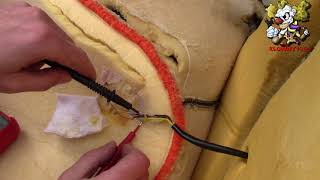
How to confirm: If the heater never works (even after an ignition cycle), the element is suspect. Disconnect the heater element connector under the seat and test for resistance using a multimeter. A reading of 'OL' (Open Loop) confirms a broken wire. A good element should have a resistance of approximately 0.78-1.57 ohms when tested at 73°F (23°C). 🎬 Watch: How to test seat heating elements with a multimeter.
Typical fix: Replace the faulty seat heater element (cushion or backrest). This requires removing the seat's upholstery.
Est. part cost: $150-$300 - Damaged Wiring or Loose Connector ⚪ Low Probability Items stored under the seat or movement of the seat can potentially snag and damage the wiring harness.
How to confirm: Perform a visual inspection of the wiring and connectors under the driver's seat. Check for any signs of chafing, pinching, or disconnection. Pay special attention to connectors C-61 or C-62 under the seat. Unplug and replug the main seat connector to ensure a secure connection.
Typical fix: Repair the damaged section of wire or secure the connector.
Est. part cost: $1-$20
Rare But Worth Checking
- Faulty Seat Warmer Control Unit: While less common for this specific symptom, a different TSB (SA-009/21) for the related Mazda3 notes that a faulty control unit can cause the B1030:13 code if the seat warmer turns off after 10 minutes and won't restart. If your symptoms match this specific behavior, the control unit could be the issue. A Reddit user with a 2019 Mazda3 experienced this exact problem.
Diagnosis Steps
- Verify the symptoms. Does the driver's seat warmer fail to work only when the car is started with the seat already warm, and then work after restarting the car? If yes, the cause is almost certainly the one described in Mazda's TSBs.
- If the warmer never works, or if it turns off after 10 minutes, proceed with further diagnosis.
- Scan the vehicle's modules for stored trouble codes to confirm B1030:13 is present.
- Visually inspect the wiring and connectors under the driver's seat. Ensure everything is connected securely and there is no visible damage, paying attention to connectors C-61/C-62. 🎬 Watch: Step-by-step testing and repair for non-working seat heaters.
- Using a multimeter set to ohms, test the resistance of the seat heater element. Disconnect the element's connector. A reading of 'OL' (Open Loop) indicates a break in the element. A good element should measure between 0.78–1.57 Ω at 73°F (23°C). A reading outside this range indicates a faulty element.
- If the element tests good and wiring is intact, but the symptom is the seat warmer shutting off after 10 minutes, the issue may lie with the seat warmer control module as described in Service Alert SA-009/21.
Parts You'll Likely Need
- Seat Heater Element (Driver Seat Bottom)
(OEM #BDEM-88-121)— This is the updated part specified by Mazda in TSBs to correct the fail-safe mode issue. Note: Some parts sites list this for the RH (passenger) side, so always confirm with the dealer using your VIN.
Trusted brands: Mazda Genuine Parts
OEM price range: $110-$200
Aftermarket price range: N/A - Seat Heater Element (Seat Back)
(OEM #DFS6-88-122)— This is the updated part for the seat back, which may also need to be replaced per the TSB.
Trusted brands: Mazda Genuine Parts
OEM price range: $100-$150
Aftermarket price range: N/A
Related Codes That Often Appear With This One
- B1032:13 — This is the identical code but for the passenger's side (RH) seat warmer. The Mazda TSBs note that these codes can appear separately or together, as both sides are affected by the same fail-safe logic.
Technical Service Bulletins (TSBs) & Recalls
- 09-005-25: States that DTCs B1030:13 and/or B1032:13 are stored due to the seat warmer's fail-safe mode and that the fix is a modified part.
- 09-012-23b: Nearly identical to the above, describing the same symptom, cause, and DTCs for the 2020-2023 CX-30. It also applies to 2019-2023 Mazda3 models.
- 09-012-23a: An earlier version of the bulletin with the same core information.
- SA-013/20: A service alert from 2020 that first noted the issue: "Seat Warmer Will Not Turn ON After Previous Usage or being parked under the hot sun. DTC B1030:13...is stored."
Platform-Specific Known Issues
- A primary, well-documented issue for the 2020-2023 CX-30 is the incorrect activation of the seat warmer's fail-safe mode, which stores code B1030:13. This happens when the ignition is turned on while the seat is already warm.
- Mazda's official fix, per TSBs, is to replace the original seat heater elements with modified parts that have optimized temperature control.
- The TSB repair procedure explicitly mentions using a hair dryer or iron to warm the adhesive on the old heater mat to avoid damaging the urethane seat pad during removal.
Mechanic-Grade Diagnostic Values
- Seat heater element resistance — expected: 0.78 - 1.57 ohms. Failure: A reading of 'OL' (Open Loop) or a value significantly outside the expected range.
Scan Tool Commands That Help
- Mazda Diagnostic and Repair Software (MDARS): Clear All DTCs — After replacing a component like the seat heater element or control module, this function is used to erase the stored B1030:13 code. The system should then be re-scanned to confirm the fault does not return.
Wiring & Ground Locations
- Seat Warmer Control Unit Connector — Under the driver's seat, connected to the seat warmer control module.. A diagnostic procedure for a related code specifies checking for continuity between terminals 2O and 2X on this connector to test the circuit.
- Connector C-61 / C-62 — Under the driver's seat, part of the seat wiring harness.. These connectors are specified in diagnostic procedures as key points to inspect for malfunction (e.g., corrosion, pushed-out pins) when troubleshooting seat heater circuit codes.
Real Owner Repair Stories
- Mazdas247 user 'Buzzman12' (2018 Mazda 6 GT Premium (related platform)) — Driver's side seat cushion stopped heating, but the seat back heater still worked.
✅ What actually fixed it The dealership replaced the seat bottom heater under warranty. The user noted that the heating element is glued to the foam seat cushion and is replaced as a single, complete unit. - Carly user 'melissaeagle1' (2022 Mazda 2 Hybrid (related platform)) — Driver's side seat heater was not working at all and had stored an error code.
❌ Tried (didn't work) Checking fuses (they were all good).
✅ What actually fixed it A repair shop diagnosed and replaced the defective seat heating mat.
Model Year Variations Within This Range
- 2020-2022: According to TSB 09-012-23b, the fail-safe issue applies to CX-30 vehicles with VINs lower than 3MV DM** 500022, which were produced before October 4, 2022. Vehicles produced after this date are likely to have the modified seat heater elements from the factory, making them less prone to this specific TSB-related issue.
Helpful Videos
We Have This Part in Stock

The information in this article is provided for general reference and educational purposes only. Vehicle specifications, procedures, and part compatibility can vary by production date, trim level, and region. Always consult your vehicle's factory service manual and verify part numbers before purchasing or performing repairs. Safety-critical components such as airbags, seat belts, and braking systems should be installed by a qualified professional.
- Mazda CX-30:
- 🎬 Helpful Videos
- 🛍️ Shop This Part
- What's Unique About the 2020-2023 Mazda CX-30
- Diagnostic Flowchart
- Symptoms You May Notice
- Most Likely Causes
- Rare But Worth Checking
- Diagnosis Steps
- Parts You'll Likely Need
- Related Codes That Often Appear With This One
- Technical Service Bulletins (TSBs) & Recalls
- Platform-Specific Known Issues
- Mechanic-Grade Diagnostic Values
- Scan Tool Commands That Help
- Wiring & Ground Locations
- Real Owner Repair Stories
- Model Year Variations Within This Range
- 🎟️ Get 5% Off