

OBD-II Code B1029: Manufacturer-Specific Fault Guide
What B1029 means, why it triggers, and how to fix it for your specific vehicle
- Code B1029 has no universal definition; you must search 'B1029 + [Your Make]' to determine if it affects your airbags, throttle, or HVAC.
- The top three causes are a faulty accelerator pedal harness on Fords, a failed passenger seat sensor on Nissans, or stored crash data in the SRS module.
- Stop driving if the airbag or wrench light illuminates, as B1029 completely disables the SRS system or forces the engine into a dangerous limp mode.
- Check for Technical Service Bulletins (TSBs) before buying parts; Ford TSB 13-3-19 fixes this code with a $20 wiring repair instead of a $200 pedal.
- You need a bi-directional scanner to fix B1029 on most vehicles, as replacing an airbag sensor requires a mandatory 'Zero Point Calibration' to clear the code.
What Does B1029 Mean?

B1029 is a manufacturer-specific body control module (BCM) code. It lacks a universal definition. On Fords, it indicates a gas pedal fault; on Nissans, an airbag system failure; on Chryslers, a climate control issue. Identifying your vehicle's make and model is the mandatory first step to diagnosing this code.
Technical definition: There is no universal SAE/ISO definition for B1029. It is a generic body-related fault code (B-code) that manufacturers use to report a wide range of issues. These include a fault in the accelerator pedal position (APP) sensor circuit (Ford), a problem with the rear blower motor control circuit (Chrysler/Dodge), a fault with the Occupant Classification System (Nissan), a communication error with an ultrasonic interior security sensor (Honda), or an open in the left-front audio output circuit (Chevrolet). On certain Fiat models, it indicates a generic 'Serial Line' communication error between modules.
Can I Drive With B1029?
Yes, But With Caution. Drive with extreme caution. Depending on your vehicle, this code disables the passenger airbag (Nissan) or forces the engine into limp mode (Ford). If the airbag light is on, the entire SRS system is disabled, meaning airbags will not deploy in a collision. If you experience limp mode, stop driving immediately to prevent transmission damage. Diagnose and fix the root cause promptly to ensure safety.
Common Causes

- Faulty or Corroded Wiring/Connectors (Very Common) — Wiring harness or connector damage is the most frequent cause across all variations. Look for broken wires, loose pins, chafing, or moisture corrosion, especially under seats (Nissan OCS) or through the firewall (Ford APP).
- Failed Accelerator Pedal Position (APP) Sensor (Common) — On many Ford vehicles, the entire accelerator pedal assembly, which contains the sensor, fails and triggers this code alongside a wrench light.
- Failed Occupant Classification System (OCS) Sensor/Module (Common) — In Nissan and Subaru vehicles, the passenger seat sensor mat that detects weight fails, or the OCS control module stores a hard fault, illuminating the airbag light.
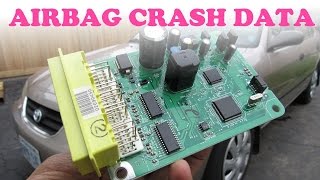
- Stored Crash Data in SRS Module (Common) — If the vehicle was in a minor accident, the airbag (SRS) control module stores 'crash data' even if airbags did not deploy. This triggers B1029 on makes like Nissan and VW and requires a specialized module reset. 🎬 Watch: How to reset stored airbag crash data
- Low Battery Voltage (Less Common) — A weak battery causes low voltage across the electrical system, leading to communication errors between modules. On Honda and Fiat, this triggers B1029 alongside other seemingly unrelated electrical faults.
- Failed HVAC Control Module or Blower Motor Resistor (Less Common) — For Chrysler and Dodge vehicles, this code points to a failure in the rear climate control module or the blower motor resistor that controls fan speed.
- Faulty or Disconnected Impact Sensor (Less Common) — On Hyundai models, this code indicates a communication error with a front impact sensor, which is often disconnected after front-end body work, corroded, or internally failed.
- Faulty Body Control Module (BCM) (Rare) — Occasionally, the Body Control Module itself fails due to an internal electronic defect, software glitch, or water intrusion.
Symptoms

- Airbag warning light is on — The SRS or airbag light illuminates, and the passenger airbag 'OFF' light stays on even with an adult in the seat. This is the primary symptom on Nissan, Subaru, and Hyundai vehicles.
- Wrench or Check Engine Light is on — On Ford vehicles, a wrench light appears on the instrument cluster, sometimes accompanied by the Check Engine Light, indicating a powertrain-related fault detected by a body module.
- HVAC fan not working correctly — The rear climate control fan fails to work on certain speeds or stops working entirely. This is common on Chrysler and Dodge vehicles.
- Car won't start or has multiple electrical issues — On Fiat models, this code relates to a 'Serial Line' communication error causing various electrical problems, including a no-start condition due to an immobilizer fault or flashing dashboard lights.
- No sound from speakers — For Chevrolet models, this code indicates an open circuit to the left-front speaker. There are no warning lights, but the audio fails to work correctly.
- Poor or erratic acceleration (also visible on scanner) — The vehicle hesitates, surges, or has delayed throttle response. The engine frequently drops into a reduced power 'limp mode.' This is the primary symptom for Ford accelerator pedal faults.
Diagnostic Flowchart
Tap your situation to follow the diagnostic path that matches what you're seeing on this code.
Common Fixes & Costs
- Repairing Wiring per Ford TSB 13-3-19 — Parts: $10-$20, Labor: $150-$300, ~2.0 hr book time (Intermediate)
- Replacing the Accelerator Pedal Position Sensor — Parts: $60-$200, Labor: $150-$300, ~1.0 hr book time (DIY)
- Replacing the Occupant Classification Sensor (Seat Mat) and Calibration — Parts: $200-$800, Labor: $400-$1500, ~2.5 hr book time (Professional)
- Resetting Airbag Module Crash Data — Parts: $0, Labor: $50-$100, ~1.5 hr book time (Intermediate)
- Replacing the HVAC Blower Motor Resistor or Module — Parts: $25-$120, Labor: $80-$350, ~0.6 hr book time (DIY)
- Replacing the Audio Amplifier (Chevrolet) — Parts: $150-$400, Labor: $250-$600, ~1.5 hr book time (Intermediate)
Used vs. New Parts: Buying Guide
When a used part is worth it: For non-safety parts like an HVAC blower resistor or an audio amplifier, a used part is a cost-effective option. For an accelerator pedal assembly, a new aftermarket part is affordable enough to be the better choice. For SRS components, used parts are never recommended due to safety risks.
Donor-vehicle mileage cap: roughly under 100000 miles for the part to have meaningful remaining life.
Donor quality checklist:
- Avoid donors from flood-damaged or rust-belt vehicles.
- Match the part number exactly; do not rely on visual similarity.
- For SRS modules, only buy from a source if you are sending it to a professional service to be cleared and reprogrammed to your vehicle's VIN.
Decision logic:
- If The part is a safety component like an OCS sensor mat or airbag module. → Buy new OEM or use a professional reset service for your original module. The risk of a used part failing is too high.
- If The part is an accelerator pedal assembly and a new aftermarket part is under $100. → Buy new. The savings from a used part are minimal compared to the labor and risk of premature failure.
- If The part is a simple, non-critical component like a blower resistor. → A used part is a good way to save money, as failure does not pose a safety risk.
Warranty tradeoff: Used parts typically come with a 30-90 day warranty. New aftermarket parts usually offer a 1-year to limited lifetime warranty. New OEM parts carry a 1-year warranty, extended if installed by a dealer.
Worst-case if a used part fails: $300-$1500 if a used safety-critical part (like an SRS module) is faulty, requiring repeat labor and the purchase of a new part.
What Happens If You Wait — Timeline
- Immediate: For Nissan/Hyundai: Airbag light illuminates; the entire SRS system is disabled. For Ford: Wrench light illuminates; acceleration remains normal for now. (MPG impact: 0%% · Added cost: $0 (but immediate and significant safety risk for airbag faults))
- Weeks to Months: For Nissan/Hyundai: Continued operation with no airbag protection; fails state safety inspection. For Ford: Intermittent hesitation, delayed throttle response, or sudden entry into 'limp mode'. (MPG impact: 0-10% (for Ford, due to erratic throttle)% · Added cost: $50-$150 in wasted fuel (Ford) or failed inspection fees.)
- 2-6 Months: For Ford: 'Limp mode' events become frequent, creating dangerous situations in traffic. Erratic signals cause harsh shifting, stressing the transmission. For HVAC/Audio: The issue remains an inconvenience. (MPG impact: 10-15% (for Ford)% · Added cost: $100-$300 (Towing cost if vehicle becomes undriveable))
- 6+ Months: For Nissan/Hyundai: An accident occurs with no airbag deployment. For Ford: The accelerator pedal fails completely, resulting in a no-throttle condition. (MPG impact: N/A% · Added cost: Potential for accident-related costs. The cost of not fixing is primarily safety-related.)
Cost of Not Fixing It
- Immediate: For airbag-related faults, the entire SRS is disabled, meaning no airbags deploy in a crash. For throttle-related faults, the vehicle enters 'limp mode' at any time, causing a sudden loss of power. (Added cost: Potential for injury or accident.)
- 1-6 months: Driving with a faulty accelerator pedal sensor causes poor fuel economy and places additional stress on the engine and transmission. An unresolved airbag light causes an automatic failure of safety inspections. (Added cost: $50-$200 in wasted fuel, plus the cost of a failed inspection.)
- 6+ months: Continued operation with a faulty throttle system contributes to premature wear on powertrain components. For HVAC or audio faults, the cost is primarily long-term inconvenience. (Added cost: Negligible for non-powertrain faults, but contributes to costly powertrain repairs for throttle issues.)
Diagnosis Steps

- Identify Your Vehicle's Specific Definition
Search online for 'B1029 [Your Make and Model]' to determine which system (airbag, throttle, HVAC, audio) is affected.
Tools: Internet access (DIY) - Check for Technical Service Bulletins (TSBs)
Search for TSBs related to code B1029 for your vehicle. Manufacturers frequently release bulletins with known fixes, such as Ford TSB 13-3-19 for the Fiesta.
Tools: Internet access (Intermediate) - Perform a Thorough Visual Inspection
Inspect the relevant area based on your specific definition. Check wiring under the passenger seat for airbag codes, the gas pedal connector for throttle codes, or the blower motor behind the glove box for HVAC codes. Look for loose connectors, damaged wires, or corrosion.
Tools: Flashlight (DIY) - Pro Tip: Test Accelerator Pedal Sensor (Ford)
Using a scan tool with live data capabilities, monitor the PIDs for APP_D and APP_E. These represent the two signals from the pedal sensor. They must move smoothly as you press the pedal. APP_E's voltage is approximately half of APP_D's. If one signal is erratic or flat, the sensor or its wiring is faulty.
Tools: Advanced OBD-II scanner (e.g., ForScan), Multimeter (Advanced) - Pro Tip: Test OCS Sensor Mat (Nissan)
Access the BCM or SRS module live data with a bi-directional scanner. The Occupant Classification System must show a change in weight/status when a person sits in the passenger seat. If the status remains 'Empty' or 'Fault', the sensor mat is the likely culprit. Check for continuity on the sensor mat's pins with a multimeter.
Tools: Bi-directional OBD-II scanner, Multimeter (Advanced) - Check Related Fuses and Relays
Consult your owner's manual to find the fuse box diagram. Check fuses for the BCM, SRS/Airbag, HVAC, and the cigar lighter/power outlet. Inspect for corroded fuse legs, not just a blown filament.
Tools: Fuse puller or needle-nose pliers (DIY) - Scan and Calibrate with an Advanced Scan Tool
Fixes for the Occupant Classification System require a professional-level scan tool to perform a 'Zero Point Calibration' after a repair. A standard OBD-II reader cannot clear hard codes stored in an airbag module.
Tools: Bi-directional OBD-II scanner (Professional) - Check for Water Intrusion (Chevy Audio/GM General)
On GM vehicles like the Chevy Malibu, a B1029 audio code is caused by water leaking onto the factory amplifier in the trunk. Inspect the amplifier and its connectors for moisture or corrosion.
Tools: Trim removal tools, Flashlight (Intermediate) - Advanced Test: Chrysler Rear Blower Resistor
Disconnect the electrical connector from the rear blower motor resistor. Probe the terminals with a multimeter set to DC volts. You must have battery voltage (approx. 12V) on the power feed wire. If power is present but the fan only works on high speed, the resistor is the failure point.
Tools: Multimeter (Advanced) - Advanced Test: Hyundai Front Impact Sensor Resistance
Disconnect the battery. Unplug the front impact sensor behind the bumper cover. Measure resistance (Ohms) across its two pins. A functional sensor typically reads between 2.0 and 3.0 Ohms. A reading of 'OL' (Open Loop) indicates an internal failure requiring replacement.
Tools: Multimeter, Trim removal tools (Advanced)
When This Code Triggers (Freeze-Frame Conditions)
- System Status: Varies (For airbag faults (Nissan), the code sets during the Key-On Self-Test before the engine starts. For throttle faults (Ford), it sets during steady-state driving.)
- Engine RPM: 0 or 1500-2500 RPM (Triggers at 0 RPM during a system self-check (airbag) or at constant cruise RPM when APP sensor signals become implausible (throttle).)
- Vehicle Speed: 0 mph or 40-65 mph (Matches the RPM conditions; triggers while stationary (airbag) or at highway speeds (throttle).)
- Battery Voltage: 11.5V - 14.5V (The code triggers if voltage drops below 11.5V on sensitive systems, but typically sets under normal voltage conditions when a specific component fails.)
Related Codes
- P2126, P2127, P2138 — These codes appear with B1029 on Ford vehicles, relating to faults in the accelerator pedal position sensor circuits. B1029 is logged by the Instrument Panel Cluster, while the P-codes are logged by the PCM. Having both strongly suggests a fault in the APP sensor or its wiring.
- B00A0 — This Occupant Classification System (OCS) code frequently appears alongside B1029 on Nissan vehicles. B00A0 indicates a general 'Occupant Detection System Malfunction.' When seen together, it confirms a fault within the passenger seat sensor system.
- U1602 — On Fiat vehicles, this CAN line error code accompanies B1029. Seeing both suggests a significant communication breakdown between modules caused by a faulty module dragging the network down, a wiring short, or a bad ground connection.
- U0186 — On Chevrolet vehicles, B1029 ('Audio Output #1 Circuit Open') is accompanied by U0186 ('Lost Communication With Speaker Amplifier'). Seeing both codes strongly points to a failure of the factory amplifier or its wiring due to water damage.
Climate & Environmental Factors
- High Humidity / Road Salt: Moisture and salt accelerate corrosion on exposed wiring and connectors. This is a significant factor for issues like the Ford APP sensor wiring and Hyundai front impact sensors. Water leaks directly cause amplifier failure on Chevrolets.
- Extreme Cold: Cold temperatures make wires and plastic connectors brittle and more prone to cracking or breaking, especially if they are disturbed during other maintenance.
How to Talk to a Mechanic About This Code
Say this: "Varies by vehicle. For Ford: 'I have a B1029 code and a wrench light on my Fiesta. I need a diagnostic to confirm if it is the accelerator pedal or the wiring issue from TSB 13-3-19.' For Nissan: 'My Rogue has a B1029 code and an airbag light. I need a diagnostic of the SRS system, specifically the Occupant Classification System. Please check the OCS live data before recommending part replacement.'"
Signals you are an informed consumer, directs the technician's diagnostic time efficiently, and prevents them from immediately suggesting the most expensive, common fix without proper diagnosis.
Avoid saying:
- 'Just fix whatever's wrong'
- 'My airbag light is on, can you look at it?' (too vague, invites a wide-ranging and expensive diagnostic process)
- 'Whatever you think is best'
Questions to ask before authorizing the repair:
- For a Nissan OCS fault: 'What did the OCS live data show? Does the module require a 'Zero Point Calibration' or is the sensor mat truly defective? Does your quote include the mandatory calibration after installation?'
- For a Ford throttle fault: 'Did you monitor the APP sensor PIDs? Were the signals erratic or dropping out? Have you inspected the wiring per TSB 13-3-19 before recommending a new pedal?'
- For any repair: 'Can you provide me with the specific fault code and its definition for my vehicle? What is the warranty on this repair, for both parts and labor?'
Where to Take It: Dealer vs Independent vs Chain
- Dealer:
Best for: Airbag (SRS) system repairs requiring manufacturer-specific calibration tools (e.g., Nissan OCS 'Zero Point Calibration')., Vehicles still under warranty or with an open recall related to the fault., Complex wiring repairs specified by a TSB if you prefer an OEM-trained technician.
Downsides: Highest labor rates and part costs., Defaults to replacing an entire assembly (e.g., Nissan passenger seat) for a very high cost, when a more specific repair or reset is possible. (Typical cost: +50% vs. baseline) - Independent Shop:
Best for most non-airbag B1029 faults. For airbag issues, a specialized independent shop is a good choice, but a general mechanic lacks the necessary calibration tools.
Best for: Out-of-warranty vehicles where cost is a factor., Well-known mechanical fixes associated with B1029, such as a Ford accelerator pedal replacement or a Chrysler blower motor resistor., Shops that specialize in your vehicle's brand or in specific systems.
Downsides: Quality and equipment vary greatly. Must verify they have advanced, multi-system scan tools and are comfortable working on SRS systems if applicable. (Typical cost: +0% vs. baseline) - Chain Shop:
AVOID. The diagnostic complexity and manufacturer-specific nature of code B1029 are a poor match for the chain shop business model.
Best for: This code is generally too complex for a typical chain shop.
Downsides: Technicians lack the specialized tools (bi-directional scanners) and training for complex body control module or airbag diagnostics., High risk of misdiagnosis, leading to unnecessary part replacement. (Typical cost: -10% vs. baseline)
When to Walk Away From the Repair
If the estimated repair cost exceeds 50% of the car's current private-party market value, you should seriously consider not fixing it and instead selling it as-is or trading it in.
- Car worth $5000, fix is $2500: Walk away. A $2500 repair for a Nissan OCS sensor on a car worth $5000 is not a good investment.
- Car worth $4000, fix is $350: Fix it. A $350 wiring repair for a Ford throttle fault is well below the threshold and restores the vehicle's safety and drivability.
- Car worth $2000, fix is $1500: Walk away. The repair cost is 75% of the vehicle's value. It's time to replace the car.
What Scan Tool You Need for This Code
Minimum: A scanner that can read manufacturer-specific Body (B) codes and SRS (airbag) codes. A basic engine-only (P-code) reader will not see this fault.
A cheap $20 scanner that only reads check engine lights shows 'No Codes Found.' Code B1029 is stored in other computers like the Body Control Module (BCM), Instrument Panel Cluster (IPC), or SRS module, which basic tools cannot access.
Budget: BlueDriver Pro / ForScan (for Ford) (~$20-120) — BlueDriver reads codes from multiple modules including SRS and BCM on many makes. For Ford owners, ForScan software paired with a compatible OBD adapter reads live data PIDs needed to diagnose the accelerator pedal issue.
Mid-range: Foxwell NT510 Elite / Autel MaxiCOM MK808 (~$150-400) — These tools offer bi-directional control and advanced service functions. They perform tasks like OCS 'Zero Point Calibration' for Nissan, ABS bleeding, and other resets required to complete a B1029 repair.
Professional: Autel MaxiCOM MK808S / MK906BT (~$450-1200) — Provides full bi-directional control for all systems, extensive live data graphing, and OE-level diagnostic capabilities for a wide range of vehicles, making it suitable for professional shops or serious DIYers.
Rent vs buy: Most auto parts store loaner tools are basic code readers and will NOT read BCM or SRS codes. If you need calibration or bi-directional features, you must buy a capable scanner or go to a shop. Buying a mid-range scanner is often cheaper than one diagnostic hour at a dealership.
How to Clear the Code After You Fix It
- Reconnect the battery if it was disconnected for the repair.
- Use an appropriate OBD-II scanner to clear the fault codes from the specific module (BCM, IPC, or SRS).
- For SRS/airbag repairs (Nissan), perform a 'Zero Point Calibration' with an advanced scan tool.
- Perform a verification drive cycle to ensure the fault does not return.
Drive cycle (~20 minutes): Start the engine and let it idle for 2 minutes. Drive for 10-15 minutes, including steady-speed cruising and stop-and-go situations. For throttle-related faults, ensure smooth acceleration is tested. For airbag faults, cycle the key off and on again after the drive to ensure the light stays off.
Readiness monitors affected: None directly, B1029 is a Body (B) code and does not affect emissions readiness monitors. However, if it appears with a Powertrain (P) code on a Ford, clearing it resets emissions monitors, which must then be re-set by completing a full drive cycle.
Watch out for:
- Using a basic code reader that cannot access or clear codes from the BCM or SRS module.
- Not performing a required calibration after replacing an OCS sensor, causing the code to return immediately.
- Replacing a part when the true fault is in the wiring or a connector.
- Forgetting to disconnect the battery before working on airbag system components.
Will This Fail Emissions / State Inspection?
No — by itself this code doesn't fail OBD inspection (but it can keep readiness monitors from setting, which causes a separate fail).
- California: An illuminated airbag light or wrench light will NOT cause a failure of the California Smog Check, which is only concerned with emissions. However, the vehicle is still unsafe to operate.
- New York: According to the NY DMV, an illuminated airbag warning lamp is noted as an advisory during the safety inspection but is NOT a cause for rejection.
- Texas: An illuminated airbag warning light causes the vehicle to FAIL the annual safety inspection. A wrench light indicating a powertrain fault also causes failure.
- Virginia: In states with comprehensive safety inspections like Virginia, an illuminated airbag light is an automatic failure.
Most Commonly Affected Vehicles
- Ford Fiesta (2011-2013) — A well-documented issue covered by TSB 13-3-19 involves faulty wiring to the accelerator pedal position sensor, causing a wrench light and potential limp mode. The fix involves rerouting and swapping specific wires at the pedal to reduce electrical noise.
- Nissan Altima, Juke, Rogue, Sentra, Murano, Pathfinder (2008-2020) — B1029 commonly points to a fault in the Occupant Classification System (OCS) 'Diagnosis Sensor Unit' within the SRS module itself, triggering the airbag light. TSB NTB19-071 details a specific diagnostic and reset procedure.
- Chrysler/Dodge Grand Caravan, Town & Country, Ram ProMaster (2010-2018) — Code B1029 relates to the rear HVAC system, specifically a 'Rear Blower Control Request Input High' fault, indicating a problem with the control module, wiring, or the resistor.
- Chevrolet Malibu, Impala, Cruze, Equinox, Silverado (2010-2020) — B1029 is defined as 'Audio Output #1 (Left Front) Circuit Open', indicating a wiring problem or fault with the radio or speaker. On the 2017 Malibu, this is caused by water intrusion into the trunk-mounted amplifier.
- Hyundai Sonata, Elantra, Tucson (2010-2015) — Often appears as B1329 or B1334, indicating a 'Front Impact Sensor Communication Error'. This is frequently caused by a disconnected sensor after front-end service or a failed sensor.
- Volkswagen Vento, Jetta, Golf (2014-2022) — B1029 indicates 'rear collision data stored' in the airbag module or a fault with a wheel speed sensor. Storing collision data requires a specialized reset of the SRS module.
- Fiat Stilo, Ducato (2002-2008) — On the Stilo, B1029 is defined as a 'Serial Line' communication error, causing a variety of strange electrical issues, including immobilizer faults and flickering dash lights.
- Honda Accord, Civic, Legend (2006-2012) — B1029 means 'Lost Communication with Ultrasonic Unit' related to the interior security alarm system. This is caused by failed internal batteries in the alarm siren module itself.
- Alfa Romeo Giulia (2017-2021) — B1029-64 indicates a 'Signal Plausibility Failure' from the Electric Power Steering (EPS) module, suggesting an invalid signal is being received by the BCM.
Manufacturer-Specific Notes

- Ford: The code is stored in the Instrument Panel Cluster (IPC), not the main engine computer (PCM), and triggers the wrench light instead of the check engine light. The official fix per TSB 13-3-19 is a specific wiring modification at multiple connectors to improve noise robustness.
- Nissan: The code points to a fault in the airbag's Occupant Classification System. The fix requires replacing the sensor mat in the passenger seat cushion and performing a 'zero point calibration' with a dealer-level scan tool. There have been multiple recalls related to the OCS.
- Chrysler/Dodge: B1029 is defined as 'Rear Blower Control Request Input High,' pointing specifically to a problem with the rear HVAC controls, not the main front system.
- Honda: The code relates to the interior alarm system's ultrasonic sensor. The root cause is failed rechargeable batteries inside the alarm siren module, which disrupts communication.
- Chevrolet: Unlike in most other brands where B1029 relates to safety or core body functions, on many Chevy models it simply means there is an open circuit for the left-front speaker. This does not cause any warning lights.
- Fiat: The code indicates a 'Serial Line' communication error. This is sometimes caused by a simple blown fuse for the cigar lighter/12v power outlet, which disrupts the communication network.
Real Owner Stories
2013 Ford Fiesta with Wrench Light
Wrench light appeared intermittently, causing slow throttle response. Codes P2126, P2127, and B1029 were present.
What they tried:
- Replaced the accelerator pedal with an aftermarket Hella unit, but the problem persisted.
- Researched and found Ford's TSB 13-3-19.
- Performed the wiring modification outlined in the TSB, which involves re-pinning wires at the pedal connector and instrument cluster.
Outcome: The TSB wiring repair cleared the codes permanently and restored normal throttle response.
Lesson: On a Ford with B1029 and accelerator pedal codes, do not immediately replace the pedal. The root cause is a wiring noise issue addressed by a specific TSB.
2017 Chevy Malibu with No Audio
Radio display went black, and all interior sounds (radio, turn signal clicks, chimes) stopped working. Code U0186 was also present.
What they tried:
- Checked fuses F39 and F42, which were fine.
- Researched online and found information about water leaking from the high-mount third brake light into the trunk.
- Inspected the amplifier in the trunk and found severe water intrusion on the unit and connectors.
Outcome: Replaced the water-damaged amplifier with a used unit, restoring all audio functions. Fixed the underlying water leak from the brake light seal.
Lesson: On GM vehicles, sudden loss of all audio and chimes points to a failed amplifier. Always check for water leaks in the trunk before replacing it.
2013 Nissan Rogue with Flashing Airbag Light
The airbag warning light on the dashboard was constantly flashing without any prior accident.
What they tried:
- Tried a specific key-on/key-off sequence found online to reset the SRS system.
- This simple procedure successfully turned off the flashing airbag light without any tools.
Outcome: The light was reset successfully. The owner noted that if the light returns, it indicates a persistent hardware fault requiring professional diagnosis.
Lesson: For a minor Nissan airbag fault, a simple key-on/off reset procedure clears the light and saves a diagnostic fee. If it comes back, a real fault exists.
2005 Fiat Stilo with No-Start and B1029
Car experienced random power loss, cut out, and wouldn't restart with an immobiliser warning. A B1029 'Serial Line' code was found alongside flashing dash lights.
What they tried:
- Replaced the earth strap and cleaned battery connections with no success.
- Inspected all fuses in the under-hood fuse box for corrosion on their legs.
- Unplugged the main ECU connectors to check for water ingress or pin corrosion.
Outcome: The issue was traced to severe corrosion in the main fuse box, causing a network communication failure that the BCM reported as B1029.
Lesson: On Fiat models, a B1029 'Serial Line' error accompanied by bizarre electrical behavior is a network-wide issue caused by corrosion or a bad ground, not a single failed part.
How to Prevent This Code From Triggering
- Apply dielectric grease to critical connectors (During any related repair) — Seals electrical connections from moisture, preventing the corrosion that causes wiring faults on exposed sensors like Ford's APP connector or Hyundai's front impact sensors.
- Inspect and clear under-seat area regularly (Every 3-6 months) — Prevents items stored under the passenger seat from damaging the delicate wiring and connectors for the Occupant Classification System (OCS) on Nissan vehicles.
- Address any water leaks immediately (As needed) — Prevents water intrusion from faulty seals from destroying expensive electronic modules like the BCM or audio amplifier located in the trunk.
- Use a battery tender for long-term storage (If car sits for more than 2-3 weeks) — Maintains a stable battery voltage, preventing the low-voltage conditions that cause random communication fault codes like B1029 on sensitive networks.
Frequently Asked Questions
Can a weak battery cause a B1029 code?
Yes. On vehicles where B1029 relates to module communication (like Honda or Fiat), a weak battery causes low voltage. This triggers communication errors between modules and sets a B1029 code alongside other electrical faults.
Is it safe to drive with the airbag light on due to code B1029?
No. When the airbag light is on, the entire supplemental restraint system (SRS) is disabled. None of the airbags will deploy in a crash.
I replaced the part, but the code is still there. What now?
If the original fault was in the wiring, replacing the sensor will not fix it. Additionally, airbag repairs require a mandatory calibration or reset procedure using a specialized scan tool. Airbag modules store 'hard codes' after a fault that a standard scanner cannot clear.
What is a common misdiagnosis for B1029?
On Ford vehicles, mechanics often mistakenly replace the accelerator pedal assembly when the actual problem is the wiring harness outlined in Ford's TSB. On Nissans, people replace the OCS sensor mat when the issue is actually stored crash data in the main SRS module.
My car was in a minor accident and now has a B1029 code, why?
The airbag control module stores 'crash data' from an impact sensor even if the airbags did not deploy. This sets code B1029 and illuminates the airbag light. The module must be professionally reset or replaced, as the code cannot be cleared with a standard scanner.
Can I just clear the code and see if it comes back?
You can, but if there is an underlying hardware or wiring fault, the code returns immediately. For issues requiring calibration or stored crash data, clearing the code will not fix the problem.
How much does it cost to fix code B1029?
Costs vary dramatically by manufacturer and system. A Chevrolet audio wiring fix costs under $150, while a Ford accelerator pedal wiring repair runs $150-$350. A Nissan occupant sensor replacement at a dealership often costs between $1,500 and $3,000.
Key Takeaways
- Code B1029 has no universal definition; you must search 'B1029 + [Your Make]' to determine if it affects your airbags, throttle, or HVAC.
- The top three causes are a faulty accelerator pedal harness on Fords, a failed passenger seat sensor on Nissans, or stored crash data in the SRS module.
- Stop driving if the airbag or wrench light illuminates, as B1029 completely disables the SRS system or forces the engine into a dangerous limp mode.
- Check for Technical Service Bulletins (TSBs) before buying parts; Ford TSB 13-3-19 fixes this code with a $20 wiring repair instead of a $200 pedal.
- You need a bi-directional scanner to fix B1029 on most vehicles, as replacing an airbag sensor requires a mandatory 'Zero Point Calibration' to clear the code.
Helpful Videos

The information in this article is provided for general reference and educational purposes only. Vehicle specifications, procedures, and part compatibility can vary by production date, trim level, and region. Always consult your vehicle's factory service manual and verify part numbers before purchasing or performing repairs. Safety-critical components such as airbags, seat belts, and braking systems should be installed by a qualified professional.
- 🎬 Helpful Videos
- What Does B1029 Mean?
- Can I Drive With B1029?
- Common Causes
- Symptoms
- Diagnostic Flowchart
- Common Fixes & Costs
- Used vs. New Parts: Buying Guide
- What Happens If You Wait — Timeline
- Cost of Not Fixing It
- Diagnosis Steps
- When This Code Triggers (Freeze-Frame Conditions)
- Related Codes
- Climate & Environmental Factors
- How to Talk to a Mechanic About This Code
- Where to Take It: Dealer vs Independent vs Chain
- When to Walk Away From the Repair
- What Scan Tool You Need for This Code
- How to Clear the Code After You Fix It
- Will This Fail Emissions / State Inspection?
- Most Commonly Affected Vehicles
- Manufacturer-Specific Notes
- Real Owner Stories
- 2013 Ford Fiesta with Wrench Light
- 2017 Chevy Malibu with No Audio
- 2013 Nissan Rogue with Flashing Airbag Light
- 2005 Fiat Stilo with No-Start and B1029
- How to Prevent This Code From Triggering
- Frequently Asked Questions
- Can a weak battery cause a B1029 code?
- Is it safe to drive with the airbag light on due to code B1029?
- I replaced the part, but the code is still there. What now?
- What is a common misdiagnosis for B1029?
- My car was in a minor accident and now has a B1029 code, why?
- Can I just clear the code and see if it comes back?
- How much does it cost to fix code B1029?
- Key Takeaways
- 🎟️ Get 5% Off