

OBD-II Code B1023: Passenger Airbag Indicator Circuit Malfunction
The Ultimate Guide to Meaning, Diagnosis, and Repair
- Code B1023 disables the entire airbag system due to an electrical fault in the passenger airbag status indicator light circuit.
- A forgotten electrical connector behind the dashboard causes over 80% of B1023 codes, usually immediately following a radio or dash repair.
- On General Motors, Jeep, and Fiat vehicles, B1023 indicates an HVAC or network fault, requiring a manufacturer-specific scan tool to diagnose correctly.
- The airbag warning light will not turn off automatically; you must use an SRS-capable OBD-II scanner to clear the code after completing the physical repair.
What Does B1023 Mean?

B1023 means the Supplemental Restraint System (SRS) module detects an electrical fault in the passenger airbag status indicator circuit. The SRS module sends a signal to the 'Passenger Airbag OFF/ON' light and expects a specific voltage or resistance return. If this feedback is missing—usually due to a disconnected plug, burnt bulb, or broken wire—the module cannot verify the indicator's status. As a strict safety precaution, it disables the entire airbag system and illuminates the main dashboard airbag warning light.
Technical definition: SAE defines B1023 as 'Passenger Airbag Indicator Circuit Malfunction,' indicating an open circuit, short to ground, short to power, or abnormal resistance in the indicator light wiring. However, General Motors, Fiat, and Jeep/Chrysler use B1023 for entirely different systems, such as an internal HVAC control module fault or a LIN bus communication error. A professional scan tool with manufacturer-specific definitions is mandatory to avoid misdiagnosis.
Can I Drive With B1023?
Yes, But With Caution. The vehicle drives normally, but B1023 disables the entire Supplemental Restraint System (SRS) as a fail-safe. In a collision, airbags and seatbelt pretensioners will NOT deploy. Driving with this code exposes occupants to severe injury or death in otherwise survivable accidents.
Common Causes

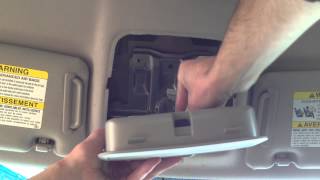
- Disconnected passenger airbag indicator light connector (Very Common) — The connector behind the radio or center dash trim is frequently forgotten or improperly seated during radio replacements or dash repairs. 🎬 Watch: How to properly remove the dash and radio.
- Damaged wiring or corroded connector pins (Common) — Wires in the main harness get stretched or pinched from seat movement. Spilled liquids or cabin leaks cause corrosion on connector pins, interrupting the signal.
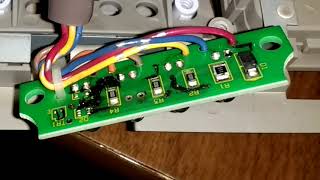
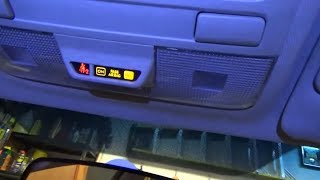
- Cracked solder joints on the indicator circuit board (Common) — On 2005-2009 Subaru Outbacks and Legacys, thermal cycling cracks the lead-free solder joints on the overhead indicator light assembly, breaking the circuit. 🎬 Watch: How to re-solder cracked joints on Subaru indicator boards.
- Faulty passenger airbag indicator light assembly (Less Common) — The internal LED or circuit board of the indicator light fails, creating an open circuit detected by the SRS module.
- Faulty Occupant Classification System (OCS) sensor (Rare) — A complete failure of the passenger seat weight sensor module prevents it from communicating status to the indicator light, indirectly causing B1023.
- Defective SRS Control Module (Very Rare) — The main airbag computer fails internally. Suspect this only after meticulously testing all wiring, connectors, and components.
Symptoms

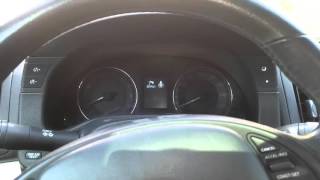
- Airbag warning light is illuminated — A steady or flashing airbag/SRS warning light appears on the instrument cluster.
- Passenger airbag indicator light is inoperative — The 'Passenger Airbag OFF' light fails to illuminate when the seat is empty, or stays on with an adult passenger present.
- Failed vehicle safety inspection — The vehicle fails state safety inspections due to the active airbag warning light.
- Airbag system is completely disabled (scan-tool only — no driver-felt sign) — The SRS module disables all airbags and pretensioners. They will not deploy in an accident.
Diagnostic Flowchart

Tap your situation to follow the diagnostic path that matches what you're seeing on this code.
Common Fixes & Costs
- Reconnecting the passenger airbag indicator light — Parts: $0, Labor: $120 - $200, ~1.0 hr book time (DIY)
- Replacing the Passenger Airbag Indicator Light Assembly
— Parts: $50 - $150, Labor: $120 - $200, ~1.0 hr book time
(DIY)
: OEM - Repairing damaged wiring or cleaning a corroded connector — Parts: $10 - $30, Labor: $150 - $300, ~2.0 hr book time (Intermediate)
- Resetting the SRS Control Module — Parts: $50 - $100, Labor: $100 - $200, ~1.0 hr book time (Professional)
- Replacing the SRS Control Module — Parts: $600 - $1,200, Labor: $200 - $400, ~1.5 hr book time (Professional)
Used vs. New Parts: Buying Guide
When a used part is worth it: A used indicator light assembly from a salvage yard is a cost-effective option. For the SRS Control Module, a used module is NOT recommended unless you use a service to reset your ORIGINAL module to avoid expensive dealer programming.
Donor-vehicle mileage cap: roughly under 100000 miles for the part to have meaningful remaining life.
Donor quality checklist:
- Match the indicator light part number exactly.
- Ensure no visible water damage or corrosion on connector pins.
- Avoid parts from flood-damaged vehicles.
Decision logic:
- If The fix is the indicator light assembly → A used part is a budget-friendly option if the part number matches.
- If The SRS module has stored crash data → Send your original module to a mail-in reset service. This requires no programming.
- If The SRS module is physically damaged → Buy a new OEM module. Used modules require costly dealer programming and carry high risk.
Warranty tradeoff: Used parts typically have a 30-90 day warranty. New OEM parts have a 1-year warranty. SRS module reset services usually offer a lifetime guarantee.
Worst-case if a used part fails: $200 - $600 if a used SRS module fails or requires programming that costs more than a reset service.
What Happens If You Wait — Timeline
- Immediate (First key-on after fault occurs): The SRS module detects the circuit fault, illuminates the main airbag warning light, and disables the entire Supplemental Restraint System (SRS) as a fail-safe. (MPG impact: 0%% · Added cost: $0)
- Next required vehicle inspection: The vehicle automatically fails safety inspections in states where an illuminated airbag light is a failure criterion (e.g., PA, VA, MA). (MPG impact: 0%% · Added cost: $20 - $70 (inspection fees))
- In case of an accident: Non-deployment of airbags and seatbelt pretensioners dramatically increases the risk of catastrophic injury or death for all occupants. (MPG impact: 0%% · Added cost: Incalculable medical and liability costs.)
Cost of Not Fixing It
- Immediate: Complete deactivation of the entire Supplemental Restraint System (SRS). No airbags will deploy in a collision. (Added cost: N/A)
- Next Vehicle Inspection: Guaranteed failure of the safety portion of state vehicle inspections (e.g., NY, VA, PA). (Added cost: $20 - $50 (re-inspection fee))
- In Case of an Accident: Significantly increased risk of serious injury or death due to non-deployment of airbags. (Added cost: Catastrophic medical costs and liability.)
Diagnosis Steps
- Recall Recent Dash Work & Scan for Codes
If the radio was recently replaced or the dash disassembled, the cause is almost certainly a forgotten connector. Use an SRS-capable OBD-II scanner to confirm B1023 is the only active code.
Tools: SRS-capable OBD-II Scanner (Beginner) - Inspect the Indicator Light Connector
Remove the trim around the radio, climate controls, or overhead console. Visually inspect the electrical connector for the passenger airbag indicator light. Plug it in securely if disconnected.
Tools: Trim removal tools, Screwdriver, Flashlight (Beginner) - Inspect Under-Seat Wiring
Move the passenger seat fully forward and back. Inspect the yellow-sheathed wires underneath for pinches or breaks. Ensure all connectors are firmly seated and free of corrosion.
Tools: Flashlight (Intermediate) - Clear Codes and Retest
Use the scanner to clear the SRS codes. Turn the ignition off, wait 10 seconds, and turn it on again. If the light stays off, the loose connection is resolved.
Tools: SRS-capable OBD-II Scanner (Intermediate) - Check Circuit Voltage and Continuity
Disconnect the battery for 15 minutes. Unplug the indicator light and SRS module. Use a multimeter to check for continuity (near 0 Ω) and shorts to ground (OL) on the signal wires. Reconnect the battery and verify 10-14V at the power wire.
Tools: Digital Multimeter, Vehicle-specific wiring diagram (Advanced) - Simulate the Indicator with a Resistor
If wiring tests good, insert a 2.2-ohm resistor into the vehicle-side connector to simulate a functional indicator light. Clear codes. If B1023 does not return, replace the indicator light assembly.
Tools: 2.2 Ohm Resistor, Wiring Diagram, Digital Multimeter (Advanced) - Inspect and Test the SRS Module
If the code persists with verified wiring and a simulated load, inspect the SRS control module connectors for water damage. Internal module failure requires professional replacement and programming.
Tools: Professional Scan Tool, Visual Inspection (Professional)
When This Code Triggers (Freeze-Frame Conditions)
- System State: Key ON (The SRS module performs a self-check every time the ignition is turned to the 'ON' position.)
- Component Resistance: 2.0-3.5 Ohms (The SRS module expects a specific resistance; an open or short triggers the code.)
- Vehicle State: Stationary (The primary check occurs within the first 6-7 seconds after turning the key.)
Related Codes
- B1018 — Points to a fault in the Occupant Classification System (OCS) sensor mat. If B1018 and B1023 appear together, the OCS failure is preventing status communication to the indicator light. Diagnose the OCS first.
- U0151 — Indicates 'Lost Communication With Restraints Control Module'. If present, the SRS module is completely offline due to a power/ground issue or CAN bus failure. B1023 is irrelevant until communication is restored.
- B00-series codes (e.g., B0020, B0028) — Relate to specific airbag deployment loops (inflators). B1023 points only to the low-current status display light circuit. A wiring diagram is essential to trace the correct circuit.
Climate & Environmental Factors
- Thermal Cycling (Hot/Cold Cycles): Repeated temperature swings cause materials to expand and contract. This fatigues and cracks solder joints on circuit boards, the primary failure mode for the indicator light on 2005-2009 Subarus.
- High Humidity / Water Intrusion: Moisture from cabin leaks or high humidity corrodes SRS connector pins, causing high resistance or short circuits that trigger faults.
How to Talk to a Mechanic About This Code
Say this: "I have an airbag light on and my scanner shows code B1023. I'd like to book a diagnostic to confirm if it's just the passenger indicator light connector. If it's a GM or Jeep, add: 'I also need you to verify the manufacturer-specific definition of that code, as I know it can mean other things.'"
This directs the technician to the most likely, and cheapest, fix first. It prevents them from starting with a lengthy wiring trace or immediately quoting a new module.
Avoid saying:
- 'My airbag light is on, can you fix it?'
- 'I think I need a new airbag module.'
- 'Just do whatever it takes to turn the light off.'
Questions to ask before authorizing the repair:
- Did you visually inspect the passenger airbag indicator connector behind the dash trim?
- Was the code an 'open circuit' or 'short circuit' fault?
- If recommending a part replacement, how did you rule out a wiring problem between the part and the module?
Where to Take It: Dealer vs Independent vs Chain
- Dealer:
Necessary for GM/Jeep diagnostics and module programming. Overkill for a simple connector issue on a Nissan or Subaru.
Best for: Vehicles under warranty., GM, Jeep, or Fiat vehicles requiring manufacturer-specific code definitions., Complex cases requiring module replacement and VIN programming.
Downsides: Highest labor rates., Favors replacing entire assemblies over component-level repairs. (Typical cost: +50% vs. baseline) - Independent Shop:
Best fit for the most common B1023 scenarios (Nissan/Subaru). Provides the best balance of expertise and value.
Best for: Out-of-warranty Nissan, Infiniti, and Subaru vehicles., Diagnosing and fixing the most common cause (unplugged connector).
Downsides: Must have an SRS-capable scan tool and electrical diagnostic experience., May lack OEM tools to differentiate the code on GM/Jeep vehicles. (Typical cost: +0% vs. baseline) - Chain Shop:
AVOID. SRS work is a safety-critical electrical diagnostic task outside the core competency of chain shops.
Best for: Simple, unrelated maintenance like oil changes or tires.
Downsides: Technicians lack specialized SRS training., Scanners are often not advanced enough for SRS diagnostics. (Typical cost: -10% vs. baseline)
When to Walk Away From the Repair
If the estimated repair cost exceeds 50% of the car's current private-party value, and the fix is not required to pass a mandatory safety inspection, consider selling or trading in the vehicle.
- Car worth $4000, fix is $2000: Walk away. The repair costs 50% of the car's value. Sell as-is or trade it in.
- Car worth $12000, fix is $1800: Fix it. The repair cost is 15% of the vehicle's value and restores a critical safety system.
- Car worth $3000, fix is $250: Fix it. A $250 diagnostic fee to fix a simple connector issue is well worth it to restore safety.
What Scan Tool You Need for This Code
Minimum: A scanner that reads and clears codes from the SRS/Airbag module. A basic engine-only code reader will not work.
B1023 is a 'B' (Body) code stored in the separate SRS module. Basic $20 readers only access the engine control unit for 'P' codes.
Budget: Autel AutoLink AL619 (~$90) — Reads and clears engine, ABS, and SRS codes on most major vehicle brands. Confirms B1023 is present and clears it after repair.
Mid-range: BlueDriver Pro (~$120) — Bluetooth dongle that pairs with a smartphone to read/clear SRS codes and provides repair reports based on verified fixes.
Professional: Autel MaxiCOM MK808 / Foxwell NT630 Plus (~$150-500) — Offers full-system diagnostics and manufacturer-specific code definitions. Crucial for GM/Jeep/Fiat to differentiate airbag vs. HVAC faults.
Rent vs buy: Auto parts store loaner tools typically do NOT have SRS capability. Buying a budget SRS-capable scanner is a necessary investment for this code.
How to Clear the Code After You Fix It
- Ensure the physical fault (e.g., loose connector, broken wire) is fixed.
- Reconnect the battery if it was disconnected.
- Connect an SRS-capable OBD-II scan tool to the diagnostic port.
- Turn the ignition to the 'ON' position (engine off).
- Navigate to the SRS/Airbag menu and select 'Clear Codes'.
- Turn the ignition off, wait 10 seconds, then start the engine to confirm the airbag light turns off.
Drive cycle (~10 minutes): An extensive drive cycle is not required. The module confirms the repair during its startup self-test. A short 10-minute drive confirms the light stays off.
Readiness monitors affected: None
Watch out for:
- Using a basic engine code reader that cannot access the SRS module.
- Attempting to clear the code before the physical fault is repaired.
- Believing that disconnecting the battery clears a hard SRS fault code.
Will This Fail Emissions / State Inspection?
No — by itself this code doesn't fail OBD inspection (but it can keep readiness monitors from setting, which causes a separate fail).
- California: An airbag light will NOT fail the emissions (smog) check. California's smog inspection does not include the SRS system.
- New York: An illuminated airbag warning lamp is an advisory during the annual safety inspection but is NOT cause for failure.
- Texas: An airbag light is NOT an inspected item and will not cause a failure of the Texas state safety inspection.
- Virginia / Pennsylvania / Massachusetts: An illuminated airbag light is an automatic failure during annual safety inspections.
Most Commonly Affected Vehicles
- Nissan Rogue (2007-2020) — Extremely common. Almost always related to the passenger airbag indicator being disconnected during dash work.
- Infiniti G37 (2008-2013) — Notorious after removing the center console trim for radio installations, leaving the indicator light unplugged.
- Nissan Juke (2011-2017) — Triggers B1023 when the passenger detection light is disconnected during a radio replacement.
- Subaru Outback / Legacy (2005-2009) — Frequently caused by cracked solder joints on the overhead console's airbag indicator circuit board (Subaru DTC 26).
- Chevrolet / GMC Silverado / Sierra (2005-2013) — B1023 is often unrelated to the airbag system, indicating an HVAC module failure or door switch issue. Requires a GM-specific scan tool.
- Dodge / Ram Ram 1500/2500 (2002-2008) — Commonly triggered after a radio installation disturbs the passenger airbag indicator wiring.
Manufacturer-Specific Notes
- Nissan / Infiniti: B1023 specifically points to the 'Passenger Airbag OFF' indicator light circuit, overwhelmingly caused by forgetting to plug it back in after a radio install.
- General Motors (Chevrolet / GMC): GM uses B1023 for unrelated issues, such as 'Integral Switch Performance' (door module) or an internal HVAC control module fault. A high-end scan tool is absolutely necessary to avoid misdiagnosis.
- Subaru: On 2005-2009 models, the airbag light (Subaru DTC 26) is frequently caused by cracked solder joints on the overhead passenger airbag indicator circuit board. Re-flowing the solder fixes it.
- Jeep / Chrysler / Fiat: FCA uses B1023 for various issues, including a 'LIN Bus - Circuit Short To Ground' in a door module or daytime running light faults. Never assume B1023 is an airbag code on these brands without a full-definition scan.
Real Owner Stories
2011 Nissan Juke
Airbag warning light illuminated immediately after a DIY radio replacement.
What they tried:
- Suspected a problem with the recent dashboard work.
Outcome: The owner removed the center console trim and found the small connector for the passenger airbag indicator light unplugged. Reconnecting the plug and clearing the code with a scanner resolved the issue completely.
Lesson: On Nissan and Infiniti vehicles, B1023 is almost always caused by forgetting to reconnect the passenger airbag indicator light after dash work.
2007 Subaru Outback
Airbag light came on intermittently on cold days, then became permanent. The overhead console passenger airbag lights stopped working.
What they tried:
- Checked under-seat wiring.
- Scanned the car, revealing Subaru DTC 26 (corresponds to B1023).
Outcome: The owner removed the overhead console circuit board and found cracked solder joints on the resistors. Re-flowing the solder with an iron restored the connection. After clearing the codes, the light stayed off.
Lesson: On 2005-2009 Subarus, B1023 is frequently caused by cracked solder joints on the overhead indicator board, a well-documented DIY fix.
2013 Chevrolet Silverado
Check engine light was on, HVAC system behaved erratically, and a generic scanner showed B1023. The airbag light was NOT on.
What they tried:
- Assumed an airbag issue based on the generic OBD-II definition.
Outcome: A GM-specific scan revealed B1023 meant 'Integral Switch Performance' within the HVAC control module. The fault was a stuck climate control button, completely unrelated to airbags. Replacing the HVAC module fixed it.
Lesson: Never assume B1023 is an airbag fault on GM, Jeep, or Fiat vehicles. A manufacturer-specific scan is essential.
2009 Nissan Altima
Airbag warning light blinked, and the passenger airbag indicator light stayed 'OFF' even with an adult seated.
What they tried:
- Attempted the manual 'key-on/key-off' reset procedure without success.
- Scanned with an SRS-capable tool.
Outcome: The scanner showed B1023 and B1018 (Occupant Classification System Fault). The root cause was a failed passenger seat weight sensor (OCS mat) preventing the system from sending the correct status to the light. Replacing the OCS sensor resolved both codes.
Lesson: If B1023 appears alongside B1018, the primary fault is the Occupant Classification System (OCS) in the passenger seat.
How to Prevent This Code From Triggering
- Brief technicians about the indicator light before dash repairs. (Any time the dash is opened) — Informing installers that the passenger airbag indicator must be reconnected prevents the #1 cause of B1023.
- Avoid storing loose items under the passenger seat. (Daily habit) — Objects sliding under the seat snag and disconnect the yellow wiring harness for the Occupant Classification System (OCS) and SRS.
- Handle SRS connectors with care. (During any DIY repair) — Disconnect the battery for 15 minutes before touching SRS components. Never force connectors; poor connections create high resistance and trigger faults.
Frequently Asked Questions
Can I fix code B1023 myself?
Yes, if the cause is a simple loose connector behind the dash, it is a straightforward DIY fix. Always disconnect the battery's negative terminal for 15 minutes before unplugging any yellow SRS connectors. This allows the system's backup capacitors to discharge safely.
Will disconnecting the battery reset the airbag light?
No. SRS fault codes are stored in the module's non-volatile memory and survive battery disconnects. You must clear the code with a compatible scan tool after completing the physical repair.
Why did my airbag light come on right after changing my car radio?
Removing the radio requires detaching the dash trim that houses the passenger airbag indicator light. Forgetting to plug that light's small electrical connector back in before turning the car on immediately triggers code B1023. Reconnecting it and clearing the code solves the issue.
My scanner won't clear the B1023 code, what's wrong?
If the code is 'active' and refuses to clear, the SRS module still detects the physical fault. You must fix the open or short circuit before the module allows the code to be erased. The scanner is working correctly; the repair is incomplete.
Is it safe to drive with code B1023?
The car drives normally, but it is absolutely not safe for occupants. This code disables the entire airbag system as a fail-safe measure. In a collision, no airbags will deploy, drastically increasing the risk of severe injury.
How much does a shop charge to diagnose B1023?
Most repair shops charge a standard diagnostic fee of one to two hours of labor, typically $120 to $250. If the issue is a simple loose connector, this fee often covers the entire repair. Complex wiring faults will incur additional labor charges.
Key Takeaways
- Code B1023 disables the entire airbag system due to an electrical fault in the passenger airbag status indicator light circuit.
- A forgotten electrical connector behind the dashboard causes over 80% of B1023 codes, usually immediately following a radio or dash repair.
- On General Motors, Jeep, and Fiat vehicles, B1023 indicates an HVAC or network fault, requiring a manufacturer-specific scan tool to diagnose correctly.
- The airbag warning light will not turn off automatically; you must use an SRS-capable OBD-II scanner to clear the code after completing the physical repair.
Helpful Videos


The information in this article is provided for general reference and educational purposes only. Vehicle specifications, procedures, and part compatibility can vary by production date, trim level, and region. Always consult your vehicle's factory service manual and verify part numbers before purchasing or performing repairs. Safety-critical components such as airbags, seat belts, and braking systems should be installed by a qualified professional.
- 🎬 Helpful Videos
- What Does B1023 Mean?
- Can I Drive With B1023?
- Common Causes
- Symptoms
- Diagnostic Flowchart
- Common Fixes & Costs
- Used vs. New Parts: Buying Guide
- What Happens If You Wait — Timeline
- Cost of Not Fixing It
- Diagnosis Steps
- When This Code Triggers (Freeze-Frame Conditions)
- Related Codes
- Climate & Environmental Factors
- How to Talk to a Mechanic About This Code
- Where to Take It: Dealer vs Independent vs Chain
- When to Walk Away From the Repair
- What Scan Tool You Need for This Code
- How to Clear the Code After You Fix It
- Will This Fail Emissions / State Inspection?
- Most Commonly Affected Vehicles
- Manufacturer-Specific Notes
- Real Owner Stories
- 2011 Nissan Juke
- 2007 Subaru Outback
- 2013 Chevrolet Silverado
- 2009 Nissan Altima
- How to Prevent This Code From Triggering
- Frequently Asked Questions
- Can I fix code B1023 myself?
- Will disconnecting the battery reset the airbag light?
- Why did my airbag light come on right after changing my car radio?
- My scanner won't clear the B1023 code, what's wrong?
- Is it safe to drive with code B1023?
- How much does a shop charge to diagnose B1023?
- Key Takeaways
- 🎟️ Get 5% Off