

OBD-II Code B1022: Passenger Seat Occupant Sensor Fault
The Ultimate 2026 Guide to B1022: What it means, why it triggers, and how to fix it for good.
- Code B1022 disables your entire Supplemental Restraint System (SRS), meaning zero airbags will deploy in a crash.
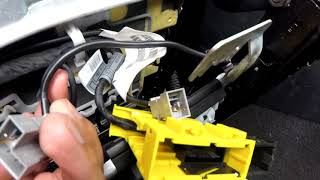
- Check under the passenger seat for a disconnected yellow wiring harness first, as this $0 fix resolves the most common cause of B1022.
- Verify your manufacturer's specific code definition, as B1022 means a faulty passenger seat sensor in a Nissan but indicates a broken steering wheel clock spring in a 1999-2002 GM truck.
- Never install a $20 OCS bypass emulator, as it forces the passenger airbag to deploy at full force even if a child is in the seat, creating massive legal liabilities.
- Search your VIN for NHTSA recalls immediately, as Nissan, Infiniti, and Subaru have issued free dealer repairs for millions of vehicles with faulty OCS sensors.
What Does B1022 Mean?

B1022 indicates your car's main safety computer (SRS Module) lost communication with or received an invalid signal from the Occupant Classification System (OCS). The OCS uses passenger seat sensors to determine occupant weight and position, deciding whether to enable the passenger-side airbag. When this code triggers, the airbag system defaults to a fail-safe mode, illuminating the warning light and disabling all airbags.
Technical definition: B1022 signifies a communication failure, implausible signal, or electrical fault within the Occupant Classification System (OCS) control module or related components. The system cannot reliably determine if a passenger is present, forcing the Airbag Control Unit to set a fault. Manufacturer definitions vary significantly, sometimes pointing to completely different systems (see Manufacturer Quirks).
Can I Drive With B1022?
No — Do Not Drive. The car drives normally, but it is unsafe. Code B1022 disables the entire Supplemental Restraint System (SRS) to prevent accidental deployment. NO airbags will deploy for you or your passengers in a crash, and seatbelt pretensioners are deactivated. Driving with this light on is a major safety risk and causes an automatic failure of vehicle safety inspections in many states.
Common Causes

- Loose or disconnected electrical connector under the passenger seat (Very Common) — Items stored under the seat, aggressive vacuuming, or shifting the seat rapidly pulls connectors loose. This is the first thing to check and the easiest to fix.
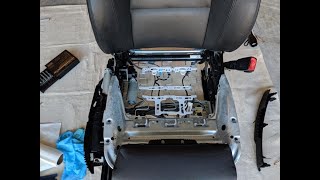
- Faulty Occupant Classification System (OCS) sensor mat (often from liquid damage) (Common) — The sensor mat is a pressure-sensitive grid inside the seat cushion. Repeated flexing, kneeling on the seat, or liquid spills short-circuit the delicate internal electronics, requiring a full mat replacement.
- Damaged wiring under the passenger seat (Common) — The wires under the seat are thin and easily pinched, frayed, or broken by the seat's movement mechanism or objects shoved underneath it.
- Blown fuse shared with another component (Less Common) — On VW and Audi models, the OCS module shares a fuse with components like the A/C high-pressure sensor. A fault in the A/C blows the fuse, cutting power to the OCS module and triggering B1022.
- Crash data stored in the SRS Airbag Control Module (Less Common) — If the vehicle was in an accident, the main airbag module stores 'crash data.' This triggers communication codes like B1022 and locks the system until the module is professionally reset or replaced.
- Faulty Occupant Classification System (OCS) control module (Rare) — The dedicated computer module for the OCS system fails occasionally, though less frequently than wiring or sensor mats. This is a diagnosis of last resort.
- Improperly installed aftermarket electronics (Rare) — Poorly installed remote starters or audio equipment interfere with the CAN bus communication network, disrupting communication with the OCS module.
Symptoms

- Airbag warning light is on or flashing — The most obvious symptom. The light remains illuminated as long as the fault is active.
- Passenger airbag 'OFF' indicator is always on — The light indicating the passenger airbag is disabled stays lit, even when an adult sits in the seat.
- Failed state vehicle safety inspection — An illuminated airbag warning light is an automatic failure for mandatory safety inspections in states like New York and Virginia.
- Airbag system is completely disabled (scan-tool only — no driver-felt sign) — Most systems disable all airbags as a safety precaution when a fault is detected. Zero airbags will deploy in an accident.
Diagnostic Flowchart
Tap your situation to follow the diagnostic path that matches what you're seeing on this code.
Common Fixes & Costs
- Reconnecting loose under-seat connector — Parts: $0, Labor: $0 - $150 (shop minimum), ~0.5 hr book time (DIY)
- Replacing a blown fuse — Parts: $2 - $10, Labor: $0 - $150 (diagnosis fee), ~0.2 hr book time (DIY)
- Repairing damaged wiring under the passenger seat — Parts: $10 - $30, Labor: $150 - $300, ~1.5 hr book time (Intermediate)
- Replacing the passenger seat cushion (with integrated OCS sensor mat) — Parts: $400 - $1,500, Labor: $200 - $500, ~2.5 hr book time (Professional)
- Replacing the OCS Control Module — Parts: $150 - $500, Labor: $150 - $300 (includes calibration), ~1.5 hr book time (Professional)
- Resetting the SRS Airbag Control Module (after an accident) — Parts: $50 - $150 (mail-in service), Labor: $100 - $200 (removal/reinstallation), ~1.0 hr book time (Intermediate)
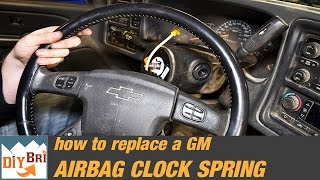
- Replacing the Clock Spring (GM-specific issue) — Parts: $60 - $300, Labor: $150 - $300, ~1.5 hr book time (Intermediate)
DIY vs Professional
- Reconnecting loose under-seat connector — Beginner:
Tools: Flashlight - Replacing a blown fuse — Beginner:
Tools: Fuse puller, owner's manual - Repairing damaged wiring — Beginner:
Tools: Soldering iron, heat shrink tubing, wire strippers, multimeter - Replacing the OCS Sensor Mat/Seat Cushion — Beginner:
Tools: Socket set, torque wrench, hog ring pliers, trim tools, SRS scan tool - Replacing the OCS Control Module — Beginner:
Tools: Socket set, trim removal tools, SRS scan tool - Replacing the Clock Spring — Beginner:
Tools: Steering wheel puller, socket set, torque wrench
Used vs. New Parts: Buying Guide
When a used part is worth it: For the expensive passenger seat cushion with the integrated OCS sensor, a used part from a low-mileage, non-recalled vehicle is cost-effective for older cars where a new OEM part exceeds the vehicle's value.
Donor-vehicle mileage cap: roughly under 60000 miles for the part to have meaningful remaining life.
Donor quality checklist:
- Verify the donor vehicle's VIN is not part of an OCS-related recall.
- Inspect the part for water damage, staining, or physical compression damage to the cushion.
- Match the part number exactly. OCS sensors are calibrated and will not interchange even if they look identical.
Decision logic:
- If Vehicle is under a known recall or extended warranty for the OCS sensor → Always use the free dealer repair with a new OEM part.
- If The part is just the OCS control module and not the sensor mat → A used module is a good value, but verify it does not require VIN programming to the new vehicle.
- If Vehicle is over 10 years old and the OEM seat cushion costs over $1,000 → A used seat assembly from a reputable salvage yard is a reasonable choice. Budget for professional installation and calibration.
Warranty tradeoff: Used parts from salvage yards typically have a 30-90 day warranty. New OEM parts installed by a dealer carry a 12-month/12,000-mile warranty.
Worst-case if a used part fails: $300-$500 if a used part is faulty or incompatible, representing repeat labor costs.
What Happens If You Wait — Timeline
- Immediate: Code B1022 is stored. The airbag warning light illuminates. The entire Supplemental Restraint System (SRS) is disabled as a fail-safe. No airbags will deploy. (MPG impact: 0%% · Added cost: $0)
- 0-12 months: The vehicle fails its mandatory state safety inspection, preventing registration renewal. The safety risk of having no airbags persists. (MPG impact: 0%% · Added cost: $50-$200 in failed inspection fees.)
- 12-24 months: Continued operation with a critical safety defect increases legal and financial liability in the event of an accident resulting in injury. (MPG impact: 0%% · Added cost: Immense potential legal costs if an accident occurs.)
- 24+ months: No further mechanical degradation occurs. The cost is the certainty of zero airbag protection in a crash. (MPG impact: 0%% · Added cost: The incalculable cost of severe injury or fatality.)
Cost of Not Fixing It
- Immediate: Complete failure of the Supplemental Restraint System (SRS). No airbags or seatbelt pretensioners will deploy in an accident. (Added cost: N/A - This is a critical safety failure, not a monetary cost.)
- 0-12 months: Failure of mandatory state vehicle safety inspection, preventing vehicle registration renewal. (Added cost: $50 - $200 in fines or failed inspection fees.)
- Long-term: Increased personal liability in an accident due to a known, unfixed safety defect. (Added cost: The incalculable cost of injury or death that a functional airbag system prevents.)
Diagnosis Steps
- Read Fault Codes with an SRS-Capable Scanner
A standard $20 OBD-II reader cannot access the airbag module. Use an advanced scanner to read B-codes (Body codes). Confirm B1022 is active and note any other related codes (like B1018) to guide your diagnosis.
Tools: SRS-capable OBD-II Scanner (Intermediate) - Perform a Thorough Visual Inspection
Move the passenger seat all the way forward and up. Look under the seat for loose connectors (often yellow), pinched wires, or obvious damage. Gently tug on the connectors to ensure they are fully seated.
Tools: Flashlight (Beginner) - Check for Recalls and Technical Service Bulletins (TSBs)
Search your VIN on the NHTSA website. Millions of Nissan, Infiniti, and Subaru vehicles have active recalls for faulty OCS systems, entitling you to a free dealer repair.
Tools: Internet access, Vehicle VIN (Beginner) - [Pro Tip] Check for Shared Fuses
For VW/Audi models, check the vehicle's fuse diagram. If the OCS module shares a fuse with the A/C high-pressure sensor or power mirrors, test that fuse. A blown shared fuse kills power to the OCS.
Tools: Fuse puller, digital multimeter, vehicle manual (Beginner) - Analyze Live Data
View the live data stream from the OCS module using an advanced scanner. Sit in the passenger seat. If the weight reading stays at 0 lbs or shows a nonsensical negative number, the sensor mat or its direct wiring is faulty.
Tools: Advanced OBD-II Scanner (Intermediate) - Test Wiring and Connectors
Disconnect the battery. Unplug the OCS and main SRS modules. Use a multimeter to check continuity and resistance in the power, ground, and communication wires. A good ground reads <1.0 ohm. Power shows ~12.6V with the key on.
Tools: Digital Multimeter, vehicle-specific wiring diagram (Advanced) - [Pro Tip] Test the OCS Sensor Mat Resistance
Check resistance across specific pins on the sensor mat connector. A healthy mat typically reads between 7-15 kOhms (verify with your manual). Infinite resistance (OL) or near-zero resistance confirms a failed mat.
Tools: Digital Multimeter, vehicle service manual (Advanced) - [Advanced] Test CAN Bus Voltages
With the system connected and key on, check voltages on the CAN High and CAN Low wires at the OCS module. CAN High should show ~2.7V and CAN Low ~2.3V. Identical voltages or a short to ground (0V) indicates a communication line fault.
Tools: Digital Multimeter, wiring diagram (Advanced) - [Advanced] Test GM Clock Spring Resistance
For 1999-2002 GM trucks (where B1022 means 'Driver Deployment Loop Resistance High'), disconnect the battery and driver's airbag. Measure resistance through the clock spring. It must be 1.5 to 2.5 ohms. Higher readings require replacement.
Tools: Digital Multimeter, trim removal tools (Advanced) - [Expert Tip] Scope Test the Communication Line
Use an oscilloscope on the communication wire between the OCS and SRS modules. With the OCS unplugged, look for a square wave data signal from the SRS module. If the waveform doesn't change when plugging in the OCS module, the module is dead.
Tools: Automotive Oscilloscope, wiring diagram (Expert)
When This Code Triggers (Freeze-Frame Conditions)
- System Status: Key-On, Engine Off/Running (The SRS module performs a self-test every time the ignition turns on. The B1022 code typically sets during this initial 6-second check if communication with the OCS module fails.)
- Fault Priority: 2 (On many systems (like VW/Audi), SRS faults receive a priority number. A priority of 2 indicates a significant safety-related fault that disables the system.)
- Fault Frequency: 1 or more (This counter increments each time the fault is detected during a drive cycle. A persistent fault has a frequency that increases with each key cycle.)
- Reset Counter: 40 (Indicates the number of fault-free drive cycles required before the code clears automatically. For SRS codes, automatic clearing is disabled; a scanner is mandatory.)
Related Codes
- B1018 — On Nissan vehicles, B1018 means 'OCS Unit Internal Failure,' while B1022 indicates a 'Communication Failure'. Seeing them together strongly suggests the OCS module is faulty.
- B00C1 / B00C2 — Specific codes for the OCS sensor mat. B00C1 means 'OCS Sensor Mat Performance' and B00C2 means 'Not Calibrated'. Seeing these alongside B1022 confirms the mat itself is the problem.
- B00A0 — A generic code for 'Occupant Classification System Subfault.' B1022 is more specific, pointing to the communication aspect of the subfault.
- B1129 — On Infiniti vehicles, this side airbag fault appears alongside B1022 when an installer improperly attempts to bypass the OCS sensor and side airbag using incorrect resistors.
Climate & Environmental Factors
- High Humidity / Water Intrusion: Moisture from spills, open windows, or humid climates penetrates the seat cushion and short-circuits the OCS sensor mat's delicate circuits.
- Extreme Cold: Cold weather causes materials to contract, loosening marginal electrical connectors or exposing hairline breaks in the OCS sensor mat wiring. The light may appear on a cold start and disappear once the cabin warms up.
- Extreme Heat: Prolonged high heat accelerates the degradation of plastics and wiring insulation, making them brittle and prone to cracking under the seat.
How to Talk to a Mechanic About This Code
Say this: "I have an airbag light on and my scanner shows a B1022 code. I've already visually checked the connectors under the passenger seat. I'd like to schedule a diagnostic to test the wiring, the Occupant Classification sensor mat, and the control module to pinpoint the failure."
This signals you have done basic homework and directs the technician toward a specific diagnostic path. It prevents them from charging you an hour of labor just to plug in a connector you already checked.
Avoid saying:
- 'My airbag light is on, can you fix it?'
- 'Just do whatever it takes to turn the light off.'
- 'I heard it's probably the sensor, can you just replace it?'
Questions to ask before authorizing the repair:
- Can you show me the live data from the OCS sensor to confirm it's not responding to weight?
- Did you perform a continuity and resistance test on the wiring harness between the sensor and the module?
- If the sensor or module needs to be replaced, does the new part require calibration, and is that cost included in your labor estimate?
- What is the warranty on this specific repair, covering both the part and the labor?
Where to Take It: Dealer vs Independent vs Chain
- Dealer:
Often necessary. If your car is on a recall list, this is your only option for a free repair. For out-of-warranty work, they are often the only shop with the required calibration tools.
Best for: Vehicles under a recall or extended warranty for the OCS system (common on Nissan, Subaru, BMW)., Any repair requiring replacement of the OCS sensor mat or control module, as these parts require proprietary software for calibration.
Downsides: Highest labor rates., May default to replacing the entire expensive seat cushion assembly rather than diagnosing a simpler wiring fault. (Typical cost: +50% vs. baseline) - Independent Shop:
Good for diagnosis, limited for repair. A trusted independent shop is the best place to start to diagnose the fault cheaply. If a new module or sensor mat is needed, you will likely have to go to the dealer for final calibration.
Best for: Out-of-warranty vehicles when the fault is suspected to be simple wiring damage or a blown fuse., Diagnosing the problem before committing to an expensive part replacement.
Downsides: Must confirm they have an advanced scan tool capable of reading SRS codes and live data., Most cannot perform the final OCS calibration required for new sensors. (Typical cost: +0% vs. baseline) - Chain Shop:
AVOID. This is a safety-critical system requiring specialized tools and knowledge. It is far outside the scope of a typical chain shop.
Best for: Oil changes, tires, and brakes.
Downsides: Technicians generally lack the specialized training for complex SRS diagnostics., High potential for misdiagnosis leading to unnecessary, expensive repairs. (Typical cost: -10% vs. baseline)
When to Walk Away From the Repair
If the estimated repair cost exceeds 40-50% of the car's private-party value, and the car is not under warranty, you should seriously consider selling or trading it in rather than repairing it.
- Car worth $4000, fix is $1800: Walk away. The repair cost is 45% of the car's value. It's not economically sensible to proceed.
- Car worth $15000, fix is $1200: Fix it. The repair is well below the threshold. However, for a BMW of this era, first confirm with a dealer that it's not covered by the 15-year extended warranty for the OC3 mat.
- Car worth $2500, fix is $1500: Walk away. The repair cost is 60% of the car's value. The vehicle is likely near the end of its economic life.
What Scan Tool You Need for This Code

Minimum: A scan tool that can read and clear Supplemental Restraint System (SRS) or Airbag codes. These are often called '4-system' or 'ABS/SRS' scanners.
A standard $20 OBD-II engine code reader will not communicate with the SRS module. It will show 'No Codes Found' even though the airbag light is on, making it useless for diagnosing a B1022 fault.
Budget: Autel AutoLink AL619 (~$90) — Reads and clears engine, ABS, and SRS codes for most major vehicle brands. It confirms the B1022 code is present and turns off the light after a successful repair.
Mid-range: Foxwell NT630 Plus (~$150) — Provides robust ABS and SRS diagnostics, including the ability to view live data from the OCS module. This is critical for seeing if the weight sensor is responding.
Professional: Autel MaxiCOM MK808 / Xtool IP819 (~$500-800) — Offers bi-directional control and special functions, including the critical 'OCS Calibration' or 'Zero Point Reset' function required after replacing an OCS sensor mat.
Rent vs buy: Buy. Most auto parts stores like AutoZone do NOT rent or loan out SRS-capable scan tools due to safety and liability concerns. Their free loaner tools are for engine codes only.
How to Clear the Code After You Fix It
- Ensure all components are securely reconnected.
- Reconnect the vehicle's battery.
- Use an SRS-capable OBD-II scan tool to read and clear the fault codes from the Airbag Control Module.
- Turn the ignition off, then on again. Verify the airbag warning light turns off after the initial 6-second system check.
Drive cycle (~20 minutes): An SRS-specific drive cycle is not required. The system performs a self-test at every key-on. If the repair is successful, the light stays off immediately.
Readiness monitors affected: Supplemental Restraint System (SRS)
Watch out for:
- Using a standard $20 OBD-II code reader that cannot access or clear SRS (B-prefix) codes.
- Failing to fix the root cause, causing the code to return immediately after clearing.
- Forgetting to calibrate a new OCS sensor mat or module to the vehicle, which prevents the code from clearing.
Will This Fail Emissions / State Inspection?
Yes — this code typically fails an OBD-II emissions inspection.
- California: While the airbag light relates to safety, not smog, many inspection stations refuse to pass a vehicle with any illuminated warning lights as a matter of policy.
- New York: An illuminated airbag warning light is an automatic failure for the mandatory state safety inspection.
- Texas: An illuminated airbag light is NOT currently a cause for failure during the Texas state safety inspection.
Most Commonly Affected Vehicles
- Nissan Rogue, Altima, Sentra, Frontier (2007-2018) — Subject to massive recalls (NHTSA #16V244) affecting ~3.5 million vehicles where the fix involved software updates or OCS control unit replacement.
- Infiniti G37, JX35, Q50, QX60 (2011-2016) — Part of a major recall (Campaign #R1606) for faulty OCS software and sensors that misclassify adult passengers. The fix requires replacing the OCS unit and a 'Zero Point Reset'.
- Audi / Volkswagen A3, Q5, Golf, Jetta (2010-2015) — Code B1022 often appears with a 'Not Configured' message after battery disconnects, requiring VCDS calibration. Also caused by a blown fuse shared with the A/C system.
- Subaru Outback, Forester, Legacy (2009-2022) — Recall WRA-24 affects 2020-2022 models due to a faulty capacitor in the ODS sensor that cracks and short circuits. Repair quotes range from $1,200 to $2,000 if out of warranty.
- BMW 3-Series (E90), 5-Series (E60) (2006-2011) — BMW extended the warranty for the passenger seat occupancy mat (OC3) to 15 years with unlimited mileage due to high failure rates.
- Hyundai / Kia Sonata, Elantra, Optima, Forte (2011-2015) — Experience high resistance in the OCS sensor mat. Diagnosis involves checking resistance values with a multimeter before condemning the sensor.
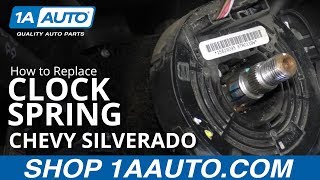
- Chevrolet / GMC K1500, Silverado, Tahoe (1999-2002) — On these older trucks, B1022 means 'Driver Deployment Loop Resistance High.' This points to a faulty clock spring in the steering column, completely unrelated to the passenger seat.
Manufacturer-Specific Notes
- Nissan / Infiniti: Definition is 'Communication Between Occupant Classification System & Airbag Control Module Interrupted.' These brands have numerous recalls requiring a 'Zero Point Reset' after repair.
- Volkswagen / Audi: Definition is 'Seat occupied recognition control module.' A 'Not Configured' sub-code is common after a battery disconnect and requires recalibration using VCDS.
- General Motors (Older): On 1999-2002 GM trucks, B1022 points to 'Driver Deployment Loop Resistance High,' caused by a faulty clock spring in the steering column, unrelated to the passenger seat.
- Jeep: On some Jeep models, B1022-15 means 'Output Shaft Speed Sensor Intermittent Failure,' a transmission issue completely unrelated to airbags.
- BMW: Failure of the passenger seat occupancy sensor mat (OC3) is so common that BMW issued a 15-year, unlimited mileage extended warranty for the part on many 2006-2011 models.
Real Owner Stories
2009 Nissan Rogue at 200K miles - The 'Check Everything' Story
Airbag light was flashing with code B1022. The owner tried a manual reset and replaced the battery, but the light remained.
What they tried:
- Checked for loose wires under the passenger seat; everything appeared connected.
Outcome: The cause was a failed OCS sensor bladder within the seat cushion, a common issue on first-generation Rogues. The owner had to replace the entire seat bottom.
Lesson: On high-mileage vehicles, a simple code often points to the failure of an integrated, expensive part. Visual checks are a good first step, but be prepared for a complex diagnosis.
2012 VW Jetta TDI - The Misdiagnosis Averted
Airbag light with code B1022 appeared. The owner also noticed the A/C was blowing warm air.
What they tried:
- A scan revealed the fuse for the OCS module (SC13) was shared with the A/C high-pressure sensor.
Outcome: Replacing the single 5-amp fuse fixed both problems. A short in the A/C system caused the shared fuse to blow, cutting power to the OCS module.
Lesson: Always check for seemingly unrelated symptoms. On European cars, control modules share fuses. A quick fuse check prevents the costly misdiagnosis of replacing an SRS component.
2006 BMW 3-Series (E90) - The Warranty Win
The airbag warning light came on. Diagnosis pointed to a faulty passenger seat occupancy sensor mat (OC3 mat).
What they tried:
- The owner received a quote for over $1,200 for the repair at a dealership.
Outcome: The owner learned BMW extended the warranty on the OC3 mat to 15 years with unlimited mileage due to high failure rates. The repair was covered for free.
Lesson: Before paying for an expensive OCS repair, check for extended warranties or 'goodwill' programs. This saves you the entire cost of the repair.
1999 Chevrolet Silverado - The Unusual Root Cause
Airbag light on, code B1022. On this specific GM truck, the code means 'Driver Deployment Loop Resistance High'.
What they tried:
- Diagnosis focused on the driver's side airbag circuit, testing resistance with a multimeter.
Outcome: Resistance through the clock spring was out of the 1.5-2.5 ohm specification. Replacing the $100 clock spring resolved the B1022 code.
Lesson: The same code has drastically different meanings across manufacturers. Verify the specific definition for your vehicle's year, make, and model before buying parts.
How to Prevent This Code From Triggering
- Avoid storing items under the passenger seat (Daily habit) — Objects like water bottles or bags shift during driving and unplug the delicate OCS sensor connectors, the most common cause of a B1022 fault.
- Be gentle when vacuuming (During cleaning) — Aggressively shoving a vacuum nozzle under the seat easily disconnects the main yellow OCS wiring harness or damages the thin wires.
- Do not kneel on the passenger seat (As needed) — The OCS sensor is a mat with a grid of fine pressure-sensitive circuits. Kneeling creates a point pressure that breaks these internal circuits permanently.
- Clean up liquid spills immediately (As needed) — Moisture seeping into the seat cushion short-circuits the OCS sensor mat or corrodes its connections.
Frequently Asked Questions
Will my airbags still work with a B1022 code?
No, you must assume they will not. The computer disables the SRS system to prevent accidental deployment when a fault is detected. The illuminated airbag warning light confirms the entire system is offline.
Can I just clear the code to turn the light off?
You can clear the code with an SRS scanner, but it returns immediately if the underlying fault remains. This is a 'hard code' tied to a physical problem and cannot be permanently erased until repaired.
Why did the light come on after I cleaned my car?
Shoving a vacuum under the passenger seat or moving it forcefully easily unplugs the yellow OCS sensor connector. Always check under the seat for disconnected wires after cleaning.
Can I install an OCS sensor bypass or emulator?
Never use bypass modules, as they force the passenger airbag to deploy at full force even if a child is in the seat. This creates a massive safety risk and exposes you to severe legal liability in an accident.
Is a B1022 code an automatic State Inspection failure?
Yes, in many regions like New York, an illuminated airbag light is an automatic failure. However, states like Texas currently do not fail vehicles for airbag lights. Always verify your local jurisdiction's current regulations.
Why did the airbag light return after a recall was performed?
The recall may have only addressed a software update while the physical sensor mat has now failed. Wiring is sometimes disturbed during repair, or the replacement part itself is faulty.
What are the most common misdiagnoses for a B1022 code?
Mechanics often mistakenly replace the expensive seat cushion sensor mat before ruling out loose connectors or damaged wiring. On VW/Audi models, a blown fuse shared with the A/C system triggers B1022, leading to unnecessary airbag repairs.
Can I replace the OCS sensor mat myself?
This is highly discouraged for beginners because it requires removing the seat, stripping the upholstery, and handling delicate sensors. The new sensor also requires calibration using a dealer-level scan tool to function.
Is it safe to have a passenger if the airbag light is on?
The car is mechanically safe to drive, but the passenger has zero airbag or seatbelt pretensioner protection in a crash. You should repair this significant safety risk immediately.
Key Takeaways
- Code B1022 disables your entire Supplemental Restraint System (SRS), meaning zero airbags will deploy in a crash.
- Check under the passenger seat for a disconnected yellow wiring harness first, as this $0 fix resolves the most common cause of B1022.
- Verify your manufacturer's specific code definition, as B1022 means a faulty passenger seat sensor in a Nissan but indicates a broken steering wheel clock spring in a 1999-2002 GM truck.
- Never install a $20 OCS bypass emulator, as it forces the passenger airbag to deploy at full force even if a child is in the seat, creating massive legal liabilities.
- Search your VIN for NHTSA recalls immediately, as Nissan, Infiniti, and Subaru have issued free dealer repairs for millions of vehicles with faulty OCS sensors.
Helpful Videos


The information in this article is provided for general reference and educational purposes only. Vehicle specifications, procedures, and part compatibility can vary by production date, trim level, and region. Always consult your vehicle's factory service manual and verify part numbers before purchasing or performing repairs. Safety-critical components such as airbags, seat belts, and braking systems should be installed by a qualified professional.
- 🎬 Helpful Videos
- What Does B1022 Mean?
- Can I Drive With B1022?
- Common Causes
- Symptoms
- Diagnostic Flowchart
- Common Fixes & Costs
- DIY vs Professional
- Used vs. New Parts: Buying Guide
- What Happens If You Wait — Timeline
- Cost of Not Fixing It
- Diagnosis Steps
- When This Code Triggers (Freeze-Frame Conditions)
- Related Codes
- Climate & Environmental Factors
- How to Talk to a Mechanic About This Code
- Where to Take It: Dealer vs Independent vs Chain
- When to Walk Away From the Repair
- What Scan Tool You Need for This Code
- How to Clear the Code After You Fix It
- Will This Fail Emissions / State Inspection?
- Most Commonly Affected Vehicles
- Manufacturer-Specific Notes
- Real Owner Stories
- 2009 Nissan Rogue at 200K miles - The 'Check Everything' Story
- 2012 VW Jetta TDI - The Misdiagnosis Averted
- 2006 BMW 3-Series (E90) - The Warranty Win
- 1999 Chevrolet Silverado - The Unusual Root Cause
- How to Prevent This Code From Triggering
- Frequently Asked Questions
- Will my airbags still work with a B1022 code?
- Can I just clear the code to turn the light off?
- Why did the light come on after I cleaned my car?
- Can I install an OCS sensor bypass or emulator?
- Is a B1022 code an automatic State Inspection failure?
- Why did the airbag light return after a recall was performed?
- What are the most common misdiagnoses for a B1022 code?
- Can I replace the OCS sensor mat myself?
- Is it safe to have a passenger if the airbag light is on?
- Key Takeaways
- 🎟️ Get 5% Off