

OBD-II Code B1019: Airbag System Configuration Mismatch
What B1019 means, why it triggers, and how to fix it
- Code B1019 disables your entire airbag system, leaving you unprotected in a crash and making the vehicle unsafe to drive.
- Inspect the wiring first; broken wires in a door harness or a loose yellow connector under a front seat cause over 50% of B1019 faults.
- GM owners with code B1019-3A should check TSB 07-09-41-008B, which requires a $150-$300 dealer software update rather than expensive hardware replacement.
- Always disconnect the negative battery cable and wait 30 minutes before touching any yellow SRS connectors to prevent accidental airbag deployment.
What Does B1019 Mean?

B1019 means the Airbag Control Module (SDM) detects a system configuration mismatch. During startup, the module compares its programmed list of safety components (airbags, sensors, pretensioners) against the hardware it actually detects. If a component is missing, unplugged, or incorrect, the module triggers B1019 and shuts down the entire airbag system as a safety precaution.
Technical definition: The SAE/ISO definition for B1019 is a System Configuration Error. The Sensing and Diagnostic Module (SDM) detects a discrepancy between its calibrated safety system components and the components detected during the key-on self-test. This includes airbag deployment loops, impact sensors, seat belt pretensioners, and Occupant Classification System (OCS) hardware.
Can I Drive With B1019?
No — Do Not Drive. The vehicle will mechanically operate, but it is unsafe to drive. Code B1019 completely disables the Supplemental Restraint System (SRS), meaning no airbags or seat belt pretensioners will deploy in a crash. While driving will not damage other components, the risk of severe injury or death in an accident is dramatically higher.
Common Causes

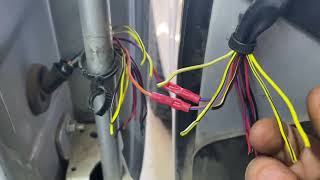
- Damaged or Broken Wiring (Very Common) — Airbag wiring routed through high-stress areas (door hinges, under seats, steering columns) chafes, breaks, or pinches over time. This is the primary cause on Nissan King Cab trucks, where the rear door harness fails from repeated use. 🎬 Watch: Diagnosing B1019 and broken door wires on a Nissan Titan.
- Loose or Corroded Connector (Common) — An unplugged or corroded connector creates an open circuit. Connectors under the front seats are frequently kicked loose, damaged by stored items, or corroded from spilled liquids.
- Incorrectly Programmed or Replaced Module (Common) — If the Airbag Control Module is replaced with a used unit or is not programmed specifically for your car's VIN and equipment level, it expects a different set of components and triggers this code.
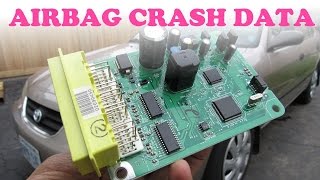
- Faulty Airbag Control Module (SDM/SRS) (Common) — The module fails internally due to age or electrical faults. If the vehicle was in an accident, the module stores 'crash data' and locks itself, requiring a professional reset before it functions again. 🎬 Watch: How to reset an airbag module and clear crash data.
- Faulty Seat Belt Pretensioner or Buckle Sensor (Less Common) — The seat belt assembly contains a sensor and a pyrotechnic pretensioner. If the internal wiring fails, it creates an open circuit, prompting the main module to log a B1019 fault.
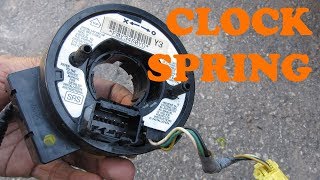
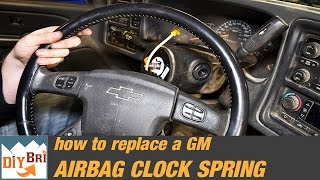
- Defective Clock Spring (Less Common) — The clock spring is a coiled ribbon cable in the steering column maintaining electrical contact for the driver's airbag. If it breaks, the SDM loses connection to the airbag and triggers a configuration fault.
- Faulty Occupant Classification System (OCS) Mat (Less Common) — The passenger seat contains a pressure-sensitive mat that detects occupant weight. If this mat fails, the SDM cannot verify the passenger-side safety configuration.
- Water Intrusion / Corrosion (Rare) — Water leaking into the cabin from a bad seal pools under the carpet where the airbag control module sits. This corrodes the pins, causing high resistance or short circuits that result in communication errors.
Symptoms

- Airbag Warning Light is On — The primary symptom. The light on your instrument cluster remains solid or, on some vehicles like Nissan, flashes rhythmically.
- Passenger Airbag 'Off' Light is On — The passenger airbag indicator stays lit on 'OFF' even when an adult is seated, because the system cannot verify the occupant sensor's status.
- Message on Information Display — The driver information center displays 'Service Airbag System' or 'Airbag Fault'.
- Failed State Safety Inspection — A vehicle automatically fails state or local safety inspections if the airbag warning light is illuminated.
- Airbags are Disabled (scan-tool only — no driver-felt sign) — The entire Supplemental Restraint System (SRS) is inactive and will not deploy in an accident.
Common Fixes & Costs
- Repairing Broken Wires — Parts: $5-$20, Labor: $150-$450, ~1.5 hr book time (Intermediate)
- Resetting the Airbag Control Module (Post-Accident) — Parts: $50-$150, Labor: $100-$250, ~1.0 hr book time (DIY)
- Reprogramming the Instrument Panel Cluster (IPC) — Parts: $0, Labor: $150-$300, ~1.0 hr book time (Professional)
- Replacing the Seat Belt Assembly (Pretensioner)
— Parts: $150-$500, Labor: $150-$300, ~1.2 hr book time
(Intermediate)
Nissan Frontier: OEM
Subaru Outback/Forester: OEM - Replacing the Clock Spring
— Parts: $50-$650, Labor: $150-$300, ~1.5 hr book time
(Intermediate)
RAM 1500: OEM
RAM 1500: OEM - Replacing the Airbag Control Module (SDM)
— Parts: $400-$1200, Labor: $150-$350, ~1.8 hr book time
(Professional)
Chevrolet Silverado (2014): OEM
DIY vs Professional
- Repairing Broken Wires — Beginner:
Tools: Wire strippers, butt connectors, heat shrink tubing, soldering iron, multimeter. - Resetting the Airbag Control Module — Beginner:
Tools: Specialized EEPROM programming equipment. - Replacing the Seat Belt Assembly — Beginner:
Tools: Socket set, torque wrench, trim removal tools. - Replacing the Clock Spring — Beginner:
Tools: Steering wheel puller, socket set, torque wrench, trim removal tools. - Replacing the Airbag Control Module — Beginner:
Tools: Socket set, trim removal tools, professional scan tool for programming.
Used vs. New Parts: Buying Guide
When a used part is worth it: For components like seat belt pretensioners or clock springs, a used part from a low-mileage, collision-free vehicle is cost-effective. A used Airbag Control Module is never recommended unless utilizing a professional VIN reprogramming service.
Donor-vehicle mileage cap: roughly under 75000 miles for the part to have meaningful remaining life.
Donor quality checklist:
- Verify the donor vehicle was not involved in a collision.
- Match part numbers exactly. Superseded numbers may not be compatible.
- Ensure wiring-related parts like clock springs have no visible damage or stretching.
Decision logic:
- If The part is the Airbag Control Module → Reset your original module or buy new. A used module requires professional VIN reprogramming and crash data clearing.
- If The part is a seat belt pretensioner or clock spring and budget is a primary concern → A used part from a reputable salvage yard with a warranty is an acceptable risk.
- If The part is safety-critical and your budget allows → Buy new OEM or a professionally rebuilt component to ensure reliability.
Warranty tradeoff: Used parts typically have a 30-90 day warranty. New OEM parts carry a 1-year or longer warranty. Professional module reset services often offer a lifetime warranty.
Worst-case if a used part fails: $500-$1500 if a used module or major component is faulty, covering the bad part plus repeat labor.
Cost of Not Fixing It
- Immediate: Total failure of the Supplemental Restraint System (SRS). Airbags and seat belt pretensioners will NOT deploy in a crash. (Added cost: No direct financial cost, but an extreme personal safety risk.)
- Next State Inspection: Guaranteed failure of any state safety inspection due to the illuminated airbag warning light. (Added cost: $20-$70 for the failed inspection fee, plus the eventual repair cost.)
- Long-Term: No progressive mechanical damage to other vehicle systems. The only cost is the persistent and critical safety failure. (Added cost: $0)
Diagnosis Steps

- Read All SRS Codes
Use an OBD-II scanner capable of reading SRS/Airbag 'B' codes. Note B1019 and any accompanying codes. A specific code, like B1081 on a Nissan, points directly to the passenger pretensioner circuit, isolating the problem immediately.
Tools: OBD-II Scanner (SRS capable) (Beginner) - Visually Inspect Wiring and Connectors
Physical damage is the most common cause. Inspect wiring under both front seats for pinched wires or loose yellow connectors. On trucks with rear-hinged doors, pull back the rubber boot between the door and cab to check for broken wires.
Tools: Flashlight, trim removal tools (Beginner) - Check for TSBs and Recalls
Search for Technical Service Bulletins (TSBs) or Recalls for your specific VIN. Nissan issued recall 06V-459 for Titan door harnesses, and GM released TSB 07-09-41-008B for a B1019-3A software issue requiring dealer reprogramming.
Tools: Internet access (Intermediate) - Inspect SDM Connectors for Corrosion
Disconnect the battery and wait 30 minutes. Locate the SDM (usually under the center console or seats) and unplug its main connectors. Inspect for green or white corrosion on the pins or evidence of water damage.
Tools: Socket set, trim removal tools, flashlight (Intermediate) - Verify Module Configuration with a Scan Tool
Using a bi-directional scan tool, navigate to the SDM's live data stream. Compare the programmed expected component list against the actual equipment on the vehicle to determine if the issue is a failed part or incorrect programming.
Tools: Advanced bi-directional scan tool (Professional) - Monitor Live Circuit Resistance
Monitor the Parameter IDs (PIDs) for the resistance of each airbag and pretensioner squib circuit. A healthy circuit reads between 1.5 and 3.5 ohms. Wiggle suspect wires; a reading that spikes or drops to 'OL' confirms an intermittent open circuit.
Tools: Advanced bi-directional scan tool (Advanced) - Test Component Resistance with a Multimeter
Disconnect the battery and wait 30 minutes. Unplug the suspect component's yellow connector. Set a multimeter to 200 ohms. A healthy pyrotechnic charge reads 1.5 to 3.5 ohms. An 'OL' reading confirms the part is bad. Never probe a connected component.
Tools: Multimeter, connector pin tools (Advanced) - Safely Test the Circuit with a Resistor
To isolate the fault to the component or the wiring, substitute the component with a 2.2-ohm SRS test resistor. Reconnect the battery and clear codes. If B1019 disappears, the vehicle wiring is good and the bypassed component is faulty.
Tools: SRS test resistor (2.2 ohm), OBD-II Scanner (Advanced) - Module Reprogramming or Replacement
If the module has incorrect programming, contains crash data, or is internally faulty, it requires professional attention. Have it reprogrammed by a dealer or send it to a mail-in service for crash data clearing.
Tools: Professional programming tools or mail-in service (Professional)
When This Code Triggers (Freeze-Frame Conditions)
- Ignition Cycle Counter: 1 (The fault is detected on the first key cycle after the physical failure occurs.)
- System Voltage: 11-14 Volts (Code sets during the initial key-on self-test at normal battery voltage.)
- Vehicle Speed: 0 mph (The SRS module performs its primary self-test immediately at key-on, before the vehicle moves.)
- Component Status: Open / Not Detected (Freeze frame data includes a status bit for the specific component loop causing the mismatch.)
Related Codes
- B1081 — On Nissan trucks, B1081 ('front passenger pretensioner open circuit') and B1019 appear together. B1081 identifies the specific electrical break in the rear door harness, while B1019 is the resulting configuration error.
- B0092 — Indicates a fault with the Occupant Classification System (OCS) sensor mat. A B0092 fault causes the main module to lose trust in passenger safety components, triggering B1019. Diagnose B0092 first.
- B1022 — A Nissan-specific code indicating a fault with the OCS control unit. B1022 means the OCS 'brain' has a problem, leading the main module to report a B1019 communication failure.
- Subaru DTC 62 / 2C — On Subarus, B1019 accompanied by '62' or '2C' strongly indicates the seat belt assembly itself has failed and requires replacement.
Climate & Environmental Factors
- High Humidity / Water Intrusion: Moisture drives electrical connector corrosion, increasing circuit resistance. SRS modules operate on tight tolerances (1.5-3.5 ohms); even minor corrosion triggers a B1019 fault.
- Extreme Temperature Fluctuations: Temperature changes cause wires and connectors to expand and contract, loosening marginal connections. Electrical resistance naturally increases with heat, pushing borderline circuits over the acceptable threshold.
How to Clear the Code After You Fix It
- Perform physical repair (fix wiring, replace component).
- Reconnect battery if disconnected.
- Use an SRS-capable OBD-II scan tool to erase the B1019 code.
- Cycle the ignition off, then on, and wait for the airbag light to turn off after its 5-7 second self-check.
Drive cycle (~1 minutes): SRS codes do not require a drive cycle. The system self-tests at every key-on. After clearing the code, cycling the ignition from off to on verifies the repair. If the light stays off, the repair is successful.
Watch out for:
- Using a basic engine code reader that cannot access or clear SRS 'B' codes.
- Attempting to clear the code without fixing the root cause; the code returns instantly.
- Failing to disconnect the battery and wait 30 minutes before working on SRS components.
Will This Fail Emissions / State Inspection?
No — by itself this code doesn't fail OBD inspection (but it can keep readiness monitors from setting, which causes a separate fail).
- California: An airbag light will not fail the emissions (smog) check, but a separate safety inspection would fail the vehicle.
- New York: The inspector checks the airbag warning light. You are informed if it is on, but it is an advisory only and not cause for rejection of the safety inspection.
- Texas: Airbags are not an inspected item for the annual safety inspection. A vehicle passes with the airbag light on, though it remains unsafe.
- Virginia: An illuminated airbag light causes an automatic failure of the state safety inspection.
Most Commonly Affected Vehicles
- Nissan Titan / Armada / Frontier (2004-2015) — Extremely common on King Cab models due to wires breaking in the rear door harness. Covered under recall 06V-459 (Nissan ID R0616).
- Chevrolet / GMC Silverado / Sierra / Tahoe / Impala (2007-2014) — Often sets a B1019-3A code. 🎬 See how to troubleshoot B1019 on a Chevy Tahoe or Silverado. TSB 07-09-41-008B identifies this as a software timing issue in the Instrument Panel Cluster (IPC), requiring dealer reprogramming.
- Ford Focus (2011-2018) — Commonly caused by a failed Occupant Classification System (OCS) mat in the passenger seat, or loose connectors under the front seats.
- Volkswagen Jetta (2011-2019) — Known for issues with failing door wiring harnesses and faulty clock springs triggering configuration mismatch codes.
- Toyota Corolla (2011-2019) — Recall 20TA03 addresses an Airbag Control Unit malfunction due to electrical noise. The fix is a dealer-installed noise filter on the harness.
- Subaru Outback / Forester (2008-2014) — Frequently points to a failure of the belt tension sensor integrated into the seat belt buckle. This electrical fault is NOT covered by Subaru's lifetime seat belt warranty.
- RAM 1500 (2009-2018) — Known to have issues with the clock spring. Part numbers have been superseded multiple times, making VIN verification critical.
Manufacturer-Specific Notes
- Nissan: On King Cab models, wiring for the rear seat belt pretensioners passes through the rear-hinged door. Repeated use breaks these wires, making it the number one cause of B1019 on these trucks.
- General Motors (Chevy/GMC): Code B1019-3A is often a software timing error in the Instrument Panel Cluster (IPC), not a part failure. TSB 07-09-41-008B requires reprogramming the IPC before replacing hardware.
- SAAB / GM: B1019 is expected to appear immediately after a new module is installed. The code remains until a specific 'setup' or 'calibration' procedure is completed with a scan tool.
- Subaru: Subaru's lifetime seat belt warranty covers mechanical failures but explicitly EXCLUDES electrical components. Pretensioner circuit faults causing B1019 are not covered.
Frequently Asked Questions
Can I just clear the B1019 code to turn the airbag light off?
No. B1019 is a hard fault in a critical safety system. The Airbag Control Module runs a self-test at every startup. The code reappears instantly until the underlying hardware or configuration problem is repaired.
What are the actual risks of driving with a B1019 code?
The primary risk is that none of your vehicle's airbags or seat belt pretensioners will deploy in an accident. This turns a survivable crash into a potentially fatal one. It is never safe to operate a vehicle with this active code.
Is it safe to work on the airbag system myself?
It is extremely dangerous if proper procedures are ignored. You must disconnect the vehicle's negative battery cable and wait at least 30 minutes before touching any airbag component to discharge backup power. Failure to do so causes accidental airbag deployment and severe injury.
Will a B1019 code cause my car to fail inspection?
Yes. In any jurisdiction requiring a vehicle safety inspection, an illuminated airbag warning light results in an automatic failure.
My car was in an accident and now has this code. What should I do?
After an accident, the Airbag Control Module stores 'crash data' and permanently locks itself. Instead of paying a dealer over $1,000 for a new module, you can mail the locked unit to a specialized reset service. They clear the crash data for $50-$150, making it plug-and-play upon reinstallation.
Why did my mechanic quote $2,500 while another quoted $200?
High quotes usually mean a shop wants to replace the expensive Airbag Control Module without proper diagnosis. A thorough mechanic often finds the actual problem is a simple broken wire or loose connector under a seat. Always demand a complete wiring inspection before authorizing module replacement.
Can I install a used airbag module from a junkyard?
This is strongly discouraged unless performed by a professional. A used module must come from an identical vehicle, have its crash data cleared, and be reprogrammed to your car's specific VIN. Installing an incorrectly configured used module instantly triggers the B1019 code.
My airbag light is flashing, not solid. Is that different?
On some vehicles, particularly Nissans, a slow, rhythmic flashing airbag light indicates the system is in diagnostic mode. The airbag system remains completely disabled in this state. A professional scan tool is required to exit diagnostic mode after completing a repair.
Key Takeaways
- Code B1019 disables your entire airbag system, leaving you unprotected in a crash and making the vehicle unsafe to drive.
- Inspect the wiring first; broken wires in a door harness or a loose yellow connector under a front seat cause over 50% of B1019 faults.
- GM owners with code B1019-3A should check TSB 07-09-41-008B, which requires a $150-$300 dealer software update rather than expensive hardware replacement.
- Always disconnect the negative battery cable and wait 30 minutes before touching any yellow SRS connectors to prevent accidental airbag deployment.
Helpful Videos

The information in this article is provided for general reference and educational purposes only. Vehicle specifications, procedures, and part compatibility can vary by production date, trim level, and region. Always consult your vehicle's factory service manual and verify part numbers before purchasing or performing repairs. Safety-critical components such as airbags, seat belts, and braking systems should be installed by a qualified professional.
- 🎬 Helpful Videos
- What Does B1019 Mean?
- Can I Drive With B1019?
- Common Causes
- Symptoms
- Common Fixes & Costs
- DIY vs Professional
- Used vs. New Parts: Buying Guide
- Cost of Not Fixing It
- Diagnosis Steps
- When This Code Triggers (Freeze-Frame Conditions)
- Related Codes
- Climate & Environmental Factors
- How to Clear the Code After You Fix It
- Will This Fail Emissions / State Inspection?
- Most Commonly Affected Vehicles
- Manufacturer-Specific Notes
- Frequently Asked Questions
- Can I just clear the B1019 code to turn the airbag light off?
- What are the actual risks of driving with a B1019 code?
- Is it safe to work on the airbag system myself?
- Will a B1019 code cause my car to fail inspection?
- My car was in an accident and now has this code. What should I do?
- Why did my mechanic quote $2,500 while another quoted $200?
- Can I install a used airbag module from a junkyard?
- My airbag light is flashing, not solid. Is that different?
- Key Takeaways
- 🎟️ Get 5% Off