

OBD-II Code B1009: EEPROM Checksum Error / Module Memory Failure
What B1009 means, why it triggers, and how to fix it
- Identify your vehicle's specific B1009 definition first; it means a wiper failure on a Honda but a critical memory error on a Chevrolet.
- Test your battery before replacing any modules; resting voltage must exceed 12.4V and cranking voltage must stay above 9.6V to prevent memory corruption.
- Inspect the G218 ground connection on 2014-2020 GM trucks before replacing the Body Control Module (BCM) to save up to $1,500 in unnecessary repairs.
- Stop driving immediately if B1009 triggers in the Airbag (SRS) or Engine Control Module (ECM), as airbags will not deploy and the engine can stall at highway speeds.
What Does B1009 Mean?

B1009 indicates a control module detected a fatal error in its internal memory. This memory (EEPROM) stores vital data like your VIN, security keys, and operational settings. When this data scrambles, the module fails its startup self-check and triggers the code.
Technical definition: The official SAE/ISO definition for the most common variant of B1009 is "EEPROM Checksum Mismatch." A control module continuously runs a self-check on its memory, calculating a digital signature (checksum) from the stored data. If this signature does not match the expected value, it indicates data corruption and sets the DTC.
Can I Drive With B1009?
Yes, But With Caution. You can drive, but doing so carries severe risks. If the code is in the Airbag (SRS) module, airbags will not deploy in a crash. In affected GM trucks, a BCM or ECM fault causes sudden engine stalling or loss of power steering at highway speeds. Driving must be strictly minimized until the issue is diagnosed to prevent unpredictable behavior and ensure safety systems operate.
Common Causes

- Low or Unstable Battery Voltage (Very Common) — This is the leading cause. Jump-starting the vehicle incorrectly, a weak battery, or disconnecting the battery causes voltage spikes or drops that corrupt sensitive data in a module's memory. A battery's efficiency drops by 50% at -17°C (0°F), making this a frequent winter failure.
- Poor Electrical Connections or Grounds (Common) — Corroded or loose wiring and grounds connected to the control module cause intermittent power loss or voltage fluctuations, leading to data corruption. GM TSB 18-NA-161 specifically addresses widespread electrical issues caused by a poor BCM ground (G218) on many trucks and SUVs.
- Faulty Control Module (Common) — The control module itself (BCM, SRS, or ECM) fails internally due to age, heat, vibration, or circuit board degradation, permanently losing the ability to read or write memory correctly.
- Water Intrusion into a Module (Less Common) — Water leaking into the cabin from clogged sunroof drains or bad seals soaks control modules, causing short circuits and permanent damage. This is a known issue on Audi and Volkswagen models where modules sit under seats or in the trunk.
- Faulty Ignition Switch (Less Common) — A worn ignition switch causes intermittent power loss to control modules during startup or shutdown, mimicking the effects of a bad battery and corrupting data. This is frequently noted in Ford Focus models.
- Improper Programming or Flashing (Less Common) — A failed or interrupted attempt to update a module's software leaves the memory in a corrupted state, triggering a checksum error. Incompatible aftermarket tuning devices also cause this.
- Interference from Aftermarket Electronics (Rare) — Improperly installed remote starters, alarms, or stereos interfere with the vehicle's CAN bus data network or cause voltage drops, leading to module memory errors.
Symptoms

- Vehicle Won't Start or Cranks But Won't Start — If the Engine Control Module (ECM), Body Control Module (BCM), or anti-theft module is affected, it fails the security check ('ignition authorization'), preventing the engine from starting.
- Sudden Stalling or Loss of Power Steering — On specific GM trucks and SUVs, a B1009 in the BCM caused by a bad ground leads to the engine stalling or a sudden loss of electric power steering assist while driving.
- Multiple Warning Lights on the Dashboard — The Check Engine Light, Airbag (SRS) light, ABS light, Service Stabilitrak warning, or a security/anti-theft light illuminate simultaneously on the instrument cluster.
- Erratic Electrical Functions — Features controlled by the affected module act up. This includes power windows, door locks, interior lights, the radio, or the instrument panel cluster going blank intermittently.
- Loss of Personalized Settings — Stored radio presets, seat memory positions, or customized settings disappear, as this information lives in the EEPROM of modules like the BCM.
- Specific System Malfunction (Manufacturer Dependent) (also visible on scanner) — On many Hondas, it indicates a wiper system failure. On Dodge/Chrysler vehicles, it links to a flashing A/C recirculation light, and on Fiats, it points to a tail light circuit problem.
Diagnostic Flowchart
Tap your situation to follow the diagnostic path that matches what you're seeing on this code.
Common Fixes & Costs
- Replace a Weak or Faulty Battery — Parts: $150-$350, Labor: $30-$80, ~0.5 hr book time (DIY)
- Clean or Replace Battery Cables and Ground Straps
— Parts: $10-$150, Labor: $50-$200, ~1.2 hr book time
(DIY)
2015-2018 GMC/Chevy Truck (6.0L): OEM - Reprogram/Re-flash the Affected Control Module (BCM, ECM, etc.) — Parts: $0, Labor: $150-$400, ~1 hr book time (Professional)
- Replace the Body Control Module (BCM)
— Parts: $250-$900, Labor: $150-$400, ~2 hr book time
(Professional)
2017-2018 Chevy Silverado/GMC Sierra: OEM
2012-2016 Ford Focus: OEM - Reset the Airbag (SRS) Module After a Crash — Parts: $0, Labor: $50-$100, ~1 hr book time (Intermediate)
- Replace the Airbag (SRS) Module
— Parts: $200-$1,200, Labor: $100-$300, ~1.5 hr book time
(Professional)
2015 Nissan Rogue: OEM
Used vs. New Parts: Buying Guide
When a used part is worth it: For Body Control Modules (BCMs), a used part is cost-effective if it is from the exact same year, make, model, and engine size, and you have access to programming tools. For Airbag (SRS) modules, used parts are highly discouraged due to safety risks and unknown history.
Donor-vehicle mileage cap: roughly under 100000 miles for the part to have meaningful remaining life.
Donor quality checklist:
- Verify the part number on the used module matches the original EXACTLY.
- Ensure the donor vehicle did not suffer from flood or fire damage.
- For BCMs, mileage and VIN are stored in the module; installing a used one causes odometer discrepancies and requires professional programming to sync with your vehicle.
Decision logic:
- If The part is an Airbag (SRS) module → Buy new OEM or have your original module professionally reset. Do not use a junkyard part due to extreme safety liability.
- If The part is a Body Control Module (BCM) and the vehicle is 2010 or newer → Favor a new or professionally remanufactured part. Used BCMs require dealer-level programming that is complex and costly, negating initial savings.
- If The part is a BCM, budget is the primary concern, and you accept the risks → A used part works, but factor in the cost of professional programming ($150-$400) and the risk of it failing or being incompatible.
Warranty tradeoff: Used parts typically have a 30-90 day warranty, if any. New aftermarket parts come with a 1-year to limited lifetime warranty. New OEM parts carry a 1-2 year warranty.
Worst-case if a used part fails: $500-$1500 if a used module is faulty or incompatible, requiring repeat labor costs and the purchase of another module.
What Happens If You Wait — Timeline
- 0-1 month: A 'history' B1009 code sets after a battery change or jump-start. No symptoms are present. Or, an 'active' code appears with minor, intermittent glitches like a flickering dome light or radio presets being lost once. (MPG impact: 0%% · Added cost: $0)
- 1-4 months: Glitches become more frequent. You experience random warning lights (Stabilitrak, ABS), intermittent failure of power windows/locks, or a parasitic drain that weakens the battery overnight. The car requires a jump-start occasionally. (MPG impact: 0-2% (due to alternator strain from low battery)% · Added cost: $150-$350 (for a new battery ruined by parasitic drain))
- 4-8 months: The failing module (e.g., BCM) begins to affect vehicle operation more seriously. You experience a no-start condition that leaves you stranded. On GM trucks, sudden engine stalling or loss of power steering occurs while driving, creating a major safety hazard. (MPG impact: 0-5%% · Added cost: $350-$800 (for towing, diagnostic fees, and potential replacement of a now-dead battery))
- 8+ months: Cascading failure. The erratic voltage and signals from the primary failed module corrupt or damage other modules on the CAN network. What started as one bad BCM now requires replacement of the BCM, radio, and instrument cluster. The repair becomes a complex and expensive electrical nightmare. (MPG impact: 5-10%% · Added cost: $1,500-$3,000+ (for multiple module replacements and extensive diagnostic labor))
Cost of Not Fixing It
- Immediate: If the code is in the SRS (Airbag) module, airbags are disabled and will not deploy in a crash. If in the BCM on affected GM trucks, sudden engine stalling or loss of power steering occurs, posing a severe safety risk. (Added cost: N/A)
- 0-3 months: Continued driving with a faulty BCM causes unpredictable electrical issues, such as a no-start condition that leaves you stranded, or a parasitic battery drain that ruins a new battery. (Added cost: $150-$400 (for towing and a new battery))
- 3+ months: Ignoring a faulty BCM puts stress on other connected electrical systems. Erratic voltage and signals from the failing BCM damages other sensitive modules on the CAN bus network, turning a single module replacement into a multi-module repair. (Added cost: $1000-$3000+)
Diagnosis Steps

- Read the Code and Identify the Module
Use an advanced OBD-II scanner to read the B1009 code and identify which specific module reports it (e.g., BCM, IPC, SDM, RIM). A B1009 in the airbag module requires a completely different repair than one in the BCM. Basic code readers cannot provide this detail.
Tools: Advanced OBD-II Scanner (Intermediate) - Check and Charge the Battery
A weak battery is the most common cause. Use a multimeter to check battery voltage with the engine off. A healthy battery reads 12.6V. A reading below 12.4V indicates a discharged or failing battery. Fully charge the battery and have it professionally load tested.
Tools: Multimeter, Battery Charger, Battery Load Tester (Beginner) - [PRO TIP] Perform a Cranking Voltage Test
Connect a multimeter to the battery terminals. Have a helper crank the engine and monitor the voltage. A healthy battery stays above 9.6 volts during cranking. If it drops below this threshold, the battery is weak and causing the memory corruption, even if resting voltage appears normal.
Tools: Multimeter (Advanced) - Inspect Battery Terminals and Main Grounds
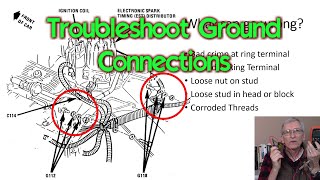
Clean corrosion from the battery terminals and cable ends with a wire brush. Follow the main negative battery cable to its connection points on the chassis and engine block; ensure these grounds are clean, rust-free, and tight. Refer to GM TSB 18-NA-161 for known problematic ground locations like G218.
Tools: Wrench set, Wire brush, Battery terminal cleaner (Beginner) - [PRO TIP] Perform a Loaded Voltage Drop Test
Connect a multimeter's positive lead to the negative battery post and the negative lead to the alternator case. Have a helper crank the engine. A voltage drop above 200mV (0.2V) indicates a bad negative battery cable or connection requiring replacement. A drop over 100mV on the positive cable is also a failure.
Tools: Multimeter with long leads (Advanced) - Perform a Hard Reset
Disconnect both battery cables. Touch the positive and negative cable ends together for 60 seconds to drain residual power from all modules and clear temporary memory glitches. Reconnect the battery (positive first) and check if the issue resolves.
Tools: Wrench set (Beginner) - [PRO TIP] Analyze Module Live Data
For manufacturer-specific codes, use a scan tool to view live data from the suspected component. For a Dodge with a B1009-92 (Recirculation Switch), monitor the switch status in the HVAC data stream. If pressing the button does not change the status to 'On', it confirms a faulty switch, not a memory error.
Tools: Advanced OBD-II Scanner (Intermediate) - Inspect the Affected Module's Wiring
Locate the module identified in Step 1. Visually inspect its connectors and nearby wiring for corrosion, water damage, pinched wires, or physical damage. Gently tug on the wires to ensure they sit securely in the connector.
Tools: Flashlight, Trim removal tools (optional) (Intermediate) - Seek Professional Reprogramming or Replacement
If all previous steps fail, the module's memory is permanently corrupted. The module requires reprogramming (re-flashing) with factory software or complete replacement. This requires specialized tools and manufacturer software subscriptions.
Tools: Professional scan tool, Module programming equipment (Advanced)
When This Code Triggers (Freeze-Frame Conditions)
- Module Voltage: 9.5V - 11.5V (During engine crank or immediately after a low-voltage event.)
- Ignition Status: RUN/START (The self-test that triggers the code runs at every wake-up or ignition-on cycle.)
- Engine RPM: 0 or >400 (The fault logs either before the engine starts (RPM=0) or during cranking.)
- Fault Status: Current, History (The code sets as 'Current' if the checksum fails the initial test, and moves to 'History' on subsequent key cycles if the error was transient.)
Related Codes
- B1000 — This is another module internal failure code, often for 'ECU Malfunction'. B1009 is more specific, pointing to the EEPROM memory chip. If they appear together, the module has failed and needs replacement.
- U-codes (e.g., U0100, U0140, U0155) — These are communication codes. A module setting a B1009 fails internally and stops communicating on the CAN bus network. Other modules report this lack of communication by setting U-codes, confirming the B1009 module is the source of the disruption.
- B2734 / B3055 (GM) — These are anti-theft codes. On GM vehicles, the BCM's memory stores security data. When this memory corrupts and sets a B1009, the anti-theft system cannot validate the key, setting a B2734 or B3055 and preventing the engine from starting.
- P1009 (Dodge/Chrysler) — A flashing recirculation button is caused by a faulty humidity sensor. This sets a P1009 'Humidity Sensor Module' code in the BCM, a companion to the B1009-92 'Recirculation Switch' code found in the HVAC module.
Climate & Environmental Factors
- Cold Weather: Cold temperatures are a primary trigger for B1009. At 0°C (32°F), a battery's available power drops by 20%, while at -17°C (0°F) it drops by 50%. Cold, thick engine oil simultaneously increases the power needed to start the engine, exposing weak batteries and causing voltage drops that corrupt module memory.
- High Humidity & Road Salt: In regions using road salt, a mixture of salt and moisture creates a corrosive electrolyte solution. This solution attacks electrical ground points and wiring connectors, increasing electrical resistance. This causes unstable voltage and ground signals to modules, directly causing data corruption.
How to Talk to a Mechanic About This Code
Say this: "I have a B1009 code and need a diagnostic. I know this code often points to a module's internal memory, but I also know the most common cause is a bad battery or poor ground connection. Can you please start by performing a battery load test, a cranking voltage test, and a voltage drop test on the main power and ground cables before quoting a module replacement?"
This signals to the shop that you are an informed customer. It directs them to check the most likely and cheapest-to-fix causes first, preventing them from jumping to a very expensive module replacement, which is a common misdiagnosis.
Avoid saying:
- 'My car is acting weird, can you fix it?'
- 'My check engine light is on, just do whatever it takes.'
- 'A friend told me I need a new computer.'
Questions to ask before authorizing the repair:
- What were the results of the battery load test and cranking voltage test?
- Did you perform a voltage drop test on the battery cables and ground straps? What were the readings?
- If you are recommending a module replacement, can you confirm the module itself is faulty and not just its power or ground supply?
- Does the replacement module require programming, and is that cost included in your quote?
Where to Take It: Dealer vs Independent vs Chain
- Dealer:
Best for: Vehicles under warranty, Complex manufacturer-specific issues (e.g., Jaguar security sync, Honda wiper communication), Newer vehicles (2015+) that require proprietary software for module programming
Downsides: Highest labor rates, often $150-$250/hour., More likely to replace an entire module assembly rather than attempting a simpler wiring or connector repair. (Typical cost: +50% vs. baseline) - Independent Shop:
Best starting point. An independent shop with strong electrical diagnostic skills efficiently solves the most common causes (battery, grounds) for the least cost. If they diagnose a failed module that they cannot program, you can then decide whether to go to a dealer or use a mail-in programming service.
Best for: Out-of-warranty vehicles where cost is a major factor., Diagnosing common B1009 causes like batteries and ground faults., Vehicles where a known TSB exists (like GM's G218 ground issue)
Downsides: Quality and expertise vary widely; vet shops based on reviews and ASE certifications for electrical work., May not have the expensive, brand-specific tools to program a new module for all makes. (Typical cost: +0% vs. baseline) - Chain Shop:
AVOID for diagnosis. Only use them if you have already confirmed you need a new battery. Do not rely on them to diagnose a B1009 code, as they are not equipped for the electrical complexity it involves.
Best for: Simple battery testing and replacement.
Downsides: Technicians often lack the advanced electrical diagnostic training needed for module-level problems., Unlikely to have the necessary scan tools to read non-engine modules (BCM, SRS) or perform programming., High risk of misdiagnosis; they may sell you a battery when the real issue is a corroded ground cable. (Typical cost: -10% vs. baseline)
When to Walk Away From the Repair
If the estimated repair cost exceeds 50% of the car's private-party value, you should seriously consider selling or trading it in instead of repairing it. For older cars (10+ years) or those with high mileage (150k+ miles), a lower threshold of 40% is more prudent.
- Car worth $5000, fix is $3000: Walk away. The repair cost is 60% of the car's value. It is not a sound financial decision to proceed.
- Car worth $15000, fix is $1500: Fix it. The repair cost is only 10% of the car's value and is well below the threshold.
- Car worth $3500, fix is $1500: Borderline. At 43% of the vehicle's value, this is a tough call. Get a second opinion before authorizing the repair. If the car has other pending issues, it is better to walk away.
What Scan Tool You Need for This Code
Minimum: A scanner that performs an 'All Module Scan' to read codes from the BCM, SRS, ABS, and other non-engine computers. It must be able to tell you *which module* set the B1009 code.
A basic $20 code reader only scans the Engine Control Module (ECM). It will not see a B1009 code if it is in the Body Control Module (BCM) or Airbag (SRS) module, making it useless for diagnosing this specific code. You will not know where to start your diagnosis.
Budget: BlueDriver Pro (~$99) — Connects to your smartphone and reads codes from all vehicle modules (Engine, ABS, Airbag, BCM, etc.) on most major brands. It identifies which module reports the B1009 code and allows you to view freeze-frame data, which is sufficient for a DIYer to begin diagnosis.
Mid-range: Foxwell NT604 Elite / Autel MaxiCOM MK808S (~$140-450) — These are handheld, all-in-one units providing full-system diagnostics. They offer comprehensive live data graphing and limited bidirectional controls to test components. The Autel MK808S offers more service functions and a faster interface, making it a favorite for serious DIYers and small shops.
Professional: Autel MaxiSys MS906 Pro / Launch X431 Series (~$1200-2000) — These professional-grade tools offer full bidirectional control to command modules and test functions directly. Critically, they support ECU coding and programming functions (often with an added subscription), which are necessary if you need to replace and initialize a new BCM or SRS module.
Rent vs buy: Auto parts store loaner tools are typically basic code readers that cannot scan BCM or SRS modules, making them unsuitable for this code. If you plan to do your own diagnostics more than once, buying a budget pick like the BlueDriver is a worthwhile investment. For a one-time, complex issue requiring programming, it is more cost-effective to pay a professional's diagnostic fee.
How to Clear the Code After You Fix It
- Ensure the battery is fully charged and stable.
- Use an advanced OBD-II scan tool to clear the code from the specific module that stored it.
- Perform a 30-minute security relearn procedure if the BCM was replaced on a GM vehicle.
- Drive the vehicle for at least one complete drive cycle to ensure the code does not return.
Drive cycle (~30 minutes): Cold start the vehicle and let it idle for 2-3 minutes. Drive in mixed city/highway conditions for 15-20 minutes, including several stops. Perform 5-10 minutes of steady-state driving on a highway. Allow the vehicle to cool down completely. This process helps readiness monitors run.
Readiness monitors affected: Comprehensive Component Monitor, Misfire Monitor
Before emissions retest: drive at least 50 miles to fully set monitors.
Watch out for:
- Simply disconnecting the battery will not clear the B1009 code from most modules and causes the problem to reoccur.
- Using a basic code reader cannot clear codes from non-engine modules like the BCM or SRS.
- If the root cause (e.g., a bad ground or failing battery) is not fixed, the code returns almost immediately after being cleared.
Will This Fail Emissions / State Inspection?
Yes — this code typically fails an OBD-II emissions inspection.
- California: A B1009 code that illuminates the Malfunction Indicator Lamp (Check Engine Light) causes an automatic failure. Even if it only illuminates an SRS or other warning light, the underlying fault prevents readiness monitors from setting, resulting in a failure.
- New York: NYVIP3 inspections check the OBDII system. Any active Diagnostic Trouble Code (DTC) that commands the MIL on is an automatic failure. A vehicle also fails if an excessive number of readiness monitors are 'Not Ready'.
- Texas: In the 17 counties requiring emissions testing, an OBDII scan is performed. A B1009 code that turns on the check engine light causes the vehicle to fail the inspection. The status of readiness monitors is also checked.
Most Commonly Affected Vehicles
- Chevrolet / GMC Silverado, Sierra, Tahoe, Suburban, Yukon (2014-2020) — Highly susceptible to electrical issues outlined in TSB 18-NA-161, causing a B1009 in the BCM. Symptoms include stalling, loss of power steering, and blank instrument clusters. The cause is a poor ground at location G218 or high resistance in the battery cables.
- Ford Focus, F-150, Fusion (2009-2016) — B1009 relates to 'Ignition Authorization' or a general BCM failure. A no-start condition stems from a faulty ignition switch, a weak key fob battery, or water damage to the BCM/fuse box.
- Pontiac Grand Prix, Bonneville, Montana (2000-2008) — Sets a B1009 in the BCM or anti-theft module, leading to a no-start condition where the engine will not crank. This frequently pairs with anti-theft codes like B2734.
- Cadillac DeVille, Seville, STS (1998-2005) — Logs B1009 as an EEPROM error in the BCM, HVAC, or Rear Integration Module (RIM). Often, it is a history code triggered by a simple battery voltage issue that clears easily.
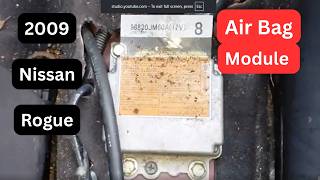
- Nissan Note, Altima, Titan, Rogue (2009-2020) — B1009 specifically indicates an internal fault in the SRS Airbag 'Diagnosis Sensor Unit'. This requires a module reset or replacement, especially if crash data is stored.
- Honda / Acura Accord, Pilot, CR-V, MDX (2003-2009) — B1009 means 'MICU Lost Communication with Combination Switch Control Unit'. The problem is almost always the wiper switch/stalk or its connector, not a general memory error.
- Jaguar XF, F-Type, XK/XKR (2008-2015) — B1009 relates to 'Ignition Authorization' and causes a no-start after the battery dies, is replaced, or after a failed key programming attempt. It requires module synchronization using dealer-level software.
- Dodge / Chrysler / Ram Durango, Charger, 300, Ram 1500 (2011-2018) — Logs a B1009-92 for a stuck 'Recirculation Switch' in the HVAC module, causing the recirculation button to flash. It also relates to a faulty cabin humidity sensor setting a P1009 code.
Manufacturer-Specific Notes
- General Motors (Chevy, GMC, Cadillac, Pontiac): This is the most common group for the 'EEPROM Checksum Error' definition. TSB 18-NA-161 points to poor grounds (G218) and high-resistance battery cables as a primary cause for widespread electrical issues leading to this code.
- Honda / Acura: B1009 means 'MICU Lost Communication with Combination Switch Control Unit'. The problem is with the wiper stalk or its wiring, not a general memory error.
- Ford / Jaguar: The definition is 'Ignition Authorization'. It causes a no-start condition triggered by a weak battery, a dead key fob battery, or a failed module programming attempt.
- Fiat: On models like the Punto and Ducato, B1009-19 indicates 'Circuit Current Above/Below Threshold' for a tail light or side light, caused by a bad bulb, short circuit, or socket corrosion.
- Nissan: On models like the Note and Altima, B1009 is an internal fault code for the airbag module ('Diagnosis Sensor Unit'), requiring a module reset or replacement after collision data is stored.
- Dodge / Ram / Chrysler: On vehicles like the Durango and Ram 1500, B1009-92 indicates a stuck 'Recirculation Switch' in the HVAC control module, presenting as a flashing recirculation button.
Real Owner Stories
2015 Chevy Silverado 1500 at 75K miles with B1009 in BCM
Owner experienced intermittent radio blackouts, flickering dash lights, and a 'Service Stabilitrak' message. One morning, the truck failed to start.
What they tried:
- Replaced the battery, assuming it was weak – the problem returned within a week.
- Took it to a shop that recommended a new BCM for $1,200.
- Owner found TSB 18-NA-161 online and checked the G218 ground location himself.
Outcome: The G218 ground bolt on the frame under the driver's door was corroded. He removed the bolt, cleaned the frame and cable lug to bare metal with a wire brush, applied dielectric grease, and re-torqued the bolt. Total cost: $5 for grease and a wire brush. The code cleared and all electrical issues resolved.
Lesson: On GM trucks with these symptoms, always inspect and clean the main battery cables and the G218 ground connection before considering an expensive BCM replacement. This is a known issue covered by a technical service bulletin.
2007 Honda CR-V at 120K miles with B1009
The check engine light was on, and the windshield wipers would not turn off, even with the key removed. The owner had to disconnect the battery to stop them.
What they tried:
- A basic code reader only showed 'B1009', leading to confusion about a module failure.
- A forum search for 'Honda B1009' quickly revealed the specific definition: 'MICU Lost Communication with Combination Switch'.
Outcome: The owner replaced the combination switch (the wiper stalk) with an OEM part for around $150. The repair took less than an hour following a video tutorial. This immediately fixed the wiper issue and the code cleared.
Lesson: This is a classic example of manufacturer-specific code definitions. A generic 'EEPROM error' diagnosis would have been completely wrong. Always search for the code along with your vehicle's make and model.
2016 Nissan Rogue at 60K miles with B1009 in SRS module
The airbag light came on after the car hit a large pothole. There was no accident and no other damage.
What they tried:
- A local mechanic tried to clear the code with a standard OBD-II scanner, but it returned immediately.
- The dealership quoted $1,800 to replace the SRS 'Diagnosis Sensor Unit'.
Outcome: The owner found a mail-in airbag module reset service online for $49.99. He removed the SRS module from under the center console (disconnecting the battery first), mailed it in, and received it back in three days. After reinstalling the reset module, the airbag light was off and the system was functional.
Lesson: For a B1009 code isolated to the SRS module, especially after a minor event or with no physical crash, a professional reset service clears the stored 'crash data' or internal fault for a fraction of the cost of replacement.
2012 Jaguar XF with 95K miles and B1009 'Ignition Authorization'
After the main vehicle battery died and was replaced, the car would not start. The dash lit up, but the engine would not crank. A B1009 code was present.
What they tried:
- Replaced the battery in the key fob – no change.
- Tried the spare key fob – no change.
- Attempted a 'hard reset' by disconnecting the new battery and touching the cables together – no change.
Outcome: The vehicle had to be towed to a Jaguar specialist. The voltage drop during the original battery failure caused the security modules to lose synchronization. The mechanic used dealer-level software (JLR SDD) to re-synchronize the Keyless Vehicle Module (KVM) and the Central Junction Box (BCM). The 1-hour labor charge was $250.
Lesson: On high-end vehicles, a simple battery failure triggers complex anti-theft and security issues that cannot be resolved with DIY methods. The B1009 code was a symptom of this de-synchronization, requiring specialized software to fix.
How to Prevent This Code From Triggering
- Maintain a Healthy Battery (Every 3 months) — A weak or unstable battery is the #1 cause of B1009. Regularly check that the battery voltage is above 12.4V when off and that it holds a charge. For cars that sit idle, use a battery maintainer or trickle charger to prevent discharge.
- Clean Battery Terminals and Chassis Grounds (Annually, or whenever working on the battery) — Corrosion on terminals and ground points creates electrical resistance, causing voltage drops that mimic a weak battery and corrupt module memory. Clean terminals and main ground points to bare metal and apply dielectric grease or anti-corrosion spray to seal out moisture.
- Use a Computer Memory Saver When Changing the Battery (Every time the battery is disconnected) — A memory saver provides continuous power to the vehicle's modules while the main battery is disconnected, preventing the voltage loss that corrupts EEPROM data and sets a B1009 code. These devices cost $15-$30 and plug into the OBD-II or 12V port.
- Follow Proper Jump-Starting Procedure (Every time you jump-start a vehicle) — Incorrectly connecting or disconnecting jumper cables causes large voltage spikes that instantly damage sensitive electronics and corrupt module memory. Always connect the final ground connection to a bare metal chassis point away from the battery to prevent sparks and surges.
- Address Water Leaks Immediately (As needed) — Water intrusion from clogged sunroof drains or bad seals soaks control modules located in the cabin floor or trunk. This causes short circuits and corrosion that lead to permanent BCM/SRS module failure and B1009 codes.
Frequently Asked Questions
Can a weak battery really cause a B1009 code?
Yes. Low voltage during engine cranking (below 9.6V) or voltage spikes from jump-starting corrupts the sensitive memory in a control module. This is the most frequent cause for the generic 'EEPROM Checksum Error'.
I replaced my battery and now I have a B1009 code. What should I do?
First, clear the code with a scanner and see if it returns. Often, the code is just a 'history' record of the voltage interruption during the battery swap. If it does not return as an 'active' code and you have no symptoms, no further action is needed.
What's the difference between a 'history' and 'current' B1009 code?
A 'history' code indicates a fault that occurred in the past but is not currently present. A 'current' code means the fault is happening right now. Clear history codes and monitor; current codes require immediate diagnosis.
What are the most common misdiagnosis mistakes with a B1009 code?
The biggest mistake is replacing expensive modules without checking the power supply. Technicians often replace keys or entire computers when the root cause is a weak battery or a corroded ground cable. Always perform voltage and ground checks before condemning a module.
My car won't start and has a B1009 and an anti-theft code. Is it the key?
No, the key is likely fine. When the module's security memory corrupts (the B1009 error), it cannot recognize any key. The module itself, or its power and ground supply, is the culprit.
What is an EEPROM?
EEPROM stands for Electrically Erasable Programmable Read-Only Memory. It is a small chip inside a car's computer module that stores persistent data like the VIN, mileage, and security codes, remaining intact even when the car is off.
Can I fix a B1009 error myself?
You can perform basic checks like testing the battery, cleaning terminals, and inspecting grounds. However, if the fix requires reprogramming or replacing the faulty module, stop DIYing. This requires specialized tools and carries a high risk of permanently disabling the vehicle.
Key Takeaways
- Identify your vehicle's specific B1009 definition first; it means a wiper failure on a Honda but a critical memory error on a Chevrolet.
- Test your battery before replacing any modules; resting voltage must exceed 12.4V and cranking voltage must stay above 9.6V to prevent memory corruption.
- Inspect the G218 ground connection on 2014-2020 GM trucks before replacing the Body Control Module (BCM) to save up to $1,500 in unnecessary repairs.
- Stop driving immediately if B1009 triggers in the Airbag (SRS) or Engine Control Module (ECM), as airbags will not deploy and the engine can stall at highway speeds.
Helpful Videos






The information in this article is provided for general reference and educational purposes only. Vehicle specifications, procedures, and part compatibility can vary by production date, trim level, and region. Always consult your vehicle's factory service manual and verify part numbers before purchasing or performing repairs. Safety-critical components such as airbags, seat belts, and braking systems should be installed by a qualified professional.
- 🎬 Helpful Videos
- What Does B1009 Mean?
- Can I Drive With B1009?
- Common Causes
- Symptoms
- Diagnostic Flowchart
- Common Fixes & Costs
- Used vs. New Parts: Buying Guide
- What Happens If You Wait — Timeline
- Cost of Not Fixing It
- Diagnosis Steps
- When This Code Triggers (Freeze-Frame Conditions)
- Related Codes
- Climate & Environmental Factors
- How to Talk to a Mechanic About This Code
- Where to Take It: Dealer vs Independent vs Chain
- When to Walk Away From the Repair
- What Scan Tool You Need for This Code
- How to Clear the Code After You Fix It
- Will This Fail Emissions / State Inspection?
- Most Commonly Affected Vehicles
- Manufacturer-Specific Notes
- Real Owner Stories
- 2015 Chevy Silverado 1500 at 75K miles with B1009 in BCM
- 2007 Honda CR-V at 120K miles with B1009
- 2016 Nissan Rogue at 60K miles with B1009 in SRS module
- 2012 Jaguar XF with 95K miles and B1009 'Ignition Authorization'
- How to Prevent This Code From Triggering
- Frequently Asked Questions
- Can a weak battery really cause a B1009 code?
- I replaced my battery and now I have a B1009 code. What should I do?
- What's the difference between a 'history' and 'current' B1009 code?
- What are the most common misdiagnosis mistakes with a B1009 code?
- My car won't start and has a B1009 and an anti-theft code. Is it the key?
- What is an EEPROM?
- Can I fix a B1009 error myself?
- Key Takeaways
- 🎟️ Get 5% Off