

OBD-II Code B1007: A Comprehensive Guide to Airbag, Lighting, and Module Faults
What B1007 means, why it triggers, and how to fix it on any make and model
- Code B1007 splits into two distinct definitions based on the manufacturer: a critical internal Airbag Control Module failure (Nissan/GM) or a simple lighting circuit fault (Ford/Honda/Jeep).
- An illuminated airbag light disables the entire Supplemental Restraint System (SRS), meaning 100% of airbags and seatbelt pre-tensioners will fail to deploy in a crash.
- Over 80% of airbag-related B1007 codes stem from either an internal hardware failure requiring module replacement or stored crash data requiring a $50-$150 professional memory reset.
- Never attempt to replace an airbag module yourself; a new unit requires dealer-level software to program the vehicle's specific VIN before it becomes functional.
- Always scan the vehicle with an SRS-capable OBD-II tool to read the specific sub-code (like B1007-15) and check for Technical Service Bulletins (TSBs) before spending $500+ on unneeded parts.
What Does B1007 Mean?

B1007 is a manufacturer-specific code with two distinct meanings. For brands like Nissan and GM, it indicates the Airbag Control Module (SDM) detected a critical internal error or locked itself after a collision, shutting down the entire airbag system. For brands like Ford, Honda, and Jeep, this code points to an electrical fault in a lighting circuit, such as a turn signal or headlight switch.
Technical definition: Common definitions include "Airbag Control Module Internal Fault," "Diagnosis Sensor Unit," or "Memory EEPROM Write Failure." This means the airbag control module has a processing or memory failure. On other vehicles, it means "MICU Lost Communication with Combination Switch Control Unit" (Honda) or "Front-Lateral Left Turn Light-Circuit" (Jeep/Fiat). Advanced scanners show a suffix, like B1007-15 ("Circuit Short To Battery or Open"), providing essential detail about the specific electrical fault.
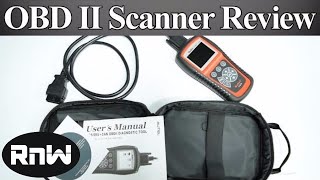
🎬 Watch: How to use an entry-level scanner for SRS codes.Can I Drive With B1007?

No — Do Not Drive. No, it is not safe to drive. If the airbag warning light is illuminated, the vehicle's entire Supplemental Restraint System (SRS) is disabled. This includes all airbags and the seatbelt pre-tensioners that tighten your belt in a crash. In an accident, the safety systems designed to protect you will not function, significantly increasing the chance of serious injury or death.
Common Causes

- Internal Airbag Control Module Failure (Very Common) — The module's internal electronics, processor, or EEPROM failed due to age, voltage spikes, or moisture intrusion. On Nissan and GM vehicles, B1007 specifically means "Diagnosis Sensor Unit" or "EEPROM Write Error," indicating a faulty, non-serviceable module.
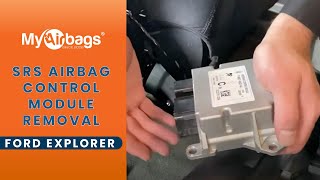
- Crash Data Stored in Module (Common) — After an accident, even a minor one without airbag deployment, the module stores "crash data" and locks itself. This triggers B1007 and disables the system until professionally reset or replaced. 🎬 Watch this walkthrough on removing an airbag control module.
- Lighting Circuit Fault (Ford, Jeep, Honda) (Common) — On Ford, Jeep, and Honda, this code points to a lighting circuit problem, most commonly the left turn signal. Causes include a burned-out bulb, corroded socket, faulty flasher relay, or damaged wiring. 🎬 See how to replace a Ford turn signal flasher relay.
- Low Battery Voltage or Power Fluctuation (Common) — A weak battery or disconnecting the battery during service corrupts the module's memory or triggers a false communication fault. Low system voltage frequently causes random body (B) and chassis (C) codes.
- Damaged Wiring or Poor Connection (Less Common) — The wiring harness or connectors leading to the Airbag Control Module are corroded, loose, or damaged. Obstructions under a seat frequently dislodge a connector, causing an immediate fault.
- Faulty Voltage Regulator / Charging System (Less Common) — On motorcycles like Harley-Davidson, B1007 means "Ignition Line Overvoltage," caused by a bad voltage regulator sending excessive power to the instruments.
- Software Glitch (Rare) — A software bug within a control module triggers the code, requiring a dealer-level update. Jeep issued Technical Service Bulletin 08-054-20 for this exact issue on 2020 Renegade models.
Symptoms

- Airbag Warning Light On — The most common and often only symptom for an airbag-related B1007 fault. The light remains steadily illuminated on the dashboard.
- Turn Signal Malfunction — On Ford, Fiat, and Jeep models, a turn signal fails to work, blinks rapidly ('hyperflash'), or stays on continuously. This occurs without an airbag light.
- Service Airbag System Message — The instrument cluster or information display shows a direct text warning.
- Horn or Steering Wheel Controls Inoperative — A fault in the clock spring causes an SRS fault code and simultaneously disables the horn or audio controls.
- Airbag System Inoperative (scan-tool only — no driver-felt sign) — None of the vehicle's airbags or seatbelt pre-tensioners will deploy in a collision.
Diagnostic Flowchart
Tap your situation to follow the diagnostic path that matches what you're seeing on this code.
Common Fixes & Costs
- Replace Airbag Control Module — Parts: $200-$1200, Labor: $150-$400, ~1.5 hr book time (Professional)
- Reset Original Airbag Control Module — Parts: $0, Labor: $50-$150, ~1.0 hr book time (Professional)
- Repair Lighting Circuit — Parts: $5-$100, Labor: $50-$250, ~0.8 hr book time (DIY)
- Replace Vehicle Battery or Voltage Regulator — Parts: $150-$450, Labor: $50-$150, ~0.5 hr book time (DIY)
- Apply Manufacturer Software Update (TSB) — Parts: $0, Labor: $100-$200, ~1.0 hr book time (Professional)
Used vs. New Parts: Buying Guide
When a used part is worth it: Only if a new part is unobtainable for a classic vehicle AND you find an identical part number from a non-crashed vehicle. A professional reset of your original module is always a better budget option.
Donor-vehicle mileage cap: roughly under 50000 miles for the part to have meaningful remaining life.
Donor quality checklist:
- Part number must match EXACTLY.
- Verify the donor vehicle had no airbag deployment.
- Avoid modules from flood-damaged vehicles.
- Requires professional VIN reprogramming.
Decision logic:
- If The original module has stored crash data but is physically undamaged → Send the original module for a professional reset service. This is the safest and most cost-effective option.
- If The original module has an internal hardware failure (e.g., EEPROM error) → Buy a new OEM module. This guarantees compatibility and safety.
- If A new OEM module is over $1000 and a used module from a low-mileage, non-crashed donor with a matching part number is available → Consider the used module, but budget for professional VIN programming and accept the risk that it may not work.
Warranty tradeoff: Used parts: Typically 30-90 day warranty, if any. Does not cover programming or labor costs. Aftermarket new: 1-year to limited lifetime warranty. OEM new: 1-year/12,000-mile warranty typical when purchased from a dealer.
Worst-case if a used part fails: $500-$1500 if a used module fails to program or is faulty. This includes the cost of the used part, wasted labor, and the eventual cost of a new module and programming.
What Happens If You Wait — Timeline
- Immediately: Airbag/SRS warning light illuminates. The entire Supplemental Restraint System is disabled as a fail-safe. (MPG impact: 0%% · Added cost: $0 (Immediate safety risk is the primary 'cost'))
- 0-12 months: Lighting faults result in traffic citations. Airbag faults cause the vehicle to fail annual safety inspections in many states. (MPG impact: 0%% · Added cost: $50-$250 (Cost of failed inspection fees and/or traffic tickets))
- 6-18 months: Minor water leaks causing intermittent faults lead to complete module failure due to corrosion. Bad grounds cause unrelated electrical issues. (MPG impact: 0%% · Added cost: $200-$800 (A fault that could have been fixed by cleaning a connector may now require a module replacement if ignored and left to corrode.))
- 18+ months: The illuminated airbag light masks new SRS faults. A new failure will not trigger a new warning, creating a false sense of security. (MPG impact: 0%% · Added cost: $1000+ (Potential for compounded repair costs if multiple faults develop over time. The primary cost remains the ongoing lack of safety systems.))
Cost of Not Fixing It
- Immediately: Complete failure of the Supplemental Restraint System (SRS). Airbags and seatbelt pre-tensioners will not deploy in an accident, drastically increasing the risk of serious injury or death. (Added cost: N/A (Safety Risk))
- Next State Inspection: Guaranteed failure of the vehicle's safety inspection in states checking SRS functionality (e.g., NY, VA, PA). The vehicle becomes illegal to operate on public roads. (Added cost: $50-$200 (Failed inspection fees, fines))
- Long-term: Lighting-related faults lead to traffic tickets. Airbag faults maintain an absolute safety risk indefinitely. (Added cost: $100+ (Traffic citations))
Diagnosis Steps
- Verify the Symptom and Code Definition
Identify the primary symptom. Is the airbag light on, or is a turn signal malfunctioning? Use an advanced OBD-II scanner that reads manufacturer-specific Body (B) codes to confirm the exact definition of B1007 for your vehicle's VIN.
Tools: Advanced OBD-II Scanner (Beginner) - Check Battery Health and System Voltage
Ensure the vehicle's battery is fully charged (above 12.4 volts at rest) and the terminals are clean and tight. Start the engine and check the charging voltage (typically 13.5-14.5 volts). Low voltage or over-voltage triggers module errors.
Tools: Multimeter, Wrench Set (Beginner) - Check for Technical Service Bulletins (TSBs)
Search online for TSBs related to code B1007 for your vehicle's specific make, model, and year. A known software glitch, like on the 2020 Jeep Renegade (TSB 08-054-20), provides an immediate fix.
Tools: Google Search (Beginner) - Attempt to Clear the Code
Use the scanner to clear the code. If it returns immediately, it is a hard fault. If it was caused by stored crash data, it will not clear with a standard scanner. If it stays off, it was likely an intermittent low-voltage issue.
Tools: Advanced OBD-II Scanner (Beginner) - Inspect the Relevant Components
If it is an airbag code, locate the Airbag Control Module (often under the center console or seats). Visually inspect its connectors and wiring for damage, corrosion, or moisture. If it is a lighting code, inspect the bulb, socket, and wiring for the affected light.
Tools: Basic Hand Tools, Flashlight (Intermediate) - Check for Crash Data
If the vehicle was in a recent accident and the airbag light is on, the code indicates stored crash data. The module requires professional resetting or replacement.
Tools: Advanced OBD-II Scanner (Advanced) - Pro Tip: Perform Pinpoint Tests at Module Connector
Disconnect the negative battery terminal and wait 15 minutes. Unplug the airbag module connector. Using a vehicle-specific wiring diagram, use a multimeter to check for correct voltage at the power supply pin (>12.0V with key on) and continuity to ground (<0.5 Ohms) at the ground pin. This definitively rules out a power or ground issue.
Tools: Multimeter, Vehicle-Specific Wiring Diagram (Advanced) - Pro Tip: Perform CAN Bus Health Check
If a communication error is suspected, check the CAN bus wires at the module's connector. With the key on, CAN High and CAN Low wires should both read approximately 2.5 volts relative to ground. An oscilloscope should show clean, mirror-image square wave patterns. An open, short, or noisy signal indicates a network wiring problem.
Tools: Multimeter, Oscilloscope, Wiring Diagram (Professional) - Pro Tip: Use a Dummy Resistor (Airbag Simulator)
To isolate a fault between the module and a component, plug a dummy resistor (typically 2.0-2.5 Ohms) into the component's harness connector after disconnecting the battery. If clearing the code now works, it proves the wiring and module are good, and the component itself is faulty.
Tools: Airbag Simulator/Resistor Set (Professional)
When This Code Triggers (Freeze-Frame Conditions)
- System Voltage: 11.5V - 14.5V (The SRS module runs a self-test at key-on; this code sets if voltage drops below 11.5V or exceeds 14.5V during this check.)
- Time Since Key On: 0-5 seconds (Internal module faults are detected during the Power-On Self-Test (POST) occurring immediately after ignition.)
- Vehicle Speed: 0 mph (Faults log when the vehicle is stationary during the startup diagnostic sequence.)
- Component-Specific Action: N/A (Lighting-related faults set the instant the driver activates the faulty component, such as a turn signal.)
Related Codes
- B1006, B1008, B1009, B1010 — Similar codes pointing to an internal failure of the airbag diagnosis sensor unit on Nissan vehicles. Requires module reset or replacement.
- B0096 — Indicates "Crash Data Memory Full." B0096 is the cause, while B1007 is the result. A module reset service fixes both.
- U0151 — Means "Lost Communication With Restraints Control Module." B1007 means the module communicates but has an internal fault; U0151 means total communication failure. Check power and ground first.
- B1D06, B1D07 (Ford) — Specific codes for Left/Right Turn Signal Circuit faults. Confirms the B1007 issue is with the lighting system, not airbags.
Climate & Environmental Factors
- High Humidity / Water Intrusion: Moisture corrodes the module's circuit board or connector pins, causing internal faults. Water leaks from sunroofs or windows frequently destroy modules mounted under seats.
- Extreme Cold/Heat Cycles: Temperature fluctuations stress electronic components and solder joints, creating micro-fractures on the circuit board that cause permanent internal faults.
- Road Salt: Winter road salt accelerates corrosion of wiring and ground connections. A corroded ground connection for the airbag module triggers B1007.
How to Talk to a Mechanic About This Code
Say this: "I have a B1007 code and an airbag light on. I need an SRS diagnostic to read the manufacturer-specific definition and determine if it's an internal module fault, stored crash data, or a sensor issue."
Proves you understand B1007 requires specific SRS diagnosis. Prevents shops from immediately quoting an expensive module replacement and forces proper diagnostic procedure.
Avoid saying:
- 'My airbag light is on, can you fix it?'
- 'I have a B1007, I need a new airbag module.'
- 'Just do whatever it takes to turn the light off.'
Questions to ask before authorizing the repair:
- What is the specific definition of B1007 for my VIN?
- Does the quote include programming the new module?
- Can you reset my existing module for crash data?
- What is your warranty on SRS system repairs, including both parts and labor?
Where to Take It: Dealer vs Independent vs Chain
- Dealer:
Best for programming new OEM airbag control modules and TSB software flashes.
Best for: Vehicles under warranty, Repairs involving a Technical Service Bulletin (TSB) software flash, Programming a new OEM airbag control module
Downsides: Highest labor rates, Will replace modules instead of offering affordable reset services (Typical cost: +50% vs. baseline) - Independent Shop:
Best for diagnosing root causes and removing modules for third-party resets.
Best for: Out-of-warranty vehicles, Diagnosing the root cause (e.g., wiring fault vs. module fault), Removing the module to be sent for a third-party reset
Downsides: Must possess advanced SRS-capable diagnostic tools (Typical cost: +0% vs. baseline) - Chain Shop:
AVOID for any airbag-related diagnosis or repair. Acceptable only for a confirmed lighting circuit fault.
Best for: Confirmed lighting circuit faults (Ford/Jeep)
Downsides: Technicians lack specialized training and tools for SRS diagnostics. High risk of misdiagnosis. (Typical cost: -10% vs. baseline)
When to Walk Away From the Repair
If the estimated repair cost for an airbag-related B1007 exceeds 50% of the car's private-party value, consider selling the car as-is with full disclosure.
- Car worth $4000, fix is $2200: Walk away. The repair cost is too high relative to the vehicle's value. The car's value with a known SRS fault is significantly lower.
- Car worth $15000, fix is $1600: Fix it. The repair cost is a reasonable percentage of the vehicle's value and restores a critical safety feature.
- Car worth $5000, fix is $60: Fix it. If the cause is stored crash data, a mail-in reset service is extremely cost-effective and makes the car safe and sellable again.
What Scan Tool You Need for This Code

Minimum: A scanner capable of reading and clearing manufacturer-specific Body (B) codes for the SRS/Airbag system.
Standard sub-$50 engine code readers cannot access the SRS module. You will not see the code or be able to clear it.
Budget: Autel AutoLink AL619 (~$89) — Specifically designed to read and clear ABS and SRS codes.
Mid-range: BlueDriver Pro (~$120) — Bluetooth scanner providing enhanced diagnostics for SRS/Airbag codes on most major brands.
Professional: Foxwell NT630 Plus / Autel MaxiCOM MK808 (~$350-550) — Bidirectional tools that read/clear SRS codes, show live data, and perform special functions like resetting modules.
Rent vs buy: Buy. Free auto parts store scanners typically use basic code readers that cannot read SRS/Airbag codes.
How to Clear the Code After You Fix It
- Reconnect all SRS components and wiring.
- Reconnect the negative battery terminal.
- Use a compatible OBD-II scan tool to clear the B1007 fault code.
- Turn the ignition off, then on again, and observe the airbag light.
Drive cycle (~5 minutes): Airbag systems do not require a drive cycle. After clearing the code, cycle the ignition. If the SRS light illuminates for 5-7 seconds and turns off, the repair is successful. If it stays on, the fault remains.
Readiness monitors affected: None
Watch out for:
- Attempting to clear crash data codes with a standard scanner.
- Using a basic engine code reader that cannot access Body (B) codes.
- Failing to wait 15 minutes after disconnecting the battery before servicing SRS components.
Will This Fail Emissions / State Inspection?
No — by itself this code doesn't fail OBD inspection (but it can keep readiness monitors from setting, which causes a separate fail).
- California: An airbag light will NOT fail a California smog check, which only tests emissions. It remains a critical safety failure.
- New York: An illuminated airbag warning light is an automatic failure of the annual safety inspection.
- Texas: An airbag light is NOT an item on the Texas safety inspection checklist and legally passes, though individual shops sometimes refuse.
- Pennsylvania / Virginia: Comprehensive safety inspections mandate an active SRS light results in a failed inspection.
Most Commonly Affected Vehicles
- Nissan Altima, Sentra, Cube, various (2007-2018) — B1007 specifically means "Diagnosis Sensor Unit," pointing directly to a failed airbag module. Millions of Nissans also face Takata and OCS sensor recalls.
- Chevrolet / GMC Silverado, Express, Savana, various (2004-2024) — Indicates an "EEPROM Write Error," a non-serviceable internal module fault requiring replacement. Modules under the driver's seat are highly susceptible to moisture.
- Ford Explorer, F-150, various (2011-2023) — Typically a lighting code with a suffix like -11 (short to ground) or -13 (circuit open), pointing to a turn signal circuit fault, not the airbag system.
- Harley Davidson Dyna, Sportster, various (2007-2012) — Means "Ignition Line Overvoltage." Caused by a failing voltage regulator or a loose battery ground cable.
- Jeep Renegade (2019-2020) — B1007-15 is a software bug fixed by TSB 08-054-20. The definition is "Front-Lateral Left Turn Light-Circuit Short To Battery Or Open."
- Honda / Acura MDX, Ridgeline, various (2007-2022) — Means "MICU Lost Communication With Combination Switch Control Unit." A lighting/switch issue related to the main body computer that does not trigger the airbag light.
- Volkswagen Golf, Jetta (2010-2021) — Variants like B10071B point to a fault in the seatbelt pre-tensioner circuit, such as "resistance too high."
- Hyundai / Kia Various (2011-2022) — Airbag control module failures are common. Replacement is the standard fix for an internal fault.
Manufacturer-Specific Notes
- Nissan: Consistently means the airbag control module ("Diagnosis Sensor Unit") has an internal diagnostic failure requiring reset or replacement.
- Ford / Ram / Fiat: Almost always relates to a lighting circuit, typically the left turn signal. Suffixes like -11 or -13 indicate the specific electrical fault.
- Honda / Acura: Means "MICU Lost Communication With Combination Switch Control Unit." A lighting/switch issue, not an airbag problem.
- General Motors (GM): Defined as "EEPROM Write Error." This definitive internal memory fault requires module replacement and reprogramming, not a simple reset.
How to Prevent This Code From Triggering
- Keep the cabin dry and fix water leaks immediately (Annually or after noticing wet carpets) — Moisture destroys electronic modules. Water leaking from clogged sunroof drains or bad window seals corrodes modules mounted under seats.
- Maintain a healthy battery and clean terminals (Every 6 months) — Low voltage or spikes corrupt module memory. Clean terminals ensure stable voltage supply to all electronics.
- Apply dielectric grease to critical connectors (Whenever a connector is serviced) — Applying dielectric grease to connector seals creates a barrier against moisture and road salt, preventing pin corrosion.
- Check under seats for obstructions and loose connectors (Monthly) — Critical SRS wiring and OCS sensor connectors live under front seats. Stray debris easily dislodges a connector, triggering an airbag fault.
Frequently Asked Questions
Is it safe to drive with code B1007?
No. An illuminated airbag light disables the entire safety system, including airbags and seatbelt pre-tensioners. In an accident, you lack the protection of these critical devices.
Why does this code have so many different meanings?
Engine codes (P-codes) are standardized, but body codes (B-codes) are defined by the manufacturer. This is why B1007 means an airbag module on a Nissan but a headlight switch on a Honda. Always verify the definition for your specific VIN.
How do I know if my B1007 code is for the airbag system or something else?
The primary symptom dictates the system. If the airbag/SRS warning light is on, the code relates to the safety restraint system. If a turn signal fails and there is no airbag light, it is a lighting system fault.
My car was in a small accident and now this light is on. What do I do?
The module stored crash data and locked itself. You do not need a new module. A professional mail-in service can reset your original module's memory for $50-$150, saving hundreds over a dealer replacement.
Can I use a used airbag module?
It is highly risky. A used module must have an identical part number, no crash history, and still requires professional programming to your vehicle's VIN. An improperly programmed module will fail during a crash.
Does car insurance cover an airbag module replacement?
Yes, if the replacement is part of a covered collision or comprehensive claim. Insurance rarely covers random hardware failures due to age.
Can I replace the Airbag Control Module myself?
No. The module is a critical safety component requiring dealer-level software to program your vehicle's VIN and configuration. An improperly installed or unprogrammed module will not operate.
What are common misdiagnosis mistakes with B1007?
The biggest mistake is replacing parts without confirming the manufacturer-specific definition. Another is replacing an expensive module when the cause was a weak battery or blown fuse. Always check for TSBs first.
Can I just reset the airbag light myself?
You can clear the code with a scanner, but a hard fault returns immediately. Codes caused by stored crash data cannot be cleared with a standard scanner and require professional memory reset.
Should I check for simple things before going to a mechanic?
Yes. Check battery health, inspect fuses, and look for loose connections. On some vehicles, debris under the passenger seat dislodges a connector and triggers an airbag fault. Visual inspections save costly diagnostic fees.
Key Takeaways
- Code B1007 splits into two distinct definitions based on the manufacturer: a critical internal Airbag Control Module failure (Nissan/GM) or a simple lighting circuit fault (Ford/Honda/Jeep).
- An illuminated airbag light disables the entire Supplemental Restraint System (SRS), meaning 100% of airbags and seatbelt pre-tensioners will fail to deploy in a crash.
- Over 80% of airbag-related B1007 codes stem from either an internal hardware failure requiring module replacement or stored crash data requiring a $50-$150 professional memory reset.
- Never attempt to replace an airbag module yourself; a new unit requires dealer-level software to program the vehicle's specific VIN before it becomes functional.
- Always scan the vehicle with an SRS-capable OBD-II tool to read the specific sub-code (like B1007-15) and check for Technical Service Bulletins (TSBs) before spending $500+ on unneeded parts.
Helpful Videos


The information in this article is provided for general reference and educational purposes only. Vehicle specifications, procedures, and part compatibility can vary by production date, trim level, and region. Always consult your vehicle's factory service manual and verify part numbers before purchasing or performing repairs. Safety-critical components such as airbags, seat belts, and braking systems should be installed by a qualified professional.
- 🎬 Helpful Videos
- What Does B1007 Mean?
- Can I Drive With B1007?
- Common Causes
- Symptoms
- Diagnostic Flowchart
- Common Fixes & Costs
- Used vs. New Parts: Buying Guide
- What Happens If You Wait — Timeline
- Cost of Not Fixing It
- Diagnosis Steps
- When This Code Triggers (Freeze-Frame Conditions)
- Related Codes
- Climate & Environmental Factors
- How to Talk to a Mechanic About This Code
- Where to Take It: Dealer vs Independent vs Chain
- When to Walk Away From the Repair
- What Scan Tool You Need for This Code
- How to Clear the Code After You Fix It
- Will This Fail Emissions / State Inspection?
- Most Commonly Affected Vehicles
- Manufacturer-Specific Notes
- How to Prevent This Code From Triggering
- Frequently Asked Questions
- Is it safe to drive with code B1007?
- Why does this code have so many different meanings?
- How do I know if my B1007 code is for the airbag system or something else?
- My car was in a small accident and now this light is on. What do I do?
- Can I use a used airbag module?
- Does car insurance cover an airbag module replacement?
- Can I replace the Airbag Control Module myself?
- What are common misdiagnosis mistakes with B1007?
- Can I just reset the airbag light myself?
- Should I check for simple things before going to a mechanic?
- Key Takeaways
- 🎟️ Get 5% Off