

OBD-II Code B1004: Control Module Memory/Configuration Error
What B1004 means, why it triggers, and how to fix it
- Code B1004 most commonly disables your vehicle's Supplemental Restraint System (SRS), meaning airbags will not deploy in a crash.
- Test your battery before replacing expensive modules; a resting voltage below 12.4V or a parasitic draw over 50mA is the leading cause of this memory loss code.
- If B1004 appears immediately after a collision, the module has locked with stored crash data and requires a professional $50-$150 mail-in reset service rather than a standard scanner clear.
- Never install a used SRS module directly from a donor vehicle; it must be reprogrammed with your exact Vehicle Identification Number (VIN) using a bi-directional scanner to function.
- On Harley-Davidson motorcycles, B1004 specifically indicates a 'Fuel Level Sender Low' fault, typically requiring a $20 harness repair under the tank console rather than an airbag diagnostic.
What Does B1004 Mean?

B1004 indicates that a control module in your car has detected a problem with its internal memory or configuration. Most often, this is the Supplemental Restraint System (SRS) or airbag module, but it also affects the Body Control Module (BCM). The module is reporting that its stored information is missing, corrupt, doesn't match the vehicle it is installed in, or that it lost its constant power supply. This happens for simple reasons, like a battery change, or because of a serious internal hardware fault.
Technical definition: The official definition of B1004 varies significantly between manufacturers. For General Motors, it is defined as "Keep Alive Memory (KAM) Reset," indicating the module lost its constant power source. For Mercedes-Benz, it means "LCP Lower Control Panel: Control unit does not match vehicle type," pointing to a programming incompatibility. For Nissan, it points to an internal fault within the SRS "DIAGNOSIS SENSOR UNIT". On Harley-Davidson motorcycles, it uniquely means "Fuel Level Sender Low". This highlights the critical need for manufacturer-specific diagnosis.
Can I Drive With B1004?
Yes, But With Caution. You can drive the vehicle, but it is highly discouraged. This code almost always means the entire Supplemental Restraint System (SRS) is disabled. In a crash, your airbags and seatbelt pretensioners will not deploy, drastically increasing the risk of serious injury or death. Continuing to drive is a significant safety gamble.
Common Causes

- Battery Power Interruption or Low Voltage (Very Common) — The most frequent cause. Disconnecting the battery, a completely dead battery, or a battery providing low voltage (below 12.0V at rest) cuts the 'Keep Alive Memory' (KAM) power, causing the module to log B1004. 🎬 Watch: Fixing airbag lights after a battery change on GM vehicles
- Loose or Corroded Battery Terminals/Grounds (Common) — Poor connections at the battery posts or the main chassis ground prevent consistent power delivery. This intermittent power loss triggers KAM reset codes.
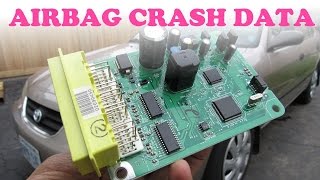
- Stored Crash Data (Common) — After any collision, the SRS module stores 'crash data' and locks itself for safety. This sets B1004 and disables the airbag system until the module is professionally reset or replaced. 🎬 See how professional crash data reset services work
- Blown Constant Power Fuse (Less Common) — A dedicated fuse supplying constant power to a module's memory (labeled 'SRS', 'BCM', or 'KAM') has blown, causing the module to lose memory every time the ignition turns off.
- Faulty Airbag (SRS) Control Module (Less Common) — The module itself fails internally due to age or component degradation. If the code returns immediately after clearing and power/grounds test good, the module requires replacement.
- Water Intrusion / Corrosion (Less Common) — SRS modules sit under seats or center consoles. Water leaks from clogged sunroof drains or bad seals corrode the module's connector pins and cause internal short circuits.
- Wiring Harness Damage (Less Common) — Wires leading to the control module are chafed or broken. On Harley-Davidson models, a specific wire in the fuel sender harness stretches and breaks, causing this code.
- Incorrect Module Installed or Programmed (Rare) — If a control module is replaced with a used part or not programmed to the car's Vehicle Identification Number (VIN), it sets this code because its configuration does not match the vehicle.
Symptoms
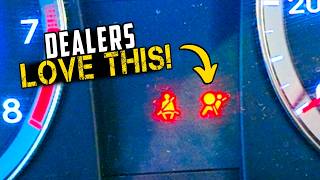
- Airbag (SRS) warning light is on — This is the most common and critical symptom. The light indicates a fault in the safety restraint system, confirming the airbags are disabled.
- Loss of memory functions — If the BCM is affected, radio presets, seat memory positions, the clock, or climate control settings reset each time you start the car.
- Inaccurate fuel gauge readings — On Harley-Davidson motorcycles, this code points directly to a fuel sender fault, causing the gauge to read empty or behave erratically. 🎬 Watch: How to replace a Harley-Davidson fuel sending unit
- Secondary warning lights or drivability issues — Depending on the affected module, a security light appears intermittently, or the engine idles roughly if the Powertrain Control Module (PCM) loses its adaptive memory.
Diagnostic Flowchart
Tap your situation to follow the diagnostic path that matches what you're seeing on this code.
Common Fixes & Costs
- Battery Replacement and System Reset — Parts: $150-$400, Labor: $50-$100, ~0.8 hr book time (DIY)
- Clean Battery Terminals and Ground Connections — Parts: $5, Labor: $0-$50, ~0.5 hr book time (DIY)
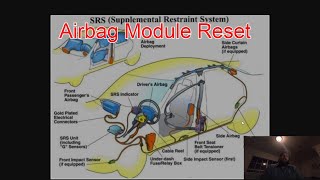
- Reset Airbag (SRS) Control Module (Crash Data Removal)
— Parts: $0, Labor: $50-$150, ~1.5 hr book time
(Professional)
Service-Based: OEM Not Applicable (Alt: Mail-in reset services like MyAirbags or Safety Restore) - Replace Airbag (SRS) Control Module
— Parts: $400-$1,200, Labor: $150-$350, ~2 hr book time
(Professional)
Chevrolet Silverado (2014-2016): OEM GM 13592880, 13518044 (Alt: Dorman 590-series)
Ford F-150 (2015): OEM Ford FL3Z-14B321-E (Alt: Remanufactured OEM units)
Hyundai Elantra (2017-2020): OEM Hyundai 95910-F2xxx series (Alt: Reset services or used OEM) - Replace Occupant Classification Sensor (OCS)
— Parts: $200-$800, Labor: $200-$400, ~2.5 hr book time
(Professional)
Subaru Forester (2017-2022): OEM Subaru 98321SG021, 98321SJ030 (Alt: OEM only) - Repair Damaged Wiring Harness — Parts: $10-$50, Labor: $150-$500, ~3.5 hr book time (Professional)
Used vs. New Parts: Buying Guide
When a used part is worth it: Buying a used SRS module is highly discouraged due to extreme safety risks. It only makes sense if you send it to a reputable service to be professionally reprogrammed with your vehicle's VIN before installation. A much safer alternative is having your original module reset by a mail-in service.
Donor-vehicle mileage cap: roughly under 50000 miles for the part to have meaningful remaining life.
Donor quality checklist:
- CRITICAL: The module MUST be reprogrammed with your car's VIN before it functions.
- NEVER buy a module from a flood-damaged or fire-damaged vehicle.
- Verify the part number matches exactly. Similar-looking modules have different internal calibrations.
- Obtain the donor vehicle's history to ensure it wasn't scrapped for a reason compromising the module.
Decision logic:
- If Your original module has stored crash data but is not physically damaged → Use a mail-in reset service on your original module. This is the safest and most cost-effective option.
- If Your original module is physically damaged (water, fire, cracked case) → Buy a new OEM module and have it programmed by the dealer or a qualified shop.
- If Budget is the absolute highest priority and you accept the risks → Buy a used module from a low-mileage, non-flood vehicle and pay for professional VIN reprogramming before installation.
Warranty tradeoff: Used parts from a junkyard offer a 30-90 day warranty covering the part only. New OEM parts carry a 1-year or longer warranty. Professional module reset services typically offer a lifetime warranty on their work.
Worst-case if a used part fails: $500-1500. If a used module is faulty or improperly programmed, you pay labor to remove it again, plus the cost of a new module and another programming fee.
What Happens If You Wait — Timeline
- Immediately: The airbag (SRS) warning light illuminates. The system's control module detects a critical fault and disables the entire Supplemental Restraint System. Your airbags will not work in a crash. (MPG impact: 0%% · Added cost: $0)
- 0-12 months (Next State Inspection): In states with comprehensive safety inspections, an illuminated airbag light is an automatic failure. You are unable to legally register your vehicle until the fault is repaired. (MPG impact: 0%% · Added cost: $50 - $250 in re-inspection fees and fines.)
- At time of resale or trade-in: An active airbag light is a major red flag for buyers, suggesting a serious safety defect or hidden accident history. Dealers deduct the full estimated repair cost from their offer. (MPG impact: 0%% · Added cost: $1,000 - $3,000+ reduction in resale/trade-in value.)
- During a collision: The disabled airbags and seatbelt pretensioners fail to deploy. Occupants are protected only by the basic locking function of the seatbelts, drastically increasing the risk of severe injury or death. (MPG impact: 0%% · Added cost: Incalculable. Represents the total failure of the vehicle's primary passive safety system.)
Cost of Not Fixing It
- Immediately: The entire Supplemental Restraint System (airbags, seatbelt pretensioners) is disabled. In a crash, they will not deploy, drastically increasing the risk of serious injury or death. (Added cost: Potentially life-altering injury or death.)
- Next State Inspection: In states with comprehensive safety inspections, an active airbag light is an automatic failure, preventing legal vehicle registration. (Added cost: $50 - $250 in re-inspection fees and fines.)
- Vehicle Resale: An active airbag light significantly reduces the vehicle's resale value, implying a major safety defect or a hidden accident history. (Added cost: $1,000 - $3,000+ reduction in resale value.)
Diagnosis Steps

- Read Codes and Check Status
Use an OBD-II scanner capable of reading Body (B) codes. Confirm B1004 is present and note if it is 'current' or 'history'. A history code is usually from a past battery disconnect. If it is current and returns immediately after clearing, a hard fault exists.
Tools: OBD-II Scanner (SRS capable) (Beginner) - Perform a Full Battery System Inspection
Use a multimeter to check the battery voltage: it must be above 12.4V with the engine off. Anything below 12.0V indicates a discharged battery causing memory resets. Clean any corrosion from the terminals and ensure clamps and the main chassis ground strap are tight.
Tools: Multimeter, Battery Terminal Brush, Wrenches (Beginner) - Inspect Fuses for Constant Power
Consult your owner's manual to locate the fuse panels. Visually inspect and test fuses labeled 'SRS,' 'BCM,' 'Memory,' or 'KAM.' These fuses provide the constant power needed for modules to retain their memory.
Tools: Fuse Puller, Owner's Manual, Multimeter (Beginner) - Attempt to Clear the Code and Perform a Drive Cycle
If the code stems from a simple power interruption, it clears and does not return. After clearing, perform a 10-15 minute drive cycle and re-scan. If it reappears, proceed with advanced diagnosis.
Tools: OBD-II Scanner (Intermediate) - Visually Inspect the Module and Wiring
Locate the affected module (often the SRS module under the center console or seats). Visually inspect its connectors for signs of water damage, corrosion, bent pins, or looseness. Look for chafed or damaged wires in the vicinity.
Tools: Trim Removal Tools, Flashlight (Intermediate) - PRO TIP: Perform a Voltage Drop Test at the Module
Confirm the module has good power and ground. With the system on, set a multimeter to a low DC Volts scale. Place the positive lead on the battery's positive post and the negative lead on the module's power supply pin. A reading above 0.2V indicates a problem in the power feed wire. Repeat for the ground side. A reading above 0.2V indicates a bad ground connection.
Tools: Multimeter, Vehicle Wiring Diagram (Advanced) - PRO TIP: Check for Parasitic Draw
If the code appears after the vehicle sits overnight, a parasitic draw is draining the battery. Disconnect the negative battery cable and connect a multimeter set to Amps in series. With the car off and doors closed for 30 minutes, the draw must be under 50-85 milliamps (0.05A - 0.085A). If higher, pull fuses one by one to isolate the faulty circuit.
Tools: Multimeter with Amp setting (Advanced) - Verify Module Programming and VIN
A technician accesses the module's identification data to verify if the VIN stored in the module matches the vehicle's VIN. If mismatched or blank, the module requires dealer-level programming or replacement.
Tools: Advanced Bi-Directional Scan Tool (Professional) - Advanced: Check Harley Fuel Sender Resistance
For Harley-Davidson models, test the fuel sender's resistance. Disconnect the fuel sender harness and connect a multimeter set to Ohms to the sender's signal and ground wires. Resistance varies from approximately 30 Ohms (full) to 240 Ohms (empty). A near-zero reading indicates a short circuit.
Tools: Multimeter, Service Manual (Advanced)
When This Code Triggers (Freeze-Frame Conditions)
- Module Voltage: 9.0 - 11.5V (The most critical parameter. A voltage drop during engine crank or a low battery state is the primary trigger for a KAM reset.)
- Fault Status: History / Pending (For a simple power loss event, the code is stored as a 'History' code and does not return after being cleared.)
- Ignition Cycles Since Fault: 0 or 1 (The fault logs on the very first ignition cycle after the power interruption or fault event occurs.)
- Module State: Crash Data Stored / Locked (In post-accident scenarios, the status reading indicates the module is locked due to stored crash data.)
Related Codes
- B1000 — B1000 indicates a general Electronic Control Unit (ECU) failure. If B1000 is present with B1004 and both return immediately after clearing, the module has an internal hardware failure and requires replacement.
- U-prefix codes (e.g., U0155, U0170) — U-codes signify communication (CAN bus) problems between modules. If you have both, the communication fault is the root cause, starving the module of data or power and triggering B1004 as a symptom. Fix the U-code first.
- B1005 — On vehicles where B1004 indicates a sensor circuit low (Harley-Davidson), B1005 indicates 'Sensor Circuit High/Open'. B1004 suggests a short to ground, while B1005 suggests a broken wire or unplugged connector.
- P0603 — P0603 is a powertrain code for 'Internal Control Module Keep Alive Memory (KAM) Error'. It is conceptually identical to the GM definition of B1004 but applies to the engine control module (PCM).
Climate & Environmental Factors
- Cold Weather: Low temperatures significantly reduce a battery's cranking power. A battery drops below the required voltage threshold (9-10V) during a cold start, causing modules to lose their Keep Alive Memory and trigger B1004.
- High Humidity / Water Intrusion: Persistent high humidity accelerates corrosion on electrical connectors. Water leaks from seals or sunroof drains seep into control modules located under seats, causing short circuits and B1004 failures.
How to Talk to a Mechanic About This Code
Say this: "I have an airbag light on and a B1004 code. I'd like to book a diagnostic appointment. Before we consider replacing the module, please perform a full battery system load test and check for parasitic draw and voltage drops at the module's power and ground connections."
This signals that you know the most common causes are simple electrical issues, not a failed module. It directs the technician to perform specific tests first, preventing them from jumping to the most expensive conclusion.
Avoid saying:
- 'My airbag light is on, can you just fix it?'
- 'I think I need a new airbag computer.'
- 'Just do whatever you think is best.'
Questions to ask before authorizing the repair:
- What were the results of the battery load test and parasitic draw test?
- What was the voltage drop reading on the module's power and ground wires?
- If you're recommending a module replacement, have you confirmed there is no stored crash data that could be reset instead?
- Does the quoted price for a new module include the cost of VIN programming?
- What is the warranty on the part and the labor for this repair?
Where to Take It: Dealer vs Independent vs Chain
- Dealer:
Recommended for programming-specific issues or warranty claims. Otherwise, a costly option for what is often a simple electrical diagnostic.
Best for: Vehicles under warranty (including recall work like on some Subarus)., Complex programming for new modules, especially on German brands like Mercedes-Benz., When you want a guaranteed OEM part and repair.
Downsides: Highest labor rates., Refuses to install customer-supplied parts or work with mail-in reset services, pushing for a costly new module. (Typical cost: +50% vs. baseline) - Independent Shop:
Best fit for most B1004 situations. A reputable independent shop with good electrical skills offers the best balance of expertise and cost.
Best for: Out-of-warranty vehicles., Diagnosing the root cause (battery, wiring, fuse vs. module)., Working with cost-saving options like mail-in module resets.
Downsides: Quality and diagnostic capabilities vary greatly. Ensure the shop has modern scan tools and experience with SRS systems., Lacks the latest dealer-level tools for programming brand new modules on all makes. (Typical cost: +0% vs. baseline) - Chain Shop:
Acceptable for a battery test, but AVOID for diagnosing the B1004 code itself. Their business model is not suited for complex electrical troubleshooting.
Best for: Battery testing and replacement if you suspect that's the simple cause.
Downsides: Not equipped for in-depth SRS diagnostics or module programming., High risk of misdiagnosis, leading to unnecessary part replacement recommendations. (Typical cost: -10% vs. baseline)
When to Walk Away From the Repair
If the estimated repair cost for the airbag system exceeds 40-50% of your car's current private-party value, consider selling the car as-is or trading it in.
- Car worth $3500, fix is $1500: Walk away. The repair cost is nearly half the car's value, and you will not recoup that cost at resale.
- Car worth $15000, fix is $1500: Fix it. The repair is a small percentage of the vehicle's value and is critical for safety and future resale.
- Car worth $6000, fix is $800: Borderline. Get a second opinion. If the fix is confirmed, it is worth doing for safety, but it is a significant investment in an aging vehicle.
What Scan Tool You Need for This Code
Minimum: A scanner that reads and clears SRS (Airbag) system codes, often labeled as 'B' codes (e.g., B1004).
A standard $20-$30 OBD-II code reader only accesses Powertrain ('P') codes related to the engine. It will not see the B1004 code in the airbag module and incorrectly shows 'No Codes Found'.
Budget: Autel ML629 / Foxwell NT301 (~$70) — Reads and clears codes from the four basic systems: Engine, Transmission, ABS, and SRS (Airbag). This is the minimum required to properly diagnose the B1004 code yourself.
Mid-range: Foxwell NT510 Elite / Innova 5610 (~$150) — Provides full system diagnostics, including SRS, and offers bi-directional controls to test components. It performs special functions like battery registration, making it a powerful tool for advanced DIYers.
Professional: Autel MaxiCOM MK808 / Xtool D7 (~$400-600) — Offers OE-level diagnostics with full bi-directional control, ECU coding, and advanced service functions. These tools are necessary for programming new modules to a vehicle's VIN.
Rent vs buy: Auto parts stores offer loaner tools, but their basic code readers typically do NOT read SRS codes. You must purchase a scanner with SRS capability. If this is a one-time fix, consider the budget pick.
How to Clear the Code After You Fix It
- For simple KAM reset: Use an OBD-II scanner with SRS capabilities to clear the code.
- For modern Ford vehicles: Perform a Battery Monitoring System (BMS) reset. Turn key-on, flash high beams 5 times, then press the brake pedal 3 times.
- For Crash Data: The module must be physically removed and sent to a professional reset service, or replaced. Standard scanners cannot clear crash data.
- After reinstalling a reset/new module, clear any remaining 'soft' codes with a scanner.
Drive cycle (~15 minutes): The SRS system performs a self-check at every key-on. After clearing the code, turn the ignition off, then on again. The airbag light illuminates for a few seconds and turns off. If it stays on, a hard fault exists. A 10-15 minute drive confirms the light stays off.
Readiness monitors affected: None. The B1004 code is a Body Control Module (BCM) or Supplemental Restraint System (SRS) code and does not affect engine readiness monitors.
Watch out for:
- Using a basic OBD-II scanner that cannot read 'B' (Body) codes or access the SRS module.
- Confusing a simple KAM reset code with 'Crash Data'. If the vehicle was in an accident, the code will not clear with a scanner.
- Replacing the SRS module with a used one without having it professionally reprogrammed to the vehicle's VIN.
Will This Fail Emissions / State Inspection?
No — by itself this code doesn't fail OBD inspection (but it can keep readiness monitors from setting, which causes a separate fail).
- California: Will NOT fail a smog check. The airbag system is not part of the emissions inspection.
- New York: Will NOT fail a safety inspection. An illuminated airbag light is noted as an 'advisory' on the inspection report, but is not a cause for rejection.
- Texas: Will NOT fail an inspection. Annual safety inspections for non-commercial vehicles are eliminated as of 2025.
- Other States: In states with mandatory comprehensive safety inspections (e.g., Virginia, Pennsylvania, North Carolina), an illuminated airbag light is an automatic failure.
Most Commonly Affected Vehicles

- Chevrolet / GMC Silverado, Sierra, Tahoe (2000-2015) — Prone to setting B1004 as a 'Keep Alive Memory (KAM) Reset' history code after a battery disconnect or if the battery is weak. If the code is current and won't clear, suspect a power supply issue.
- Ford F-150, Escape, Focus (2010-2020) — A B1004 after a battery change indicates the Battery Monitoring System (BMS) needs a reset. This is done with a specific sequence of flashing the high beams and pressing the brake pedal.
- Honda Accord, CR-V, Civic (2013-2020) — Related to low battery voltage causing temporary glitches in the SRS module. A full battery system test and clearing the code is the first diagnostic step.
- Hyundai / Kia Elantra, Sonata, Sportage (2011-2024) — Frequently seen after an accident, indicating crash data is stored. A mail-in reset service is a much more affordable option than a $1,000+ module replacement.
- Mercedes-Benz C-Class, E-Class (2000-2015) — This code means a control unit is not correctly programmed to the vehicle (SCN Coding). This happens when an incorrect or used module is installed without dealer-level programming.
- Harley-Davidson Touring models (Street Glide, Road Glide) (2007-2016) — Uniquely, B1004 means 'Fuel Level Sender Low,' indicating a short in the fuel sending unit circuit. A common failure point is a broken yellow/white wire in the harness under the tank console.
- Nissan Note, Altima, Rogue (2012-2020) — The code appears as 'DIAGNOSIS SENSOR UNIT' and points to a non-serviceable internal fault within the SRS airbag module itself, requiring a reset or replacement.
- Subaru Forester, Outback, Legacy (2015-2022) — Linked to a failure in the Occupant Detection Sensor (ODS) mat in the passenger seat. Multiple recalls (e.g., WRA-24) address a cracking capacitor that disables the passenger airbag.
Manufacturer-Specific Notes

- General Motors (Chevrolet, GMC, Pontiac): The code means 'Keep Alive Memory (KAM) Reset'. It is a harmless history code stored after the battery was disconnected. If it is a current code that won't clear, it points to a power supply issue or internal module fault.
- Ford: After a battery replacement, this code means the Battery Monitoring System (BMS) needs a reset. A B1004-13 variant points to an open circuit in the overhead console's emergency call indicator light.
- Harley-Davidson: The code means 'Fuel Level Sender Low'. This points directly to a problem with the fuel gauge sending unit or its wiring, most commonly a broken wire in the harness under the fuel tank console.
- Mercedes-Benz: B1004 means a control module has the wrong software or is not coded with the car's VIN (SCN Coding). This happens when an incorrect or used replacement part is installed without dealer-level programming.
- Subaru: This code links to a faulty Occupant Detection System (ODS) sensor. Subaru issued recall WRA-24 for 2020-2022 Legacy/Outback models because a capacitor in the ODS sensor cracks, short-circuits, and disables the passenger airbag.
- Jeep: On certain Jeep models, B1004-13 relates to the braking system, specifically an 'Erratic' signal from the Brake Boost Regulation Pressure Sensor.
Real Owner Stories
2005 Chevrolet Silverado with intermittent electrical issues
After 20 minutes of driving, the security light came on, the radio locked up, and daytime running lights flashed. Code B1004 'KAM Reset' was present.
Outcome: A technician traced the issue to a faulty Body Control Module (BCM). The BCM failed internally when heated, causing widespread electrical havoc and triggering B1004 in other modules as it disrupted power.
Lesson: A B1004 'KAM Reset' code is a symptom, not the root cause. If accompanied by other strange electrical problems, the BCM or a main power distribution fault is the real culprit.
2010 Harley-Davidson Street Glide with erratic fuel gauge
Fuel gauge bounced to full, then half, and the 'Distance to Empty' reading was inaccurate. Diagnostic check revealed code B1004.
Outcome: An independent shop performed the 5-step diagnostic test from the service manual and found the fuel float itself was intermittently getting stuck. Replacing the float assembly for $100 resolved all issues.
Lesson: Systematically testing the circuit per the manual is crucial to avoid expensive guesswork on Harley-specific B1004 codes.
Maserati GranTurismo with Airbag Light after new battery
The airbag light appeared with code B1004 immediately after proactively replacing the car battery.
Outcome: The code was a simple 'Keep Alive Memory' (KAM) reset triggered by the battery disconnection. Once cleared with an appropriate scanner, the light stayed off.
Lesson: If B1004 appears right after a battery change, it is almost certainly a harmless history code. Clear it before starting any expensive diagnosis.
Nissan Note with airbag light on after a minor accident
The airbag light was on and code B1004 'DIAGNOSIS SENSOR UNIT' was stored after a minor collision where airbags did not deploy.
Outcome: The code would not clear because 'crash data' was stored. The owner used a mail-in reset service for $50, which cleared the internal crash data, and the light stayed off after reinstallation.
Lesson: If B1004 appears after any accident, the module is locked with crash data. A professional mail-in reset service is a safe and cost-effective alternative to dealer replacement.
How to Prevent This Code From Triggering
- Perform regular battery maintenance (Every 6 months) — A leading cause of B1004 is low voltage. Clean any corrosion from the terminals with a baking soda solution and a wire brush to ensure a solid connection and prevent voltage drops.
- Test and replace battery proactively (Test annually after 3 years) — An aging battery drops below the voltage required by sensitive control modules during cranking, triggering memory loss codes like B1004. Replace it before it fails completely.
- Use a battery tender or maintainer (For any storage longer than 2 weeks) — A battery tender keeps the battery at an optimal charge, preventing the voltage from dropping low enough to cause module memory loss.
- Address water leaks immediately (As needed) — Water from clogged sunroof drains or bad seals seeps into control modules located under seats, causing short circuits and leading to B1004 failures.
- Ensure the battery is securely mounted (During battery service) — Excessive vibration from a loose battery damages its internal components and causes intermittent connection issues at the terminals, leading to memory reset faults.
Frequently Asked Questions
Why did code B1004 appear right after I replaced my car battery?
Disconnecting the old battery cuts power to the control modules, causing them to lose their 'Keep Alive Memory' and log B1004. On most cars, you can clear this history code with an SRS-capable scanner and it will not return. Modern Fords may also require a Battery Monitoring System (BMS) reset procedure.
Is it safe to drive with the airbag light on due to a B1004 code?
No. An active airbag warning light means the entire Supplemental Restraint System (SRS) is disabled. In a crash, your airbags and seatbelt pretensioners will not deploy, drastically increasing the risk of severe injury.
Can I just clear the code to turn off the airbag light?
You can try, but if a hard fault like stored crash data or a dead battery exists, the code returns immediately. Clearing the code does not fix the underlying hardware or power issue. If the light stays off, the problem was likely a temporary low-voltage event.
What is the difference between resetting and replacing an airbag module?
Resetting is a $50-$150 mail-in service where a specialist clears permanent 'crash data' stored after an accident. Replacement is necessary only if the module is physically damaged by water or fire, or has an internal hardware failure. A new, programmed module costs between $500 and $1,500.
Can I reset the airbag module myself after an accident?
No. Clearing soft codes with a standard OBD-II scanner cannot erase hard-coded crash data. Crash data removal requires specialized EEPROM programming equipment to directly rewrite the module's memory chip.
My shop says I need a new airbag module for over $1000, but there was no crash. What should I do?
Insist the shop performs a full electrical diagnostic before authorizing replacement. They must verify battery load health, check for parasitic draw under 50mA, and confirm a voltage drop below 0.2V at the module's power and ground wires. A weak battery or corroded ground is a far more common cause than spontaneous module failure.
What's the difference between a B1004 'Keep Alive Memory' error and 'Crash Data'?
A 'Keep Alive Memory' (KAM) error means the module temporarily lost its constant battery power, similar to a computer being unplugged. 'Crash Data' is permanent information written to the module's memory during a collision to lock the system. KAM errors are fixed by restoring power and clearing the code, while crash data requires a professional reset service.
Key Takeaways
- Code B1004 most commonly disables your vehicle's Supplemental Restraint System (SRS), meaning airbags will not deploy in a crash.
- Test your battery before replacing expensive modules; a resting voltage below 12.4V or a parasitic draw over 50mA is the leading cause of this memory loss code.
- If B1004 appears immediately after a collision, the module has locked with stored crash data and requires a professional $50-$150 mail-in reset service rather than a standard scanner clear.
- Never install a used SRS module directly from a donor vehicle; it must be reprogrammed with your exact Vehicle Identification Number (VIN) using a bi-directional scanner to function.
- On Harley-Davidson motorcycles, B1004 specifically indicates a 'Fuel Level Sender Low' fault, typically requiring a $20 harness repair under the tank console rather than an airbag diagnostic.
Helpful Videos


The information in this article is provided for general reference and educational purposes only. Vehicle specifications, procedures, and part compatibility can vary by production date, trim level, and region. Always consult your vehicle's factory service manual and verify part numbers before purchasing or performing repairs. Safety-critical components such as airbags, seat belts, and braking systems should be installed by a qualified professional.
- 🎬 Helpful Videos
- What Does B1004 Mean?
- Can I Drive With B1004?
- Common Causes
- Symptoms
- Diagnostic Flowchart
- Common Fixes & Costs
- Used vs. New Parts: Buying Guide
- What Happens If You Wait — Timeline
- Cost of Not Fixing It
- Diagnosis Steps
- When This Code Triggers (Freeze-Frame Conditions)
- Related Codes
- Climate & Environmental Factors
- How to Talk to a Mechanic About This Code
- Where to Take It: Dealer vs Independent vs Chain
- When to Walk Away From the Repair
- What Scan Tool You Need for This Code
- How to Clear the Code After You Fix It
- Will This Fail Emissions / State Inspection?
- Most Commonly Affected Vehicles
- Manufacturer-Specific Notes
- Real Owner Stories
- 2005 Chevrolet Silverado with intermittent electrical issues
- 2010 Harley-Davidson Street Glide with erratic fuel gauge
- Maserati GranTurismo with Airbag Light after new battery
- Nissan Note with airbag light on after a minor accident
- How to Prevent This Code From Triggering
- Frequently Asked Questions
- Why did code B1004 appear right after I replaced my car battery?
- Is it safe to drive with the airbag light on due to a B1004 code?
- Can I just clear the code to turn off the airbag light?
- What is the difference between resetting and replacing an airbag module?
- Can I reset the airbag module myself after an accident?
- My shop says I need a new airbag module for over $1000, but there was no crash. What should I do?
- What's the difference between a B1004 'Keep Alive Memory' error and 'Crash Data'?
- Key Takeaways
- 🎟️ Get 5% Off