

B1000 on 2006-2011 Honda Accord: Diagnosing Communication Bus Errors and MICU Failure
On a 2006-2011 Honda Accord, code B1000 indicates a 'Communication Bus Line Error' (BUS-OFF). This is most often caused by a failing Multiplex Integrated Control Unit (MICU), which is part of the under-dash fuse box. Expect strange electrical issues like failing wipers, A/C, or a parasitic battery drain. The fix is usually replacing the fuse box, but a faulty HandsFreeLink module is another very common culprit that should be checked first.
- B1000 on your Accord means there's a communication breakdown between the car's computers, not that a single major component has failed.
- Before suspecting expensive parts, check the health of your car battery and charging system, as low voltage can trigger this code.
- The most common cause is a faulty control module on the network, with the HandsFreeLink (Bluetooth) module and the MICU (under-dash fuse box) being the most frequent culprits.
- Diagnosis requires a methodical approach of disconnecting modules one by one to find the source of the network disruption.
- Due to the complexity of the diagnosis, professional help with a Honda-specific scan tool is highly recommended.
What's Unique About the 2006-2011 Honda Accord
Unlike many other manufacturers where B1000 can mean a generic ECU failure, on Hondas of this era it specifically points to a B-CAN network communication failure. The architecture of these vehicles often makes the Multiplex Integrated Control Unit (MICU), which is built into the under-dash fuse box, the central hub for these communications. As a result, the MICU is a common failure point that can trigger this code and a host of seemingly unrelated electrical symptoms. Another extremely common failure point on this network is the HandsFreeLink (Bluetooth) module, which can fail internally, get stuck in an 'on' state, and disrupt the network while causing a significant parasitic battery drain.
Generation note: The 2006-2011 range covers two Accord generations: the end of the 7th generation (2006-2007) and the start of the 8th generation (2008-2011). While the B1000 code means 'Communication Bus Line Error' for both, the specific modules on the B-CAN network and the part numbers for the MICU/fuse box will differ. A key difference is that on the 7th gen, the MICU is generally considered 'plug and play', while on the 8th gen, a replacement MICU must be programmed to the car's immobilizer system. The diagnostic principle of isolating modules remains the same for both generations.
Symptoms You May Notice
- Intermittent wipers not working
- A/C compressor clutch does not engage
- Keyless entry or security system malfunctions
- Instrument cluster gauges behaving erratically or not working
- Various warning lights on the dashboard
- Parasitic battery drain leading to a dead battery overnight or after a few days
- Interior dome lights staying on or not working correctly
- Power windows and locks working erratically
- Engine starts and then immediately stalls, with a flashing green key light (immobilizer issue after incorrect MICU replacement)
- Replacing individual components like the A/C compressor or wiper motor without diagnosing the network, when the root cause is the control module or MICU.
- Replacing the battery multiple times without diagnosing the underlying parasitic draw caused by a faulty HFL module or MICU. 🎬 See how a bad HFL module drains your battery
Most Likely Causes
- Failed HandsFreeLink (HFL) Control Unit 🔴 High Probability The HFL Bluetooth module is a notoriously common failure point on many Honda/Acura products of this era. It can fail internally, get stuck in an 'on' state, flood the B-CAN network with erroneous data, and cause a significant parasitic battery drain of over 200mA.
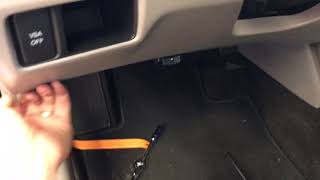
How to confirm: This is the easiest and most common first diagnostic step. The module is typically located behind a panel in the overhead console area. 🎬 Watch: How to locate and access the Bluetooth module Disconnect the electrical connector to the HFL module, clear codes, and see if the B1000 code and associated symptoms disappear. If so, the HFL module is faulty.
Typical fix: Disconnect the module and leave it disconnected (losing Bluetooth functionality), or replace the module. Given the high failure rate, many owners opt to simply disconnect it.
Est. part cost: $50-$150 (Used), $200-$400 (New OEM) - Failed Multiplex Integrated Control Unit (MICU) 🔴 High Probability The MICU is a known failure point on Hondas from this period. It acts as a central gateway for the B-CAN network, and an internal failure can bring down the entire bus, often failing to enter 'sleep mode' and causing a parasitic draw.
How to confirm: This is typically confirmed after ruling out other modules. If the HFL module and other accessible B-CAN units are disconnected and the B1000 code persists, the MICU is the likely culprit. A technician can also use a special service connector to put the MICU into a self-diagnostic test mode.
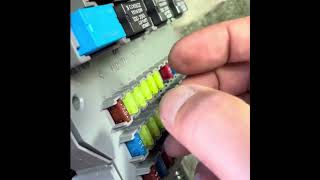
Typical fix: Replace the entire under-dash fuse/relay box assembly, as the MICU is integrated into it. 🎬 Watch: Under-dash MICU replacement walkthrough For 2008-2011 models, this requires programming by a dealer or a locksmith with appropriate tools.
Est. part cost: $80-$250 for a used or remanufactured unit, $400+ for a new OEM unit. - Faulty Control Unit on B-CAN Network 🟡 Medium Probability Any single module on the network (e.g., Gauge Control Module, Climate Control Unit) can fail and start flooding the network with bad data or short it out, causing the B1000 code.
How to confirm: Using a Honda HDS scanner, disconnect one B-CAN module at a time, clear the codes, and see if B1000 returns. If the code does NOT return after disconnecting a specific module, that module is the source of the fault.
Typical fix: Replace the specific control unit that was identified during the isolation test.
Est. part cost: $50-$500 depending on the specific module. - Low Battery Voltage or Failing Charging System ⚪ Low Probability Modern vehicles are highly sensitive to voltage. A weak battery or a failing alternator can cause voltage drops that lead to communication errors between modules.
How to confirm: Test the battery with a multimeter or electronic battery tester. It should read ~12.6V with the engine off and ~14.0-14.7V with the engine running. A load test is the most definitive way to confirm battery health.
Typical fix: Recharge or replace the battery. If the charging system is at fault, replace the alternator.
Est. part cost: $100-$250 for a new battery.
Rare But Worth Checking
- Short or Open in B-CAN Wiring Harness: This can be caused by physical damage, chafing against a bracket, or corrosion. It is often difficult to find and requires tedious continuity testing of the single B-CAN wire between all the modules.
Diagnosis Steps
- Connect a professional scanner capable of reading Honda B-codes (like a Honda HDS). Check for B1000 and any other communication codes (U-codes, other B-codes).
- Check and confirm battery and charging system health. A healthy battery should be at ~12.6V engine-off and the alternator should produce ~14V+ engine-on. Resolve any voltage issues first. A weak battery can cause communication faults.
- Isolate the HandsFreeLink (HFL) Module. This is the most common culprit. Locate the module (usually in the overhead console) and disconnect its electrical connector. Clear the codes and see if B1000 returns. If the code is gone and electrical accessories now work, the HFL module is faulty and should be replaced or left disconnected.
- If the code returns after disconnecting the HFL, begin isolating other modules. Consult a service manual for your specific year to get a list of all modules on the B-CAN line.
- Disconnect one module at a time (e.g., Gauge Control Module, Climate Control Unit), clear the codes, and re-check.
- If B1000 does NOT return after disconnecting a specific module, you have found the faulty component. Replace that module.
- If B1000 continues to return after disconnecting every other accessible module on the network, the problem is likely in the wiring harness or the MICU (under-dash fuse box).
- Inspect the B-CAN wiring for obvious damage. If none is found, the MICU is the most probable cause. Replacing the MICU is the next step. Remember that for 2008-2011 models, the new MICU will need to be programmed to the car's immobilizer system.
Parts You'll Likely Need
- Multiplex Integrated Control Unit (Under-Dash Fuse Box)
(OEM #Varies by year and trim. Example for 2008 Accord: 38200-TBD-A02. Always verify with VIN.)— This is a common point of failure that causes a B1000 code when other modules have been ruled out.
Trusted brands: Honda (OEM)
OEM price range: $400-$600
Aftermarket price range: $80-$250 (Used/Remanufactured) - HandsFreeLink Control Unit
(OEM #Varies by year. Example: 39770-TA0-A01. Always verify with VIN.)— This module is notoriously prone to failure, causing parasitic drain and B-CAN issues. It is often the first part to check/disconnect when diagnosing B1000.
Trusted brands: Honda (OEM)
OEM price range: $200-$400
Aftermarket price range: $50-150 (Used)
Related Codes That Often Appear With This One
- B1005, B1007, B1011 — These are other B-CAN communication error codes that may be logged along with B1000, indicating a widespread network failure.
- U0155 — Indicates a loss of communication with the Instrument Panel Cluster (Gauge) Control Module. This often occurs alongside B1000 when the B-CAN bus is down.
- U1282 — On 8th gen Accords, this indicates the Passenger's MICU lost communication with the Driver's MICU, pointing directly to a B-CAN network fault.
Platform-Specific Known Issues
- Real Owner Experience: MICU Failure: A user on a Honda forum with an '05 Accord experienced a no-start condition after replacing the MICU. While the 7th gen MICU is supposed to be plug-and-play, a faulty replacement unit or an underlying wiring issue can still cause problems like no power to ignition coils or the ECU fuse, demonstrating the complexity of the system.
- Real Owner Experience: HandsFreeLink Parasitic Drain: Numerous owners across forums for Accords, Civics, and CR-Vs from 2003-2008 report that their HFL module became hot to the touch even with the car off, causing a significant battery drain. Disconnecting the module completely solved the battery drain and, in cases where it was disrupting the network, other electrical gremlins.
Documented NHTSA Reports
While B1000 is a specific communication error on Honda platforms, it is important to note that other manufacturers use this code to denote internal Electronic Control Unit (ECU) malfunctions. For example, NHTSA ODI #11660121 describes a case where a B1000-00 code was listed as an ECU fault, with diagnostic searches suggesting the unit required replacement or reprogramming. Similarly, NHTSA ODI #11105156 notes a B1000 code indicating an ECU malfunction in a passenger presence system, where the owner also identified grounds in very bad condition at the battery negative to the engine and frame. In other vehicle architectures, such as described in NHTSA ODI #11471720, a B1000 code may specifically refer to a resistance issue in an air bag control module, while NHTSA ODI #11307397 and NHTSA ODI #11687675 associate the code with general control module faults and lost communication with the BCM or ECM.
Mechanic-Grade Diagnostic Values
- B-CAN Bus Voltage (Single Wire System) — expected: Unlike a two-wire CAN system, Honda's B-CAN is a single-wire bus. The voltage should fluctuate rapidly, which appears as a fuzzy or changing voltage on a multimeter. An oscilloscope is required to see the true waveform, which switches between approximately 0V and 5V.. Failure: A line that is stuck high (at 5V or battery voltage) or stuck low (at 0V) indicates a short to power or ground, or a faulty module pulling the bus down.
- B-CAN Wire Continuity to Ground — expected: With the battery disconnected and all B-CAN modules unplugged, there should be no continuity (infinite resistance) between the B-CAN wire (Pink wire at MICU connector Q, pin 6 for 8th gen) and chassis ground.. Failure: Continuity to ground indicates a short in the wiring harness.
Scan Tool Commands That Help
- Honda Diagnostic System (HDS): B-CAN System Diagnosis Test Mode A/B — This function, found under Body Electrical, queries all modules on the B-CAN network to see which ones are communicating. If a module is listed as 'Not Available', it helps pinpoint the source of the communication failure. This is the factory-prescribed first step when multiple communication DTCs are present.
- Honda Diagnostic System (HDS) or compatible aftermarket tool (e.g., Autel, XTOOL): Immobilizer Key Registration / MICU Replacement — This function is mandatory when replacing the MICU (under-dash fuse box) on an 8th generation (2008-2011) Accord. The new MICU must be programmed to the vehicle's immobilizer system and existing keys, otherwise the car will not start.
- Honda Diagnostic System (HDS): Gauge Control Module Self-Diagnostic Function — This test, found under Body Electrical -> Gauges -> Functional Tests, can check the communication line between the gauge cluster and the rest of the B-CAN network. A failure here can point towards the gauge module itself being the cause of the B1000 code.
Wiring & Ground Locations
- G501 — Behind the left side of the dash, near the driver's kick panel area.. This is a primary interior ground point. The MICU, Gauge Control Module, and other B-CAN related components rely on this ground. A loose or corroded G501 can cause intermittent communication issues and a host of electrical problems, mimicking a module failure.
- G601 — On the left side of the floor, under the carpet/trim, near the driver's seat area.. This ground serves various body components. While less directly tied to the MICU than G501, a fault here can introduce electrical noise or voltage drops that affect modules on the B-CAN network.
- MICU Connector Q (16P) - 8th Gen (2008-2011) — This is a 16-pin connector on the under-dash fuse box (MICU).. Pin 6 of this connector contains the single B-CAN communication wire (Pink). This is a critical test point for checking voltage, shorts to ground, or shorts to power on the B-CAN line directly at the main body controller.
- MICU Green Plug - 7th Gen (2006-2007) — A green connector at the MICU (under-dash fuse box).. On 7th gen models, this connector houses key communication and control wires. For example, Pin 9 (Pink/Blue) and Pin 25 (Pink/Black) are related to the power lock system controlled by the MICU via the B-CAN.
Real Owner Repair Stories
- Honda-Tech Forum User (2008 Honda Accord EX-L) — Rear turn signals shorting with running lights and brake lights. Strange clicking sound from the fuse box area prior to the failure.
❌ Tried (didn't work) Checked all bulbs, Checked ground connections, Inspected Molex plug connectors
✅ What actually fixed it The user concluded the driver's side fuse box (MICU) was malfunctioning and was seeking information on how to program the replacement unit, which confirmed the diagnosis.
Model Year Variations Within This Range
- 2006-2007 (7th Gen): The MICU (under-dash fuse box) is considered 'plug-and-play'. A replacement unit, new or used, does not require immobilizer programming. This makes DIY replacement much more feasible.
- 2008-2011 (8th Gen): The MICU is part of the vehicle's immobilizer system. A replacement MICU MUST be programmed to the car's keys and the PCM using a Honda HDS or a capable professional aftermarket scan tool. Failure to program the new unit will result in a no-start condition with a flashing green key light.
Diagnostic Flowchart
Other Known Issues on This Vehicle
Issues unrelated to this code that are worth knowing about as an owner of this generation:
- Excessive Oil Consumption (V6 with VCM) 🔴 High — Common on 2008-2011 V6 models with Variable Cylinder Management (VCM). Can lead to fouled spark plugs and engine damage. (Ref: Subject of a class-action lawsuit which extended powertrain warranties.)
- VTC Actuator Rattle on Cold Start (4-Cylinder) 🟠 Medium — Common on 2008-2011 2.4L 4-cylinder engines. Causes a loud, brief rattle for a few seconds on a cold start. (Ref: Honda TSB 09-010)
- Premature Rear Brake Pad Wear 🟠 Medium — Widespread on 2008-2009 models, but can affect later years. Rear pads may wear out in as little as 20,000-30,000 miles. (Ref: Subject of class-action lawsuits, but no official recall.)
- Excessive Oil Consumption (4-Cylinder) 🟠 Medium — Affects some 2008-2011 2.4L models due to sticking piston rings. (Ref: Honda TSB 12-087 was issued to address replacing pistons and rings for affected vehicles.)
- Automatic Transmission Failure (7th Gen V6) 🔴 High — A known weak point for the 2003-2007 generation Accords with the V6 engine, though less prevalent by the 2006-2007 model years compared to earlier ones. Can result in complete transmission failure.
Used vs. New Parts: Buying Guide for This Vehicle
When a used part is the smart pick: A used part is a very smart choice for both the HandsFreeLink (HFL) module and the MICU, with one major caveat. For the HFL, it's a cheap way to restore functionality, but the failure rate is high, so it may not last. For the 7th gen (2006-2007) Accord, a used MICU is an excellent, cost-effective, plug-and-play repair. For the 8th gen (2008-2011), a used MICU is still a good value, but you MUST factor in the cost of professional programming.
Donor-vehicle mileage cap: roughly under 150000 miles for the part to have meaningful remaining life.
What to inspect on the donor part:
- For a MICU, inspect the fuse box for any signs of water intrusion, corrosion on the terminals, or melted plastic.
- Ensure the part number on the used MICU exactly matches the original. There are many variations based on trim (LX, EX, EX-L), engine, and transmission.
- Buy from a reputable salvage yard with a return policy in case the unit is also faulty.
- Check for any visible damage to the connectors or the plastic housing.
OEM-only on this vehicle (don't cheap out):
- For this specific repair, there are no common aftermarket alternatives for the MICU or HFL module itself. The choice is between OEM (new or used) or a remanufactured OEM unit.
Real Owner Stories
Aggregated from forums and TSBs cited above. Mileages and costs reflect what owners reported in those sources.
2005 Honda Accord
Symptoms: Experienced a crank-no-start condition after replacing the MICU; the car had no power to the ignition coils or the ECU fuse.
What fixed it: The owner investigated potential wiring issues or a faulty replacement unit, highlighting that even 'plug-and-play' swaps on 7th gen models can have complications.
Source hint: Honda-Tech Forum - 'Bad MICU on 05 Honda accord' (URL: honda-tech.com/forums/honda-accord-crosstour-2003-2012-118/bad-micu-05-honda-accord-3351980/)
2006 Honda Accord
Symptoms: The HandsFreeLink (HFL) module became hot to the touch even with the car turned off, causing a significant parasitic battery drain and electrical gremlins.
What fixed it: Disconnecting the HFL module completely solved the battery drain and resolved the network disruptions.
Source hint: EEVblog Forum - 'Honda Hands Free Bluetooth Module drains Battery' (URL: eevblog.com/forum/repair/honda-hands-free-bluetooth-module-drains-battery/)
Related OBD-II Codes
Frequently Asked Questions
Why is my 2008-2011 Honda Accord battery dying overnight and showing a B1000 code?
Can I replace the MICU in my 2008-2011 Accord myself to fix the B1000 code?
My Accord's wipers and A/C stopped working at the same time as the B1000 code appeared. Are they related?
Where is the HandsFreeLink module located if I want to disconnect it to test for B1000?
Why does my Honda Accord have a flashing green key light and stall immediately after I replaced the fuse box?
Is there a way to test the MICU without replacing it immediately?
Helpful Videos

We Have This Part in Stock



The information in this article is provided for general reference and educational purposes only. Vehicle specifications, procedures, and part compatibility can vary by production date, trim level, and region. Always consult your vehicle's factory service manual and verify part numbers before purchasing or performing repairs. Safety-critical components such as airbags, seat belts, and braking systems should be installed by a qualified professional.
- Honda Accord:
- 🎬 Helpful Videos
- 🛍️ Shop This Part
- What's Unique About the 2006-2011 Honda Accord
- Symptoms You May Notice
- Most Likely Causes
- Rare But Worth Checking
- Diagnosis Steps
- Parts You'll Likely Need
- Related Codes That Often Appear With This One
- Platform-Specific Known Issues
- Documented NHTSA Reports
- Mechanic-Grade Diagnostic Values
- Scan Tool Commands That Help
- Wiring & Ground Locations
- Real Owner Repair Stories
- Model Year Variations Within This Range
- Diagnostic Flowchart
- Other Known Issues on This Vehicle
- Used vs. New Parts: Buying Guide for This Vehicle
- Real Owner Stories
- 2005 Honda Accord
- 2006 Honda Accord
- Related OBD-II Codes
- Frequently Asked Questions
- 🎟️ Get 5% Off