

OBD-II Code B0561: System Voltage High
What B0561 means, why it triggers, and how to fix it
- Code B0561 indicates dangerously high electrical system voltage, almost always caused by a failed internal alternator voltage regulator.
- Expect unusually bright headlights and an illuminated ABS or StabiliTrak warning light, frequently accompanied by a secondary C0561 code.
- Stop driving immediately; sustained voltage above 15.5V permanently destroys expensive control modules, turning a $400 alternator job into a $2,500+ repair.
- Diagnose this instantly by testing the battery with a multimeter while the engine runs—any reading above 15.5 volts confirms a bad alternator.
- Never replace the ABS module for a related C0561 code; this is a secondary symptom that clears automatically once you fix the primary high-voltage issue.
What Does B0561 Mean?
B0561 indicates a control module, typically the Body Control Module (BCM), detects vehicle electrical system voltage above the safe operating limit. This triggers when voltage exceeds 15.5 to 16.0 volts for several consecutive seconds. The module sets this code to protect itself and other sensitive electronics from overcharging damage.
Technical definition: While the official SAE J2012/ISO 15031-6 definition for B0561 is manufacturer-specific, it universally indicates a 'System Voltage High' condition within the body control circuits. It is the Body (B-code) equivalent of the Powertrain (P-code) P0563. The BCM sets this code when its power input reads above the manufacturer-specified threshold (typically 16.0V) for several consecutive seconds.
Can I Drive With B0561?
Yes, But With Caution. Yes, for very short distances, but continued operation carries massive financial risk. High voltage disables crucial safety systems like ABS and StabiliTrak, increasing braking distances and skid risks. More critically, sustained voltage above 15.5V permanently damages expensive electronic modules (PCM, BCM, radio, instrument cluster). Ignoring the issue turns a $400 alternator replacement into a $2,500+ repair bill for multiple fried computers.
Common Causes
- Failing Alternator / Voltage Regulator (Very Common) — The internal voltage regulator caps the charging voltage. Its failure is the leading cause of overcharging the system and triggering a high voltage code. This is the root cause in 90% of B0561 cases.
- Poor Ground Connections (Common) — A corroded, loose, or broken main ground strap for the engine, battery, or a specific module creates high resistance. This confuses the alternator's sensing circuit, forcing it to overcharge. This is a heavily documented issue on GM trucks.
- Damaged Wiring or Sense Wire (Common) — The alternator uses a 'sense' wire to monitor system voltage. If this wire breaks or corrodes, the alternator defaults to maximum charging output. Similarly, a positive battery cable shorted to a signal wire feeds excessive voltage directly into a control module.
- Faulty Battery (Less Common) — While bad batteries typically cause low voltage, an internal short leads to erratic voltage regulation and spikes during charging. A completely failed battery removes the system's natural voltage buffer, allowing unregulated alternator voltage to spike.
- Improperly Installed Aftermarket Electronics (Less Common) — High-power aftermarket accessories (stereos, winches, lighting) wired incorrectly interfere with the charging system. They draw power in a way that confuses the alternator's voltage sensing circuit, creating an overcharge situation.
- Failing TIPM (Chrysler/Dodge/Jeep) (Less Common) — On Chrysler products, the Totally Integrated Power Module (TIPM) acts as the main fuse and relay center. Internal TIPM failures cause bizarre electrical issues, including commanding the alternator to overcharge.
- Faulty Body Control Module (BCM) (Rare) — The module itself fails and misreads the system voltage. This is rare and requires exhaustive testing of all other components before replacement.
Symptoms
- ABS, Traction Control, or StabiliTrak Lights On — The high voltage corrupts data signals, forcing the Electronic Brake Control Module (EBCM) to disable safety systems and set a related code like C0561.
- Unusually Bright Headlights and Interior Lights — The most direct physical sign of high voltage is headlights burning noticeably brighter than normal. They frequently flicker or burn out prematurely.
- Battery Gauge Reads High — Vehicles with dashboard voltmeters read significantly above the normal 14.0-14.7 volt range, pushing into the 16V+ red zone or triggering a 'High Voltage' warning message.
- Battery Swelling, Leaking, or Rotten Egg Smell — A chronically overcharged battery overheats, causing the case to swell. Severe cases boil the internal electrolyte, leaking acid and releasing hydrogen sulfide gas (rotten egg smell).
- Erratic Electronic Component Behavior — The radio cuts out, dashboard lights flicker, power windows operate strangely, and the transmission shifts harshly because unstable voltage corrupts data between modules.
Diagnostic Flowchart
Tap your situation to follow the diagnostic path that matches what you're seeing on this code.
Common Fixes & Costs
- Replace the Alternator — Parts: $200 - $550, Labor: $150 - $350, ~2 hr book time (Intermediate)
- Clean or Replace Ground Straps/Cables — Parts: $15 - $75, Labor: $100 - $250, ~1 hr book time (DIY)
- Replace Blown Fusible Link or Main Fuse — Parts: $5 - $50, Labor: $50 - $150, ~0.5 hr book time (DIY)
- Repair Damaged Wiring Harness — Parts: $20 - $100, Labor: $200 - $800, ~3 hr book time (Professional)
- Replace the Body Control Module (BCM) — Parts: $300 - $900, Labor: $150 - $350, ~2.5 hr book time (Professional)
Used vs. New Parts: Buying Guide
When a used part is worth it: A used junkyard alternator is a budget-friendly option for an older vehicle (>150k miles) you do not plan to keep long-term. It saves money but risks premature failure.
Donor-vehicle mileage cap: roughly under 80000 miles for the part to have meaningful remaining life.
Donor quality checklist:
- Verify the donor vehicle lacks front-end collision or flood damage.
- Choose a part from a donor with under 80k miles.
- Spin the pulley by hand. It must spin smoothly with slight resistance and no grinding.
- Match the part number exactly; amperage ratings differ on the same model.
Decision logic:
- If Vehicle is newer or you plan to keep it long-term → Buy a new or high-quality remanufactured unit. The reliability and warranty are worth the cost.
- If Budget is the primary concern and the car is old → A used alternator is an acceptable risk, but prepare for it to fail sooner.
- If You want a balance of cost and reliability → A remanufactured alternator from a reputable brand offers near-new performance with a solid warranty.
Warranty tradeoff: Used parts have a 30-90 day part-only warranty. Remanufactured units offer 1-year to limited-lifetime warranties. New aftermarket parts have 1-3 year warranties.
Worst-case if a used part fails: $200 - $500 if a used part fails prematurely, requiring repeat labor and another replacement part.
What Happens If You Wait — Timeline
- Immediate (First Drive): Code B0561 sets. The 'Battery' light illuminates. The EBCM sets a C0561 and disables ABS and Traction Control systems. (Added cost: $0)
- Days to Weeks: Constant overcharging above 15V boils the battery electrolyte, causing swelling and acid leaks. Headlights and interior bulbs burn out. (Added cost: $150 - $350 (for a new battery and replacement bulbs))
- Weeks to Months: High voltage spikes degrade components in the radio, instrument cluster, and control modules, causing erratic behavior and glitches. (Added cost: $500 - $2,500 (for one or two damaged modules))
- Months or a Severe Failure Event: A major voltage spike permanently destroys primary control modules (PCM, BCM). The vehicle fails to start, requiring a massive electrical rebuild. (Added cost: $3,000 - $5,000+ (for multiple modules and diagnostic labor))
Cost of Not Fixing It
- Immediate (Days to Weeks): Permanent battery damage due to overheating and boiling of the electrolyte, causing swelling and leaks. Premature burnout of headlights. (Added cost: $150 - $350 (for new battery and bulbs))
- Short Term (Weeks to Months): Damage to sensitive electronic components. High voltage fries circuits in the BCM, PCM, radio, instrument cluster, or ABS module. (Added cost: $500 - $2500+ (per damaged module))
- Long Term (Months): Catastrophic electrical system failure. Multiple modules fail simultaneously, leading to a no-start condition or dangerous driving behavior. (Added cost: $3000+ (for multiple modules and complex wiring diagnostics))
Diagnosis Steps
- Test Charging System Voltage at the Battery
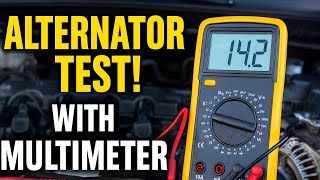
With the engine off, use a multimeter to check the battery's static voltage (should be ~12.6V). Start the engine. Voltage must rise to between 13.7V and 14.7V. 🎬 See this easy DIY tutorial on testing your alternator with a multimeter. If it jumps to 15.5V or higher, the alternator is overcharging and requires replacement.
Tools: Multimeter (Beginner) - Scan for All Trouble Codes
Use an OBD-II scanner capable of reading Body (B), Chassis (C), and Communication (U) codes. B0561 is frequently accompanied by C0561, P0563, or U-codes. Document and diagnose primary engine or charging system codes before addressing C-codes.
Tools: Advanced OBD-II Scanner (Beginner) - Perform an Alternator Load Test
Take the vehicle (or just the alternator) to an auto parts store for a free load test. This definitively confirms if the alternator's internal voltage regulator failed.
Tools: Alternator testing machine (at auto parts store) (Beginner) - Inspect Battery Terminals and Main Grounds
Visually inspect battery terminals for corrosion. Follow the main negative cable to the chassis and engine block. Follow the main power cable to the alternator and fuse box. Ensure all connections are clean, tight, and bare metal.
Tools: Wrench set, wire brush (Beginner) - Perform Voltage Drop Test
With the engine running, set the multimeter to DC Volts. Place the positive lead on the battery's positive post and the negative lead on the alternator's main output stud. A reading above 0.5V indicates high resistance in the charging cable. Next, place the positive lead on the alternator case and the negative lead on the battery's negative post. A reading above 0.2V indicates a poor ground.
Tools: Multimeter (Intermediate) - Inspect Wiring Harnesses
Visually inspect the wiring harness leading to the alternator (especially the sense wire) and the BCM. Look for melted insulation, chafing, or corrosion indicating a short circuit.
Tools: Flashlight (Intermediate) - Analyze Scan Tool Live Data
Monitor live data PIDs for 'Control Module Voltage' and 'Generator Field Duty Cycle'. Compare the module voltage reading to your multimeter reading at the battery; a discrepancy points to a wiring issue. A low duty cycle command with high voltage output confirms a faulty alternator ignoring PCM commands.
Tools: Advanced OBD-II Scanner (Advanced) - Check for AC Ripple Voltage
Set the multimeter to AC Volts. With the engine running at 1500 RPM, touch the leads to the battery terminals. Any reading over 0.5V AC (500mV AC) indicates failing alternator diodes, requiring alternator replacement.
Tools: Multimeter (Advanced) - Test BCM Power and Ground Circuits
Using a vehicle-specific wiring diagram, check for proper voltage and ground at the BCM connector pins. This confirms if the BCM receives the correct voltage or if its internal sensor failed. Perform this only after confirming the alternator and wiring are flawless.
Tools: Multimeter, vehicle-specific wiring diagram (Advanced)
When This Code Triggers (Freeze-Frame Conditions)
- Engine Coolant Temp: 180-210°F (The fault typically appears after the engine reaches full operating temperature.)
- Engine RPM: 1200-2500 RPM (Triggers at a steady, elevated RPM above idle, such as during highway cruising.)
- Electrical Load: Moderate to High (Sets when electrical accessories (headlights, HVAC fan) are active, placing a load on the charging system.)
- Time After Start: 5-15 minutes (The fault condition requires several minutes after the initial startup and battery-recharge phase.)
Related Codes
- C0561-71 — This means 'Invalid Serial Data Received'. B0561 is the cause (high voltage), while C0561 is the effect. High voltage corrupts data messages, forcing the EBCM to set C0561 and disable ABS. Always fix the B0561 first.
- P0563 — This is the Powertrain Control Module's (PCM) version of the same fault. If both P0563 and B0561 are present, it guarantees a vehicle-wide overcharging problem caused by the alternator.
- U0100, U0140 — These indicate lost communication with the ECM or BCM. Extreme voltage spikes disrupt the CAN bus network. Fixing the voltage problem restores communication.
- P0641 — A short circuit in the 5-volt reference line causes erratic sensor readings. The ECM misinterprets this and sends invalid data to the brake module, triggering a C0561 code.
Climate & Environmental Factors
- Cold Weather: Cold temperatures increase electrical load (heaters, defrosters) and thicken engine oil, forcing the alternator to work harder. This strain causes marginal alternators to fail.
- High Humidity: Moisture penetrates electrical connectors and alternator internals, causing corrosion and short circuits. This disrupts the voltage regulator's sensing ability, triggering overcharging.
- Road Salt (Rust Belt Regions): Corrosive salt spray accelerates the decay of electrical components. It destroys chassis ground connections and seizes alternator bearings, causing premature charging system failure.
How to Talk to a Mechanic About This Code
Say this: "I have a B0561 high voltage code, and my ABS/StabiliTrak light is on with a related C0561 code. Please test the charging system voltage at the battery and perform a voltage drop test on the main power and ground cables before recommending any parts."
This signals you understand B0561 is the root cause and C0561 is a symptom. It directs the mechanic to perform specific tests to confirm a bad alternator, preventing them from misdiagnosing the problem and selling you an unnecessary ABS module.
Avoid saying:
- 'My ABS light is on, can you fix it?'
- 'My check engine light is on, just tell me what it costs.'
- 'Just replace whatever is broken.'
Questions to ask before authorizing the repair:
- What was the exact voltage reading at the battery with the engine running?
- Did you perform a voltage drop test on the alternator power and ground cables? What were the readings?
- Can you confirm that the C0561 code is a symptom of the high voltage and that the ABS module itself is not faulty?
- What is the warranty on the replacement alternator and your labor?
Where to Take It: Dealer vs Independent vs Chain
- Dealer:
Recommended only if the vehicle is under warranty or has a known, complex manufacturer-specific quirk. Otherwise, an independent shop is more cost-effective.
Best for: Vehicles still under warranty., Complex, manufacturer-specific electrical issues (e.g., failing TIPM on a Jeep or IBS sensor on a BMW)., When you want a guaranteed OEM part.
Downsides: Significantly higher labor rates and part costs., Inclined to replace entire assemblies rather than perform component-level repairs. (Typical cost: +50% vs. baseline) - Independent Shop:
Best fit for this code. A competent independent shop easily diagnoses and repairs a B0561 for a much lower cost than a dealer.
Best for: Most out-of-warranty vehicles., Standard electrical diagnostics and alternator replacement., Building a long-term relationship with a mechanic.
Downsides: Quality varies widely; look for ASE certifications., Lacks specialized tools for very new or complex models. (Typical cost: +0% vs. baseline) - Chain Shop:
Use with caution. Acceptable for a straightforward alternator replacement if you are certain that is the problem. AVOID for initial diagnosis.
Best for: Simple, straightforward parts replacement if the diagnosis is already certain.
Downsides: Technician skill varies dramatically., High pressure to upsell services., Lacks diagnostic depth to differentiate between a B0561 root cause and a C0561 symptom. (Typical cost: -10% vs. baseline)
When to Walk Away From the Repair
If the estimated repair cost exceeds 40-50% of the car's private-party value, seriously consider selling or trading it in.
- Car worth $4000, fix is $800: Fix it. This repair is well below the threshold and critical for vehicle health.
- Car worth $3000, fix is $2000: Walk away. The repair cost is ~67% of the car's value. This does not make financial sense, especially if other modules were damaged.
- Car worth $15000, fix is $1200: Fix it. The cost is a small fraction of the vehicle's value.
What Scan Tool You Need for This Code
Minimum: A scanner that reads Body (B) and Chassis (C) codes, in addition to standard Powertrain (P) codes. It must display live data for 'Control Module Voltage'.
A basic $20 code reader only shows Powertrain (P) codes. It misses the B0561 (Body) and C0561 (Chassis) codes, leaving you with an incomplete and misleading diagnosis.
Budget: TopDon TopScan / Ancel BD310 (~$80) — These Bluetooth dongle-style scanners connect to your smartphone and read codes from all systems (Engine, ABS, Airbag, Body). They display live voltage data essential for diagnosing B0561.
Mid-range: Foxwell NT510 Elite / Topdon ArtiDiag Pro (~$250) — Offers full system diagnostics and live data graphing. These tools offer bidirectional controls to test components and provide in-depth information to confirm the diagnosis.
Professional: Autel MaxiCOM MK808S / Launch X431 CRP919XBT (~$450-600) — Provides dealer-level diagnostics. These tools offer full bidirectional control, advanced live data PIDs, and perform special functions and programming necessary if a BCM requires replacement.
Rent vs buy: Auto parts stores offer loaner tool programs where you pay a refundable deposit. However, many stores only read codes and do not rent out advanced scanners. A budget scanner is a worthwhile investment for DIY work.
How to Clear the Code After You Fix It
- Ensure the new alternator or repaired component is correctly installed.
- Reconnect the battery if disconnected during repair.
- Use an OBD-II scan tool to erase B0561 and related codes (P0563, C0561) from all modules.
- Perform a complete drive cycle to allow readiness monitors to run self-tests.
Drive cycle (~20 minutes): A generic drive cycle includes: 1) Cold start (engine off for 8+ hours). 2) Idle for 3 minutes with electrical loads on. 3) Drive in city traffic (25-40 mph) with stops. 4) Drive at a steady highway speed (55-60 mph) for 10 minutes.
Readiness monitors affected: Comprehensive Component Monitor (CCM), Catalyst Monitor, EVAP System Monitor
Before emissions retest: drive at least 50 miles to fully set monitors.
Watch out for:
- Disconnecting the battery clears the code but resets emissions monitors to 'Not Ready', causing an automatic emissions test failure.
- The code returns immediately if the overcharging alternator is not replaced.
- The EVAP monitor requires specific fuel levels (between 15% and 85%) and overnight cold soaks to complete.
Will This Fail Emissions / State Inspection?
Yes — this code typically fails an OBD-II emissions inspection.
- California: An active Check Engine Light results in an automatic smog check failure. A full drive cycle must be completed to set readiness monitors before a retest.
- New York: Any illuminated Check Engine Light causes an automatic emissions inspection failure. A drive cycle is required after clearing the code.
- Texas: An active DTC like B0561 causes an automatic failure. Clearing the code right before the test results in a 'Not Ready' rejection.
Most Commonly Affected Vehicles
- Chevrolet Silverado / Tahoe / Suburban (2007-2014) — Notorious for setting the related C0561 code. The root cause is frequently an engine issue like a cracked PCV tube (P0171/P0174) or a failing electronic throttle body (P2135), not high voltage.
- GMC Sierra / Yukon (2007-2014) — Shares the GMT900 platform vulnerabilities. GM issued TSB PIT4169F warning technicians not to replace the EBCM for a C0561 code alone, but to find the primary code first.
- Ford F-150 (2009-2014) — Failing alternators are the primary cause. Also check the Battery Management System (BMS) sensor on the negative terminal for faults.
- Subaru Outback / Forester / Legacy (2005-2014) — Prone to alternator failure. Owners report a 'Christmas tree' effect of dashboard warning lights as the voltage regulator fails and sends spikes through the system.
- Hyundai Sonata / Elantra (2011-2016) — Reports point directly to a failed alternator internal voltage regulator as the sole cause for high voltage conditions and the B0561 code.
- GMC Acadia (2007-2012) — Noted for Electronic Brake Control Module (EBCM) and wheel speed sensor connector issues leading to a C0561 code, triggered by underlying voltage problems.
- Chevrolet Cobalt (2005-2010) — Experiences C0561 alongside engine performance codes like P0641 (5-Volt Reference Circuit). A short in the sensor wiring harness corrupts data and triggers the C0561.
- Chevrolet Corvette (2005-2013) — C6 generation Corvettes have highly sensitive electronics. A voltage surge from a failing alternator instantly triggers B0561 and a cascade of communication codes.
Manufacturer-Specific Notes
- General Motors (Chevrolet, GMC, Cadillac, Buick): C0561 is an informational code, not a fault code. GM TSB PIT4169F explicitly warns technicians NOT to replace the EBCM for a C0561 code alone. The root cause is always another primary code.
- BMW: An overvoltage event damages the Intelligent Battery Sensor (IBS) on the negative terminal. A damaged IBS causes erratic charging even after alternator replacement. The IBS requires replacement and battery registration.
- Chrysler / Dodge / Jeep: A failing Totally Integrated Power Module (TIPM) commands the alternator's field circuit on continuously, leading to a severe overcharge condition.
- Ford: Recall 19S11 for 2015-2019 F-150s involves an engine block heater cable shorting. Deteriorated connections in the transmission lead frame also cause false signals to the PCM, relating to voltage issues.
Real Owner Stories
2011 Subaru Outback with 240k miles
Car was completely dead. After jump-starting, it ran for 3 days before dying again. A new battery was installed 3 months prior.
What they tried:
- Jump starting the vehicle repeatedly.
- Took the car to an auto parts store for testing.
Outcome: The charging system test failed. The owner replaced the alternator, resolving the issue.
Lesson: A battery that repeatedly dies, especially a new one, indicates the alternator is failing. Test the charging system before assuming the battery is the problem.
2007 Chevrolet Silverado 1500
Intermittently received a C0561 'Stabilitrak Off' message while driving, with no other codes present initially.
What they tried:
- Researched the code and found it related to rough idle caused by GM's Active Fuel Management (AFM) system.
- Disabled AFM and replaced fouled spark plugs.
Outcome: Disabling the AFM system stopped the rough idle, and the C0561 code never returned.
Lesson: On GM trucks, C0561 is an informational symptom code. Investigate rough idle, misfires, or vacuum leaks before suspecting the brake module.
2015 Subaru Outback with 108k miles
All dashboard lights illuminated. The car ran rough with poor acceleration. A main electrical fuse had previously blown.
What they tried:
- Replaced the battery.
- Tested and replaced the alternator (showed 11V output).
Outcome: The car remained non-functional after replacing both components, indicating a deeper electrical short.
Lesson: If replacing the battery and alternator fails, the problem lies in the wiring. Perform voltage drop tests on ground and power cables to find hidden resistance.
How to Prevent This Code From Triggering
- Inspect and Clean Battery Terminals and Ground Connections (Every 6 months or during oil change) — Corrosion creates high resistance, confusing the alternator's voltage sensing and causing overcharging. Clean connections ensure the system reads the correct voltage.
- Replace Serpentine Belt at Recommended Intervals (Every 60,000 to 100,000 miles) — A worn belt slips, causing erratic alternator speed and unstable voltage output, leading to voltage spikes.
- Avoid Deeply Discharging the Battery (Daily habit) — Forcing the alternator to recharge a deeply drained battery puts maximum strain on the voltage regulator, accelerating wear.
- Ensure Engine is Free of Oil or Coolant Leaks (During routine checks) — Fluids dripping onto the alternator contaminate internal components, causing short circuits and premature voltage regulator failure.
Frequently Asked Questions
Can I just replace the battery to fix a B0561 code?
No. A B0561 code indicates high voltage overcharging, while a bad battery causes low voltage. The root cause is a failing alternator overcharging the system. Replacing the battery without fixing the alternator destroys the new battery.
A mechanic wants to replace my ABS module (EBCM) for a C0561 code. Is this correct?
This is a common misdiagnosis, especially on GM vehicles. The C0561 code is a secondary symptom indicating the ABS module shut down safety systems due to invalid data from the high-voltage condition. Diagnose and fix the primary B0561 code first, and the C0561 clears automatically.
What does the '71' in C0561-71 mean?
The '-71' suffix means 'Invalid Serial Data Received'. This confirms the module is not faulty, but is receiving corrupted information from another computer on the vehicle network. This corruption is directly caused by the B0561 voltage spike.
Can a bad ground cause my StabiliTrak light to come on?
Yes. A poor ground connection causes a voltage differential between modules, corrupting CAN bus network data signals. The Electronic Brake Control Module (EBCM) sees this invalid data and sets a C0561 code, disabling StabiliTrak.
Is B0561 the same as C0561?
No, but they are directly related. B0561 is a Body code for 'System Voltage High', while C0561 is a Chassis code for 'Invalid Serial Data Received'. The high voltage of B0561 corrupts network messages, triggering the C0561 symptom code.
Will clearing the code make it go away?
No. Clearing the code only turns the light off temporarily. Because this is a hard fault caused by a physical hardware failure, the control module detects the high voltage immediately upon startup and triggers the code again.
How much does it cost to diagnose a B0561 code?
Most independent shops charge a diagnostic fee ranging from $125 to $200. This covers the first hour of labor to scan all computers, perform charging system tests, and pinpoint the source of the high voltage.
Key Takeaways
- Code B0561 indicates dangerously high electrical system voltage, almost always caused by a failed internal alternator voltage regulator.
- Expect unusually bright headlights and an illuminated ABS or StabiliTrak warning light, frequently accompanied by a secondary C0561 code.
- Stop driving immediately; sustained voltage above 15.5V permanently destroys expensive control modules, turning a $400 alternator job into a $2,500+ repair.
- Diagnose this instantly by testing the battery with a multimeter while the engine runs—any reading above 15.5 volts confirms a bad alternator.
- Never replace the ABS module for a related C0561 code; this is a secondary symptom that clears automatically once you fix the primary high-voltage issue.
Helpful Videos


The information in this article is provided for general reference and educational purposes only. Vehicle specifications, procedures, and part compatibility can vary by production date, trim level, and region. Always consult your vehicle's factory service manual and verify part numbers before purchasing or performing repairs. Safety-critical components such as airbags, seat belts, and braking systems should be installed by a qualified professional.
- 🎬 Helpful Videos
- What Does B0561 Mean?
- Can I Drive With B0561?
- Common Causes
- Symptoms
- Diagnostic Flowchart
- Common Fixes & Costs
- Used vs. New Parts: Buying Guide
- What Happens If You Wait — Timeline
- Cost of Not Fixing It
- Diagnosis Steps
- When This Code Triggers (Freeze-Frame Conditions)
- Related Codes
- Climate & Environmental Factors
- How to Talk to a Mechanic About This Code
- Where to Take It: Dealer vs Independent vs Chain
- When to Walk Away From the Repair
- What Scan Tool You Need for This Code
- How to Clear the Code After You Fix It
- Will This Fail Emissions / State Inspection?
- Most Commonly Affected Vehicles
- Manufacturer-Specific Notes
- Real Owner Stories
- 2011 Subaru Outback with 240k miles
- 2007 Chevrolet Silverado 1500
- 2015 Subaru Outback with 108k miles
- How to Prevent This Code From Triggering
- Frequently Asked Questions
- Can I just replace the battery to fix a B0561 code?
- A mechanic wants to replace my ABS module (EBCM) for a C0561 code. Is this correct?
- What does the '71' in C0561-71 mean?
- Can a bad ground cause my StabiliTrak light to come on?
- Is B0561 the same as C0561?
- Will clearing the code make it go away?
- How much does it cost to diagnose a B0561 code?
- Key Takeaways
- 🎟️ Get 5% Off